
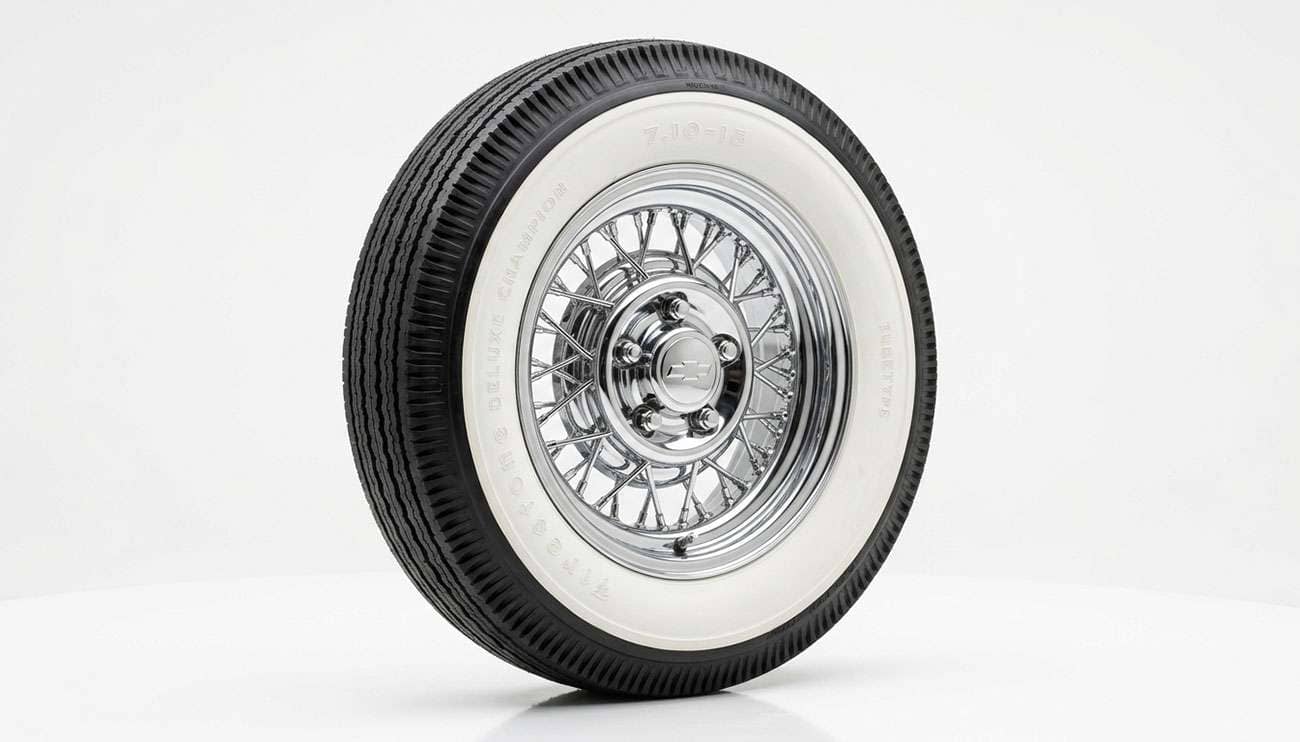
I get this question more than just about any other from the classic crowd, and it's a good one, because the honest answer isn't the number stamped in your glovebox. I've been airing up tires on old iron since I was a kid in the shop, and I can tell you the single most common mistake I see on a beautifully restored car is the right tire at the wrong pressure. Folks find that faded factory sticker, set their tires to it, and head down the road on numbers that were never meant for the rubber they're running. Let's fix that. Here's what PSI to actually run in your classic, and how to dial it in like I would in the shop.
Here's the thing most people don't realize. That original pressure spec, whether it's on a door jamb, a glovebox sticker, or in the owner's manual, was written for the tires your car wore when it left the factory. And up through the early 1970s, that meant bias-ply tires. A lot of those old specs read 22, 24, maybe 28 psi. Those numbers were correct, for bias-ply construction.
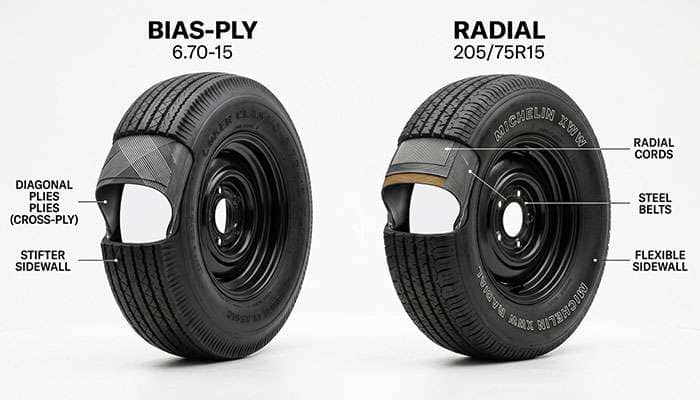
The trouble is that the overwhelming majority of classics on the road today are riding on modern radials, even when they look like period-correct rubber. Bias-ply and radial tires are built completely differently and behave completely differently at the same pressure. A bias-ply tire has stiff, rigid sidewalls that hold the car up on their own, so it can run low pressure and still feel firm. A radial has a flexible sidewall that relies on air pressure to do that job. Put a bias-ply number like 22 psi into a modern radial and you've got a dangerously underinflated tire, one that'll run hot, wear its edges off, handle like a wet noodle, and in the worst case let go on the highway. If you want the full rundown on how these two are built, our guide on the pros and cons of radial versus bias-ply tires for classic cars spells it out, and the deeper difference between bias-ply and radial tires for classic cars covers the engineering.
So step one is simple: figure out what you're actually running. If those are modern radials under your classic, throw the old sticker number out the window and read on.
For modern radials on a typical classic car or muscle car, you want to be in the neighborhood of 30 to 35 psi cold. That's the range that lets a radial sidewall do its job without being overinflated. If I'm setting up a customer's car with no better information to go on, I'll usually start around 30 psi in front and 32 in the rear, then adjust from there based on how the car rides and how the tires wear.
Why a little more in the rear? Most of these cars carry their weight differently front to back, and the rear takes the load when you've got people or gear in the trunk. A couple extra pounds back there keeps things even. That's a starting point, not gospel; your car's weight, your tire size, and how you drive all move the needle. Here's a quick reference I keep in my head:
Setup |
Front (cold) |
Rear (cold) |
Notes |
|---|---|---|---|
Modern radials, comfort cruise |
28-30 psi |
30-32 psi |
Softer ride; good for show and Sunday driving |
Modern radials, balanced |
30-32 psi |
32-34 psi |
The all-around sweet spot for most classics |
Modern radials, spirited handling |
32-35 psi |
32-35 psi |
Firmer, sharper turn-in; a bit more road noise |
Bias-ply (period-correct) |
22-26 psi |
24-28 psi |
Follow the original spec; stiff sidewalls run lower |
If your car came from a later era and originally wore radials, the factory sticker is actually a reasonable starting point, since it was written for radial construction. It's the pre-radial cars where you have to think for yourself. Our general guide on how to find your recommended tire pressure and the piece on why proper tire pressure is important are worth a read for the fundamentals that apply to any car.
Now, if you're one of the folks running genuine bias-ply tires for authenticity, for show points, or just because that's what belongs on your car, the rules flip back. Bias-ply tires were designed to run those lower pressures, and the original factory spec is your friend here. Low-to-mid 20s up front and mid-20s in the rear is typical, but follow whatever the original documentation called for, because that number was written for exactly this construction.
One word of caution with bias-ply: don't overinflate them chasing a firmer ride or better mileage. A bias-ply tire that's pumped up too hard wears the center of the tread right out and rides like a wagon wheel. These tires are stiff enough already. Keep them where they belong and they'll do their job. If you're deciding between authentic bias-ply and a radial that looks the part, our guide to modern tires for classic cars and the overview of the different types of classic car tires can help you choose.
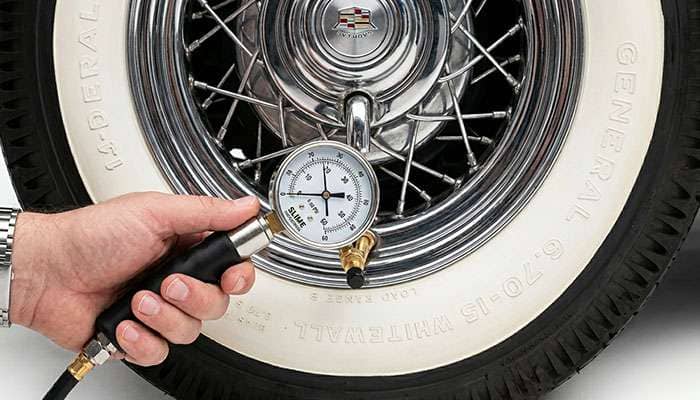
This one trips up more people than any other, so listen close. The big pressure number molded into the sidewall of your tire, the one that might say 44 or 51 psi, is not your target pressure. That number is the maximum pressure at which the tire can carry its maximum rated load. It is a ceiling, not a recommendation.
I've watched folks air their tires up to the sidewall max thinking they're doing the right thing, and then wonder why the car rides like a buckboard and the tread is wearing out down the center. Running max sidewall pressure on a car that weighs a fraction of the tire's load capacity gives you a hard, skittery ride, a smaller contact patch, and center wear. The right pressure for your classic is almost always well below that sidewall maximum. Use the sidewall number to know your upper limit, then set your actual pressure in the range we talked about. If you want to see what running too much pressure does to a tire, our article on overinflated tires shows the damage.
Tire pressure is only meaningful when the tire is cold, meaning the car has been sitting for a few hours or hasn't been driven more than a mile or so. Here's why: as you drive, the tires heat up, the air inside expands, and the pressure climbs, typically by around 10 percent. A tire you set to 30 cold might read 33 or 34 after a good highway run. That's normal and expected.
The mistake is checking a hot tire, seeing the higher number, and bleeding air out to bring it back down. Do that and you'll be badly underinflated once the tire cools off. So always set your pressure first thing, before you've driven anywhere, and let the heat-up happen on its own. And remember that temperature swings matter too. Tires lose pressure as the weather gets colder, roughly a pound for every ten-degree drop, so the set you aired up in summer will read low come winter. Our guide on tire pressure in cold weather covers that in detail. Get yourself a decent gauge and check monthly; it's the cheapest insurance there is.
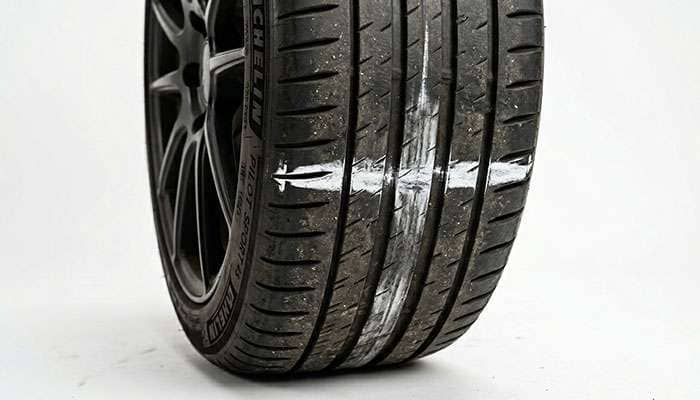
Now here's an old trick I learned decades ago that beats any chart, including mine. It's called the chalk test, and it lets the tire tell you exactly what pressure it wants for the way your particular car sits and drives.
Take a piece of sidewalk chalk and draw a line straight across the tread, from one edge to the other. Then drive the car forward slowly in a straight line, maybe twenty or thirty feet, and stop. Get out and look at the chalk. If the chalk wore off evenly across the whole width of the tread, your pressure is just right; the whole tire is meeting the road. If the chalk is gone only in the center and still there on the edges, you're overinflated, the tire is bulging in the middle. If the chalk wore off on both edges but is still there in the center, you're underinflated, the tire is rolling under at the shoulders. Adjust a couple pounds at a time and repeat until the chalk wears even. That's your number, found the honest way.
You can read the same story over time in your tread wear, just slower. Center wear means too much pressure, wear on both shoulders means too little. Learning to read tire wear patterns turns your tires into their own pressure gauge over the long haul.
Pressure isn't a set-it-and-forget-it deal, and it changes with how you use the car. If you're loading up the trunk for a road trip, a cooler and chairs and a weekend's worth of gear, add a few pounds to the rear to carry that weight. If you're just rolling to the cruise-in with an empty car, you can sit at the comfortable end of the range.
It's also a trade-off between ride and handling, and there's no single right answer, only your preference. Lower in the range gives you that soft, floaty classic-car ride a lot of folks love. Higher in the range firms it up, sharpens the steering, and helps a little on fuel economy, at the cost of more road noise and a busier ride. Most of my customers land right in the middle and never think about it again. Tinker within the range and find what feels right to you; just don't drop a radial below the high 20s, because that's where you start cooking the tire. If fuel economy is on your mind, our piece on whether tire pressure affects gas mileage has the numbers.
I'll leave you with the most important thing of all, because perfect pressure means nothing on a tire that isn't safe. On a classic, the rubber is often old, and old tires get hard, crack, and lose their integrity no matter how much tread is left or how perfectly they're aired up. A tire that's been on the car or on the shelf for years can let go at speed even looking brand new.
Check the date code on the sidewall and inspect for cracking, especially if the car sits a lot, which most classics do. No amount of correct pressure makes a dry-rotted tire safe. Our guides on whether vintage tires are safe to use and when car tires should be replaced walk you through the warning signs. If it's time for fresh rubber, our roundup of the 13 best whitewall tires for classic cars and the best tires for muscle cars will point you the right way, and you can make sure you're buying the correct size with our complete guide on what size tires vintage cars use.
So what PSI should you run in your classic car tires? If you're on modern radials, which most of you are, somewhere in the 30 to 35 psi range cold, not the low-20s number on that old factory sticker. If you're on genuine bias-ply, the original spec in the low-to-mid 20s is right. Either way, set it cold, ignore the max sidewall number, let the chalk test fine-tune it, and watch your wear patterns over time. Do that and your classic will ride right, handle right, and wear its tires even for years. The old girl will tell you what she wants; you just have to know how to listen.
Only if you're running the same type of tire the car came with. Pre-1970s classics came with bias-ply tires, and their factory pressure specs, often in the low 20s, were written for that stiff bias-ply construction. If you've fitted modern radials, which most classic owners have, that old number is too low and unsafe. Run radials around 30 to 35 psi cold instead.
For modern radials on a typical classic or muscle car, aim for about 30 to 35 psi cold, often a couple pounds more in the rear to carry load. Start near 30 front and 32 rear, then adjust based on ride comfort and tire wear. Don't drop a radial below the high 20s, because that's where it starts to run hot and wear at the edges.
The number molded into the sidewall is the maximum pressure for the tire's maximum rated load, not a recommended setting. Your classic weighs far less than that load limit, so running max sidewall pressure gives a hard, skittery ride, a smaller contact patch, and accelerated wear down the center of the tread. Treat it as an upper limit only.
Draw a chalk line across the tread from edge to edge, drive forward slowly in a straight line about twenty or thirty feet, then check the chalk. If it wore off evenly across the whole tread, your pressure is right. If only the center wore off, you're overinflated. If only the edges wore off, you're underinflated. Adjust a couple pounds at a time and repeat until it wears even.
Always cold, meaning before you've driven more than a mile or after the car has sat for a few hours. Driving heats the tires and raises the pressure by roughly 10 percent, so a hot reading looks higher than your real setting. If you bleed air out of a hot tire to hit your number, you'll be underinflated once it cools. Set it cold and let the heat rise happen naturally.



