
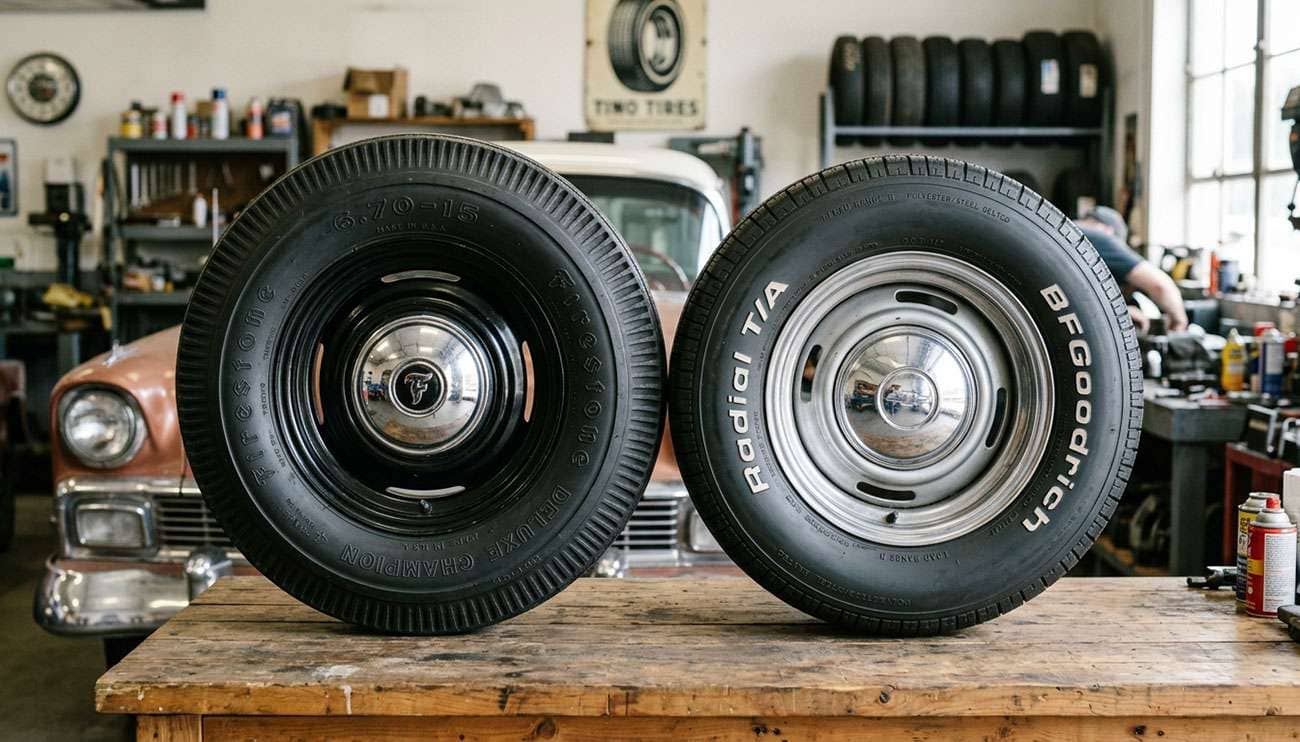
Your classic car from the 1920s through 1970s uses a completely different tire measurement system than modern vehicles. You can't just walk into any tire shop and expect the staff to understand designations like 5.00-16 or F78-14. These vintage sizing systems are essential knowledge for maintaining your classic automobile's authenticity, performance, and safety.
The tire industry transformed dramatically throughout the 20th century. Early automobiles used inch-based measurements like 5.00-16 or 6.50-15. Manufacturers introduced alphanumeric sizing in the 1960s, then eventually shifted to today's metric system. This means the tires your vintage car needs depend entirely on its manufacturing year and which measurement standard was current at that time.
Your challenge goes beyond just finding tires that fit. You need tires that maintain your vehicle's original appearance, handling characteristics, and historical accuracy while meeting modern safety standards. Whether you're restoring a 1957 Chevrolet Bel Air, maintaining a 1965 Ford Mustang, or preserving a pre-war roadster, understanding vintage tire sizing determines your success.
Vintage car tire sizes differ fundamentally from modern sizing because they pre-date today's standardized metric system. Before you can select the correct tires for your classic vehicle, you need to understand these older measurement systems and how they translate to contemporary options available from retailers like Performance Plus Tire.
Vintage tires used several different sizing systems depending on the era. The earliest system, from the 1920s through early 1960s, employed numeric sizing where manufacturers designated tires by cross-section width and rim diameter in inches. A tire marked 6.00-16 had a 6-inch cross-section width and fit a 16-inch rim. Simple enough for the mechanics and car owners of that era, but this measurement tells only part of the story about actual tire dimensions.
The aspect ratio—the relationship between tire height and width—wasn't explicitly stated in early sizing systems. Most bias-ply tires from this period had similar proportions, typically around 82-92% aspect ratio. A 6.00-16 tire would have a sidewall height of approximately 5 inches, creating that tall, narrow profile that looks distinctly different from modern tires.
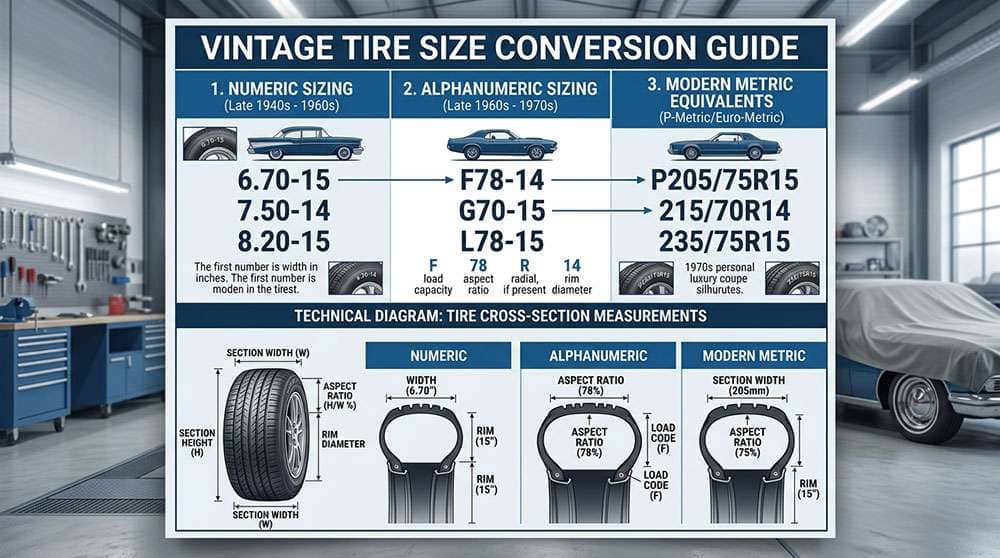
In the 1960s and early 1970s, the industry introduced alphanumeric sizing, which used letter designations to indicate load-carrying capacity. You'll see sizes like F78-14 or G70-15 on muscle cars from this era. The first letter indicates the tire's load range, the number represents the nominal aspect ratio, and the final number is the rim diameter. An F78-14 tire has an approximately 78% aspect ratio and fits a 14-inch wheel. That "F" designation tells you it's designed for mid-size passenger cars of that period.
Understanding bias-ply versus radial construction is critical when selecting vintage car tires. Bias-ply tires, standard on vehicles through the early 1970s, have cords running diagonally across the tire at angles of about 30-40 degrees. This construction creates a stiffer sidewall and different handling characteristics than modern radial tires. Many purists prefer bias-ply tires for authenticity. Radial tires in vintage sizes offer superior handling, longer treadlife, and better fuel economy.
| Vintage Numeric Size | Alphanumeric Equivalent | Modern Metric Equivalent | Common Vehicles |
|---|---|---|---|
| 5.60-15 | B78-15 | 185/80R15 | 1950s Chevrolet, Ford |
| 6.50-13 | C78-13 | 185/80R13 | Volkswagen Beetle, Mini Cooper |
| 6.70-15 | D78-15 | 205/75R15 | 1960s Mustang, Camaro |
| 7.10-15 | E78-15 | 215/75R15 | 1960s Impala, Galaxie |
| 7.75-14 | F70-14 | 215/70R14 | 1970s muscle cars |
| 8.15-15 | G70-15 | 235/70R15 | Performance muscle cars |
Whitewall and redline tires deserve special mention when discussing vintage car tire sizes. These distinctive sidewall treatments were factory equipment on many classic cars and are essential for authentic restorations. A 7.75-14 whitewall tire maintains the same dimensions as its blackwall counterpart but features that iconic white stripe that defined American automotive style in the 1950s and 1960s. The whitewall width varied by era—narrow whitewalls dominated the 1960s, while wide whitewalls ruled the 1950s.
Load index and speed ratings weren't marked on vintage tires the way they are today. Tire manufacturers designed specific tire lines for passenger cars, light trucks, and commercial vehicles. When selecting modern replacements for vintage sizes, you need to ensure the load capacity matches or exceeds your vehicle's requirements. Most passenger car tires from the 1950s-1970s were designed for speeds up to 85-100 mph, which modern S-rated tires (112 mph) easily exceed.
The biggest mistake classic car owners make is assuming any tire that physically fits the wheel is appropriate for their vehicle. Rim width is critical—vintage wheels were typically narrower than modern equivalents. A 15x5 wheel from a 1965 vehicle shouldn't accept a modern 225-width tire even if it can be mounted. The tire's bead won't seat properly and handling will suffer dramatically.
Mixing tire types without understanding the consequences creates dangerous handling characteristics. Installing radial tires on the rear axle while keeping bias-ply tires on the front is a recipe for disaster. The different construction types respond differently to steering inputs and road conditions. If you're transitioning from bias-ply to radial tires, replace all four tires simultaneously and prepare for your classic car to handle differently than it did originally.
Many enthusiasts overlook the importance of correct inflation pressures for vintage tire sizes. Original equipment recommendations were based on bias-ply tire construction, which required higher pressures—often 28-32 psi—than modern radials. If you install radial tires in vintage sizes, you may need to adjust pressures to the 26-30 psi range for optimal performance and tread wear. Consult the tire manufacturer's specifications rather than relying solely on the placard in your classic car's doorjamb.
Attempting to use ultra-wide modern performance tires on vintage vehicles is another common pitfall. Wider tires might seem like a performance upgrade, but they cause clearance issues with fenders, suspension components, and steering linkage not designed to accommodate them. Significantly wider tires alter your vehicle's scrub radius and can make steering heavier, particularly on cars without power steering.
Ignoring the speedometer calibration issue causes problems for many classic car owners. Your vehicle's speedometer was calibrated for a specific tire diameter. Installing tires with a different overall diameter—even by just an inch—will make your speedometer read incorrectly. Use the tire size comparison calculator to ensure your replacement tires match the original diameter as closely as possible.
Selecting the correct tires for your classic car requires balancing authenticity, performance, safety, and availability. You need to consider how you use your vehicle, what level of originality you're trying to maintain, and what tire options are currently manufactured in your required sizes. The vintage tire market has evolved significantly in recent years, with specialty manufacturers producing more authentic options than ever before.
Your first step is identifying your vehicle's original equipment specifications. Check your owner's manual if you still have it, look for identification plates in the glovebox or doorjamb, or consult marque-specific restoration guides and forums. Many classic car clubs maintain detailed databases of original tire specifications for popular models.
For pre-1950s vehicles, you're dealing with very tall, narrow tires with designations like 5.00-16, 5.50-16, or 6.00-16. These sizes are still manufactured by specialty tire companies that cater to the antique car market. Vehicles from this era used bias-ply construction exclusively, and installing period-correct bias-ply tires maintains that authentic ride quality and appearance many collectors value.
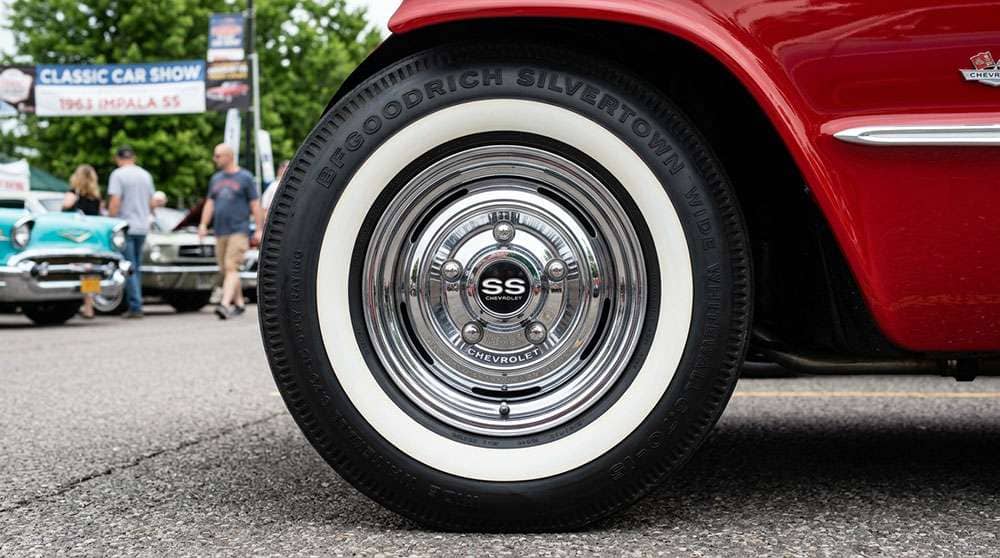
Cars from the 1950s and early 1960s commonly used sizes like 6.70-15, 7.10-15, and 7.60-15. These vehicles came with 14-inch or 15-inch wheels, with 15-inch being most common on full-size American cars. You have several options for these sizes: authentic bias-ply reproduction tires that match the original appearance, radial tires manufactured in vintage sizes that offer modern performance, or carefully selected modern equivalents that maintain the correct overall diameter.
Mid-1960s to early 1970s vehicles represent the transition period when both numeric and alphanumeric sizing were used. A 1965 Mustang might have come with 6.95-14 tires, while a 1968 Camaro used F70-14. These sizes are well-supported by both specialty vintage tire manufacturers and some mainstream brands that still produce popular classic car sizes. This gives you flexibility in choosing between authentic appearance and modern performance.
Muscle cars and performance vehicles from the late 1960s and early 1970s often came with wider tires like G70-14, G70-15, or even L60-15 on high-performance models. These wider sizes are easier to cross-reference to modern metric equivalents, and you'll find more options available. Maintaining the period-correct appearance often means choosing specific tread patterns and sidewall designs that match the era.
| Vehicle Era | Typical Wheel Size | Common Tire Sizes | Best Modern Options |
|---|---|---|---|
| 1920s-1940s | 16", 17", 18" | 4.50-18, 5.00-16, 5.50-17 | Specialty bias-ply reproductions |
| 1950s | 14", 15" | 6.70-15, 7.10-15, 7.60-15 | Radial in vintage sizes or 205/75R15 |
| 1960s | 13", 14", 15" | 6.50-13, 7.75-14, E70-14 | 215/70R14, 225/70R14 |
| 1970s | 14", 15" | F70-14, G70-15, FR78-14 | 215/70R14, 235/70R15 |
Light trucks and commercial vehicles from the vintage era used different sizing conventions entirely. Truck tires were designated with letters like 6.50-16LT or 7.50-16LT, where "LT" indicated light truck construction with heavier load capacity. If you're restoring a vintage pickup or delivery van, ensure you select tires with adequate load rating for the vehicle's intended use, even if you're primarily using it for shows rather than hauling.
European vintage cars often used metric sizing earlier than American vehicles, or employed unique sizing systems specific to certain manufacturers. A vintage Volkswagen Beetle might use 5.60-15 tires, while a 1960s Porsche could have come with 165HR15 tires—already using a form of metric sizing. British vehicles sometimes used their own sizing conventions, such as 5.20-13 for early Minis. Research your specific make and model carefully to ensure you're selecting appropriate replacements.
How you actually use your vintage car should heavily influence your tire selection. A concours-level restoration that's trailered to shows and driven minimally has very different needs than a classic car that's your weekend cruiser or regular driver. Be honest about your intended use—you should prioritize safety and performance over absolute authenticity if you're putting serious miles on your vintage vehicle.
For show cars and trailer queens, authentic bias-ply tires in the correct size with period-appropriate tread patterns and sidewall markings are essential. Judges at concours events will absolutely notice if your 1957 Bel Air has modern radials instead of the correct wide whitewall bias-ply tires. In this scenario, the tires' limited treadlife and inferior handling characteristics don't matter because you're driving the car so minimally. Just remember that even stored tires age and should be replaced based on date codes, typically every six to seven years regardless of mileage.
Weekend drivers and occasional-use classics benefit most from radial tires manufactured in vintage sizes. These tires maintain a period-appropriate appearance while offering dramatically better handling, wet weather performance, and treadlife than authentic bias-ply construction. You'll enjoy driving your classic more, feel safer in modern traffic conditions, and spend less time and money on tire replacements. Many companies now offer radial tires with vintage-style tread patterns and authentic-looking sidewalls that satisfy all but the most critical judges.
Regular drivers—classic cars that see frequent use for errands, commuting, or extended road trips—should prioritize modern radial construction with contemporary tread compounds. If exact vintage sizes aren't available in high-quality radials, carefully selected modern equivalents that maintain the correct overall diameter are appropriate. Safety equipment like tires shouldn't be compromised on a vehicle that shares the road with modern traffic regularly. Focus on finding tires from reputable manufacturers like Michelin that offer the best combination of performance, longevity, and ride quality.
Performance and handling modifications require special consideration. If you've upgraded your classic car's suspension, brakes, or engine, your tire needs have changed from the original specifications. Modern suspension components work best with radial tires that have appropriate speed ratings for your vehicle's capabilities. A resto-mod muscle car with fuel injection, modern suspension, and upgraded brakes shouldn't be limited by vintage tire technology. In these cases, stepping up to contemporary tire sizes and specifications makes sense, though you'll want to maintain an appearance that complements your vehicle's era.
Climate and storage conditions matter significantly for tire selection. If you're in a region with harsh winters and only drive your classic car seasonally, you might consider maintaining two sets of wheels and tires—one with show-quality tires for summer events and another with more practical radials for general driving. Proper storage is critical for any vintage car tires. Store them indoors away from sunlight, ozone sources like electric motors, and temperature extremes. Tire covers protect whitewall and redline tires from discoloration during storage.
Budget considerations are real for most classic car owners. Authentic bias-ply reproduction tires in vintage sizes often cost $150-300 per tire or more, while radial equivalents might be $100-200 per tire. If your classic car needs specialty sizes that few manufacturers produce, you may have limited options and premium pricing. Plan accordingly and consider whether stepping to a more common vintage size (if your wheels can accommodate it) might open up more affordable tire choices without sacrificing authenticity.
Understanding what size tires vintage cars use requires knowledge of historical sizing systems, tire construction evolution, and how to balance authenticity with modern safety and performance. Whether your classic car needs 6.70-15 bias-ply tires, F70-14 alphanumeric sizes, or something more obscure, matching the tires to both your vehicle's specifications and your intended use is key.
The vintage tire market has never been better for classic car owners. Specialty manufacturers produce authentic reproductions for concours restorations, mainstream brands offer radials in popular classic car sizes, and conversion charts help you find modern equivalents when necessary. Take the time to research your specific vehicle's original equipment, consider how you actually use your classic car, and select tires that provide the right balance of appearance, performance, and safety for your needs.
Whether you're restoring a pre-war roadster, maintaining a 1950s cruiser, or enjoying a muscle car from the golden era of American performance, the right tires are essential to your classic car's character and capability. Visit Performance Plus Tire to explore tire options for your vintage vehicle, and reach out to tire specialists who understand the unique requirements of classic car ownership. Your vintage car deserves the proper tires to keep it looking authentic and performing safely on today's roads.
Here are the essential points to remember about vintage car tire sizes:
• Sizing systems evolved significantly: Vintage cars used numeric sizing (6.70-15) through the early 1960s, alphanumeric sizing (F78-14) in the 1960s-1970s, before the industry standardized on today's metric system, so understanding these historical systems is essential for finding correct replacements.
• Bias-ply versus radial construction matters: Original vintage cars came with bias-ply tires, but modern radial tires in vintage sizes offer superior handling, treadlife, and safety while maintaining period-appropriate appearance for most applications except concours-level restorations.
• Match tires to your actual usage: Show cars benefit from authentic bias-ply reproductions, weekend drivers are best served by radials in vintage sizes, and regular-use classics should prioritize modern radial construction with contemporary safety features and performance characteristics.
• Overall diameter must be maintained: Replacement tires should match the original equipment's overall diameter within one percent to maintain proper speedometer calibration, ground clearance, and gear ratios, regardless of whether you choose authentic vintage sizes or modern equivalents.
• Avoid common fitment mistakes: Never mix bias-ply and radial tires on the same vehicle, ensure replacement tires match your wheel width specifications, adjust inflation pressures appropriately for the tire construction type, and verify clearance before installing wider tires on vintage vehicles not designed for them.
Yes, you can install modern radial tires on most vintage cars, and many owners prefer them for improved handling, treadlife, and wet weather performance. Radial tires are available in many popular vintage sizes and offer modern safety features while maintaining a period-appropriate appearance. You must replace all four tires with radials—never mix bias-ply and radial construction on the same vehicle. For concours-level restorations where absolute authenticity is required, bias-ply reproductions are necessary. If you drive your classic car regularly, radials in the correct vintage size provide the best combination of safety and authenticity.
Converting vintage tire sizes to modern metric equivalents requires matching the overall diameter and maintaining appropriate width. A 6.70-15 tire converts to approximately 205/75R15, while a 7.75-14 translates to about 215/70R14. Calculate the overall diameter of your original tires using this formula: diameter = (2 × section width × aspect ratio) + rim diameter. Then find a modern tire with the same overall diameter. Use online tire size calculators to verify your conversions maintain proper diameter within one percent of the original. Section width measurements aren't directly equivalent—a 7.75-inch vintage tire is closer to a 215mm modern tire than the 197mm direct conversion would suggest.
Yes, whitewall tires are still manufactured for classic cars in popular vintage sizes. Several specialty tire manufacturers produce authentic whitewall tires in both bias-ply and radial construction, with options for narrow whitewalls (popular in the 1960s) and wide whitewalls (common in the 1950s). Common whitewall sizes include 5.60-15, 6.70-15, 7.10-15, 7.75-14, and their modern radial equivalents. Whitewall tires typically cost more than blackwall equivalents due to the additional manufacturing steps required. Quality varies significantly between manufacturers, so select whitewalls from reputable companies that specialize in classic car applications. Use specific whitewall cleaners and tire dressings designed for white rubber to prevent yellowing and discoloration.
Numeric sizing, used from the 1920s through the early 1960s, expressed tires as cross-section width and rim diameter in inches—for example, 6.70-15. Alphanumeric sizing, introduced in the mid-1960s, used a letter to indicate load range, a number for aspect ratio, and rim diameter—such as F78-14. The letter designation (A through N) indicated the tire's load-carrying capacity, with each letter step representing roughly 50 pounds of additional capacity. The number (70, 78, etc.) represented the aspect ratio, though these weren't as precise as modern measurements. Both systems pre-dated today's standardized metric sizing. When restoring or maintaining a vintage car, identify which system your vehicle originally used and select replacement tires accordingly to maintain proper fitment and appearance.
Replace vintage car tires based on age rather than appearance or tread depth, as rubber compounds deteriorate over time regardless of use. Most tire manufacturers and safety organizations recommend replacing tires that are six to ten years old from their date of manufacture, even if they appear to have adequate tread. Check the DOT date code on the tire sidewall—the last four digits indicate the week and year of manufacture. Tires on cars that are stored and driven minimally may look perfect but have degraded internally. Factors that accelerate aging include UV exposure, heat, ozone, and improper storage. Bias-ply tires may age differently than radials, but the same age-based replacement guidelines apply. For show cars with extremely low mileage, consider the tires a consumable item that requires periodic replacement regardless of appearance to maintain safety.



