
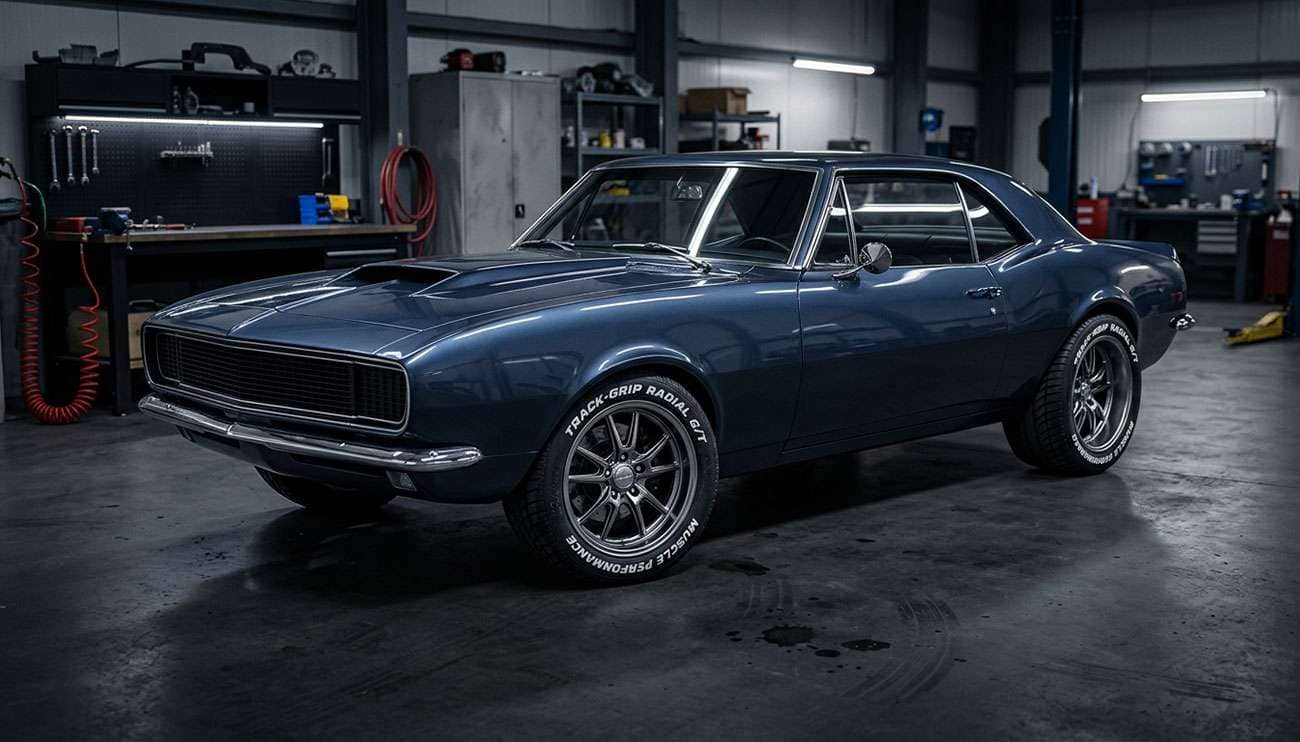
I bolted my first set of tires onto a 1965 GTO when I was 18 years old, and I've been putting tires on muscle cars ever since. Six decades of working on Boss 302 Mustangs, Hemi 'Cudas, Yenko Camaros, original GTOs, then transitioning through the 1980s revival era and into modern Hellcats, Demons, and Dark Horses tells me something specific: muscle car tire selection has changed dramatically while the fundamental priorities have stayed exactly the same.
The fundamentals: muscle cars need tires that can put substantial V8 horsepower to the ground (300+ horsepower on classic muscle, 400-800+ horsepower on modern muscle), survive the abuse that muscle car owners actually put their tires through (burnouts, hard launches, weekend track sessions, drag strip runs), and look right on the car. That last priority isn't optional — a muscle car wearing the wrong tire aesthetic looks fundamentally incorrect, the way a 1969 Camaro looks wrong on modern low-profile tires or a 2024 Hellcat looks wrong on narrow blackwall touring tires.
What's changed is the available technology. Modern UHP summer tires deliver grip levels that drag radials achieved 20 years ago. UHP all-season tires now make sense on muscle cars in ways they didn't a decade ago. Drag radials reach grip thresholds that weren't physically possible on classic compound chemistry. The 2026 muscle car tire market gives buyers more options across more specific use cases than ever before, but the decision framework has to start with understanding what you're actually going to do with the car.
This guide covers tires for muscle cars across five distinct use cases: modern street performance, all-season daily driving, drag strip focus, autocross and track day weekend warrior, and classic period-correct restoration. Every tire mentioned is in current Performance Plus Tire inventory with sizes that work on the specific muscle car platforms most owners drive. Click any product link to verify sizes and pricing for your specific car.
The right tire for your muscle car depends on five questions you have to answer honestly before looking at specific products.
1. What do you actually do with the car? Daily driver, weekend cruiser, dedicated track car, dedicated drag car, show car, or restoration project? Each use case demands different tire characteristics. The mistake most muscle car owners make is picking tires for the aspirational use case (drag radials because they want to occasionally drag race) rather than the actual use case (daily driving 95% of the time and drag racing 5%). Match the tire to actual use, not theoretical use.
2. What climate do you operate in? Year-round in warm climates (Southwest, Florida, southern California) opens up UHP summer tire options. Year-round in cold-winter climates (Northeast, Midwest, Pacific Northwest) demands UHP all-season alternatives unless you can manage seasonal storage. Garage-kept weekend toys in any climate can run UHP summer tires regardless of season because the car isn't out in the cold.
3. What era muscle car are you running? Classic muscle (1964-1973) typically calls for period-correct aesthetics (raised white letter, redline, blackwall depending on year and configuration). Modern muscle (S550/S650 Mustang, 5th-6th gen Camaro, 3rd gen Challenger LX/LD platforms) can run any contemporary tire aesthetic. The visual coherence between car and tire matters substantially on muscle cars — the wrong era tire on the right era car looks fundamentally incorrect.
4. What horsepower level are you putting down? Stock classic muscle (250-400 hp) can handle most quality UHP summer tires without grip issues. Modern Hellcat and Demon-level horsepower (700-1,000+ hp) needs specific tire selection to manage the torque. Heavily modified classic muscle with crate engines making 500+ hp falls into "needs drag radials or wide UHP summer tires" territory regardless of era.
5. What's your budget reality? UHP summer tires for a 20-inch wide rear setup cost $300-450 per tire ($600-900 for rear pair, $1,200-1,800 for full set). Drag radials at $250-400 per tire need replacement every 5,000-10,000 miles with hard use. Daily-driver all-season UHP tires cost less per tire but typically need replacement at 30,000-40,000 miles versus 25,000-30,000 for UHP summer. Calculate total cost of ownership across the tire's expected service life, not just the per-tire purchase price.
Five distinct use cases drive the muscle car tire decision.
Use Case |
Tire Category |
Recommended Picks |
|---|---|---|
Modern street performance (weekend warrior) |
Max Performance Summer (UHP Summer) |
Michelin Pilot Sport 4 S, Nitto NT555 G2 |
All-season daily driver muscle |
Ultra-High-Performance All-Season |
BFGoodrich g-Force COMP-2 A/S+, Continental ExtremeContact DWS06 Plus |
Drag strip / strip-focused builds |
Drag Radial / DOT-Legal Slick |
Mickey Thompson ET Street R, Mickey Thompson ET Street S/S, Nitto NT555R II |
Autocross / track day weekend warrior |
R-Compound / Max Performance Summer |
Nitto NT05, Nitto NT01 (R-comp), Michelin Pilot Sport 4 S |
Classic period-correct (1964-1973) |
Vintage Raised White Letter / Redline |
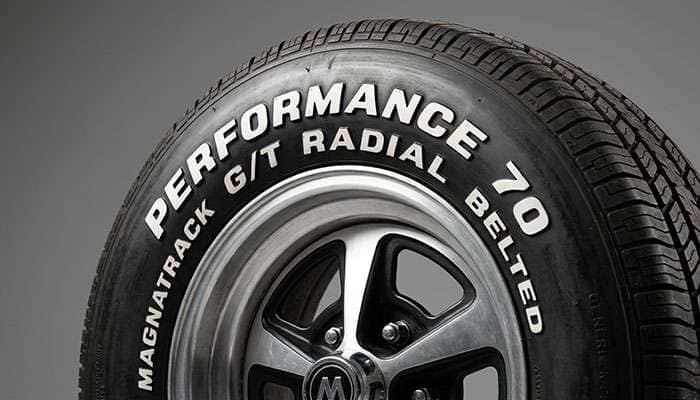
BFGoodrich Radial T/A, Cooper Cobra Radial G/T, Diamond Back Sumitomo HTR Z5 Redline |
The pattern: modern muscle car owners benefit most from UHP summer tires when they can manage seasonal use, UHP all-season tires when they can't. Drag-focused builds use dedicated drag radials and accept the daily-driver limitations. Track day weekend warriors increasingly choose UHP summer tires (Pilot Sport 4 S) over true R-compound tires because the UHP summer alternatives deliver 90% of the track grip with substantially better daily usability. Classic restoration projects demand period-correct aesthetics regardless of modern technology alternatives.
Different muscle car eras run different tire sizing, and matching the sizing to the era matters for both fitment and aesthetics.
Era / Platform |
Typical Front Sizing |
Typical Rear Sizing |
Aspect Notes |
|---|---|---|---|
Classic muscle 1964-1973 (stock height) |
205/70R14 - 215/70R15 |
225/70R15 - 245/60R15 |
Period-correct 14-15 inch wheels |
Classic muscle (resto-mod, larger wheels) |
235/40R18 - 245/45R17 |
275/40R18 - 295/35R18 |
17-18 inch resto-mod fitment |
Revival muscle 1990s-2004 (Mustang SVT, GTO) |
245/45R17 - 245/40R18 |
275/40R17 - 275/40R18 |
17-18 inch OE typical |
Modern muscle S550/S650 Mustang GT |
255/40R19 - 275/35R19 |
275/40R19 - 295/35R19 |
19-20 inch OE staggered |
Modern muscle Camaro SS (5th/6th gen) |
245/45R20 - 285/30R20 |
275/40R20 - 305/30R20 |
20 inch OE staggered |
Modern muscle Challenger R/T to Scat Pack |
245/45R20 - 275/40R20 |
275/40R20 - 305/35R20 |
20 inch OE staggered or square |
Modern muscle Hellcat Widebody |
305/35R20 |
305/35R20 |
Square setup, widebody fenders |
Drag-focused builds (any era) |
Skinny: 26x6.0R15 to 28x6.0R17 |
Wide: 275/60R15 to 315/35R20 |
Front skinny, rear drag radial |
The general principle: modern muscle has migrated from the 14-15 inch classic muscle sizes to 19-20 inch contemporary sizing, with corresponding aspect ratio reduction (from 60-70 series classic to 30-40 series modern). The visual proportions of the tire and wheel relative to the fender well determine whether the car looks right or wrong — too narrow makes modern muscle look tucked in, too wide makes classic muscle look wrong. For deeper muscle car size analysis, see our muscle car wheel size guide.
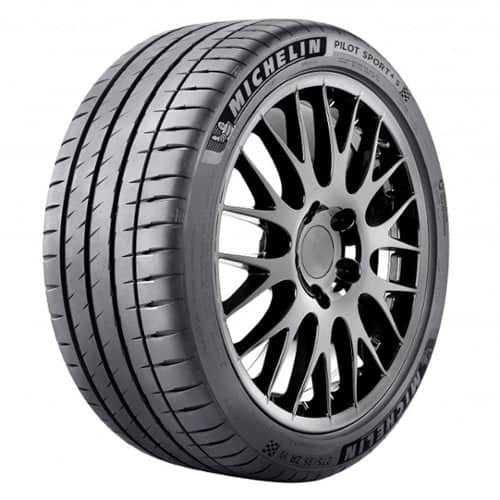
Best For: Modern street performance, weekend warrior, occasional track day • Category: Max Performance Summer • Typical Price: $230-380 per tire
The Michelin Pilot Sport 4 S is the UHP summer tire I recommend more often than any other for modern muscle car applications. Mustang GT, Mustang Mach 1, Camaro SS, Camaro 1LE, Challenger Scat Pack, Challenger Hellcat owners who want peak grip in summer conditions consistently end up on the Pilot Sport 4 S. Michelin's Variable Contact Patch 3.0 technology delivers exceptional dry grip and balanced handling at the limit — the tire generates more lateral grip than competing alternatives while maintaining the predictable transition behavior that makes the car drivable rather than spooky when you push it.
What separates the Pilot Sport 4 S from other UHP summer alternatives is the daily-driver compatibility. The tire delivers acceptable ride quality (better than R-compound alternatives), reasonable tread life for the category (typically 25,000-30,000 miles with daily driving), and wet grip that doesn't disappear the moment the road gets damp. For owners who track their muscle car occasionally but daily-drive it most of the time, the Pilot Sport 4 S is consistently the right answer. The trade-off: summer-only operation. The compound stiffens dramatically below 40-45°F and loses meaningful grip below that threshold. For year-round daily-driver use in cold climates, the BFGoodrich g-Force COMP-2 A/S+ or Continental ExtremeContact DWS06 Plus deliver better year-round capability with acceptable performance compromise. Browse Michelin Pilot Sport 4 S sizes.
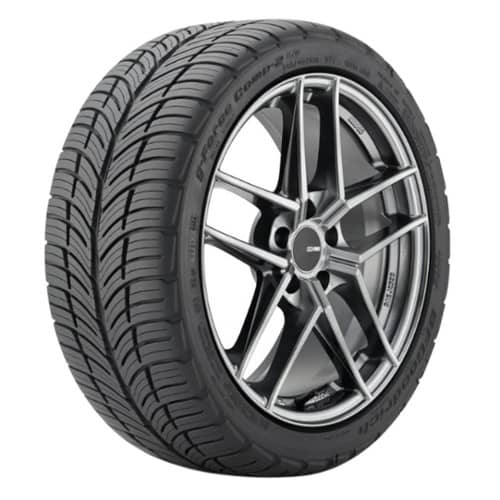
Best For: All-season daily-driver muscle, year-round capability • Category: Ultra-High-Performance All-Season • Typical Price: $170-280 per tire
The BFGoodrich g-Force COMP-2 A/S+ is the UHP all-season specialist for daily-driven muscle cars in mixed climates. BFGoodrich has been making tires specifically for American muscle since the original Radial T/A defined raised white letter aesthetic in the 1970s, and the g-Force COMP-2 A/S+ brings that muscle-car-specific engineering DNA to the modern UHP all-season category. The asymmetric tread design delivers strong dry handling, competitive wet performance, and acceptable cold-weather capability — meaningful for muscle car owners in regions where UHP summer tires aren't a year-round option.
What gives the g-Force COMP-2 A/S+ its position on this list is the muscle-car-specific value proposition. The tire is available in sizes that match modern muscle car staggered setups (245/40R20, 275/35R20, 305/35R20 and similar), at pricing that lands 15-25% below comparable Michelin and Continental UHP all-season alternatives. For Mustang GT, Camaro SS, Challenger R/T, and Charger applications where the buyer needs year-round capability without paying premium pricing, the COMP-2 A/S+ delivers strong economics with acceptable performance characteristics. The 50,000 mile manufacturer treadwear warranty on most sizes exceeds typical UHP summer alternatives by 60-80% — a meaningful longevity benefit. Browse BFGoodrich g-Force COMP-2 A/S+ sizes.
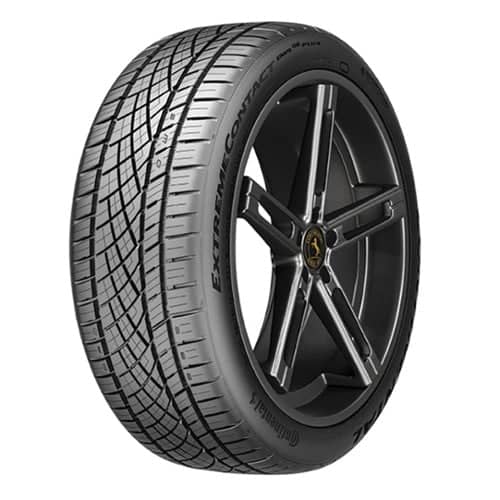
Best For: Premium UHP all-season for muscle cars with serious winter exposure • Category: Ultra-High-Performance All-Season • Typical Price: $200-330 per tire
The Continental ExtremeContact DWS06 Plus is the premium UHP all-season specialist — the right answer when the muscle car owner needs the strongest possible winter capability in an all-season tire without going to dedicated winter tires. Continental's DWS (Dry, Wet, Snow) designation reflects the tire's promise of balanced performance across all three conditions, and the tread wear indicator system (the DWS letters wear away as the tire ages, indicating which condition the tire still handles capably) provides useful visual feedback on tire condition over time.
For Mustang GT, Camaro SS, Challenger R/T, and Scat Pack applications operating in regions with meaningful winter exposure (Pacific Northwest, mid-Atlantic, Northeast, Midwest), the DWS06 Plus delivers usable light snow capability that the BFGoodrich g-Force COMP-2 A/S+ and other UHP all-season alternatives can't quite match. The trade-off vs the COMP-2 A/S+ is pricing — DWS06 Plus typically lands 15-25% higher at equivalent sizes. The trade-off vs UHP summer alternatives is dry-weather peak grip — DWS06 Plus doesn't match Pilot Sport 4 S in summer dry conditions. For owners who genuinely use their muscle car year-round in cold climates and won't manage seasonal tire swaps, the DWS06 Plus is consistently the right answer. Browse Continental ExtremeContact DWS06 Plus sizes.
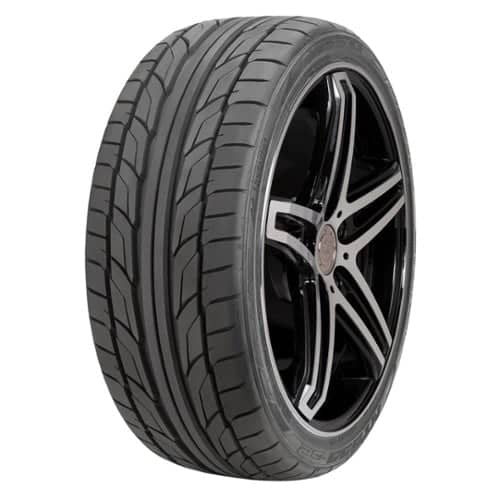
Best For: Street performance UHP summer at strong value pricing • Category: Max Performance Summer • Typical Price: $160-280 per tire
The Nitto NT555 G2 has become one of the most popular tires on American muscle car builds for one specific reason: it delivers UHP summer performance characteristics at meaningfully better pricing than Michelin Pilot Sport 4 S, Pirelli PZero, and Continental ExtremeContact Sport 02 alternatives. The aggressive asymmetric tread design with massive shoulder blocks reads as deliberately purposeful — a tire that looks aggressive on muscle car applications rather than generic. Nitto has built strong brand recognition in the American performance enthusiast community over the past two decades, and the NT555 G2 represents the brand's most popular muscle car offering.
What separates the NT555 G2 from competing UHP summer alternatives is the value proposition. Pricing typically lands 30-40% below Michelin Pilot Sport 4 S at equivalent sizes while delivering approximately 85-90% of the peak performance characteristics. For Mustang GT, Camaro SS, Challenger R/T, Charger applications, and modified classic muscle running 17-20 inch wheels, the NT555 G2 covers most popular muscle car sizes. The tire is also OE specification on certain ROUSH-modified Mustangs and aftermarket-tuner-car applications. The trade-off: tread life typically runs 20,000-25,000 miles, shorter than Michelin alternatives. For buyers prioritizing initial cost over long-term cost per mile, the NT555 G2 delivers strong economics with acceptable performance. Browse Nitto NT555 G2 sizes.
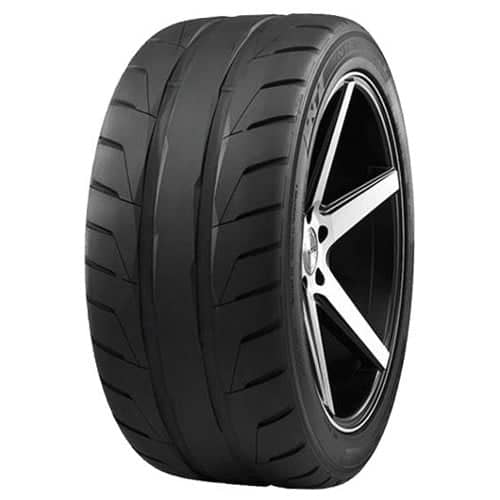
Best For: Track day weekend warrior, autocross competition • Category: Max Performance Summer (track-biased) • Typical Price: $180-300 per tire
The Nitto NT05 is the track-biased UHP summer tire specifically engineered for weekend warrior track day applications. The tire delivers grip characteristics approaching true R-compound tires while maintaining DOT-legal street usability — the right answer for muscle car owners who drive their car to the track, run track sessions, and drive home on the same tires. Nitto positions the NT05 between street UHP summer (like the NT555 G2) and true R-compound (like the NT01) — more grip than street UHP, more daily usability than R-compound.
For Mustang GT 1LE-equivalent, Mustang Mach 1, Camaro SS 1LE, Camaro ZL1, Challenger Scat Pack with widebody, and modified muscle car applications where the buyer wants meaningful track performance without committing to R-compound rubber, the NT05 is consistently the right answer. The tread life trade-off is meaningful — the NT05 typically delivers 15,000-20,000 miles with daily driving versus 25,000-30,000 for the NT555 G2 and similar street UHP alternatives. For track-focused builds that don't accumulate high mileage, the shorter tread life is acceptable. For daily-driver muscle cars, the NT555 G2 or Pilot Sport 4 S deliver better economics. The NT05R variant adds even more track bias for buyers who want closer to true R-compound performance. Browse Nitto NT05 sizes.
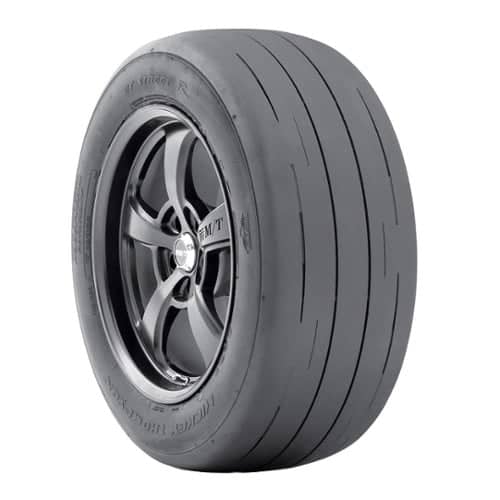
Best For: Drag strip / strip-focused muscle car builds • Category: DOT-Legal Drag Radial • Typical Price: $250-450 per tire
The Mickey Thompson ET Street R is the drag radial benchmark for muscle car applications. Mickey Thompson Tires & Wheels has been the dominant brand in drag racing tires for over 50 years — the company's competition tire heritage informs every aspect of the ET Street R's engineering. The R3 compound chemistry delivers exceptional launch traction at the drag strip while remaining DOT-legal for street use, which means muscle car owners can drive the car to the strip, run drag sessions, and drive home on the same tires (though the wear rate makes this practice expensive).
For 1969 Camaro, 1970 Challenger, 1971 'Cuda, 1965 GTO, and similar classic muscle drag-focused builds, the ET Street R is the established standard. For modern Hellcat, Demon, Demon 170, Mustang GT500, and similar high-horsepower modern muscle, the ET Street R handles the torque that street UHP summer tires can't manage. The trade-offs are significant: 5,000-10,000 mile tread life with hard use, harsh ride quality, road noise, and unsuitability for wet conditions (the soft compound combined with directional drag radial tread pattern produces dangerous hydroplaning characteristics in rain). For dedicated drag strip applications, the ET Street R is the right answer. For dual-purpose street/strip cars, accept the daily-driver limitations or run a separate set of street tires for non-strip use. Also see the Mickey Thompson ET Street S/S for street/strip applications with better street manners. Browse Mickey Thompson ET Street R sizes.
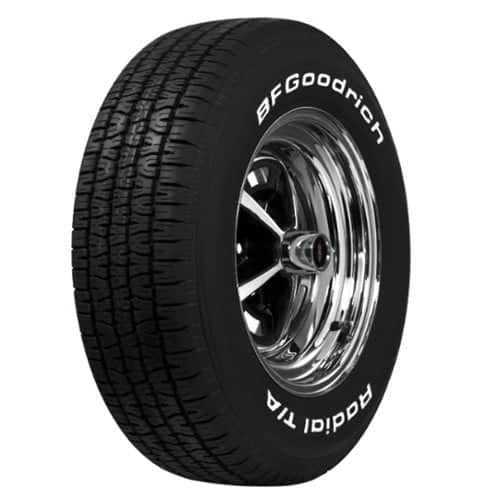
Best For: Classic period-correct muscle restoration (1964-1973) • Category: Vintage Raised White Letter Performance • Typical Price: $130-220 per tire
The BFGoodrich Radial T/A is the period-correct standard for classic muscle car restoration. BFGoodrich introduced the original Radial T/A in 1970 as the first DOT-legal radial tire specifically marketed for performance street applications, and the raised white letter sidewall became the defining aesthetic of 1970s muscle car culture. Modern Radial T/A production retains the original aesthetic while delivering improved performance characteristics from modern compound chemistry — period-correct visual presentation with modern grip and durability.
For 1964-1973 Mustang, 1967-1974 Camaro, 1970-1974 Challenger, 1964-1972 GTO, 1968-1970 Charger, and similar classic muscle restoration projects, the Radial T/A is the visual answer that other period-correct tire options can't quite match. The raised white letter sidewall reads as historically correct rather than just aftermarket — anyone who knows muscle car heritage recognizes the BFGoodrich Radial T/A as the right tire on the right car. Available in sizes that match period-correct 14-15 inch wheel applications. The tire works for daily-driven classic muscle as well as show car applications because the performance characteristics support actual driving rather than just static display. For broader raised white letter context, see our raised white letter tires guide. Browse BFGoodrich Radial T/A sizes.
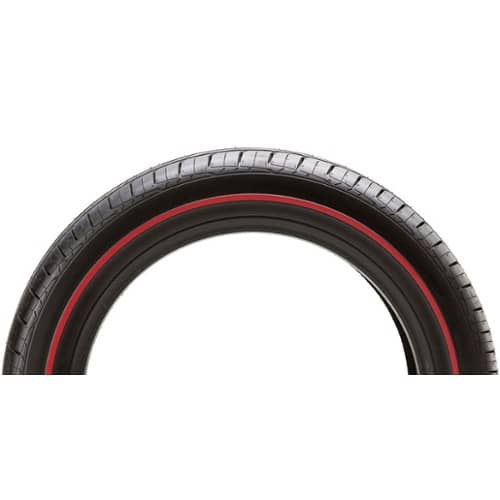
Best For: Early classic muscle period-correct (1964-1968 era) • Category: Vintage Redline Performance • Typical Price: $250-380 per tire
The Diamond Back Sumitomo HTR Z5 Redline is the period-correct answer for early classic muscle car restoration where redline tires defined the era's aesthetic. Diamond Back Classics specializes in vintage-correct tire aesthetics — they take modern performance tires (in this case, the Sumitomo HTR Z5 ultra-high-performance summer tire) and add the period-correct redline sidewall stripe that defines 1964-1968 era muscle car visual presentation. The result: modern grip and durability with historically-correct visual presentation.
For 1964-1968 Mustang fastback, 1964-1968 GTO, 1965-1967 Chevelle SS, 1965-1968 Charger, 1966-1967 Coronet, and similar early classic muscle restoration projects, the redline sidewall reads as historically correct in ways the raised white letter aesthetic (introduced in 1970) doesn't quite match. The 1968-and-earlier muscle car era specifically used redline tires before the white letter became the standard aesthetic. For buyers building these early classic muscle cars to period-correct standards, the Diamond Back Sumitomo HTR Z5 Redline is the right answer. The base Sumitomo HTR Z5 tire delivers strong UHP summer performance, so the period-correct aesthetic doesn't come at the cost of modern driving characteristics. Browse Diamond Back Sumitomo HTR Z5 Redline sizes.
I see the same mistakes from muscle car owners more often than any others. Knowing what they are saves you money and frustration.
1. Picking tires for aspirational use instead of actual use. The biggest mistake in muscle car tire selection: buying drag radials because you occasionally drag race, then living with the daily-driver compromises 95% of the time. Buy tires for actual use, not theoretical use. If you drag race once a month, run a separate set of drag tires that you swap on for strip days. Don't make your daily commute miserable trying to optimize for occasional drag runs.
2. Wrong era aesthetic for the car. A 1969 Camaro on modern low-profile UHP summer tires looks wrong because the proportions don't match the original car's design. A 2024 Hellcat on raised white letter Radial T/As looks wrong because the aesthetic doesn't match the modern car. Match the tire aesthetic to the era of the car. Resto-mod builds where the owner has deliberately modernized the visual presentation are the exception, but ensure the modernization is intentional rather than accidental.
3. Insufficient tire width for the power. Modern muscle cars produce 400-800+ horsepower routed to the rear wheels. Stock tire widths often can't put down the power without unmanageable wheelspin. A Mustang GT with stock 275 mm rear tires often benefits from 285-305 mm rear widths to manage the torque. A Hellcat with stock 305 mm tires often benefits from 315-335 mm rear widths. Verify the tire width is appropriate for the horsepower level you're putting down.
4. UHP summer tires in winter climates without storage plan. UHP summer tires (Michelin Pilot Sport 4 S, Nitto NT555 G2, Mickey Thompson drag radials) lose grip and become genuinely dangerous below 40-45°F. Owners in cold-winter climates who buy UHP summer tires without managing seasonal storage end up driving on inappropriate compound through winter, which creates real safety issues. For year-round daily-driven muscle in cold climates, UHP all-season alternatives (BFGoodrich g-Force COMP-2 A/S+, Continental ExtremeContact DWS06 Plus) are the right answer.
5. Mismatched front and rear tire models. Some muscle car owners run different tire models on front vs rear (street UHP fronts, drag radial rears). This works for dedicated strip cars but creates handling issues on street-driven muscle. The different compound characteristics, sidewall stiffness, and grip levels produce unpredictable handling balance that's difficult to manage at the limit. For street-driven muscle, run the same model front and rear (with different widths for staggered setups). Save the mismatched setups for dedicated strip cars where strip performance matters more than street handling.
For broader muscle car tire context, see our what tires do muscle cars use guide.
Tire |
Category |
Best For |
Price Tier |
|---|---|---|---|
Michelin Pilot Sport 4 S |
UHP Summer Benchmark |
Modern street performance, weekend warrior |
Premium |
BFGoodrich g-Force COMP-2 A/S+ |
UHP All-Season Value |
Year-round daily-driver muscle |
Mid |
Continental ExtremeContact DWS06 Plus |
UHP All-Season Premium |
Year-round muscle with winter exposure |
Mid to Premium |
Nitto NT555 G2 |
UHP Summer Value |
Street performance at value pricing |
Mid (Value) |
Nitto NT05 |
UHP Summer Track-Biased |
Track day weekend warrior, autocross |
Mid to Premium |
Mickey Thompson ET Street R |
DOT Drag Radial |
Drag strip / strip-focused builds |
Premium |
BFGoodrich Radial T/A |
Vintage Raised White Letter |
Classic 1970-1973 era restoration |
Mid (Value) |
Diamond Back Sumitomo HTR Z5 Redline |
Vintage Redline |
Classic 1964-1968 era restoration |
Premium |
For modern S550/S650 Mustang GT applications, the right tire depends on climate and use case. Warm-climate year-round drivers or seasonal-swap-willing cold-climate drivers benefit most from the Michelin Pilot Sport 4 S — peak UHP summer performance with acceptable daily usability. Cold-climate drivers who don't manage seasonal swaps need UHP all-season alternatives — BFGoodrich g-Force COMP-2 A/S+ for value-tier pricing or Continental ExtremeContact DWS06 Plus for premium-tier with stronger winter capability. Budget-conscious buyers wanting UHP summer characteristics often choose Nitto NT555 G2 at meaningfully lower pricing than Pilot Sport 4 S. Track day weekend warriors benefit from Nitto NT05 for stronger grip at the cost of tread life. For Mach 1 and Shelby GT500 applications specifically, the Pilot Sport 4 S is OE specification on certain trims and is consistently the right replacement choice.
Technically yes, practically no for most owners. Drag radials like the Mickey Thompson ET Street R are DOT-legal for street use, but the daily-driver compromises are substantial: 5,000-10,000 mile tread life with hard use (versus 25,000-30,000 for street UHP summer alternatives), harsh ride quality (the soft compound and reinforced sidewall produce significant impact transmission), substantial road noise (directional drag tread pattern), and dangerous wet weather characteristics (the soft compound combined with limited tread pattern produces hydroplaning issues in rain). The economics rarely work — a $400 drag radial that wears out at 7,500 miles costs 53 cents per mile, versus 12 cents per mile for a $300 street UHP summer tire that wears out at 25,000 miles. For dedicated drag strip cars driven occasionally, drag radials make sense. For daily-driven muscle, run separate street tires and swap on drag radials for strip days.
Original muscle car tire equipment varied by year and manufacturer, but the patterns are clear by era. 1964-1968 muscle cars typically came with bias-ply tires featuring redline sidewall stripes — the redline aesthetic defined the early muscle car era. 1969-1972 muscle cars transitioned through several aesthetic patterns including raised letter, raised script, and various sidewall treatments as manufacturers experimented with visual presentation. 1970 onward saw the introduction of the BFGoodrich Radial T/A — the first DOT-legal radial performance tire — which established the raised white letter sidewall as the dominant 1970s muscle car aesthetic. Original sizing was typically 7.35-14 or 7.75-14 on lower-trim muscle, scaling to F70-14, G70-14, or G60-15 on Big Block muscle car variants. Modern radial replacements that preserve the period-correct aesthetic (BFGoodrich Radial T/A for 1970+, Diamond Back redline tires for 1964-1968) deliver substantially better performance than the original bias-ply tires while preserving the visual presentation.
Three differences separate drag radials from street UHP summer tires. First, compound chemistry: drag radials use much softer rubber compounds that deliver exceptional traction during launch (when the tire heats up) but wear rapidly during normal driving. Street UHP summer compounds balance traction with tread life over 25,000-30,000 miles. Second, tread pattern: drag radials use minimal directional tread designed to evacuate the small amount of water that drag strip preparation leaves on the track. Street tires have substantial tread depth and pattern complexity for wet weather evacuation. Third, sidewall construction: drag radials use specialized sidewall construction that "wrinkles" under heavy launch loads to absorb shock and put more rubber to the ground momentarily — the visual signature of a hard drag launch is the sidewall wrinkle. Street tires have stiffer sidewalls optimized for handling response rather than launch flex. The result: drag radials excel at one specific task (drag racing launches) at the cost of everything else.
UHP summer tires can only be run year-round in warm climates where temperatures consistently stay above 40-45°F. The Michelin Pilot Sport 4 S, Nitto NT555 G2, and similar UHP summer compounds stiffen progressively below 45°F and lose meaningful grip below 40°F. In cold-climate regions (Northeast, Midwest, Pacific Northwest, mid-Atlantic, mountain west), year-round UHP summer use creates dangerous winter conditions where the tire essentially has no grip in freezing temperatures. For cold-climate year-round muscle car use, the right answer is either UHP all-season tires (BFGoodrich g-Force COMP-2 A/S+, Continental ExtremeContact DWS06 Plus) or seasonal tire swaps with dedicated winter tires for cold months and UHP summer tires for warm months. The seasonal swap approach delivers peak performance in both conditions but requires storage space and mounting/balancing costs at each transition.
Maximum tire width depends on wheel well clearance, fender modifications, suspension geometry, and brake clearance — varies substantially by muscle car platform. Modern S550/S650 Mustang GT typically maxes at 305mm rear tires without major modifications. Modern Camaro SS handles 305mm rear tires on factory bodies, 315-335mm on modified setups. Modern Challenger R/T tops out at 305mm on standard body, 305mm on widebody (the widebody fenders are wider but the tire width sizing stays comparable). Hellcat Widebody handles 315mm rear tires from factory. Classic muscle car platforms vary substantially by year and modification level — 1969 Camaro can fit 275mm rear tires on factory bodies with mini-tubbing modifications opening up 295-315mm widths. Verify wheel well clearance, fender flare situation, suspension geometry (lowered cars have reduced clearance), and brake clearance before committing to maximum width fitments. Performance Plus Tire can verify fitment for your specific muscle car configuration.
Staggered setups (wider rear tires than front) work best for most muscle car applications because the V8 rear-wheel-drive power delivery demands rear traction that wider rear tires provide. Staggered setups also produce the visual aesthetic that matches muscle car design philosophy — wide rear stance signaling the car's rear-wheel-drive performance character. The trade-offs: no front-to-rear tire rotation possible (limits tread life equalization), more aggressive understeer at handling limits (less playful at the edge), and more complicated tire purchasing decisions. Square setups (same width front and rear) make sense for dedicated track cars and autocross applications where balanced handling and tire rotation capability matter more than acceleration traction. Drag-focused builds typically use "skinny front / fat rear" setups where the front tires are intentionally narrow for reduced rolling resistance and the rear tires are maximum-width drag radials — the most extreme version of staggered setup.
Tire life on muscle cars depends substantially on the tire category and driving style. UHP summer tires (Michelin Pilot Sport 4 S, Nitto NT555 G2) typically deliver 20,000-30,000 miles with daily-driver use, dropping to 15,000-20,000 miles with weekend warrior use that includes hard acceleration and cornering. UHP all-season tires (BFGoodrich g-Force COMP-2 A/S+, Continental ExtremeContact DWS06 Plus) deliver 40,000-50,000 miles with daily driving. Track-biased UHP summer (Nitto NT05) drops to 15,000-20,000 miles with mixed track/street use. Drag radials (Mickey Thompson ET Street R) deliver 5,000-10,000 miles with hard use, 15,000+ miles if used primarily for occasional drag racing rather than daily driving. Classic period-correct tires (BFGoodrich Radial T/A, Diamond Back redlines) typically deliver 30,000-40,000 miles with the moderate driving style that classic muscle car owners typically use. Aggressive driving style on any tire category reduces these estimates by 30-50%.



