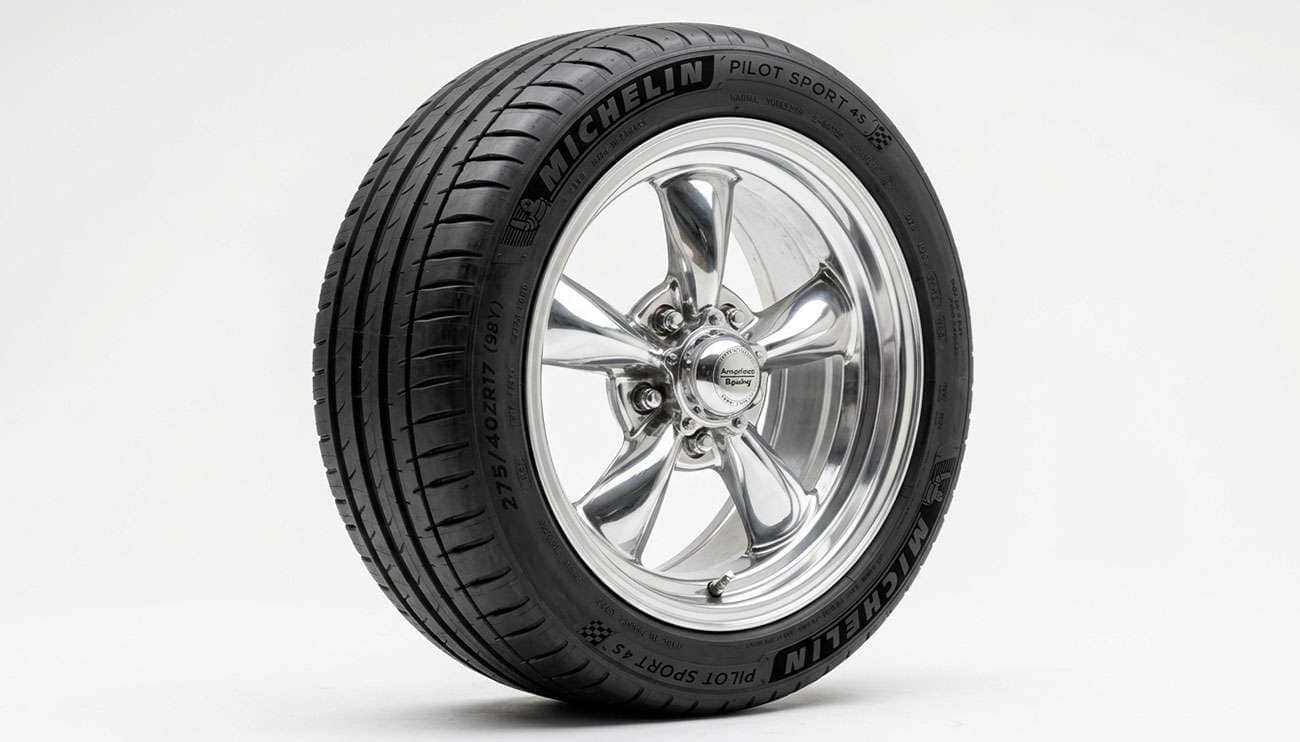
I've been mounting tires on classic cars since most people reading this were in diapers, and I'll tell you the question that comes up more than any other: "Hank, can I put modern radials on my classic?" The short answer is almost always yes. The long answer — the one that keeps you from cracking a wheel, ruining your speedometer, or buying tires that look wrong on the car — is what this guide is about.
There's a difference between a car you trailer to shows and a car you actually drive. If you're chasing concours points, the rules are different. But for the rest of us — guys who want to fire up the small-block on a Saturday morning, take the long way to the diner, and not white-knuckle the steering wheel through a rainstorm — modern tires are usually the right call. You just have to buy the right ones.
Bias-ply tires are how the world used to roll, and there's nothing wrong with them when they're on the right car. They look correct on a '57 Chevy. They feel correct, too — that classic floaty, wandering ride is part of the experience. But they wear faster, they hate rain, they get flat-spotted if the car sits, and they don't track straight on grooved pavement. Anybody who drove the interstate in the '60s remembers that.
Modern radials solve most of those problems. The carcass is built differently — cords run perpendicular to the direction of travel, with steel belts under the tread — which means the tread can stay flat on the road while the sidewall flexes. That gives you grip, longer life, lower rolling resistance, and far better wet-weather behavior. For a car you actually drive, the safety upgrade alone is worth the price of admission.
The catch is that not every classic was engineered for the grip a modern radial delivers. We'll get to that next. And if you're not ready to go full modern, there's a beautiful middle ground called the bias-look radial — vintage looks on the outside, radial guts on the inside. I covered that whole category in detail in our bias-look radial tires guide if you want to dig deeper there.
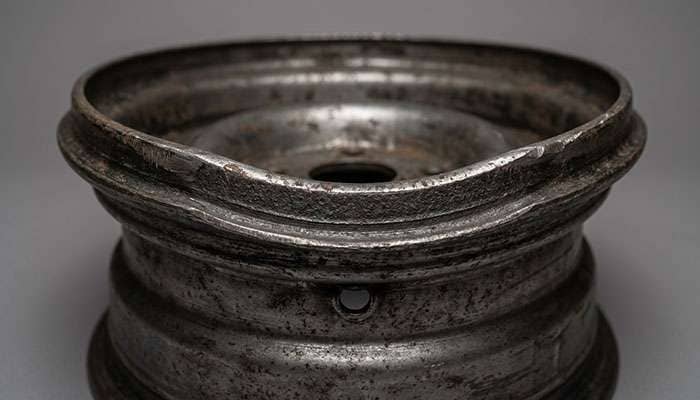
Here's the part most articles skip right past. Bias and radial tires don't load the wheel the same way. When a radial flexes under cornering, it puts a localized bulge against the rim flange — more concentrated stress, in a different spot, than a bias-ply ever did. SAE and SEMA both have published technical papers on this. The short version: wheels designed in the bias-ply era — especially the cheaper stamped-steel jobs from the '30s, '40s, and early '50s — can develop fatigue cracks at the bead seat or flange after enough miles on radials.
Now, before you panic and trailer your car home, understand the scope of this. Most factory 14- and 15-inch steel and aluminum wheels from the muscle car era (mid-'60s onward) handle radials just fine — that's largely the era when designs started overlapping. The problems show up more on pre-war wood-spoke wheels, very early stamped rims, and rims that have been hammered on for sixty years and have rust pitting at the bead seat.
What I tell guys in the shop:
One more thing: tubeless versus tubed. A lot of pre-1955 wheels weren't built with the safety bead that lets a tubeless tire seat properly. If yours doesn't have it, you run a tube, period. That's not a downgrade — it's how the car was meant to roll. Some of you have stock 15-inch wheels under classic Mustangs and Camaros that read like modern rims and run tubeless without issue. Some of you have a '49 Caddy and need tubes. Look at the rim, don't guess.
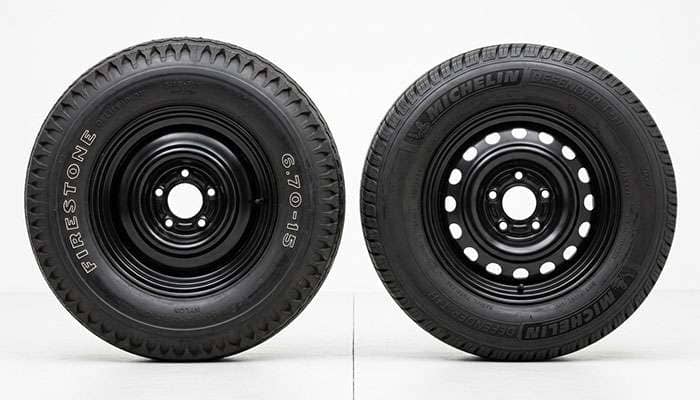
This is where guys get themselves in trouble. Your '69 Camaro didn't come with a P-metric size — it came with something like F70-14 or G70-14. Your '55 Bel Air came with 6.70-15. The numbers don't translate directly, and if you go by gut feel, you'll either fill the wheel well too far or end up with a tire so small your speedometer reads twenty miles an hour off.
The rule is simple: match the overall diameter. Width matters too, but diameter is what keeps your speedometer honest, your gearing right, and your fenders happy. If you'd like a deep dive on the old sizing systems themselves, our antique tire sizes guide breaks it down further. Here are the most common conversions we run in the shop:
Old Size |
Closest Modern Metric |
Approx. Overall Diameter |
|---|---|---|
6.00-15 |
175R15 |
26.7 in |
6.70-15 |
P205/75R15 |
27.1 in |
7.50-14 |
P215/75R14 |
26.7 in |
F70-14 |
P205/70R14 |
25.3 in |
G70-14 |
P215/70R14 |
25.9 in |
G78-14 |
P215/75R14 |
26.7 in |
G78-15 |
P215/75R15 |
27.7 in |
L60-15 |
P255/60R15 |
27.0 in |
These are the closest matches by overall diameter and width — they're not always exact, because the old systems never lined up perfectly with the metric one. If you want a tire that's within a quarter-inch of the original height (and that's what you want for speedo and gearing), this table will get you there for most American iron from the '50s through the early '70s. For anything older, or for a foreign classic, call the shop — we have books going back further than most car parts catalogs do.
Once you've figured out the size you need, you've got three honest options. Pick the one that matches how you actually use the car, not how you imagine you do.
This is for the show car, the concours hopeful, and the purist who wants the car to ride exactly the way the factory delivered it. The visual is right, the feel is authentic, and you'll lose points at judging with anything else. The trade-offs are real, though: shorter life, worse wet weather, that signature wander on grooved pavement. If this is your road, BFGoodrich's Silvertown Bias Ply line is what we've sold for decades. They make a series of sidewall widths to match different eras — narrow whitewall, wide whitewall, redline, goldline. Pick the look that matches the year of your car.
This is what I put on my own car, and it's what I sell more of than anything else in this category. You get a sidewall profile that reads vintage from ten feet away — the bulge is right, the whitewall is integrated correctly — but inside the tire it's modern radial construction. That means modern grip, modern wear, modern wet behavior. The compromises are tiny. The visual ones are subtle enough that only judges will catch them.
Top picks: the American Classic Bias Look Radial for blackwall builds, the American Classic Wide Whitewall Bias Look Radial for '40s and '50s cruisers, and the Narrow Whitewall version for late-'50s and '60s American iron. They're built in the USA, and they carry a real tread-life warranty.
If you've upgraded the suspension, dropped a modern brake setup on the car, or you're driving a real restomod with EFI and overdrive, you don't need to fake anything. Put a modern radial on it and let it work. The look will be different — flatter sidewall, square shoulder — but the car will drive like the engineering inside it actually intended. For period-flavored modern radials, the BFGoodrich Radial T/A with raised white letters is the muscle car standard for good reason. For pure performance with no nostalgia, you've got tires like the BFGoodrich g-Force COMP-2 A/S+ or the Continental ExtremeContact DWS06 Plus in the sizes your wheels will hold.
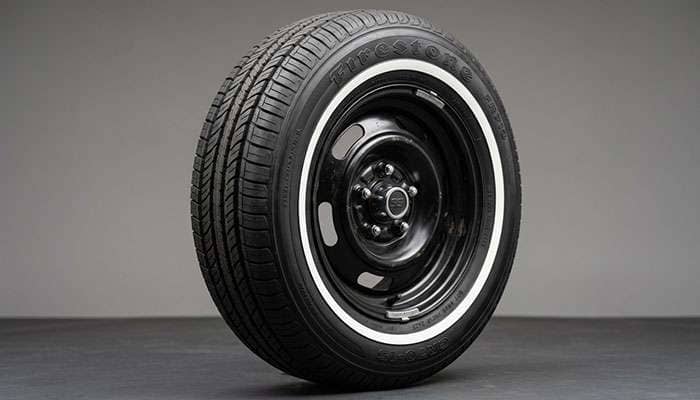
Theory's fine. Let me get specific. Here's what I'd put on the car depending on what it is and how you drive it. I've covered a broader list of style-matched options in our best whitewall tires for classic cars roundup if you want more comparisons.
Think Bel Air, Galaxie, Impala, big-body Cadillac, T-Bird. You drive it on weekends, you take it on the highway, you sometimes get caught in rain. Go bias-look radial with a whitewall sized correctly for the era — wide for the '40s/early '50s, narrow for late '50s/'60s. The American Classic Wide Whitewall Radial and the BFGoodrich Silvertown Radial both come in the right widths.
'64–'73 Mustangs, Camaros, Chevelles, Cudas, Chargers, Road Runners. If you want the period look, run a redline or a raised white letter radial. The BFGoodrich Radial T/A is the king of this segment — it's been on muscle cars since the mid-'70s and the modern version is a much better tire than the original. The Firestone Wide Oval Radial is the right call if you're chasing the OE Firestone look from the factory build sheet. For something with a slightly meaner profile and a bit more grip, the Cooper Cobra Radial G/T is a sleeper pick.
Model A's, early V-8 Fords, classic Packards, anything with bigger wheels and skinnier tires. Modern radial options here are slim, but they exist. The American Classic Model A Plus Radial is the go-to for 19- and 21-inch Model A applications. For European pre-war and early sports car work, the Vredestein Sprint Classic is the tire I put on the MG, the early Porsche, the early Volkswagen — it looks right and drives right.
Modern suspension, modern brakes, modern engine. Forget the period look — your tires need to keep up with the rest of the car. Go full performance radial. The BFGoodrich g-Force COMP-2 A/S+ is the smart all-around pick — grippy when it's dry, capable when it rains, decent tread life. The Continental ExtremeContact DWS06 Plus is what I'd hand the keys over with if a customer told me he was driving the car cross-country.
I'll add a sixth bonus mistake: paying retail. We've been doing this for over thirty years and we keep prices honest on the whole whitewall tire and American Classic tire catalogs because we want classic cars to stay on the road. If you're picking out a fresh set of Hot Rod Hank's wheels at the same time, we package them up and ship them mounted and balanced.
Modern tires belong on most classic cars that actually get driven. The technology has come too far, the safety gap is too big, and the bias-look radials on the market now give you the vintage look without the vintage risk. The trick isn't deciding whether to switch — it's making sure your wheels are up to the job, your sizing matches the original overall diameter, and the tire you pick matches how you actually use the car. Take an extra hour at the front of the project to figure those three things out, and you'll be on the right rubber for the next forty or fifty thousand miles.
Usually yes, especially for wheels from the mid-'60s onward. The exceptions are pre-war wood-spoke wheels, very early stamped rims, and any wheel showing rust pitting at the bead seat or cracks at the welds. Inspect every wheel before you commit. If a rim is structurally compromised, replace it before you mount new rubber.
The look is nearly identical from a few feet away — bias-look radials are built with a profile that mimics a true bias-ply, including the sidewall bulge and period-correct whitewall or redline styling. The internal construction, though, is modern radial: steel belts, perpendicular cords, the works. You get vintage appearance with modern grip, ride quality, and tread life. For most owners who drive their cars, it's the best of both worlds.
The closest modern equivalent for G78-14 is P215/75R14, which holds the same overall diameter of roughly 26.7 inches. The most important number to match is overall diameter — that's what keeps your speedometer accurate, your gearing right, and your fender clearance intact. Width matters too but isn't quite as critical. See the conversion table in the body of this guide for the most common matches.
If you're showing at a serious concours or vintage judging event, yes — original construction matters there and judges will check. For local cruise nights, regional shows, and most car club events, bias-look radials pass the eye test easily. Decide based on where you actually show the car.
Not necessarily, but it depends on how aggressive the tire is. A bias-look radial puts loads on the suspension that aren't dramatically different from the original bias-ply. A full performance radial — a g-Force COMP-2 or similar — will generate cornering forces the original suspension wasn't designed for. If you're going that direction, plan to upgrade shocks, bushings, and possibly the sway bars to match.
Tread life isn't usually the limiter on a classic — most owners replace tires for age, not wear. Modern radials should be replaced at six to ten years regardless of tread depth, because rubber compounds degrade over time. Store the car indoors, keep the tires properly inflated, and avoid sustained sunlight, and you'll get the long end of that range.