You can't just walk into any shop and grab tires for your classic car. If your vintage ride rolled off the assembly line before 1975, you're facing a critical decision that affects everything from how your car handles to what it's worth: bias ply or radial tires. This choice impacts ride quality, cornering performance, braking distance, and even your restoration's authenticity. The construction difference between these two tire types runs deeper than most people realize, and picking the wrong one can compromise both your safety and your classic's character.
Classic car forums, shows, and vintage racing paddocks all buzz with this question: "what is the difference between bias ply and radial tires for classic cars?" Purists swear by bias ply for period-correct authenticity. Performance enthusiasts upgrade to radials for superior safety and handling. Both camps have valid points. The real answer? It depends on how you actually drive your classic. Understanding the technical differences, performance characteristics, and practical implications of each tire type helps you make a smart decision that aligns with your restoration goals and driving style.
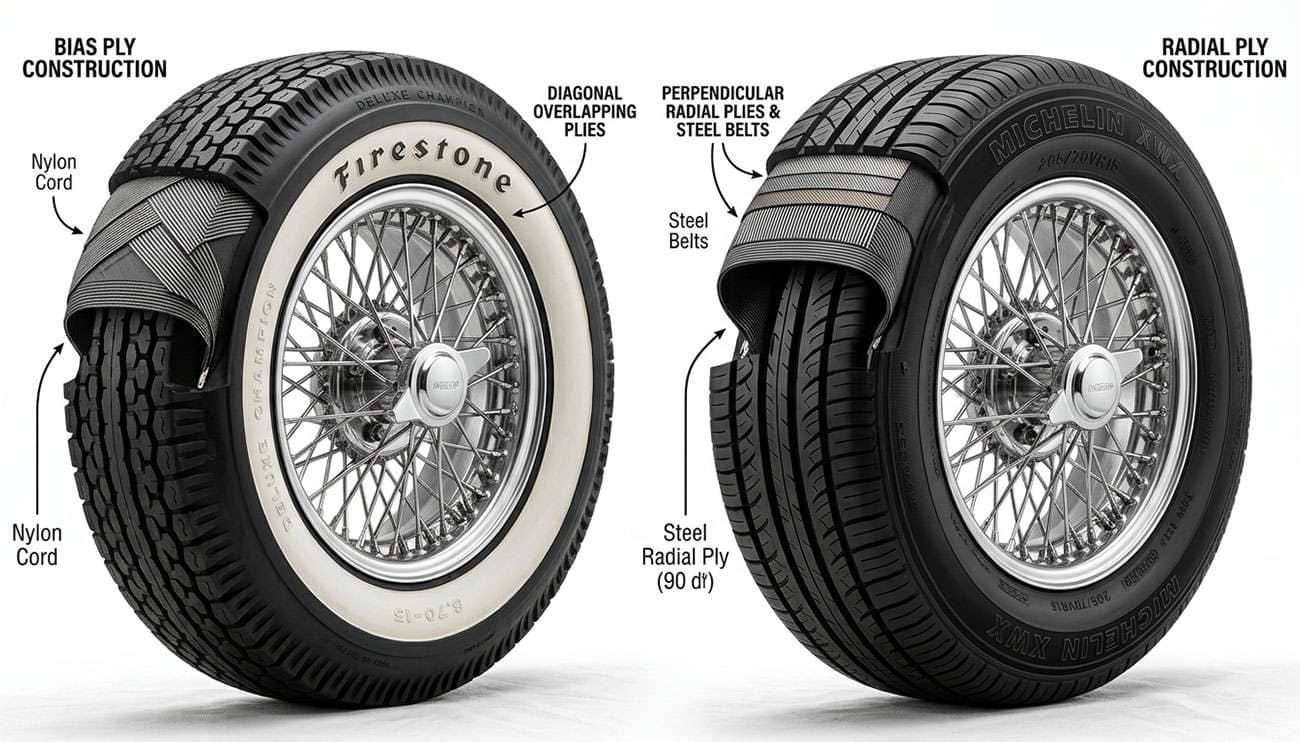
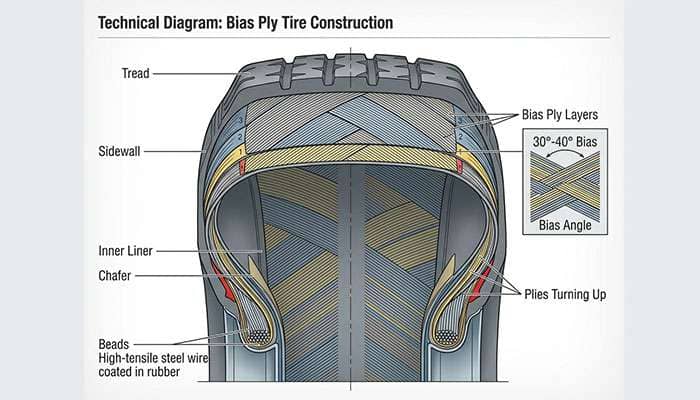
Construction separates bias ply from radial tires at their core. Bias ply tires use cords running diagonally from bead to bead at 30-40 degree angles. These plies crisscross each other in alternating layers, creating a sturdy but relatively inflexible carcass. Radial tires take a different approach—their cords run perpendicular to the direction of travel, radiating from bead to bead, with additional belts under the tread for stability. This construction difference fundamentally changes how each tire performs on the road.
When you shop for classic car tires, understanding these construction differences explains the performance variations you'll experience. Bias ply tires dominated the industry from the early 1900s through the mid-1970s. They're simpler to manufacture and historically accurate for period restorations. Radial tires became mainstream in North America during the 1970s and now dominate the market because they perform better. Many classic car owners wrestle with the authenticity versus performance dilemma when selecting tires for their restoration.
Bias ply tires deliver a distinctive driving experience that differs significantly from radials. Rigid sidewalls create a firmer ride quality with more road feedback transmitted directly to your steering wheel. This characteristic appeals to drivers who appreciate the connected feel of vintage automobiles, but you'll also feel every crack and imperfection in the pavement. The stiffer sidewalls resist deflection during cornering, which sounds positive but actually reduces the contact patch size when the tire leans. This limitation becomes apparent during spirited driving or emergency maneuvers.
Radial tires offer fundamentally different performance characteristics. Flexible sidewalls allow the tread to remain flatter against the road surface during cornering, maintaining a larger and more consistent contact patch. This design translates to better grip, shorter braking distances, and more predictable handling. Radial tires typically run cooler due to reduced internal friction, extending tread life by 20-40% compared to bias ply designs. You'll see fuel economy improve by approximately 5-8% with radials due to lower rolling resistance. The ride quality feels smoother because flexible sidewalls absorb road irregularities more effectively than rigid bias ply construction.
Feature |
Bias Ply Tires |
Radial Tires |
|---|---|---|
Sidewall Construction |
Rigid, multiple overlapping plies at 30-40° angles |
Flexible, single ply at 90° with stabilizing belts |
Load Capacity |
Excellent for heavy loads, stiff sidewalls resist bulging |
Good load capacity with better heat dissipation |
Tread Life |
15,000-25,000 miles typical |
30,000-50,000 miles typical |
Cornering Performance |
Reduced contact patch during lean, more sidewall flex |
Consistent contact patch, superior grip in turns |
Ride Quality |
Firm, transmits road imperfections directly |
Smooth, absorbs road irregularities better |
Heat Buildup |
Higher internal friction, runs hotter at highway speeds |
Lower rolling resistance, stays cooler |
Temperature management represents another critical difference. Bias ply tires generate more internal heat during highway driving due to the flexing action of crisscrossed plies rubbing against each other. This heat buildup accelerates tread wear and increases the risk of tire failure on long highway trips, particularly in warm climates. Modern bias ply tires incorporate better compounds than original vintage designs, but they still can't match the heat dissipation characteristics of radial construction. If you plan extended highway trips in your classic car, this temperature consideration becomes increasingly important for your safety.
Mixing bias ply and radial tires on the same vehicle ranks as one of the most common mistakes classic car owners make. This practice creates dangerous handling inconsistencies because the two tire types respond differently to steering inputs, braking forces, and weight transfer. Rigid sidewalls of bias ply tires react more abruptly to cornering loads, while radial sidewalls flex progressively. When you combine these mismatched characteristics on one vehicle, you get unpredictable handling that can surprise you during emergency maneuvers. If you decide to switch from bias ply to radial tires or vice versa, always replace all four tires simultaneously.
Another frequent error involves ignoring the suspension geometry requirements of each tire type. Classic cars designed in the bias ply era often have suspension settings optimized for those tire characteristics. When you install radial tires on a vehicle originally designed for bias ply, you may need to adjust alignment specifications—particularly toe settings—to achieve optimal handling. The increased grip of radial tires can also expose weaknesses in worn suspension components that weren't apparent with the lower grip levels of bias ply tires. Many classic car owners discover they need to upgrade shocks, bushings, and steering components when switching to radials.
Some restorers mistakenly assume modern bias ply tires perform identically to original vintage tires. Today's bias ply tires use modern rubber compounds and manufacturing techniques that deliver significantly better performance than tires produced 50-70 years ago. While they maintain the authentic appearance and general characteristics of vintage bias ply design, modern versions offer improved grip, better resistance to aging, and more consistent quality control. The Firestone Deluxe Champion represents this evolution—it combines authentic styling with contemporary manufacturing standards.
Understanding tire sizing conventions helps you decode specifications when shopping for classic car tires. Bias ply tires typically use inch-based sizing that appears straightforward but actually involves some complexity. A tire marked 7.75-14 indicates a nominal section width of 7.75 inches when mounted on a rim with a 14-inch diameter. However, the actual width varies depending on rim width, and the aspect ratio (the relationship between sidewall height and section width) isn't explicitly stated. Most bias ply tires have aspect ratios between 78% and 92%, resulting in tall sidewalls that contribute to the characteristic appearance of vintage automobiles.
Radial tire sizing uses a different alphanumeric system that provides more specific information. A tire marked 215/70R15 translates to: 215 millimeters section width, 70% aspect ratio (sidewall height is 70% of section width), R for radial construction, and 15-inch rim diameter. This metric system became standard during the radial tire transition and provides more precise specifications. When converting from bias ply to radial sizing, you need to calculate the overall diameter to ensure your new tires maintain proper speedometer calibration and don't create clearance issues with fenders or suspension components.
Load ratings and speed ratings also differ between vintage bias ply specifications and modern radial standards. Older bias ply tires may not display load index numbers or speed rating letters because these standardized rating systems came later. Modern radial tires include this information as part of the tire designation. For classic car applications, you typically want load ratings that exceed your vehicle's curb weight divided by four, with a safety margin of at least 20%. Speed ratings become relevant if you plan sustained highway speeds—an H-rating (130 mph capability) provides adequate safety margin for most classic car applications that will realistically see speeds up to 75-80 mph.
Choosing between bias ply and radial tires for your classic car requires honest assessment of how you'll actually use the vehicle. This decision isn't merely technical—it reflects your priorities regarding authenticity, performance, safety, and driving experience. Start by defining your primary use case: is this a show car that travels short distances to events, a weekend driver for casual cruising, or a vehicle you plan to drive regularly including highway trips? Your usage pattern directly influences which tire type makes the most sense for your specific situation.
Consider the judging standards if you participate in concours events or car shows where originality matters. Top-level concours judging often requires period-correct tires, which means bias ply construction for most vehicles manufactured before 1975. However, many car shows and driving tours don't enforce such strict authenticity requirements. If you're building a driver-quality restoration rather than a show car, radial tires may serve you better by providing improved safety margins and more confidence-inspiring handling. The choice becomes clearer once you identify which aspects of classic car ownership matter most to you.
The size and weight of your classic car influences which tire type works best. Larger, heavier vehicles—particularly American full-size sedans, muscle cars, and luxury automobiles from the 1960s and early 1970s—benefit more dramatically from upgrading to radial tires. The improved load-carrying capacity, better heat dissipation, and superior stability at highway speeds make radials particularly advantageous for these bigger classics. The stiff suspension systems common in these vehicles also pair well with the more compliant sidewalls of radial construction, producing a more comfortable ride than the harsh combination of firm suspension plus rigid bias ply tires.
Smaller, lighter classic cars and sports cars present a different scenario. Many European sports cars from the 1950s and 1960s were actually designed with radial tires because European manufacturers adopted the technology earlier than American companies. A Porsche 356 or Jaguar E-Type originally equipped with Michelin XWX radial tires should absolutely retain radial construction for both authenticity and optimal performance. Conversely, American sports cars like early Corvettes or Thunderbirds originally used bias ply tires and present a genuine choice between period correctness and modern performance.
Weight distribution matters too. Front-heavy vehicles with significant nose weight benefit from the improved steering response and cornering grip that radial tires provide. Flexible sidewalls of radial construction allow the front tires to maintain better road contact during hard braking and cornering, reducing understeer tendencies. Rear-heavy vehicles or those with significant power can also benefit from radials, particularly if you drive spiritedly—the improved traction helps put power down more effectively without excessive wheel spin. Classic cars with more neutral weight distribution adapt well to either tire type, making the choice more about personal preference and intended use.
Your driving habits and expectations should heavily influence the bias ply versus radial decision. If you enjoy spirited driving, frequently encounter winding roads, or occasionally participate in vintage racing or autocross events, radial tires deliver measurably better performance. The improved cornering grip, more progressive breakaway characteristics, and shorter braking distances provide larger safety margins when driving enthusiastically. Many classic car drivers discover they can enjoy their vehicles more confidently with radial tires because the superior grip and predictable handling inspire greater confidence.
For gentler driving styles focused on cruising and casual weekend outings, bias ply tires remain viable and can actually enhance the vintage driving experience. The direct steering feedback and firm ride quality of bias ply construction contribute to the authentic character of older automobiles. Some enthusiasts specifically prefer the way bias ply tires communicate road conditions and vehicle dynamics—it's part of the period-correct experience they're seeking. If you rarely exceed 55-60 mph, don't drive in emergency situations, and value authenticity over ultimate performance, quality bias ply tires serve perfectly well for this type of driving.
Climate and road conditions in your area also factor into this decision. If you live in a region with well-maintained smooth roads and mild temperatures, bias ply tires perform adequately. However, if you regularly encounter rough pavement, potholes, or temperature extremes, radial tires handle these conditions more effectively. The superior heat dissipation of radial construction becomes particularly important in hot climates or during summer months when internal tire temperatures can exceed 150°F during highway driving. Cold weather also affects the two tire types differently—radial tires maintain more consistent performance across a wider temperature range than bias ply designs.
Initial purchase price might suggest bias ply tires offer cost savings, but the total cost of ownership tells a different story. While bias ply tires sometimes cost less upfront—particularly in common sizes—their shorter tread life means you'll replace them more frequently. A set of bias ply tires lasting 20,000 miles versus radial tires lasting 40,000 miles means you're buying twice as many tire sets over the same mileage. When you factor in mounting, balancing, and installation costs for those additional replacements, radial tires often prove more economical over the long term despite their higher initial price.
Fuel economy differences also accumulate over time. The lower rolling resistance of radial tires can improve fuel economy by 5-8% compared to bias ply construction. On a classic car averaging 15 mpg, that improvement translates to approximately 0.75-1.2 additional miles per gallon. Over 10,000 miles of driving at $4 per gallon, this difference saves roughly $200-$320 in fuel costs. The improved fuel economy alone can offset a significant portion of the higher initial tire cost, particularly if you drive your classic car regularly rather than just occasionally.
Safety considerations have monetary value too, though they're harder to quantify. The improved braking performance, better wet weather grip, and more predictable handling of radial tires reduce accident risk. While no one plans to have an accident, better tires can help you avoid emergency situations or reduce their severity if they occur. Insurance companies don't typically adjust premiums based on tire type, but the personal value of reduced risk—particularly when transporting family members or driving in traffic—deserves consideration when making this decision. For many classic car owners, the improved safety margin of radial tires justifies any additional cost.
The classic car tire market offers various options across both bias ply and radial categories. Modern tire manufacturers have invested in developing tires specifically for vintage vehicle applications, recognizing that classic car owners represent a distinct market segment with unique requirements. These specialized offerings balance period-correct appearance with contemporary safety standards and manufacturing quality. Understanding which tires excel in specific use cases helps you select the optimal option for your particular classic car and driving needs.
When evaluating tire recommendations, consider that availability varies significantly by size. Common sizes for popular classic cars typically offer more choices, while unusual sizes from rare vehicles or European imports might have limited options. Many specialty tire dealers, including Performance Plus Tire, maintain inventory of hard-to-find sizes and can source appropriate tires for unusual applications. Don't assume your classic car limits you to only one or two tire options—the vintage tire market has expanded considerably over the past decade.
If you drive your classic car regularly—whether for daily transportation or frequent weekend use—radial tires make the most sense. The improved tread life, better fuel economy, superior wet weather grip, and enhanced safety margins become increasingly important with accumulated mileage. For daily driver classics, the authenticity compromise of radial tires becomes less significant than their practical advantages. You're using the car as transportation, not primarily displaying it, so performance and reliability take precedence over period-correct appearance.
The BFGoodrich Silvertown Radial represents an excellent choice for frequently driven classics. This tire combines modern radial construction and performance with authentic whitewall styling that suits American classics from the 1950s through 1970s. The tread design and sidewall appearance maintain vintage aesthetics while the internal construction delivers contemporary safety and durability. Available in numerous sizes covering popular American classics, these tires strike an excellent balance between appearance and performance for cars that see regular use.
For daily drivers that prioritize performance over vintage appearance, contemporary touring tires designed for older vehicles offer maximum safety and comfort. Modern all-season radials provide excellent wet weather grip, long tread life exceeding 50,000 miles, and ride comfort that makes daily driving genuinely pleasant. These tires typically feature modern tread designs without attempting to mimic vintage appearance, but they deliver the best possible performance for classic cars used as regular transportation. The trade-off involves sacrificing period-correct appearance for maximum practical performance.
Classic car enthusiasts who enjoy spirited driving, participate in vintage racing, or regularly tackle winding roads need tires that deliver maximum grip and predictable handling. Performance-oriented radial tires designed specifically for classic vehicles provide modern grip levels while maintaining compatibility with vintage suspension geometry and brake systems. These tires transform the driving experience of older vehicles by providing cornering grip and braking performance that approaches contemporary standards.
The Michelin Pilot Sport Classic line stands out for performance-focused classic car applications. These tires feature modern performance radial construction with tread compounds that deliver excellent grip in both dry and wet conditions. The asymmetric tread design provides strong cornering stability while maintaining reasonable comfort for street driving. Available in sizes appropriate for European and Japanese sports cars from the 1970s through 1990s, these tires suit performance classics where handling capability matters more than period-correct appearance.
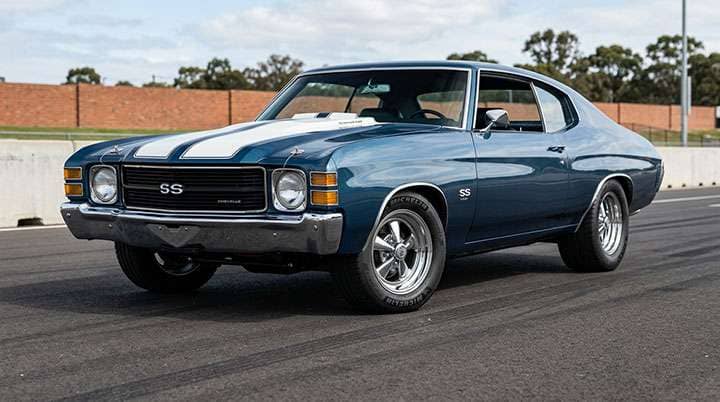
For muscle car owners who enjoy occasional drag racing or spirited acceleration runs, consider radial tires with reinforced construction designed to handle high torque loads. Modern performance radials for classic applications can resist the twisting forces generated by powerful V8 engines better than vintage bias ply tires ever could. The improved traction also helps you launch harder without excessive wheel spin, resulting in quicker acceleration times. If your classic car modification includes engine performance upgrades, appropriate performance radial tires become essential to safely manage the additional power.
Classic car owners working with limited budgets still have viable tire options that provide adequate safety and performance without breaking the bank. Budget considerations often arise during initial restoration phases when you need to get a project car rolling before investing in premium tires. Temporary budget solutions can serve while you complete other aspects of the restoration, with plans to upgrade to better tires later. The key involves selecting budget options that still meet basic safety standards rather than choosing the absolute cheapest tires available.
Modern bias ply tires from established manufacturers represent the most budget-friendly option for classic cars, particularly if you drive infrequently and prioritize period-correct appearance. These tires cost less than premium radials while maintaining authentic styling appropriate for show cars and occasional-use classics. Quality control has improved significantly in recent bias ply production, so modern versions deliver more consistent performance than vintage bias ply tires. For show cars that travel limited distances to events and rarely exceed 50-60 mph, budget bias ply tires serve adequately while preserving authentic appearance.
If you need budget-friendly radial tires for a driver-quality classic, consider standard touring radials from mainstream manufacturers in appropriate sizes. While these lack the vintage-specific design of specialty classic car radials, they provide safe, reliable performance at competitive prices. The trade-off involves sacrificing period-correct appearance for improved safety, longer tread life, and better all-around performance. This approach makes sense for project cars, spare vehicles, or classics that see utility use where appearance matters less than function. You can always upgrade to premium tires later as budget allows.
The difference between bias ply and radial tires for classic cars extends far beyond simple construction methods—it fundamentally affects how your vintage vehicle handles, stops, and rides. Bias ply tires offer authentic period-correct appearance and that distinctive vintage driving character. Radial tires deliver superior performance, safety, and longevity that better suits frequent driving. Neither option is universally "correct"—the right choice depends entirely on how you intend to use your classic car and which characteristics matter most to you as an owner.
For show cars, concours restorations, and vehicles driven occasionally at modest speeds, quality bias ply tires remain perfectly appropriate and maintain historical authenticity. For classic cars driven regularly, used on highway trips, or driven enthusiastically on winding roads, radial tires provide measurable advantages in safety, comfort, and performance that justify their higher cost. Many classic car owners find their tire preference evolves as usage patterns change—a vehicle initially restored with bias ply tires for show purposes might transition to radials as driving becomes more frequent and spirited.
The classic car tire market continues evolving with manufacturers offering more specialized options for vintage vehicles every year. Whether you choose bias ply or radial construction, selecting quality tires from reputable manufacturers ensures safe, enjoyable driving experiences. Visit Performance Plus Tire to explore our complete selection of classic car tires, compare options across both bias ply and radial categories, and find the perfect tires for your vintage automobile. Our tire specialists understand the unique requirements of classic vehicles and can help you select tires that match your restoration goals and driving needs.
Understanding the key differences between bias ply and radial tires helps you make informed decisions for your classic car restoration.
• Construction fundamentally differs: Bias ply tires use diagonal overlapping plies creating rigid sidewalls, while radial tires feature perpendicular plies with flexible sidewalls that improve grip and ride quality.
• Performance advantages favor radials: Radial tires deliver 20-40% longer tread life, 5-8% better fuel economy, shorter braking distances, and superior wet weather grip compared to bias ply construction.
• Authenticity matters for show cars: Period-correct bias ply tires remain essential for top-level concours judging and vehicles where historical accuracy takes priority over performance upgrades.
• Usage patterns determine the best choice: Frequent drivers benefit more from radial tire advantages, while occasional-use show cars can utilize bias ply tires without significant performance compromises.
• Never mix tire types on one vehicle: Combining bias ply and radial tires creates dangerous handling inconsistencies—always install matching tire construction on all four corners simultaneously for predictable, safe performance.
Yes, you can safely install radial tires on classic cars originally designed for bias ply tires. Most classic car owners who drive regularly choose to upgrade to radials for improved safety, handling, and tread life. You may need to adjust alignment specifications slightly—particularly toe settings—to optimize handling with radial construction. Always replace all four tires simultaneously and never mix radial and bias ply tires on the same vehicle. Some owners also upgrade suspension components like shocks to fully capitalize on the improved grip that radial tires provide.
Check the tire sidewall markings to identify construction type. Radial tires include the letter "R" in the size designation (example: P215/70R15), while bias ply tires typically use inch sizing without the "R" designation (example: 7.75-14). You can also inspect the sidewall appearance—radial tires have flexible sidewalls that bulge slightly at the bottom, while bias ply tires have stiffer sidewalls that maintain their shape more rigidly. The tread pattern and sidewall styling may also provide clues, though these vary significantly by manufacturer and model.
Yes, radial tires typically last 20-40% longer than bias ply tires due to their construction advantages. Bias ply tires generally provide 15,000-25,000 miles of tread life, while comparable radial tires often deliver 30,000-50,000 miles. Flexible sidewalls of radial construction generate less internal heat and friction, which reduces wear rates. Radials also maintain more consistent contact patches during cornering, preventing uneven wear patterns common with bias ply tires. This longevity advantage helps offset the higher initial cost of radial tires, making them more economical over the long term for frequently driven classic cars.
Switching tire construction types can affect speedometer accuracy if the overall diameter changes significantly. When selecting replacement tires, calculate the overall diameter of both the original bias ply size and the proposed radial size. Keep diameter differences within 3% to maintain reasonable speedometer accuracy. Many radial tire sizes available for classic cars are specifically designed to match the overall diameter of common bias ply sizes. If significant diameter differences occur, your speedometer will read either fast or slow proportional to the size change. Tire dealers specializing in classic cars can help you identify radial sizes that maintain proper diameter for your specific vehicle.
Yes, modern bias ply tires perform significantly better than original vintage bias ply tires from 40-70 years ago. Contemporary bias ply tires benefit from improved rubber compounds, better quality control, more consistent manufacturing processes, and modern materials that weren't available decades ago. While they maintain the authentic construction method and appearance of vintage bias ply designs, modern versions offer better grip, improved resistance to aging and cracking, more uniform construction, and longer tread life. If you're installing bias ply tires for authenticity purposes, you'll still benefit from these substantial quality improvements compared to the original tires your classic car wore when new.