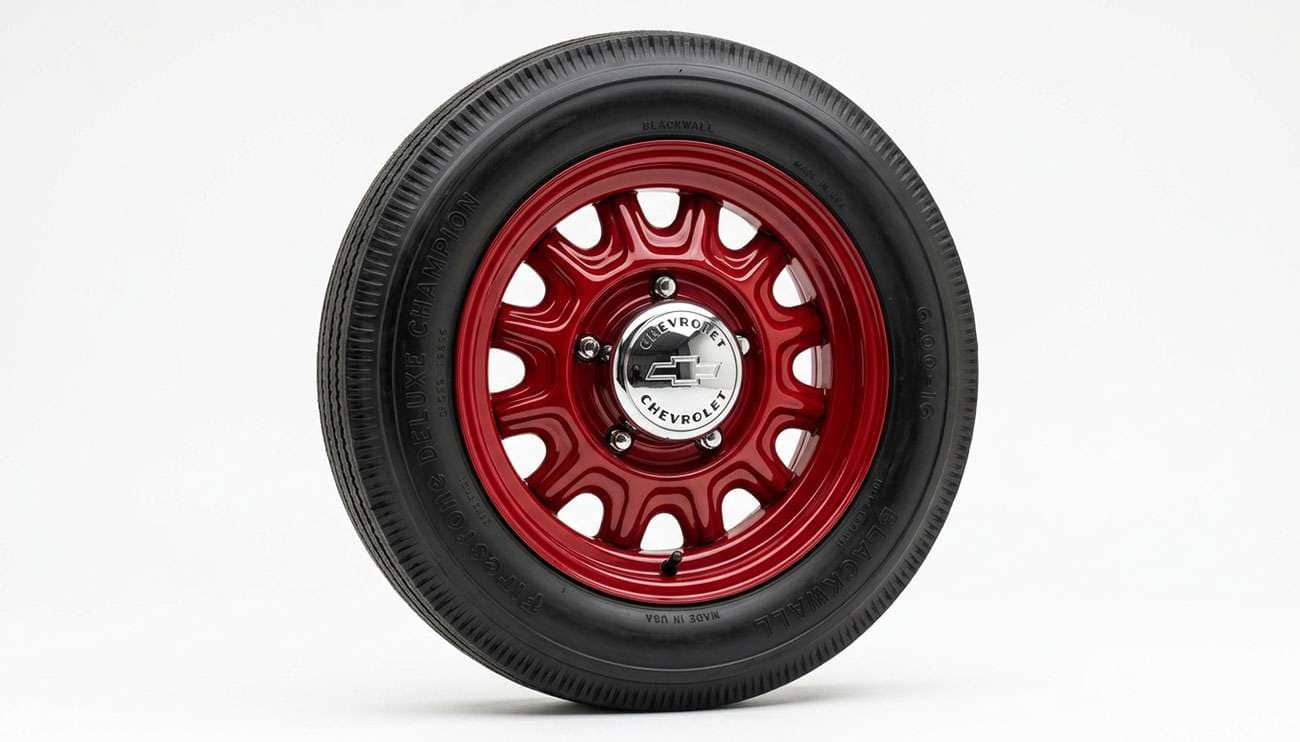
Artillery wheels are steel wheels with a scalloped, spoked face styled after the wood-spoke wheels once bolted under horse-drawn cannon carriages. Detroit made them famous in the mid-1930s, when Ford stamped its version in 1935 and Chevrolet followed with its now-iconic wheel in 1936, and hot rodders never let the look die. Today you can buy brand-new artillery wheels in primer, gloss paint, or full chrome, sized and drilled for classic trucks, traditional rods, and lowrider bombs.
Now let me tell you the rest of the story, because this one starts about a hundred years before anybody bolted a flathead into a Deuce.
The name is not marketing fluff. It goes back to actual artillery. In the 1800s, armies figured out that an ordinary wagon wheel would fold up like a lawn chair when a gun crew wheeled a cannon around hard in the field. The sideways loads were just too much for spokes mortised into a wooden hub. So they built something tougher: wood spokes fitted together keystone-style with miter joints, then bolted into a two-piece metal hub. That heavy-duty design became known as the artillery wheel, and it could take punishment that shattered lesser wheels.
When the automobile showed up, early builders borrowed the same construction because it was stronger than the delicate wire wheels of the day. By the 1920s, most cars wore steel wheels that mimicked the wood-spoke artillery look, and the nickname simply came along for the ride. Some old-timers will also tell you the name stuck because the scalloped steel wheels on 1930s cars resembled the wheels on World War I military vehicles. Either way you trace it, the bloodline runs straight back to the battlefield, which is a better origin story than most wheels can claim.
Here is where it gets good for us hot rod folks. In the 1930s, American buyers wanted wheels that looked substantial, and the factories delivered. Ford moved to stamped steel artillery-style wheels in 1935. Chevrolet answered in 1936 with the scalloped steel wheel that has become the single most recognizable artillery design ever made. GM trucks ran artillery wheels as stock equipment from the mid-1930s clear through 1945, first as a 17 inch six-lug on the half-tons, later as a wider 15 inch on the three-quarter-ton trucks. These stamped wheels were far stronger than wire wheels, shrugging off potholes and curb strikes that would have pretzeled a set of spokes.
By the time the war ended, the plain steel wheel had taken over and the fancy scallops faded from the assembly lines. But the hot rodders and customizers of the 1940s and 50s remembered. An artillery wheel in fresh paint with a big chrome cap gave a traditional rod or a custom truck a period-perfect stance that nothing else could match. It sat right alongside other early styles you can read about in our guide to classic car wheel styles, and it has never gone out of fashion in the traditional scene since.
No, and the difference is all in the face. A smoothie wheel has a clean, uninterrupted steel face with no scallops or spokes, while an artillery wheel shows a ring of stamped scallops that echo the old wood-spoke design. They are cousins, not twins. Both are steel, both take the same style of caps and dress-up, and Wheel Vintiques even builds its artillery wheels with the same 7.5 inch cap fitment as its smoothies. If you want the full rundown on the slick-faced side of the family, our article on smoothie wheels and baby moons covers it front to back.
Good news: you do not have to dig through a swap meet and pray the rust gods were merciful. Every wheel below is brand-new steel, built to modern tolerances, and sitting in our warehouse right now.
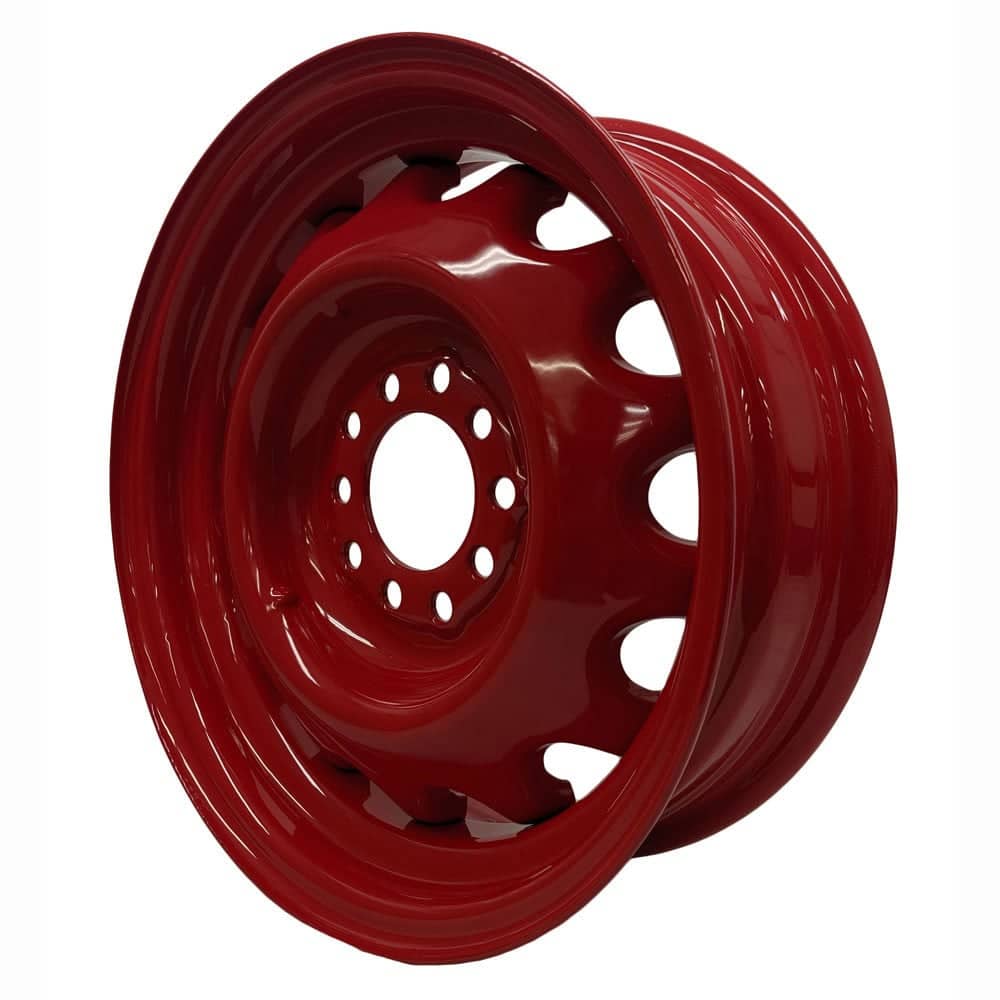
I might be a little biased on this one, but the Hot Rod Hanks Artillery is exactly the wheel I always wanted to bolt on my own trucks. It comes in gloss black or gloss Barron red, in 15 inch diameters from skinny 15x4 fronts to 15x7 rears, drilled 5x127/5x139.7 for classic Chevy and GM truck fitments. Starting at 99 bucks a corner, it is the cheapest ticket into the artillery look on this page, and the gloss finish under a chrome cap looks like a million more.
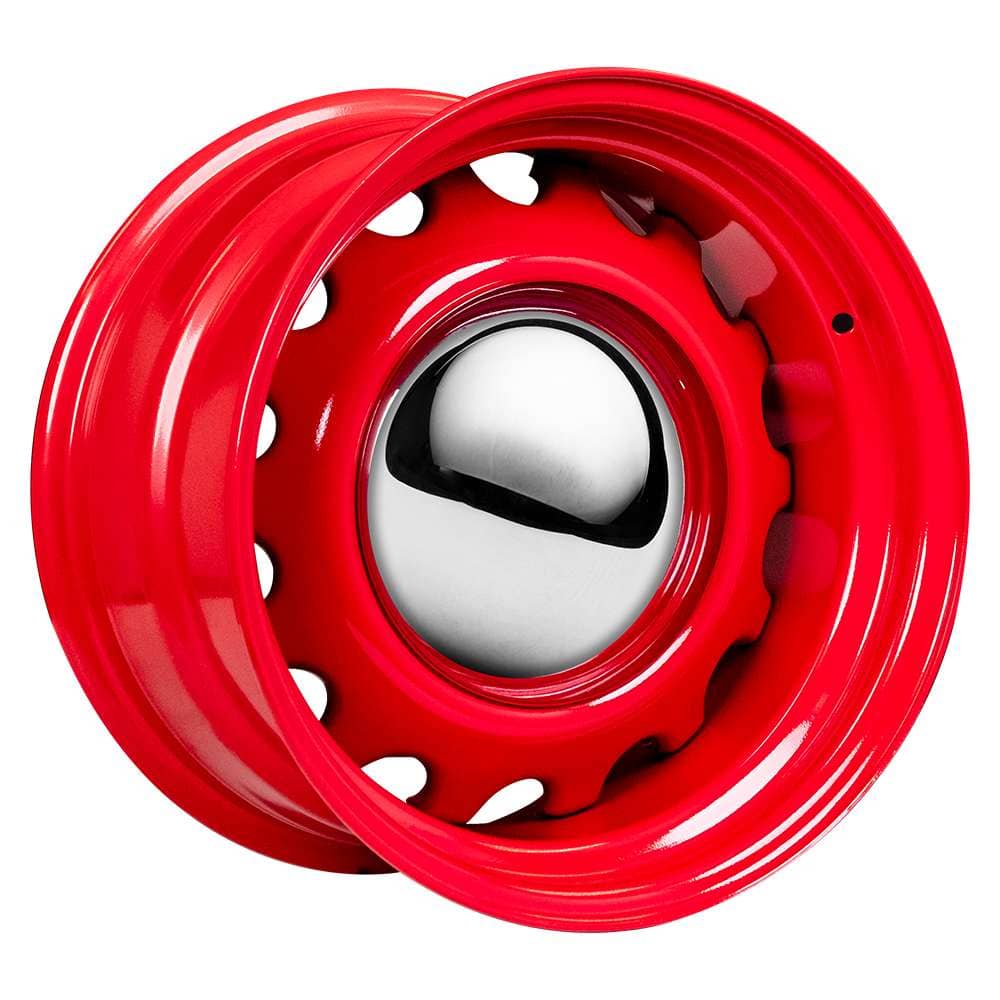
The Boyd Coddington Artillery carries a name that needs no introduction in the hot rod world. This one runs a wider 15x8 with zero offset in the same 5x127/5x139.7 pattern, which makes it the pick when you want a fat rear tire under a stepside bed. Also 99 dollars per wheel, also available in red or black, and the wide lip fills a wheel well the way the skinny stockers never could.
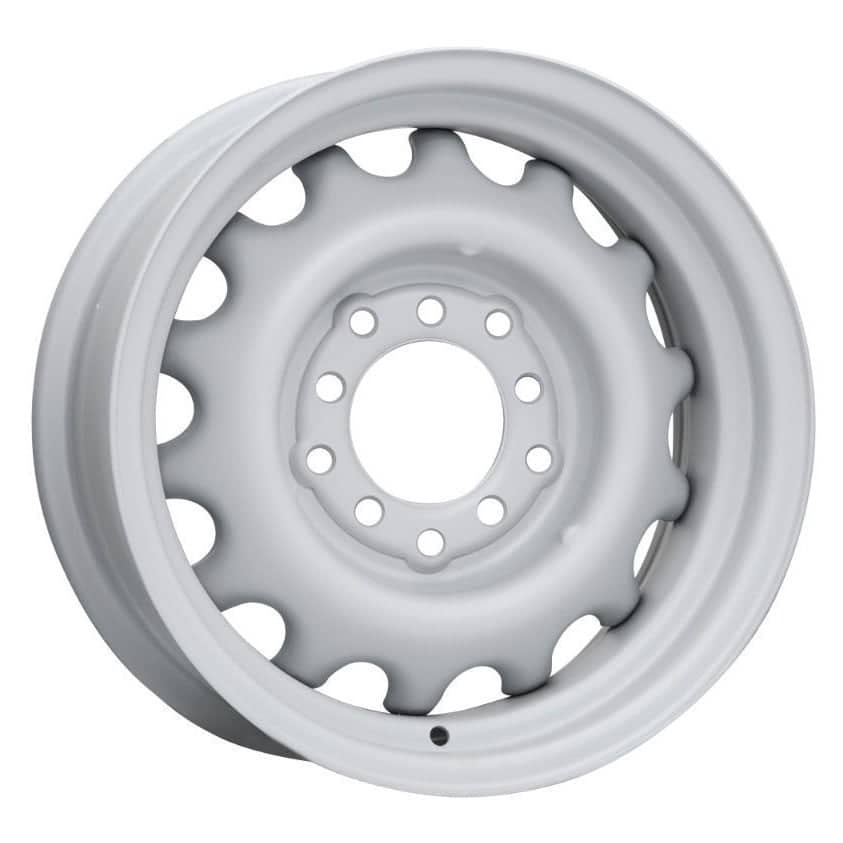
Wheel Vintiques builds the restoration-grade stuff, 100 percent American-made steel. The 17 Series Artillery ships in primer at around 200 dollars, ready for you to paint body color like the factory did in 1936. Want to go bigger and brighter? The 19 Series Artillery brings the same scalloped face in a full chrome 17x8 for the resto-mod crowd who want vintage style over modern brakes.
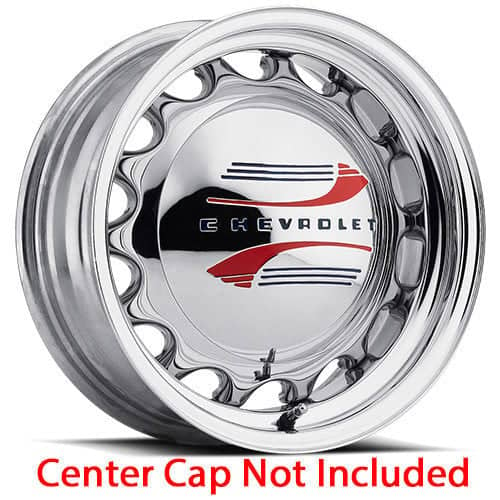
U.S. Wheel covers the whole finish spectrum with its artillery line: the 555 in raw steel for the patina and paint-it-yourself builders, the 556 with a chrome outer and raw center, and the 557 in full chrome for maximum shine. All three run the 5x114.3/5x120.65 dual pattern that fits a huge range of vintage Ford and classic GM passenger cars. Prices run from about 240 to 340 dollars, and the raw 555 is a favorite of the rat rod crowd we wrote about in our rat rod patina steelies piece.
Anything from the era wears them naturally: 1930s and 40s Fords, tri-five-and-earlier Chevy trucks, and every fat-fendered sedan in between. The lowrider bomb scene practically owns the style, dressing 1936 to 1954 Chevys with artillery wheels, wide whitewalls, and enough chrome trim to blind a state trooper. If you are going that direction, get your whitewall proportions right with our whitewall width guide before you order rubber.
Traditional hot rods and rat rods love them too, especially in primer or satin black with a bias-ply look. And do not overlook a straight restoration: if your prewar car came on artilleries, new steel beats fighting eighty-year-old rust. Our antique car tire guide will help you match period-correct rubber to whichever wheel you land on. The one place artilleries look wrong is on anything built after about 1960, where a plain steelie, a rally, or a mag carries the era better. If budget steel is the goal on a later car, read our guide on what are steelies instead.
Wheel |
Sizes |
Bolt Pattern |
Finish |
Starting Price |
|---|---|---|---|---|
Hot Rod Hanks Artillery |
15x4 to 15x7 |
5x127 / 5x139.7 |
Gloss Black, Gloss Barron Red |
USD 99 |
Boyd Coddington Artillery |
15x8 |
5x127 / 5x139.7 |
Red, Black |
USD 99 |
Wheel Vintiques 17 Series |
15x4 to 17x9 |
5x114.3 / 5x120.65 |
Primer |
USD 200 |
Wheel Vintiques 19 Series |
17x8 |
5x127 / 5x139.7 |
Chrome |
USD 199 |
U.S. Wheel Artillery 555 |
15x5 |
5x114.3 / 5x120.65 |
Raw |
USD 241 |
U.S. Wheel Artillery 556 |
15x6 |
5x114.3 / 5x120.65 |
Raw / Chrome |
USD 306 |
U.S. Wheel Artillery 557 |
15x6 |
5x114.3 / 5x120.65 |
Chrome |
USD 340 |
Artillery wheels went from hauling cannons to hauling groceries to hauling trophies at every traditional car show in the country, and that is a career arc any wheel would envy. Whether you want my own Hot Rod Hanks version at 99 bucks, a Boyd for the wide-tire stance, restoration-grade Wheel Vintiques steel, or U.S. Wheel chrome, the scalloped classics are all here and all new. Browse the full Hot Rod Hanks wheels lineup and put a hundred years of history under your fenders. And if the spoked look has you curious about the wire side of things, our wire wheels and knock-offs guide is the natural next read.
Yes. Hot Rod Hanks, Boyd Coddington, Wheel Vintiques, and U.S. Wheel all manufacture brand-new steel artillery wheels today in sizes from 15x4 to 17x9, with finishes ranging from bare primer to full chrome.
Factory artillery wheels of the 1930s were mostly 16 and 17 inch diameters, with GM trucks running a 17 inch six-lug from 1934 to 1936 and a 15 inch version on three-quarter-ton trucks from 1937 through 1945. Modern reproductions center on 15 inch sizes with 17 inch options for resto-mods.
That is the whole reason they exist. The original design was created because ordinary wheels collapsed under the sideways forces of artillery maneuvers, and the stamped steel versions of the 1930s were adopted specifically because they resisted pothole and curb damage far better than wire wheels. Modern reproductions are new steel built to current manufacturing tolerances.
The reproductions we stock come in two dual-drilled patterns: 5x127/5x139.7 for classic Chevy and GM trucks, and 5x114.3/5x120.65 for vintage Ford and classic GM passenger cars. That combination covers the vast majority of prewar and early postwar American vehicles.