
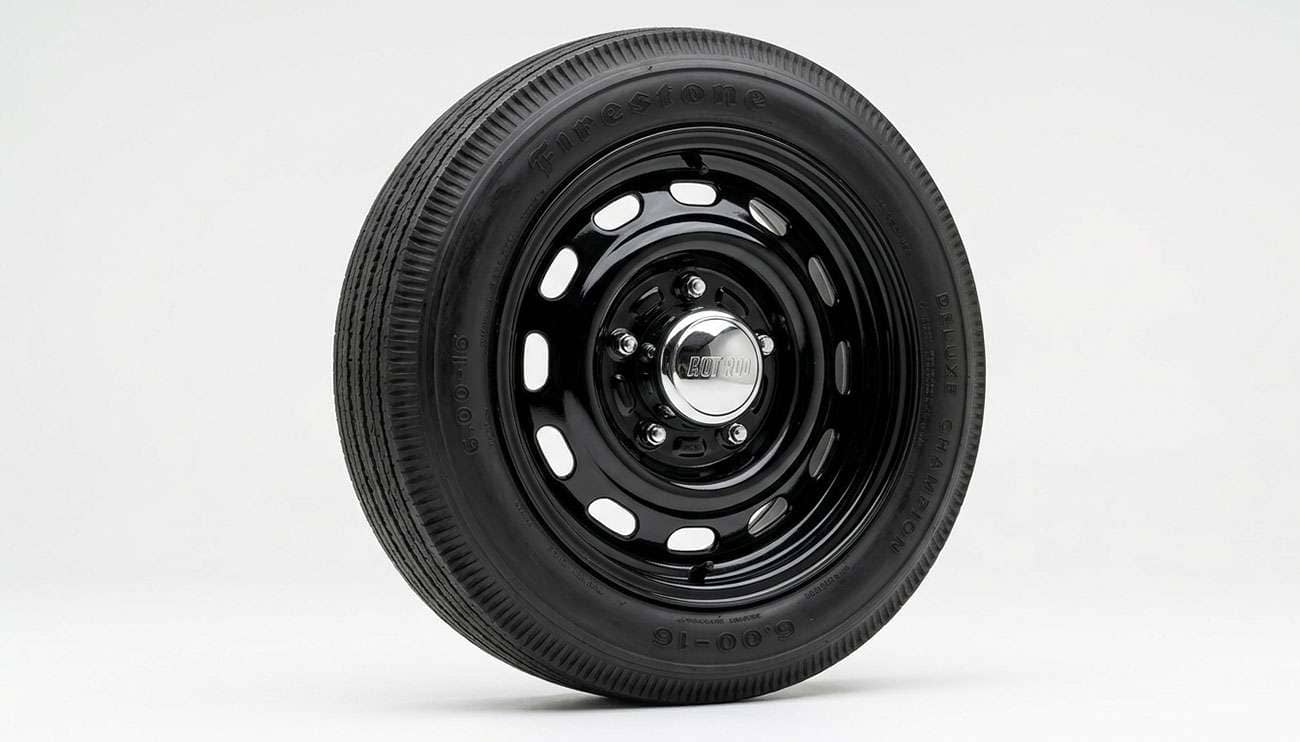
Let me cut right to it, because folks ask me this all the time. Rat rod wheels are steel wheels, plain and simple. We're talking painted or raw steelies in the traditional hot rod styles: Soft 8s, smoothies, artillery wheels, and D-windows, almost always finished in gloss black, satin, primer gray, or left to wear an honest coat of patina. Wrap them with a dog dish cap or a trim ring, stuff a fat bias-ply out back, and you've got the look. No chrome wonders, no billet jewelry. The whole point of the rat rod is that the wheel looks like it came off a junkyard car and earned every mile. I've been building and selling this stuff for a long time, so let me walk you through exactly how to get it right.
That said, "rat rod" gets thrown around loosely, and getting the wheels right starts with understanding what the car actually is. So before we talk steelies, let's settle what separates a rat rod from a regular hot rod.
A rat rod is a traditional-style hot rod built on a budget, out of whatever the builder could get their hands on, and worn proudly instead of polished. The term came out of the hot rod magazines decades ago as a nod to "rat bikes," those bare-bones custom motorcycles built cheap and ridden hard. It started as a reaction against the high-dollar, smoothed-out billet street rods that were taking over the shows in the 1990s. A bunch of home builders looked back at the rough, homemade rods of the 1940s and '50s and decided that primer, patina, and a flathead with a stack of carbs had more soul than a flawless paint job.
So here's the difference. A hot rod is the broad family: any older American car built for speed and style, and it can absolutely be a clean, painted, beautifully finished machine. A rat rod is the scrappy corner of that family, the one that leans into worn paint, exposed welds, satin or primer finishes, and a deliberately unfinished attitude. Both run traditional wheels, but where a polished street rod might wear chrome or billet, the rat rod insists on plain painted steel. If you want the full lay of the land on traditional rolling stock, our hot rod wheel and tire guide covers the whole spectrum.
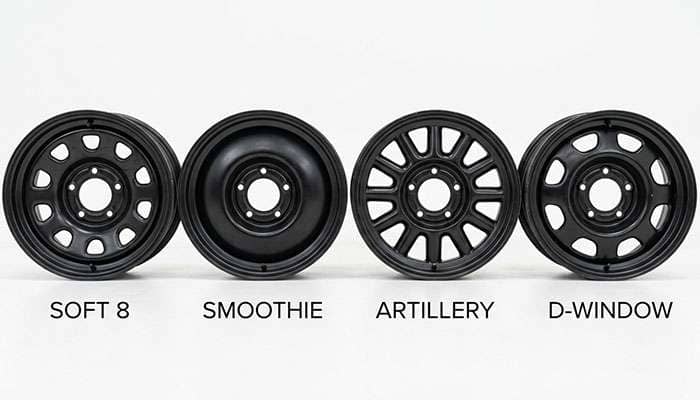
There are really just a handful of steel wheel styles that built the rat rod look, and the good news is they're all still made today in modern sizes and bolt patterns. Here are the ones that matter.
The Soft 8 is probably the most popular rat rod wheel there is, and for good reason. It's a steel wheel with eight gently rounded "soft" slots stamped around the center, which is where the name comes from. It looks tough and purposeful without being fussy, it takes a center cap beautifully, and it disappears into a traditional build like it was always there. If somebody's running one wheel on a rat rod or a shop truck, it's usually a black Soft 8.
The smoothie is exactly what it sounds like: a smooth, slotless steel wheel with a clean face and no decoration at all. That simplicity is the whole appeal. A smoothie puts all the attention on the tire and the stance, and it pairs perfectly with a dog dish cap and a wide whitewall. For the deep dive on this style and its little cousin the baby moon, see our guide to smoothie wheels and baby moons.
Artillery wheels carry raised, tapered spokes radiating out from the center, a style that goes all the way back to the wood-spoke wheels on early cars and got reborn in steel. They've got more visual texture than a smoothie or a Soft 8, which makes them a favorite on Model A and early Ford builds where you want a period-correct look with a little more presence.
The D-window is an old-school steel wheel with large D-shaped lightening holes stamped around the center, a genuine dry-lakes and early drag racing look. Round it out with rally-style steel wheels and basic painted steelies, and you've covered the traditional menu. The common thread through all of them is honest stamped steel. If you want a primer on the budget-friendly steel wheel in general, our guide on what steelies are lays out the basics, and for a wider tour of period styles there's our classic car wheel styles rundown.
The finish is where a steel wheel actually becomes a rat rod wheel. Same Soft 8 in bright chrome reads as a clean cruiser; in flat black or worn steel it reads as a rat rod. Here are the looks that work, from easiest to most involved.
Gloss or satin black is the bread and butter. It's the safest, sharpest-looking rat rod finish, it hides road grime, and it lets the tire and the dog dish cap do the talking. Primer gray takes it a step further into the deliberately-unfinished territory, matching the primered body panels that define so many of these cars. Raw steel and patina is the purist's move: you run the bare stamped steel and let it develop a natural, even rust haze over time. The trick there is controlling it; most builders knock the surface rust back and then seal it with a matte clear coat so it stops where they want it and doesn't bleed onto everything. Body-color paint is the traditional touch, matching the wheels to the car's main color or an accent, the way the factory hot rodders did it in the '50s. There's no wrong answer here, only what fits the attitude of the build.
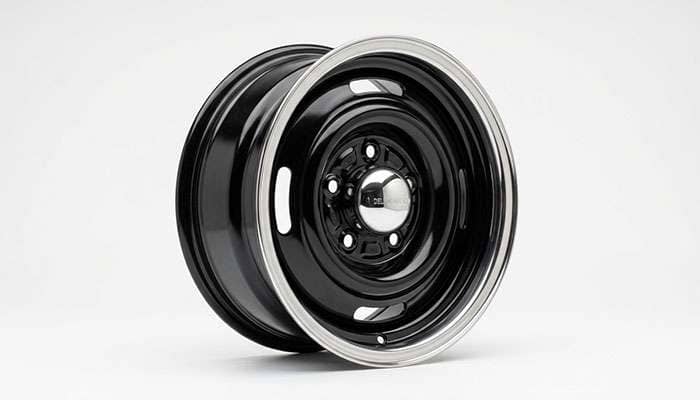
A bare painted steelie is great, but the small stuff is what sells the whole look. These are the dress-up pieces that turn a plain wheel into a finished rat rod statement.
A dog dish cap, sometimes called a poverty cap, is a small round center cap that covers just the middle of the wheel rather than the whole face, leaving the painted steel showing around it. The name comes from the shape, which looks like an upside-down dog's food bowl. It's the single most iconic rat rod and traditional hot rod accent there is. Keep in mind that the wheel usually needs the right retention clips installed to hold a dog dish cap, so order those together when you buy.
A trim ring, or beauty ring, is a polished stainless band that snaps around the outer edge of the wheel. It frames the steelie with a clean ring of brightwork without going full chrome, which is a nice middle ground if you want a touch of shine on an otherwise blacked-out wheel. Run a dog dish cap and a trim ring together and you've got the classic dressed-steelie look in its purest form.
The tire matters as much as the wheel. Nothing finishes a rat rod steelie like a tall, narrow piecrust bias-ply, named for the ribbed "piecrust" edge on the sidewall, or a fat wide-whitewall. They give you that period-correct profile a modern radial just can't fake. Many builders go bias-ply look or true bias-ply up front and bigger out back to nail the traditional stance.
Rat rods almost always run a staggered setup: a skinny wheel and tire up front, a wide one out back. That rake and that big-little contrast is half the attitude. Up front you'll commonly see narrow 15-inch steelies, something like a 15x5 or 15x6, to keep the nose light and tucked. Out back the builders go wide, 15x8, 15x10, or wider, to fit a fat tire and plant the stance. Fifteen-inch wheels are the traditional default and the right call for most builds, though early Fords and trucks sometimes wear 16s for an even more vintage profile.
Before you buy, nail down two things: your bolt pattern and your backspacing. The bolt pattern has to match your hubs exactly, and backspacing determines how far the wheel tucks in or pokes out, which is everything on a car where you're chasing a specific stance and clearing old-school suspension. When in doubt, measure or call us, because a steelie that pokes wrong ruins the whole look. For more on getting the diameter and width right on a classic build, our muscle car wheel size guide applies directly, and if you're weighing a slotted-mag alternative to steel, the slot mag wheels guide is worth a look. Prefer the rally-steel route? We break that down in what rally wheels are.
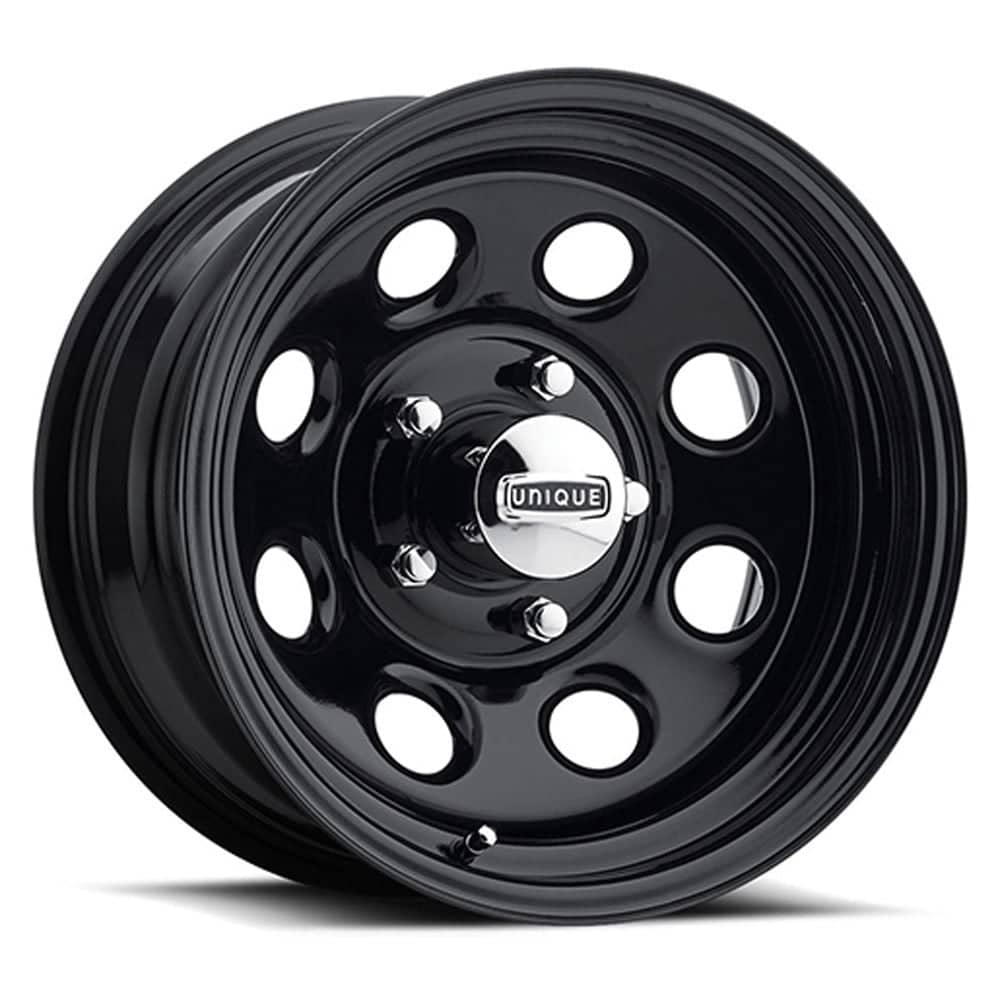
This is the part I get to brag a little on, because two of the brands we build are made for exactly this look. Hot Rod Hanks is our traditional steel wheel line, and it's the rat rod menu top to bottom: the 297 Soft 8 in gloss black powdercoat, the Smoothie, the Artillery, the 42 D-Window, and the Gennie. These are honest, properly engineered steel wheels in modern sizes and bolt patterns, so you get the period look without the period problems. You can see the full lineup on the Hot Rod Hanks wheels page.
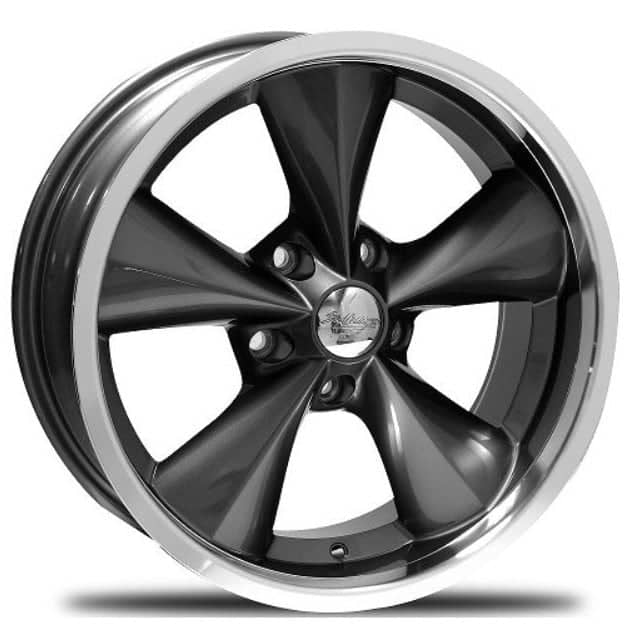
Then there's Boyd Coddington, a name that needs no introduction in the hot rod world, and another brand in our family. Boyd is best known for show-stopping billet, but the line also includes the traditional steel styles a rat rod wants, including the aptly named Junkyard Dog in gunmetal, the Smoothie, the 55 Steel Rally, and the Artillery. It's the move when you want that worn, purposeful look but with a pedigree behind it. Browse the range on the Boyd Coddington wheels page. Between those two lines, whatever flavor of steelie your build is calling for, we make it.
Building a rat rod is about attitude, and the wheels carry a big part of it. Stick with traditional stamped steel, a Soft 8, a smoothie, an artillery, or a D-window, finish it in black, primer, or honest patina, dress it with a dog dish cap and a trim ring, and run a staggered skinny-front, fat-rear stance on the right bolt pattern and backspacing. Do that and the whole car clicks into place. Skip the chrome and the billet for this one; the rat rod earns its looks the hard way, and so should its wheels. When you're ready to roll, our Hot Rod Hanks and Boyd Coddington lines have every style covered.
The essentials for getting rat rod wheels right:
Rat rod wheels are traditional stamped steel wheels finished in black, primer, body color, or raw patina rather than chrome or billet. The common styles are the Soft 8, the smoothie, the artillery wheel, and the D-window, usually dressed with a dog dish cap and a trim ring.
A hot rod is any older American car built for speed and style, and it can be a clean, fully finished machine. A rat rod is the budget, deliberately unfinished corner of that family, built from salvaged parts and worn with primer, patina, and exposed character on purpose. Rat rods stick to plain painted steel wheels, while polished hot rods may run chrome or billet.
A Soft 8 is a steel wheel with eight gently rounded slots stamped around the center, which is where the "soft" in the name comes from. It is the most popular rat rod and traditional hot rod steel wheel, usually run in black and finished with a dog dish center cap.
Yes. The rat rod look is defined by stamped steel wheels rather than aluminum, chrome, or billet. Steel suits the budget, traditional, hard-used character of the style and takes paint, primer, or a patina finish well.
A dog dish cap, also called a poverty cap, is a small round center cap that covers only the middle of the wheel and leaves the painted steel showing around it. Named for its dog-bowl shape, it is the most iconic accent on rat rod and traditional hot rod steelies. The wheel typically needs retention clips installed to hold one.
Most rat rods run 15-inch steel wheels in a staggered setup: a narrow wheel up front such as a 15x5 or 15x6, and a wide one out back such as a 15x8 or 15x10. Some early Fords and trucks use 16-inch wheels for a more vintage profile. Always confirm your bolt pattern and backspacing for proper fit and stance.
Run bare or lightly aged stamped steel and let a thin, even surface rust develop, then knock it back and seal it with a matte clear coat so it stops where you want it. Primer gray and satin black are easier alternatives that capture the same deliberately unfinished, worn character.



