
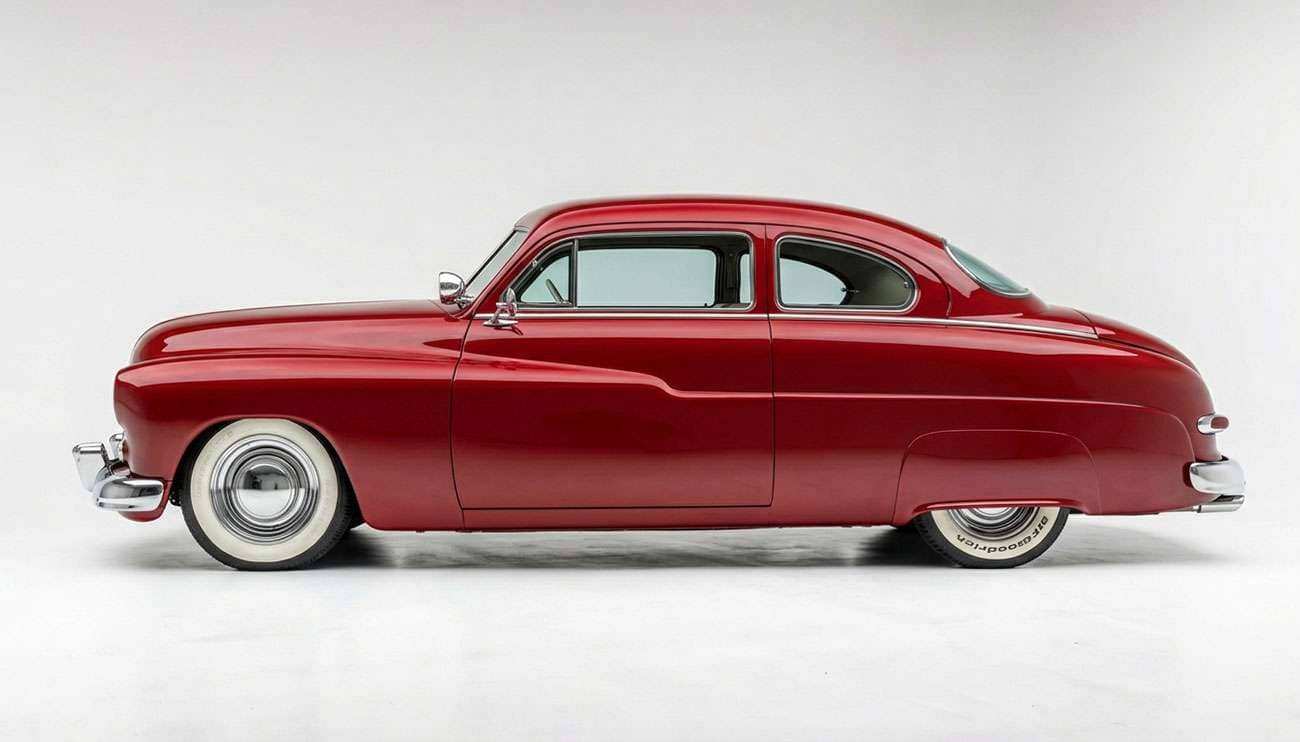
Some wheels shout. A smoothie whispers, and that's exactly the point. I've watched this look come and go and come back around again over the decades, and it never really goes out of style because it does something no flashy wheel can: it gets out of the way and lets the car be the star. If you've ever seen a clean custom rolling on body-color wheels with a little chrome cap winking in the center and thought "that just looks right," you were looking at a smoothie. Let's talk about what they are and how to do them properly.
A smoothie is exactly what it sounds like — a wheel with a smooth, uncluttered face. No spokes to speak of, no vent slots, no exposed lug nuts shouting for attention. Just a clean, simple disc that sweeps out to the rim, usually finished off with a small center cap. That's the whole idea. Where a five-spoke or a rally wheel draws your eye into the wheel itself, a smoothie sends your eye right back to the bodywork and the stance.
It's the most understated wheel in the classic playbook, and that restraint is why it pairs so well with a car that already has presence. On a chopped custom or a clean restomod, a busy wheel fights the lines. A smoothie agrees with them. It's a different philosophy than something like a rally wheel, and seeing them side by side is the fastest way to understand what the smoothie is doing.
The smoothie was born out of the early custom scene, back when builders wanted their cars long, low, and free of clutter. The fashion was to shave door handles, frenchen the headlights, and smooth every panel you could — so naturally the wheels got the same treatment. A plain steel wheel, painted body color or a contrasting shade, capped with a simple dome, finished the look. It became a signature of the lead sleds and mild customs, and it carried straight into traditional hot rodding.
What's interesting is that the look has proven completely timeless. The same clean face that worked on a custom decades ago works just as well on a modern restomod today, which is why builders never stopped reaching for it. It sits comfortably in the same family as other honest classic styles you can read about in our overview of classic car wheel styles.
Here's where you make your first real decision, because a smoothie comes two very different ways, and they suit different builds and budgets.
The traditional route is steel. A steel smoothie is honest, period-correct, and easy on the wallet. We stock a deep range of them — the U.S. Wheel Smoothie series, the Wheel Vintiques 10, 12, and 13 Series, the American Racing VN31, the Cragar 313, and Allied's smoothies among them — generally running from a little over a hundred dollars up into the few-hundred range per wheel. Steel is heavier than aluminum, but on a classic cruiser that weight rarely matters, and the look and the price are hard to beat. If you're weighing the trade-offs in general, our piece on steel versus aluminum wheels for classic cars lays it out, and steel smoothies are close cousins to the humble steelie.
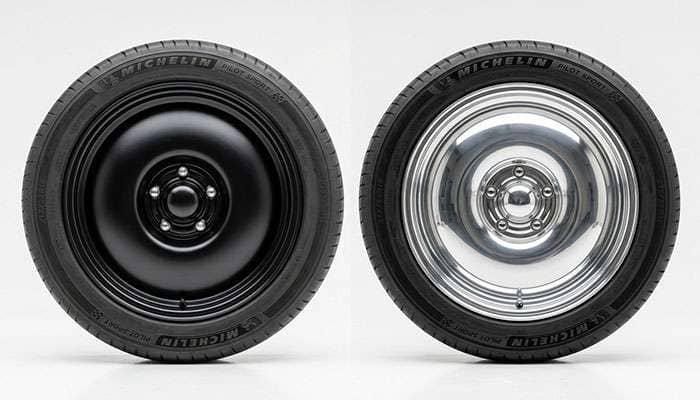
The modern route is billet aluminum. A billet smoothie keeps the clean face but adds machined precision, lighter weight, and a price tag to match — the Boyd Coddington Smoothie and Ultimate Smoothie and the Intro Custom Smoothie live in this world, ranging from several hundred dollars into the low thousands per wheel for the high-end pieces. This is the route for a serious show build or a restomod where you want flawless finish and modern sizing. The face reads the same from ten feet away; the difference is in the material and the craftsmanship. If the broader question of what wheels are made from interests you, we cover it in what wheels are made of.
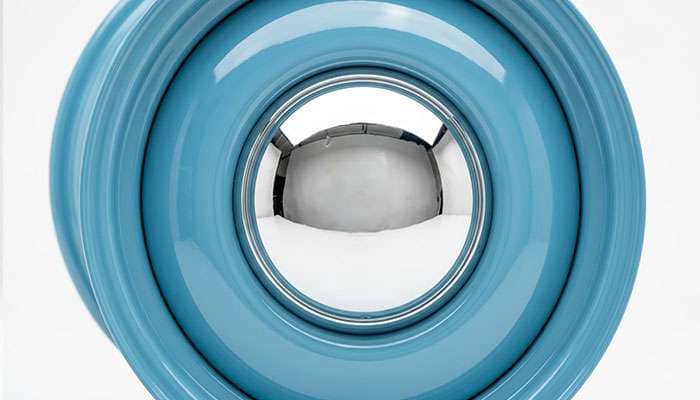
A smoothie isn't really finished until you've sorted out the center, and this is where the look gets its personality. The classic choice is a baby moon — a small, domed cap that covers just the hub area and leaves the painted face exposed around it. A chrome baby moon over a body-color wheel is about as traditional as it gets, and it's the detail most people picture when they think of this style.
From there you've got options. A full-dome moon cap covers more of the face for an even cleaner, almost seamless disc. A simple painted or chrome center cap keeps things subtle. And a bright trim ring around the outer edge adds a little sparkle at the rim without cluttering the face. The beauty of the smoothie is that these small choices completely change the character of the wheel while the wheel itself stays simple. Mix and match until it talks to your paint.
The good news is that the smoothie has kept up with the times. Where these once only came in small classic diameters, today you can get them across a wide range — steel smoothies commonly run from 14 inches up to 20 and 22, and the billet versions stretch even further for big-inch modern builds. That means you can keep a period-correct 15-inch look with a tall sidewall, or go to a larger diameter for a lower-profile, more aggressive stance.
Build Style |
Material |
Typical Diameter |
The Vibe |
|---|---|---|---|
Traditional custom / cruiser |
Steel |
15" |
Period-correct, tall sidewall |
Mild restomod |
Steel or billet |
17"–18" |
Clean, modern footprint |
Show build |
Billet aluminum |
20"+ |
Low profile, flawless finish |
As with any wheel on a classic, the fit comes down to your bolt pattern and your backspacing, not just the diameter. Confirm what your car or truck actually uses before you order — patterns like the common 5x5 show up on a lot of classic GM iron — and let your suspension and brake setup guide the backspacing so the wheel sits where you want it under the fender. And if you're putting smoothies on a classic hauler, my picks for the best classic truck wheels are worth a look.
This is the fun part, because a smoothie is basically a blank canvas. Paint the face your body color for that seamless one-piece look, or run a contrasting color to make the wheel pop. Chrome the whole thing for maximum shine, or keep just the cap and trim ring bright over a painted face. There's no wrong answer, only the look you're after — and our take on how custom wheel finishes can make or break the look is a good gut-check before you commit.
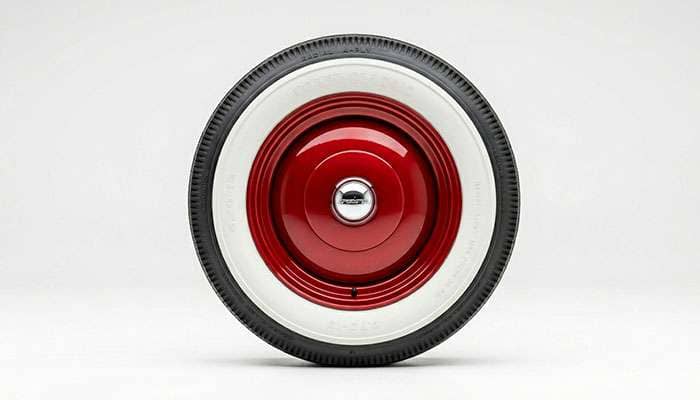
Then there's the tire, which carries half the look on a classic. Nothing finishes a smoothie like the right rubber: a wide whitewall says traditional custom and lead sled, a redline leans toward the muscle era, and a clean blackwall keeps things modern and understated. Match the tire to the era you're chasing and the wheel will fall right into place.
Here's my honest guidance after seeing a lot of these builds. A smoothie is the right call when the car already has a strong identity it wants to show off — a custom, a lead sled, a clean restomod, a daily-driven classic that you want to look tasteful rather than loud. It's the wheel that flatters the car instead of competing with it.
It's the wrong call if you're chasing an aggressive, technical, or motorsport look — that's spoke and mesh territory, not smoothie territory. But for the builder who values restraint and wants that timeless, clean stance, nothing else quite does it. When you're ready to shop, our Classic Wheels selection is the place to start, and for accurate reproduction smoothies the Resto Wheels page is where I'd point you.
The smoothie has lasted because it understands something a lot of flashier wheels don't: the best wheel for a great-looking car is often the one that doesn't try to steal the show. Decide between honest, affordable steel and precision billet aluminum, pick the cap or baby moon that gives it personality, size it to your bolt pattern and the stance you want, and finish it with the right color and tire for your era. Do that and you'll have a wheel that looks like it was always meant to be there — which is exactly what a smoothie is supposed to do.
A smoothie is a wheel with a smooth, uncluttered face — no spokes, vent slots, or exposed lug nuts — usually finished with a small center cap. The clean look keeps attention on the car's bodywork rather than the wheel, which is why it's a favorite on customs and clean restomods.
A baby moon is a small, domed cap that covers just the hub area of the wheel, leaving the painted face exposed around it. A chrome baby moon over a body-color smoothie is one of the most traditional custom looks there is.
Both. Traditional smoothies are steel — affordable and period-correct. Modern billet aluminum smoothies offer lighter weight, machined precision, and larger sizing at a higher price. The face looks the same from a few feet away; the difference is the material and the cost.
Steel smoothies commonly run from 14 inches up to 20 and 22 inches, and billet versions stretch further for big-inch builds. That lets you keep a period-correct 15-inch look with a tall sidewall or go larger for a lower, more aggressive stance.
It depends on the era you're chasing. A wide whitewall suits a traditional custom or lead sled, a redline leans muscle-era, and a clean blackwall keeps things modern and understated. Match the tire to the look and the smoothie falls right into place.



