
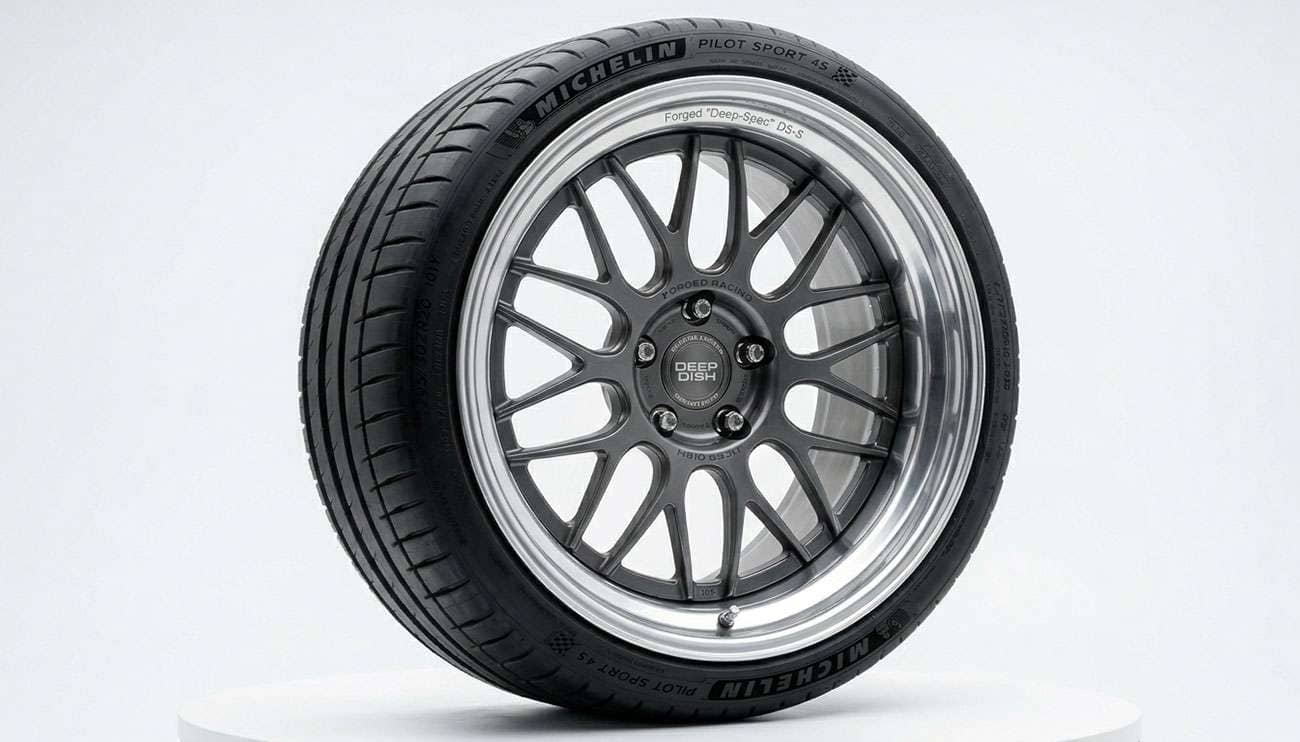
A deep dish wheel earns its name from one measurement: a mounting face set well back from the outer rim edge, leaving a tall, exposed lip that catches the light and pushes the barrel outward. That single design choice is what gives the wheel its presence, and it is also the source of nearly every drawback on the list. None of the downsides here are random or mysterious. Each one traces back to a number you can read off the spec sheet before you ever place the order.
This guide walks through the real tradeoffs the way I work through them on the order desk: by mechanism, not by reputation. If you understand why a deep dish setup behaves the way it does, you can predict every drawback in advance and decide whether the look is worth the cost. For the upside of the design and a full definition of the geometry, start with our companion piece on what deep dish wheels are.
Three numbers describe how any wheel sits on a vehicle: rim width, offset, and backspacing. A deep dish wheel does not introduce a new measurement so much as push two of these toward extremes. To get the dramatic lip, the offset moves toward zero or into negative territory, which means the mounting face sits closer to the inner edge of the rim and the whole barrel slides outward. Backspacing drops accordingly. The wider the rim and the more negative the offset, the deeper the dish.
Everything that follows is downstream of that shift. The weight changes because there is more aluminum in the barrel. The handling changes because the contact patch moves relative to the steering axis. The exposure changes because the lip now sits farther out than the tire sidewall. If you want the full mechanics of how these numbers interact, our breakdown of wheel offset, backspacing, and bolt patterns is the foundation worth reading first. The drawbacks below are simply that geometry expressed as real-world behavior.
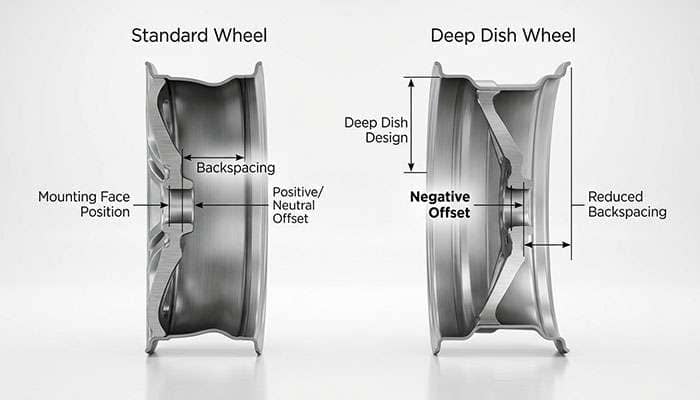
A taller lip means more material in the barrel, and more material means more mass. That is true across construction types, though the size of the penalty depends heavily on how the wheel is built. A heavy cast or multi-piece deep dish wheel can carry a meaningful weight increase over a comparable flat-face wheel, and that weight lands in the worst possible place for performance: out at the rim, as unsprung and rotating mass.
The reason location matters more than raw pounds is that unsprung weight is the portion of the vehicle the suspension has to control independently of the body. Every pound out at the wheel works against acceleration, braking, and ride compliance, and rotating mass at the rim is harder to spin up and slow down than the same mass parked near the hub. On a street cruiser the difference is often marginal and you may never feel it. On a build chasing quarter-mile times or quick throttle response, it is the kind of penalty that shows up on the clock. We cover the physics in depth in our article on whether unsprung weight matters.
The mitigation lives in construction. A forged deep dish wheel can recover much of the weight a cast version gives up, and the gap between construction methods is large enough to change the verdict entirely. If weight is a priority, the construction conversation matters more than the dish depth, which is why our guide to cast vs. forged vs. flow-formed wheels is required reading before you commit.
This is the drawback most buyers never see coming, and it is the one I spend the most time on at the counter. When you run a heavily negative offset to push the lip outward, you move the tire's centerline away from the steering axis. That distance is the scrub radius, and increasing it changes how the front end behaves under steering and braking.
The immediate effect a driver notices is heavier steering and a front end that feels less crisp, sometimes accompanied by understeer in quick transitions or on wet pavement. The longer-term effect is mechanical. A wheel that sits farther outboard acts like a longer lever arm on the suspension. Picture carrying a grocery bag with your arm fully extended versus holding it close to your body: the farther the load sits from the pivot, the more strain it places on everything in between. The same leverage works on your steering and suspension components, adding load to wheel bearings, ball joints, tie rods, and steering knuckles that were engineered around the factory geometry.
On a vehicle with heavy-duty components this added stress may be absorbed without complaint. On a lighter-duty platform with factory parts sized for a modest offset, an aggressive negative-offset deep dish setup can accelerate wear and, in extreme cases, shorten the service life of those parts considerably. Scrub radius is part of the same family of alignment-and-geometry concerns as camber, caster, and toe, and it deserves the same respect. The point is not that negative offset is forbidden; it is that there is a window of how much you can change before the tradeoffs compound, which we map out in our guide to how much you can change offset.
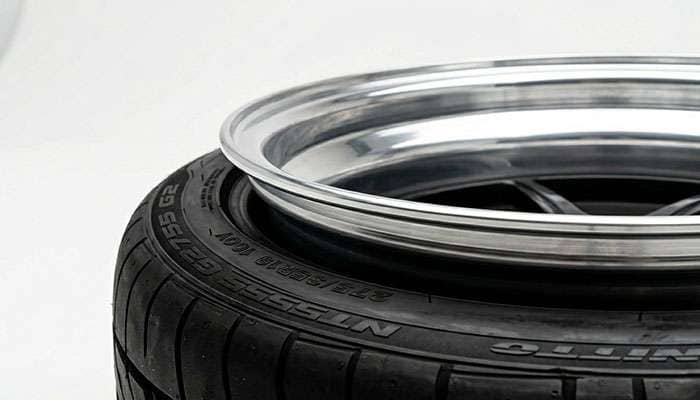
The polished lip that sells the look is also the first part of the wheel to make contact with a curb. Because the dish pushes the rim flange out past the tire sidewall, the tire no longer acts as a bumper for the wheel. Cut a parking-lot turn a little tight, misjudge a tight street park, or hand the keys to a valet, and the lip takes the hit before anything else does.
This is not a rare or freak occurrence. In my experience nearly every deep dish owner curbs a wheel at least once, usually within the first year. The only variable is whether it happens to you or to someone you lent the car to. The deeper the lip and the larger the diameter, the more exposed the flange becomes, which is why 20- and 22-inch deep dish setups tend to collect curb rash faster than smaller-diameter wheels.
The damage is not always catastrophic. Light curb rash on a one-piece cast or forged wheel can often be sanded and refinished by a qualified wheel-repair shop. Deeper gouges may require refinishing the entire lip, and on a polished or chrome surface that repair is more involved and more expensive than touching up a painted face. Rim protectors and disciplined parking habits genuinely help, but the honest expectation to set is this: an exposed lip will eventually meet a curb, and you should budget for that as part of ownership rather than hoping to avoid it forever.
Pushing the barrel outward solves one clearance problem and creates another. On the outboard side, the lip can extend past the fender line and lead to rubbing on the fender lip or inner liner, especially under suspension compression or at full steering lock. On the inboard side, low backspacing can bring the barrel close to brake calipers and suspension components. Get the measurements wrong and you are looking at contact in one direction or the other.
Solving it cleanly often means more than bolting the wheels on. Some applications need fender rolling, modest suspension adjustment, or spacers and longer hardware to find clearance, and each of those adds cost and complexity to the project. Larger brake kits complicate the picture further, since the inner barrel of a deep dish wheel may not clear an oversized caliper without careful planning; our big brake kit wheel clearance guide walks through how to check that before ordering. The reliable approach is to measure fender clearance, suspension travel, and brake clearance up front, rather than discovering an interference issue after the wheels arrive.
Drawback |
Spec-Sheet Driver |
What to Check Before Ordering |
|---|---|---|
Added unsprung weight |
Barrel material and construction method |
Stated wheel weight; cast vs. forged vs. multi-piece |
Heavier steering and component wear |
Negative offset and scrub radius |
Offset vs. factory spec; suspension component rating |
Curb rash on the lip |
Lip exposure past the tire sidewall |
Dish depth and overall diameter |
Rubbing and interference |
Low backspacing and wide section |
Fender clearance, suspension travel, brake clearance |
Higher cost and upkeep |
Construction and finish surface area |
Finish type; multi-piece vs. one-piece |
Two cost stories run in parallel with deep dish wheels: what you pay up front, and what you pay to keep them looking right. On the purchase side, the deepest, most dramatic lips usually come from forged or multi-piece construction, and those methods cost more than a standard cast wheel. Custom offsets, rare finishes, and the occasional spacer or adapter needed to dial in fitment push the total higher still. A one-piece cast deep dish wheel like the 9six9 SIX-1 Deep keeps the budget reasonable; a multi-piece forged setup is a different tier of investment entirely.
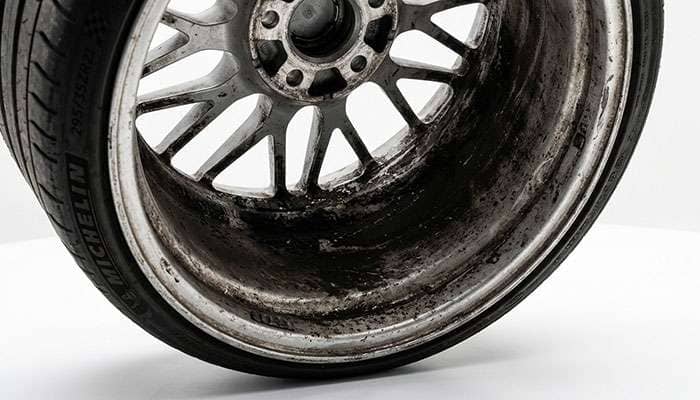
Maintenance is the quieter cost. A deep dish wheel simply has more surface area than a flat-face wheel, and the recessed barrel and inner lip trap brake dust, road grime, and moisture in places a quick wash never reaches. Polished and chrome finishes demand the most attention, because neglected buildup leads to pitting and corrosion over time, and brake dust shows more obviously against a bright surface. The practical defense is routine cleaning of the barrel and lip, a protective sealant or coating to slow buildup, and proper padded storage if you run a seasonal set. None of this is difficult, but it is real ongoing effort that a plain wheel does not ask of you.
Here is the part most articles skip: a properly specified deep dish wheel keeps almost every drawback above marginal. The problems compound when the spec ignores the vehicle, not because the design is inherently flawed. The look and the function are not at war as long as the numbers respect the platform.
Work backward from the vehicle. Choose an offset aggressive enough to give the lip you want but conservative enough to keep scrub radius and component loads in a sensible range. Match the construction to your priorities, leaning forged if weight matters and accepting a heavier cast wheel only if budget rules. Confirm fender, suspension, and brake clearance against real measurements before the order goes in. And set realistic expectations about curb exposure and cleaning, because those are inherent to the design rather than fixable with a better spec. For the full picture of what these wheels are built to do well, our piece on the purpose of deep dish rims rounds out the tradeoff. If you would rather have the fitment worked out for you, browse our wheel selection and let the spec be matched to your build from the start.
The drawbacks of deep dish wheels are not surprises waiting to ambush you; they are predictable consequences of the geometry that creates the look. The lip that gives the wheel its presence adds weight, sits exposed to curbs, shifts the scrub radius, and asks more of your suspension and your cleaning routine. Read those tradeoffs off the spec sheet before you buy, match the wheel to your vehicle and your goals, and the deep dish look can deliver the stance you want without the regret. Buy on impulse with no regard for offset, construction, or clearance, and every drawback above is waiting for you.
Properly specified deep dish wheels are not bad for your car. Problems arise from improper specs: too little backspacing causes fender rubbing, and excessive negative offset alters the scrub radius and adds leverage that stresses bearings, hubs, and steering components. Matching the offset and construction to your specific vehicle keeps the drawbacks marginal.
Yes. The outer lip sits past the tire sidewall, so it is the first part of the wheel to contact a curb. Deeper lips and larger diameters are the most exposed. Rim protectors and careful parking help, but most owners curb a wheel at least once, so it is wise to plan for occasional refinishing.
Often, yes, because the taller barrel uses more material, and that weight sits out at the rim as unsprung, rotating mass. The penalty depends heavily on construction: a forged deep dish wheel can recover much of the weight a cast or multi-piece version gives up. If weight matters for performance, the construction method matters more than the dish depth.
The negative offset that creates the lip moves the tire centerline away from the steering axis, increasing the scrub radius. That can make steering feel heavier and introduce understeer in quick transitions, while the wheel's outboard position acts as a longer lever arm that adds wear to suspension and steering parts over time.
They take more effort. The recessed barrel and inner lip have more surface area and trap brake dust and grime in spots a quick wash misses. Polished and chrome finishes need the most attention to prevent pitting and corrosion. Routine cleaning plus a protective sealant or coating keeps them looking right.



