
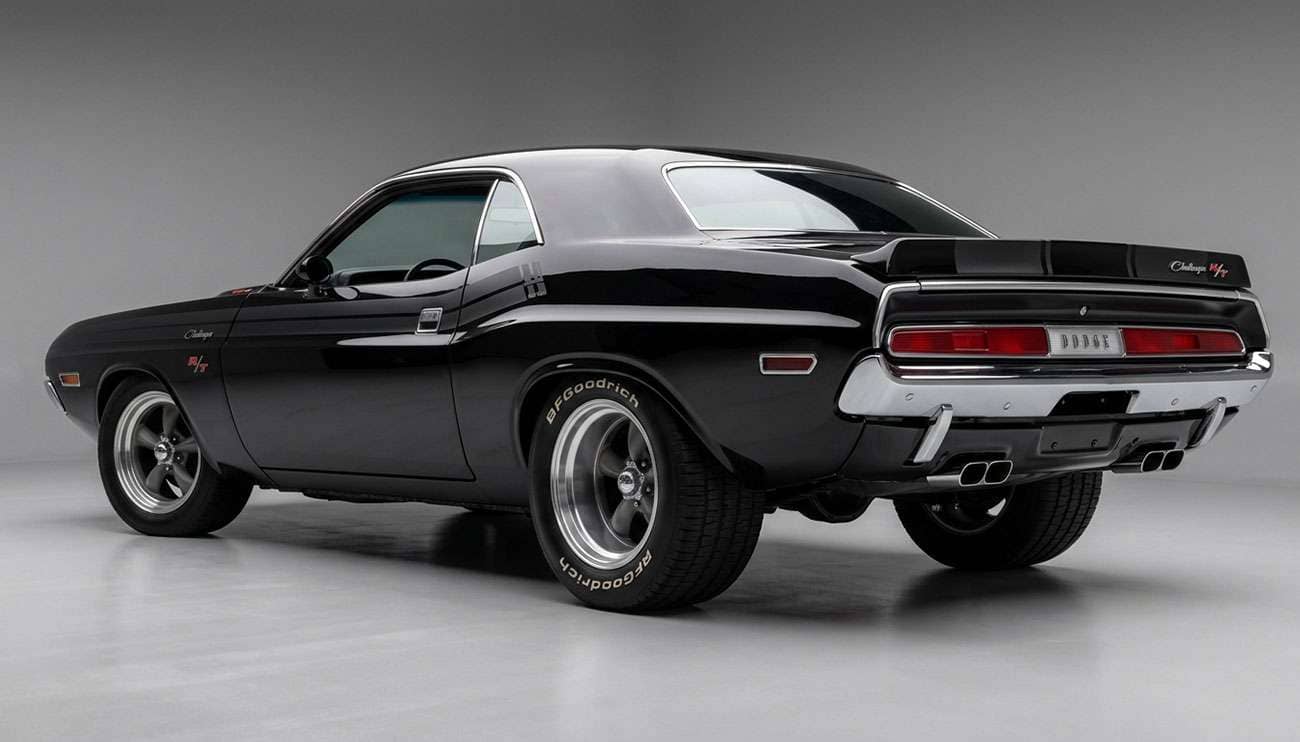
Walk any Goodguys show or cruise-in this summer and one stance is going to stop you cold. Car sitting low, fenders stuffed with rubber, and wheels — specifically the back wheels — that look like they've got a canyon cut into them. That canyon is the dish. The way the wheel face is tucked way back inside the barrel, leaving three, four, sometimes five inches of polished lip hanging out in the open. That's what hot rodders and drag racers have been calling deep dish for the better part of fifty years, and that's what gives a muscle car that aggressive "don't mess with me" look you can spot from across the parking lot.
I've been bolting deep dish wheels onto hot rods since the Pro Street era first kicked off. The style has come and gone and come back again — wider, fatter, meaner, then sleeker, and now swinging back to proper period-correct depth for the classic builds. But the geometry that makes a wheel "deep dish" hasn't changed, and the reasons you'd run one are the same today as they were when the Tubbed Chevy era was in full swing. Let me walk you through what a deep dish wheel actually is, where the look came from, and what you need to know before you bolt a set to your ride.
A deep dish wheel is a wheel where the mounting face — the flat part where the lug holes live and the wheel bolts to the hub — sits significantly back from the outer rim edge, creating a visible concave "dish" on the outside of the wheel. The deeper the dish, the more lip you see hanging out past the spokes.
Every wheel has some dish to it, even the flat-looking OE stuff that came on your grandma's Buick. But on a proper deep dish, the dimension between the outer rim edge and the wheel face is a design feature you can measure with a ruler. Walk around a classic with a set of Cragar S/S wheels running a wide rear, and you can literally see three or four inches of mirror-polished lip sitting proud of the tire sidewall. That's dish.
The trick is in the backspacing — the measurement from the inner edge of the wheel to the mounting face. A wheel with low backspacing (say, 3 inches) on a wide rim is going to push the barrel out toward the fender and pull the face in toward the brake — that's your deep dish. A wheel with high backspacing (say, 6 inches) on the same width rim will sit flush with the tire, no lip to speak of. Same rim width, totally different look, thanks to where that mounting face is placed. Our full breakdown on how to measure backspacing on classic car rims walks through the measurement if you're new to it.
There's no official definition. In hot rod circles, I've seen guys call anything with a visible lip "deep dish," and I've seen purists argue it doesn't count unless you've got four inches or more sticking out. Here's how I categorize them when a customer walks in the door.
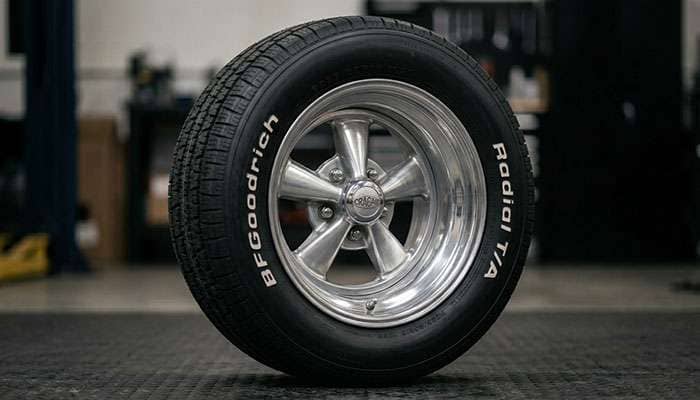
Subtle dish (1 to 2 inches of lip): The shallowest of the deep dish family. You see this on a lot of factory Mustang GT wheels, aftermarket concave designs, and tasteful street builds. Gives the car some stance without screaming race car. Daily-driver-friendly.
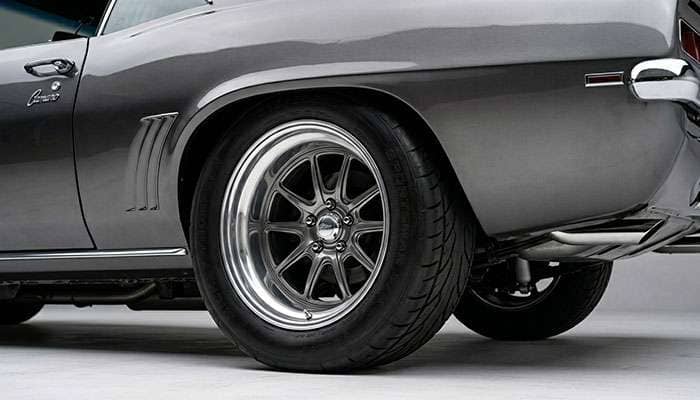
Moderate dish (2 to 3.5 inches of lip): The sweet spot for classic muscle and pro-touring builds. A '69 Camaro with a set of 15x8 Torq Thrust D's running around 3 inches of backspacing hits this territory, and it's arguably the most-photographed look in muscle car history. Period-correct enough for a show, aggressive enough to get your point across.
Aggressive dish (4 inches and up): This is Pro Street territory. Tubbed rear quarters, mini-tubbed cars, drag race street machines. Rear wheels running 15x12 or 15x14 with five-plus inches of polished lip, front wheels often narrow to balance the look. You're not getting this stance without suspension work, fender rolling, and often narrowing a rear housing to clear the rubber.
One thing I tell every customer: dish depth is a style choice, not a performance upgrade. A two-inch dish doesn't handle worse than a four-inch dish — they just look different. The performance differences come from rim width, weight, and construction method, which we'll get to.
The deep dish look traces straight back to NHRA drag racing. Back in the '60s and '70s, drag racers needed to stuff as much tire as possible under their rear fenders to put the power down. The solution was twofold: widen the wheelhouse (tubbing) and run a wheel where the mounting face could tuck inside a very wide rim, letting a fat slick fit where a skinny street tire used to live. Centerline started making their polished aluminum drag wheels in 1973, and the look of a deep-dished rear wheel with a narrow front became synonymous with going fast in a straight line.
By the late '70s and into the '80s, that drag strip aesthetic had bled into the street scene, and the Pro Street movement was born. Street-driven muscle cars built to look like race cars — tubbed rears, wheel-tubs stuffed with Mickey Thompson ET Street tires, narrow front runners, and deep dish wheels everywhere. Magazines like Hot Rod and Super Chevy splashed Pro Street builds on their covers for a solid decade.
The look fell out of fashion in the '90s when the smooth, Boyd Coddington-style street rod and the pro-touring movement took over. Deep dish went underground. Then somewhere around the 2005-2010 window, it came roaring back — this time on restomods, modern muscle, tuner builds, and even European performance cars. Today you'll see deep dish on everything from a '69 Nova to a new Porsche 911, and the core geometry hasn't changed a bit. For the full history of wheel styles on classic muscle, our guide on the names of muscle car wheels from vintage to modern covers the lineage.
Three measurements decide how a deep dish wheel sits on your car. Get any of them wrong and you'll be rubbing a fender or watching your wheel flange kiss a curb in the McDonald's parking lot.
Offset. Offset is the distance from the mounting face to the true centerline of the rim, measured in millimeters. Positive offset pushes the wheel face outward (toward the fender). Negative offset pulls the wheel face inward (toward the brake), which is what you want on a deep dish setup — it pushes the barrel and lip out where you can see them. Deep dish wheels typically run offsets anywhere from zero to heavily negative.
Backspacing. Backspacing is the measurement from the inner edge of the rim to the mounting face, in inches. It's the old-school drag racer's way of saying the same thing as offset. A 15x8 wheel with 3.5 inches of backspacing has the face closer to the inner edge — that gives you more dish on the outside. Same 15x8 wheel with 5 inches of backspacing has the face pushed outward — no dish, flush look. Our deep dive on wheel offset, backspacing, and bolt patterns explained gets into the math if you want the full breakdown.
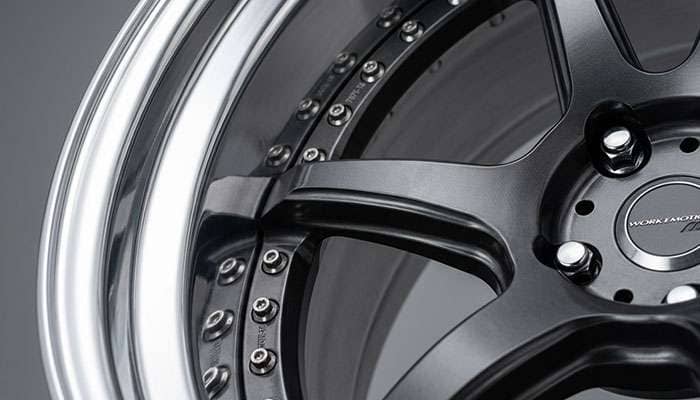
Lip depth. This is the cosmetic measurement everyone actually cares about — how much polished (or chromed, or powder-coated) lip sticks out past the spokes. Multi-piece wheels let you build whatever lip depth you want by choosing a different barrel. Cast one-piece wheels have a fixed lip depth designed into the casting.
There are four good reasons to run deep dish, and one not-so-good one.
The stance. Biggest reason by a mile. A proper deep dish wheel on a classic car stops people in their tracks. You can't fake that look with any other wheel style — the depth is visible, the polish catches the light, and the car just plants itself differently. Nine out of ten of my customers are buying deep dish for exactly this reason and won't admit it.
Wider tires. Deep dish wheels are usually wider than what came on the car from the factory. A 15x8 or 15x10 rear with proper dish lets you run a 275 or 295 tire back there, which is a real-deal traction upgrade if you're putting power down. Matched with a narrower front runner, you've got a classic "big 'n' little" setup that looks right and hooks up right.
Brake clearance. When you're building a pro-touring car and you step up to a big Baer or Wilwood brake kit, the wheels have to clear the calipers. A deep dish design with the face pushed back toward the brake tucks enough metal out of the way that a six-piston front caliper fits without hitting the wheel spokes. This is why you see so many restomod builds with deep dish 17s and 18s — it's as much brake fitment as stance.
Staggered setups. Running a narrower wheel up front and a wider one out back — called a staggered setup — is the classic hot rod formula, and deep dish lets you do it with visual impact. Our full guide on the muscle car staggered setup covers the history and the fitment math.
The bad reason: because your buddy has them. Don't be that guy. Deep dish wheels require thought, measurement, and often suspension or body mods. Buying a set because the white Chevelle on Instagram looked sick will cost you time and money when they don't fit.
Every wheel style has trade-offs. Deep dish has more than most, and I feel like it's my job to tell you about them before you drop $4,000 on a set.
Curb rash is inevitable. That beautiful polished lip sticks out past the tire sidewall, which means it's the first thing to make contact when you cut a parking lot turn too tight. Every deep dish customer I've ever had has curbed at least one wheel within the first year of ownership. The only question is whether it's your fault or a valet's.
They're heavier. Big lips mean more aluminum, which means more unsprung weight. On a street car the difference is marginal. On a track car or a stoplight-to-stoplight dragster, every pound matters. If you're chasing 9-second quarters, light is better than deep. For the weight-vs-performance breakdown, check our article on the construction method tradeoffs in cast vs. forged vs. flow-formed wheels.
Scrub radius shifts. When you run a heavily negative offset wheel, you're changing the scrub radius — the relationship between the steering axis and the tire centerline. This affects how the car responds to braking, acceleration, and road irregularities. A mild dish on a modern car barely registers. A five-inch-negative-offset setup on a sixty-year-old chassis is going to steer differently, and you may need an alignment spec the original factory never envisioned.
Parking becomes a sport. Lips 3+ inches wide eat curbs, concrete blocks, and pothole edges for breakfast. Most guys running serious dish park at the back of the lot and walk.
Cleaning is harder. Brake dust, road grime, and tar collect inside that deep barrel where it's hard to reach. A good detailer with a long wheel brush is your friend. A neglected polished lip will cloud and pit over time if you don't keep after it.
How a deep dish wheel is made matters more than most buyers realize. Here's the plain-English version.
Cast one-piece. Molten aluminum poured into a mold. Cheapest to make, heaviest of the three, limited customization (the lip depth is baked into the casting). Most entry-level deep dish wheels — like the classic one-piece Torq Thrust II or Cragar S/S reproduction — are cast. Perfectly good for a street car, plenty strong, easy on the wallet.
Forged one-piece. A block of aluminum pressed under massive pressure into the wheel shape. Lighter, stronger, and pricier than cast. You'll see forged deep dish wheels on pro-touring and track-day builds where weight matters. Budget on paying two to three times what you'd pay for cast.
Multi-piece (two- or three-piece). The face and the barrel are separate pieces bolted together, sometimes with a separate inner barrel as well. This is how you get six-plus inches of mirror-polished lip — the barrel is spun or forged to whatever depth you want, bolted to whatever face design you like. Most true "Pro Street" wheels are multi-piece. They're expensive (think $1,000+ per wheel), they can be serviced if you curb a lip (just replace the barrel), but they're also the heaviest of the three and require periodic re-torquing of the barrel bolts.
Here's where most deep dish projects go sideways. Buying the wheels is the easy part. Making them fit without rubbing, scrubbing, or sticking out past the fenders is the hard part. Run through this list before you order.
Measure before you buy. Pull a tape measure from the hub mounting face out to the fender lip, and note the distance at ride height. That's your maximum wheel-plus-tire width per side. Anything beyond that number will rub.
Consider suspension travel. The wheel can clear the fender at ride height and still rub under full compression. A drop over a railroad crossing at 40 mph loads the suspension hard — if the rear quarter panel comes down an inch and a half, your tire needs to still be inside the sheet metal.
Fender rolling. Many deep dish applications require rolling the inner fender lip over with a special tool so the tire doesn't cut on the bare metal edge. Common on muscle cars running 275+ out back.
Rear housing width. On an older rear-drive chassis, the rear housing width determines how much tire you can run. Sometimes a project requires narrowing the housing two to four inches to get the wheels and tires inside the body.
Brake caliper clearance. Low offset / low backspacing pulls the face toward the caliper. If you're running big brakes, measure the clearance carefully — or buy wheels rated for your specific brake kit.
Alignment afterward. Any wheel change significantly different from factory spec warrants a trip to an alignment shop that knows their way around older cars. Don't let a chain quick-lube set the specs on your Chevelle.
A few wheel designs defined the deep dish look and every hot rodder worth his salt can name them on sight.
American Racing Torq Thrust D. Five-spoke muscle car icon with a proper dish when spec'd in wider widths. The "D" stands for "Deep." Been on Chevelles, Camaros, Mustangs, and street rods since the '60s. Our full Torq Thrust wheels review digs deeper.
Cragar S/S. The five-spoke chrome classic. Spec'd wide with 3 or 3.5 inches of backspacing, a Cragar S/S delivers serious dish and one of the most recognizable looks in American hot rod history.
Centerline Auto Drag. Polished aluminum, spider-style spokes, available in widths and backspacings that produce full-on Pro Street dish. Staple of the '80s Pro Street movement.
Weld Draglite. Aluminum drag race wheel built for strength and weight. Available in one-piece and multi-piece configurations, with deep dish fronts and rears. See are Weld wheels any good for the full breakdown.
Boyd Coddington hot rod lineup. Legendary street-rod builder whose wheel designs — Blaster, Bonneville, Crown Jewel, Classic series — brought multi-piece deep dish to the custom rod scene in the '90s and beyond.
Mickey Thompson Classic III and V. Five- and six-spoke designs with properly dished rear fitments. Long favorite for Pro Street and drag race street cars.
Here's what I stock and recommend for deep dish builds, sorted by use case:
Wheel |
Best For |
Why It Works |
|---|---|---|
Classic muscle and restomods wanting period-correct stance |
The five-spoke silhouette is unmistakably muscle-car. Available in 15x7, 15x8, and larger widths with the proper backspacing for a proper dish. Cast aluminum, affordable, fits thousands of classics out of the box. |
|
Traditional hot rod looks and mild custom builds |
The original five-spoke chrome icon. When spec'd in wider rear sizes with lower backspacing, delivers that classic 1970s hot rod dish that built American muscle car culture. |
|
Drag race street machines and serious Pro Street builds |
Forged aluminum strength, lightweight construction, and purpose-built drag race geometry. Available in narrow fronts and wide rears with heavy dish for the full Pro Street stance. |
|
High-end street rods and custom muscle car builds |
Multi-piece construction with custom finish options. The Boyd lineup offers dozens of face designs across the classic, polished, and billet-style categories, buildable to whatever lip depth the project calls for. |
Deep dish wheels are one of those automotive style choices that's been around long enough to be genuinely classic. The Pro Street era faded, pro-touring came and went, and here we are in 2026 with deep dish wheels still showing up on show-winning builds every single weekend. That's not a trend — that's a permanent fixture of American hot rod culture, and there's a good reason for it. When a classic muscle car wears the right set of dished rollers, with the right tire stagger and the right stance, it hits you in the gut in a way that no flush wheel ever will.
Just do your homework before you buy. Measure your fender clearance, pick the right backspacing, plan for the alignment work, and budget for the occasional curb kiss. Get those things right and you'll have a car that turns heads at every stoplight for the next twenty years.
If you're building a classic, a muscle car, a pro-touring restomod, or a full-on Pro Street machine, come visit us at Performance Plus Tire. We stock the classic five-spokes, the drag-race forged stuff, and the custom multi-piece lineups — and we'll help you spec out the backspacing, offset, and lip depth that'll clear your fenders and nail the look you're after.
A deep dish wheel has the mounting face set back from the outer rim edge, creating a visible polished lip that sticks out past the spokes. A concave wheel has spokes that curve gradually inward toward the hub without a pronounced outer lip. Deep dish is the more aggressive, classic hot rod look; concave is the subtler modern performance car look.
Not directly. Deep dish geometry is primarily a styling choice. The performance gains come from secondary effects: wider rims let you run wider tires for better traction, and lower backspacing can clear bigger brake calipers. A deep dish wheel made of heavy cast aluminum will actually hurt performance compared to a lighter forged wheel at the same width.
Properly specified deep dish wheels aren't bad for your car, but improperly specified ones can cause problems. Too little backspacing pushes the wheel into the fender and causes rubbing. Excessive negative offset changes the scrub radius and can stress bearings, hubs, and steering components. Work with a shop that can match the wheel spec to your specific vehicle and build.
Tire size depends on the wheel's rim width, not its dish depth. A 15x8 deep dish wheel fits the same tire range as a 15x8 flat wheel — typically a 225 to 275 tire depending on the specific rim and intended use. The dish depth only affects where the wheel sits relative to the fender, not what tire you can bolt to it.
Light curb rash on a cast one-piece wheel can usually be sanded and polished out by a qualified wheel repair shop. Deeper damage may require refinishing the entire lip. Multi-piece deep dish wheels have the advantage that the damaged barrel can be unbolted and replaced without replacing the whole wheel.
Cast one-piece deep dish wheels from brands like American Racing and Cragar typically run $200–$400 per wheel. Forged one-piece wheels run $600–$1,000 each. Multi-piece deep dish wheels with deep custom lips can easily hit $1,000–$2,500 per wheel or more, depending on the finish, barrel width, and builder.



