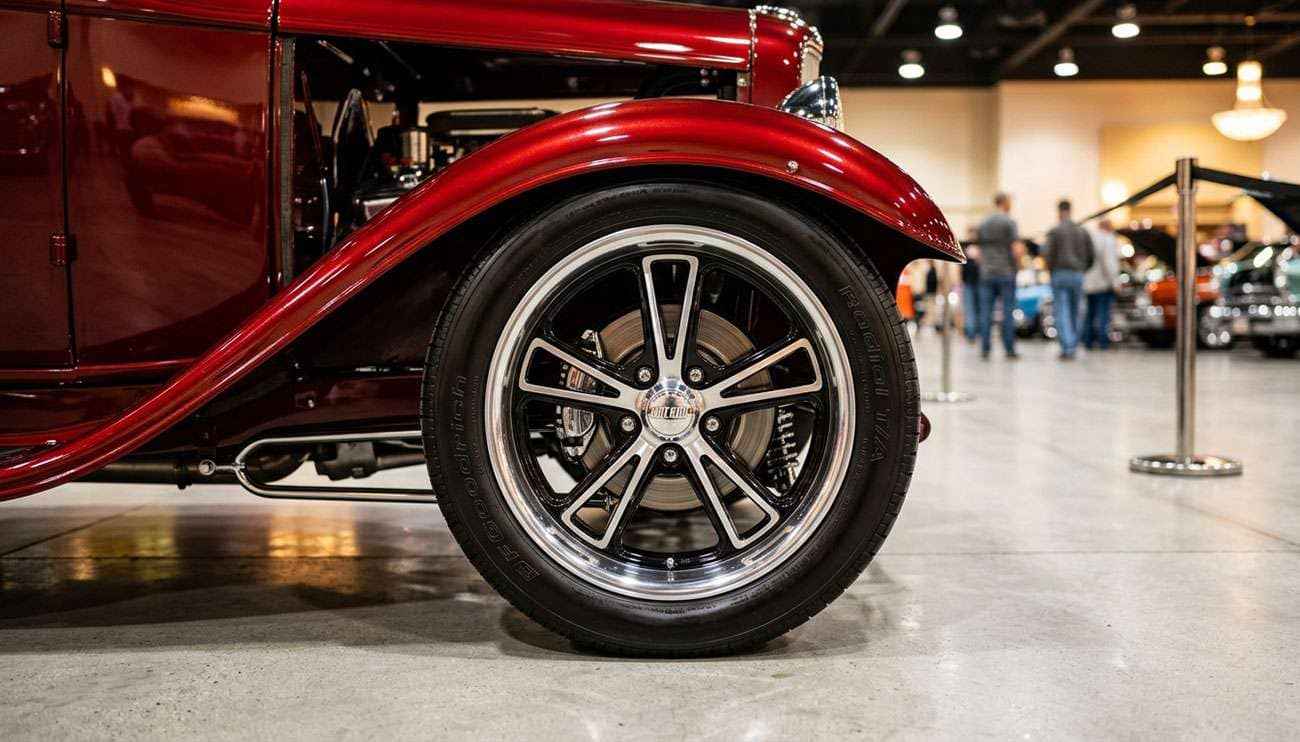
A two-tone wheel is only as tough as the way its second color was made. Every two-tone wheel looks like two colors from ten feet away, but there are really five different processes behind them. Some cut bare aluminum and protect it with clear coat. Some lay down two coats of paint. Some combine chrome plating with paint. Some are built from separate pieces. That process decides how the wheel handles road salt, brake dust, a car wash brush, and a curb. Pick the look you like, then pick the process that fits how you drive. Do it in that order and you will still love the wheels in five years.
I have been selling wheels since we opened the doors in Long Beach in 1971, and two-tone has never really gone out of style. It just changes clothes. In the sixties it was a chrome rim with a painted center. By the eighties it was gold and silver. Today it is gloss black with bright machined faces on everything from a Tri-Five to a new Silverado. The look keeps coming back because it does something a single color cannot: it shows off the shape of the wheel. The question I get most is not which one looks best. It is which one will still look good after a few winters. Here is how to answer that.
Two-Tone Type |
How the Second Tone Is Made |
Holds Up To |
Watch Out For |
|---|---|---|---|
Black machined face |
Whole wheel painted, then the face is cut on a lathe to bare metal and clear coated |
Normal daily driving with gentle cleaning |
Chipped clear coat lets moisture in; road salt |
Milled spokes or accents |
Painted wheel with spoke edges or windows cut by a CNC mill, then clear coated |
Daily driving; small cut areas mean less exposed metal |
Same clear coat weak points, just smaller |
Machined or mirror cut lip |
Only the outer lip is cut to bare metal and clear coated |
Most driving |
The lip is the part that hits curbs first |
Chrome with painted accents |
Chrome plated wheel with painted pockets, inserts, or center |
Show cars and fair-weather drivers |
Pitting from salt and moisture; acidic cleaners |
Painted two-tone or stripes |
Two paint or powder colors, or paint plus pinstripes |
Year-round driving; easy to touch up or refinish |
Less sparkle than bare metal |
Now the same five, keyed to the car and the way you use it.
Your Car and Driving |
Best Two-Tone Choice |
Why |
|---|---|---|
Daily driver in a snow or salt state |
Painted two-tone, or a small milled accent |
Least bare metal exposed to salt |
Daily driver in a dry climate |
Black machined face or machined lip |
Full sparkle with low corrosion risk |
Classic or hot rod, weekend driven |
Chrome with painted accents, or gunmetal with machined lip |
Period-correct look and lives in the garage |
Lifted truck that sees dirt |
Milled accents on black |
Hides scuffs; less bare face to chip |
Modern European or sport sedan |
Mirror cut face on silver or gunmetal |
Matches the factory diamond-cut look |
A two-tone wheel uses two contrasting finishes on the same wheel. Usually one is dark, such as black, gunmetal, or bronze, and the other is bright, such as machined aluminum, polished metal, or chrome. The contrast makes the spoke shape stand out from a distance, which is why designers love it.
Shops and catalogs use a lot of names for these: black machined, machined face, milled, diamond cut, mirror cut, two-tone, and so on. They are not all the same thing. Most of the names tell you where the bright metal is and how it was made, and that is the part that matters for how long the finish will last.
The key thing to understand is the difference between bare metal and a coating. Paint, powder coat, and chrome are coatings that seal the aluminum underneath. Machined, milled, and diamond-cut finishes are the aluminum itself, cut bright and then covered with a thin layer of clear coat. That clear coat is the only thing between the bare metal and the road. Keep that in mind, because it explains almost everything below.
A black machined wheel is the most common two-tone you will see today. The process goes like this. The wheel is cast, then painted completely, usually gloss black. Then it goes on a lathe, and a cutting tool skims a thin layer off the front face of the spokes and the lip. That exposes bright bare aluminum on the face while the black stays in the pockets and on the sides of the spokes. Finally, the whole wheel gets a clear coat to seal the bare metal.
Some makers call this a diamond cut, because the lathe tool is often diamond-tipped and leaves a very fine, almost reflective finish. You can usually see faint circular tool lines in the metal if you look close.
Nothing else gives that crisp, bright-on-black contrast. It shows off the spoke design better than any single color. It also goes with nearly any paint color.
The machined face is bare aluminum under clear coat. If a rock chip, a curb, or a harsh chemical breaks through that clear coat, moisture gets under it. Aluminum corrodes, and the corrosion spreads under the clear, leaving white or cloudy trails across the face. Once that starts, it keeps going. On a car that sees road salt, that is the most common way a black machined wheel ends up looking tired.
If you want to see one in action, our Moto Metal MO951 black and machined review shows how this finish looks on a truck.
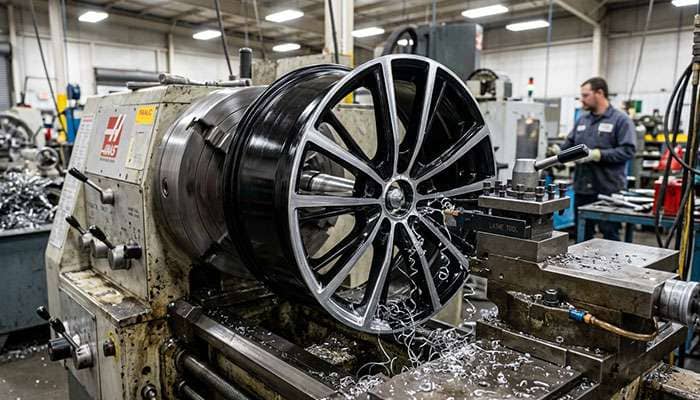
Milled is a close cousin of machined, but it is done on a different machine and looks different. Instead of a lathe spinning the whole wheel and skimming the face, a CNC mill cuts specific details: a bright chamfer along the edge of each spoke, a cut around the windows, or a groove down the middle of a spoke. The rest of the wheel stays painted.
The result is a mostly dark wheel with thin bright lines tracing the design. It is more subtle than a full machined face, and it reads well on trucks and modern cars that want a darker look with a little detail.
A milled wheel has much less bare metal showing than a machined face wheel. There is still clear coat over each cut, and it can still chip, but there is less area to chip and less area for corrosion to spread across. For a daily driver, especially a truck, milled accents are a good compromise between sparkle and durability.
Here, only the outer lip of the wheel is cut bright. The face and spokes stay painted. You get a bright ring around the outside of a dark wheel. A mirror cut lip is the same idea, finished to a higher shine.
This is a classic look. A gunmetal or black wheel with a machined lip has been on muscle cars and hot rods for decades, and it still looks right. A mirror cut face, where the whole face is finished to a near-mirror shine over silver, is popular on modern European cars because it echoes the factory diamond-cut wheels many of them come with.
The catch with a bright lip is simple: the lip is the part of the wheel that touches the curb first. If you parallel park on the street every day, expect lip rash eventually. The good news is that a lip is a smaller, simpler area to refinish than a whole machined face.
This is the oldest two-tone of all, and the one I grew up with. A chrome-plated wheel with painted pockets, a painted center, or a painted insert. Think of the five-spoke Magnum 500 style with a chrome face and dark accents, or a chrome wheel with black inserts behind the spokes.
Chrome is a plating, not bare metal, so it does not corrode the way a machined face does. It is very bright and very tough on the surface. But chrome has its own enemy: pitting. Road salt and moisture can work into tiny flaws in the plating and leave small pits and rust spots. That is why chrome two-tone wheels are at their best on show cars, weekend cruisers, and cars that live in dry climates.
If you are deciding between chrome and polished aluminum for the bright half of the look, our comparison of chrome vs. polished wheels covers how each one wears over time. And if you want to know where PVD fits in, see our guide to PVD vs. chrome vs. powder coat.
The toughest two-tone is the one with no bare metal at all. Two colors of paint or powder coat, or a painted wheel with pinstripes. Gloss black with a red stripe on a steel wheel. A gunmetal center with a silver ring. A body-colored center on a black wheel.
Because the whole wheel is sealed in paint or powder, there is no bare aluminum to corrode. Chips can be touched up. If the wheel ever gets beat up, it can be stripped and refinished in any colors you want. Powder coat in particular is very durable; our article on powder coating wheels explains why.
The tradeoff is sparkle. Paint does not catch the light the way cut aluminum or chrome does. For a hot rod or a rat rod, that is often exactly the look you want. For a show car that needs to glitter, it may not be.
Not if you treat the bright half gently. Most two-tone damage I see is self-inflicted at the car wash. Here is what works.
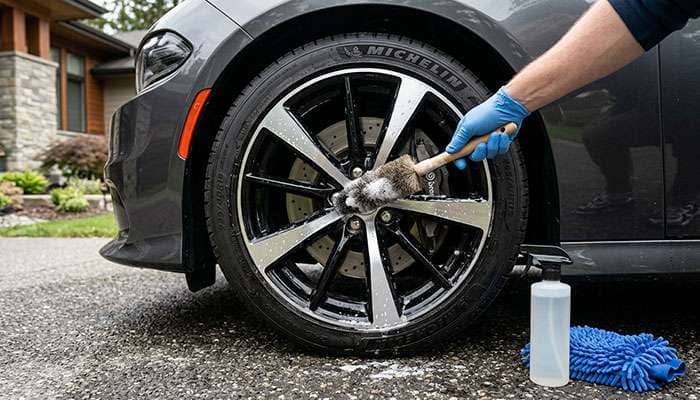
Strong acidic or alkaline wheel cleaners can eat at clear coat and stain bare aluminum underneath. On a machined or milled wheel, that is how corrosion starts. Use a pH-neutral cleaner made for clear-coated or painted wheels. Our guide on how to clean aftermarket wheels by finish breaks down what to use on each surface.
Stiff brushes and abrasive pads scratch clear coat and chrome. Use a soft wheel brush or a microfiber mitt.
Brake dust is hot metal particles, and it can bake into clear coat if it sits. Wash it off every week or two on a daily driver.
A wheel sealant or ceramic coating adds a layer over the factory clear, makes brake dust easier to wash off, and gives the clear coat a little more protection against chips and chemicals.
If you drive in winter, rinse the wheels after every trip on salted roads. Salt sitting in a chip in the clear coat is the fastest way to ruin a machined face.
Yes, but how depends on the finish, and it is the main reason I tell people to think about process before they buy.
Painted two-tone: the easiest. Sand, fill, and repaint the damaged spot. Most wheel repair shops can do this, and it is the least expensive fix.
Machined face or diamond cut: the hardest. You cannot just paint over curb rash on bare cut aluminum. The usual fix is to strip the face, put the wheel back on a lathe, re-cut the face to bright metal, and clear coat it again. That takes a shop with the right lathe, and it costs noticeably more than a standard paint repair. Each re-cut also removes a little metal, so a wheel can only be re-cut so many times.
Milled accents: in between. Small damage on a painted area is easy. Damage that runs through a milled cut needs the cut redone or the area repainted.
Machined or mirror cut lip: often re-cut on a lathe, and simpler than a whole face because it is a smaller area.
Chrome: small scuffs are tough to hide. Real damage usually means re-plating, which is a specialty job.
Our guide on how to fix curb rash on wheels covers DIY kits and when to go to a pro. If you park on the street a lot, a painted or milled two-tone will cost you less in the long run than a full machined face.
Here are the wheels I would point you toward for each style. A few of these are from our own Boyd Coddington and Hot Rod Hanks lines, because I know exactly how they are built. Prices are per wheel for the size shown; other sizes are on each product page.
Wheel |
Finish |
Two-Tone Type |
Size Shown |
Price |
|---|---|---|---|---|
Gloss Black / Machined Face / Diamond Lip |
Black machined face |
17x7 |
$249.70 |
|
Black w/Milled Spokes |
Milled accents |
15x7 |
$188.99 |
|
Gunmetal / Machined Lip |
Machined lip |
15x7 |
$159.50 |
|
Silver W/Mirror Cut Face |
Mirror cut face |
18x10 |
$253.30 |
|
Chrome/Semi Gloss Black |
Chrome and paint |
15x7 |
$199.00 |
|
Gloss Black w/Red and Blue Stripes |
Painted with stripes |
15x10 |
$95.00 |
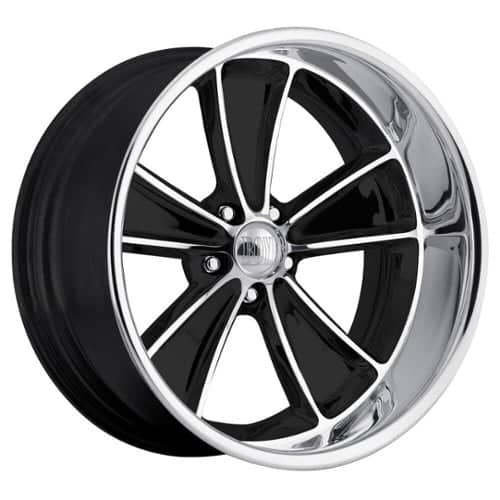
The Speedster is gloss black with a machined face and a diamond-cut lip, which gives you two bright elements on one wheel. It is a clean, simple spoke design that suits a modern build, a resto-mod, or a late-model muscle car. If you want the full machined look and you drive in a dry climate, this is the one I would start with.
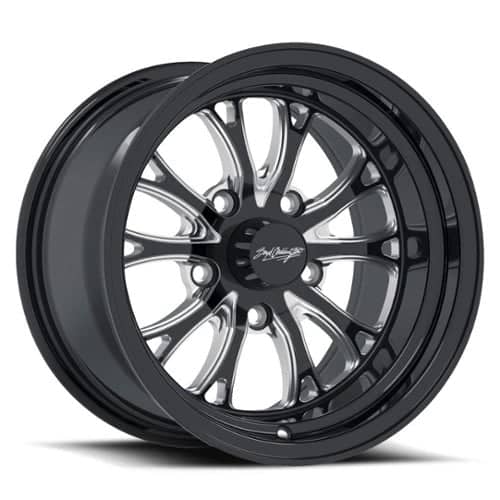
The Bristol is mostly black with milled detail on the spokes. You get the bright accents without a big exposed face, which is why I recommend it for cars that see real weather. It comes in 15-inch sizes for classics, and narrow 17-inch fronts for drag and pro-street builds.
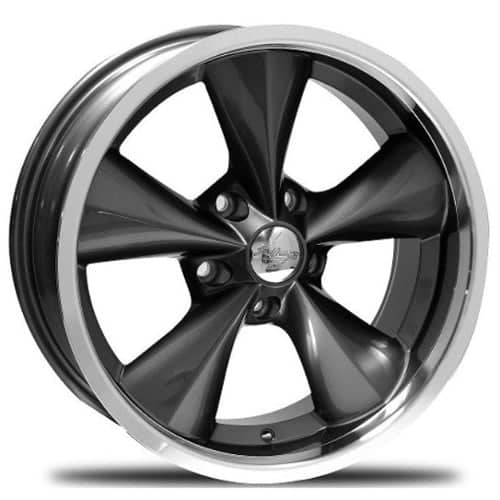
Gunmetal with a machined lip is about as hot rod as a wheel gets. The Junkyard Dog runs from 15-inch classic sizes up to 20 inches, so it works on a traditional build or a modern pro-touring car. Only the lip is bare metal, so it is easier to live with than a full machined face.
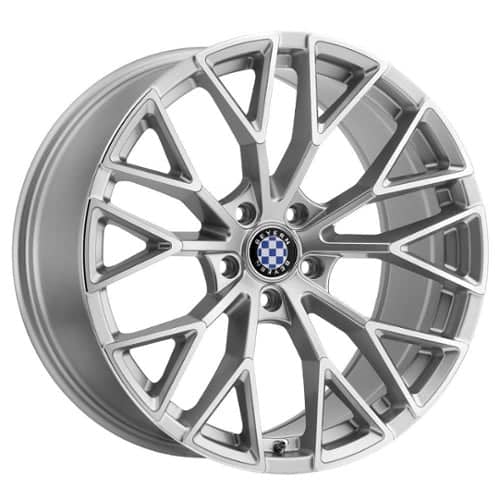
The Antler pairs silver with a mirror cut face, a look that suits BMWs and other European cars that came with diamond-cut wheels from the factory. It is built in the 5x120 bolt pattern and in sizes from 17 to 22 inches.
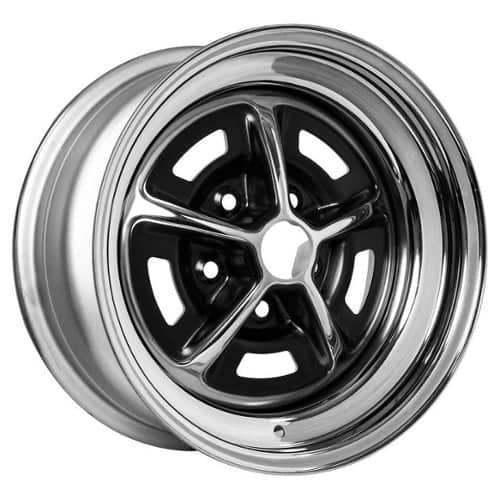
The Magnum 500 style is pure muscle car history, and this one pairs a chrome face with semi gloss black accents. It is the classic chrome and paint two-tone. For a weekend cruiser or a show car, it is hard to beat.
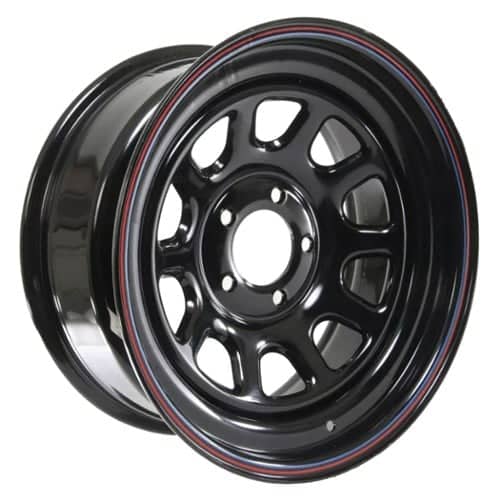
This is our own Hot Rod Hanks wheel with a gloss black finish and red and blue stripes. No bare metal, nothing to corrode, and nothing to baby. It is the toughest two-tone on this list and the most affordable, and it looks right on a gasser, a rat rod, or a traditional hot rod.
Here is the order I would make the decision in.
Step 1: Be honest about where you drive. Salt, snow, gravel roads, and street parking all push you toward painted or milled two-tones. Dry climates and garage-kept cars can run anything.
Step 2: Pick your bright half. Machined aluminum for a crisp modern look, chrome for classic flash, or a second paint color for the toughest option.
Step 3: Decide how much bright metal you want. A full machined face is the most dramatic. Milled accents or a machined lip give you the look with less exposed area.
Step 4: Match the dark half to the car. Gloss black is the safe choice with almost any paint. Gunmetal and bronze warm up a classic. Body color can tie the wheel to the car.
Step 5: Think about repairs. If you park on the street, factor in that a machined face costs more to fix than a painted wheel.
Step 6: Protect them from day one. Seal or ceramic coat new wheels before they see the road, and use a pH-neutral cleaner.
If you are weighing other bold finishes too, our gold wheels finish guide covers another look that is making a comeback. When you are ready to shop, browse our machined custom wheels.
Two-tone wheels look like one category, but they are really five different finishes with very different strengths. The bright half is the part to think about. Machined and milled finishes are bare aluminum under clear coat, so they are beautiful and need gentle care. Chrome is tough on the surface but hates salt. Painted two-tones give up a little sparkle for a lot of durability.
Pick the look you love, then pick the process that fits how you drive. A garage-kept hot rod can wear a full machined face or chrome forever. A daily driver in a salt state will be happier with milled accents or paint. Get that match right and your two-tone wheels will look as good in five years as they do the day you bolt them on.
Two-tone wheels go by several names depending on how the bright half is made: black machined, machined face, diamond cut, milled, mirror cut, machined lip, or chrome with painted accents.
Yes, with care. The machined face is bare aluminum under clear coat. As long as the clear coat stays intact, it holds up well. If it chips, moisture and salt can cause corrosion under the clear.
Machined wheels have the whole face cut bright on a lathe. Milled wheels have specific details, such as spoke edges or windows, cut by a CNC mill, so less bare metal shows.
You can, but powder coating covers the bright machined face, so you lose the two-tone look unless the face is re-machined afterward.
Use a pH-neutral wheel cleaner, a soft brush or microfiber mitt, and plenty of water. Avoid strong acidic cleaners and stiff brushes, which can damage the clear coat over machined areas.
Yes, but it usually means stripping the face, re-cutting it on a lathe, and re-applying clear coat. It costs more than a standard paint repair, and each re-cut removes a little metal.