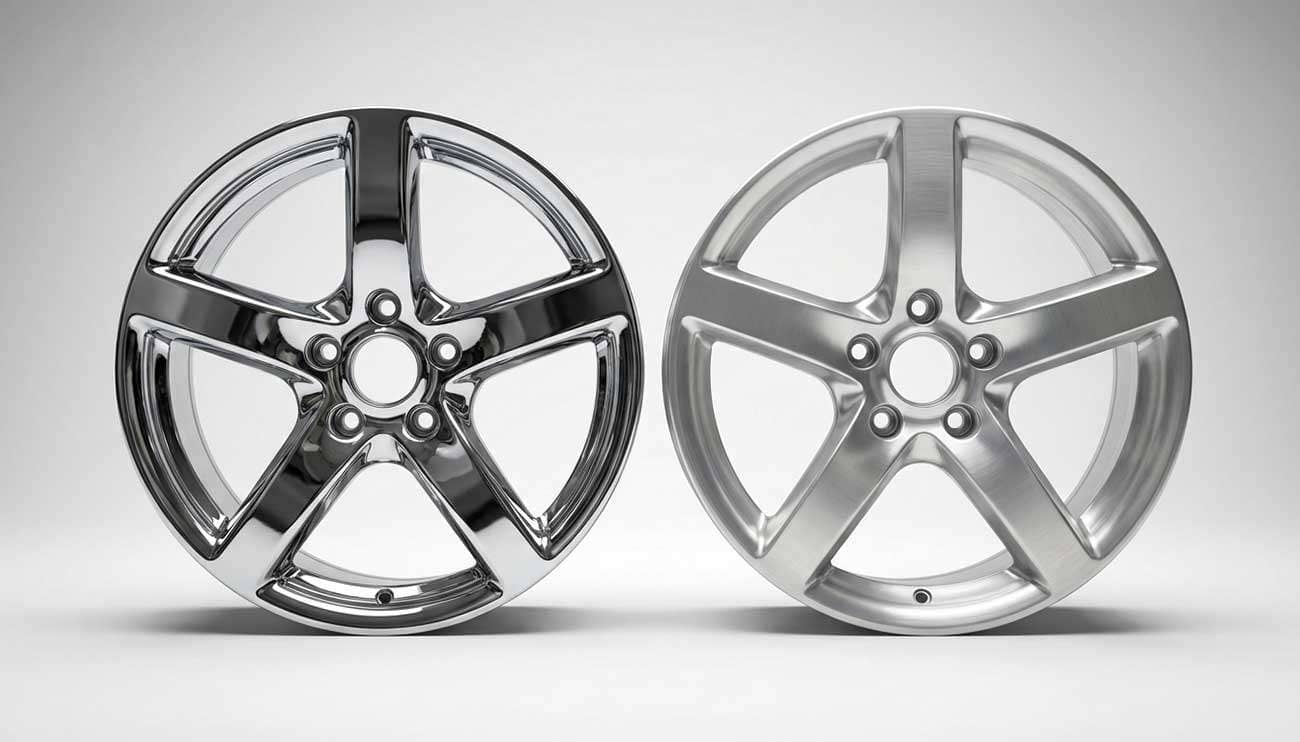
Chrome vs polished wheels presents more than just a style choice for your vehicle. Chrome wheels deliver that unmistakable mirror finish that reflects like glass, while polished aluminum offers a more subtle yet still eye-catching metallic luster. Understanding these differences helps you make the right investment for your ride.
Chrome wheels often cost more upfront and may require expensive re-chroming after just 3-5 years of regular use. Polished aluminum wheels cost less initially and maintain their value better over time. The manufacturing process explains why these finishes perform so differently. Chrome uses a complex multi-step electroplating process that begins with a coating of nickel, sometimes applied in multiple layers for enhanced durability and appearance.
Your decision between polished vs chrome wheels depends on what matters most for your driving needs. Chrome can look perfect for years, but it degrades rapidly once the plating gets compromised. Polished aluminum typically lasts longer and ages better. We'll guide you through exactly how these finishes differ in durability, maintenance requirements, and long-term value to help you select the best option for your vehicle and driving habits.
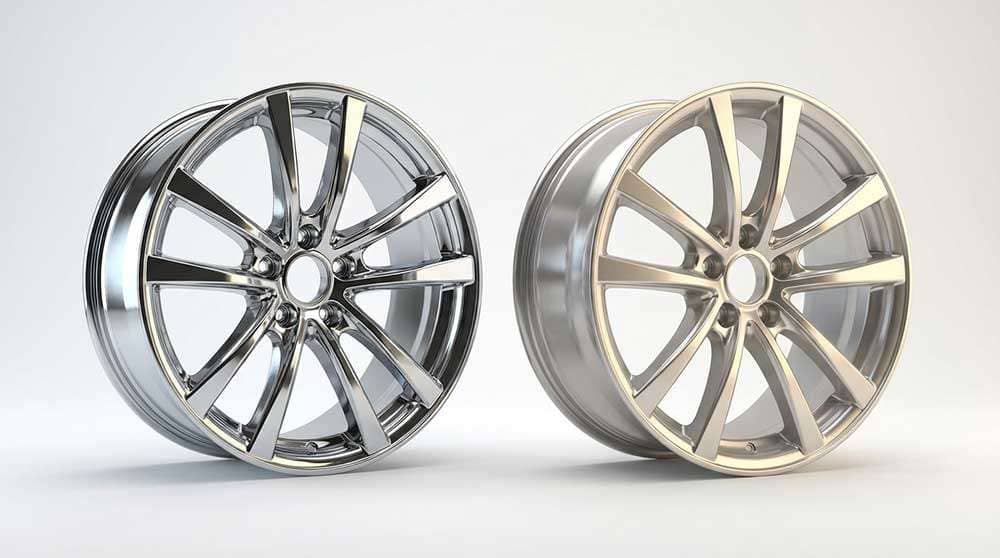
The visual distinction between chrome and polished wheels goes beyond simple appearance preferences. Understanding how these finishes are made, how they look, and how they perform helps explain why your choice matters for long-term satisfaction.
Chrome wheels get their distinctive look through a complex multi-step electroplating process. This typically begins with one or more layers of nickel as a foundation, followed by a thin layer of chromium that creates the final finish. Electroplating permanently bonds these metallic layers to the wheel's surface. The chrome plating process often involves copper as the initial strike plate, with nickel serving as the primary corrosion protector since chrome itself is somewhat porous.
Polished wheels use a much simpler manufacturing process. Technicians mechanically buff and polish the raw aluminum surface of the wheel until it achieves a smooth, reflective finish. Most manufacturers apply a protective clear coat to shield the exposed aluminum from environmental damage, although some wheels are left as raw polished aluminum.
The most noticeable difference between these finishes is how they reflect light. Chrome delivers an unmistakable mirror-like shine that creates crisp, clear reflections—almost like looking into a glass mirror. This high-gloss, reflective surface makes chrome wheels immediately recognizable and particularly dramatic in bright sunlight.
Polished aluminum produces what wheel experts describe as "fuzzy" or vague reflections. This more subdued metallic sheen actually highlights the intricate designs of wheels better than chrome, whose intense shine can sometimes obscure detailed patterns. Polished aluminum maintains its visual appeal across various lighting conditions, whereas chrome can appear cold or harsh in overcast weather.
Chrome and polished wheels differ significantly in weight. The multiple layers of metal applied during chroming add noticeable mass to wheels. Chrome-finished C6 Z06 style wheels weigh approximately 22 pounds for fronts and 27 pounds for rears.
The chroming process adds weight because it involves applying multiple metal layers. Though each individual layer is thin (chrome typically deposits at just 1/1000th inch per hour), the cumulative effect of copper, nickel, and chrome plating increases overall wheel mass. Polished aluminum wheels eliminate this added weight since they simply reveal the wheel's native surface rather than adding material.
Some aftermarket wheel manufacturers now offer PVD (Physical Vapor Deposition) finishes that provide a chrome-like appearance without the additional weight, potentially improving fuel efficiency and handling responsiveness. Traditional chrome remains popular for those prioritizing maximum visual impact over performance considerations.
Real-world performance tells the true story about wheel finish longevity. We've examined how these finishes perform under actual driving conditions to determine which option delivers better value over time.
The chromium layer on chrome wheels creates a protective barrier between the base metal and environmental elements. This shield effectively prevents rust and oxidation—but only as long as the finish remains intact. Once the thin chrome layer gets compromised, even minimally, the protection disappears completely. Small chips or scratches expose the underlying metal to corrosion that spreads quickly, making chrome's durability entirely dependent on maintaining an unblemished surface.
Polished aluminum operates under different principles entirely. Without a separate coating (unless clear-coated), the polished surface is the actual wheel material. Minor damage doesn't create the same vulnerability points for accelerated deterioration. Automotive experts confirm that "polished aluminum will last forever, no peeling, chipping or rusting" with proper maintenance and modern sealants.
Environmental conditions affect both wheel types differently:
Winter conditions prove especially harsh on chrome wheels. Road salts and de-icing chemicals cause devastating damage, leading Porsche AG to officially advise against chrome-plating aluminum wheels based on their corrosion tests showing "heavy pitting compared to original aluminum wheel rims, especially with winter use".
Brake dust affects both finishes but requires different cleaning schedules. Chrome's mirror finish shows water spots and brake dust immediately, demanding weekly cleaning. Meanwhile, polished aluminum can typically go 2-3 weeks between thorough cleanings.
UV exposure gradually degrades clear coats on both finishes, potentially leading to color fading or even cracks in extreme cases.
Both finishes show distinctive aging patterns with proper care. Chrome deteriorates through pitting, peeling, and blistering—issues that typically emerge within 3-4 years for even good-quality chrome jobs. Once chrome begins to fail, it does so dramatically and unattractively, requiring complete professional re-chroming at considerable expense.
Polished aluminum develops what many consider a desirable patina over time. Rather than failing suddenly, it gradually loses some shine while retaining its fundamental integrity. Aluminum wheels offer something chrome cannot—straightforward repairability. Minor scratches and oxidation can typically be addressed through DIY polishing, restoring the wheel's appearance without specialized equipment. This aging profile explains why polished wheels typically maintain higher resale values.
The verdict on durability favors polished aluminum for most real-world driving conditions, especially in regions with harsh winters or coastal environments.
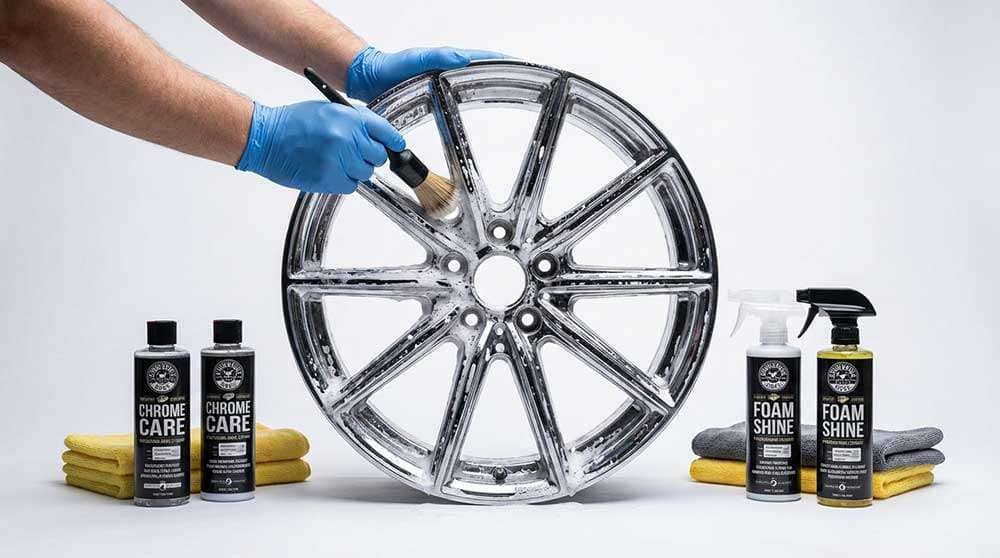
Maintaining your wheels properly makes the difference between a finish that lasts and one that fails prematurely. The maintenance requirements vary significantly between chrome and polished finishes, directly affecting both appearance and long-term costs.
Chrome wheels demand more frequent attention than polished aluminum. The mirror finish shows water spots, brake dust, and road grime immediately, requiring weekly cleaning sessions to maintain their appearance. Chrome surfaces are particularly vulnerable to calcium and magnesium minerals in water spots, which cling stubbornly to the plating.
Polished aluminum wheels offer more flexibility in your maintenance schedule. These wheels can typically go 2-3 weeks between thorough cleanings without looking neglected. This reduced maintenance schedule makes polished wheels more practical for busy drivers.
Regular cleaning with mild soap and water extends the lifespan of either finish considerably. Drying with microfiber towels afterward prevents water spotting and maintains shine.
Repair options reveal the starkest difference between these finishes. Chrome plating damage requires professional restoration. Re-chroming costs $200-500 per wheel and requires specialized equipment. Matching the original chrome finish perfectly can be challenging, often leaving visible differences.
Polished aluminum offers straightforward DIY repair solutions. Minor scratches and oxidation can be addressed at home with proper polishing compounds. Heavily oxidized wheels require progressive wet sanding - starting with 1000 grit, then 1500, and finally 2000 grit - followed by polishing paste application. This repairability significantly reduces long-term ownership costs.
Clear coat protection dramatically changes maintenance requirements. Clear-coated polished wheels need gentler cleaning - only mild soap and water or water-based wheel cleaners. Never use metal polish or acidic solutions. This protective layer shields against oxidation but limits DIY repair options.
Unprotected polished aluminum requires more frequent polishing and waxing to prevent oxidation and pitting. The repairability makes raw polished aluminum attractive for enthusiasts willing to perform regular maintenance.
Specialized clear coats like ceramic-based formulas offer exceptional durability. These coatings provide hydrophobic properties that repel brake dust and contaminants, significantly reducing cleaning frequency.
Financial considerations often determine the final choice between chrome and polished wheels. Both initial investment and long-term expenses show significant differences that affect your budget over time.
The price difference between these finishes is substantial. Chrome wheels typically cost $200-800+ per wheel, while polished aluminum wheels generally range from $150-500+ per wheel. This makes polished aluminum approximately 25-35% less expensive upfront.
Manufacturing complexity drives this price gap. Chrome requires a multi-step electroplating process with expensive materials and specialized equipment. The Corvette market provides a clear example: forged polished wheels cost $119 while forged chrome wheels commanded $185 – a 55% premium for chrome.
Ongoing maintenance creates additional financial impact beyond the purchase price. Chrome wheels demand higher annual maintenance costs:
Maintenance Item |
Estimated Annual Cost |
|---|---|
Chrome polish & wax |
$50-100 |
Microfiber towels |
$20-40 |
Protective coatings |
$30-60 |
Professional cleaning |
$100-200 |
Chrome wheels typically require expensive re-chroming after 3-5 years of regular use. This process can cost $300+ per wheel, representing a substantial reinvestment.
Polished aluminum maintenance involves fewer specialized products yet more frequent polishing. The long-term expense of regular polishing and potential refinishing adds up over time, but generally remains below chrome's lifetime cost.
Polished aluminum tends to maintain higher resale value. This value retention comes from its more graceful aging process – polished aluminum develops a patina that many buyers find acceptable, while damaged chrome significantly reduces buyer interest.
Vehicle resale value varies considerably based on wheel condition. Many buyers factor potential refurbishment costs into their purchase decisions, making chrome wheels in poor condition a liability rather than an asset.
For most practical applications, polished aluminum offers better long-term value with its manageable maintenance, straightforward repairability, and steady depreciation profile.
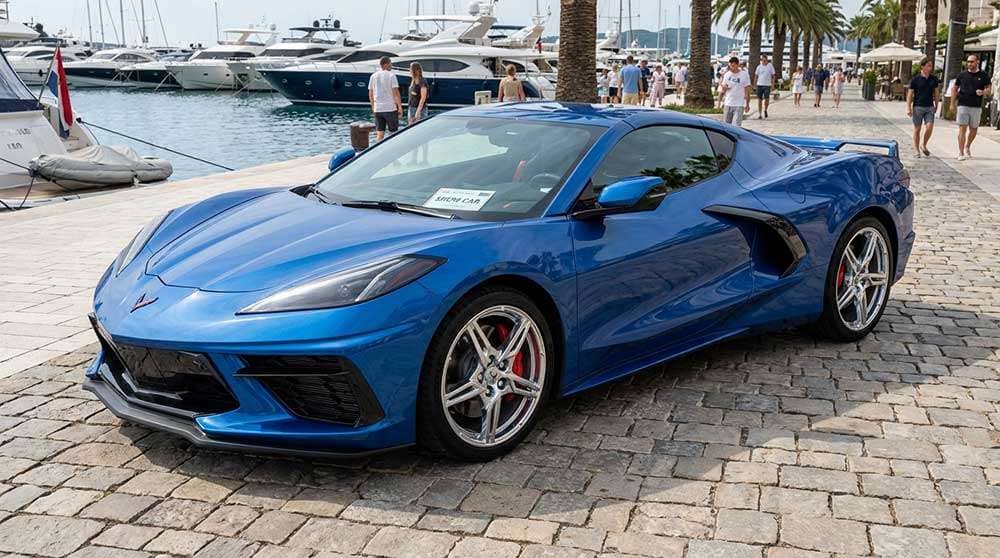
Choosing between chrome and polished wheels depends on your vehicle's primary purpose and how often it faces the elements.
Chrome wheels deliver unmatched visual impact that's ideal for show vehicles. Nothing reflects light quite like perfectly chromed wheels—their mirror finish literally stops people in parking lots. This exceptional shine makes chrome the preferred choice for:
Show cars, lowriders, and classic muscle cars
Custom trucks seeking maximum visual presence
Vintage Corvettes, 1955 Chevys, and classic Mustangs
Specific wheel designs like Cragar S/S, Keystone Klassic, and Smoothie wheels are considered "era-correct" for 1960s and 1970s cars, making chrome finishes particularly appropriate for period-authentic builds.
For vehicles driven regularly, polished aluminum typically makes more sense. The lower maintenance requirements and better aging characteristics outweigh chrome's visual advantages. Polished wheels work exceptionally well on:
Daily drivers experiencing varied weather conditions
Hot rods and muscle cars needing a premium look without excessive upkeep
Vehicles where repairability matters more than maximum shine
For expert advice on selecting wheels suited to your specific driving habits, check out Performance Plus Tire.
Custom builds require balancing appearance against practicality. Chrome wheels excel where "appearance trumps practicality considerations". Many builders follow this simple guideline: if your car is a "garage queen" that rarely faces the elements, either finish works beautifully.
Quality matters more than finish type—a well-made polished aluminum wheel will consistently outlast and outperform a cheap chrome wheel. Choose the finish that matches how you actually use your vehicle, not just how you want it to look.
Characteristic |
Chrome Wheels |
Polished Wheels |
|---|---|---|
Initial Cost |
$200-800+ per wheel |
$150-500+ per wheel |
Appearance |
Mirror-like, crisp reflections |
Subtle metallic luster, "fuzzy" reflections |
Manufacturing Process |
Multi-step electroplating (copper, nickel, chrome) |
Mechanical buffing of raw aluminum |
Weight Impact |
Adds noticeable mass due to plating layers |
No additional weight |
Durability |
3-5 years before requiring re-chroming |
Lasts "forever" with proper maintenance |
Corrosion Resistance |
Excellent when intact, fails rapidly if damaged |
Better long-term resistance |
Weather Vulnerability |
High (especially to road salt and chemicals) |
More resistant to environmental factors |
Cleaning Frequency |
Weekly required |
Every 2-3 weeks |
Repair Options |
Professional re-chroming ($200-500 per wheel) |
DIY polishing possible |
Maintenance Cost |
Higher (specialized products + professional services) |
Lower (basic maintenance tools) |
Resale Value |
Lower when damaged |
Better value retention |
Best Usage |
Show cars, garage-kept vehicles |
Daily drivers, all-weather vehicles |
Chrome wheels deliver that eye-catching mirror finish that stops people in their tracks. Chrome offers unmatched visual impact that transforms any vehicle's appearance. However, the weekly cleaning requirements and higher initial investment make chrome wheels best suited for show cars and garage queens.
Polished aluminum wheels emerge as the smarter long-term choice for most drivers. Their superior durability against environmental damage, straightforward DIY repair options, and lower lifetime ownership costs make them ideal for daily drivers facing regular road conditions. Additionally, polished wheels develop an attractive patina rather than failing dramatically like chrome, which means they maintain better resale value over time.
Your choice depends on your specific driving needs and priorities. Chrome wheels excel on show cars, garage queens, and vehicles where maximum visual impact matters more than practicality. Polished wheels work better for daily drivers, vehicles experiencing varied weather, and owners who prefer manageable maintenance schedules. Quality remains paramount regardless of finish type—premium polished wheels consistently outlast cheap chrome alternatives.
At Performance Plus Tire, our expert team can help you find the perfect wheels that match your vehicle's style and your specific driving conditions. We'll help determine whether chrome's unmistakable shine or polished aluminum's practical durability better suits your needs. Our specialists understand that proper wheel selection impacts both appearance and value throughout your ownership experience.
Ready to upgrade your ride? Visit Performance Plus Tire today and discover the perfect wheels for your vehicle at prices that won't break the bank.
When choosing between chrome and polished wheels, understanding their durability differences and long-term costs helps you make the smartest investment for your vehicle.
• Polished aluminum wheels last significantly longer - they can last "forever" with proper maintenance, while chrome typically requires expensive re-chroming after just 3-5 years of regular use.
• Chrome costs 25-35% more upfront and has higher lifetime expenses - initial premium plus $300+ per wheel re-chroming costs versus polished wheels' DIY repair options.
• Maintenance schedules differ dramatically - chrome demands weekly cleaning to maintain its mirror finish, while polished aluminum can go 2-3 weeks between thorough cleanings.
• Choose based on your driving habits - chrome excels for show cars and garage-kept vehicles, while polished aluminum better suits daily drivers facing varied weather conditions.
• Polished wheels retain better resale value - they age gracefully with attractive patina development, whereas damaged chrome significantly reduces buyer interest and vehicle value.
The bottom line: unless maximum visual impact trumps practicality for your specific use case, polished aluminum wheels offer superior long-term value through better durability, lower maintenance costs, and easier repairability.
Polished aluminum wheels generally last longer than chrome wheels. With proper maintenance, polished wheels can last indefinitely, while chrome wheels typically require expensive re-chroming after 3-5 years of regular use.
Chrome wheels demand weekly cleaning to maintain their mirror finish, while polished aluminum wheels can typically go 2-3 weeks between thorough cleanings. Chrome also requires specialized cleaning products, whereas polished wheels need simpler maintenance.
Polished aluminum wheels are usually more cost-effective long-term. They have a lower initial cost, require less frequent maintenance, and offer DIY repair options. Chrome wheels have higher upfront costs and expensive re-chroming requirements every few years.
Polished aluminum wheels tend to maintain better resale value. They age more gracefully, developing an attractive patina over time. Chrome wheels, when damaged, can significantly reduce a vehicle's value due to the high cost of restoration.
Chrome wheels are ideal for show cars, garage-kept vehicles, and custom builds where maximum visual impact is the priority. They excel in situations where the vehicle is not regularly exposed to harsh weather conditions or road chemicals.