
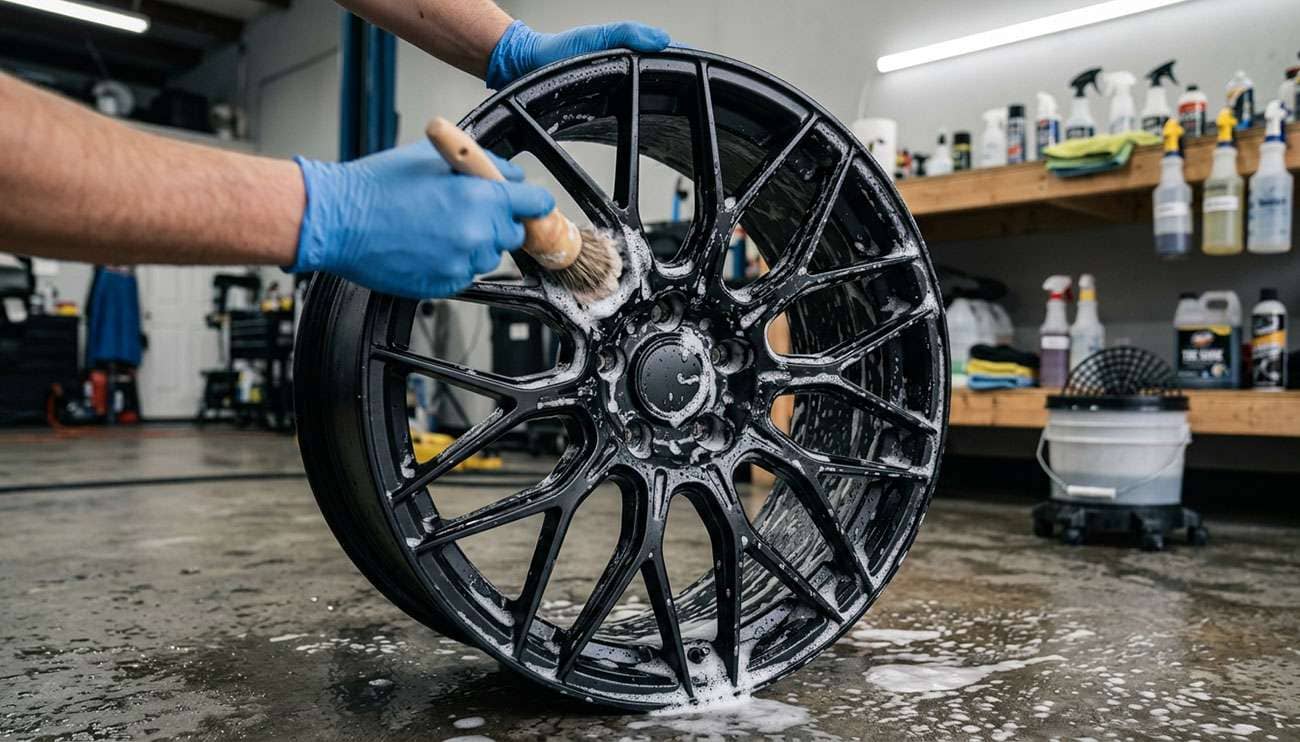
I've been cleaning wheels at the shop since 1962, and the single biggest reason aftermarket wheels look terrible after two years isn't because the owner bought cheap wheels. It's because the owner cleaned them wrong. The acid wheel cleaner that strips brake dust from chrome destroys matte black finish in three applications. The wire brush that polishes oxidized aluminum gouges machined faces permanently. The pressure washer that blasts mud off off-road wheels drives water into powder-coat layers and produces the under-coating corrosion that fails the finish from inside. Wheel finishes need different care, and getting the care wrong damages the wheel faster than no cleaning at all.
The 2026 aftermarket wheel market includes finish types that didn't exist 30 years ago. Modern wheels come in matte black, satin black, semi-gloss black, gloss black, painted gloss colors, machined faces, diamond-cut lips, powder-coated finishes in any color, two-tone combinations with milled accents, brushed aluminum, polished aluminum, anodized colors, and traditional chrome. Each finish requires specific cleaning protocols, specific products, and specific avoidance of products that would damage that particular finish. The generic advice to "clean your wheels regularly with soap and water" works as a starting point but doesn't address the finish-specific care that actually keeps wheels looking new across years of service.
This guide breaks down cleaning protocols by finish type with specific products, common mistakes, and damage prevention strategies. The recommendations come from manufacturer maintenance guidelines (Fuel, Method, American Racing, KMC, US Mags, Niche, TSW), professional detailing protocols, and decades of accumulated shop experience watching wheel finishes either last or fail based on owner care practices. Every wheel mentioned is in current Performance Plus Tire inventory across the major finish categories.
The fundamental issue with generic wheel cleaning advice: different finishes have different chemical and physical vulnerabilities, and products that work on one finish damage others.
Chrome finish: Chrome plating is a metal layer (nickel and chromium typically) electrochemically bonded to the underlying wheel structure. Chrome can handle acid cleaners that would destroy other finishes — the chrome itself is resistant to most acids that dissolve brake dust. However, chrome is vulnerable to road salt and brake dust embedded into the surface over time, requiring more frequent cleaning than other finishes.
Painted gloss finish: Paint is a polymer layer applied over a base coat, typically protected by a clear coat. Acid cleaners attack the clear coat first, then etch into the color layer. Once the clear coat fails, the color underneath oxidizes rapidly. Painted gloss finishes require pH-neutral cleaners exclusively.
Powder-coat finish: Powder coat is a polymer applied as a dry powder, then heat-cured to bond to the wheel surface. The finish is substantially more durable than paint — typically 10-15 year service life with proper care vs 5-8 years for painted finishes. But powder coat is still vulnerable to acid cleaners that attack the polymer chemistry, and aggressive scrubbing can produce visible scratch marks on the finish surface.
Matte and satin finishes: The matte appearance comes from microscopic surface texture that diffuses light rather than reflecting it. Polishing compounds, abrasive cleaners, or even aggressive scrubbing flatten that surface texture and produce shiny spots that look fundamentally wrong on a matte finish. Once you've polished a matte wheel, you can't unpolish it — the only fix is refinishing.
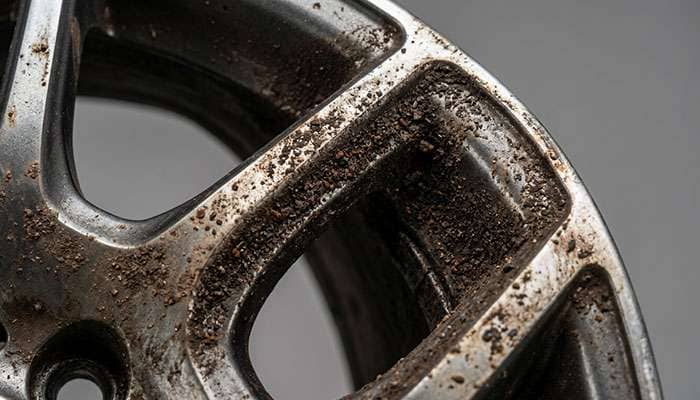
Machined face / diamond-cut lip: The machined surface is bare aluminum exposed through machining operations, typically protected by a clear coat. Once the clear coat fails, the bare aluminum oxidizes rapidly producing the white powder/spotting that ruins the appearance. Acid cleaners that attack the clear coat dramatically accelerate this failure mode.
Polished aluminum: Polished aluminum is bare aluminum mechanically polished to a mirror finish, typically with no clear coat protection. The bare aluminum oxidizes continuously through contact with air and water, requiring regular polishing maintenance to maintain the mirror appearance. Different chemistry than chrome — acid cleaners that work on chrome destroy polished aluminum.
Five rules apply to every wheel finish regardless of specific care protocol differences.
1. Always clean wheels when they're cool to the touch. Hot wheels (recently driven, exposed to summer sun) cause water and cleaning products to evaporate too quickly, leaving streaks, mineral deposits, and product residue that damages finishes over time. The "cool to the touch" standard means about an hour after driving, or before the day's first drive. Cleaning hot wheels is the single most common cause of streaks and water spots that won't come off with subsequent cleaning.
2. Rinse thoroughly before applying any cleaner. The pre-rinse removes loose dirt, debris, and brake dust that would otherwise grind into the finish during the cleaning process. Even a soft microfiber wash mitt drags loose particles across the surface, and that grinding action produces the swirl marks and scratches that accumulate over years of cleaning. Hose down the wheels with pressure-rinsed water before applying any product.
3. Use dedicated wheel cleaning tools — never tools used elsewhere. Wash mitts, microfiber towels, and brushes used for general car washing pick up grit that damages wheel finishes. Maintain separate wheel-specific tools (wheel-only microfiber towels, dedicated wheel brushes, separate wash bucket) and clean them regularly. The slight extra cost of dedicated wheel tools saves expensive wheel refinishing.
4. Match cleaner pH to finish requirements. Generic "wheel cleaner" formulations vary dramatically in pH and chemistry. Acid-based cleaners work fast on chrome but destroy matte and painted finishes. pH-neutral cleaners work safely on all finishes but require more dwell time and physical agitation. Match the cleaner to the specific finish, not to the convenience of using one product across all wheels.
5. Dry wheels with clean microfiber after cleaning. Air-drying leaves water spots from mineral content (especially in hard-water regions). Dry the wheels with clean microfiber towels to prevent the water spots that mark almost every neglected wheel after a few months of air-drying. The drying step takes 5 minutes and prevents the gradual finish degradation that washing without drying produces over time.
Essential cleaning supplies for every wheel owner:
Optional but valuable supplies:
The total investment for a complete wheel care kit runs $80-$150. The investment pays for itself in extended finish life — neglected wheels typically need refinishing within 4-6 years ($200-$500 per wheel for powder coating, $400-$800 per wheel for chrome plating), while properly maintained wheels often deliver 10-15+ years of service life without refinishing.
The most common modern wheel finish — found on Fuel, Method, KMC, XD Series, TSW, and most aggressive aftermarket truck and performance wheels. Matte black presents specific care challenges because the matte appearance depends on microscopic surface texture that's vulnerable to polishing compounds and aggressive cleaning techniques.
The do's:
The don'ts:
Cleaning frequency: Every 2-3 weeks during normal use, weekly in winter regions with road salt exposure, immediately after off-road use.
Common failure mode: Shiny spots developing on wheel faces from aggressive cleaning techniques, particularly around spoke faces where pressure during brushing concentrates the abrasion. Once shiny spots appear, the only fix is refinishing the entire wheel — partial refinishing produces visible inconsistencies. For Fuel, Method, KMC, and similar matte black wheel investments, the care discipline matters substantially for protecting the wheel's resale value and visual appeal across years of service.
Satin and semi-gloss black finishes occupy the middle ground between full matte and full gloss — visibly more reflective than matte, less reflective than gloss. Found on many American Racing, Niche, Forgestar, and TSW wheel options. The care protocol falls between matte and gloss requirements.
The do's:
The don'ts:
Cleaning frequency: Every 2-3 weeks during normal use, weekly in winter, immediately after off-road exposure.
Common failure mode: Inconsistent shine across the wheel face from uneven cleaning pressure. Satin finishes can show "polishing marks" from harder pressure in specific areas. The fix: maintain consistent gentle pressure across the entire wheel surface during cleaning.
Painted gloss finishes (gloss black, gloss white, gloss colors like red/blue/orange/silver) use clear-coated paint similar to vehicle body paint. The care requirements parallel vehicle paint care — pH-neutral cleaners, gentle techniques, regular protection.
The do's:
The don'ts:
Cleaning frequency: Every 2 weeks during normal use, weekly in winter regions, immediately after road salt exposure.
Common failure mode: Clear coat failure (visible as cloudy spots, peeling, or fading) typically caused by acid wheel cleaner exposure or prolonged neglect. Once clear coat fails, the paint underneath oxidizes rapidly — typically within 6-12 months. Catching clear coat damage early and refinishing one wheel costs $200-$400; allowing all four wheels to fail before refinishing costs $800-$1,600. For deeper finish context, see our custom wheel finishes guide.
Machined finishes expose bare aluminum through machining operations, with the bare aluminum protected by a clear coat layer. Found on countless modern wheels including Fuel Maverick (Black Milled variants), American Racing VN605, VN338, KMC XD820 Black Milled, Niche M131 Silver Machined, and similar contemporary aftermarket designs. Care matters substantially because clear coat failure on machined faces produces visible aluminum oxidation rapidly.
The do's:
The don'ts:
Cleaning frequency: Every 2 weeks during normal use, weekly in winter, immediately after exposure to road salt or aggressive contamination.
Common failure mode: Clear coat failure on machined surfaces, allowing the bare aluminum underneath to oxidize. Visible as cloudy white spots progressing to white powder accumulation on the machined surface. Once the bare aluminum oxidizes, refinishing requires complete machining face restoration plus new clear coat application — typically $300-$500 per wheel at specialized refinishers. Catching the issue early (visible clear coat thinning before bare aluminum exposure) allows much cheaper preventive recoating.
Powder coating applies dry polymer powder to the wheel, then heat-cures the polymer to bond to the surface. The finish is substantially more durable than paint — typically 2-3x service life — and resists chipping, peeling, and clear coat failure that affects painted wheels. Available in essentially any color, with custom colors common for high-end wheel applications. Modern aftermarket wheels increasingly use powder coating instead of paint for the durability advantage.
The do's:
The don'ts:
Cleaning frequency: Every 2-3 weeks during normal use, weekly in winter, monthly during normal use is generally sufficient given the powder coat's durability.
Common failure mode: Stone chips that expose the underlying aluminum to corrosion. Powder coat itself rarely fails through chemical attack — the typical failure mode is mechanical damage (stones, curb impacts) producing localized failure points where corrosion can develop. Touch-up paint or localized refinishing addresses the chip damage before it produces widespread corrosion. For deeper powder coat context, see our powder coating wheels guide.
Two-tone finishes (matte black with machined accents, satin black with chrome lip, gunmetal with milled spokes, black with red tinted milled accents) combine multiple finish types on the same wheel. The care challenge: different sections require different protocols, and care techniques appropriate for one section can damage adjacent sections.
The general principle: Care for the most vulnerable finish on the wheel rather than the most durable. If the wheel combines matte black (vulnerable) with chrome (more durable), care for the matte black areas because chrome-appropriate care will damage the matte. If the wheel combines powder coat (durable) with machined face (more vulnerable to clear coat failure), care for the machined face because powder-coat-appropriate care can damage the machined areas.
The do's:
The don'ts:
Cleaning frequency: Every 2 weeks during normal use, weekly in winter.
Common failure mode: Uneven aging across the different finish sections — the chrome stays looking new while the matte black ages, or vice versa. Once the sections age differently, the wheel looks inconsistent. Prevention: maintain consistent care across all sections from the wheel's first day of use, not after the appearance starts showing inconsistency.
Polished aluminum is bare aluminum mechanically polished to a mirror finish, with no clear coat protection on most applications. Found on classic American Racing Salt Flat, traditional US Mags smoothies, and similar hot-rod-oriented wheels where the polished aluminum aesthetic matters. The care requirements differ substantially from clear-coated finishes because the bare aluminum is exposed to environmental conditions continuously.
The do's:
The don'ts:
Cleaning frequency: Weekly during normal use — substantially more frequent than other finishes because polished aluminum oxidizes continuously through air exposure. Polished aluminum on display vehicles requires daily wiping for optimal appearance.
Common failure mode: Oxidation buildup that progresses from cloudy spots to permanent pitting. The cloudy spots respond to metal polish in the early stages but become permanent if allowed to develop into deep pitting. Once pitting occurs, refinishing requires complete re-polishing — typically $200-$400 per wheel at specialized polishing shops. For deeper polishing context, see our polish and restore vintage aluminum wheels guide.
Chrome wheel care is a separate topic with established PPT coverage. Chrome handles acid cleaners that would destroy other finishes, requires specific anti-rust protection in winter conditions, and has unique care requirements compared to modern matte and powder-coat finishes.
For comprehensive chrome wheel care guidance, see the existing PPT articles:
The fundamental difference: chrome can handle acid-based wheel cleaners (Sonax Wheel Cleaner Full Effect and similar) that would destroy matte, painted, machined, or powder-coated finishes. Don't apply chrome wheel care techniques to other finish types.
Wheel cleaners divide into three major chemistry categories, and matching the chemistry to the finish prevents damage.
Cleaner Type |
Chemistry |
Safe On |
Damages |
|---|---|---|---|
pH-Neutral |
pH 6-8, surfactant-based |
All finishes including matte, satin, painted, machined, powder-coated, chrome, polished aluminum |
None (safe universal option) |
Acid-Based |
pH 1-4, hydrofluoric acid or similar |
Chrome only (with caution) |
Matte, painted, machined, powder-coated, polished aluminum (immediate damage) |
Alkaline / Degreaser |
pH 9-12, caustic-based |
Most finishes with controlled exposure |
Polished aluminum (etches surface) |
Iron Remover |
Mercaptan-based (reacts with iron) |
All finishes |
None (used for embedded brake dust) |
The practical guidance: Default to pH-neutral wheel cleaners for everything except chrome. The convenience of using one product across all wheels (matte black truck wheels, painted sport car wheels, machined performance wheels) eliminates the cross-contamination risk of switching between products. For heavy brake dust contamination, supplement with iron remover spray — works on all finishes without damage. Reserve acid-based cleaners for chrome wheels with severe contamination that pH-neutral cleaners can't address. Common acid-based cleaner mistakes (using on painted or matte wheels) account for the majority of finish damage I see in the shop.
Brake dust is the most common cause of wheel finish degradation, and understanding what it is explains why finish-specific cleaning matters.
The composition: Brake dust consists of iron particles worn from brake rotors plus organic compounds from brake pad material. The iron particles are microscopic (typically 1-10 microns) and bond chemically to wheel surfaces through a process called galvanic corrosion. The iron-based contamination becomes more aggressive when wet (water accelerates the galvanic process), which is why wheels in rainy climates show faster finish degradation than wheels in dry climates.
Why it damages wheels: The iron particles literally bond to the wheel surface through chemical reaction rather than just physical adhesion. Surface cleaning (wash mitt with soap) removes the loose dust but doesn't address the bonded particles. The bonded particles continue to corrode and produce visible "rust spots" on the wheel finish — actually the iron particles oxidizing in place rather than the wheel itself rusting. Over time, the iron oxidation etches into the wheel finish (clear coat, paint, or even the underlying aluminum) producing permanent damage.
The two-step removal process:
Iron remover spray is the most under-utilized product in wheel care. Most owners clean wheels with surface cleaner only, leaving the bonded iron particles to continue corroding. Adding iron remover spray to the maintenance routine (typically every 4-6 cleaning cycles) addresses the bonded contamination that surface cleaning can't remove. The product costs $15-$25 per bottle and prevents finish degradation that would otherwise require $200-$500 wheel refinishing.
Sealants and coatings provide protective layers between the wheel finish and environmental contamination. The protection layer dramatically reduces brake dust bonding, water spot formation, and chemical degradation from environmental exposure.
Traditional carnauba waxes: Carnauba wax is a natural product applied as a paste or liquid, providing 4-8 weeks of protection per application. Works well on chrome, painted, and powder-coated finishes. Less effective on matte and satin finishes (can produce uneven shine if applied to matte areas). Cost: $15-$30 per container, lasts through dozens of applications.
Polymer sealants: Synthetic polymer formulations apply as a liquid and provide 3-6 months of protection per application. More chemical resistance than carnauba wax, easier application, longer service life per coat. Works well on all clear-coated finishes (painted, machined, powder-coated). Cost: $20-$40 per bottle, typically 8-12 applications per bottle.
Ceramic coatings: Silica-based formulations that bond chemically to the wheel surface, providing 1-2+ years of protection per application. Substantially more chemical resistance than wax or polymer sealants. The trade-off: more expensive initial cost ($60-$120 per kit), more complex application requiring careful preparation, and once applied, more difficult to remove for refinishing or replacement. Best for premium wheel investments where the long-term protection justifies the higher initial investment.
Matte-specific products: Standard waxes and most sealants produce shiny spots on matte finishes. Matte-specific sealants (Gtechniq C5, Adam's Matte Paint Coating, Chemical Guys Matte Detailer) maintain the matte appearance while providing protection. Use these exclusively on matte black wheels — never traditional carnauba wax.
The application schedule: Sealant 2-3 times per year for typical applications, weekly to bi-weekly for premium care. Ceramic coating once every 1-2 years. The protection layer makes routine cleaning easier (contamination doesn't bond to coated surfaces as readily) and extends finish life substantially across the wheel's service period.
Winter road salt is the single biggest enemy of wheel finishes, and seasonal care discipline prevents the corrosion damage that destroys wheels through cold-weather operation.
Winter prep (fall before snow):
Winter operation (during snow/salt season):
Spring transition:
Summer operation:
The winter discipline matters substantially for wheel finish life. Wheels operated through aggressive winter conditions without protective sealant and regular cleaning typically need refinishing within 4-6 years. Wheels with proper winter care discipline routinely deliver 12-15+ years of service life without refinishing, even in road-salt-heavy regions.
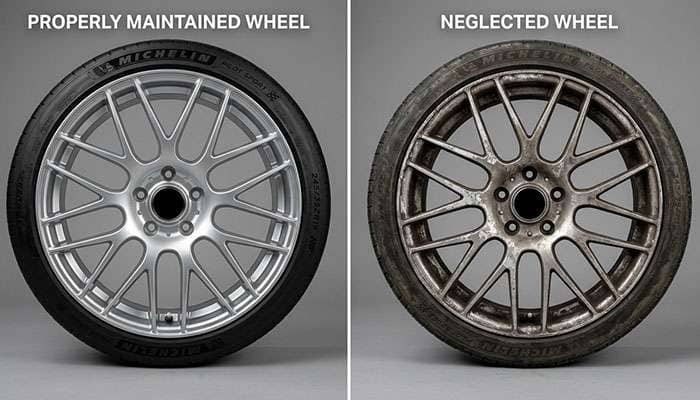
Five mistakes appear consistently across customer wheels that arrive needing refinishing.
1. Using acid wheel cleaner on non-chrome finishes. The single biggest cause of wheel finish damage I see in the shop. Acid cleaners (designed for chrome) attack the clear coat on painted, machined, and powder-coated wheels within minutes of application. The damage appears as cloudy spots, color fade, or clear coat lifting. Once it starts, refinishing is the only fix. Match cleaner chemistry to finish type — pH-neutral for everything except chrome.
2. Cleaning hot wheels. Cleaning wheels that are hot from driving causes products to evaporate too quickly, leaving streaks, water spots, and mineral deposits. The high surface temperature also affects how cleaning products work chemically — many products are formulated for room-temperature operation and produce unpredictable results on hot surfaces. Let wheels cool for at least 1 hour after driving before cleaning.
3. Using the same tools for wheels and body. Wash mitts and brushes used on the vehicle body pick up brake dust contamination that becomes abrasive grit when subsequently used on wheels. The result is visible scratches and swirl marks accumulating across the wheel surface over years of cleaning. Maintain dedicated wheel-only tools — wheel-specific microfiber towels, wheel-specific brushes, separate wash bucket.
4. Skipping the iron remover step. Surface cleaning with wheel cleaner removes loose brake dust but leaves the bonded iron particles that continue corroding into the finish. Iron remover spray (added to the maintenance routine every 4-6 cleaning cycles) addresses the bonded contamination that surface cleaning misses. Most wheel finish degradation I see in customer wheels would have been prevented by adding iron remover to the maintenance routine.
5. Allowing winter salt exposure without protection. Operating wheels through winter salt conditions without protective sealant produces corrosion damage that typically requires wheel refinishing within 4-6 years. The fix is straightforward: apply fresh sealant before winter operation, rinse wheels weekly during salt season, deep clean with iron remover at winter's end. Wheels properly protected through winter often deliver 12-15+ years of finish life — wheels operated through winter without protection rarely make it past 5-6 years.
Representative examples from PPT inventory across the major finish categories. Each illustrates the care requirements specific to its finish.
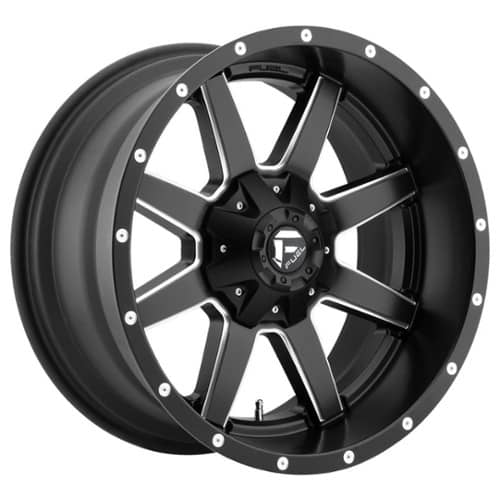
Finish: Matte Black + Milled Accents (two-tone) • Care Protocol: Two-tone matte/machined combined approach
The Fuel Maverick D538 in Matte Black Milled combines matte black main surface with machined milled accents on the spoke detail. The combination demands care for both finish types simultaneously — pH-neutral cleaners exclusively, soft brushes that won't polish the matte areas or scratch the machined detail, matte-specific sealants that don't produce shiny spots, and regular iron remover treatment to address brake dust bonding to the machined surfaces. Browse Fuel Maverick D538 sizes, or see the full Fuel Wheels lineup.
Finish: Pure Matte Black • Care Protocol: Matte-specific (pH-neutral only, soft brushes only, matte sealants only)
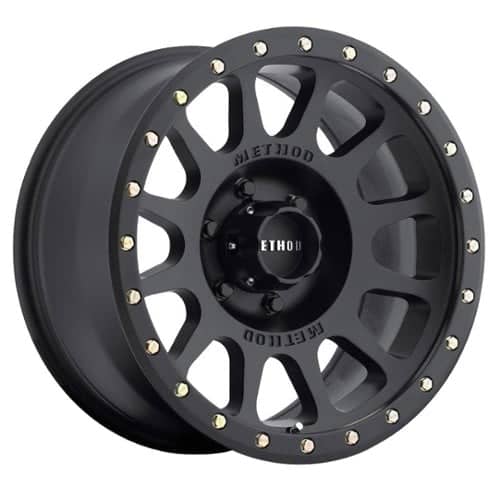
The Method 305 NV in Matte Black represents the pure matte black finish protocol — no machined accents, no chrome elements, just consistent matte black across the entire wheel surface. Care discipline matters substantially because the matte appearance depends on microscopic surface texture that polishing destroys. Never apply traditional carnauba wax (produces shiny spots), never use polishing compounds, never use acid-based cleaners. Method's lifetime structural warranty doesn't cover finish degradation from improper care. Browse Method 305 NV sizes, or see the full Method Wheels lineup.

Finish: Black Milled (two-tone with aggressive milled spoke detail) • Care Protocol: Two-tone approach with extra machined-area attention
The XD Series XD820 Grenade in Black Milled features more aggressive milled accent areas than the Fuel Maverick — wider machined faces that create the wheel's signature visual aggression. The larger machined surfaces require more careful clear coat protection because they represent more exposed bare-aluminum surface area beneath the clear coat. Apply fresh sealant 3-4 times per year on the machined sections specifically. Any clear coat failure on the milled accents requires complete refinishing because partial machining repair produces visible inconsistency. Browse XD820 Grenade sizes.
Finish: Silver Machined (predominantly machined face) • Care Protocol: Machined-face primary care
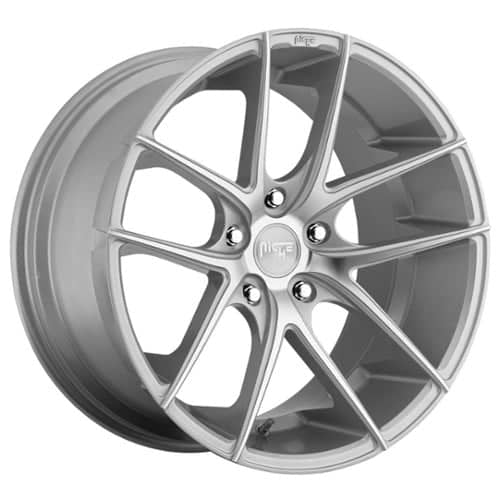
The Niche Targa M131 in Silver Machined uses machined finish across most of the wheel face, with the entire visible surface requiring machined-finish care protocols. The exposed bare aluminum under the clear coat means substantially higher attention to clear coat integrity than wheels with painted or powder-coated main surfaces. Apply ceramic coating for premium protection if budget allows — the long-term protection substantially extends finish life on machined-face applications. Inspect quarterly for any clear coat thinning or damage. Browse Niche Targa M131 sizes.
Finish: Satin Black + Machined Lip (two-tone) • Care Protocol: Two-tone satin/machined combined approach
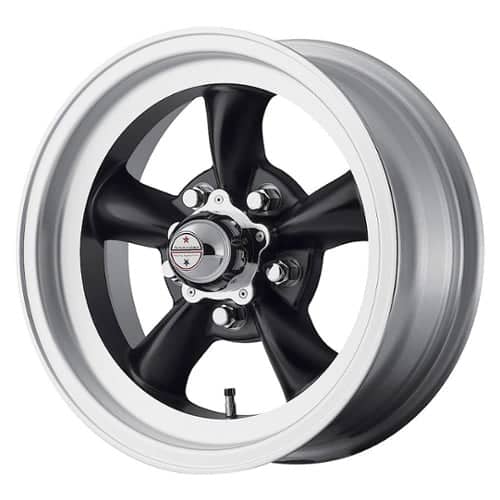
The American Racing VN105 Torq Thrust D in Satin Black with Machined Lip combines satin black main surface with machined accent on the outer lip detail. The satin finish is more forgiving than pure matte (handles standard sealants better) while the machined lip requires the same clear coat protection as full machined applications. Apply sealant to both surfaces during the same maintenance cycle — using different products on different sections produces uneven aging and visible inconsistency. Browse VN105 Torq Thrust D sizes, or see the full American Racing lineup.
Finish: Matte Black (European-style design) • Care Protocol: Matte-specific care identical to Method 305 NV approach
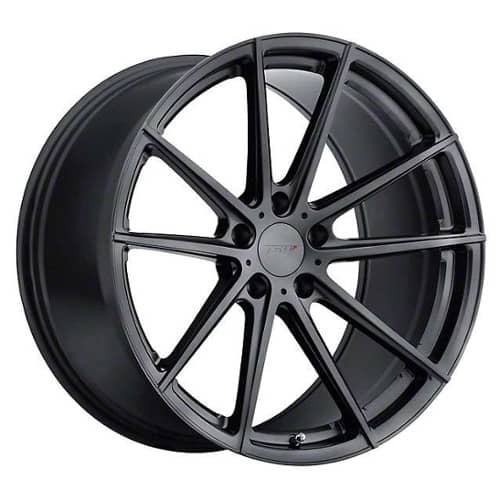
The TSW Bathurst in Matte Black represents European-style matte black aesthetic with the same care requirements as American matte black alternatives. The split-spoke design has more visible spoke surfaces than simpler 5-spoke designs, which means more surface area requiring matte-specific care attention. The complex spoke geometry also creates more places for brake dust to accumulate — iron remover treatment matters substantially for wheels with intricate spoke designs. Browse TSW Bathurst sizes.
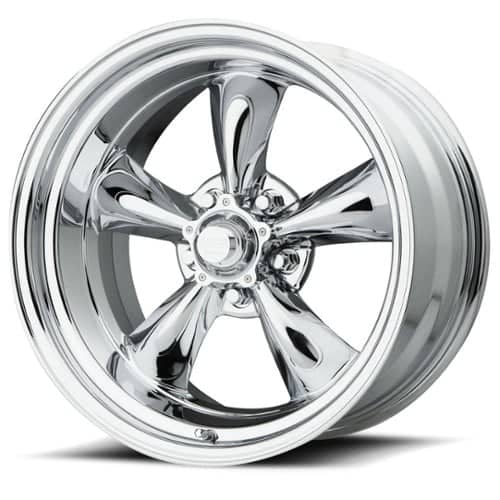
Finish: Chrome • Care Protocol: Chrome-specific (see existing PPT chrome articles linked above)
The American Racing VN615 Torq Thrust II in Chrome represents traditional chrome wheel care territory. Chrome handles acid-based cleaners that would destroy every other finish on this list, requires specific anti-rust protection in winter conditions, and has unique care considerations vs modern finishes. For comprehensive chrome wheel care, see the existing PPT articles on how to clean chrome rims and protecting chrome wheels from winter road salt. Browse VN615 Torq Thrust II Chrome sizes.
Driving Condition |
Quick Rinse |
Full Wash |
Iron Remover |
Sealant Application |
|---|---|---|---|---|
Normal summer driving |
Weekly |
Bi-weekly |
Every 6 weeks |
Every 3 months |
Winter road salt exposure |
Twice weekly |
Weekly |
Every 4 weeks |
Every 2 months |
Off-road / dirt road regular |
After each off-road |
Bi-weekly |
Every 4-6 weeks |
Every 2-3 months |
Show car / garage queen |
Pre-show only |
Monthly |
Every 6 months |
Every 6 months |
Coastal / salt air regular |
Weekly |
Weekly |
Every 4 weeks |
Every 2 months |
Track day / autocross |
After each session |
Weekly |
Every 3-4 weeks |
Every 2 months |
The schedule scales with exposure intensity. The basic principle: rinse off contamination quickly to prevent bonding, full wash to remove accumulated contamination, iron remover to address the bonded particles that surface cleaning misses, sealant to protect against future contamination bonding. Each component of the schedule addresses a different protection function — skipping any single component allows the others to work less effectively.
Finish Type |
Cleaner Chemistry |
Primary Risk |
Sealant Type |
|---|---|---|---|
Matte Black |
pH-neutral only |
Shiny spots from polishing |
Matte-specific only |
Satin / Semi-Gloss Black |
pH-neutral preferred |
Inconsistent shine |
Standard sealants OK |
Painted Gloss |
pH-neutral only |
Clear coat failure |
Carnauba or polymer |
Machined / Diamond-Cut |
pH-neutral only |
Clear coat failure exposing bare aluminum |
Polymer or ceramic preferred |
Powder-Coated |
pH-neutral preferred |
Stone chip damage |
Any quality sealant |
Two-Tone / Milled Accents |
pH-neutral only |
Uneven aging across sections |
Match to most vulnerable section |
Polished Aluminum |
pH-neutral + metal polish |
Oxidation and pitting |
Aluminum-specific wax |
Chrome |
Acid OK with caution |
Salt corrosion in winter |
Chrome-specific products |
pH-neutral wheel cleaners are the only safe choice for matte black wheels. Products like Sonax Wheel Cleaner Plus, P21S Wheel Cleaner, Adam's Wheel Cleaner, and similar pH-balanced formulations clean effectively without damaging the matte finish. Never use acid-based wheel cleaners on matte black — they attack the matte surface texture and produce uneven shine that can't be reversed. Pair the pH-neutral cleaner with iron remover spray (Sonax Iron Cutter, Adam's Iron Remover) every 4-6 cleaning cycles to address embedded brake dust particles that surface cleaning misses. Use soft brushes only (boar's hair face brush, soft synthetic barrel brush) and dry with clean microfiber towels by patting rather than wiping. For sealant application, use matte-specific products only (Gtechniq C5, Adam's Matte Paint Coating, Chemical Guys Matte Detailer) — standard carnauba wax produces shiny spots that look fundamentally wrong on matte finishes.
Acid-based wheel cleaners are safe ONLY on chrome wheels. They destroy every other finish type — matte, satin, painted gloss, machined, powder-coated, two-tone, and polished aluminum all suffer immediate damage from acid cleaner exposure. The chemistry attacks clear coats, etches into paint, and damages the surface texture of matte and satin finishes. The damage typically appears within minutes of application as cloudy spots, color fade, or visible surface degradation. For non-chrome aftermarket wheels, use pH-neutral wheel cleaners exclusively. The convenience of using one product across all your wheels prevents the cross-contamination mistake of accidentally using chrome cleaner on a non-chrome wheel. If you have both chrome and non-chrome wheels in your collection, maintain separate cleaning routines and clearly labeled products to prevent confusion.
Cleaning frequency depends on driving conditions and finish type. For normal summer driving on paved roads, full wash every 2 weeks with weekly quick rinses provides adequate maintenance. For winter operation in road salt regions, weekly full washes plus twice-weekly rinses prevent the salt corrosion damage that destroys wheel finishes through winter exposure. Off-road use, coastal salt air, track day use, and similar aggressive exposure conditions warrant more frequent cleaning. The general principle: rinse off contamination quickly to prevent bonding, full wash to remove accumulated contamination, iron remover treatment every 4-6 weeks to address bonded brake dust particles, and sealant application every 2-3 months for ongoing protection. Polished aluminum is the exception requiring substantially more frequent care — weekly cleaning during normal use because the bare aluminum oxidizes continuously through air exposure.
Pressure washers can damage wheel finishes when used at extreme pressure or close range. The high-pressure water can drive contamination into surface texture (matte finishes), chip clear coats (painted finishes), and force water into powder-coat layers (producing under-coating corrosion over time). For safe pressure washing of wheels, maintain at least 12 inches distance from the wheel surface, use moderate pressure settings (under 1500 PSI for typical applications), and avoid spraying directly at edges where chips can develop. For matte and machined finishes specifically, lower-pressure rinsing with garden hose pressure is safer than power washing. The pressure washer works well for initial debris rinse but should be supplemented with appropriate brushes and pH-neutral cleaner for the actual cleaning step rather than relying on pressure alone to remove bonded contamination.
No — matte black wheels cannot be polished without permanent damage. The matte appearance comes from microscopic surface texture that diffuses light rather than reflecting it. Polishing compounds, rubbing compound, abrasive cleaners, or even aggressive scrubbing flatten that surface texture and produce shiny spots that look fundamentally wrong on a matte finish. Once you've polished a matte wheel (intentionally or accidentally), you cannot unpolish it — the only fix is complete refinishing of the entire wheel (partial refinishing produces visible inconsistencies). For matte black wheels with minor scratches or marks, accept the imperfection rather than attempting to polish out the damage. For more significant damage, complete refinishing at a powder coating specialist typically runs $200-$400 per wheel. The protection strategy: avoid the situations that produce scratches in the first place — soft brushes only, matte-specific products only, no abrasive cleaners.
White spots on machined wheel faces indicate clear coat failure exposing the bare aluminum underneath, which then oxidizes producing the visible white powder accumulation. The clear coat failure typically results from acid-based wheel cleaner exposure (the chemistry attacks the clear coat), prolonged neglect without protective sealant, or aggressive cleaning techniques that wear through the clear coat over time. Once bare aluminum oxidation starts, the only fix is complete refinishing of the affected wheel — machining face restoration plus new clear coat application, typically $300-$500 per wheel at specialized refinishers. Prevention is substantially cheaper than repair: use pH-neutral cleaners exclusively on machined finishes, apply quality sealant every 2-3 months, and inspect quarterly for any clear coat thinning before bare aluminum exposure occurs. Catching the issue early allows much cheaper preventive recoating rather than full refinishing.
Ceramic coatings deliver meaningful long-term protection for aftermarket wheels, particularly premium wheel investments where the protection economics justify the higher initial cost. The coating provides 1-2+ years of protection per application versus 3-6 months for polymer sealants and 4-8 weeks for traditional carnauba wax. The coating bonds chemically to the wheel surface providing substantially better resistance to brake dust bonding, water spot formation, and chemical contamination. For a typical set of $1,500-$3,000 wheel investments, the $60-$120 ceramic coating cost represents 2-5% of the wheel investment but extends finish life by potentially 5-8+ years. The trade-offs: more complex application requiring careful preparation (most owners benefit from professional installation at $200-$400 per set), and once applied, more difficult to remove for refinishing or replacement. For wheels expected to deliver 8+ years of service life, ceramic coating typically pays off. For wheels expected to be replaced within 3-5 years, polymer sealants provide adequate protection at lower cost.
Brake dust that resists regular wheel cleaner is bonded iron particles chemically attached to the wheel surface through galvanic corrosion. The bonded particles require iron remover spray for proper removal. Products like Sonax Iron Cutter, Adam's Iron Remover, Carpro Iron-X, and similar mercaptan-based formulations chemically react with iron particles, dissolving them for water rinse removal. Apply the iron remover to a clean cool wheel, let it dwell for 3-5 minutes (the product turns purple as it reacts with iron particles), agitate with a soft brush, then rinse thoroughly. The product is safe on all wheel finishes including matte, satin, painted, machined, powder-coated, polished aluminum, and chrome. Add iron remover to your maintenance routine every 4-6 cleaning cycles to prevent the bonded particle accumulation that causes long-term finish damage. The product costs $15-$25 per bottle and addresses the contamination that regular wheel cleaner can't remove.



