
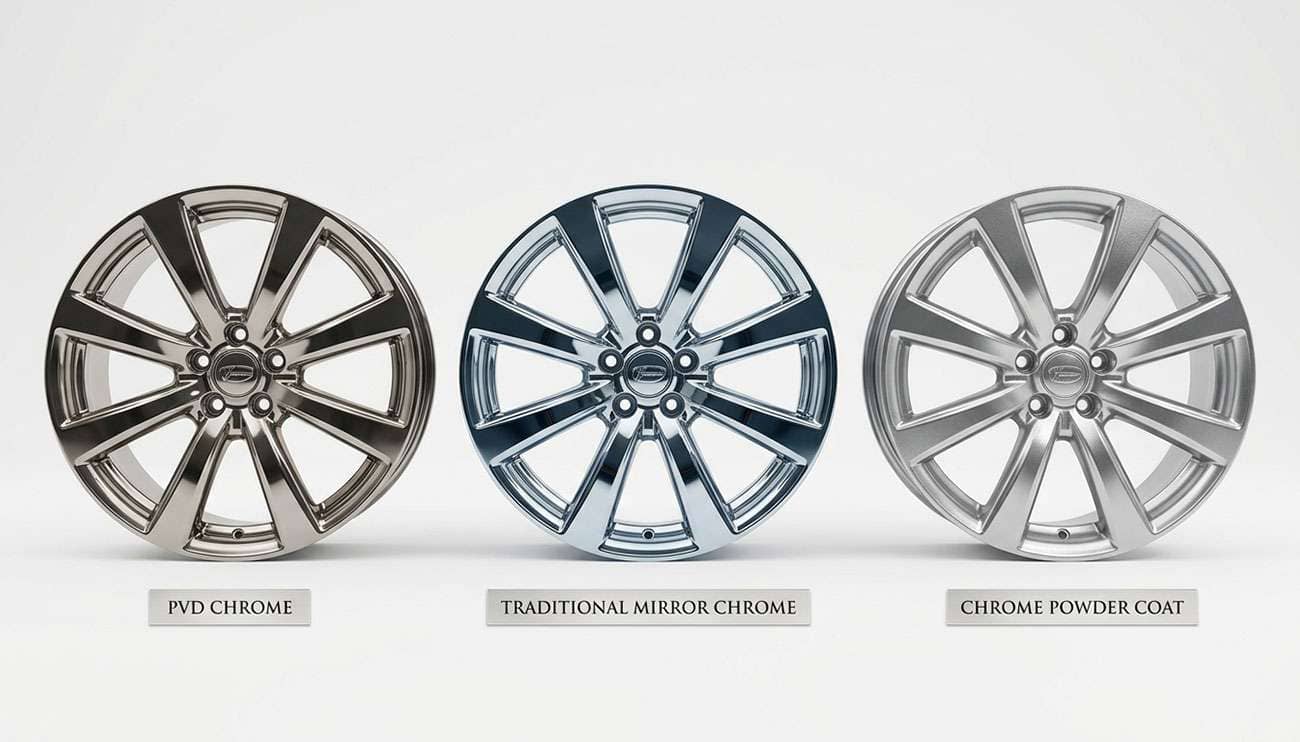
Here is something that trips up a lot of buyers: the word "chrome" on a wheel listing does not describe one finish. It describes at least three, and they are made completely differently, hold up differently, weigh differently, and have to be cleaned differently. Scroll a single page of chrome wheels and you will see one tagged "Chrome," another "Chrome Powder," and a third "Chromium Black" or "PVD" — and from a thumbnail, you cannot tell them apart.
That matters, because picking the wrong one for your climate or your patience level is how people end up with pitted, peeling rims a year later. So let me break down what each of these finishes actually is, how they stack up on the things that count, and which one is the right call for your car.
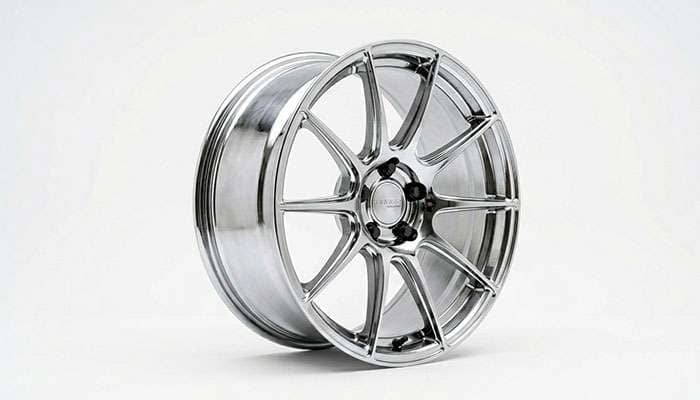
Traditional chrome is the real thing — the finish everyone pictures when they hear the word. It is an electroplating process: the wheel is submerged in a series of chemical baths and an electric current deposits layers of copper, then nickel, then a thin top layer of chromium over the base metal. The result is that unmistakable deep, liquid, mirror gloss that nothing else quite matches.
The catch is durability. Because real chrome is a plated layer over the base, it is vulnerable at the surface. Caustic brake dust and road contaminants left to sit will etch and pit it, and in harsh winter conditions, the salt and magnesium chloride used to melt ice eat right through plated chrome. Left unprotected, plated chrome can start to pit or peel in as little as 12 to 24 months. It is also the heaviest of the three finishes and the most expensive to re-coat if it goes bad — often around $350 a wheel, part of why chrome has a reputation for being a pricey finish; our look at whether chrome wheels are expensive breaks down the real numbers. That is why a lot of owners in snowy regions pull their chrome wheels for winter entirely. If you want the deep dive on keeping plated chrome alive, our guides on how to keep chrome rims from rusting and how to protect chrome wheels from winter road salt are the references to bookmark.
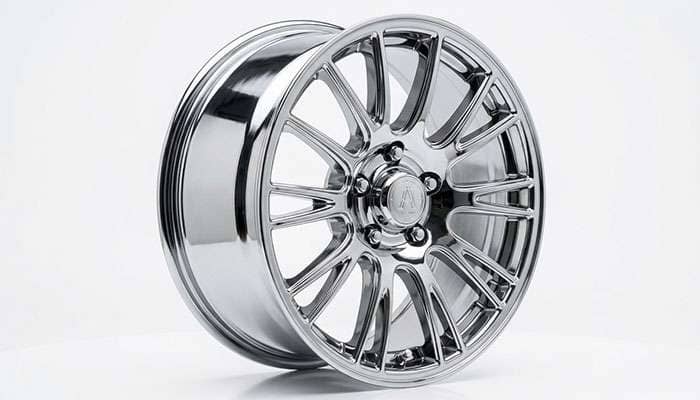
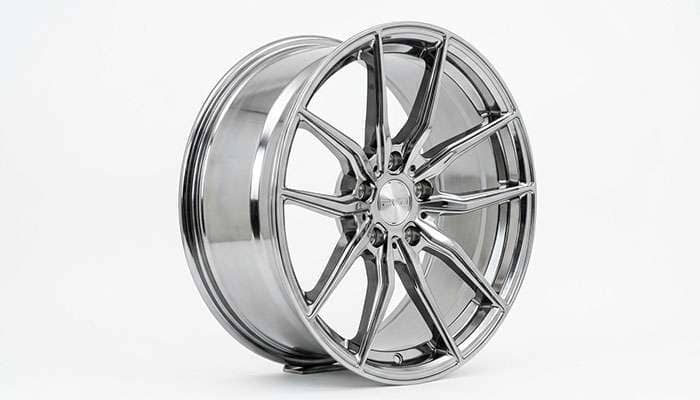
PVD stands for Physical Vapor Deposition, and it is the finish you will increasingly see sold as "chrome," "Chromium Black," or under brand trade names. Instead of chemical baths, the wheel is prepped with a base layer (usually a powder coat), then placed in a vacuum chamber where a metallic film is vaporized and bonded to the surface, and finally sealed with a protective clear coat. The look is very close to real chrome — high shine, chrome-like reflectivity — though the deepest mirror gloss still belongs to traditional plating.
Where PVD pulls ahead is everywhere else. Because the metallic layer is sealed under a clear topcoat, it resists corrosion far better than plated chrome. It handles winter salt and magnesium chloride well enough to run year-round, so there is no pulling your wheels for the season. It is lighter — often 2 to 3 pounds per wheel less than the equivalent chrome, which trims rotating mass. Manufacturer warranties typically run three years or more, versus the one to two years common on chrome. And if you do curb one, it is cheaper to repair, often around $150 versus $350. The trade-off is the cleaning rules, which I will get to, because they are the part people get badly wrong.
The third option you will see is chrome powder coat — a powder-coating process that lays down a chrome-effect finish rather than plating or vapor-depositing actual chromium. It gives you a bright, chrome-like appearance at the most accessible price point of the three, and because it is fundamentally a powder coat, it carries the durability advantages of that process: good chip and corrosion resistance, and a finish that behaves much like any other coated wheel.
What it will not do is match the dead-mirror depth of true plated chrome up close. Powder chrome reads as bright and shiny, but a trained eye can tell it is not the real plating. For a lot of buyers — especially on a build where they want the chrome look without the chrome maintenance headaches or the chrome price — that is a perfectly good trade. If you want to understand the coating process underneath it, our explainer on powder coating wheels explained covers how powder finishes are applied and why they hold up.
Here is the side-by-side on the factors that actually drive the decision. Think about how you drive and where you live as much as how the wheel looks on the shelf.
Factor |
Traditional Chrome |
PVD Chrome |
Chrome Powder |
|---|---|---|---|
Shine / mirror depth |
Deepest, true mirror |
Very high, near-chrome |
Bright, not true mirror |
Corrosion / salt resistance |
Poor — pits and peels |
Excellent — year-round |
Good |
Weight |
Heaviest |
Lighter (2–3 lbs less) |
Light |
Typical warranty |
1–2 years |
3+ years |
Varies, coating-based |
Repair / re-coat cost |
Highest (~$350/wheel) |
Lower (~$150/wheel) |
Lowest |
Cleaning |
Chrome polish/cleaner OK |
NO chrome cleaner — soap only |
Treat like painted finish |
The pattern is clear: traditional chrome wins on outright looks, PVD wins on durability and practicality, and powder wins on price. The reason PVD can shave pounds also ties into how the underlying wheel is built — if you want that background, our breakdown of cast vs forged vs flow formed wheels explains where wheel weight actually comes from. And if your real question is chrome against a polished bare-metal look rather than these three, our chrome vs polished wheels durability test covers that comparison.
This is the single most important thing in the whole article, so pay attention here. The acidic polishes and cleaners made for traditional chrome will instantly destroy a PVD finish. Because PVD is sealed under a clear topcoat, it behaves like a painted or clear-coated wheel, not like bare plated chrome. Hit it with a chrome cleaner and you will etch and ruin the topcoat in one wash.
So the rule is simple: traditional chrome gets chrome polish and chrome-specific cleaners. PVD and chrome powder get mild soap and water and the same gentle products you would use on a painted wheel — nothing acidic, nothing abrasive. If you are not certain which finish you have, treat it as PVD and use only mild soap until you confirm. This one mistake ends more "chrome" wheels than curb rash does, and it is entirely avoidable.
With the differences laid out, the decision comes down to your priorities.
Choose traditional chrome if you want the absolute deepest mirror shine, you garage the car or live in a mild, dry climate, and you are willing to baby the finish with regular cleaning and proper chrome care. It is the show-car and warm-climate choice. Just know it is the heaviest, priciest to maintain, and the one you may need to pull for winter — if you are still weighing whether plated chrome is worth it at all, our real-world test of whether chrome rims are good is a useful gut-check.
Choose PVD chrome if you want a chrome look you can actually live with year-round. It is the right call for daily drivers, four-season climates, and anyone who would rather wash with soap and water than fuss with chrome polish. Lighter, more durable, longer warranty, cheaper to fix — it is the most practical of the three, as long as you respect the cleaning rules.
Choose chrome powder if you want the bright chrome look on a budget and you are comfortable with a finish that is bright rather than true-mirror up close. It is the value play, and it cleans up like any painted wheel.
Whichever direction you go, you will find all three finishes represented across our lineup of chrome custom wheels — from classic plated-chrome steelies like Cragar, U.S. Wheel, and American Racing Torq Thrust, to PVD-style chromium-black designs from XXR, to chrome powder options like the Carroll Shelby CS80. Use the wheel visualizer to preview the look on your car, and our team can confirm exactly which finish a given wheel uses before you buy.
"Chrome" is not one finish — it is three, and the differences are bigger than the photos suggest. Traditional plated chrome gives you the deepest mirror but demands the most care and struggles with salt and weight. PVD chrome trades a hair of mirror depth for serious gains in durability, weight, warranty, and year-round usability. Chrome powder delivers the look for less. Match the finish to your climate, your maintenance tolerance, and your budget — and never, ever clean a PVD wheel with chrome polish — and you will get the shine you wanted without the regret a year down the road.
PVD chrome looks very close to traditional chrome and is highly reflective, but the deepest, true mirror gloss still belongs to electroplated chrome. For most people the difference is subtle, and PVD's durability advantages usually outweigh the small loss of mirror depth.
Yes. Because PVD is sealed under a protective clear coat, it resists the salt and magnesium chloride used on winter roads and can be run year-round. Traditional plated chrome, by contrast, is vulnerable to those chemicals and is often removed for the winter.
PVD wheels are finished with a clear topcoat and behave like painted or clear-coated wheels. The acidic polishes and cleaners formulated for bare plated chrome will etch and destroy that topcoat, often in a single wash. Use only mild soap and water on PVD and chrome powder finishes.
No. Chrome powder is a powder-coating process that creates a bright, chrome-like appearance, not an actual layer of plated chromium. It is more affordable and durable like other powder coats, but it does not match the true mirror depth of electroplated chrome up close.
PVD chrome generally lasts longest in real-world conditions because its sealed clear coat resists corrosion and salt, and it typically carries a three-year-plus warranty. Traditional chrome can look the best but is the most prone to pitting and peeling, often within one to two years if not carefully maintained.



