
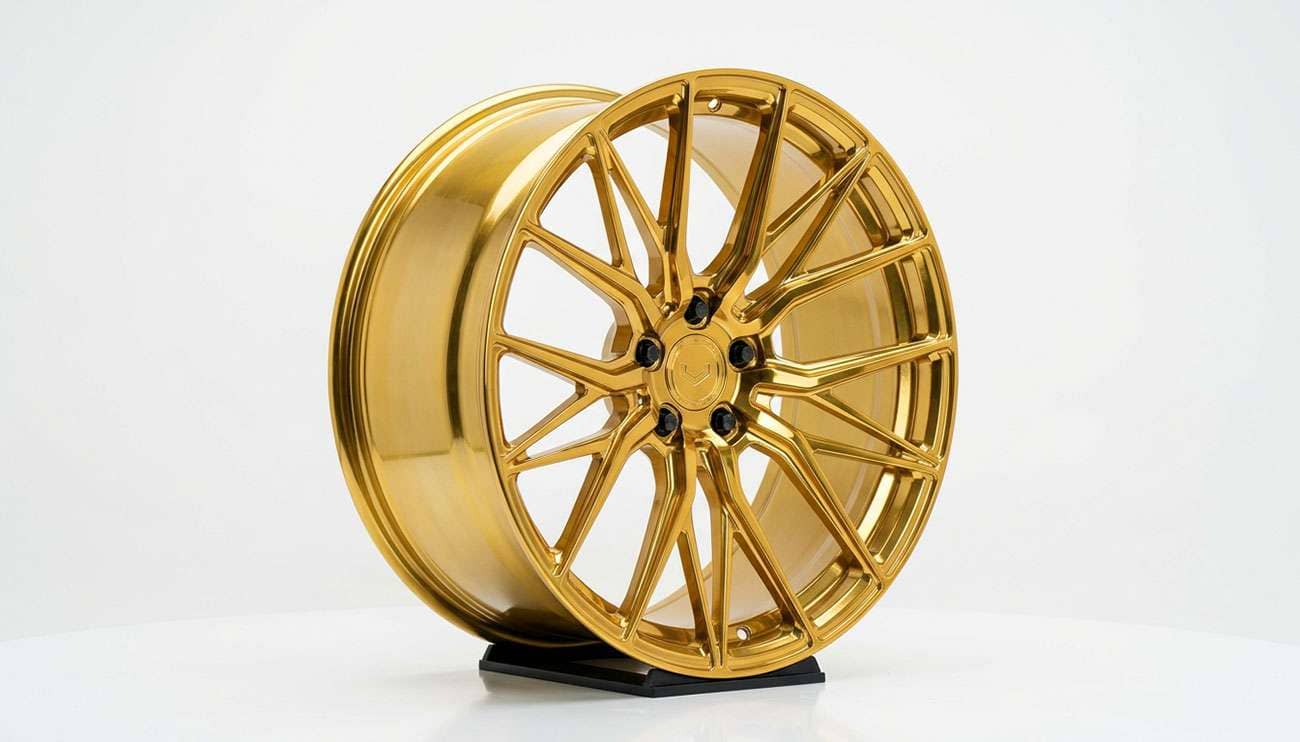
Almost never. On a car wheel, gold is a finish applied over an aluminum base, not the metal the wheel is made from. No production wheel is cast from solid gold, since it would be far too soft, heavy, and expensive to hold a car. Even the wheels marketed as 24K gold are describing a plating process, not purity. What actually varies from one gold wheel to the next is how that gold color is applied, and that single choice decides how the wheel looks, how long it lasts, and what it costs. Here is how to read the finish and pick the right set.
Gold has jumped from a niche lowrider and off-road look into mainstream street and performance builds, and the range of finishes has exploded with it. The trouble is that two wheels can both be listed as gold and be worlds apart in durability. As a fitment guy, I want you buying on the spec, not the render, so let me break down the finishes, the styles, and the numbers that matter.
No. A gold wheel starts life as a standard aluminum alloy wheel, then receives a gold-colored surface treatment. That treatment might be paint, powder coat, a vapor-deposited film, an anodized layer, or in rare show cases, actual gold plating measured in microns. The base metal underneath is what carries the load and gives the wheel its strength, which is why the alloy and construction matter as much as the color. If you want the full picture on what a wheel is made of, our breakdown of wheel aluminum alloys explains the substrate every gold finish sits on.
This matters for one practical reason: the word gold tells you the color, not the quality. A cheap painted gold wheel and a premium PVD gold wheel can look identical in a photo and behave completely differently after a year on the road. So the first question to ask any seller is simple: is this gold-colored paint, a plated finish, or something in between?
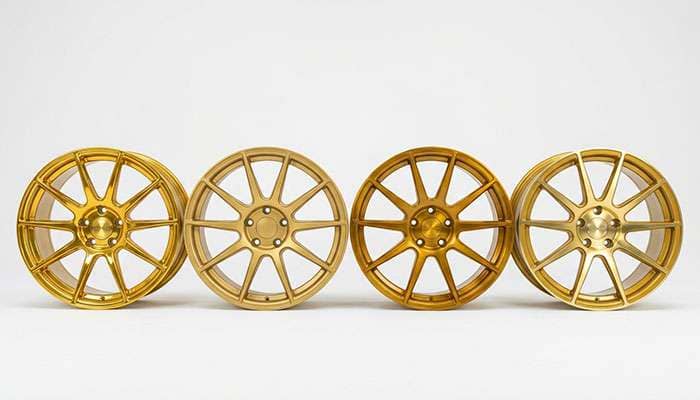
Gold is not a single finish. It is a family of surface treatments, each with its own process, look, and durability, and as our guide on why custom wheel finishes make or break your car's look explains, that choice shapes the whole build. Here are the main ones you will run into.
The most common and most affordable option. A base coat goes down, gold metallic paint is sprayed over it, and a clear coat seals it, exactly like the paint on your car's body. You will see it sold as gloss gold, matte gold, or satin gold. Painted finishes are easy to clean and repair, but they are the most vulnerable to stone chips and UV fade if the clear coat is thin or unsealed.
Instead of liquid paint, a dry powder is applied electrostatically and cured in an oven, where it melts into a tough polymer layer. Powder coat is thicker and more durable than paint, with more consistent color, which makes it a favorite for off-road and daily-driven gold wheels. The trade-off is that it is harder to strip if you ever want to refinish.
PVD, or physical vapor deposition, lays down a thin, chrome-like gold film that is extremely durable, highly reflective, and more environmentally friendly and cost-effective than traditional chrome plating. It resists scratches and brake dust better than paint, provided the base plating is flawless. Some brands sell it under trade names rather than calling it PVD. For a full comparison of these processes, our guide on PVD vs chrome vs powder lays it out side by side.
Here a gold-coated wheel gets a CNC machine cut across the face or lip, removing the coating to reveal bright raw aluminum for a two-tone contrast. That is where those gloss gold with mirror-cut face wheels come from. It is a modern, aggressive look popular in the tuner and street world, and the machined areas are clear-coated for protection.
Anodizing is an electrochemical process that thickens the metal's natural oxide layer, adding both color and corrosion resistance. It is behind those deep, rich brushed candy gold finishes. Anodized and candy golds are rarer and pricier, but they hold up well and resist fading, which is why you see them on premium wheels.
At the top sits genuine gold plating, where a wheel is chrome-plated and then given a layer of actual gold, often marketed as 24K. This is show-car and classic lowrider territory, frequently seen on triple-plated wire wheels. It delivers unmatched shine but costs two to three times a standard finish and can blister or delaminate if any layer underneath is imperfect. Genuine plating should specify a thickness in microns; anything vanishingly thin will not last.
Finish |
How It Is Made |
Durability |
Typical Cost |
Best For |
|---|---|---|---|---|
Painted Gold |
Sprayed metallic paint and clear coat |
Moderate, fades if under-sealed |
Budget, around $80 to $150 per wheel |
Daily drivers on a budget |
Powder-Coated Gold |
Electrostatic dry powder, oven cured |
High, thick and tough |
Mid, around $180 to $350 per wheel |
Off-road and daily use |
PVD Gold |
Vapor-deposited chrome-like film |
High, scratch and dust resistant |
Mid to premium |
Show shine with better wear |
Machined Two-Tone |
CNC cut through the coating |
Good, clear-coated cut areas |
Mid to premium |
Tuner and street contrast looks |
Anodized or Candy Gold |
Electrochemical oxide layer |
High, fade and corrosion resistant |
Premium |
Deep, rich premium builds |
Real Gold Plating |
Chrome base plus actual gold layer |
High if flawless, else blisters |
Highest, 2 to 3 times standard |
Show cars and classic lowriders |
Beyond the finish, the shape and construction of the wheel set the whole character of a gold build. Popular styles vary by construction type, face design, and accent colors, so match the profile to your goal, whether that is a classic muscle car, a lowered tuner, or a modern luxury car.
Two-piece and three-piece forged wheels let you mix materials and finishes, for example a gloss black or polished chrome outer lip bolted to a custom brushed gold center. Forged construction is lighter and stronger than cast, and it holds a finish beautifully, which is why it dominates high-end gold builds. Our guide on cast vs forged vs flow-formed wheels covers why the base construction matters so much.
For aggressive fitments, a deep-dish or step-lip profile maximizes the outer barrel width to show off high-contrast hardware and deep dimensions. A gold center with a bright polished lip is a classic combination here, and it reads as loud or subtle depending on the accent colors you choose.
Modern luxury structures lean on ultra-thin Y-spoke and mesh designs that reduce rotational mass while showing off big brake calipers underneath. A satin or brushed gold on a fine mesh face is the current look on European performance sedans and coupes.
Traditional lowrider and classic restorations lean into full 24K gold plating with high-density, 100-spoke wire configurations. This is the oldest gold-wheel tradition of all, prized for its jewelry-like shine. If black or bronze is more your speed than gold, our takes on whether black rims are a good idea and why bronze wheels are so popular compare the neighboring finishes.
If longevity is your priority, the ranking is fairly clear. PVD, powder coat, and anodized finishes generally outlast plain painted gold, because they bond harder and resist UV, brake dust, and road salt better. Painted gold can absolutely last if it wears a quality UV-blocking clear coat, but a thin or unsealed paint job is the finish most likely to chip and fade first.
Two other factors decide how long any gold finish survives. The first is the base construction: a forged or dense-cast wheel holds a coating better than a cheap, porous casting. The second is color reality. Gold is a light, warm finish, so it shows brake dust and fine scratches far more than black or gunmetal. That is not a durability flaw, but it does mean a gold wheel demands more frequent, more careful cleaning to keep looking its best. If a curb does get you, our guide on how to fix curb rash on wheels walks through touch-up versus full refinishing.
No finish saves a wheel that does not fit. A gold wheel that is the wrong size will rub suspension, foul the brake calipers, or wear tires unevenly, so four numbers are non-negotiable. Diameter and width have to match your tire and clearance. Bolt pattern, such as 5x114.3, must match your hub exactly. Offset, written as an ET value, sets how far the wheel tucks in or pokes out. And center bore has to match the hub, or you use hub-centric rings to close the gap.
On top of that, confirm the load rating meets or exceeds your vehicle's requirement, and look for JWL or VIA certification marks on quality wheels. When you install, torque the lug hardware to spec, usually in the 80 to 100 ft-lbs range for passenger vehicles, in a star sequence, and re-torque after about 50 miles. The finish is the fun part, but the fitment is the safety part, so get the specs right first.
Gold rewards care and punishes neglect. Brake dust is the main enemy, because the iron particles in it bond aggressively to gold coatings and stain them if left too long. Wash your wheels regularly with a pH-neutral cleaner, roughly in the 6.5 to 7.5 range, using a dedicated soft-bristle brush. Skip acidic or harsh wheel cleaners, steel wool, and clay bars, all of which strip protective sealants and can damage the finish.
For the best protection, apply a ceramic coating formulated for wheels before the first drive, ideally one with UV inhibitors, so it forms a sacrificial barrier without dulling the shine. After winter or coastal driving, rinse road salt off promptly with cool water rather than blasting hot water, which can degrade a clear coat. A few minutes of the right maintenance keeps a gold finish bright for years, while the wrong chemical can ruin it in a single wash.
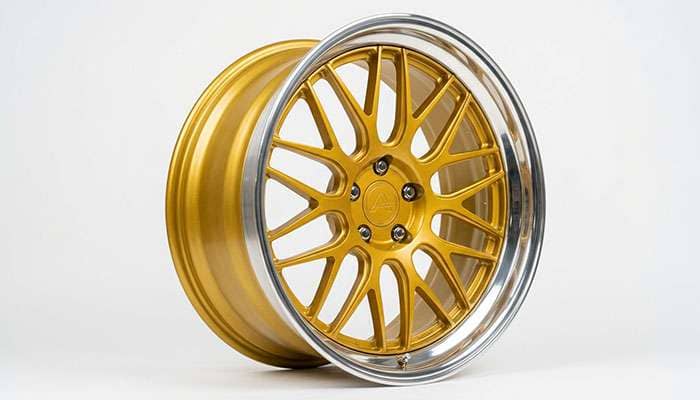
Here are three gold wheels that show the range, from a lightweight track icon to a machined luxury face to a rugged off-road fitment. Browse the full selection on our gold custom wheels page.
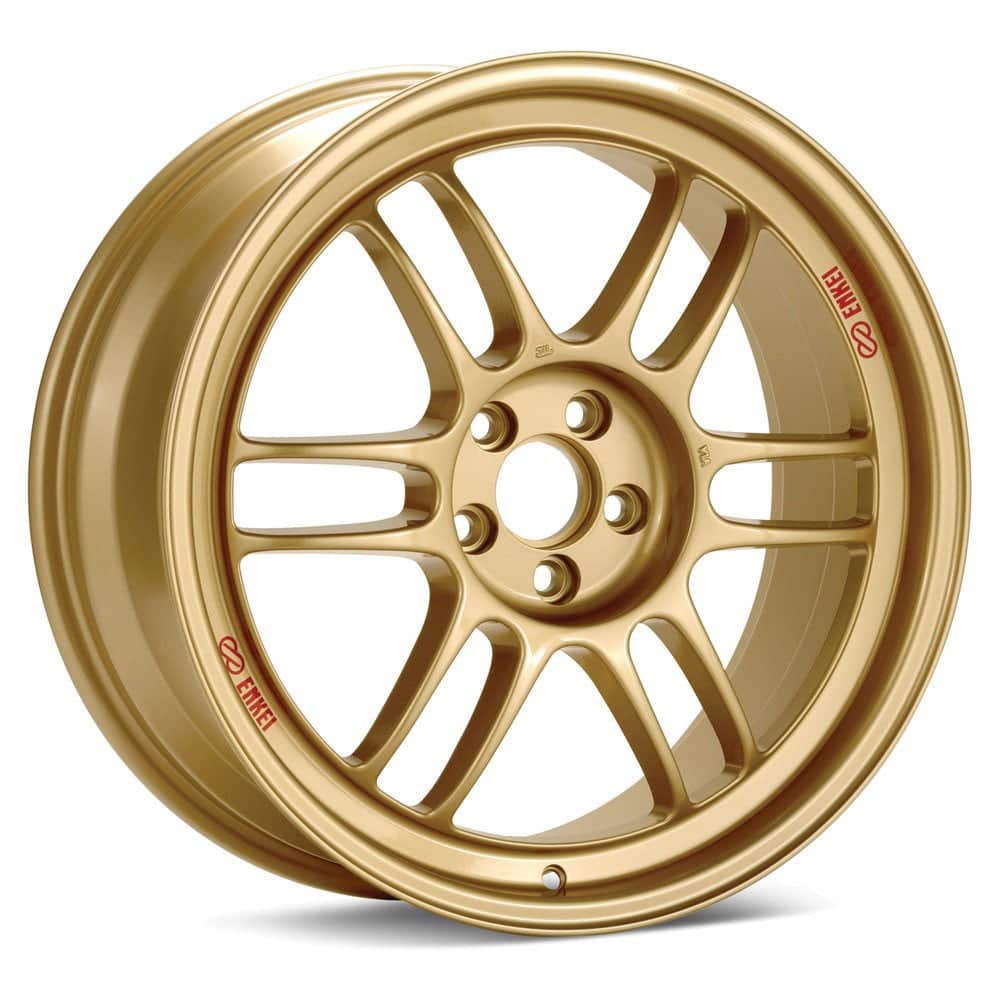
Enkei RPF1 (15x8, Gold) - about $312. The RPF1 is a legend in the motorsport world, a flow-formed, feather-light track wheel, and the classic gold colorway is iconic on a tuner or track build. If you want a proven performance wheel that happens to look perfect in gold, start here. See the range on the Enkei wheels page.
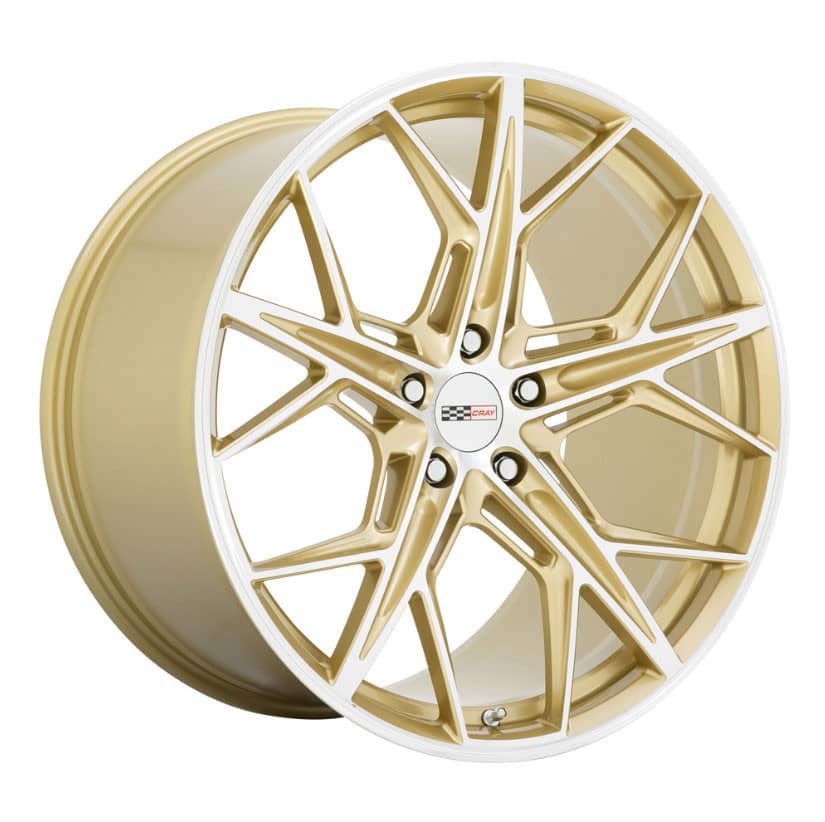
Cray Hammerhead (19x9, Gloss Gold with Mirror-Cut Face) - about $469. Built for Corvette fitments, the Hammerhead shows off the machined two-tone approach, gloss gold paired with a bright mirror-cut face for depth and contrast. It is the luxury-performance pick when you want gold with an edge. Find it on the Cray wheels page.
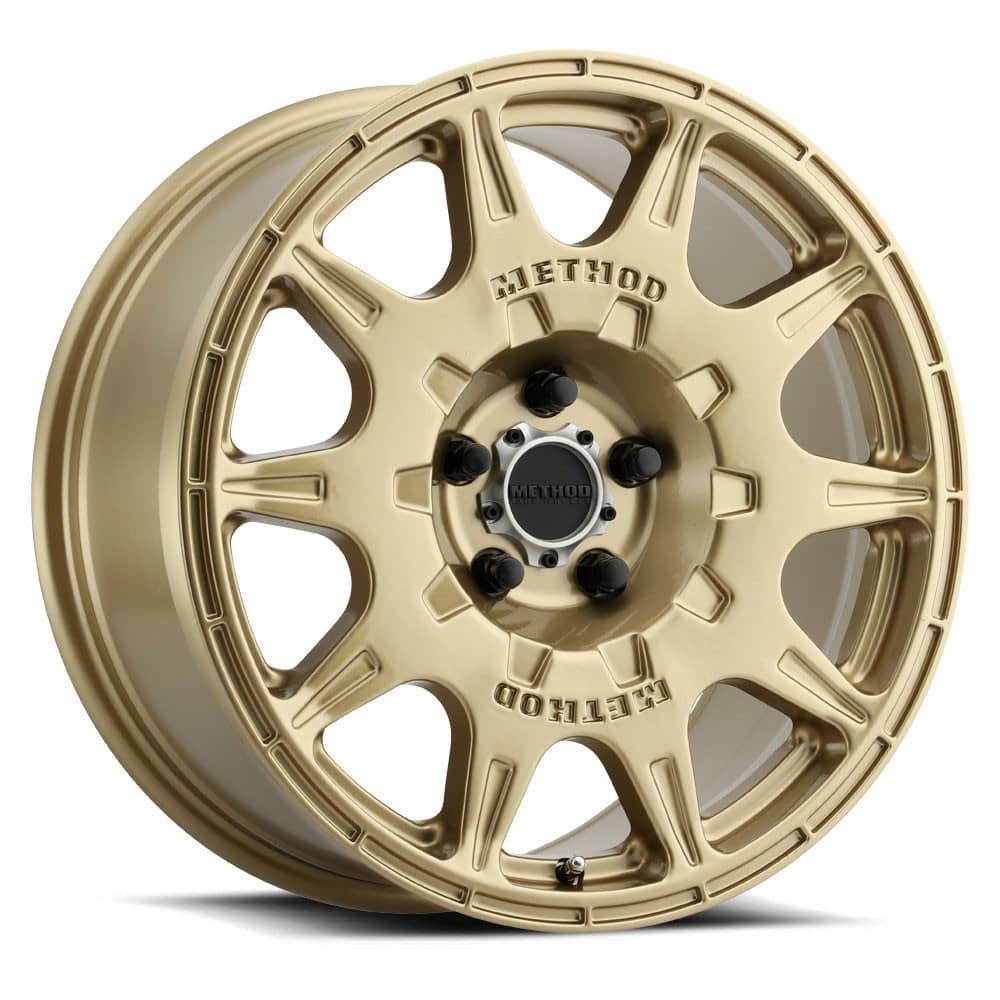
Method 502 Rally (17x8, Gold) - about $345. Method's rally gold is a signature off-road look, and the 502 pairs it with the tough, durable construction an overland or trail build needs. This is the pick when your gold wheels have to survive dirt and gravel, not just a car show. See more on the Method wheels page.
No. Gold wheels are aluminum alloy wheels finished in a gold color through paint, powder coat, PVD, anodizing, or, in rare show cases, actual gold plating. No production wheel is made of solid gold, and wheels marketed as 24K are describing a thin plating layer, not purity.
Painted gold is metallic paint sprayed over a base and sealed with clear coat, which is affordable but more prone to chips and fading. Plated gold, including PVD and real gold plating, deposits a metallic layer that is more reflective and durable, but it costs more and depends on flawless base plating to avoid blistering.
They can, especially painted finishes without a strong UV-blocking clear coat. PVD, powder-coated, and anodized golds resist fading and chipping far better. A quality clear coat, a ceramic coating, and regular cleaning all extend the life of the finish significantly.
Budget painted-gold alloys run roughly $80 to $150 per wheel, mid-range powder-coated or PVD gold wheels land around $180 to $350, and premium forged or multi-piece designs start at $400 and climb well past $1,000 per wheel. True gold plating adds a further premium of two to three times a standard finish.
Yes. Existing wheels can be professionally refinished in gold through paint or powder coating, and DIY kits exist for painted finishes. Proper surface prep and a UV-resistant clear coat are essential for adhesion and longevity. Note that aftermarket refinishing typically voids a factory wheel warranty.
Not from the color itself. Performance depends on the wheel's weight, construction, and correct fitment, not its finish. A lightweight forged gold wheel performs like any other lightweight forged wheel; the gold is purely cosmetic.



