
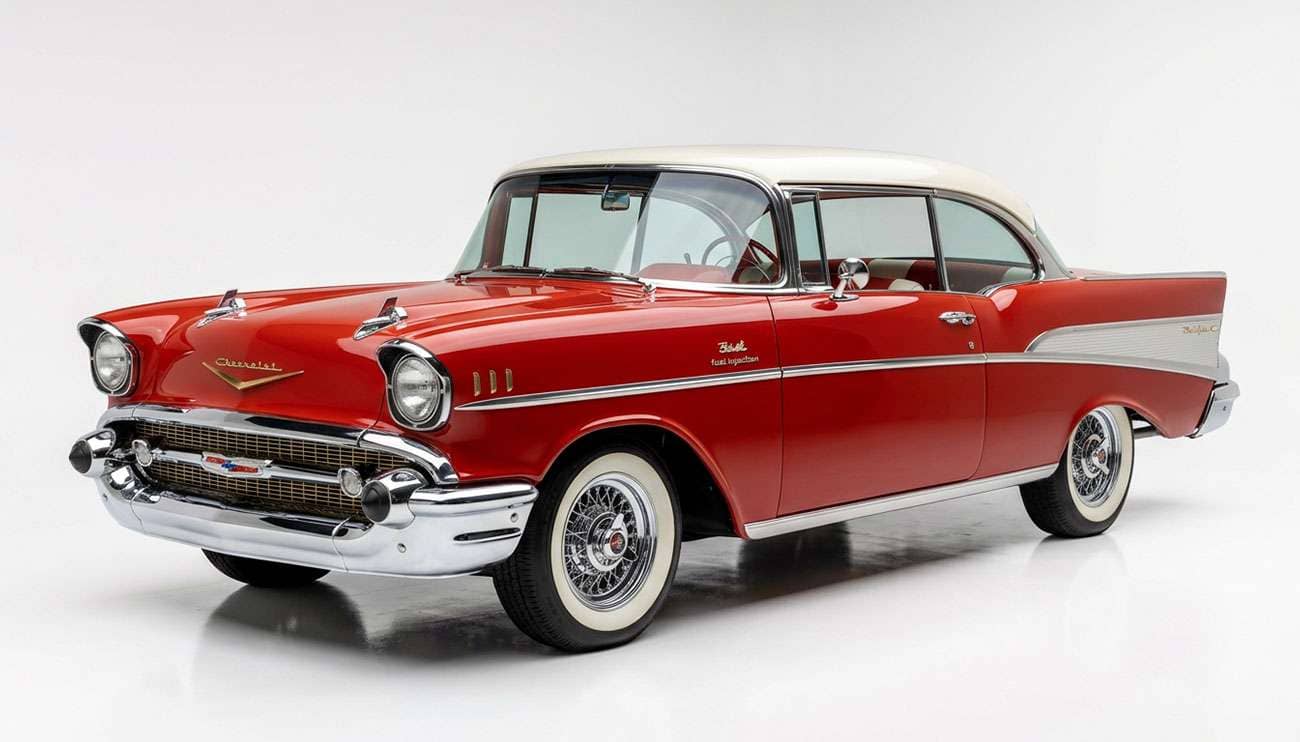
Every tri-five Chevy - the 1955, 1956, and 1957 models - left the factory on the same 5x4.75 bolt pattern that GM kept for decades. The '55 and '56 rolled on 15x5 steel wheels wrapped in 6.70-15 bias plies, while the '57 dropped to 14-inch wheels with 7.50-14 rubber. Today, a 205/75R15 radial nails the stock look on the early cars, most '57 owners move up to 15s, and the hot rod crowd runs 15x7s up front with 15x8s and fat 60-series rubber out back.
I've had tri-fives rolling through the shop for as long as I've had a shop. The 150, the 210, the Bel Air, the Nomad wagon - doesn't matter which one you've got, the wheel and tire questions are always the same, and I'm going to answer every one of them right here.
Chevrolet built the tri-five on the 5x4.75 bolt pattern - five lugs on a 4.75 inch circle, same as it used on everything from Chevelles to Camaros for the next thirty years. That's the best news in this whole article, because it means the tri-five has one of the deepest wheel selections in the classic car world.
Year |
Stock Wheel |
Stock Tire |
Modern Equivalent |
|---|---|---|---|
1955 |
15x5 steel |
6.70-15 bias ply |
205/75R15 |
1956 |
15x5 steel |
6.70-15 bias ply |
205/75R15 |
1957 |
14x5 steel |
7.50-14 bias ply |
205/75R14 |
If those old numbering systems look like hieroglyphics, you're not alone - we decoded the whole mess in our guide to antique tire sizes. The short version: 6.70-15 translates to roughly a 205/75R15 in modern metric, which is why that size has become the default tri-five radial.
Here's the thing about a tri-five: the body is so right that almost any wheel works. The question isn't what fits - it's what story you want the car to tell. These cars have worn every style in the book, and if you want the full tour of what's out there, our rundown of classic car wheel styles covers the whole family tree. For tri-fives specifically, four looks own the hobby.
Body-color steelies, full wheel covers or dog dish caps, and wide whitewalls. This is the car the way it sat in the showroom, and on a Gypsy Red and India Ivory '55, nothing else comes close. The details matter here - the right cap, the right trim, the right whitewall width. Our piece on center caps and trim rings covers the dress-up hardware that makes or breaks this look.
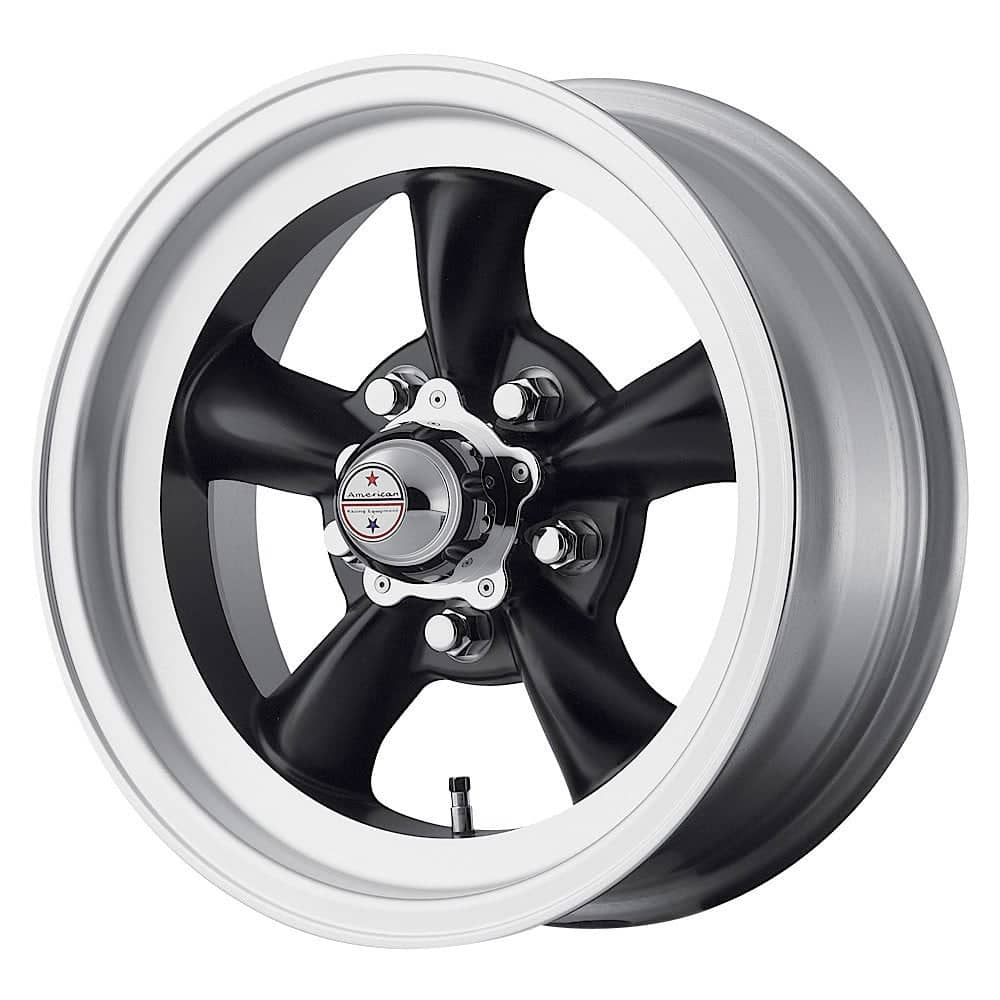
A set of Torq Thrusts and a one-inch whitewall turns any tri-five into the car every kid in 1965 wanted. This is the look I grew up around - warmed-up small block, four-speed, five-spokes. Sixty years later it still hasn't aged a day.
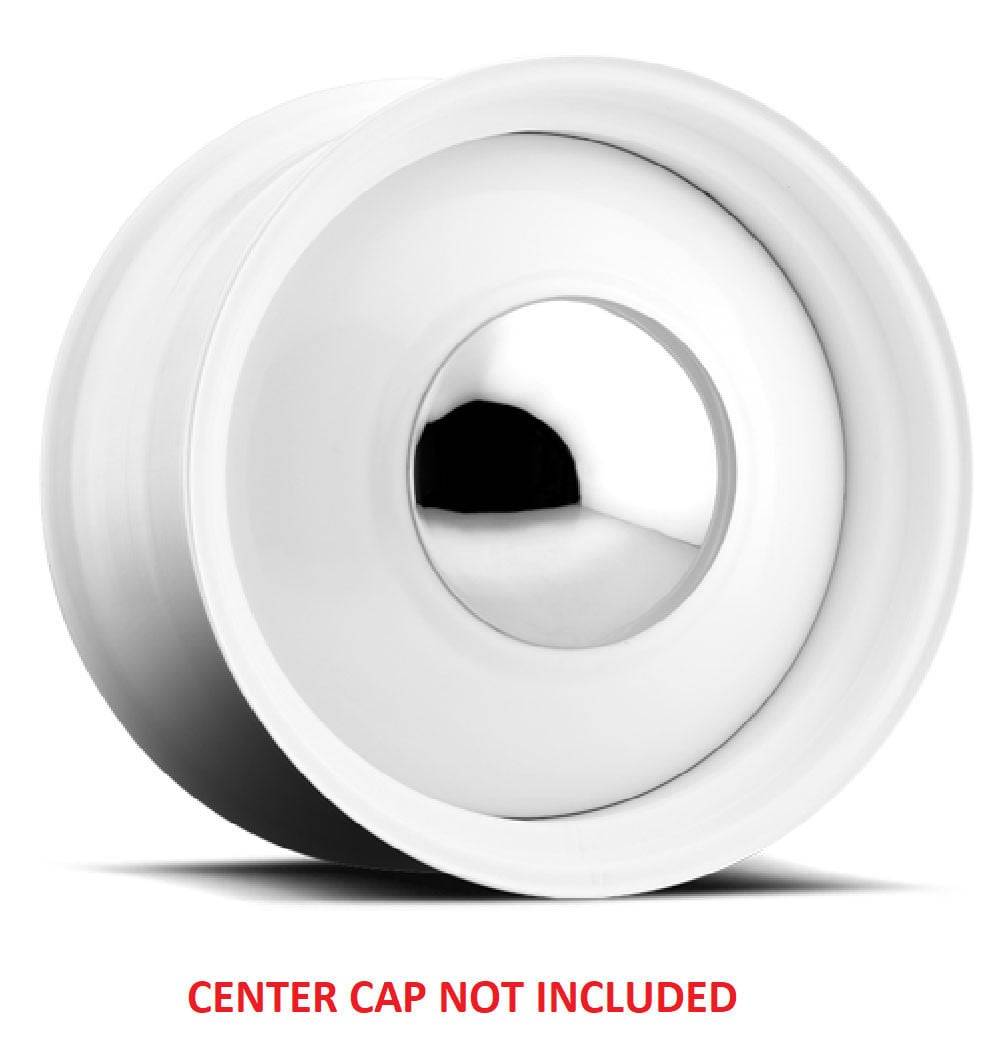
The custom crowd's answer: a slick steel wheel with no holes, no spokes, no fuss, capped with a chrome baby moon. Killer with wide whites on a lowered car. We went deep on this look in our smoothie wheels and baby moons guide.
Technically these didn't show up on Chevys until 1967, and the rivet counters will remind you. I say a chrome-lipped rally with a disc brake cap looks so natural on a tri-five that nobody's ever asked one to leave a car show. It's the most popular "wrong" wheel in the hobby, and my own wheel line makes one for exactly this reason.
The tri-five is generous with wheel room, but here's the honest sizing talk. Up front, a 15x6 or 15x7 with around 3.75 to 4 inches of backspacing tucks in clean with a 205/75R15 or a 205/60R15. Out back, a 15x8 clears fine on most cars, and a 235/60R15 fills the wheel well nicely - the brave run a 275/60R15 for that raked, big-and-little stance. Go wider than that and you're into mini-tub territory.
Now the '57 question I get weekly: those cars came on 14s, and 14-inch tire selection gets thinner every year. Worse, most front disc brake conversion kits simply won't clear a 14-inch wheel. So when a '57 comes in for a brake upgrade, it leaves on 15s - better tire choices, better brakes, and the proportions actually improve. Unless you're chasing a factory-correct judged restoration, move the '57 to 15-inch wheels and never look back.
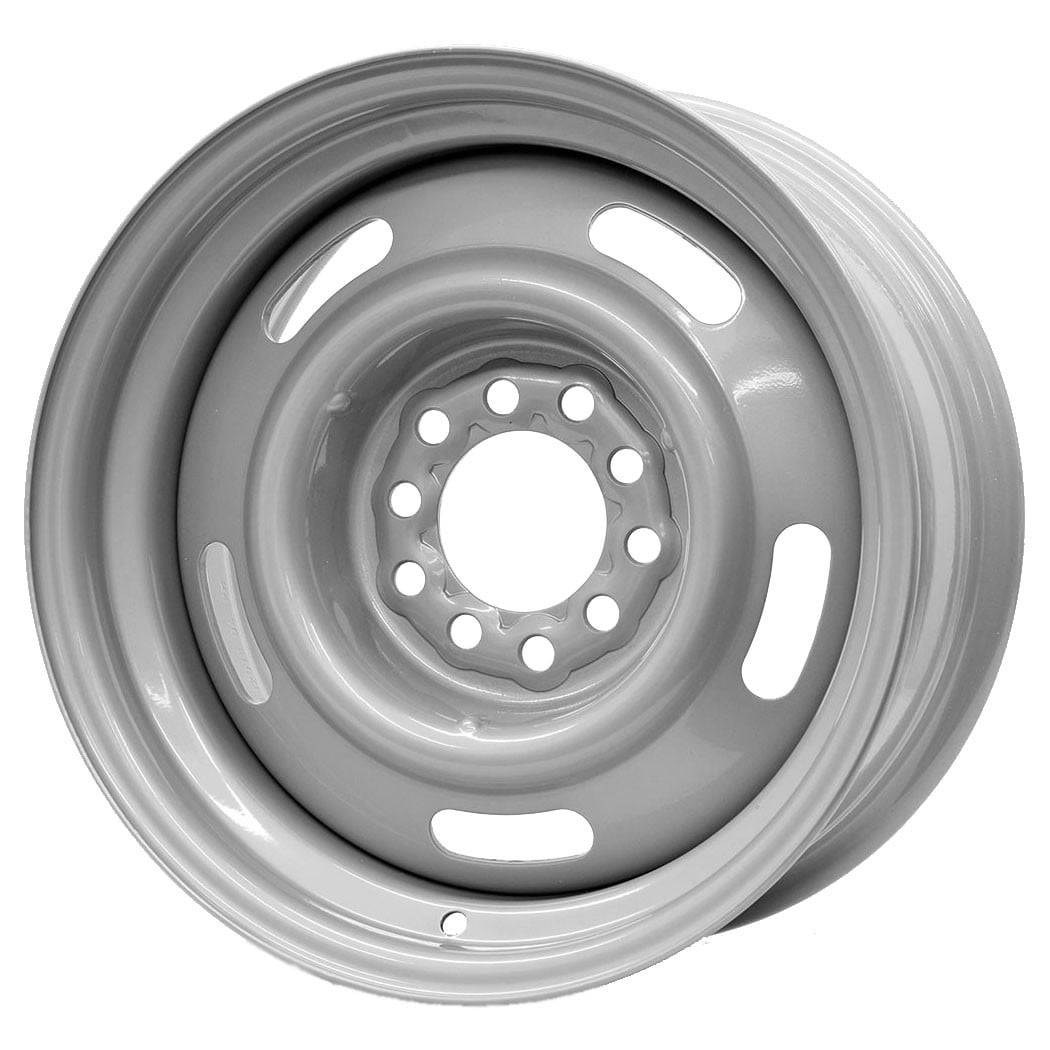
Hot Rod Hanks 55 Rally - from $74. Yes, it's my own line, and I'll defend the pick all day: a proper steel rally in 15x6 for less than a tank of gas per corner. Add caps and rings and you've nailed the look for under $500 a set. See it here.
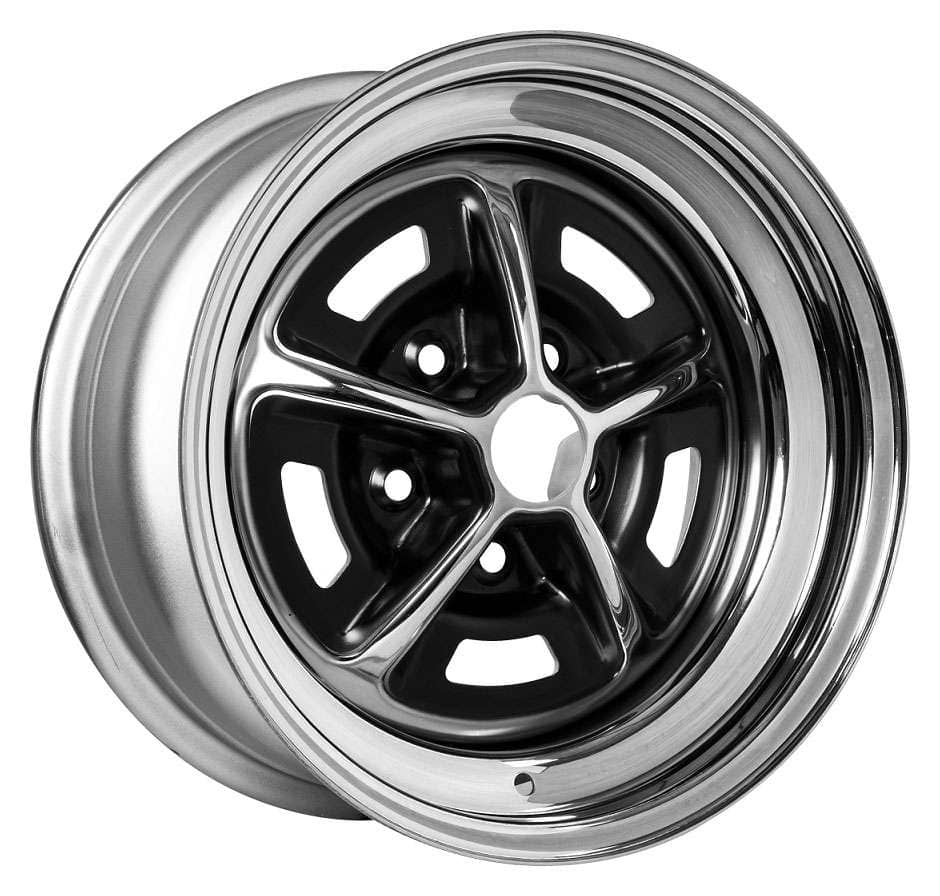
Boyd Coddington 50 Series SS - from $199. Boyd's take on the classic five-spoke supersport, chrome over semi-gloss black, 15x7. It splits the difference between rally and mag and looks money on a lowered 210. Check it out here.
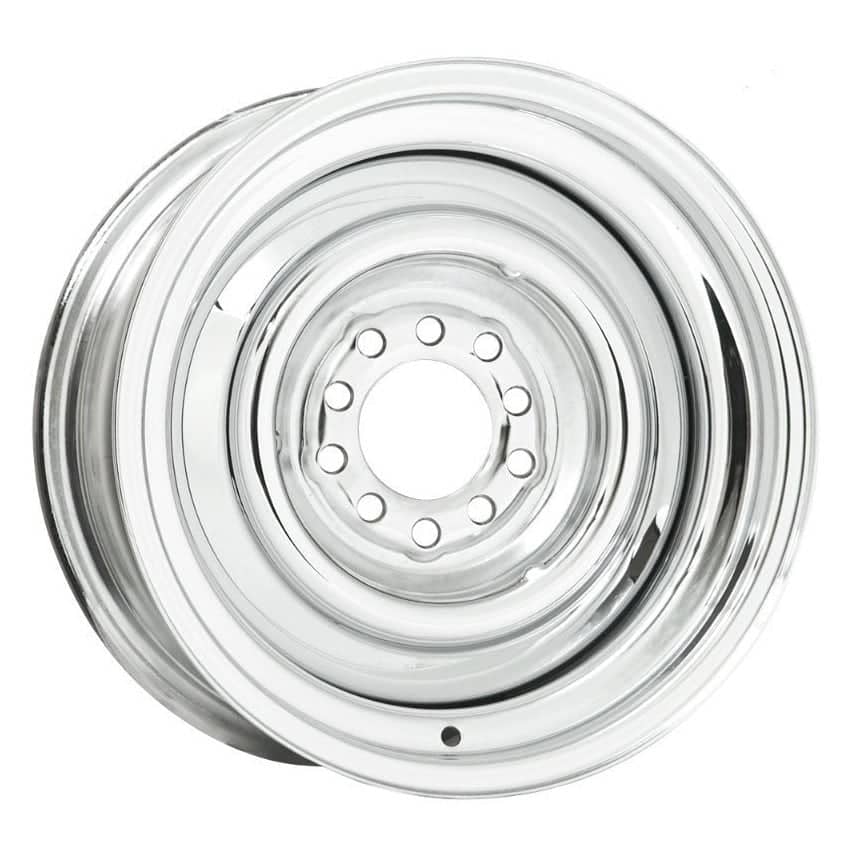
Wheel Vintiques 10 Series Smoothie - from $246. The gold standard smoothie in triple chrome, 15x6. Cap it with a baby moon, drop the car two inches, done. See it here.
U.S. Wheel 512 Smoothie in gloss white - from $186. The sleeper pick. A white smoothie with a wide whitewall on a two-tone '56 is pure drive-in gold, and hardly anybody thinks to do it. Take a look here.
American Racing VN105 Torq Thrust D - from $210. The five-spoke. Satin black centers, machined lip, 15x7 - the exact recipe that made these cars legends the second time around. See the Torq Thrust here.
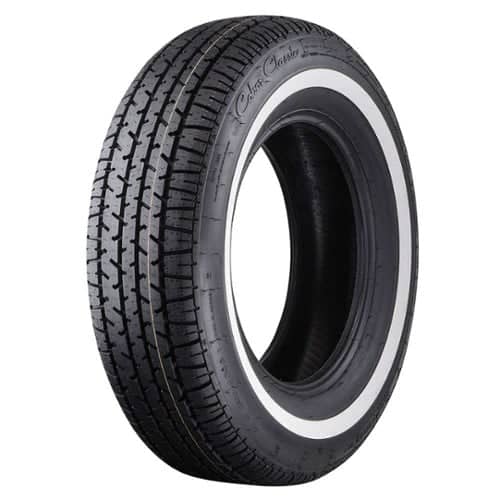
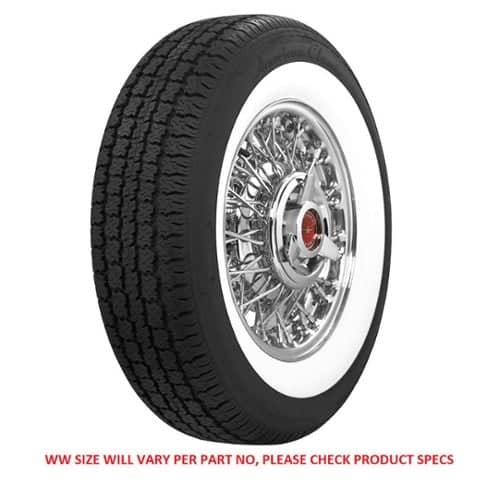
Whitewall width is the detail that separates the guys who know from the guys who guess - a '55 wants a wide white, a '60s hot rod wants a narrow one, and mixing them up is like wearing sneakers with a tux. Our whitewall width guide sorts out which era wore what.
Coker Star Series Narrow - from $178. A 205/75R15 radial with a one-inch whitewall - the Torq Thrust's best friend and the best value in the classic tire aisle. See it here.
American Classic Wide Whitewall Radial - from $253. The showroom look with radial manners: a P205/75R15 with the fat 2-plus-inch white stripe the '55 wore new. Check it out here.
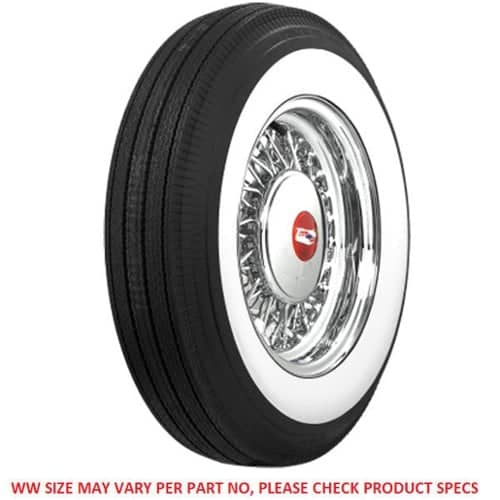
Diamond Back Auburn Premium - from $289. Diamond Back vulcanizes real whitewalls onto modern radial carcasses, so you get today's ride with yesterday's face. The Auburn Premium in 205/75R15 is the one I put on customer cars that get driven. See it here.
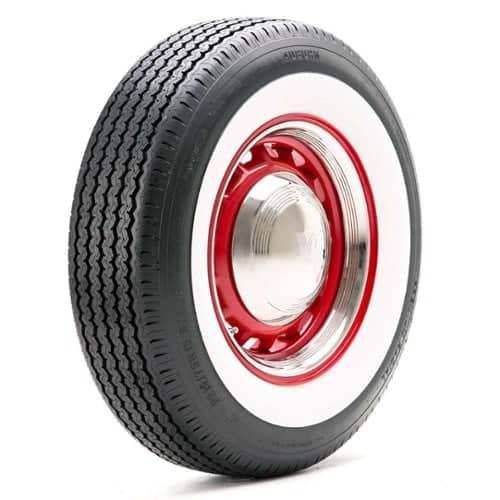
Coker Classic Bias B - from $282. The genuine article: a true 6.70-15 bias ply with a wide whitewall for judged restorations and the purists who want the car to drive exactly like 1955. If you want the bias look without the bias wander, read our take on bias-look radial tires before you decide. See the Bias B here.
Sixty years on, the tri-five is still the friendliest classic in the hobby to put wheels under: one bolt pattern, generous fender room, and every look from showroom stock to pro touring on the table. Figure out the story you want the car to tell, size the rubber to your brakes and stance, and the rest falls into place. When you're ready to roll, browse my own Hot Rod Hanks wheels and the rest of our classic lineup - every combo ships mounted, balanced, and ready to bolt onto your '55, '56, or '57.
All 1955-1957 Chevy passenger cars use the 5x4.75 bolt pattern, also written as 5x120.65 mm. It's the same pattern GM used on Chevelles, Camaros, and Novas for decades, which is why tri-five wheel selection is so deep.
The 1955 and 1956 Chevys came with 6.70-15 bias ply tires on 15x5 steel wheels. The closest modern radial equivalent is a 205/75R15, which fits the original wheels as well as aftermarket 15x6 and 15x7 wheels.
Yes. The '57 came on 14-inch wheels from the factory, but 15s bolt right up and are the standard upgrade - they clear front disc brake conversions, open up far better tire selection, and keep the car's proportions right.
Absolutely, and most owners do. Radials ride better, track straighter, and last longer than bias plies. True bias tires still make sense for judged restorations, and whitewall radials from Coker, American Classic, and Diamond Back give you the vintage look with modern manners.
The big four are steel wheels with covers or caps for restorations, Torq Thrust five-spokes for the hot rod look, chrome smoothies with baby moons for customs, and rally wheels - not factory-correct for these years, but so popular nobody minds.



