
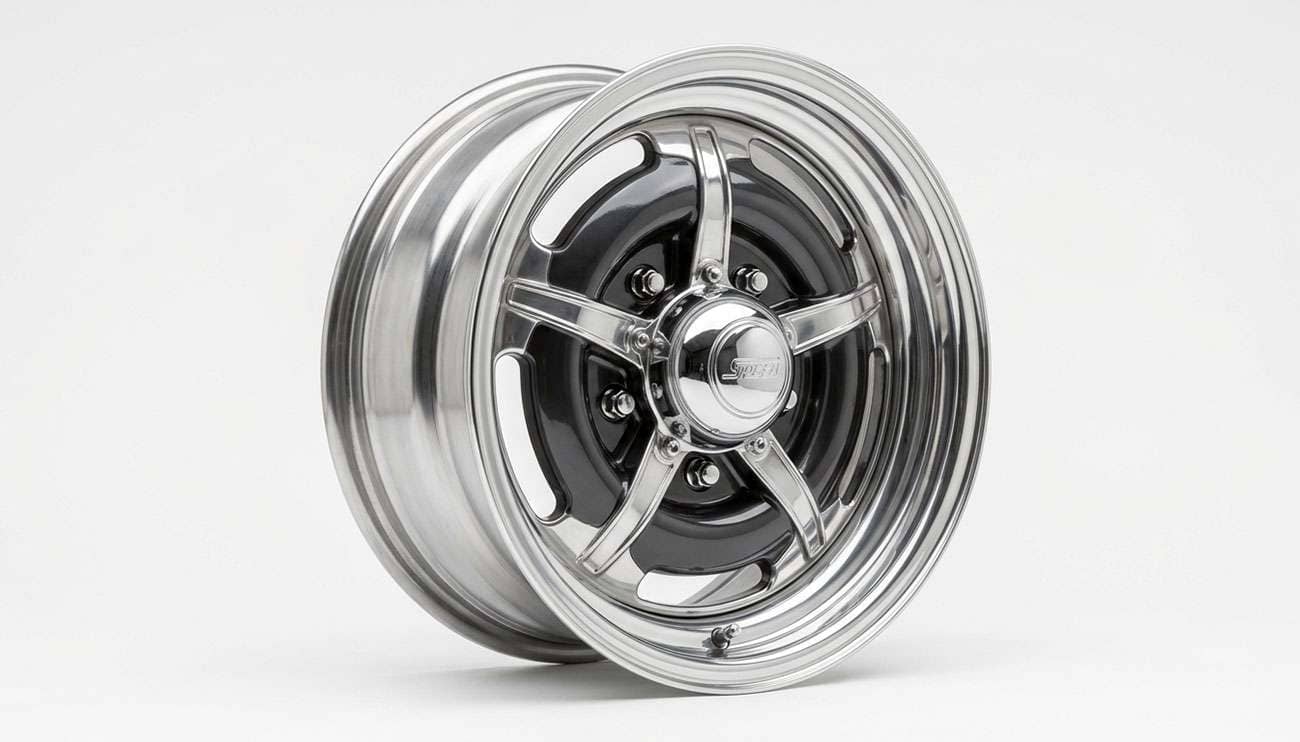
A center cap covers the middle of the wheel, where the hub and lug nuts live. A trim ring — also called a beauty ring — is the polished metal band that wraps the outer edge of the wheel. Run the two together on a painted steel wheel and you turn a plain rim into a finished, period-correct piece. That's the whole job. The confusion starts because folks throw around "hubcap," "center cap," "beauty ring," and "wheel cover" like they all mean the same thing. They don't, and after forty years of bolting this stuff onto customers' cars, I'll sort it out for you.
I get this question across the counter all the time. A fella picks up a clean set of steelies for his '57 or his C10, gets them painted, slides them on, and stands back thinking something's missing. It is. The wheel looks unfinished because the dress-up parts aren't on it yet. So let's walk through what each piece actually is, what it does, and how to pick the right combination for your build.
A center cap is the piece that covers the center bore of the wheel — the hub area and, depending on the design, the lug nuts. On a steel wheel it snaps or bolts into the middle and hides the bare hub. On an aluminum or alloy wheel it's usually a smaller plastic or metal disc that covers just the hub bore and often carries the brand logo or a bow tie.
There are two ways a cap holds on. A push-in cap has spring tabs around the back that grab the inside of the wheel's center hole — you tap it in by hand. A bolt-on cap fastens with small screws or threads to the wheel face, which is the more secure setup and the one I steer guys toward if they drive the car much. Push-in caps are fine for a show piece, but I've watched plenty of them launch off on the freeway because somebody trusted forty-year-old spring clips. If you've got a cap that won't stay put, that's worth fixing before it costs you the cap. Our guide on how to change a hubcap walks through the basics of getting one seated right.
On a classic steel wheel, the cap is doing more than hiding hardware. A small dog dish cap leaves most of the painted wheel showing for that lean factory look, while a full cap covers nearly the whole face. Pick the cap and you've already set the character of the wheel.
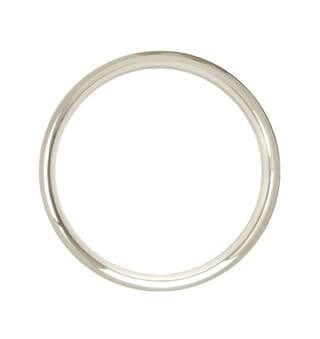
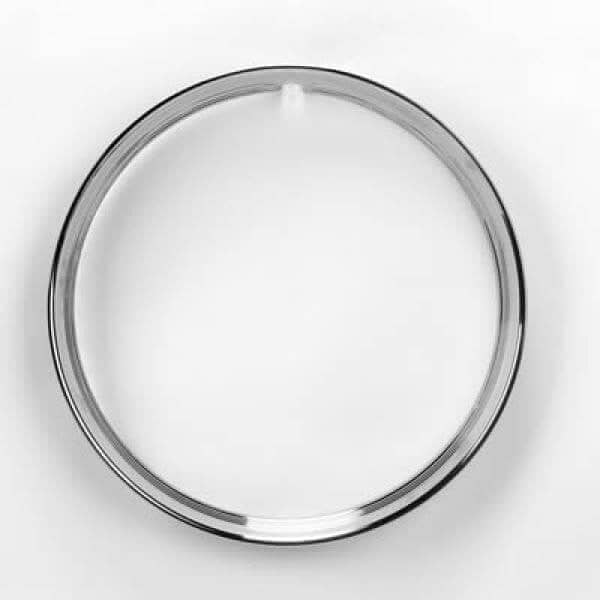
A trim ring is the bright metal band that rides around the outer lip of the wheel, framing it like a picture frame frames a photo. It does two things. First, it covers the raw outer edge of a steel wheel, which is the part that looks cheapest when it's left bare. Second, it makes the wheel read a touch bigger and finishes the transition between the wheel and the tire. Run a polished ring around a painted steelie and the whole thing snaps into focus.
Trim rings come in a few profiles. A smooth ring is one clean, unbroken band — the most common and the most versatile. A ribbed ring has grooves or raised lines for a little extra texture, which suits period customs. A stepped ring has a sharper shoulder that throws a stronger highlight, and it's the one that looks most factory-correct on a lot of muscle-era cars.
Yes. "Trim ring" and "beauty ring" are two names for the exact same part. Old-timers and hot rod guys tend to say beauty ring; parts catalogs and modern shops tend to say trim ring. You'll also hear "wheel ring" now and then. Don't let the different words throw you — they all describe the band that wraps the outer edge of the wheel. There's no functional difference, so order whichever one your supplier lists.
A trim ring only covers the outer edge of the wheel and leaves the center open. A hubcap covers the center area — sometimes a little, sometimes a lot. They're not interchangeable, and on a proper classic steel wheel you often run both: a trim ring around the rim and a cap in the middle, with the painted steel showing in between. That trim-ring-plus-cap combination is the whole reason these parts get confused for each other. They work as a team, but each one has its own job.
Here's where most of the mix-up happens. People use these three terms loosely, but in the shop they mean different things. A wheel cover is a large piece that covers nearly the entire face of a steel wheel — that's your classic full hubcap. A center cap covers just the center hub area. A hubcap is the catch-all old name that technically covers the hub but gets used for everything. This table sorts it out.
Feature |
Center Cap |
Hubcap / Wheel Cover |
Trim Ring |
|---|---|---|---|
What it covers |
Hub and center bore only |
Most or all of the wheel face |
Outer edge of the wheel only |
Typical wheel |
Steel or aluminum |
Plain steel wheel |
Painted steel wheel |
How it mounts |
Push-in clips or bolt-on |
Spring retention around the rim |
Saw-tooth clips against the lip |
Run with a trim ring? |
Yes — the classic combo |
Usually no, it covers too much |
Pairs with a center cap |
Not quite. A hubcap, in the old sense, is a larger cover that hides the hub and a good chunk of the wheel face on a plain steel wheel. A center cap is smaller and covers only the center bore, which is what you see on most aluminum and alloy wheels today. People use the words interchangeably, and that's fine in casual talk, but if you're ordering parts, know that a "center cap" listing is almost always the small hub cover, not the big full-face cover.
A dog dish cap — sometimes called a poverty cap — is a small, shallow center cap that covers just the hub and leaves most of the painted steel wheel exposed. It got the "poverty" nickname because it came standard on base-model and fleet cars back in the day, but the look has flipped completely. Now that lean, blacked-out steelie with a dog dish cap is one of the most wanted setups for muscle cars, sleepers, and traditional rods. Pair it with a trim ring and a redline or whitewall tire and it looks period-correct from any angle.
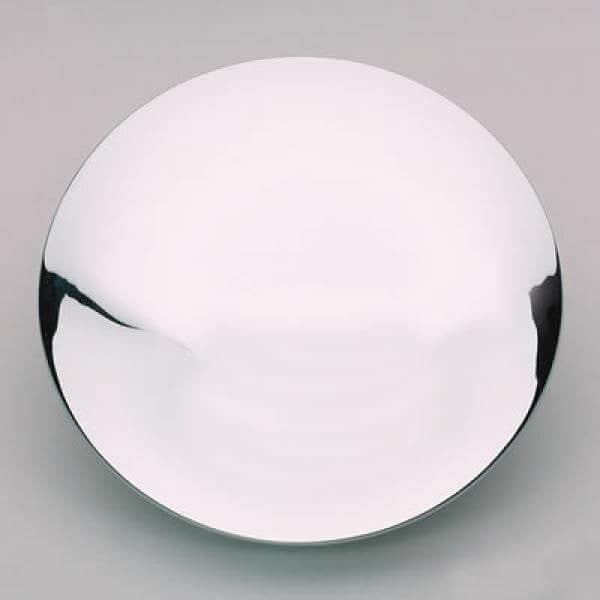
A baby moon is a small, smooth, dome-shaped chrome cap that covers the center of the wheel with a clean, mirror-like bowl. A full moon, or moon cap, covers the entire wheel face in that same smooth chrome dome. Both are staples of the kustom and lowrider world, and both pair beautifully with a trim ring around the edge. I go deeper on the spokeless steel look and these caps in our smoothie wheels and baby moons breakdown if you want the full story on that style.
Strictly speaking, no — a wheel rolls fine without them. But on a painted steel wheel they do real work beyond looks. A center cap keeps road grime and water off the hub and lug area. A trim ring protects the outer edge of the wheel, which is the spot most likely to get curbed and start rust. And together they hide the two parts of a steelie that look the most unfinished. Skip them and the wheel always reads a little bare.
One honest warning from years of dealing with old sets: the retention clips matter more than the parts themselves. I've seen beautiful stainless trim rings come off a shelf looking perfect, then you flip them over and the steel spring clips that hold them on have rusted to dust. A ring that won't clip on tight will walk off the wheel on the first pothole. When you buy, check the clips, and if you're reusing vintage rings, plan on replacing the retention hardware. It's cheap insurance against losing a ring you can't easily replace.
Sizing starts with the wheel diameter, plain and simple. A 15-inch wheel takes a 15-inch trim ring; a 14-inch wheel takes a 14-inch ring. Get the diameter wrong and the ring won't seat, period. Center caps are a little fussier — they're sized to the center bore and the retention nub, not just the wheel diameter, so you have to match the cap to the specific wheel. Always confirm the cap fits your wheel before you order, because a cap that fits one brand's 15-inch wheel won't necessarily fit another's.
Feature |
Smooth Ring |
Ribbed Ring |
Stepped Ring |
|---|---|---|---|
Look |
Clean, simple, versatile |
Textured, period custom |
Sharper highlight, factory-style |
Best build |
Rods, customs, daily classics |
Traditional and kustom |
Muscle-era restorations |
Pairs with |
Baby moon or dog dish |
Dog dish or full cap |
Factory-style center cap |
Match the ring diameter to the wheel diameter — that's the first and most important number. Check the size stamped on the back of the wheel, or measure across the wheel face. Then pick a profile width that suits the wheel. A narrower ring exposes more paint and looks sportier and more restrained; a wider, deeper ring covers more edge and makes a bolder statement. On a smaller wheel, an oversized ring can look heavy, so balance the proportion to the wheel.
This one comes up constantly. Chrome has the deeper, smoother mirror shine and pops harder in the sun, which is why a lot of guys want it. Stainless steel holds up better over the long haul, especially against rain, road salt, and condensation — it won't pit and flake the way chrome eventually can if the plating gets compromised. My honest take: if the car lives in a garage and goes to shows, chrome gives you the best shine. If it sees weather or daily duty, stainless is the smarter buy. Either way, the retention clips are usually plain steel, so those are what rust first regardless of the ring finish.
The dress-up parts should tell the same story the rest of the car tells. A traditional rod or a rat rod wants a dog dish cap on a raw or satin-black steelie, sometimes with no ring at all for that stripped-down honesty — that whole patina look is its own art, and I broke it down in our rat rod patina steelies guide. A factory-correct muscle car restoration wants a stepped trim ring and the proper factory-style center cap to match what rolled off the line. A clean cruiser or kustom looks right with a baby moon and a smooth polished ring.
Here's the good news: we stock the dress-up parts, not just the wheels. For trim rings, the in-house Hot Rod Hanks Smoothie Trim Ring runs about USD 28 and is the clean, smooth band that fits a 14-, 15-, or 16-inch steelie, while the Wheel Vintiques Hot Rod Ribbed Trim Ring gives you that textured period look for around the same money. On the cap side, a Wheel Vintiques Baby Moon Cap in chrome starts near USD 20 for the smooth bowl look, and Chevy guys can finish the center with an American Racing or Cragar bow tie cap. You'll find all of these in our wheel accessories section, sorted by the wheel they fit.
As for the steelie underneath them, the in-house Hot Rod Hanks 55 Rally in 15-inch silver is one of the most affordable period-correct wheels out there and is purpose-built to wear a ring and cap. Steelies like these come alive once the dress-up parts go on — browse the rest on our steel wheels page.
If you're still deciding which wheel style fits your car before you worry about caps and rings, our overview of classic car wheel styles covers the full menu, and the guide to steelies explains why a plain steel wheel is still such a smart buy. For factory-correct restorations, the rally wheel guide is worth a read, and if you're chasing the spinner look instead, our knock-off wheels guide covers that path.
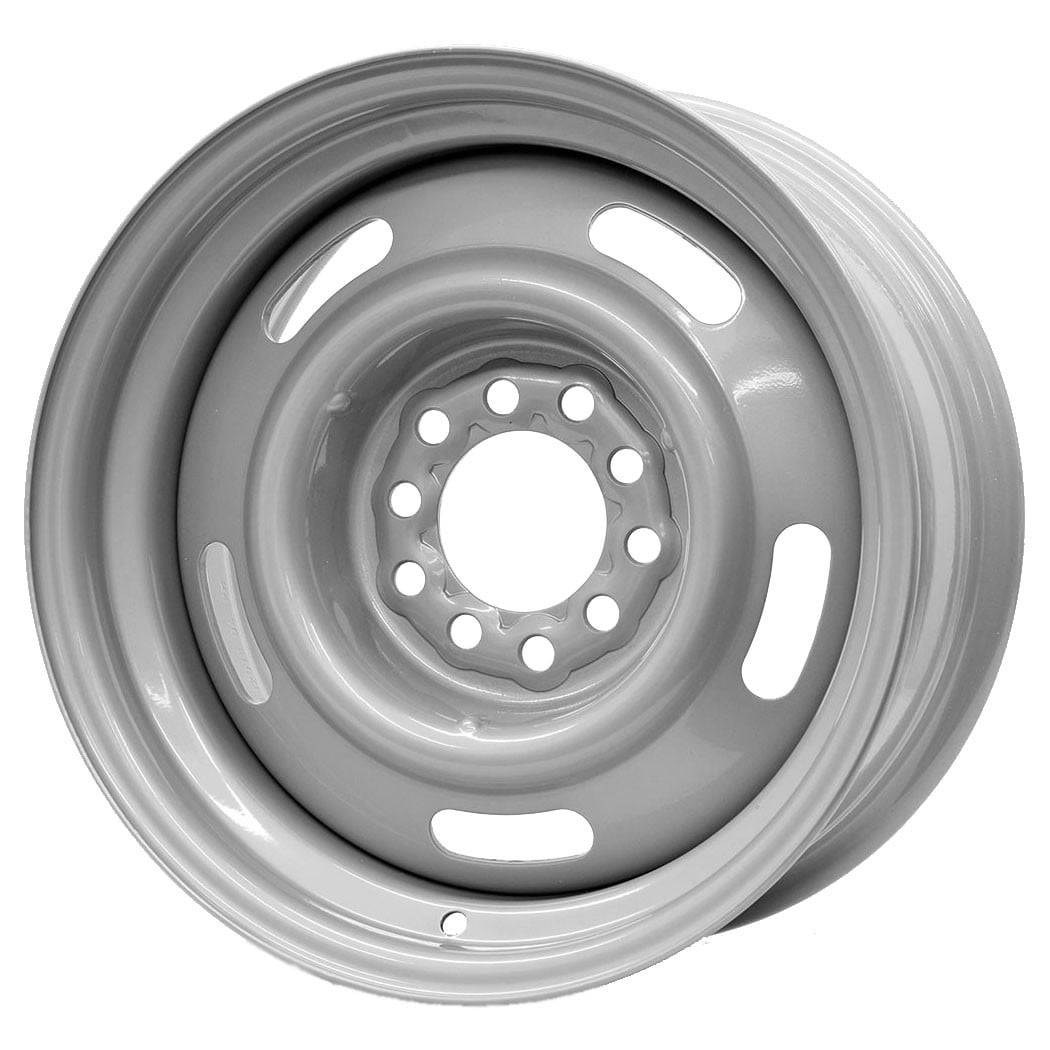
Once you know the parts, the whole thing stops being confusing. A center cap covers the hub. A trim ring — the same thing as a beauty ring — frames the outer edge. A hubcap or wheel cover hides most of the face. On a classic steel wheel, the magic combination is a cap in the middle and a ring around the edge, with the painted steel showing in between. Match the cap and ring style to the story your build is telling, get the diameter right, check the clips, and you'll take a plain steelie and make it look like it belongs. That's the difference between a wheel that's done and a wheel that's just bolted on.
Yes. Trim ring and beauty ring are two names for the same part — the bright metal band that wraps the outer edge of the wheel. Hot rod guys tend to say beauty ring, parts catalogs say trim ring, but there is no functional difference.
A center cap covers only the center hub area of the wheel, which is what you see on most aluminum and alloy wheels. A hubcap, in the older sense, is a larger cover that hides the hub and a good portion of a plain steel wheel face. The terms get used interchangeably, but a parts listing for a center cap is almost always the smaller hub cover.
Yes, and on a classic steel wheel that is the standard combination. The trim ring frames the outer edge while the cap finishes the center, leaving the painted steel showing in between. That cap-and-ring pairing is the classic dressed-up steelie look.
Match the trim ring diameter to the wheel diameter — a 15-inch wheel takes a 15-inch ring. Check the size stamped on the back of the wheel or measure across the face. Then choose a ring width that suits the wheel proportion: narrower rings expose more paint, wider rings make a bolder statement.
Chrome gives the deeper mirror shine and pops harder in the sun, making it ideal for garaged show cars. Stainless steel resists rain, salt, and condensation better over time, so it is the smarter choice for cars that see weather or daily driving. The retention clips are usually plain steel either way, so inspect those for rust.
A dog dish cap, also called a poverty cap, is a small, shallow center cap that covers just the hub and leaves most of the painted steel wheel showing. It came standard on base-model cars decades ago, but today the lean steelie-and-dog-dish look is highly sought after for muscle cars, sleepers, and traditional rods.



