
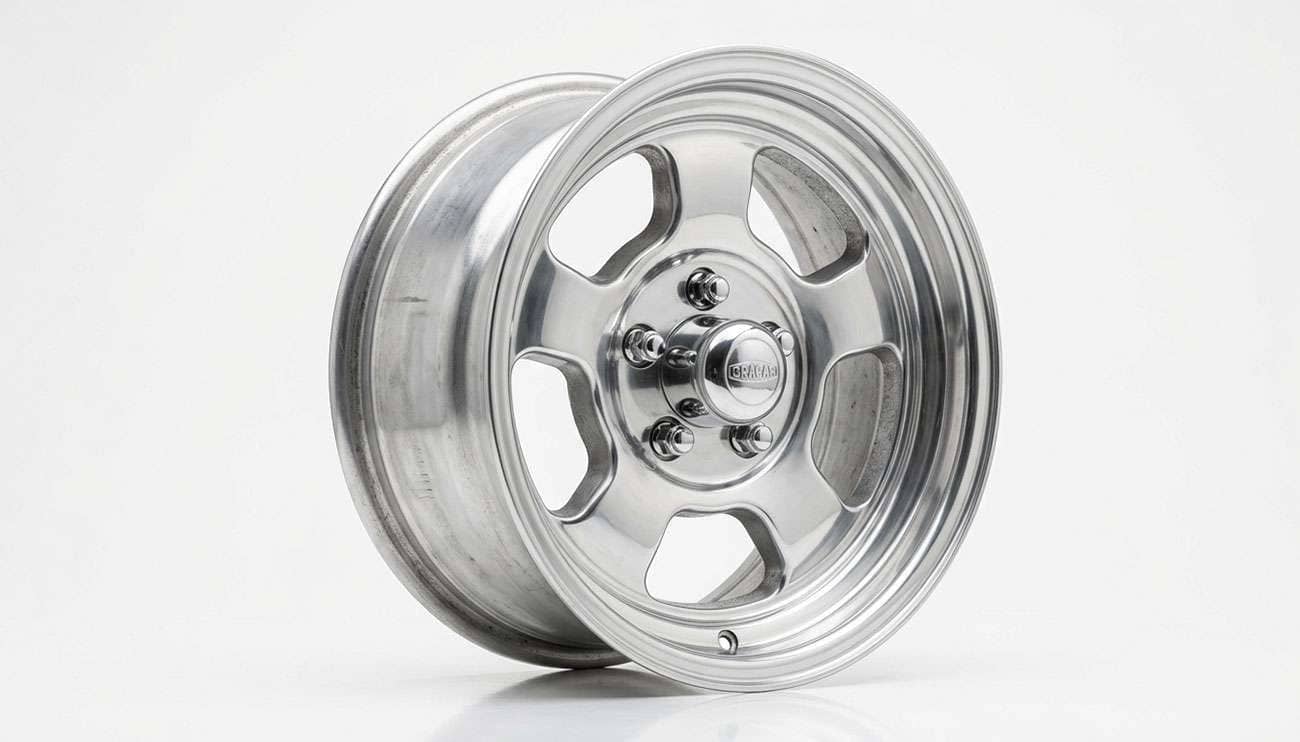
I've been around wheels my whole working life, and there are a handful of designs you can spot from across a parking lot without reading a single letter of branding. The slot mag is one of them. Five clean slotted openings cut into a polished aluminum face, a little dish, and that's it. No frills, no gimmicks. You see those five slots and your brain goes straight to drag strips, gassers, and Saturday-night cruising. For a wheel that's about as simple as a wheel can get, it carries an awful lot of history.
People ask me all the time what makes a slot mag a slot mag, why we call it a "mag" when the thing's made of aluminum, and whether they can still run a set on a build today. Good questions, all of them. Let me walk you through it the way I would if you were standing at the counter.
At its heart, a slot mag is a cast aluminum wheel with a small number of slotted openings cut through the face, almost always five of them. That's where the name comes from: a wheel with slots. The slots aren't just for looks, either. They cut weight out of the casting and let air move through to the brakes, which mattered a great deal back when these wheels were doing double duty on the street and at the strip.
The look is the thing, though. A slot mag reads clean and aggressive at the same time. The five openings, the machined or polished face, the modest lip, the whole package just works on a low, mean stance. It's a far cry from a fussy multi-spoke wheel, and that simplicity is exactly why it's been copied a thousand times over. If you want to see where it sits among the broader family of vintage rims, our rundown of classic car wheel styles puts it in context next to the other icons of the era.
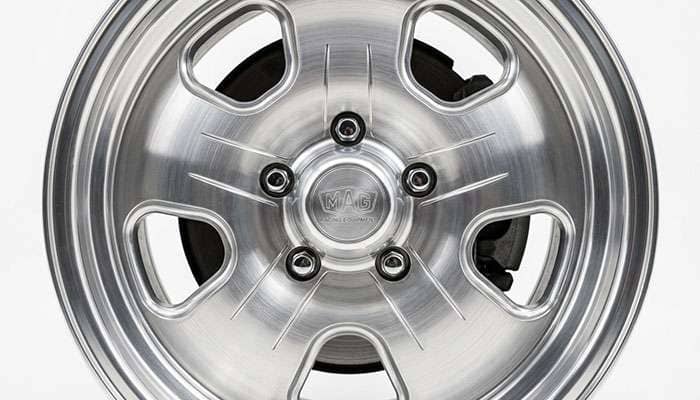
Here's the part that trips folks up. We call them mag wheels, but the slot mag you'll buy today is aluminum, not magnesium. So what gives?
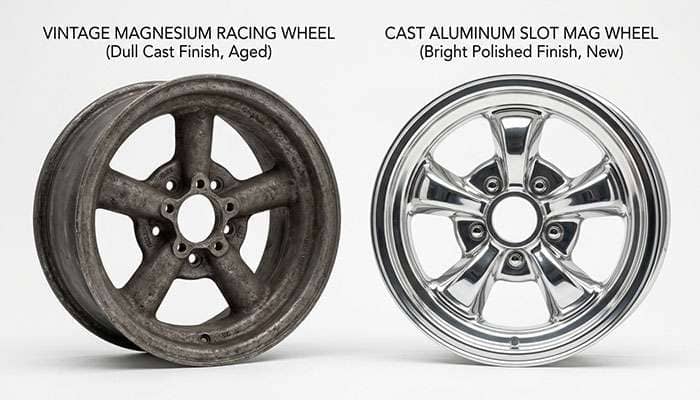
Go back to the racing world of the 1960s. Magnesium is about a third lighter than aluminum while holding similar strength, so magnesium racing wheels were the hot ticket on the track. They were genuinely light, and on a race car every pound off the corners is money. The enthusiast crowd saw those wheels under the fast cars and wanted the look and the weight savings for the street, and the word "mag" came along for the ride. The name stuck to the style even as the material changed underneath it.
And change it did, for good reason. Real magnesium is a headache on a street car. It corrodes badly if you don't baby it, and raw magnesium will actually burn if it gets hot enough, which is not a sentence you want associated with the thing holding your tire on. Aluminum gave you most of the lightness without the drama, and it was cheaper to cast in volume. So the industry settled on cast aluminum, kept calling them mags, and never looked back. If you want the full story on that naming quirk, I dug into it in why is it called mags, and the broader question of what is a mag wheel covers the whole category.
The slot mag as we know it really got rolling in the early 1960s. Ansen Automotive put out a five-hole aluminum design that landed at exactly the right moment, and it caught fire with the hot rod crowd. Once one company proved the look sold, everybody wanted a piece. Within a few years just about every aftermarket wheel house had its own version of a five-slot wheel on the shelf, from the big names to the small shops.
That's the funny thing about the slot mag. There was never really one "official" slot mag. It was a shared idea, a silhouette that a dozen manufacturers chased at once, each with their own little twist on the slot shape, the lip, and the center cap. The design was simple enough that nobody could really own it, and that's a big reason it spread the way it did. It became the default aggressive wheel of an entire era.
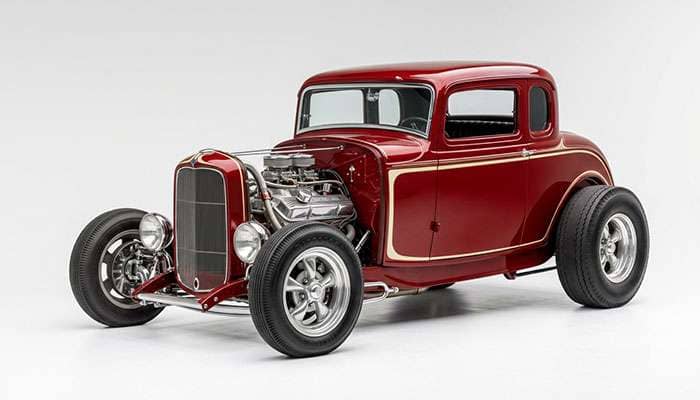
This is where the slot mag earns its legend. The thing showed up everywhere. Gassers ran them with skinny fronts and fat rears. Muscle cars wore them on the boulevard. Drag cars bolted them up at the track. But it didn't stop with American iron. Slot mags found their way onto vans during the custom van craze, onto dune buggies kicking up sand, onto Volkswagens, onto little imported sports cars. If it had four wheels and an owner who wanted it to look fast, odds are somebody put a set of slots on it.
Part of that came down to the bolt patterns and sizes the wheels were offered in. You could get slot mags in a wide enough range of fitments to cover almost anything in the driveway, which meant the look wasn't locked to one kind of car. That universality is a big reason the slot mag became shorthand for the whole period of custom car culture, rather than belonging to any single make or model. If you're matching a set to a muscle-era car specifically, our muscle car wheel size guide walks through getting the diameters and widths right for that stance.
Plenty of wheel styles came and went over the decades. Trends are trends. But the slot mag never really left, and I think it comes down to three things.
First, the simplicity. A clean five-slot face doesn't fight with the rest of the car. It works on a primered rat rod and it works on a glossy show car, on a Chevy and on a Ford. There's nothing trendy about it to date itself, which is exactly why it has aged so well.
Second, the lightness and the function. These were cast aluminum wheels that shed real weight compared to the steel rims they replaced, and the slots did honest work moving air to the brakes. Unsprung weight matters, and a lighter wheel helps a car feel quicker on its feet. That was true in 1965 and it's true now.
Third, the breadth of fitment. Because so many makers built the style in so many sizes and bolt patterns, you could put them on darn near anything. A design that fits everything and offends nobody has a way of sticking around.
Now for the question I get most: can you still buy and run slot mags? Absolutely, and in some ways it's easier than it ever was. The classic styles never died, and the good news is the modern reproductions are built with today's tooling, today's metallurgy, and today's sizing.
The wheel that's closest to the original spirit on our shelves is the US Mags Indy U101 in polished cast aluminum. It is, for all intents and purposes, the slot mag, recreated by a company founded by hot rodders who set out to reissue the classic styles with modern manufacturing. If you want the look with a more contemporary fitment range, the ATX AX186 Slot carries the five-slot face into modern truck and SUV sizing. And on the heritage end, brands like American Racing have kept the old-school catalog alive for the purists.
One thing I always tell people: a slot mag wants the right rubber to look right. A modern low-profile tire kills the whole vibe. You want a taller sidewall with a period-correct look, and if you're chasing the vintage stance without giving up modern manners, take a look at our piece on the bias look radial tires that get you there. The wheel and the tire are a package deal on a build like this.
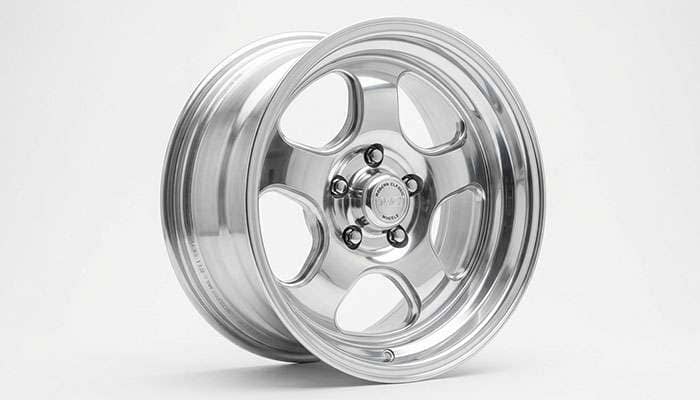
A few things to nail down before you order, and none of them are complicated.
Get the bolt pattern and offset right first. This is the part people rush and regret. The slot mag look depends on the wheel sitting at the right depth in the well, so confirm your bolt pattern and the offset that gives you the stance you're after before anything else. While you're at it, sort out your lug hardware, because the seat type has to match the wheel; our guide to lug nut seat types keeps you from buying the wrong nuts.
Decide on a finish. Polished aluminum is the classic, full stop, but the modern catalog gives you machined faces, gunmetal, black, and diamond-cut lips if you want something with a little more attitude. Match it to the car and the era you're going for.
Know your construction. The originals were cast, and most reproductions still are, which is perfectly correct for this style and keeps the cost sane. If you ever wonder how cast stacks up against the fancier methods, our breakdown of cast vs. forged vs. flow-formed wheels spells out the trade-offs, but for a period-correct slot mag, cast is the right call.
When you're ready to shop the full lineup of vintage-style rims, our classic wheels selection runs from the true slot mags to the rest of the old-school catalog, and if you get stuck on fitment, that's exactly what my crew is here to sort out before you buy.
The slot mag is proof that you don't need to be complicated to be iconic. Five slots, a little dish, some polished aluminum, and a whole era of car culture rolled out on it. The name's a leftover from the magnesium racing days, the design came up in the early sixties and got copied by everyone, and it stuck around because it's light, it's simple, and it fits just about anything. Run a set today with the right tire under it and you've got a look that's been turning heads for sixty years and isn't about to stop. That's not nostalgia. That's just a good wheel.
Slot mag wheels are cast aluminum wheels with a small number of slotted openings cut through the face, almost always five, which is where the "slot" name comes from. The slots reduce weight and let air reach the brakes. The clean five-slot look became one of the most recognizable wheel designs of hot rod and custom car culture.
Almost never anymore. The "mag" name carried over from the magnesium racing wheels of the 1960s, but the slot mags sold today are cast aluminum. Magnesium is lighter but corrodes badly and can burn at high temperatures, so aluminum became the practical choice for street wheels while the mag nickname stuck.
Yes. The classic style is widely reproduced today using modern tooling and sizing. Wheels like the US Mags Indy recreate the original five-slot look in cast aluminum, and brands such as ATX carry the slotted face into modern truck and SUV fitments. They come in a range of bolt patterns and finishes.
A taller sidewall with a period-correct profile suits slot mags far better than a modern low-profile tire, which clashes with the vintage look. Many builders use radials styled to look like old bias-ply tires to keep the classic stance while gaining modern handling and ride quality.
Historically slot mags ran on just about everything: gassers, hot rods, muscle cars, custom vans, dune buggies, Volkswagens, and small sports cars. Because they were offered in many bolt patterns and sizes, the look was never tied to one make. Modern reproductions continue to offer a broad range of fitments.



