
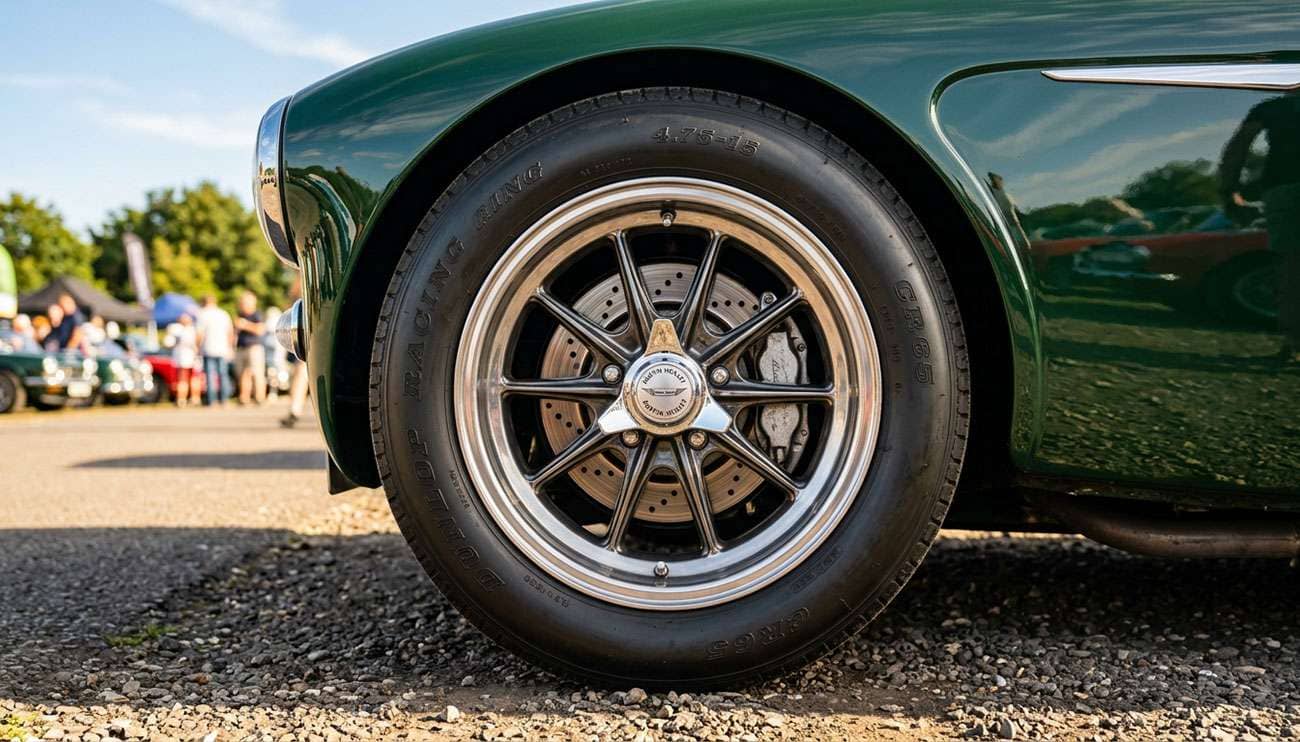
Ask ten people what "mags" means and you'll get ten confident but slightly different answers. Some will say it means any fancy aftermarket wheel. Others will say it's any alloy wheel as opposed to a steel wheel. A few will confidently tell you mags are made of magnesium — and they'll be the closest to right, even though the wheels they're pointing at almost certainly aren't magnesium at all. The word "mags" is one of the most widely used and least understood terms in automotive culture. Almost everyone uses it. Almost no one knows where it actually came from, why it stuck, or what it technically means. This is that story — from the magnesium foundries of post-war racing to the chrome alloys in the shopping mall parking lot — and why a word that was born on the racetrack became the default slang for any wheel that looks good.
Let's get the etymology out of the way first because it's simple, direct, and almost universally misunderstood: mags is short for magnesium. Full stop. The word comes from magnesium wheels — wheels cast or forged primarily from magnesium alloy — which were developed and popularized in motorsport beginning in the late 1940s and reaching peak use through the 1950s and 1960s. Magnesium became "mags" the same way photographs became "photos" and specifications became "specs" — through the natural human tendency to shorten words we say constantly.
The problem is that true magnesium wheels — wheels with a composition that's primarily magnesium — haven't been commonly used on road-going passenger cars in decades. What most people today call "mags" are almost always aluminum alloy wheels. They look similar. They serve the same purpose. They came directly from the same racing heritage that magnesium wheels pioneered. But they are not magnesium. The name outlasted the material, and now it floats freely, attached to almost any wheel that isn't a plain steel disc with a hubcap over it.
That linguistic drift from a specific technical term to general automotive slang is actually a fascinating story. Understanding it means understanding the entire history of how performance wheels evolved from a niche racing technology into the standard fitment on virtually every modern vehicle sold today.
To understand why wheels were ever made from magnesium in the first place, you have to understand what post-war motorsport was trying to solve. The great challenge of racing in the late 1940s and early 1950s wasn't power — it was weight. Engineers had figured out how to extract serious horsepower from relatively small displacement engines, but the cars carrying those engines were still heavy by modern standards. Every pound you could remove from the car — especially from rotating and unsprung components like wheels — translated directly into faster acceleration, better braking, and sharper handling.
Steel wheels, which were universal on road cars, were heavy. Cast iron even heavier. Aluminum alloy was lighter, but magnesium was lighter still — in fact, magnesium is the lightest structural metal available, roughly 35% lighter than aluminum and about 75% lighter than steel for the same volume. In the context of a racing wheel, that weight difference is enormously significant. A wheel is what engineers call "unsprung weight" — mass that isn't supported by the suspension springs. Unlike the weight of the engine or the driver, unsprung weight works directly against the suspension's ability to keep the tire in contact with the road. The lighter the wheel, the more effectively the suspension can do its job, and the better the tire sticks to the track surface through corners, bumps, and braking zones.
Magnesium also has excellent vibration-damping properties — it absorbs road shock and vibration more effectively than aluminum or steel, which reduces driver fatigue over long races and improves feel through the steering wheel. For endurance racing especially, these properties made magnesium the obvious material choice once the technology to work with it matured.
The development of magnesium wheels for motorsport happened primarily in Europe and the United States simultaneously in the late 1940s. European Formula racing teams — particularly those competing in what would become Formula One after the World Championship was established in 1950 — were among the first to experiment seriously with magnesium wheel castings. The material required specialized casting and machining techniques that were expensive and technically demanding, but for factory-backed racing teams with full engineering departments, the performance gains justified the investment.
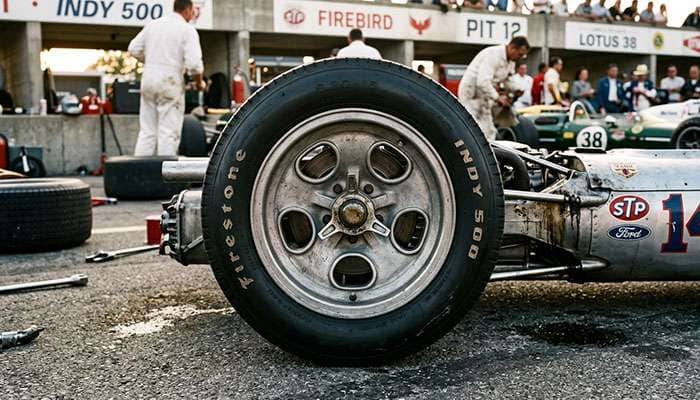
In the United States, the development path ran through oval racing and, critically, through the hot rod and custom car culture of Southern California. American manufacturers began producing magnesium wheels in the early 1950s, and the cars running them at tracks like Indianapolis, Daytona, and the dry lakes of the Mojave Desert were the most visible, celebrated vehicles in the country. When those cars appeared in magazines and newsreels with their distinctive multi-spoke, lightweight wheels gleaming in the pits, the word "mag wheels" entered the American automotive vocabulary permanently.
No discussion of mag wheel history in America is complete without Ted Halibrand. Halibrand Engineering, founded in California in the late 1940s, became the preeminent American manufacturer of magnesium racing wheels through the 1950s and 1960s. The Halibrand "kidney bean" and "piecrust" mag designs appeared on championship-winning Indianapolis 500 cars, NHRA drag racing winners, and countless land speed record vehicles at the Bonneville Salt Flats. When you see a photograph of a beautiful, lightweight multi-spoke wheel on an American racing car from this era, there's a very good chance it's a Halibrand — and it's almost certainly magnesium.
Halibrand wheels were not cheap, and they were not designed for the street. But they were photographed constantly, written about obsessively in the automotive press, and lusted after by every serious car enthusiast in the country. The Halibrand name became synonymous with performance wheels, and "mag wheels" became the shorthand for what those wheels were made of. By the late 1950s, the term was embedded deeply enough in American car culture that it was starting to be used loosely — applied to any lightweight, stylish aftermarket wheel regardless of actual material composition.
The journey from racetrack terminology to everyday street slang happened in two overlapping waves: through the hot rod and custom car culture of the 1950s and 1960s, and through the muscle car era of the 1960s and early 1970s. Both were driven by the same underlying desire — regular car owners wanted the performance look and prestige of racing technology on their street vehicles.
Southern California's hot rod culture was the primary transmission vector for mag wheel culture into mainstream American automotive life. The hot rodders and custom car builders working out of garages in Los Angeles, the San Fernando Valley, and the surrounding area were intensely connected to the racing world — many of them raced on weekends and built street cars during the week, often with the same parts. When genuine Halibrand mags became available through speed shops, and when cheaper imitations began appearing from other manufacturers, the word "mags" made the jump from the race pit to the street with them.
Car magazines — Hot Rod Magazine, Motor Trend, Car Craft — were the social media of the era, and they used the word constantly. "Mags" appeared in build writeups, product reviews, and advertisements throughout the late 1950s and 1960s. By the time a kid in Nebraska or Ohio read about a California custom car built with "mags," the word was already divorced from any specific understanding of magnesium metallurgy. It just meant the cool wheels — the ones that set a performance car apart from the stock iron it rolled on from the factory.
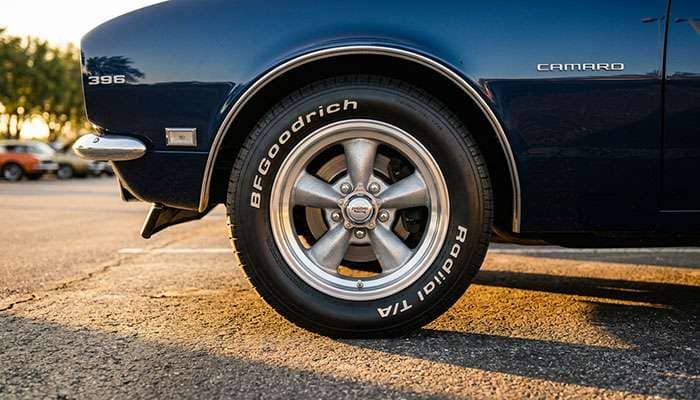
The muscle car era of the mid-1960s through early 1970s was when "mags" made the definitive leap from enthusiast terminology to mass cultural awareness. Cars like the Ford Mustang, Chevrolet Camaro, Pontiac GTO, and Dodge Charger came from the factory with steel wheels and full hubcaps — functional, but visually flat compared to the aftermarket options flooding the market. The first thing most muscle car owners did after driving their new car home was pull those steel wheels and replace them with aftermarket "mags."
And here's the critical historical shift: almost none of those aftermarket wheels being sold to muscle car buyers were actually magnesium. By the mid-1960s, the aftermarket wheel industry had pivoted almost entirely to aluminum alloy construction for street wheels. Aluminum was safer on the street (more on why shortly), dramatically cheaper to produce, easier to finish in chrome and polished finishes, and perfectly adequate for the performance needs of a street car. But the name "mags" came with the wheels anyway — stamped on the packaging, spoken by the salesmen at the speed shop, printed in the catalogs. The terminology had completely separated from the material.
If one product more than any other is responsible for burning the word "mags" into the American automotive mainstream, it's the Cragar S/S wheel. Introduced in 1964 and manufactured in chrome-plated steel with an aluminum center — not magnesium — the Cragar S/S became the best-selling aftermarket wheel in American history. It appeared on muscle cars, street rods, custom vans, and trucks by the millions through the late 1960s and 1970s.
The Cragar S/S was sold as a "mag wheel" from the beginning, advertised as such in every medium. It was affordable enough that middle-class car buyers across the country could put a set on their Chevelle or F-100, and millions of them did. By the time the Cragar S/S had saturated the American car market, the word "mags" meant "those cool aftermarket wheels" to virtually every driver in the country, regardless of what the wheels were actually made of. The original magnesium etymology had become effectively irrelevant to everyday usage.
Here's the practical breakdown that most people never get a clean explanation of: the difference between a true magnesium wheel, an aluminum alloy wheel, and a steel wheel — because all three have been called "mags" at various points, and only one of them actually earns the name.
A genuine magnesium wheel is cast or forged from an alloy that is primarily magnesium — typically 90% or more magnesium content, alloyed with small amounts of aluminum, zinc, manganese, and other elements to improve strength and corrosion resistance. True magnesium wheels are:
• The lightest option available — a magnesium wheel can weigh 30–40% less than an equivalent aluminum alloy wheel of the same size
• Excellent at vibration damping — magnesium absorbs road vibration better than aluminum, improving feel and reducing fatigue
• Extremely expensive — the material cost, specialized casting processes, and finishing requirements make genuine magnesium wheels cost multiples of equivalent aluminum wheels
• Primarily used in motorsport — Formula One, WRC rally, Le Mans prototypes, and other top-tier motorsport categories still use magnesium wheels where regulations permit
• Virtually absent from road cars — the combination of cost, flammability risk, and corrosion susceptibility has made genuine magnesium wheels impractical for everyday street use
When someone says "mags" in 2026, they are almost certainly talking about aluminum alloy wheels. Modern alloy wheels are cast or forged from aluminum alloy — typically a composition around 85–90% aluminum with silicon, copper, magnesium, and other elements — and they represent the overwhelming majority of aftermarket and OEM wheels on passenger cars and trucks worldwide.
Aluminum alloy wheels offer a genuine performance advantage over steel: they're significantly lighter (though not as light as magnesium), they conduct heat more effectively (important for brake performance), they can be cast or forged into more complex shapes, and they can be finished in a virtually unlimited range of appearances. The custom wheel market — everything from 18-inch gloss black spokes to 24-inch chrome deep-dish — is built on aluminum alloy construction.
Steel wheels are the heavy, utilitarian baseline that "mags" originally defined itself against. Stamped from steel, covered with a hubcap, and found as standard equipment on basic vehicles and winter wheel setups, steel wheels are heavier than alloy, less thermally efficient, and far more limited in design. They're also durable, cheap to produce, cheap to replace, and highly resistant to the kind of cracking that alloy wheels can suffer from severe impacts. For winter driving in particular, steel wheels are often the practical choice — corrosion from road salt doesn't destroy them the way it attacks alloy finishes, and a bent steel wheel can often be straightened where an alloy wheel of the same damage might need to be scrapped.
Feature | Magnesium (True Mags) | Aluminum Alloy | Steel |
|---|---|---|---|
Weight |
Lightest |
Light |
Heaviest |
Strength |
High (with alloy) |
High |
Very High |
Cost |
Very High |
Moderate–High |
Low |
Corrosion resistance |
Poor (needs coating) |
Good |
Poor (rusts) |
Heat dissipation |
Excellent |
Good |
Poor |
Fire risk |
High (burns intensely) |
None practical |
None |
Common use |
Motorsport only |
Street, performance, OEM |
Base vehicles, winter |
If magnesium is lighter than aluminum and better at vibration damping, why did it essentially vanish from road cars? The answer comes down to three factors: fire, corrosion, and cost — and the fire issue is by far the most significant.
Magnesium is a highly combustible metal. Under normal driving conditions this isn't an issue — magnesium has a high ignition temperature and won't simply catch fire from heat alone. But in a crash situation, particularly one where brakes overheat severely, brake fluid leaks onto a hot magnesium wheel, or the car catches fire for any reason, a burning magnesium wheel is a catastrophic problem. Magnesium burns extremely hot — over 3,000°C at full combustion — and it reacts violently with water, making it nearly impossible to extinguish with water-based fire suppressants. Pouring water on a burning magnesium wheel actually intensifies the fire.
For racing use, where cars are surrounded by professional fire marshals with specialized suppression equipment and where the performance gains justify the risk management complexity, magnesium remains viable. For a road car driven by a regular person, the fire risk is simply not acceptable. Several high-profile racing accidents involving magnesium fires — most infamously a series of Le Mans incidents and several IndyCar fires through the 1960s and 1970s that burned for extended periods while fire crews struggled to suppress them — cemented the perception that magnesium wheels were a liability on anything that drove on public roads.
Magnesium is also highly susceptible to galvanic corrosion — the electrochemical process by which dissimilar metals in contact with each other and with an electrolyte (like road salt dissolved in water) corrode each other. A magnesium wheel in contact with steel brake components, aluminum hub components, and exposed to road salt creates an ideal galvanic corrosion scenario. Unprotected magnesium can corrode rapidly and severely in these conditions, weakening the wheel structure from the inside out in ways that aren't always visible on the surface.
Racing wheels are inspected constantly, replaced frequently, and not subjected to years of winter road salt. Road car wheels need to last for the life of the vehicle with minimal specialist maintenance. The corrosion management requirements for magnesium wheels — specialized coatings, regular inspection, careful material compatibility management — made them impractical for road use even before the fire risk was fully understood.
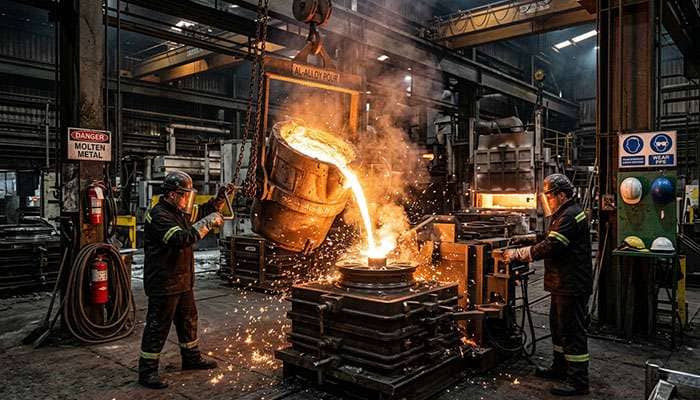
True magnesium alloy is expensive — significantly more so than aluminum. The casting and machining processes for magnesium are more technically demanding, require specialized equipment and safety precautions (magnesium produces flammable chips and dust during machining), and the finished product requires more expensive surface treatments to protect against corrosion. A genuine magnesium wheel that performs reliably and safely in a motorsport context costs dramatically more to produce than an equivalent aluminum alloy wheel. For the racing teams that need the absolute maximum performance regardless of cost, that's an acceptable trade-off. For an automotive manufacturer equipping millions of road cars, it isn't.
Part of the reason "mags" has become such a catch-all term is that the whole vocabulary around wheels is consistently misused, and the misuse has become so widespread that it functions as a de facto second definition. Here's the precise technical breakdown of what each term actually means — and what people actually mean when they use them.
The wheel is the complete assembly — everything that's not the tire. It includes the central hub disc (the part that bolts to the vehicle's hub via lug nuts or lug bolts), the spokes or web that connects the center to the outer edge, and the rim. When you buy "a set of wheels" you're buying complete wheel units without tires. When someone says "I like the wheels on that car," they're looking at the complete visible assembly. This is the technically correct broadest term and the one that causes the least confusion.
The rim is technically just the outermost cylindrical edge of the wheel — the part that the tire actually mounts to and seals against. In a bicycle wheel, you can clearly see the rim as a separate component from the spokes and hub. In a car wheel, the rim is the outer barrel section. Strictly speaking, "rims" refers only to this outer edge, not the whole wheel.
In common usage, though, "rims" has become essentially interchangeable with "wheels" in American English — particularly in urban and hip-hop culture from the 1990s onward, where "rims" became the dominant slang for any visible wheel assembly, especially large-diameter custom wheels. "Rims" in this context carries connotations of style, size, and aftermarket customization — you wouldn't normally say your economy car has "nice rims," but you might say it about a vehicle with 22-inch chrome aftermarket wheels. The word has developed cultural weight beyond its technical meaning.
This is where it gets layered. "Mags" operates simultaneously on three levels in modern usage:
Technical/historical: Wheels manufactured primarily from magnesium alloy. This is the original and technically correct definition. Almost no road cars have these.
Enthusiast usage: Any cast or forged aluminum alloy wheel, as distinct from steel wheels. This usage acknowledges the racing heritage and material distinction even while using the wrong metal name. Most car enthusiasts use "mags" this way.
General slang: Any stylish, aftermarket, or non-stock wheel, regardless of material. This is the broadest and loosest usage, where "mags" just means "the good-looking wheels" as opposed to whatever came on the car from the factory. This is the usage that drives purists crazy and is simultaneously the most common.
All three usages are in active circulation. Context usually makes clear which one is intended, and the communication almost never fails even when the technical definition is being stretched. That's how robust the word has become — it functions effectively across all three meanings simultaneously.
You can't fully understand why "mags" became the dominant term without understanding the specific wheel designs that popularized it. A handful of iconic aftermarket wheel designs from the 1960s and 1970s collectively made "mag wheels" a cultural touchstone — and most of them were aluminum, not magnesium.
Already mentioned above, the Cragar S/S deserves emphasis as possibly the single most influential aftermarket wheel in American history. Its five-spoke chrome design appeared on more American cars in the 1960s and 1970s than any other aftermarket wheel, and its presence in car magazines, at drag strips, and on the streets of every American city and suburb made it the visual reference point for "mag wheels" for an entire generation. When someone who grew up in the 1970s says "mags," they're often unconsciously picturing a Cragar S/S. It's the platonic form of the word for millions of American car owners.
The American Racing Torq-Thrust, introduced in 1963, brought a different aesthetic to the mag wheel conversation — a cast aluminum five-spoke design with a distinctive angled spoke profile that referenced the look of genuine racing wheel designs while being thoroughly streetable. The Torq-Thrust became the wheel of choice for the muscle car restoration community and remains in continuous production today, one of the longest-running aftermarket wheel designs in history. Its association with Corvettes, Mustangs, and muscle cars of the 1960s made it another defining visual reference for what "mags" meant to American car culture.
On the European and British side, the Minilite wheel played a similar cultural role. Cast aluminum, lightweight, with a multi-spoke design optimized for performance, the Minilite appeared on everything from rally cars to road-going sports cars in the 1960s and 1970s. In the UK and Europe, "alloys" became the dominant term for what Americans called "mags" — a reflection of the fact that the aluminum alloy composition was always understood more precisely on that side of the Atlantic. But the functional role was identical: the performance-derived wheel that elevated a car's appearance and handling above the steel-wheeled baseline.
Before the mag wheel era, the prestige aftermarket wheel for sports cars and luxury vehicles was the wire wheel — a spoked wheel with individual tension spokes radiating from a central hub to a chrome or polished steel rim, visually elaborate and strongly associated with European sports cars. Wire wheels were never called "mags" and represent a distinct visual tradition, but they're part of the broader story of how "the good wheels" have always functioned as a status and performance signal in car culture, going back further than the magnesium era.
Here's the honest answer: practically speaking, not much. The word "mags" communicates effectively across virtually every automotive context it's used in. If you walk into a wheel shop and ask to see their mags, nobody's going to bring out a set of genuine magnesium racing wheels and invoice you accordingly. Everyone in the automotive ecosystem — manufacturers, retailers, installers, enthusiasts, and casual buyers — understands what "mags" means in context. The communication works.
Where precision matters is in specific technical contexts. If you're buying wheels for a professional racing application and you're having a conversation about whether to run genuine magnesium versus aluminum, the distinction is critical — it affects weight, performance, fire safety protocols, and cost significantly. If you're restoring a period-correct race car and sourcing authentic components, knowing the difference between a genuine Halibrand magnesium wheel and an aluminum reproduction is essential. If you're discussing wheel safety in the context of classic car tire age and condition, understanding what material the wheel is actually made from is relevant.
For the vast majority of street car buyers and enthusiasts, though, the practical question isn't "is this magnesium or aluminum?" — it's "does this wheel fit my car, does it look right, is it properly rated for my vehicle's load requirements, and is it a quality product?" Those are the questions that actually determine whether your wheel upgrade is a success. Browse the full range of wheels at Performance Plus Tire and you'll find thousands of aluminum alloy options in every style, finish, and size — all of them called mags by most of the people who'll put them on their cars, none of them actually magnesium, and every one of them a direct descendant of the magnesium racing wheels that started the whole conversation seventy-plus years ago.
There's one practical context where knowing the difference genuinely matters for a street car owner: if you ever need to have a wheel welded or repaired. Magnesium and aluminum require completely different welding techniques and filler materials — welding a magnesium wheel with aluminum welding equipment, or vice versa, produces a structurally compromised repair that can fail without warning. If you have wheels that you suspect might be genuine magnesium — perhaps on a vintage race car or a very early sports car from the 1960s — always have a qualified welder confirm the material before any repair work.
Similarly, the fire suppression note from the racing world is worth keeping in mind for any vintage vehicle owner: if your classic car has wheels that could be genuine magnesium, having ABC dry chemical fire extinguishers rather than water or CO2 extinguishers in the car or trailer is the appropriate precaution. It's an edge case for most owners, but worth knowing.
Whether you call them mags, alloys, rims, or wheels, the shopping process is the same: you need the right bolt pattern, hub bore, diameter, width, and offset for your specific vehicle. Use the Wheel Visualizer to see exactly how different styles and sizes will look on your vehicle before you buy. Check your vehicle's specifications for the correct fitment range, and if you're considering a size change — going from 17-inch to 18-inch or wider — use the tire size calculator to confirm the overall diameter stays within acceptable limits so your speedometer stays accurate and the tires clear your wheel wells.
The racing wheels category carries the most direct descendants of the original mag wheel tradition — lightweight, performance-oriented designs that trace their design DNA directly back to those magnesium racing wheels that started this whole story in the first place. And the classic wheels section has the period-correct designs — including the Torq-Thrust inspired five-spoke styles and other designs that defined what "mags" looked like to the generation that coined the term.
The word "mags" has one of the more interesting journeys in automotive vocabulary. It started as a precise technical shorthand for a specific and genuinely revolutionary material — magnesium alloy wheels that gave racing cars a significant performance advantage through reduced unsprung weight and superior vibration damping. Those wheels came out of the post-war racing world, were perfected by American manufacturers like Halibrand through the 1950s, and reached their cultural peak on the drag strips and oval tracks of the 1960s when the hot rod and muscle car movements were at full intensity.
Then the material mostly disappeared from road cars — priced out by aluminum, regulated out by fire risk concerns, corroded out of practical use by road salt and winter conditions — but the word stayed. It transferred to aluminum alloy wheels effortlessly because aluminum alloys had taken over the same performance and visual role that magnesium had pioneered. The term "mags" became attached not to the specific material but to the concept: the performance-derived, non-stock, look-at-these wheels that set a car apart from whatever it rolled on from the factory.
Today, when someone says their car has mags, they're unknowingly invoking seventy-plus years of racing history, hot rod culture, muscle car mythology, and the entire development arc of modern automotive wheel technology. The wheels they're pointing at are almost certainly aluminum. But the name belongs to magnesium — and to every craftsman, engineer, and racer who figured out that the right wheels could transform not just how a car looked, but how it moved. Performance Plus Tire carries thousands of those wheels. Come find yours.
Here's the full story of "mags" distilled into the essentials.
• "Mags" is short for magnesium: The term originated from magnesium alloy wheels developed for motorsport in the late 1940s and 1950s, where magnesium's extreme lightness gave racing cars a significant performance edge over steel wheels.
• Almost no road cars have genuine magnesium wheels: Real magnesium wheels are used almost exclusively in professional motorsport today. Road car "mags" are virtually always aluminum alloy wheels — lighter than steel, excellent for performance, but not actually magnesium.
• The term went mainstream through hot rod and muscle car culture: By the 1960s and 1970s, "mags" had fully separated from its material meaning and simply meant any stylish, performance-oriented aftermarket wheel — driven by iconic designs like the Cragar S/S and the American Racing Torq-Thrust.
• Magnesium left road cars for three reasons: Fire risk (magnesium burns intensely and reacts with water), corrosion susceptibility (especially in road salt conditions), and significantly higher cost compared to aluminum alloy alternatives all made genuine magnesium impractical for street use.
• Wheel, rim, and mag mean different things technically: A wheel is the complete assembly; a rim is technically just the outer cylindrical edge the tire mounts to; a mag is technically a magnesium wheel but colloquially means any alloy wheel or even any stylish aftermarket wheel. All three terms are used interchangeably in everyday speech, and the communication generally works despite the technical imprecision.
True mag wheels are made of magnesium alloy, but the overwhelming majority of wheels called "mags" today are aluminum alloy. The term originated from genuine magnesium racing wheels developed in the late 1940s and 1950s, but transferred to aluminum alloy street wheels as the material and terminology diverged. If you're buying aftermarket wheels for a road car in 2026, they are almost certainly aluminum alloy regardless of what they're called in the catalog or on the shop floor.
In technical terms, "mags" refers to magnesium alloy wheels and "alloy wheels" refers to aluminum alloy wheels — two different materials. In everyday usage, however, the terms are largely interchangeable, with "mags" more common in American and Australian automotive culture and "alloys" more common in British and European usage. Both terms describe lightweight metal wheels as opposed to basic steel wheels, and in practice they're pointing at the same type of product: cast or forged aluminum alloy wheels.
Three main reasons: fire risk, corrosion, and cost. Magnesium burns at extremely high temperatures and reacts violently with water, making fires involving magnesium wheels very difficult to extinguish safely — a serious problem for road cars that might be involved in accidents or experience brake fires. Magnesium also corrodes rapidly in the presence of road salt and moisture. And genuine magnesium wheels are significantly more expensive to produce than aluminum alternatives. For professional motorsport, the performance benefits justify these trade-offs. For road cars, they don't.
Technically, a rim is the outermost cylindrical edge of a wheel — the part the tire actually mounts onto and seals against. A mag (or mag wheel) refers to the complete wheel assembly, originally made from magnesium alloy. In everyday speech, both "rims" and "mags" are used to describe the complete wheel assembly, particularly stylish aftermarket versions. "Rims" became dominant in urban American slang from the 1990s onward, while "mags" has older roots in hot rod and motorsport culture. Both are widely understood to mean the same thing in most contexts.
Very few, and they are extremely rare and expensive. Some ultra-high-performance vehicles — certain Porsche, Ferrari, and other supercar applications — have offered genuine magnesium wheels as optional equipment or on limited special editions, where the extreme weight reduction justifies the cost and the buyers are sophisticated enough to handle the specialized care requirements. For virtually all production road cars, including performance vehicles, the wheels are aluminum alloy regardless of what the marketing materials or common usage might suggest.



