
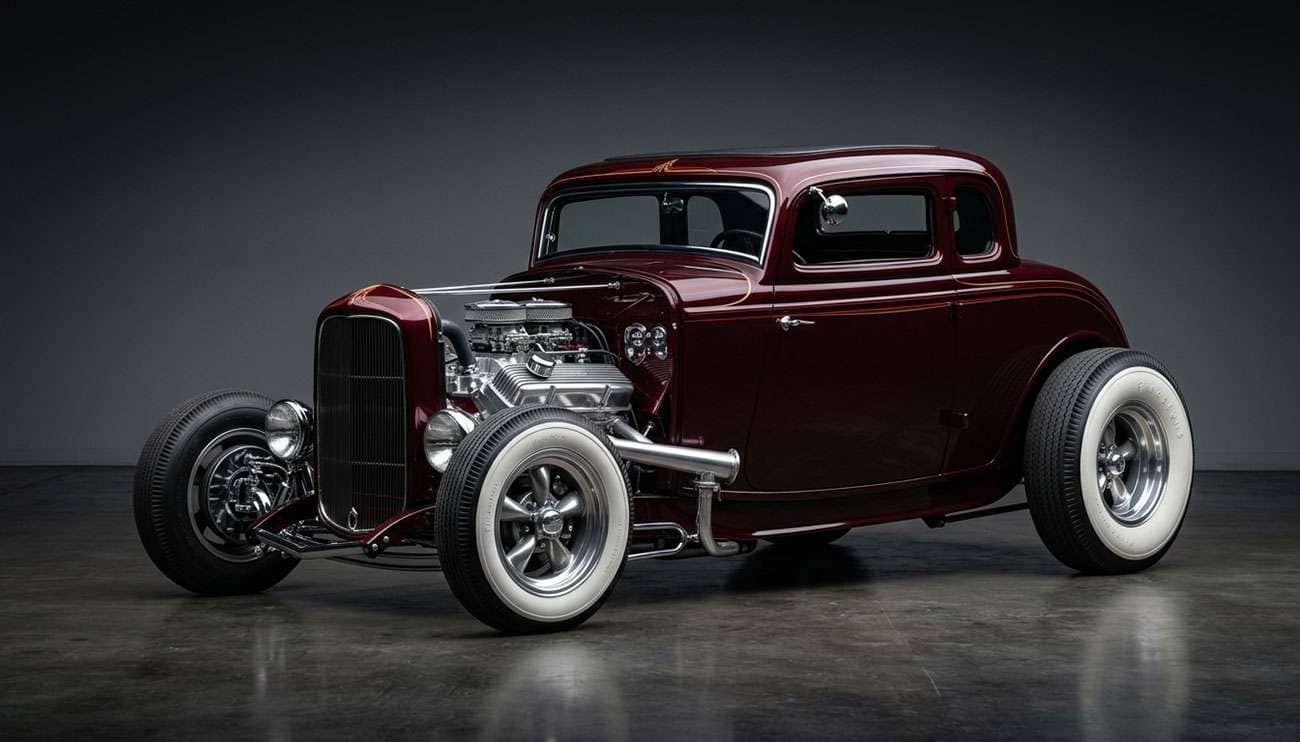
I built my first hot rod when I was 17 years old — a chopped 1932 Ford three-window coupe with a small-block Chevy that my brother and I dropped in over a long summer in 1962. Sixty-plus years later I'm still bolting wheels and tires onto hot rods, and the fundamental truth about hot rod wheel and tire selection hasn't changed in those six decades: hot rods aren't muscle cars, aren't classics, aren't street rods exactly, and aren't pro-touring cars. They occupy their own aesthetic category with specific rules about what looks right and what looks wrong, and the wheel and tire choice either reinforces the aesthetic intent of the build or fights against it.
The challenge in 2026 is that "hot rod" has become an umbrella term covering at least three distinct aesthetic schools: traditional hot rods (period-correct 1930s-1950s aesthetic with bias-ply tires, smoothie steel wheels, and the visual language of the original hot rod era), street rods (vintage body with modern drivetrain and modernized but vintage-flavored aesthetic — usually meaning chrome or polished classic mags with raised white letter or whitewall radials), and pro-touring or resto-mod builds (vintage body with modern chassis, modern drivetrain, modern wheels, and modern UHP tires producing essentially modern car performance on a vintage shell). Each school has different wheel and tire requirements, and mixing the aesthetics produces builds that look fundamentally incoherent.
This guide covers all three hot rod aesthetic schools with specific wheel and tire recommendations for each. The picks come from current Performance Plus Tire inventory across the major hot rod brands — US Mags, American Racing (specifically their vintage and classic lines), Cragar, Coker, Diamond Back, BFGoodrich, and Mickey Thompson. Click any product link to verify sizes and pricing for your specific hot rod build. Whether you're building a traditional flathead-powered roadster, a chrome-laden boulevard cruiser street rod, or a Pro Tour-spec '69 Camaro that handles like a modern sports car, the right wheel and tire combination starts with understanding which aesthetic school the build belongs to.
The term "hot rod" gets applied loosely in modern usage, but it has specific meaning rooted in American automotive history. A hot rod is a modified vintage vehicle — typically pre-1948 American vehicles, though the definition has expanded over time — built for performance, aesthetic, or both. The original hot rod movement emerged in Southern California in the 1930s and 1940s when returning World War II veterans applied their mechanical skills to building fast, distinctive vehicles from affordable pre-war chassis.
The hot rod aesthetic has evolved through distinct eras: traditional pre-war and immediate post-war hot rods (1930s-1950s) featuring chopped tops, channeled bodies, exposed engines, and bias-ply tires; the muscle car era influence (1960s-1970s) bringing radial tires, raised white letter aesthetics, and increased horsepower; the street rod era (1970s-1990s) introducing modern engines, chrome accessories, and the recognizable boulevard cruiser aesthetic; and the modern pro-touring era (2000s-present) bringing modern suspension, brakes, wheels, and tires to vintage bodies to produce essentially modern performance characteristics.
In 2026, all of these aesthetic schools coexist in the hot rod community, and each demands different wheel and tire choices. A traditional hot rod with modern UHP tires on giant aftermarket wheels looks fundamentally wrong because the aesthetic intent of traditional building (period-correct visual presentation) conflicts with the modern wheel and tire choice. A pro-touring resto-mod with bias-ply tires on classic steel wheels looks equally wrong because the aesthetic intent of pro-touring (modern performance, modern visual presentation) conflicts with the period-correct tire choice. The wheel and tire selection is fundamental to the build's aesthetic coherence.
Three distinct aesthetic schools drive hot rod wheel and tire selection, and each has specific rules about what looks right.
Aesthetic School |
Era Reference |
Wheel Style |
Tire Style |
|---|---|---|---|
Traditional Hot Rod |
1930s-1950s period-correct |
Steel smoothies, painted steel, baby moons, Halibrand-style |
Bias-ply, blackwall or wide whitewall, period-correct tread |
Street Rod |
1970s-1990s boulevard cruiser |
Polished or chrome 5-spoke (Torq Thrust style), Cragar SS |
Radial whitewall, raised white letter, modern compounds |
Pro-Touring / Resto-Mod |
2000s-present modern performance |
Modern multi-spoke, billet, larger diameter (17-22 inch) |
UHP summer or all-season, blackwall, modern compounds |
Traditional hot rod aesthetic: This category embraces the period-correct visual presentation of original 1930s-1950s hot rods. Steel wheels (smoothies, baby moons, or painted steel), bias-ply or bias-look tires, blackwall or wide whitewall tires, period-correct tread patterns. The wheel and tire choice should look like it could have been on the car when it was originally built — no modern multi-spoke wheels, no low-profile tires, no chrome bling. Builds in this category often run small wheel diameters (14-16 inch typical) with substantial sidewall to match period proportions. Examples: HAMB (Hokey Ass Message Board) style traditional hot rods, Bonneville salt flat racers, dry lakes roadsters, Model T and Model A street modifieds.
Street rod aesthetic: This category bridges traditional and modern, taking vintage bodies and modernizing the drivetrain, suspension, and aesthetic without going all the way to modern car aesthetics. Polished or chrome classic-style 5-spoke wheels (American Racing Torq Thrust, Cragar SS, similar), raised white letter radial tires or whitewall radials, typically 15-17 inch wheel diameters. The visual language reads as "modernized but still vintage" rather than either pure period-correct or pure modern. Examples: 1932-1948 era American hot rods with small-block Chevy or LS swaps, 1950s-1960s era cars with modern wheels and tires, the boulevard cruiser aesthetic popularized by California hot rod culture.
Pro-Touring / Resto-Mod aesthetic: This category brings full modern car performance and aesthetics to vintage bodies. Modern multi-spoke wheels (17-22 inch typical), UHP summer or UHP all-season tires, billet construction wheels, sometimes forged construction. The vintage body becomes the canvas for what's essentially modern car engineering — modern chassis, modern brakes, modern suspension, modern transmission, modern engine with electronic fuel injection. The wheel and tire choice matches modern car practice rather than period-correct hot rod aesthetics. Examples: Pro Touring magazine builds, Goodguys gathering competition cars, modern restomod 1969 Camaros and 1970 Chevelles built for high-speed canyon driving rather than cruising.
The three categories aren't always strictly separated — some builds blend elements across schools intentionally (traditional body modifications with modern drivetrain and street rod wheels, for example). But the wheel and tire choice should match the dominant aesthetic intent. Mixing categories accidentally produces builds that look incoherent. Mixing categories intentionally requires conscious design decisions that ensure the elements work together visually. For broader hot rod build context, see our classic car and hot rod wheel guide.
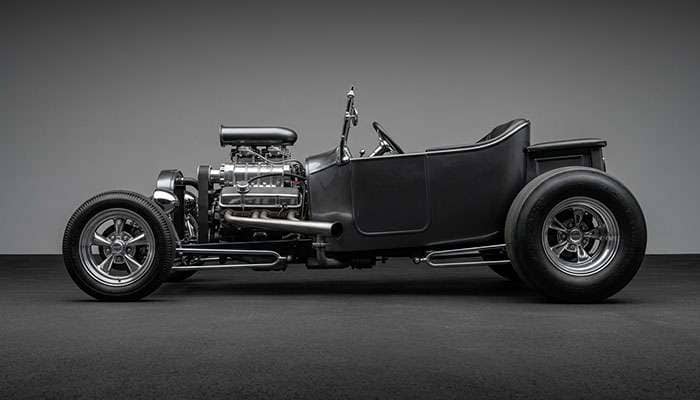
The big-and-little setup is one of the defining visual elements of traditional and street rod hot rod aesthetics. The term refers to a staggered front and rear wheel/tire combination with substantially narrower fronts than rears — typically 14-15 inch wheels with skinny 4-6 inch wide tires on the front, paired with 15-16 inch wheels and wide 10-14 inch tires on the rear. The aesthetic comes from drag racing influence: drag cars use this setup to minimize rolling resistance at the front while maximizing rear traction for launch.
Even hot rods that never see a drag strip often run big-and-little setups for the visual aesthetic. The narrower front tire visually emphasizes the front wheel design and creates the "pointed forward" look that hot rod culture finds compelling. The wider rear tire creates the aggressive rear stance that signals the car's power output and rear-wheel-drive performance character. Combined, the big-and-little look communicates "fast" before the car even moves.
Traditional big-and-little sizing: Common front sizing is 4.50-15 or 5.60-15 bias-ply tires on 4-5 inch wide steel wheels. Rear sizing typically runs 10.00-15 or 11.00-15 bias-ply tires (or modern equivalents) on 8-10 inch wide wheels. The proportions match period-correct drag racing aesthetic.
Street rod big-and-little sizing: Common front sizing is 165R15 or 175R15 radial whitewalls on 5-6 inch wide polished mags. Rear sizing typically runs 235/60R15 or 295/50R15 raised white letter radials on 8-10 inch wide wheels. Same proportions as traditional but with modern radial construction.
Pro-Touring big-and-little sizing: Less common in pro-touring builds because the modern performance aesthetic favors more matched front-to-rear proportions. When used in pro-touring, typical sizing is 245/40R18 front and 295/35R18 rear or similar staggered modern UHP tires.
The big-and-little setup demands careful clearance verification. Skinny front tires can fit inside wheel wells that wide rear tires can't, but the rear tire fitment often requires fender modifications, mini-tubbing, or narrowed rear ends to fit the desired width. Verify rear wheel well clearance before committing to wide rear tire setups, particularly on traditional and street rod builds where stock-width rear ends limit how much rear tire width fits without modification.
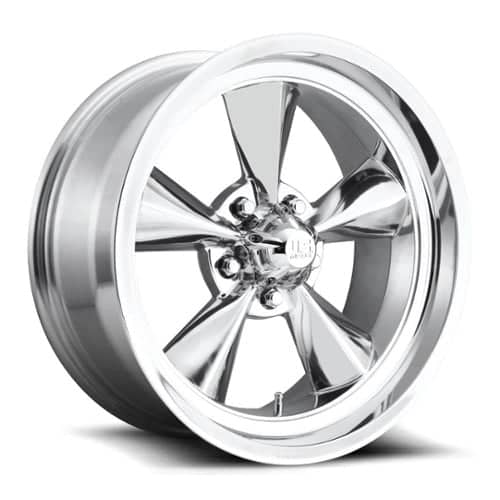
Best For: Traditional hot rod aesthetic, smoothie-style polished wheel • Finish: Polished • Sizes: 15" through 20"
The US Mags Standard U108 in Polished finish is the smoothie-style wheel I recommend for traditional hot rod builds where the period-correct polished steel aesthetic matters most. US Mags built their reputation on hot rod and classic car wheels specifically — the company understands the proportions, offsets, and visual presentation that hot rod builds demand differently than muscle car or modern performance applications. The Standard U108 design is a clean smoothie face that reads as period-correct from a distance while delivering modern aluminum construction and modern offset specifications that actually work on contemporary chassis modifications.
The polished finish requires more maintenance than chrome or matte alternatives (water spots and oxidation need regular attention), but the visual result on traditional and street rod builds matches what chrome and painted steel alternatives can't quite achieve. For 1930s-1940s Ford coupe and roadster builds, 1950s era hot rod modifications, and any build where the visual intent is period-correct smoothie aesthetic with modern construction benefits, the Standard U108 is consistently the right answer. The U102 Matte Gunmetal, U104 Chrome, and U107 Gloss Black variants offer alternative finishes within the same Standard design language. Browse US Mags Standard U108 sizes, or see the full US Mags lineup.
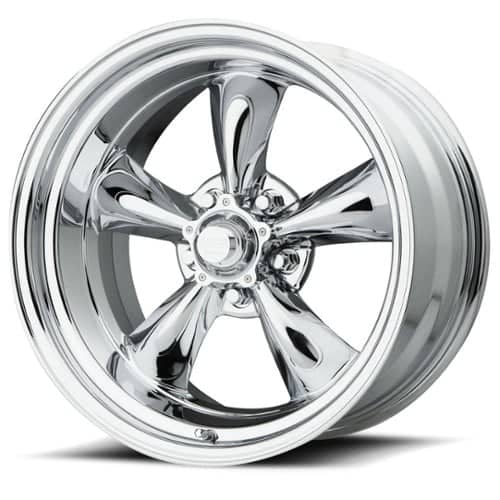
Best For: Street rod boulevard cruiser aesthetic • Finish: Chrome • Sizes: 15" through 20"
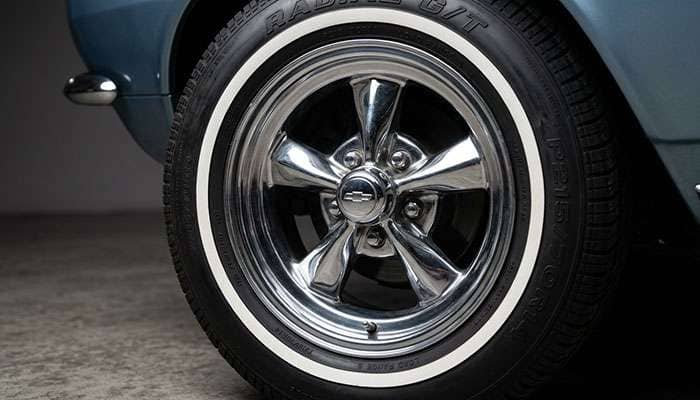
The American Racing VN615 Torq Thrust II in Chrome is the defining street rod wheel of the 1980s-1990s boulevard cruiser era, and it remains the visual benchmark for builds in that aesthetic school in 2026. American Racing introduced the original Torq Thrust design in 1963, and the Torq Thrust II variant extends that heritage into a slightly updated five-spoke geometry that works on both classic muscle car and street rod hot rod applications. The Chrome finish defines the boulevard cruiser aesthetic — bright, polished, visually loud in the way that 1980s street rod culture embraced.
For 1932-1948 Ford coupe and roadster street rod builds, 1950s era street rod modifications, and any build where the visual intent is "modernized but still vintage" boulevard cruiser aesthetic, the VN615 Torq Thrust II Chrome is the right answer. The VN605 Torq Thrust D variant offers a slightly different five-spoke geometry within the same aesthetic family. The VN605 Chrome works equally well for builds that want a slightly more aggressive look. For broader American Racing context including the original Torq Thrust history, browse VN615 Torq Thrust II sizes.
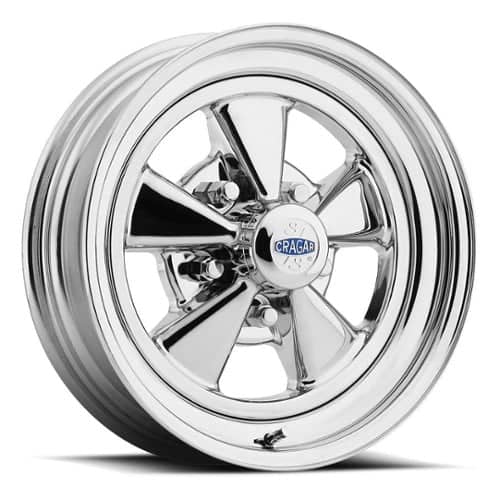
Best For: Iconic American hot rod and street rod aesthetic • Finish: Chrome with Aluminum Center • Sizes: 14" through 20"
The Cragar 08/61 S/S Super Sport is the most iconic American hot rod wheel ever made. Cragar introduced the original Series 08 wheel in 1964, and it became the defining hot rod aesthetic of the 1960s and 1970s — appearing on countless street rods, custom cars, muscle cars, and hot rods of the era. The five-spoke design with chrome outer and aluminum center reads as historically correct for any build from the late 1960s through the early 1980s. For builds in that era's aesthetic school, no wheel delivers the same visual authenticity.
The Cragar S/S Super Sport works on traditional hot rod builds (where period-correct 1960s-1970s aesthetic is the intent), street rod builds (where boulevard cruiser aesthetic matters), and classic muscle car restorations (where Cragar was OE-period correct aftermarket equipment). The design has aged extraordinarily well — what looked aggressive in 1968 still looks aggressive in 2026, which speaks to the timelessness of the original Cragar engineering. Available in multiple bolt patterns to fit virtually every hot rod application from Model A and Model T builds through 1970s American cars. Browse Cragar 08/61 S/S Super Sport sizes, or see the full Cragar lineup.
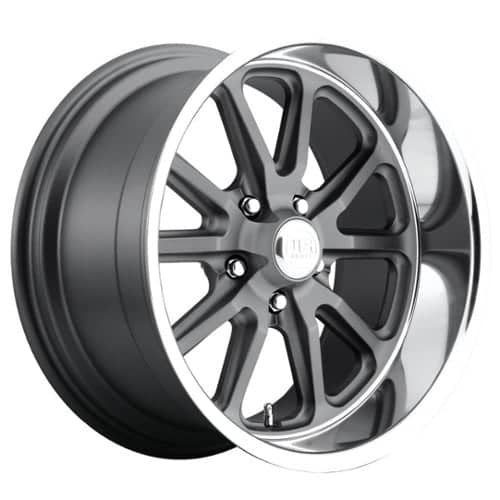
Best For: Modern pro-touring with vintage influence • Finish: Matte Gunmetal • Sizes: 17" through 22"
The US Mags Rambler U111 in Matte Gunmetal bridges the pro-touring/resto-mod aesthetic with hot rod heritage. The Rambler design takes the classic five-spoke language that defines hot rod aesthetics and modernizes the proportions, spoke geometry, and finish options for contemporary builds. The Matte Gunmetal finish reads as deliberately understated and modern — not chrome (which would feel too boulevard cruiser), not polished (which would feel too traditional), but the modern matte aesthetic that pro-touring builds favor.
For 1969 Camaro pro-touring builds, 1970 Chevelle resto-mods, 1968 Charger resto-mods, and similar vintage muscle builds with modern chassis and drivetrain modifications, the Rambler U111 delivers the visual sophistication that matches modern performance intent. The wheel ships in 17-22 inch diameters with offset specifications optimized for modern chassis (Roadster Shop, Detroit Speed, Heidts, and similar pro-touring chassis platforms). Multiple finish variants (U109 Black/Machined, U117 Gloss Black/Diamond Cut Lip, U121 Gloss Black, U123 Matte Black) give buyers extensive aesthetic options within the modern pro-touring design language. Browse US Mags Rambler U111 sizes.
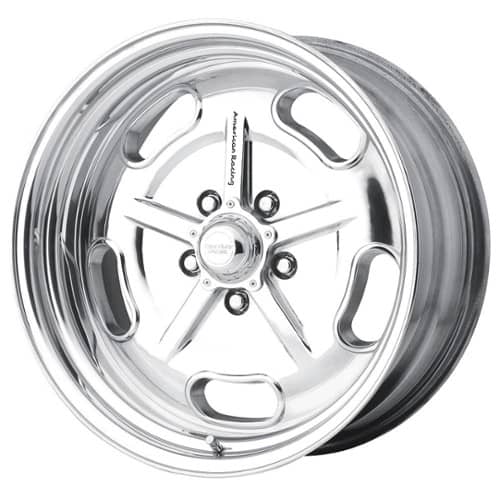
Best For: Traditional Bonneville salt flat aesthetic, dry lakes roadster builds • Finish: Polished • Sizes: 15" through 18"
The American Racing VN471 Salt Flat Special in Polished finish is the wheel I recommend for traditional hot rod builds with Bonneville salt flat aesthetic intent. The 2-piece construction (separate face and lip bolted together) creates the deep dish look that defines salt flat and dry lakes racing aesthetic, and the polished finish reads as period-correct for the 1940s-1950s era of Southern California dry lakes racing culture. For builds with this specific aesthetic intent, the Salt Flat Special is the right answer.
The wheel works particularly well on Ford Model A, Model B, Model T, 1932-1934 era Ford builds, and similar pre-WWII chassis modifications where the Bonneville aesthetic makes historical sense. The VN470 Salt Flat Special Mag Gray/Polished variant offers a slightly less bright finish for builds that want some matte texture. The VN511 Salt Flat Gloss Black/Diamond Cut Lip variant offers an aggressive modern interpretation for builds that want the Salt Flat lineage with contemporary aesthetic adjustment. For deeper dive into the Bonneville cultural heritage that informs these wheel designs, the Salt Flat naming references the actual salt flat racing surface where dry lakes racing graduated to in the 1940s. Browse VN471 Salt Flat Special sizes.
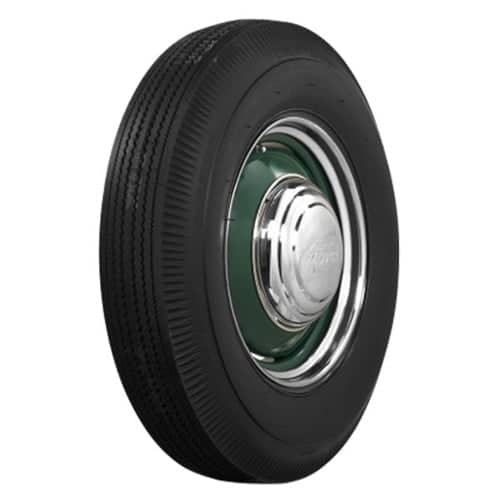
Category: Bias-Ply Period-Correct Vintage • Best For: Traditional hot rod period-correct restoration • Era: 1930s-1960s authentic
The Coker Classic Bias Ply is the true period-correct tire for traditional hot rod builds where bias-ply construction matches the original 1930s-1960s hot rod aesthetic. Coker Tire has been the leading manufacturer of vintage-correct tires for over 60 years — the company specializes in producing tires that match the visual and construction specifications of original equipment from various automotive eras. The Classic Bias Ply tire reproduces the bias-ply construction (multiple plies arranged at angles to the tire centerline rather than perpendicular like modern radials) that defines authentic period-correct presentation.
The trade-offs from running true bias-ply are real and worth understanding. Bias-ply tires deliver harsher ride quality than modern radials (the construction transmits more impact to the suspension), produce different handling characteristics (bias-ply tires "walk" more in corners and respond differently to inputs than radials), and have shorter tread life (typically 15,000-25,000 miles versus 40,000-60,000 for modern radials). For traditional hot rod builds where period-correct authenticity matters more than modern performance characteristics — particularly trailer-queen show cars, occasional driver builds, and dedicated period-correct restoration projects — the Coker Classic Bias Ply is the right answer. For daily-driven hot rods, the Coker Classic Radial / Bias Look alternative below delivers period-correct visual presentation with modern radial performance. Browse Coker Classic Bias Ply sizes.
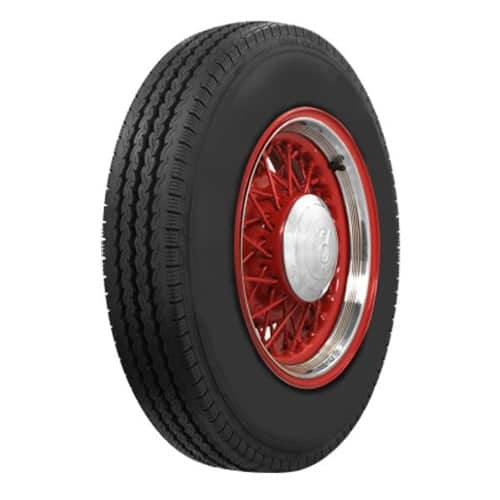
Category: Radial Construction with Vintage Visual • Best For: Daily-driven traditional hot rod, period-correct visual with modern performance • Era: 1930s-1960s visual presentation
The Coker Classic Radial / Bias Look is the practical answer for hot rod builders who want period-correct visual presentation without the daily-driver compromises of true bias-ply construction. The tire uses modern radial construction (the standard tire construction since the 1970s with plies perpendicular to the tire centerline and a steel belt under the tread) while preserving the visual sidewall presentation of period-correct bias-ply tires. From across a parking lot or in build photography, the Bias Look tires read as authentically period-correct. In actual driving, they deliver modern radial performance.
The construction difference matters substantially for hot rods that get driven. Modern radial construction delivers ride quality, handling response, tread life, and wet weather performance that bias-ply construction cannot match. For 1932 Ford coupe builds that see regular driving, 1948 Chevy hot rod cruisers, and similar traditional aesthetic builds that need to function as daily or weekly drivers, the Classic Radial / Bias Look is consistently the right answer. The compromise versus the true Classic Bias Ply is authenticity in actual construction (which doesn't matter visually), and the benefits versus pure modern radials are visual authenticity (which matters substantially for the aesthetic intent). Browse Coker Classic Radial / Bias Look sizes, or see the full Coker Tires lineup.
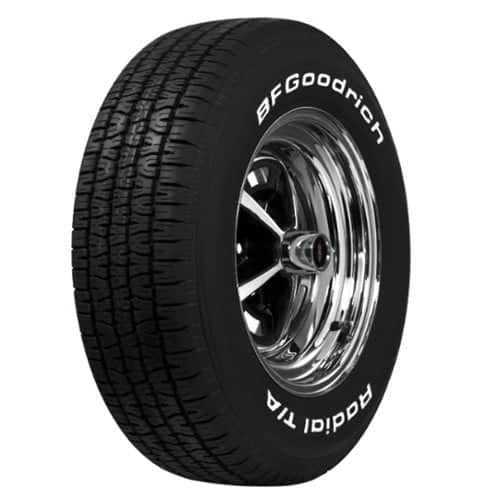
Category: Raised White Letter Performance • Best For: Street rod boulevard cruiser builds • Era: 1970s-1990s street rod aesthetic
The BFGoodrich Radial T/A is the defining tire of the street rod boulevard cruiser era. BFGoodrich introduced the original Radial T/A in 1970 as the first DOT-legal radial performance tire for street applications, and the raised white letter sidewall became the visual signature of 1970s-1990s street rod culture. The aesthetic pairs perfectly with chrome American Racing Torq Thrust wheels and Cragar S/S Super Sport wheels — the visual combination defines street rod identity in ways no other tire/wheel combination achieves.
For 1932-1948 Ford coupe and roadster street rod builds, 1949-1954 Chevrolet street rod modifications, 1955-1957 Chevrolet hot rod builds, and any street rod with chrome or polished classic mag wheels, the Radial T/A is consistently the right tire choice. The 50,000 mile manufacturer treadwear warranty exceeds expectations for performance tires, and the modern compound chemistry delivers performance that the original 1970s Radial T/A couldn't approach while preserving the period-correct visual presentation. Available in sizes that match the typical 14-17 inch wheel diameters used in street rod applications. Browse BFGoodrich Radial T/A sizes.
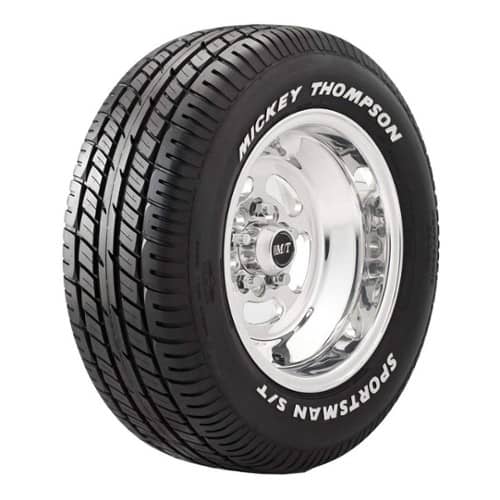
Category: Performance Street Drag-Style Big-and-Little • Best For: Hot rod big-and-little staggered rear • Era: Drag-influenced street builds
The Mickey Thompson Sportsman S/T is the right answer for hot rod big-and-little setups where the rear tire needs to deliver drag-strip aesthetic with street usability. Mickey Thompson Tires & Wheels built the brand's reputation on drag racing tires specifically — the Sportsman S/T brings that drag racing DNA to street-legal applications, delivering the wide rear stance and visual aesthetic that defines drag-influenced hot rod builds while remaining DOT-legal for normal driving use.
The S/T designation (Sportsman Street/Track) means the tire works for both street driving and occasional strip use. Available in wide sizes (28-31 inch tall, 11-14 inch wide) that fit traditional and street rod big-and-little setups. The compound chemistry balances traction (for the launch capability that drag aesthetic implies) with tread life (the soft compound chemistry of true drag radials would wear out impractically fast on street driving). For 1932-1948 Ford coupe builds with traditional drag aesthetic, 1969-1972 Chevy II Nova drag-influenced builds, and similar hot rods where the big-and-little aesthetic matters, the Sportsman S/T is the answer. Pair with the Mickey Thompson Sportsman Front for matched front and rear visual presentation. Browse Mickey Thompson Sportsman S/T sizes.
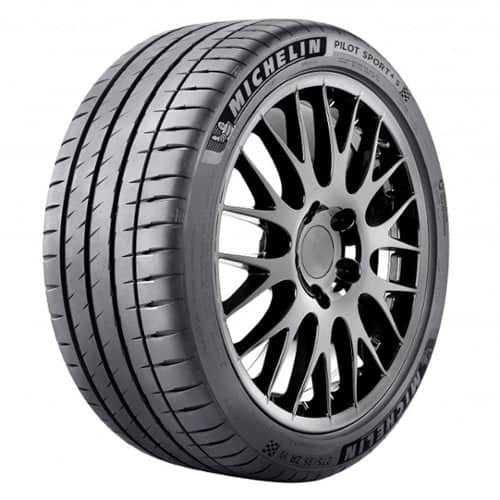
Category: UHP Summer Modern Performance • Best For: Pro-touring resto-mod hot rod builds • Era: Modern performance aesthetic
The Michelin Pilot Sport 4 S is the right tire for pro-touring and resto-mod hot rod builds where modern performance characteristics matter as much as visual presentation. Pro-touring builds combine vintage bodies with modern chassis, modern drivetrain, modern brakes, and modern suspension — and the tire choice has to deliver modern performance to match the modern engineering. UHP summer tires that work on contemporary BMW M3 and Porsche 911 applications work equally well on pro-touring 1969 Camaros and 1970 Chevelles where the chassis and brake upgrades enable modern performance levels.
The Pilot Sport 4 S is OE specification on numerous modern performance vehicles and is consistently the benchmark UHP summer tire across independent testing. For 1969 Camaro pro-touring builds with Roadster Shop or Detroit Speed chassis, 1970 Chevelle resto-mods with modern LS or LT engines, 1968 Charger resto-mods with modern Hemi swaps, and similar pro-touring hot rod applications, the Pilot Sport 4 S delivers the modern grip and handling response that justifies the chassis investment. The Continental ExtremeContact DWS06 Plus alternative works equally well for pro-touring builds in cold-climate regions where UHP all-season alternatives are required. Browse Michelin Pilot Sport 4 S sizes.
I see the same mistakes from hot rod builders more often than any others. Knowing what they are saves you from building cars that look fundamentally incoherent.
1. Mixing aesthetic schools accidentally. The biggest mistake in hot rod wheel and tire selection: combining elements from different aesthetic schools without conscious design intent. Traditional steel wheels with modern UHP tires. Modern multi-spoke wheels with raised white letter tires. Polished chrome wheels with bias-ply tires. These combinations don't read as intentional — they read as accidental, like the builder didn't know what aesthetic they were going for. Pick one aesthetic school (traditional, street rod, or pro-touring) and commit to it fully across both wheel and tire choices.
2. Wheel diameter wrong for the build category. Traditional hot rod builds typically run 14-16 inch wheels because period-correct hot rods used those sizes. Modern 18-22 inch wheels on a traditional build look fundamentally wrong regardless of finish or design. Pro-touring builds typically run 17-20 inch wheels because that's what modern performance demands. 14-15 inch wheels on a pro-touring build look fundamentally wrong because the modern brake packages don't fit and the proportions don't match modern performance aesthetic. Match the wheel diameter to the aesthetic school you're committing to.
3. Ignoring big-and-little proportions on traditional builds. Traditional and street rod hot rods historically use staggered front-to-rear sizing (skinny fronts, wide rears) for both visual aesthetic and functional drag-racing influence. Modern square setups (same width front and rear) work fine for pro-touring builds but look wrong on traditional and street rod builds where the big-and-little aesthetic is part of the historical visual language.
4. Using maximum chrome on builds where matte aesthetic is correct. Some hot rod builders default to chrome everything regardless of build context. Chrome works for street rod builds where the boulevard cruiser aesthetic embraces bright finishes. Chrome looks fundamentally wrong on traditional builds where painted steel or polished aluminum (subtler than chrome) is period-correct. Chrome also looks fundamentally wrong on most pro-touring builds where matte and satin finishes match modern performance aesthetic. Match the finish to the era and aesthetic intent.
5. Failing to verify rear clearance before committing to wide rear tires. Big-and-little setups demand wider rear tires than stock factory body work was designed to accommodate. Wide 11-14 inch rear tires need substantial wheel well width that stock-width rear ends often don't provide. Verify rear tire clearance through actual measurement (not estimation) before committing to wide rear tire purchase. Common solutions include mini-tubbing, narrowed rear ends, or fender modifications — but these need to be planned before tire purchase rather than discovered after the tires don't fit.
For broader hot rod build context, see our building a hot rod guide and how to build a hot rod guide.
Product |
Aesthetic School |
Best For |
|---|---|---|
US Mags Standard U108 Polished |
Traditional / Street Rod |
Smoothie polished aesthetic |
American Racing VN615 Torq Thrust II Chrome |
Street Rod |
Boulevard cruiser five-spoke chrome |
Cragar 08/61 S/S Super Sport |
Traditional / Street Rod |
Iconic 1960s-1970s hot rod aesthetic |
US Mags Rambler U111 Matte Gunmetal |
Pro-Touring / Resto-Mod |
Modern pro-touring with vintage influence |
American Racing VN471 Salt Flat Special |
Traditional Bonneville |
Salt flat / dry lakes aesthetic |
Coker Classic Bias Ply |
Traditional Period-Correct |
Authentic bias-ply restoration |
Coker Classic Radial / Bias Look |
Traditional Daily-Driven |
Period-correct visual with modern radial |
BFGoodrich Radial T/A |
Street Rod |
Raised white letter boulevard cruiser |
Mickey Thompson Sportsman S/T |
Traditional / Street Rod Big-and-Little |
Drag-influenced wide rear staggered |
Michelin Pilot Sport 4 S |
Pro-Touring / Resto-Mod |
Modern UHP summer performance |
The terms overlap significantly but have specific distinctions in modern usage. "Hot rod" is the umbrella term covering any modified vintage vehicle built for performance or aesthetic — typically pre-1948 American vehicles. "Street rod" specifically refers to hot rods built for street driving with modern drivetrain and aesthetic modernization (typically 1970s-1990s aesthetic) rather than period-correct traditional construction. A 1932 Ford coupe with a flathead V8 and bias-ply tires is a traditional hot rod. The same 1932 Ford coupe with a small-block Chevy, polished American Racing wheels, and raised white letter tires is a street rod. Both are technically hot rods, but the aesthetic schools differ substantially. The Pro-Touring or resto-mod category represents a third school — vintage body with full modern chassis and modern performance equipment producing essentially modern car performance on a vintage shell.
The decision depends on use case and aesthetic priority. Bias-ply tires (Coker Classic Bias Ply, Firestone Wide Oval Bias Ply) deliver true period-correct authenticity that matters for show car builds, trailer queens, and dedicated period-correct restoration projects. The trade-offs are real: harsher ride, different handling characteristics, shorter tread life (15,000-25,000 miles typical). Radial "bias look" tires (Coker Classic Radial / Bias Look) deliver period-correct visual presentation with modern radial construction — typically the right answer for daily-driven traditional hot rods where the car needs to function as actual transportation. For street rod builds, modern radial tires with raised white letter or whitewall sidewall aesthetics (BFGoodrich Radial T/A, Diamond Back whitewall radials) are the standard answer. For pro-touring builds, modern UHP tires with no period-correct visual treatment work best.
Wheel sizing depends on the aesthetic school the build belongs to. Traditional 1932 Ford hot rod builds typically run 15-16 inch wheels with substantial sidewall to match period-correct proportions — common combinations include 15x6 front with 165R15 tires and 15x8 rear with 235/60R15 tires, or true period-correct 16x4 fronts with 5.60-16 bias-ply and 16x6 rears with 7.50-16 bias-ply. Street rod 1932 Ford builds typically run 15-17 inch wheels with polished classic mags — common combinations include 15x6 front with 195/60R15 whitewall and 15x8 rear with 235/60R15 raised white letter. Pro-touring 1932 Ford resto-mod builds with modern chassis run 17-20 inch wheels with modern UHP tires — common combinations include 18x8 front with 245/40R18 and 18x10 rear with 285/35R18. Match the wheel size to the aesthetic school you're committing to.
Yes, Cragar wheels are still in production in 2026. The Cragar brand has gone through ownership changes since the original Cragar Industries founded the brand in 1964, but the iconic 08/61 S/S Super Sport design and related classic Cragar wheels remain in current production. Performance Plus Tire stocks current Cragar production in chrome with aluminum center finish, with sizes ranging from 14 to 20 inches across multiple bolt patterns to fit virtually every hot rod application from Model A and Model T builds through 1970s American muscle and modern street rod applications. The current production retains the original visual aesthetic that defined 1960s and 1970s hot rod culture while delivering modern construction and quality control. The Cragar 32C Klassic and Series 410 variants offer alternative classic Cragar designs for builds wanting different aesthetics within the Cragar brand family.
A big-and-little setup is a staggered wheel and tire combination with substantially narrower fronts than rears — typically 14-15 inch wheels with skinny 4-6 inch wide tires on the front, paired with 15-16 inch wheels and wide 10-14 inch tires on the rear. The aesthetic comes from drag racing influence: drag cars use this setup to minimize rolling resistance at the front while maximizing rear traction for launch. Even hot rods that never see a drag strip often run big-and-little setups for the visual aesthetic — the narrower front tire visually emphasizes the front wheel design while the wider rear tire creates aggressive rear stance. Traditional and street rod builds favor big-and-little setups as part of the historical visual language. Pro-touring builds typically use more matched front-to-rear proportions because modern performance favors balanced handling characteristics. Big-and-little setups require careful clearance verification — wide rear tires often need fender modifications, mini-tubbing, or narrowed rear ends to fit properly.
Technically yes, aesthetically usually no. Modern UHP summer tires (Michelin Pilot Sport 4 S, Continental ExtremeContact Sport 02, similar) deliver dramatic improvements in grip, handling, and braking compared to period-correct bias-ply or radial alternatives. However, the visual aesthetic of low-profile UHP tires on a 1932 Ford coupe with traditional smoothies looks fundamentally incoherent — the modern tire profile fights against the period-correct wheel and body aesthetic. UHP tires also typically come in sizes that match modern wheel diameters (17-20 inch) rather than the 14-16 inch wheel sizes traditional hot rods use. For builds where modern performance matters more than period-correct visual presentation, pro-touring is the right aesthetic school — and pro-touring builds use modern wheels alongside modern tires to maintain visual coherence. For traditional builds where the period-correct aesthetic matters, stay with period-correct or bias-look tire options.
Wheel choice for a 1955 Chevy Bel Air hot rod depends entirely on the aesthetic school the build is committing to. Traditional 1950s aesthetic builds work well with US Mags Standard U108 Polished smoothies or American Racing VN471 Salt Flat Special Polished wheels paired with whitewall radial tires. Street rod boulevard cruiser builds work well with Cragar 08/61 S/S Super Sport Chrome wheels or American Racing VN615 Torq Thrust II Chrome wheels paired with BFGoodrich Radial T/A raised white letter tires. Pro-touring resto-mod builds with modern chassis (Art Morrison, Roadster Shop, Detroit Speed) work well with US Mags Rambler U111 Matte Gunmetal or Forgestar F14 Satin Black wheels paired with Michelin Pilot Sport 4 S UHP summer tires. The 1955-1957 Tri-Five Chevy platform supports all three aesthetic schools equally well — the wheel and tire choice signals which school the builder is committing to. Verify bolt pattern matches your specific year and configuration.
Maximum rear tire width depends on the specific chassis, body, fender configuration, and modifications. Stock 1932-1948 Ford rear ends typically accommodate 235-275mm rear tires (or equivalent bias-ply sizing like 8.00-15 or 9.00-15) without modifications. Mini-tubbing modifications (cutting into the rear wheel wells and replacing the inner fender structure with larger tubs) open up clearance for 295-335mm rear tires (or 12-14 inch wide bias-ply). Narrowed rear ends (typically narrowing the rear axle by 2-4 inches per side) combined with mini-tubbing can accommodate up to 18-20 inch wide rear tires (the typical maximum that fits visually without overhanging the body width). For pro-touring builds with modern chassis platforms (Roadster Shop, Detroit Speed, Heidts), the chassis is designed for modern wide rear tires and typically accommodates 295-335mm widths without body modifications. Always verify clearance before committing to wide rear tire purchase — measuring twice before buying once prevents expensive return-shipping situations.



