
I've had more G-bodies roll through the shop over the years than I can count, and the conversation almost always starts the same way: somebody bought a set of wheels online, brought them home, and they either don't bolt up or they rub the frame the first time the car leans into a corner. The good news is that the G-body is one of the friendliest classic platforms there is to put wheels on, because General Motors used the same basic underpinnings across the whole family. The bad news is that there's one easy mistake that trips people up, and a couple of clearance details nobody mentions until it's too late. Let's walk through all of it the way I'd walk through it standing next to your car.
When I say G-body, I'm talking about the rear-drive midsize GM cars from 1978 to 1988 — the Chevrolet Monte Carlo and Malibu, the El Camino, the Buick Regal and Grand National, the Oldsmobile Cutlass, and the Pontiac Grand Prix and Bonneville. Different badges, different grilles, same family underneath. That shared DNA is exactly why wheel shopping is simpler than you'd think once you know the rules.
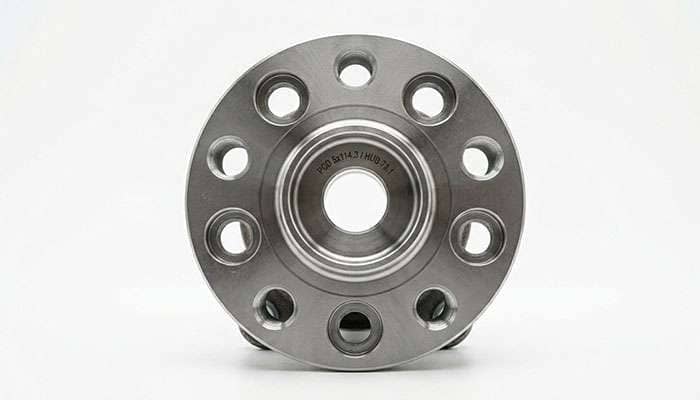
Every rear-drive G-body uses a 5 x 4.75-inch bolt pattern, which you'll also see written as 5x120.65 in millimeters. Five lugs on a four-and-three-quarter-inch circle. That's it. And here's the part that makes life easy: GM ran that exact pattern on a huge swath of its rear-drive cars. Camaros, Firebirds, Corvettes, S-10 pickups, and the 1964 to 1977 A-body Chevelles and Cutlasses all share it. That's why you'll spot a G-body wearing Camaro wheels at any cruise night — they simply bolt on.
What it means for you is that the pool of wheels that fit your car is enormous, both vintage and brand new. If you've never measured a bolt pattern before, you can confirm it yourself in about a minute with a tape measure. Just remember the magic number: 5 on 4.75.
Here's the trap, and it catches folks every single year. When most people hear "Buick Regal," they picture a Grand National. But Buick kept building Regals long after the G-body ended, and the 1988-and-up front-wheel-drive W-body Regal is a completely different animal. That car uses a 5x115 bolt pattern — close enough to 5 x 4.75 to look similar on a spec sheet, but it is not the same, and the lug seats won't load correctly if you force the wrong wheel on.
So when you're shopping, make sure the listing or the seller is talking about the right car. A 1987 Grand National is 5 x 4.75. A 2001 Regal is 5x115. They share a name and almost nothing else under the body. If you're buying used wheels off a forum or a marketplace and the seller pulled them off "a Regal," ask which one. That one question saves a lot of return shipping.
Before you change anything, it helps to know what the factory put under there, because that's your reference point for everything else. The 1983 to 1988 Monte Carlo SS came on 15x7 wheels — painted steel on the early cars, the familiar aluminum SS wheel on '86 and up — with a 215/65R15 tire. Those wheels carried a small negative offset, right around 3mm, and about 3.75 inches of backspacing.
Why does that matter? Because that 3.75-inch backspace number is your anchor. Backspacing is the distance from the wheel's mounting face to its inner lip, and it decides how far the tire tucks in toward the frame or pokes out toward the fender. Stray too far from stock in either direction and you start fighting clearance problems. If backspacing is new territory for you, our guide on how to measure backspacing on classic car rims breaks down exactly how to take the measurement, and the broader piece on wheel offset, backspacing, and bolt patterns ties offset and backspacing together so the numbers stop feeling like a foreign language.
For a G-body, you've really got three honest directions to go, and all of them work — it just depends on the look you're after.
Stay 15-inch if you want the period-correct stance and the most forgiving fitment. A 15x7 up front and a 15x8 in the rear is a time-tested combination that bolts in with correct backspacing and gives you room for a meatier rear tire. Plenty of guys run 15x8 all the way around, too. Step up to 17 or 18 inch and you get a more modern, planted look with sharper handling, which is where a lot of Monte SS and Grand National owners land today. Go bigger than that — 20s and up — and you're firmly in show territory, where you'll want to pay close attention to backspacing and tire sidewall to keep the ride livable.
Whatever diameter you choose, aim to keep backspacing in the neighborhood of stock — call it 3.75 to 4.5 inches on the rear depending on width. More backspace pulls the tire inward toward the frame; less backspace pushes it out toward the fender lip. A wider rear wheel with around 4.5 inches of backspace generally clears nicely and fills the wheel well without rubbing. For the full rundown on how diameter and width change the car's character, the muscle car wheel size guide is worth a read before you commit.
This is where a G-body really comes alive. The classic look is a touch of rake — nose down, tail up just slightly — and you get it through tire sizing more than anything else. On a 15-inch setup, a common shop-proven combination is a 235/60R15 up front on the 7-inch wheel and a 245/60R15 out back on the 8-inch wheel. That gives you a subtle rake, fills the wells, and clears without drama.
Want a bigger rear footprint for that pro-touring or street-machine attitude? A 275/50R15 will fit on a 15x8 with the right backspacing, and I've seen folks squeeze a 295 on a 15x10 with 4.5 inches of backspace, though at that point you're checking clearance carefully and watching sidewall bulge. One word of caution from years of mounting tires: don't stretch a tire that's far too wide onto a narrow rim. Put an 11-inch-wide tire on an 8-inch wheel and the bead never seats square — hit a pothole at low pressure and it can unseat on you. Match the tire width to the rim width sensibly. If you like the slightly raised tail, our piece on the hot rod rake stance explains how to dial it in without wrecking the geometry.
Two camps, both right. The classic camp keeps it vintage: 15-inch rally wheels, smoothies with baby moons, slot mags, or a set of five-spokes with raised-white-letter tires. It's honest, it's correct for the era, and on a clean Cutlass or Monte it looks like it just rolled out of 1985 in the best way. If you're leaning that direction, the classic car wheel styles overview lays out the options, and the smoothie wheels and baby moons guide covers that specific clean-and-simple steel look that suits these cars so well.
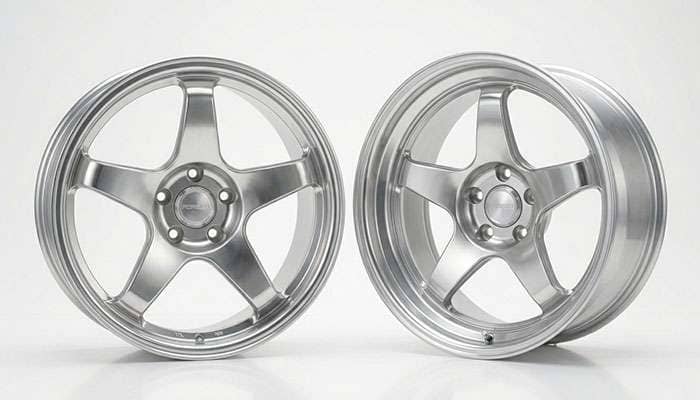
The modern camp runs a staggered setup — a narrower wheel and tire up front, a wider one in the rear — usually in 17, 18, or 20 inch. It tightens up the handling and gives the car a purposeful, planted look that plays nicely with a built engine. Staggered fitment has its own rules about how much wider you can go in back, and our muscle car staggered setup guide is the one I'd hand you before you order, so you don't end up with a rear tire you can't fit.
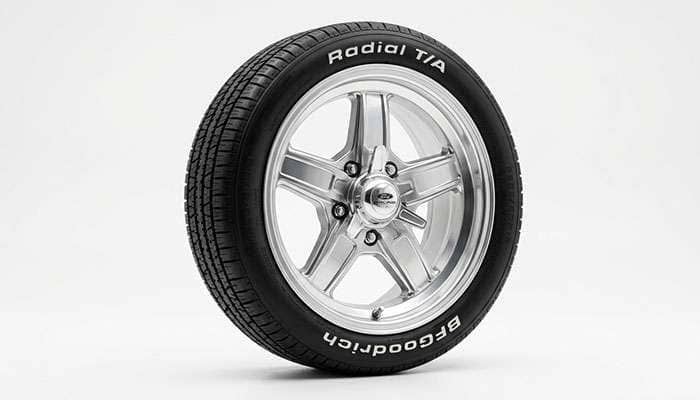
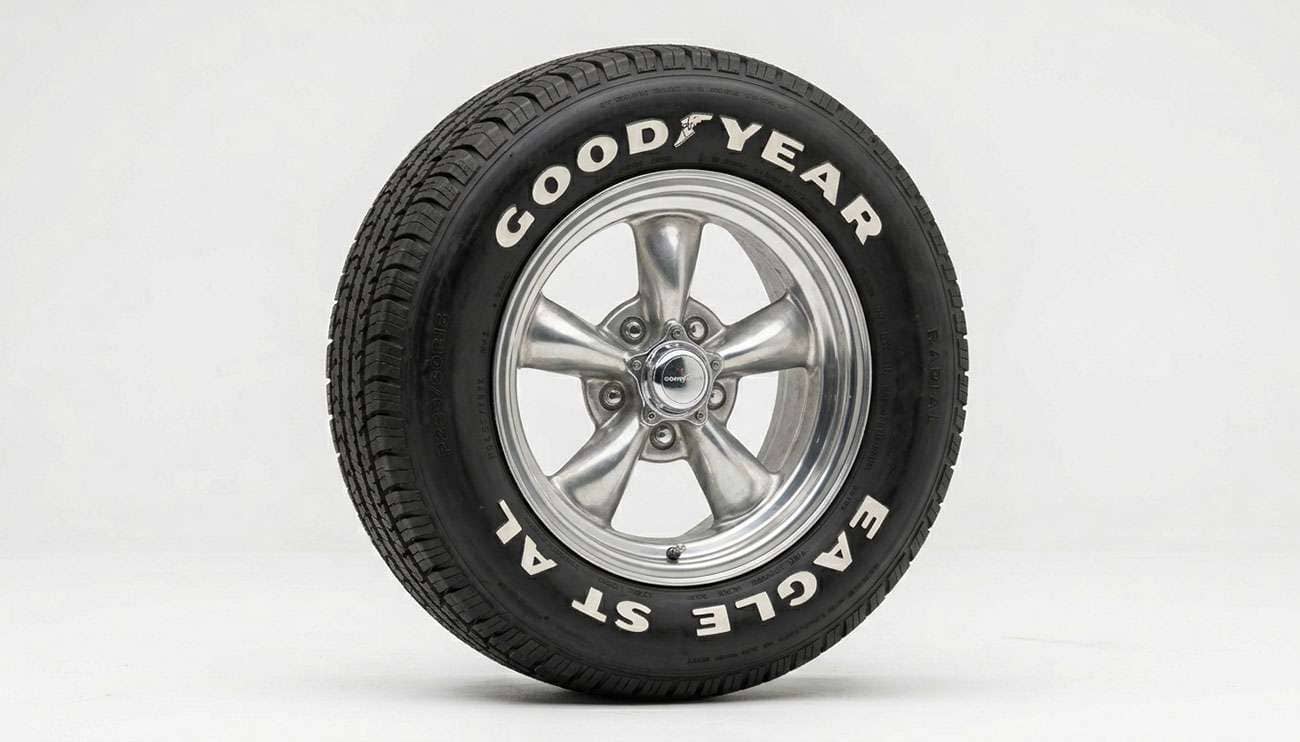
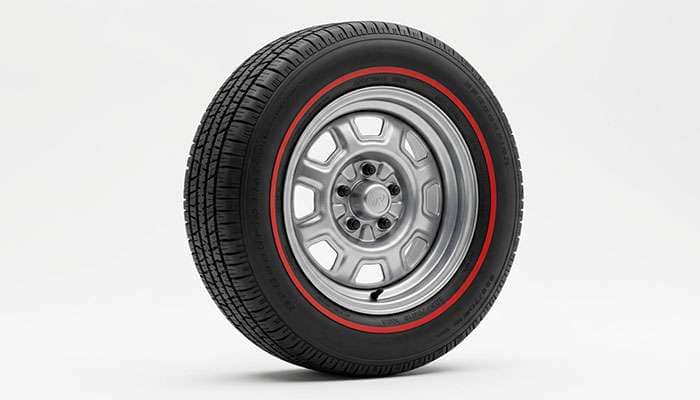
Because the 5 x 4.75 pattern is so common, we stock thousands of wheels that bolt right up. A few that come up again and again on G-body builds: the American Racing Torq Thrust II is the timeless five-spoke that looks correct on practically any GM muscle car and never goes out of style. For a lighter, more aggressive billet look, the Billet Specialties Street Lite is a shop favorite that suits both street and strip duty. And if you want that clean vintage steel-wheel vibe done right, the U.S. Wheel Smoothie is a straightforward classic that pairs beautifully with a set of trim rings and a whitewall or redline tire.
Any of those can be sized to whatever direction you picked above. You can browse the full lineup on our American Racing wheels page to see the Torq Thrust family and the rest of the classic styles in the sizes that fit your car. If you're choosing a whitewall to finish the period look, pick a stripe that's proportioned right for the wheel diameter.
A few things I always tell people to check before the box ships, because they're a lot cheaper to catch now than after the wheels are mounted.
First, the front inner fender. On a lot of G-bodies, a tall front tire — say a 215/70R15 — can just barely brush the plastic inner fender liner at full lock. Dropping to a 215/65R15 or a 235/60R15 usually solves it. Second, the rear frame rail. Too much backspacing tucks the rear tire in until it kisses the frame under cornering, which is why I keep harping on that backspace number. Before you buy, take a peek up inside your rear wheel well, note how much clearance you've got from the current tire to the frame, and measure the backspacing of the wheels that are on the car now. That gives you a real-world baseline to compare any new wheel against.
Third, if you're moving from the factory setup to something dramatically wider or larger, a thin wheel spacer is sometimes the difference between rubbing and clearing — but use it to fine-tune, not to cover for a wheel with the wrong backspacing in the first place. When in doubt, give us the specs of what's on the car and what you're considering, and we'll sanity-check the fitment with you before you spend the money.
The G-body is one of the most rewarding classics to put wheels on precisely because GM made it so easy: one bolt pattern — 5 x 4.75 — opens up a massive catalog of vintage and modern wheels that bolt right up. Know your stock backspacing, keep new wheels in that neighborhood, size your tires for a touch of rake, and decide whether you're chasing the period-correct look or a modern staggered stance. Watch the front inner fender and the rear frame for clearance, don't confuse your rear-drive Regal with the front-drive one, and you'll end up with a car that looks right and drives right. That's the whole game, and it's a fun one.
Every rear-drive G-body from 1978 to 1988 uses a 5 x 4.75-inch bolt pattern, also written as 5x120.65 in millimeters. That includes the Monte Carlo, Malibu, El Camino, Regal, Grand National, Cutlass, Grand Prix, and Bonneville. It's the same pattern GM used on Camaros, Corvettes, S-10s, and 1964–77 A-body cars.
Yes, because those cars share the 5 x 4.75 bolt pattern with the G-body. The wheels will bolt on, but you still need to confirm the width, diameter, and backspacing work with your fenders and frame. A wheel that bolts up doesn't automatically clear, so check the fitment, not just the bolt pattern.
A popular, proven combination is a 235/60R15 on a 15x7 front wheel and a 245/60R15 on a 15x8 rear wheel. That gives a slight rake and fills the wheel wells without rubbing. For a wider rear footprint, a 275/50R15 fits a 15x8 with correct backspacing, but check clearance carefully as you go wider.
Buick kept the Regal name long after the G-body ended. The 1988-and-up front-wheel-drive W-body Regal uses a 5x115 bolt pattern, which is different from the rear-drive G-body's 5 x 4.75. They share a name but not the chassis, so wheels are not interchangeable between them.
Use the factory figure of about 3.75 inches as your baseline and stay in the neighborhood of 3.75 to 4.5 inches depending on wheel width. More backspacing tucks the tire toward the frame; less pushes it toward the fender. Measure the backspacing on your current wheels and your available clearance before ordering anything wider.
Yes. A staggered setup with a narrower front wheel and a wider rear is a popular modern look on G-bodies, typically in 17, 18, or 20 inch. The key is keeping rear width and backspacing within what your wheel well and frame will clear, so it's worth reviewing staggered fitment rules before ordering.



