
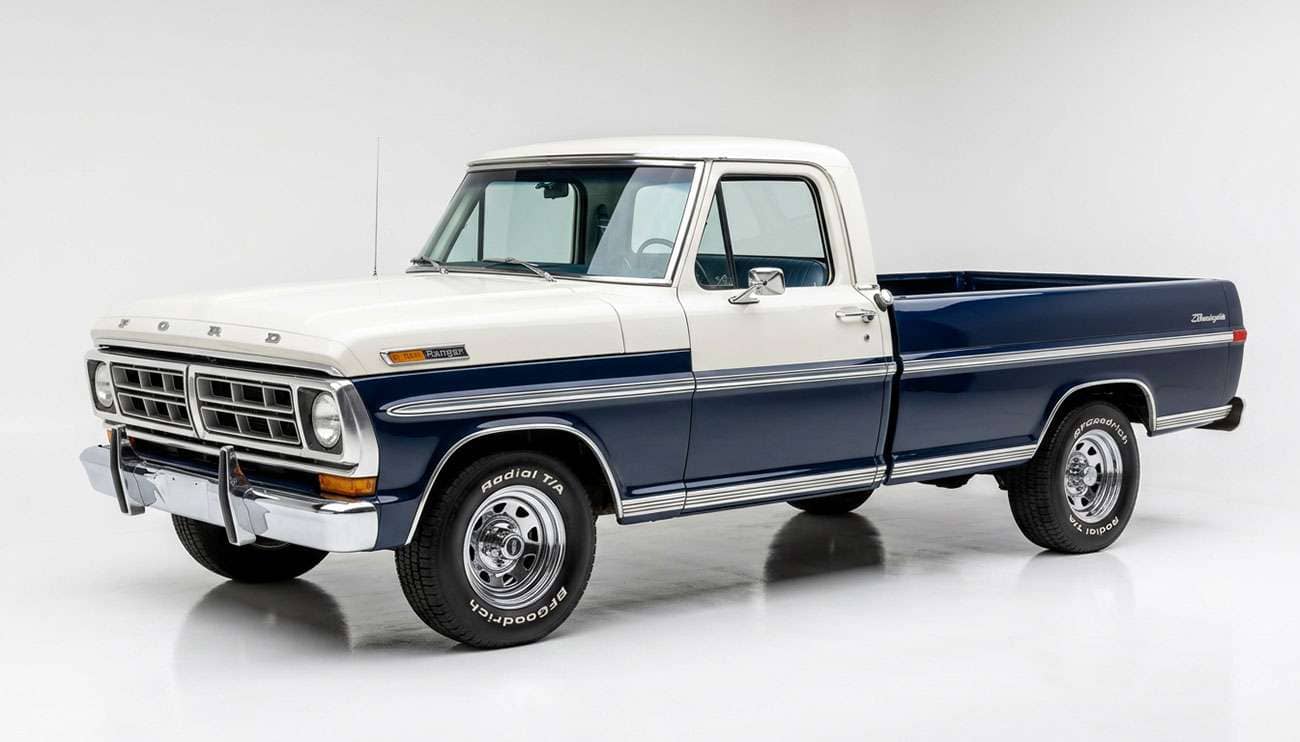
Every 1973-79 Ford F-100 and F-150, two-wheel drive or four-wheel drive, uses a 5x5.5 (5x139.7) bolt pattern with 1/2-20 lug studs. The F-250 and F-350 use 8x6.5. That is the easy part, and it is where most guides stop. The part that sends wheels back is hub bore. The F-100 hub measures 87.1 mm, and a big share of 5x5.5 wheels on the market are bored for Dodge and Ram trucks at about 78 mm. Same bolt pattern, and the wheel will not go on. On a 4x4, the locking hubs add one more clearance check.
I'm Hank Feldman. I opened this shop in 1971, two years before Ford built the first of these trucks, and I have been putting wheels on dentsides ever since. Back then they were work trucks. Now they are one of the best-looking classic pickups you can buy, and the wheel question I get most is a simple one with a catch. Here is the whole answer in one table:
Feature |
Bolt Pattern |
Hub Bore |
Lug Stud |
What to Check |
|---|---|---|---|---|
F-100 / F-150 2WD |
5x5.5 (5x139.7) |
87.1 mm |
1/2-20 |
Wheel bore at least 87.1 mm |
F-100 / F-150 4x4 |
5x5.5 (5x139.7) |
87.1 mm hub pilot |
1/2-20 |
Center hole clears the locking hub |
F-250 / F-350 |
8x6.5 (8x165.1) |
Varies by axle |
Varies by axle |
Measure the hub and stud before ordering |
Once you know the wheel will bolt on and center, the next choice is the stance you want. This table is where most dentside owners make the buying decision:
Feature |
Typical Wheel |
Typical Tire |
What to Watch |
|---|---|---|---|
Factory look, stock height |
15x7 or 15x8 |
235/75R15 |
Backspacing on wider 15s |
1970s street truck |
15x8 front, 15x10 rear slot or 8-spoke |
Raised white letter all-terrain or street radial |
Deep negative offset hits the fender lip |
Lowered modern stance |
17x8 or 18x8 |
275/60R17 or 285/55R18 |
Bore size; most 18s and 20s are not built for Ford hubs |
Stock-height 4x4 |
15x8 or 15x10 |
31x10.50R15 |
Locking hub clearance |
"Dentside" is the nickname for Ford's sixth-generation F-Series pickups, built for the 1973 through 1979 model years. The name comes from the long indented crease that runs down the side of the body. The generation before it, 1967-72, is the "bumpside," named for the raised body line in the same place. If your truck has a dent along its flank, you are in the right article.
The family includes the half-ton F-100, the heavier half-ton F-150 that Ford added partway through the run, the three-quarter-ton F-250, and the one-ton F-350, in regular cab, SuperCab, and crew cab. Trim names like Custom, Ranger, Ranger XLT, and Explorer badged the nicer ones. The badge decides the bolt pattern far more than the trim does.
The early Bronco is a different truck with its own fitment rules, covered in our early Bronco wheel and tire guide. If you are cross-shopping with a Chevy of the same era, the C10 squarebody wheel guide covers that truck.
5x5.5, also written 5x139.7. Every half-ton dentside uses it, F-100 and F-150, two-wheel drive and four-wheel drive. That surprises some people, because on other brands the 4x4 and 2WD trucks of this era do not always match. On the Ford half-ton, they do.
The three-quarter-ton and one-ton trucks are different. A dentside F-250 or F-350 uses 8x6.5. If someone hands you a set of eight-lug wheels for your F-100, they came off a heavier truck.
How to confirm it on your own truck: with the wheel off, measure from the center of one stud, skip the next one, to the center of the third. On a 5x5.5 hub, that distance is about 3.23 inches. It is a quick check, and it catches the truck that had a hub swap somewhere in the last fifty years.
5x5.5 is a common pattern. Ford used it on half-ton pickups through the mid-1990s, and it shows up on Jeep and Dodge trucks too. That is good news for selection, and it is also where the trouble starts. Our 5x139.7 bolt pattern guide lists the vehicles that share it.
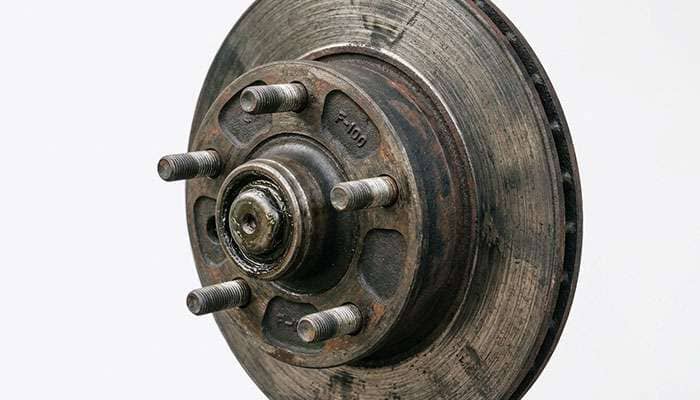
The bolt pattern only tells you the studs line up. It does not tell you the wheel will slide onto the hub. That depends on the hole in the middle of the wheel, the center bore.
The dentside F-100 hub measures 87.1 mm. The wheel's center bore has to be at least that large. Here is the catch: across the 5x5.5 aftermarket wheel market, a little under three wheels in ten are bored at about 78 mm, the size for Dodge and Ram trucks. They match your bolt pattern exactly, and they will not go over a Ford hub. Owners have known this for years; the old rule is that a Ford wheel will usually fit a Dodge, but not the other way around, because the Ford has the bigger center hole.
The problem gets worse as wheels get bigger. In 15-inch 5x5.5 wheels, only about one in twenty is bored under 87 mm, because most 15s are built for classic trucks and off-road use. In 17, 18, and 20 inches, it is roughly one in four or more, because many of those wheels are built for later Dodge and Ram half-tons. Check the center bore on every wheel before you buy it, especially if you are going big. If you are not sure how to read that number, see our guide on wheel center bore.
Most 5x5.5 wheels that do fit an F-100 are bored larger than 87.1 mm, commonly 108 mm or more. Those slide on easily, but they are centered by the lug nuts rather than the hub. For a street truck, use hub-centric rings sized 87.1 mm inside to the wheel's bore outside. They are cheap, and they stop a vibration you would otherwise chase with balancing.
The studs are 1/2-20. Match the nut to the stud, and match the seat to the wheel. Many classic-style aftermarket wheels need a shank-style nut or a specific conical seat, and the factory nuts will not seat correctly on them. Buy the nuts the wheel maker calls for.
Same bolt pattern, one extra check. A dentside 4x4 has a solid front axle with locking hubs, and the hub body sticks out past the wheel mounting face. The wheel's center hole has to clear the outside of that locking hub, not just the hub pilot behind it.
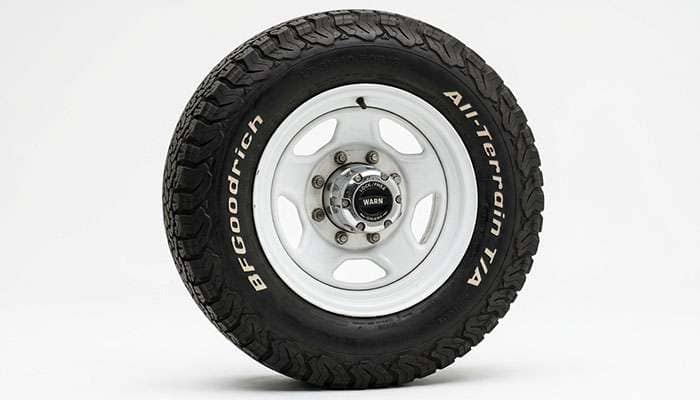
That is why most off-road-style 5x5.5 wheels, the classic white spokes and steel 15x8s and 15x10s, come with a big center hole. A wheel with a small, tight center hole may bolt onto a 2WD truck perfectly and still hit the hubs on a 4x4. Before you buy, measure the outside diameter of your locking hubs and compare it to the wheel's center bore. If you are swapping wheels from a 2WD truck to a 4x4, check this first.
On the tire side, the classic stock-height 4x4 fitment for these trucks is a 31x10.50R15 on a 15-inch wheel. It fills the wheel well, it looks right, and it keeps the 1970s proportions. Going bigger usually means a lift.
Dentside half-tons left the factory on 15x5.5 steel wheels with about +14 mm of offset. Many wore L78-15 tires, a bias-ply-era letter size. Owners on the Ford truck forums report 1979 F-100 and F-150 trucks arriving new on L78-15s.
Letter sizes are hard to find now. The closest modern radial size is 235/75R15, about 29 inches tall, and it keeps the speedometer and the look close to original. It is also the size I put on most stock-height dentsides that come through our shop.
That narrow 15x5.5 factory wheel is the reason so many owners change wheels in the first place. It looks skinny under a full-size Ford fender. Moving to a 15x7 or 15x8 fills the wheel well without changing the overall height. Just watch the backspacing. Most 15-inch 5x5.5 aftermarket wheels run negative offset, which pushes the tire out toward the fender lip. Our guide to measuring backspacing on classic rims shows how to check before you order.
Lowered dentsides are everywhere at the shows right now, and they look great. The two-wheel-drive trucks use Ford's Twin I-Beam front suspension, and most drops use dropped I-beams or drop spindles up front with a flip kit or lowering springs in the rear. Each drop setup changes how much room the tire has, so the numbers below are a starting point, not a guarantee.
Common lowered setups run 17x8 or 18x8 wheels. Fitment references list offsets of roughly -5 to +25 mm for those sizes on an F-100, which is far less outboard than most aftermarket wheels in that diameter. Tire choices in those sizes commonly run around 275/60R17 or 285/55R18, keeping the overall diameter near 30 inches.
The bigger issue at 18 and 20 inches is bore size, as covered above. Many of the most popular 20-inch 5x5.5 wheels are built for later Ram trucks. Confirm the bore before you fall in love with a style.
A note on Twin I-Beam: that front suspension changes camber as it moves. Lowering it changes the camber at ride height too, which affects tire wear on the front. Get an alignment from a shop that knows Twin I-Beam after any drop, and check the inside edge of the front tires for the first few thousand miles.
These trucks were born in the 1970s, and the wheels of that decade still look the best on them. Here is how I walk customers through it.
The deep-dish slot wheel and the soft 8-spoke are the most period-correct looks for a dentside street truck. Our own Hot Rod Hanks 297 Soft 8 and Hot Rod Hanks 42 D Window both come in 15-inch 5x5.5 with a 108.7 mm bore, so they clear the F-100 hub. Wrap them in raised white letter tires and you have the truck you wanted in high school.
For a cleaner look, a painted smoothie with a dog-dish or center cap suits the earlier, plainer trim levels. The Hot Rod Hanks Smoothie in 15-inch 5x5.5 has an 87.9 mm bore, just enough to clear the 87.1 mm hub.
For the 4x4 dentside, a white spoke steel wheel with a 31x10.50R15 is the classic look. It also usually has the large center hole the locking hubs need.
For more period picks across the classic truck world, see my classic truck wheel picks.
A wheel that matches the bolt pattern and nothing else costs more the longer it stays on the truck.
Every one of those starts with skipping a measurement. The fix is free: check bore, seat, and backspacing before you pay.
If you own a dentside F-250 or F-350, our 8x6.5 lug pattern guide covers the eight-lug side of the family.
A 1973-79 F-100 is about as simple as classic truck fitment gets on paper. Every half-ton is 5x5.5, two-wheel drive or four-wheel drive, and the heavy trucks are 8x6.5. The work is in the two things the bolt pattern does not tell you. The wheel's center bore has to clear the 87.1 mm Ford hub, and a big share of 5x5.5 wheels are bored for Dodge trucks and will not. On a 4x4, the center hole also has to clear the locking hubs.
Get those right, then have fun with it. Slots and soft 8s on 15s for the 1970s street truck, white spokes and 31s for the 4x4, or 17s and 18s on a dropped truck. These trucks have earned a good set of wheels.
A 1977 Ford F-100 uses a 5x5.5 (5x139.7) bolt pattern with 1/2-20 lug studs and an 87.1 mm hub bore. The same pattern applies to every 1973-79 F-100 and F-150, both 2WD and 4x4.
Usually not. Both use 5x5.5, but many Dodge and Ram wheels have a center bore of about 78 mm, smaller than the F-100's 87.1 mm hub. The wheel will not slide onto the hub.
Many dentside half-tons came on L78-15 tires mounted on 15x5.5 steel wheels. The closest modern radial size is 235/75R15, about 29 inches tall.
They share the 5x5.5 bolt pattern, but a 4x4 has locking hubs that stick out past the wheel mounting face. The wheel's center hole must be large enough to clear the hubs, which some 2WD-style wheels are not.
31x10.50R15 is the classic stock-height size for dentside 4x4 trucks, run on 15x8 or wider wheels with backspacing matched to the truck. Larger tires usually need a lift.
The 1973-79 Ford F-250 and F-350 use an 8x6.5 (8x165.1) bolt pattern, different from the half-ton F-100 and F-150.



