
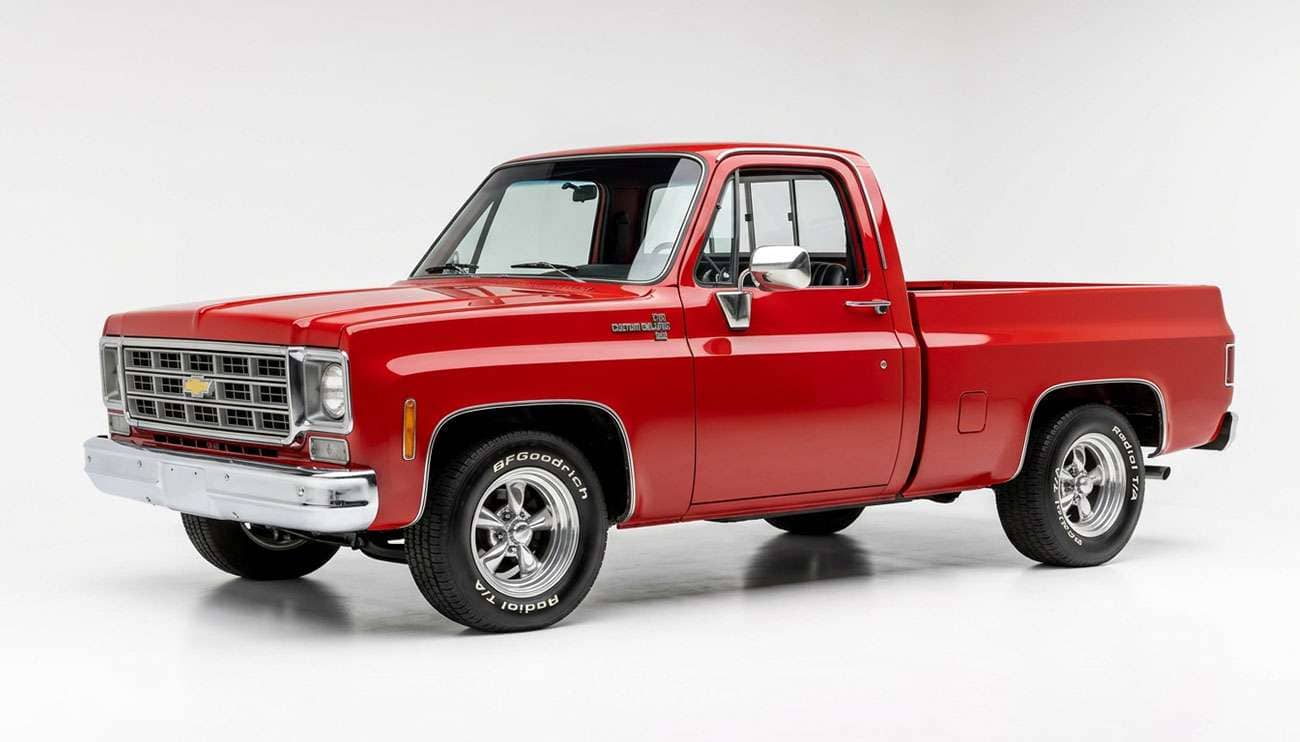
I've had more of these trucks on my lift than I could count, and the conversation almost always starts the same way: a fella walks in, says he just picked up a squarebody or an old C10, and he wants it to sit right and roll on a set of wheels that look like they belong. Good. That's the right instinct. But before we talk about how it looks, we've got to talk about what bolts up — because the single most common mistake I see on these trucks is somebody buying a beautiful set of wheels that won't go on their hubs. Let's keep you out of that ditch.
"Squarebody" isn't a model — it's a nickname for the third generation of GM's full-size pickups, built from 1973 through 1987. People hung the name on them because of those flat, slab-sided panels and the boxy cab. Chevy badged them as the C/K line, and GMC ran their own versions too. The C meant two-wheel drive, the K meant four-wheel drive, and the number told you the load class: 10 for half-ton, 20 for three-quarter-ton, 30 for one-ton.
So a C10 is the half-ton, two-wheel-drive version. Now here's where folks get tangled up: the C10 name goes back further than the squarebody. It started in 1960, ran through the rounded 1967–1972 trucks everybody loves, and carried into the squarebody era. That matters, because the running gear changed along the way — and what changed most, for our purposes, is the bolt pattern. Tell me the year and whether it's a half-ton or something heavier, and I can tell you what wheels you're shopping for.
This is the part to get right before you spend a dime. Up through 1970, the half-ton C10 wore a six-lug pattern — 6x5.5 inches, which you'll also see written as 6x139.7 millimeters. Then in 1971, GM moved the light two-wheel-drive trucks to a five-lug pattern measuring 5x5 inches, or 5x127 metric. That five-lug setup carried all the way through the squarebody run to 1987 on the C10.
The four-wheel-drive trucks didn't follow along. K-series trucks stayed on the six-lug 6x5.5 pattern, and once you step up to the heavier three-quarter- and one-ton trucks, you're usually looking at an eight-lug pattern. So two squarebodies parked side by side can take completely different wheels depending on drivetrain and load class. Don't assume — measure. If you're not sure how, our guide to measuring your lug bolt pattern walks you through it with a tape and five minutes.
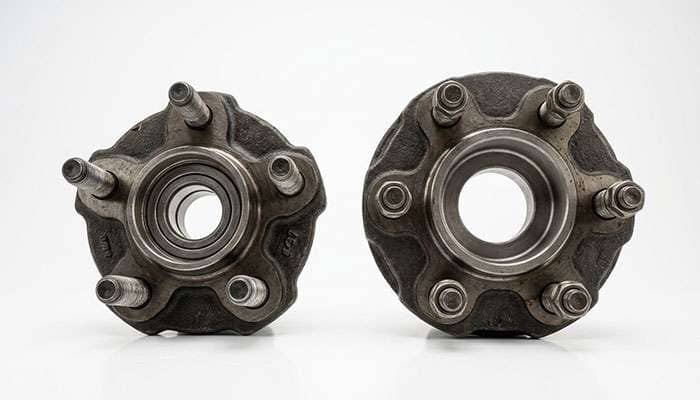
The center bore on these trucks typically runs around 78.1 millimeters or a touch larger, so when you're fitting an aftermarket wheel with a bigger bore, plan on a set of hub-centric rings to keep everything running true. Here's a table to keep it straight:
Truck |
Years |
Drive |
Bolt Pattern |
|---|---|---|---|
C10 (half-ton) |
1960–1970 |
2WD |
6x5.5 (6x139.7) |
C10 (half-ton) |
1971–1987 |
2WD |
5x5 (5x127) |
K10 / K5 Blazer |
1973–1987 |
4WD |
6x5.5 (6x139.7) |
C20 / C30 (3/4 & 1-ton) |
1973–1987 |
2WD / 4WD |
8x6.5 (8x165.1) |
If your truck is a pre-'71 six-lug or a four-wheel-drive K, you'll want to start your search on the 6-lug wheels page. And if you want the full rundown on these two patterns specifically, we've got dedicated breakdowns on the 5x5 bolt pattern and the 6x5.5 bolt pattern.
Knowing the factory setup gives you a baseline to build from. A base squarebody rolled off the line on a plain 15x6 steel wheel, usually wrapped in something like a 205, 215, or 225/75R15. Step up to a nicer trim and you'd often find the 15x8 rally wheel — the one with the bright trim ring and center cap that everybody recognizes — running a 235/75R15 with around four to four-and-a-quarter inches of backspacing.
That backspacing number is worth tucking away. The factory built these trucks with a fairly conservative wheel that sat nicely under the fenders. When you go aftermarket, the backspacing and offset you choose decide whether your new wheels tuck in clean, sit flush, or poke out past the bodywork. Stray too far from stock without thinking it through and you'll be rubbing fenders or staring at a tire that sticks out in the weather. We'll come back to that.
This is the fun part, and it's where a squarebody or C10 really shows its owner's personality. Over the years a handful of styles have come to define these trucks, and the good news is they're all still made in the right bolt patterns.
The rally wheel is the honest, period-correct choice — it's what a lot of these trucks wore when they were new, and a clean set with trim rings never looks wrong. The smoothie is its cousin: a plain, body-color or polished steel-look wheel that suits a slammed shop-truck build beautifully. We carry the U.S. Wheel Smoothie and Rat Rod series in both five- and six-lug, so they work across the whole C10 timeline. For something with a little more attitude, the five-spoke look — think American Racing Torq Thrust II — bridges classic and modern about as well as anything ever has. If you want my honest take on that wheel, I put down my thoughts in the Torq Thrust review.
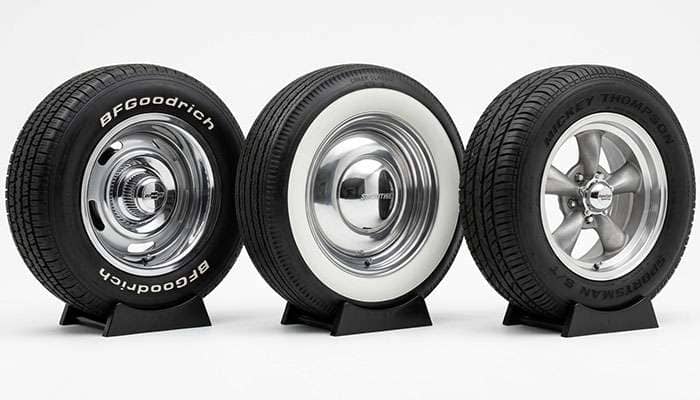
From there it opens right up. The US Mags Bullet and Rambler give you that billet-style street-truck look in larger diameters. The Boyd Coddington Junkyard Dog leans into the hot rod heritage. Wheel Vintiques builds reproduction smoothies and rally wheels for folks chasing a factory-correct restoration. The point is, you don't have to compromise the look to get the fit. If you'd like a curated shortlist, I pulled together my favorites in my picks for the best classic truck wheels, and you can browse the whole lineup on our Classic Wheels page.
Now we talk diameter. Most builds I see fall into one of four camps, and where you land usually comes down to whether you want ride comfort, a period look, or a show stance.
If you're keeping it close to original, a 15-inch or 17-inch wheel with a tall sidewall rides like the truck was meant to — and on a working truck, that sidewall is your friend. Step up to a mild restomod and an 18-inch wheel, often staggered a little wider in back, gives you a modern footprint without going overboard. Then there's the lowered crowd: dropped on a 20-inch wheel, staggered front to rear, with a low-profile tire that fills the wheel well. And finally the show trucks, where 22s and custom backspacing put the wheel right out to the edge of the fender lip. For a deeper look at how the lowered crowd does it, our writeup on wheels for lowered trucks is worth a read.
Build Goal |
Wheel Size |
Tire Example |
The Look |
|---|---|---|---|
Stock / period-correct |
15x8 |
235/75R15 |
Tall sidewall, factory stance |
Mild restomod |
17x8 or 18x8 |
245/55R18 |
Modern footprint, easy ride |
Dropped daily |
20x9 / 20x10 staggered |
275/45R20 |
Low and filled-out |
Show truck |
22 with custom backspacing |
Low-profile, fender-to-lip |
Maximum stance |
One word of caution as you go bigger: changing your overall tire diameter from stock will throw your speedometer off. It's not the end of the world, but it's worth knowing about before you wonder why your readings feel funny. And if you want help matching wheel widths to truck sizes in general, truck rim sizes explained covers the ground well.
The tire makes or breaks the whole look, and the right one depends entirely on the road you're chasing. For a classic, period-correct build on 15s, it's hard to beat a raised-white-letter tire — a BFGoodrich Radial T/A puts that old-school lettering right where it belongs, and a Mickey Thompson Sportsman S/T fills out a rear wheel well with that fat, planted look that says hot rod. The Cooper Cobra Radial G/T is another that lives in that same classic lane.
Go up to a modern 18-, 20-, or 22-inch setup and you'll want a tire built for the bigger diameter. A Nitto NT420V gives you a clean street-and-show profile, and the Toyo Proxes S/T III is a solid all-around choice for a truck that actually gets driven. The thing to keep in mind is that as the wheel grows, the sidewall shrinks — so you trade a little ride softness for that filled-out stance. Pick the balance that fits how you use the truck, not just how it looks parked.
Here's the shop-floor truth that catches people out: the wheel diameter and the bolt pattern only get you so far. What actually decides whether a wheel clears your truck is the backspacing and offset — how far the mounting face sits in or out relative to the wheel's centerline. Get it wrong and the tire rubs the fender at full lock, or it tucks so far in it scrubs the suspension, or it pokes out where you didn't want it.
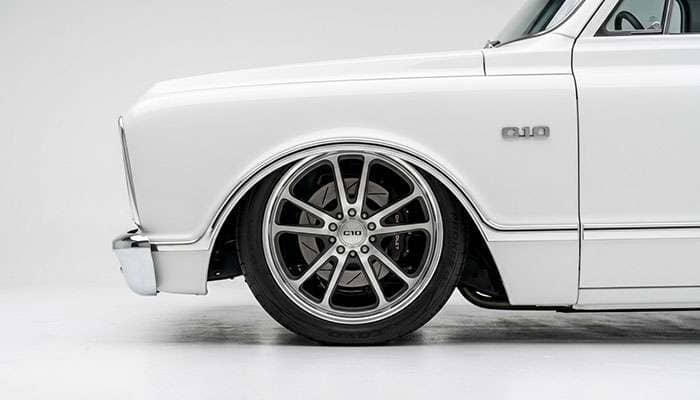
And on a modified truck, the target keeps moving. If you've dropped it with a spindle and a flip kit, swapped to a disc-brake front, or narrowed or widened the rear end, all of that changes what backspacing will clear. That's why I always tell folks building a lowered or pro-touring squarebody to nail down the suspension and brake setup first, then spec the wheel to match — not the other way around. Measure the truck you've got, not the one in the brochure. And for restoration-grade reproduction wheels, the Resto Wheels page is where I'd point you.
Building a C10 or squarebody the right way isn't complicated, but the order matters. Confirm your bolt pattern by year and drivetrain first — five-lug 5x5 on the 1971-and-up half-tons, six-lug 6x5.5 on the early and four-wheel-drive trucks. Then pick a wheel style that fits the truck's character, size it to the stance you're after, wrap it in a tire that matches how you drive, and let your suspension and brakes guide your final backspacing. Do it in that order and you'll end up with a truck that sits right, rolls true, and looks like it was always meant to wear those wheels. That's the whole game.
A squarebody C10 — the half-ton, two-wheel-drive truck from 1973 to 1987 — uses a five-lug 5x5 inch pattern (5x127 metric). GM switched the light two-wheel-drive trucks to this pattern in 1971.
Half-ton C10s built from 1960 through 1970 are six-lug, using a 6x5.5 inch pattern (6x139.7). The five-lug pattern arrived on the light two-wheel-drive trucks starting in 1971.
Base trucks came on 15x6 steel wheels, while better-trimmed trucks often wore the 15x8 rally wheel with a 235/75R15 tire and around four to four-and-a-quarter inches of backspacing.
Yes, and it's a popular look on lowered and show trucks. The key is matching the backspacing and offset to your suspension, brake, and rear-end setup so the wheel clears the fenders and suspension. Spec the wheel after the truck is set up, not before.
If your overall tire diameter changes from stock, your speedometer reading will be off until it's recalibrated. Keeping the overall diameter close to original when you go to a larger wheel — by running a lower-profile tire — minimizes the difference.



