
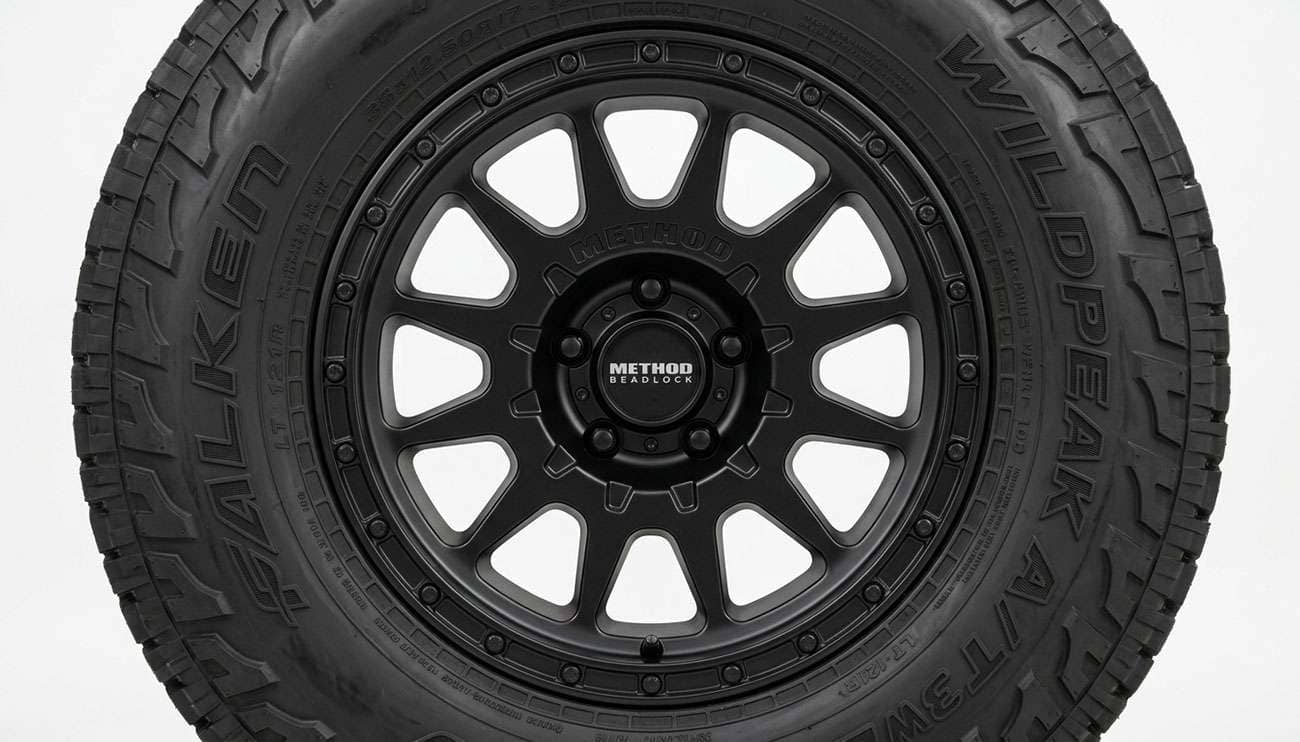
The 5x139.7 bolt pattern, also written as 5x5.5 inches, means the wheel has five lug holes spaced evenly around a circle 139.7 millimeters (5.5 inches) in diameter. It is one of the most common five-lug truck and SUV patterns on the road, and you will find it on the Dodge Ram 1500 (1994-2010), older Ford and Jeep trucks, and a long list of Suzuki, Kia, and Mitsubishi off-roaders. If your rig runs this pattern, any wheel stamped 5x139.7 or 5x5.5 shares the same lug circle. That said, bolt pattern alone does not guarantee a fit, and I will cover the other numbers that matter below.
A bolt pattern is two numbers: the lug count and the diameter of the circle those lugs sit on. So 5x139.7 is five lugs on a 139.7 mm bolt circle, measured through the center of the stud holes. That circle is what has to line up with the studs on your hub.
The metric and imperial versions are the same pattern written two ways. Divide 139.7 by 25.4 (the number of millimeters in an inch) and you get exactly 5.5, which is why this pattern is stamped both as 5x139.7 and 5x5.5. Manufacturers and wheel brands use the two labels interchangeably, so do not let the different numbers throw you.
This is a heavy-duty pattern by design. It shows up almost entirely on trucks, body-on-frame SUVs, and off-road rigs because the wider 5.5 inch lug circle spreads clamping load across a bigger footprint than a compact car pattern like 5x100 or 5x114.3. If you want the sibling comparisons, we break down neighbors like the 5x5 (5x127) pattern and the six-lug 6x114.3 pattern in their own guides.
Here are the vehicles most commonly fitted with the 5x139.7 (5x5.5) bolt pattern from the factory. Bolt pattern can change between generations and trims, so treat this as a starting point and always confirm against your exact year and VIN before buying.
Make and Model |
Model Years |
Stud Thread |
|---|---|---|
Dodge Ram 1500 |
1994-2010 |
9/16 in |
Ford F-100 and older half-ton F-series / Bronco |
1956-1996 |
1/2 in-20 |
Jeep CJ-5 / CJ-7 |
1972-1986 |
1/2 in-20 |
Suzuki Samurai / Sidekick / Vitara / Grand Vitara |
1985-2017 |
12 x 1.25 mm |
Kia Sportage (first generation) |
1995-2002 |
12 x 1.5 mm |
Mitsubishi Montero / Pajero |
1982-2006 |
12 x 1.5 mm |
A quick word of caution, because it trips people up: a lot of newer half-ton trucks moved away from this pattern. The Dodge Ram 1500 switched to a six-lug 6x139.7 setup in later generations, and modern Jeep Wranglers run 5x127, not 5x139.7. So the year matters as much as the model. If your vehicle is not on this list, do not assume, measure it.
Yes. They are two names for one bolt pattern. 5x139.7 is the metric label and 5x5.5 is the imperial label, and 139.7 mm converts to exactly 5.5 inches. A wheel marked 5x5.5 will bolt to a 5x139.7 hub and vice versa, with no adapter and no difference in the lug circle. The only reason you see both is that some brands, especially classic and steel-wheel makers, still spec in inches while most modern off-road brands spec in millimeters. When you are shopping, treat 5x139.7 and 5x5.5 as the same line item. For a deeper look at this pattern in inch terms, see our 5x5.5 wheels overview.
Matching the bolt pattern gets the wheel onto the studs, but three more numbers decide whether it actually fits your truck without rubbing, spacing out, or sitting off-center. This is where I see the most avoidable mistakes.
Measure the pattern first. A five-lug pattern is awkward because no two studs sit directly across from each other. The trick is to measure from the center of one stud to the outer edge of the stud two positions over. On a true 5x139.7 pattern that reads about 5.5 inches. If you want the full method with a diagram, follow our guide on how to measure a lug bolt pattern.
Check the hub bore (center bore). This is the diameter of the big hole in the middle of the wheel that sits over the hub. On trucks you want a hub-centric fit, where the hub carries the weight of the wheel rather than the lug studs. If the wheel bore is larger than your hub, you need hub-centric rings to center it. Our breakdown of hub-centric vs lug-centric wheels explains why this matters on a heavy rig.
Confirm offset and backspacing. Offset (ET) and backspacing set how far the wheel tucks in or pokes out, which drives clearance against your brakes, suspension, and fenders. Get this wrong and even a correct 5x139.7 wheel will rub. Our guide to wheel offset, backspacing, and bolt patterns walks through the math.
Match the stud thread. The lug circle can be identical while the stud thread is not. Classic domestic trucks and the Jeep CJ use imperial studs like 1/2 in-20, while the Suzuki, Kia, and Mitsubishi imports use metric studs such as 12 x 1.25 mm. Your lug nuts have to match the stud thread, not just the pattern. And if you are trying to run a wheel from a different pattern entirely, that is adapter territory, which we cover in our look at wheel spacers and adapters.
We stock the 5x139.7 pattern deep, from modern off-road designs to classic steel. Here are a few of the picks I point people toward, depending on the build. You can browse the full selection on our 5x139.7 wheels page.
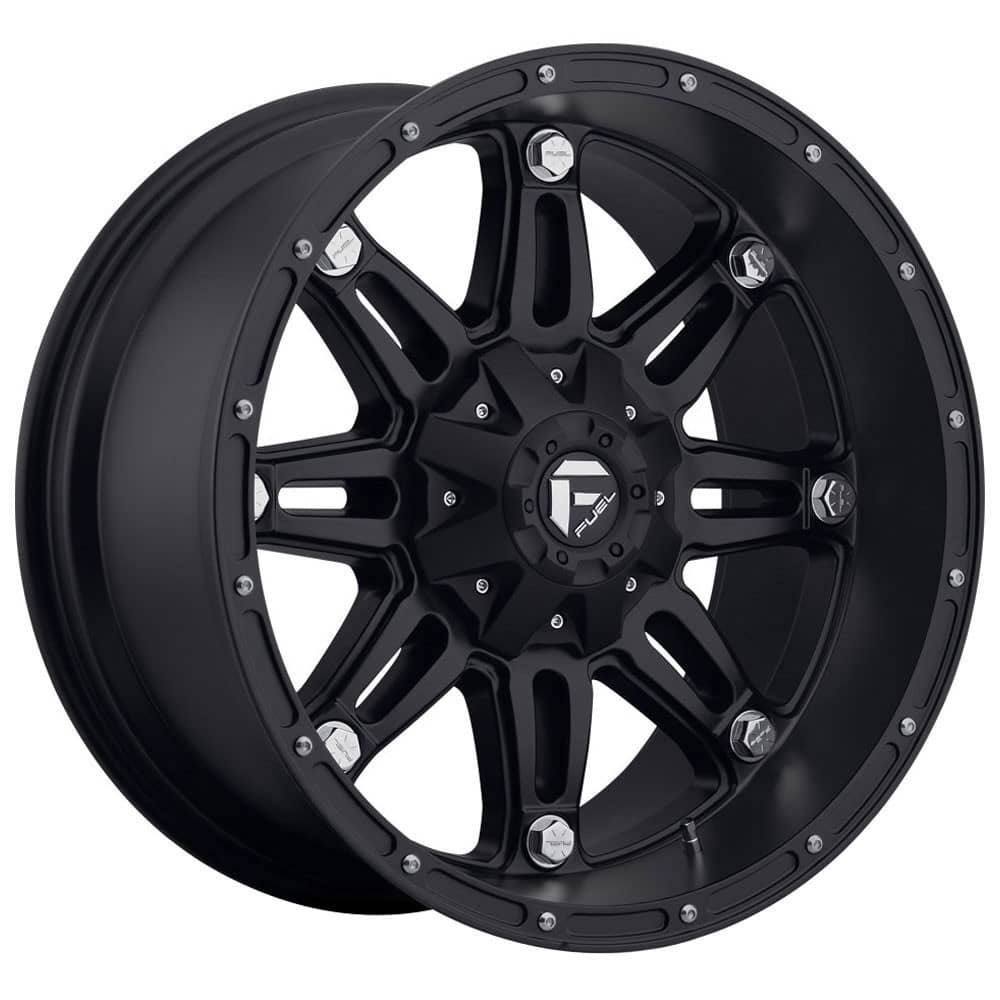
Fuel Hostage D531 (matte black). A go-to aggressive off-road look with a deep concave face, offered from 17 up to 24 inches. It is one of the most popular fitments we ship in this pattern for lifted and leveled trucks. See the range on the Fuel wheels page.
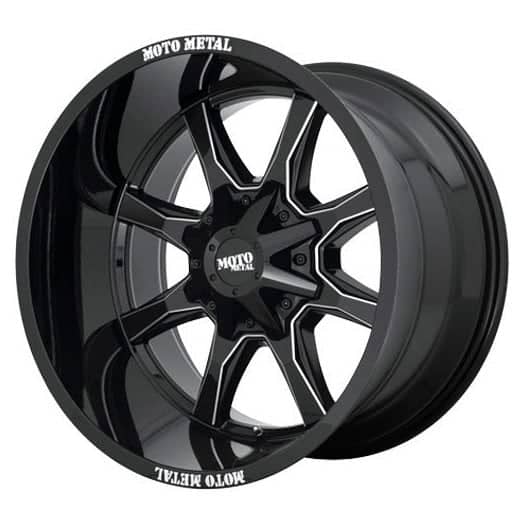
Moto Metal MO970 (gloss black, milled spoke). A clean, value-strong eight-spoke that spans 17 to 24 inches and suits a daily-driven truck as well as it does a weekend rig. Browse it on the Moto Metal wheels page.
Want a more directional, milled look? The Vision 405 Korupt and the Black Rhino Arsenal are both strong modern choices in 5x139.7. For a chrome, old-school muscle-truck vibe, the American Racing VN517 Marauder is hard to beat.
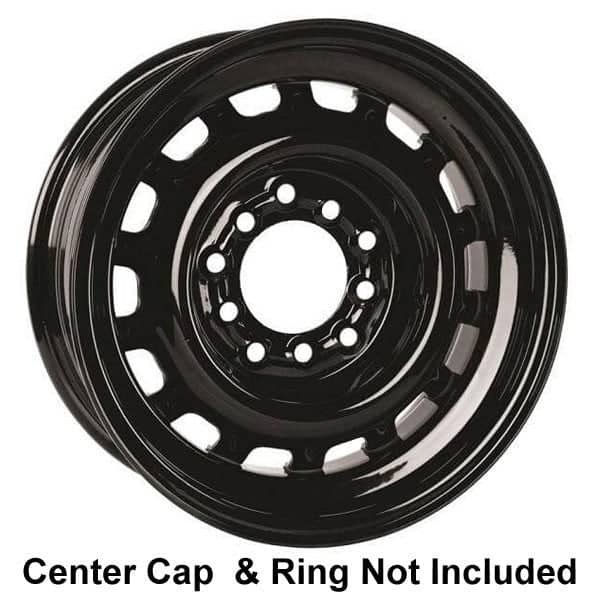
Hot Rod Hanks Artillery (gloss black). For a classic truck or restomod, our own Hot Rod Hanks line brings vintage styling in 15 and 17 inch fitments starting under 100 dollars per wheel. It is the value classic pick in this pattern. See the full lineup on the Hot Rod Hanks wheels page.
Running deep tread on any of these? Pair them with the right rubber from our off-road wheel and tire selection, or call the shop and we will confirm the full fitment for your exact year and model.
The 5x139.7 (5x5.5) bolt pattern is the workhorse five-lug truck and SUV pattern: five studs on a 5.5 inch circle, found on the Dodge Ram 1500 (1994-2010), older Ford and Jeep CJ trucks, and a range of Suzuki, Kia, and Mitsubishi off-roaders. The two labels mean the same thing, so shop 5x139.7 and 5x5.5 as one. Just remember that the pattern is only the first of four numbers that matter. Confirm the hub bore, offset, and stud thread too, and you will land the right wheel the first time. Browse our full 5x139.7 wheel selection or our wider truck wheels lineup to get started.
The 5x139.7 (5x5.5) bolt pattern is found mainly on trucks and body-on-frame SUVs, including the Dodge Ram 1500 (1994-2010), older Ford F-100 and half-ton F-series and Bronco, the Jeep CJ-5 and CJ-7, and Suzuki Samurai, Sidekick, Vitara, and Grand Vitara, plus the first-generation Kia Sportage and the Mitsubishi Montero and Pajero. Always confirm against your exact year and trim.
Yes. They are the same bolt pattern written two ways. 5x139.7 is the metric label and 5x5.5 is the imperial label, since 139.7 mm equals exactly 5.5 inches. A wheel marked either way fits the same hub with no adapter needed.
5x139.7 is 5x5.5 inches. Divide the bolt circle of 139.7 mm by 25.4 mm per inch and you get exactly 5.5 inches, so the pattern is five lugs on a 5.5 inch circle.
No, not directly. 5x114.3 and 5x139.7 are different lug circles, so a 5x114.3 wheel will not bolt to a 5x139.7 hub without a bolt-on adapter that converts the pattern. If you go that route, use a quality hub-centric adapter and confirm the added width still clears your fenders and suspension.
The Dodge Ram 1500 used the 5x139.7 pattern from 1994 through 2010. Later half-ton Ram 1500 generations moved to a six-lug 6x139.7 pattern, so check your specific year before buying wheels.



