
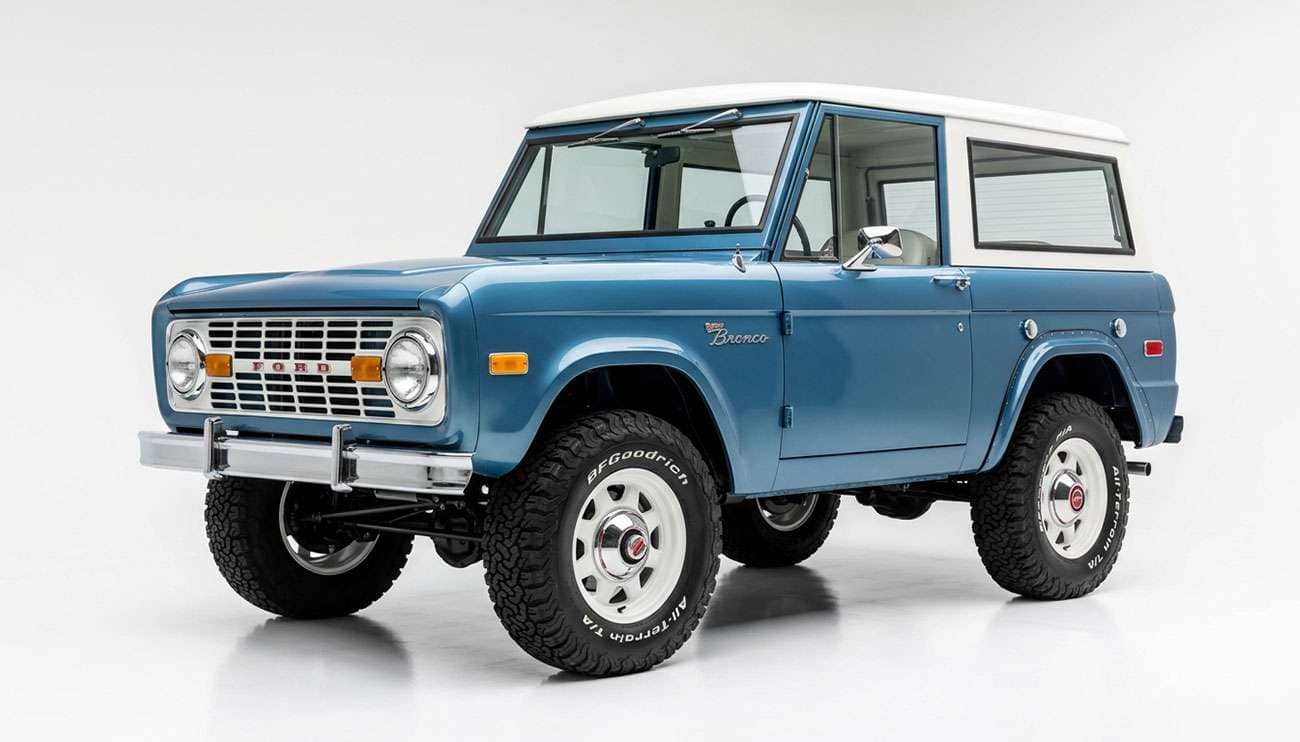
Let me give you the short version first, because that is what most Bronco guys want. Every 1966 to 1977 Ford Bronco uses a 5x5.5 inch bolt pattern (also written 5x139.7), it came from the factory on narrow 15-inch steel wheels, and it is lug-centric, meaning the wheel centers on the lug nuts, not the hub bore. On stock, uncut fenders you can comfortably run a 30 or 31-inch tire; cut the fenders and add a mild lift and 33s are the sweet spot. Get your backspacing in the 3.5 to 4.25-inch range and you will keep the tires off the fenders and radius arms.
Now the long version. I have had my hands on more first-gen Broncos than I can count, and the same questions come up every time somebody drags one into the shop: what bolt pattern is this thing, why does everything rub, and how big can I go without butchering the body. The early Bronco is one of the greatest 4x4s ever built, but it has tight wheel wells and a narrow track, so fitment is less forgiving than a modern truck. Here is how I set one up right, whether you are keeping it period-correct or building a trail rig.
Before we get into the weeds, here is the whole thing on one page. Use it as your starting point, then confirm clearance on your actual truck, because two Broncos with different lifts, springs, and body-mount condition can behave differently.
Setup |
Max Tire |
Typical Sizes |
Backspacing |
|---|---|---|---|
Uncut, stock height |
30 to 31 in |
30x9.50R15, 31x10.50R15 |
3.75 to 4.25 in |
Uncut, mild lift (2 to 3 in) |
31 to 32 in |
31x10.50R15 |
3.75 to 4.25 in |
Cut fenders, 2 to 4 in lift |
33 in |
33x12.50R15 |
3.25 to 3.75 in |
Cut, bigger lift plus body work |
35 in and up |
35x12.50R15 |
3.25 to 3.75 in |
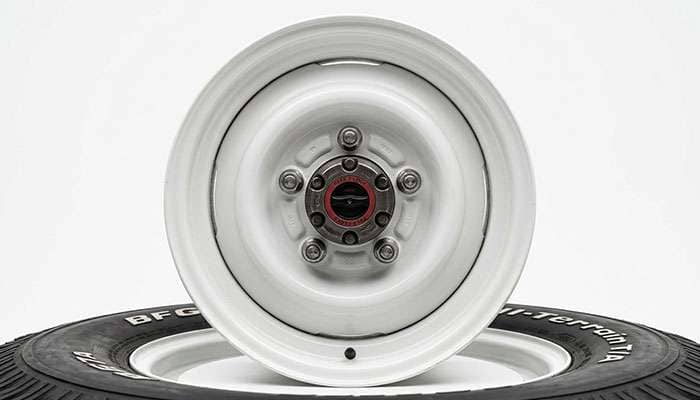
The single most important number when you shop for early Bronco wheels is the bolt pattern, and the good news is that it never changed. From the first 1966 truck to the last 1977, every Bronco ran the 5x5.5 inch pattern, which means five lugs on a circle 5.5 inches across. In metric that is 5x139.7. That same pattern shows up on a lot of vintage half-ton Ford trucks and certain Jeeps, which is why you will hear old-timers talk about robbing wheels off an F-100 or a CJ. If you want the deeper rundown on what shares this pattern, we wrote a whole piece on 5x5.5 wheels.
One thing that trips up newcomers: the early Bronco is lug-centric, not hub-centric. The wheel is centered by the tapered lug nuts seating into the wheel, not by the hub sticking through a center bore. That is why so many aftermarket wheels fit these trucks with a large open center. It is a perfectly safe design when the lugs are torqued properly in a star pattern, but it means centering care matters at install. If that distinction is new to you, our guide on hub-centric versus lug-centric wheels explains it plainly.
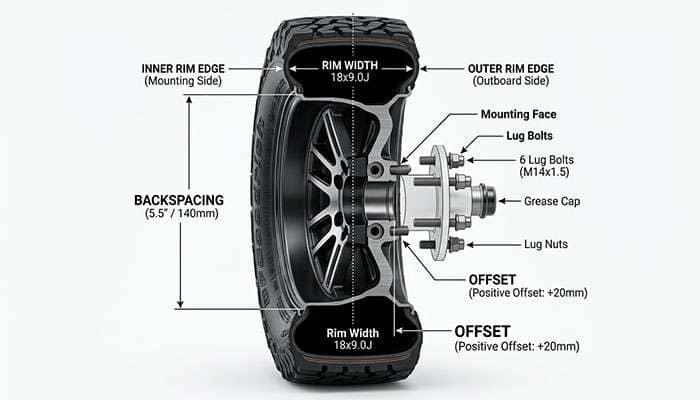
Bolt pattern gets a wheel onto the studs. Backspacing decides whether it rubs. On an early Bronco the wheel wells are tight and the front track is narrow, so this number matters more than it does on almost anything else I fit. Backspacing is simply the distance from the wheel's mounting face to the back lip of the rim. Less backspacing pushes the tire outward for a wider, more aggressive stance; more backspacing tucks it in toward the suspension.
For most early Broncos, keep backspacing in the 3.5 to 4.25-inch window. On an uncut truck I lean toward 3.75 to 4.25 inches to keep the tire from poking out and chewing the fender lip. Once the fenders are cut for flares, you can drop to 3.25 to 3.75 inches for that planted, wide look. Factory offset lands right around zero to slightly negative. Go too far either way and you invite rubbing at full steering lock or when the suspension stuffs on a bump. If offset and backspacing still feel like a foreign language, our explainer on wheel offset and backspacing lays it out.
Early Broncos left the factory on 15-inch steel wheels, usually 5.5 to 6 inches wide, wrapped in tall skinny bias-ply tires. That 15-inch size is still the heart and soul of the classic look, and it gives you the tall sidewall that soaks up trail abuse and airs down nicely. Most builders running a traditional or period-correct rig stick with a 15x7 or 15x8. The 15x8 is probably the single most popular early Bronco wheel width because it supports a 31 or 33 without stretching the tire.
The case for stepping up to 17 inches is tire selection. A lot of the newest all-terrain and mud-terrain compounds show up first in 17-inch sizes, so a 17x8 or 17x9 opens the door to more modern rubber and bigger brakes underneath. My honest take: if you want the classic Bronco character and the widest sidewall for the trail, stay 15. If you are building a modern-driving restomod, especially with a disc-brake or Coyote swap, 17 makes sense. There is no wrong answer, only the one that matches how you use the truck. For more on the tradeoffs, see what makes a wheel an off-road wheel.
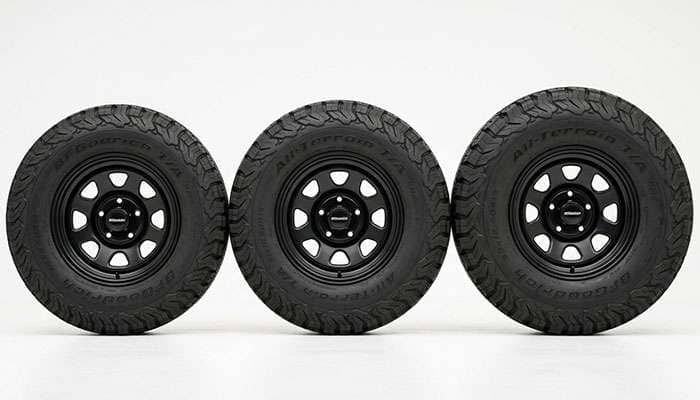
Here is where the early Bronco earns its reputation for tight clearance. The whole conversation comes down to two words: cut or uncut. Uncut means the original fender openings are untouched; cut means someone trimmed them, usually to run fender flares.
On an uncut Bronco at stock height, a 30x9.50R15 is the safe, no-drama choice, and a 31x10.50R15 is a common target that may lightly rub at full stuff or full lock, especially in the rear. Add a mild 2 to 3-inch lift and 31s settle in nicely, with some folks squeezing a narrow 32. Once you cut the fenders and add flares with a 2 to 4-inch lift, 33x12.50R15 becomes the go-to and it is a fantastic all-around trail size. Push to 35s and up and you are into bigger lifts, body lifts, and trimming. Worth noting: the factory originally spec'd tall alpha-numeric bias-ply sizes like the G78-15, so if you are chasing a period-correct restoration rather than a trail build, our guide to decoding those old tire sizes will help. For the modern diameter question, our breakdown of 31s versus 33s versus 35s is the companion read.
Once you have your size, tread type is the next decision, and it comes down to how you actually drive. An all-terrain (A/T) tire is the right call for the Bronco that sees pavement during the week and dirt on the weekend. It rides quieter, wears longer, and still claws through mud and rock better than most people need. A mud-terrain (M/T) tire trades road manners and tread life for maximum bite in deep mud and over sharp rock, and it looks the business, but you will hear it on the highway.
For the classic Bronco that splits its life between the boulevard and the trail, I steer most owners to a good A/T. Save the M/T for the dedicated crawler or the truck that lives in the mud. If you want the full comparison, we broke down H/T versus A/T versus M/T tires so you can match the tread to your driving.
Here is what I would actually bolt on a first-gen Bronco, and all of these come in the correct 5x5.5 pattern.
For the classic Bronco wheel, the US Mags Indy U101 in 15x10 around 303 dollars is the definitive early Bronco look, and it is the wheel we put on our own Bronco builds. If you want the true period white-spoke steel look, the U.S. Wheel 8 Spoke 70 in gloss white around 171 dollars nails it.
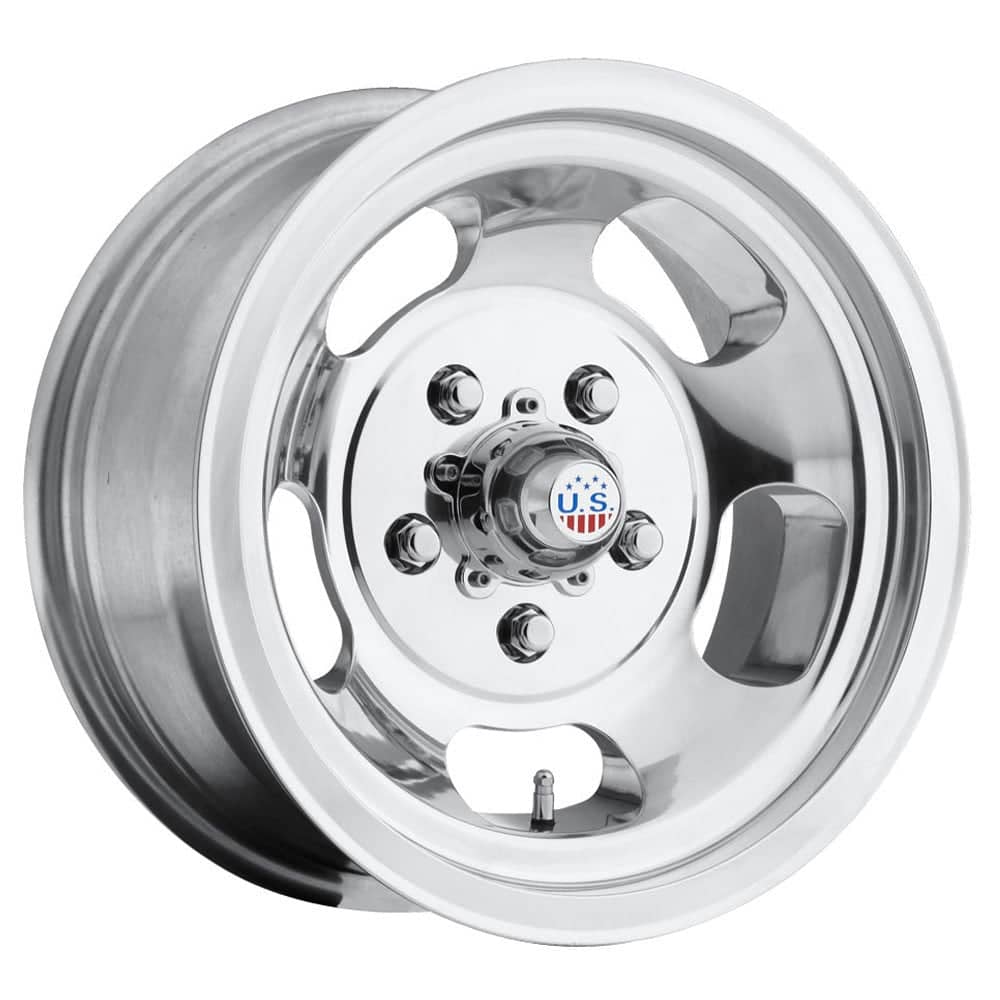
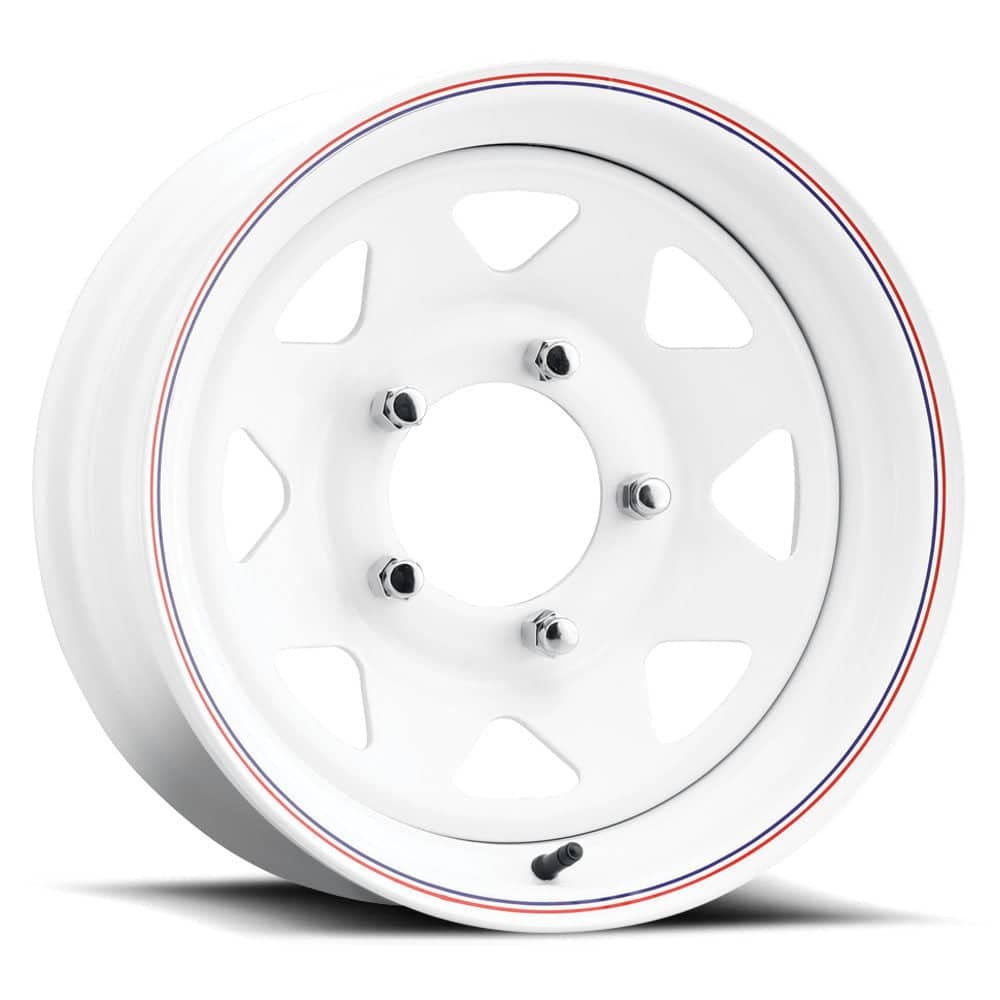
For the modern restomod build, step up to the American Racing AR172 Baja in 17x8 around 288 dollars, a classic off-road design that opens up 17-inch tire options.
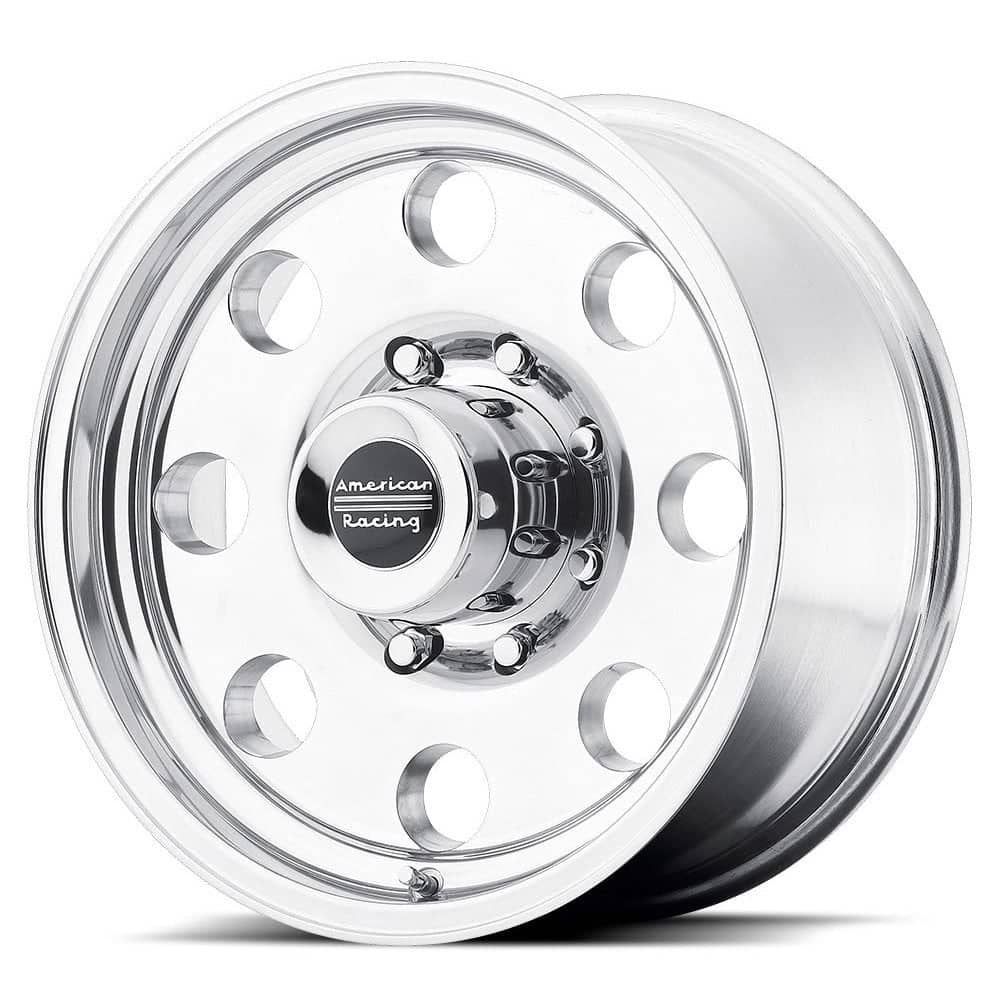
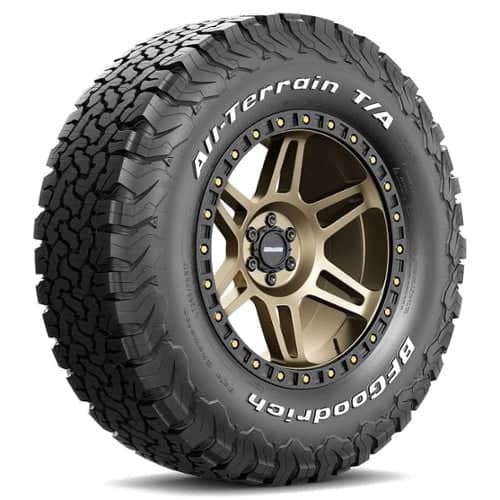
For tires, the BFGoodrich All-Terrain T/A KO2 is my default early Bronco tire, and it comes in exactly the sizes these trucks want: 30x9.50R15 around 223 dollars for a conservative uncut setup, 31x10.50R15 around 254 dollars for the uncut sweet spot, and 33x12.50R15 around 329 dollars for a cut-and-lifted rig.
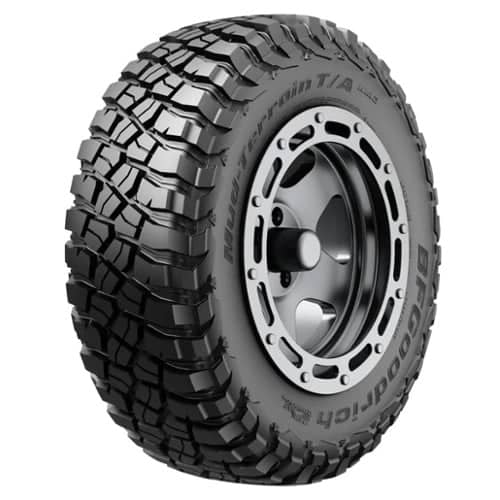
For the serious mud rig, jump to the BFGoodrich Mud-Terrain T/A KM3 in 33x12.50R15 around 328 dollars for maximum bite when the trail turns nasty.
Whatever direction you go, browse the full range of off-road wheels in the correct pattern and let our team confirm fitment for your build over at Performance Plus Tire.
The bolt pattern never changed. Every 1966 to 1977 Bronco is 5x5.5 inch (5x139.7), and it is lug-centric, so the wheel centers on the lugs, not the hub bore.
Backspacing is the make-or-break number. Keep it in the 3.5 to 4.25-inch range: toward 4.25 for uncut trucks, toward 3.25 to 3.75 once fenders are cut.
Uncut runs 30 to 31 inch tires; cut runs 33s. Stock uncut fenders like a 30x9.50R15 or 31x10.50R15. Cut fenders and a mild lift open up 33x12.50R15.
15-inch for classic, 17-inch for modern. Stay 15 for the traditional look and tall sidewall; step to 17 for the widest modern tire selection and bigger brakes.
Match tread to how you drive. An all-terrain suits the street-and-trail Bronco; save the mud-terrain for the dedicated crawler.
Every 1966 to 1977 Ford Bronco uses a 5x5.5 inch bolt pattern, also written as 5x139.7 in metric. That means five lugs on a 5.5-inch circle. The pattern never changed across the entire first generation, and it is shared with several vintage half-ton Ford trucks and certain Jeeps.
On stock, uncut fenders a 30x9.50R15 fits with no drama, and a 31x10.50R15 is a common target that may lightly rub at full steering lock or full suspension compression, especially in the rear. To reliably clear 31s, most owners add a mild 2 to 3-inch lift or run conservative backspacing.
Yes, 33x12.50R15 tires are a popular early Bronco size, but they typically require cut fenders with flares and a 2 to 4-inch suspension lift to clear without rubbing. Backspacing in the 3.25 to 3.75-inch range helps. It is one of the best all-around trail sizes for a built first-gen Bronco.
Aim for backspacing in the 3.5 to 4.25-inch range. On an uncut truck, lean toward 3.75 to 4.25 inches to keep the tire from poking past the fender. Once the fenders are cut for flares, 3.25 to 3.75 inches gives a wider, more aggressive stance while still clearing the suspension.
Choose 15-inch wheels for the classic look, the tallest sidewall, and easy airing down on the trail. Choose 17-inch wheels when you want the widest selection of modern all-terrain and mud-terrain compounds or need clearance for larger disc brakes, which is common on restomod and engine-swapped builds.
Early Broncos are lug-centric, meaning the wheel is centered by the tapered lug nuts seating into the wheel rather than by the hub bore. That is why many aftermarket wheels fit with a large open center. It is a safe design as long as the lug nuts are torqued evenly in a star pattern to the correct specification.



