
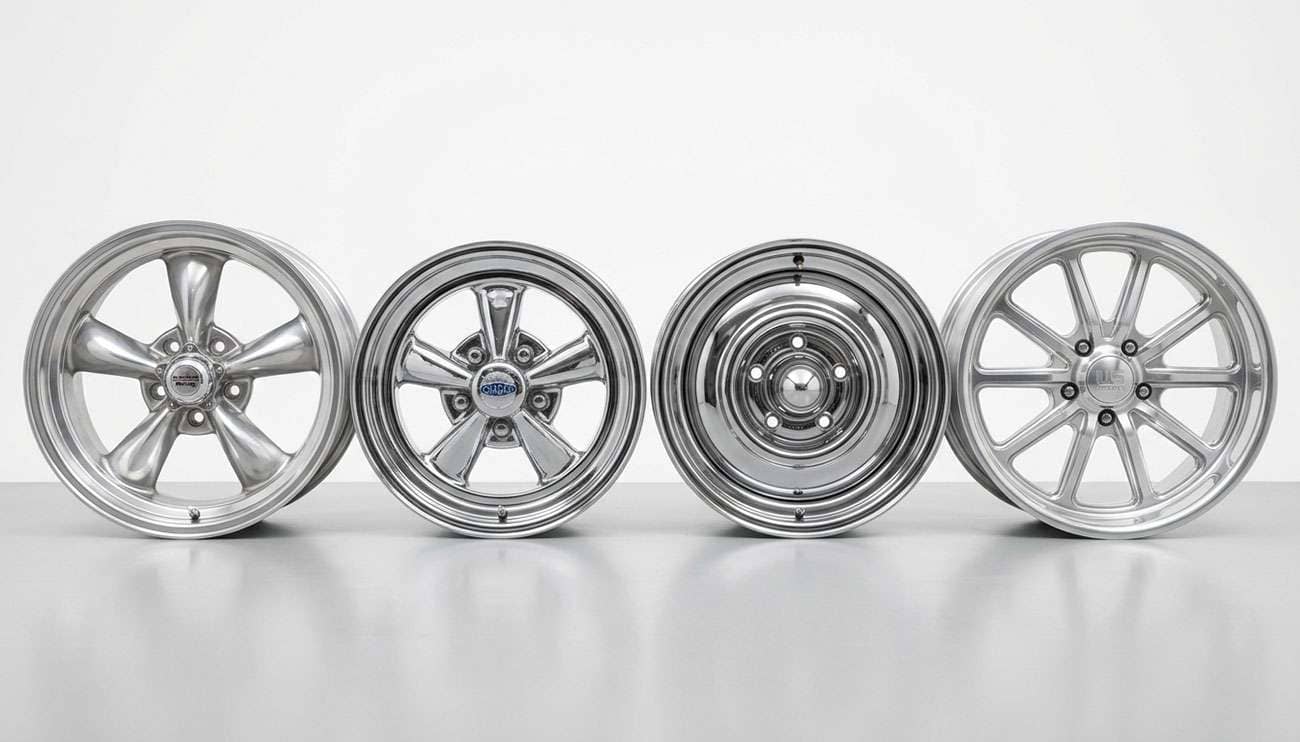
The classic truck scene is bigger right now than at any point I can remember in this business. A 1972 C10 in clean shape costs more than a comparable Chevelle. Squarebody Chevys, '78 F-100s, and '74 K5 Blazers are showing up at every cruise night, every car show, every cars-and-coffee. And the first thing every one of those guys does — before the LS swap, before the airbags, before the bed wood — is buy a set of wheels.
I've been selling wheels to truck builders for a long time, and the list below is what I'd put on my own shop truck. Some are period-correct hot rod heritage. Some are modern takes on classic looks. A couple are pro-touring grade for guys building a restomod with real horsepower and real brakes. Each pick has a job — match the wheel to what you're actually building.
Three things matter more than any others when I'm helping a customer pick wheels for a classic truck:
Material and weight matter too, though they matter more on performance-focused builds than on weekend drivers. If you're building a restomod with serious brakes and modern suspension, you want forged or flow-formed aluminum to reduce unsprung weight. If you're building a clean cruiser, cast aluminum is fine and saves you real money. Our offset, backspacing, and bolt-pattern guide covers the fitment math in detail.
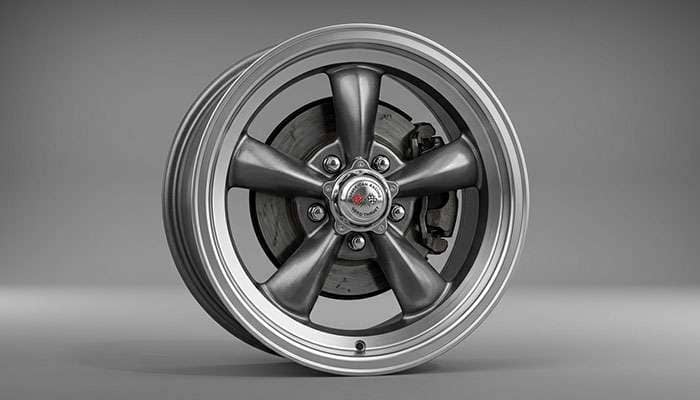
The Torq Thrust is the most iconic five-spoke wheel ever made, and the American Racing VN215 Classic Torq Thrust II is the modern one-piece version that goes on everything. C10, F100, Squarebody, OBS — doesn't matter. Available in mag gray with a machined lip that nails the original muscle-era look, plus chrome and gloss black finishes for guys who want a cleaner build.
Sizes: 15-, 17-, 18-, and 20-inch diameters in common truck bolt patterns. Best for: Anyone who can't decide what they want — this wheel works on every classic truck I've put it on and never looks wrong. For more on the Torq Thrust family specifically, our Torq Thrust review goes deeper.
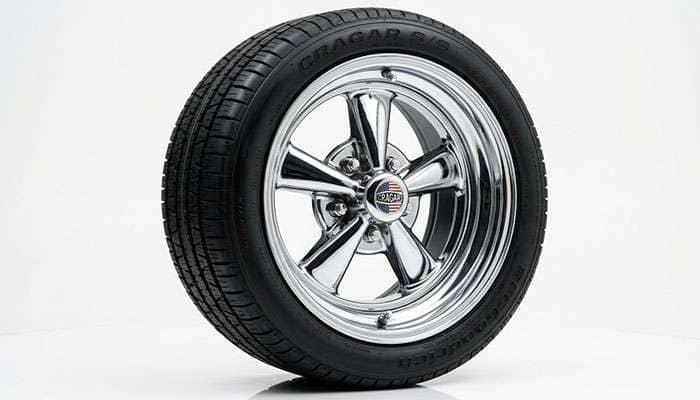
The Cragar S/S is the wheel that built American hot rodding. The original launched in 1964 and the Cragar 614C S/S Modern Muscle Chrome is the updated take, built to modern load standards but holding onto the look that defined an era. Chrome only on this one — it's a Cragar S/S, anything else would be wrong.
Sizes: 15-, 17-, and 20-inch in classic truck bolt patterns. Best for: Period-correct '60s and '70s truck builds. Anyone whose dad ran Cragars and wants the same look on their own truck. This is also the right pick for kustom and lowrider-leaning C10 builds. For the longer story on the brand, our Cragar S/S history piece traces it from 1964 forward.
The US Mags Indy U101 takes its design straight from the open-wheel racing world of the '60s — five spokes with the period-correct slot detail. Polished aluminum, made by US Mags with the same factory tooling pedigree they've used for decades.
Sizes: 15-, 17-, 18-, 20-, and 22-inch in common truck bolt patterns. Best for: C10 and F100 builds going for an authentic '60s race-truck vibe. Pairs well with skinnier-than-modern tires for the correct period proportion.
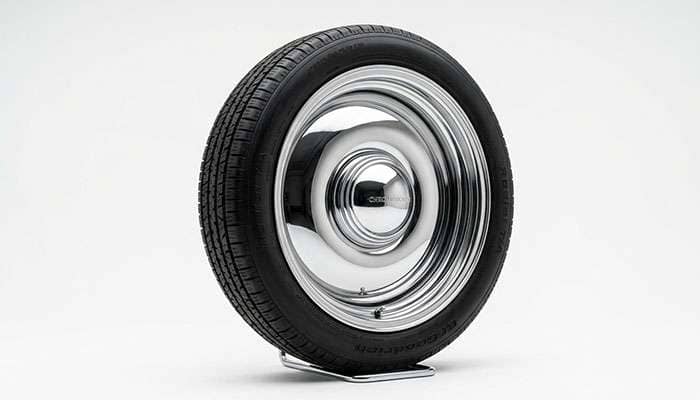
The bullet — sometimes called a smoothie — is the cleanest look in classic truck wheels. No spokes, no flash, just a polished bowl with a center cap. The US Mags Bullet U131 is the modern version, cast aluminum with a chrome finish that hits the right note on a slammed C10 or a kustom-painted F100.
Sizes: 15-, 17-, 18-, and 20-inch. Best for: Slammed, bagged, and clean-build trucks where the wheel should disappear and let the bodywork do the talking. Painted bumper-to-bumper builds. Show trucks where less is more.
The US Mags Rambler U110 is a five-window classic with a star-pattern center that reads as both vintage and aggressive. Available in chrome, gunmetal, and matte black, the Rambler works on a wider range of build directions than most period wheels.
Sizes: 17-, 18-, 20-, and 22-inch in 5- and 6-lug patterns. Best for: Builders who want a period look with a little more visual aggression than a Torq Thrust. Squarebody Chevys especially — the proportions are right.
Chip Foose has been designing wheels for hot rods since before some of you reading this had a driver's license. The Foose Legend F104 is a five-spoke that takes the Torq Thrust DNA and modernizes it — thinner spokes, deeper concave, milled accents. The black-milled finish is what's selling right now.
Sizes: 17-, 18-, 20-, and 22-inch in common truck bolt patterns. Best for: Restomod-leaning builds where you want classic styling cues but with modern proportions. Lowered C10s with bigger brakes. OBS builds going for a clean modern look without losing the heritage.
When a customer comes in with a Pro-Touring build — modern coil-over suspension, Wilwood brakes, an LS or Coyote swap, the whole package — I send him to Boze. The Boze Alloys B1 is a forged five-spoke that strikes the right balance: classic enough to look right on a '67 C10, modern enough to handle the loads a restomod actually puts on a wheel.
Sizes: 18-, 19-, 20-, and 22-inch. Forged construction means lighter weight than cast competitors. Best for: Pro-touring and full restomod builds where ride dynamics matter as much as looks. The price is up there, but you're getting forged-aluminum unsprung weight savings that you'll feel through the steering wheel.
If you're going pro-street — narrowed rear end, big-and-littles, blower scoop hanging out the hood — the Centerline Auto Drag is your wheel. Centerline made its name in drag racing decades ago, and the Auto Drag delivers that look in street-legal sizing. Brushed silver finish that catches the light just right under hood scoop shadows.
Sizes: 15- and 17-inch primarily — pro-street builds rarely go bigger. Best for: Big-block C10 builds. Pro-Street F100s. Anyone running drag radials or DOT race tires who wants the wheel to match the build philosophy.
Not every customer can drop $1,200 a wheel on Boze forgings, and that's why the Ridler 606 earned its spot. Cast aluminum, chrome finish, multi-spoke classic styling, and a price that lets a first-time builder put a clean set under his truck without taking a second mortgage.
Sizes: 17-, 18-, 20-, and 22-inch in common bolt patterns. Best for: First builds, weekend cruisers, and anyone working a real budget. Ridler isn't chasing the high-end market — they're making honest classic-style wheels at honest prices, and that has real value in this segment.
This is the part most guys get wrong on their first build. Classic trucks ran a handful of bolt patterns and they don't all match what you'd expect. Reference table below — verify against your actual truck before ordering wheels. If you also need to measure your existing wheels for backspacing reference, our backspacing measurement guide walks you through it.
Truck |
Years |
Bolt Pattern (Inches) |
Bolt Pattern (Metric) |
|---|---|---|---|
Chevy / GMC 1/2-Ton 2WD |
1963–1972 |
5 x 4.75 |
5 x 120.65 mm |
Chevy / GMC 1/2-Ton 4WD (K10) |
1967–1972 |
6 x 5.5 |
6 x 139.7 mm |
Chevy / GMC Squarebody 1/2-Ton |
1973–1987 |
6 x 5.5 |
6 x 139.7 mm |
Chevy / GMC OBS 1/2-Ton (C1500 / K1500) |
1988–1998 |
6 x 5.5 |
6 x 139.7 mm |
Ford F-100 / F-150 |
1965–1996 |
5 x 5.5 |
5 x 139.7 mm |
Ford F-150 (later) |
1997–2003 |
5 x 5.5 |
5 x 139.7 mm |
Dodge D100 / W100 |
1972–1993 |
5 x 5.5 |
5 x 139.7 mm |
Two notes. First, a small number of early-'70s C10s came from the factory with the 5x5 (5x127) bolt pattern rather than the more common 5x4.75 — these are rare but they exist, so measure your hub before you order. Second, anything 3/4-ton or larger (C20, K20, F250) ran 8-lug patterns that aren't represented above and that aren't typically the focus of restomod or kustom-truck builds.
Most classic trucks rolled off the line on 15-inch wheels. You've got real flexibility in where you take it from there:
Stock 15-inch: Period-correct, easy to find tires for, and the right call if you're going for an authentic '60s or '70s look. Skinnier tires fit naturally — 235/75R15 or thereabouts. This is what I'd recommend for a stock-bodywork C10 or F100 that's going to a show with the original paint.
Plus-one (17-inch): The sweet spot for most modern builds. Better brake clearance, modern tire options galore, and proportions that still read as classic. A 17-inch wheel with a 60- or 65-series tire holds the overall diameter close to stock so your speedometer and gearing stay accurate. Most of the picks above hit their sweet spot in 17 inches.
Plus-two (18- to 20-inch): The modern aggressive look. Required for big-brake conversions and restomod builds where you want the wheel and tire to fill the wheel well. The trade-off is ride quality — shorter sidewalls transmit more road imperfection into the cabin, and on a classic truck without modern suspension, that can get unpleasant fast.
22-inch and larger: Visual statement only. Ride quality suffers significantly, and on a stock chassis you'll fight clearance issues at every turn. Builders going this big are typically also doing airbags, a Z'd frame, or other significant modifications. Not for a stock-suspension cruiser.
If you also need tires to go with the wheels, our modern tires for a classic car buyer's guide covers the equivalent decision on the tire side. We package the whole setup mounted and balanced through the Hot Rod Hank's wheels program, and the broader truck wheel catalog covers everything beyond this list. For the brands I went deep on here, the American Racing, Cragar, and US Mags catalogs have every size variant.
The classic truck world has more good wheel options today than it's ever had. A Torq Thrust still looks right after sixty years, a Cragar S/S still anchors a hot rod build, and modern designs from Foose and Boze give you the option to take a classic chassis somewhere the original engineers couldn't have imagined. Match the wheel to the build, get the bolt pattern right the first time, and you'll have a truck that looks correct from twenty feet away and from twenty inches away. If you're also looking at a classic muscle car build, my 7 best classic muscle car rims roundup covers that side of the garage. Call the shop if you're not sure — that's why we're here.
It depends on the build direction. A stock-suspension C10 going for period-correct looks should run 15- or 17-inch wheels with appropriately sized tires. A lowered, big-brake restomod can handle 18- to 20-inch wheels with a 50- or 55-series tire. Anything 22-inch or larger requires significant suspension modification to clear and to ride acceptably.
A 1972 Chevy C10 1/2-ton 2WD typically runs a 5 x 4.75 (5 x 120.65 mm) bolt pattern. A 1972 K10 (4WD) runs a 6 x 5.5 (6 x 139.7 mm) bolt pattern. A small number of 1971 and 1972 trucks came from the factory with a 5 x 5 (5 x 127 mm) pattern instead — these are rare but they exist, so verify by measuring your hub before ordering wheels.
Yes — squarebody Chevys (1973–1987 1/2-ton trucks) run a 6 x 5.5 bolt pattern that's well-supported by virtually every classic truck wheel on the market. The Torq Thrust, Foose Legend, US Mags Rambler, and Boze Alloys B1 picks on this list all come in squarebody-compatible sizes and bolt patterns. Confirm offset and backspacing match your suspension setup before ordering.
The modern Cragar 614C S/S Modern Muscle version retains the original five-spoke aesthetic but is built to current load and DOT standards. Construction is modernized for safety and consistency, but the visual signature — chrome finish, deep dish, distinctive spoke profile — matches the original 1964 design. Original-era Cragars are still floating around the swap-meet circuit, but for a wheel you'll actually drive on, the modern version is the safer choice.
Cast wheels are made by pouring molten aluminum into a mold — efficient, affordable, and perfectly adequate for most weekend-driven classic trucks. Forged wheels are made by pressing solid aluminum billets under massive pressure, which produces a stronger, lighter wheel for the same diameter and width. Forged wheels typically cost three to five times more than cast equivalents and are the right call for restomod and pro-touring builds where unsprung weight matters. The Boze Alloys picks on this list are forged; most other picks are cast.
If the wheel's center bore is larger than your truck's hub diameter — which is common with aftermarket wheels designed to fit multiple vehicles — yes, you need hub-centric rings. They center the wheel on the hub itself rather than relying on the lug nuts alone, which prevents vibration at speed. Most wheel sets ship with the appropriate rings included; verify when ordering. Lug-centric mounting (without rings) is acceptable on some aftermarket wheels, but hub-centric is the better option whenever possible.



