
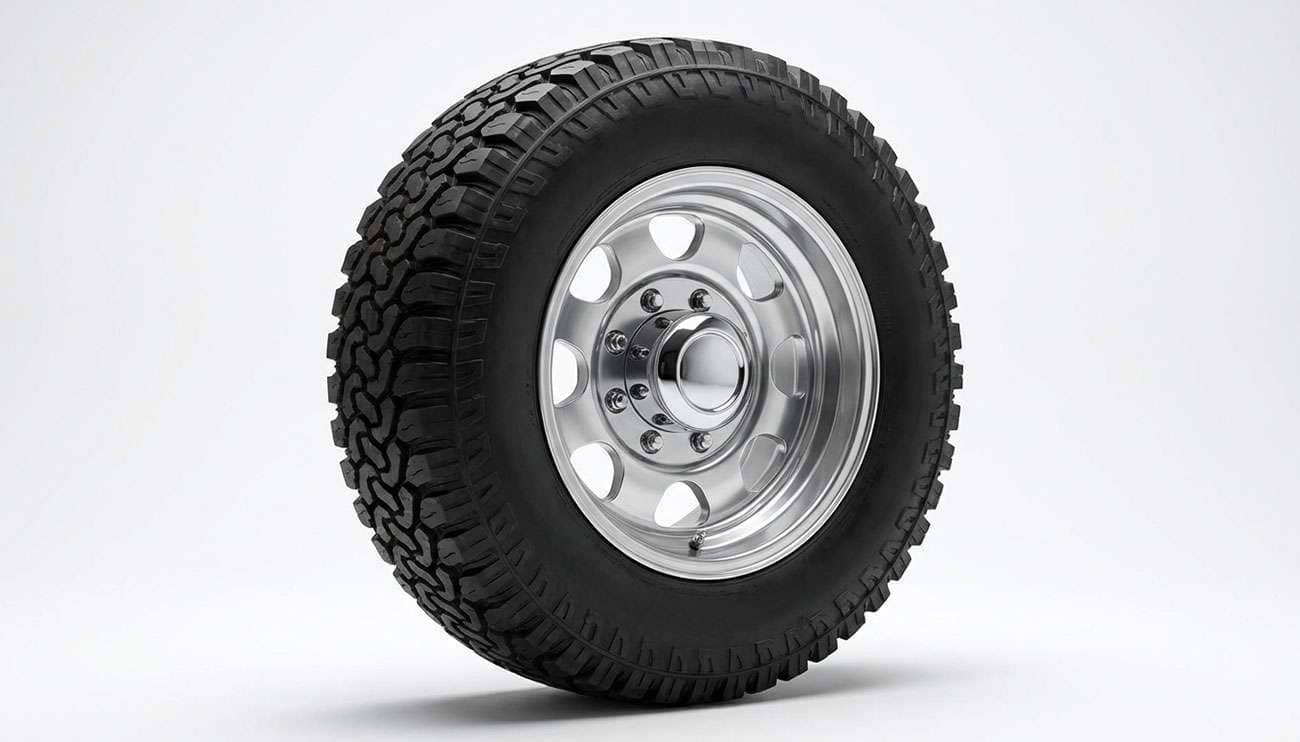
The 8x6.5 bolt pattern stands as one of the most widely adopted wheel configurations for trucks and larger vehicles. When you're upgrading your wheels or replacing damaged ones, getting the bolt pattern right makes the difference between a perfect fit and a costly mistake. This specific pattern appears across seven major vehicle manufacturers: Cadillac, Chevrolet, Dodge, Dongfeng, Ford, GMC, and Holden vehicles.
Chevrolet takes the lead with 31 different models using this bolt pattern. Popular models include the Avalanche 2500 (2002-2006) and Silverado 2500 (1999-2010). Dodge offers 4 models with this configuration, featuring the Ram 2500 (1994-2010) and Ram Van B2500 (1994-2003). Ford brings 5 compatible models to the table, from the E-150 Econoline (2007-2014) to the F-250 (1973-1996). GMC rounds out the selection with 10 models, including the Sierra 2500HD (1999-2010) and the newer Hummer EV (2022-2026).
This guide breaks down everything you need to know about the 8x6.5 bolt pattern. We'll explain what these numbers mean, show you which vehicles use this configuration, and answer the most common questions about mixing and matching wheels between different brands.
Understanding bolt patterns becomes essential when you're dealing with heavy-duty trucks and larger vehicles. The 8x6.5 bolt pattern stands out as one of the most common configurations for vehicles built for serious work - towing, hauling, and off-road applications where strength matters most.
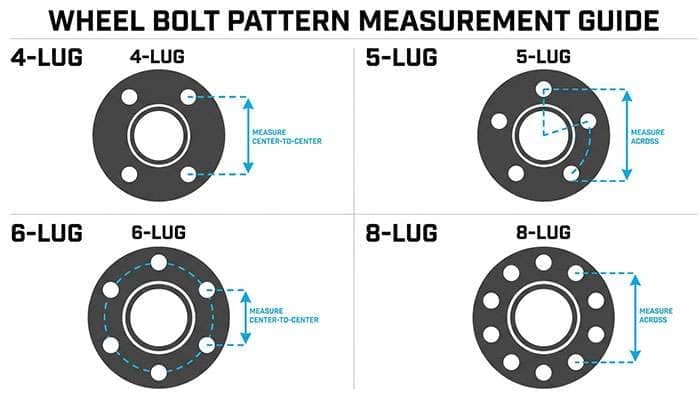
The 8x6.5 designation tells you exactly how your wheels connect to your vehicle. The first number (8) indicates the total number of lug holes or studs on the wheel hub. Think of these lugs as the critical connection points that hold your wheel securely to the vehicle. The second number (6.5) represents the diameter in inches of an imaginary circle that connects all these lug holes.
This 8-lug setup isn't just about numbers - it's about distributing the substantial weight and stress that trucks and commercial vehicles encounter daily. The configuration ensures both durability and safety under demanding conditions. You'll find this pattern across major manufacturers like Chevrolet, Dodge, Ford, and GMC, especially on their heavy-duty truck generations.
When you're shopping for wheels, this notation appears everywhere. A product listing showing "8x6.5" means your vehicle has 8 lugs arranged in a perfect circle with a 6.5-inch diameter measurement. Simple as that.
PCD stands for Pitch Circle Diameter - the fundamental measurement that defines any wheel's bolt pattern. Picture an imaginary circle passing through the center of all wheel bolts or studs. This measurement ensures your wheels align precisely with your vehicle's hub every single time.
The automotive industry developed PCD standardization to make wheels universally interchangeable when specifications match. Without this system, finding compatible wheels would be nearly impossible across different manufacturers.
For the 8x6.5 pattern, that 6.5-inch measurement is your PCD - the diameter of the circle where all lug holes are centered. This number determines wheel compatibility across different vehicle makes and models, making it one of the most important specifications to get right.
Yes, absolutely. The 8x6.5 and 8x165.1 bolt patterns are identical - just expressed in different units. One uses imperial measurements (inches), while the other uses metric (millimeters). The numbers convert perfectly: 6.5 inches equals 165.1mm.
Many vehicle owners wonder if these patterns truly interchange. The answer is definitive: wheels with an 8x165.1 bolt pattern fit perfectly on vehicles specified as 8x6.5. As one industry expert put it clearly, "8x6.5 is exactly the same thing as 8x165. They'll fit."
This matters when you're shopping for aftermarket wheels. Manufacturers list specifications using either imperial or metric units, so you might see thousands of wheel options labeled either way. Both work on your vehicle - the performance and safety remain identical.
One important distinction: this pattern differs completely from the 8x170mm pattern found on newer Ford Super Duty trucks from 1999 forward. Those wheels won't interchange with 8x6.5 vehicles without special adapters.
Finding out if your vehicle uses an 8x6.5 bolt pattern doesn't have to be complicated. You have several options, from quick documentation checks to hands-on measuring. Here's how to get the answer you need.
Your owner's manual contains the bolt pattern information you're looking for. Look in the "Specifications" or "Wheels and Tires" section for detailed wheel specifications. Most manufacturers include this data right alongside tire pressure recommendations and wheel size requirements.
Many vehicles also display this information on the driver's side door jamb sticker. This sticker typically lists tire pressure recommendations, wheel sizes, and bolt pattern specifications in one convenient location.
Heavy-duty trucks that commonly use the 8x6.5 pattern include older Ford F-250/F-350 trucks, Ram 2500/3500 models, and GM 2500/3500 HD trucks from before their pattern changes. Checking these official sources first saves time and eliminates guesswork.
Wheel fitment databases make identification straightforward. Enter your vehicle's make, model, and year to get precise specifications. These databases are particularly helpful when you can't locate your owner's manual or door jamb sticker.
Keep in mind that the 8x6.5 pattern appears in metric notation as 8x165.1mm in some databases. Both refer to the same specification, so don't let the different units confuse you.
When official documentation isn't available, measuring your bolt pattern directly gives you the definitive answer. Here's the process for 8-lug wheels:
Count the lugs on your wheel to confirm you have 8.
Measure straight across from the center of one lug hole to the center of the opposite lug hole.
A measurement of approximately 6.5 inches (or 165.1mm) confirms an 8x6.5 bolt pattern.
You may need to remove a wheel for accurate measurement. Use a tape measure or ruler with 1/32" increments for the precision this measurement requires.
Professional tire shops can verify your bolt pattern using specialized bolt pattern gages. These tools deliver precise readings and are especially useful for 8-lug patterns like 8x6.5.
The bolt pattern affects your safety directly. Incorrect measurements can result in wheels that won't mount properly or create dangerous driving conditions. When you're unsure about your measurements, professional verification is always the smart choice.
The 8x6.5 bolt pattern has a long history across multiple manufacturers, spanning decades of heavy-duty vehicle production. This standardized configuration appears primarily on trucks and larger SUVs built for demanding applications.
General Motors ran the 8x6.5 bolt pattern from 1965 through 2010 across their 3/4-ton and 1-ton pickup trucks. The Silverado 2500/3500 HD (1999-2010) and Sierra 2500/3500 HD (1999-2010) represent the most common models with this configuration. Single-wheel and dually versions both used this pattern during this timeframe.
The change came in 2011 when GM switched to the 8x180mm bolt pattern, ending decades of 8x6.5 compatibility. The Suburban and Yukon XL 2500 models also carried this bolt pattern throughout their production runs.
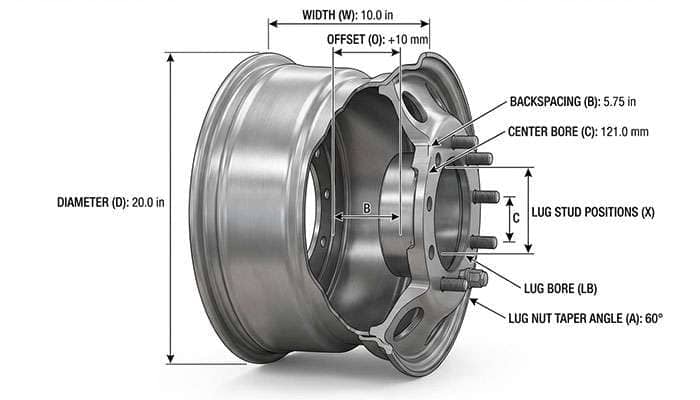
Ram has stuck with the 8x6.5 (8x165.1) bolt pattern longer than most manufacturers. You'll find this pattern on Ram 2500/3500 trucks from 1961 through current models. The Ram 2500 used this pattern with a 25mm offset and 120.9mm center bore from 1994 to 2002. Later models (2003-2017) kept the same bolt pattern but changed to a 45mm offset.
Early Ram 250/350 8-bolt trucks introduced this pattern in the 1980s, and modern Ram 2500/3500 vehicles continue using it today.
Ford used the 8x6.5 bolt pattern on F-250 models from 1961 to 1997 and F-350 single-wheel trucks from 1979 to 1998. F-350 dually models carried this pattern from 1979 through 1997. Ford made the switch to 8x170mm after 1998, creating a split in wheel compatibility with older models.
The Hummer H2 also uses this bolt pattern. H2 wheels will fit Ford F350 trucks, though the H2's 5.5" backspacing differs from Ford's typical 4-4.5" requirement for 35" tires.
Several manufacturers beyond the American truck makers have used the 8x6.5 bolt pattern. Nissan applies this configuration to their commercial van lineup, including the NV1500, NV2500, and NV3500 series. The pattern's proven durability makes it suitable for commercial and utility trailers as well. This widespread adoption across multiple manufacturers makes it one of the most common heavy-duty wheel configurations available.
Looking to replace or upgrade wheels on your 8x6.5 (8x165.1) vehicle? Find the best selection of 8x165.1 wheels at Performance Plus Tire, where you'll discover options compatible with all these manufacturers.
Understanding wheel compatibility between different manufacturers can save you significant time and money when upgrading your vehicle. Here are the most common questions about mixing and matching 8x6.5 wheels across brands.
Yes, 8x6.5 Dodge wheels will typically fit Chevy trucks that share the same bolt pattern. Both manufacturers used identical 8x6.5 (or 8x165.1mm) patterns on their heavy-duty trucks for many years. The bolt pattern itself isn't the issue, but other wheel specifications like center bore diameter, offset, and clearance can create problems. You might need minor modifications even with matching patterns.
No, 8x6.5 and 8x180 patterns are not interchangeable without adapters. These two patterns have different bolt circle diameters (6.5 inches vs. 7.09 inches), creating a mismatch that prevents proper mounting. However, specialized wheel adapters are available to convert between these patterns. These adapters create an intermediate mounting surface, allowing 8x6.5 wheels to fit on 8x180 hubs or vice versa.
Installation of such adapters should only be performed by trained professionals. Proper torquing of lug nuts is critical, and air tools should never be used during installation. Some vehicles may require modifications to make the adapters work properly, including grinding or trimming protruding studs.
Chevrolet stopped using the 8x6.5 bolt pattern in 2010. Starting with the 2011 model year, Chevy made a significant change to their heavy-duty truck lineup, affecting the Silverado 2500HD and 3500HD models.
General Motors made the switch from 8x6.5 (8x165.1mm) to the 8x180 bolt pattern in 2011. This change affected their entire heavy-duty truck lineup, including both Chevrolet and GMC heavy-duty models. The newer 8x180mm pattern has been used exclusively on GM heavy-duty trucks from 2011 onward.
Ready to find the right wheels for your 8x6.5 vehicle? Find the best selection of 8x165.1 wheels at Performance Plus Tire, where we carry options compatible with all these manufacturers.
Getting your wheel fitment right is critical for safety and performance with an 8x6.5 bolt pattern. The good news? We have the right tools to make this process simple and accurate.
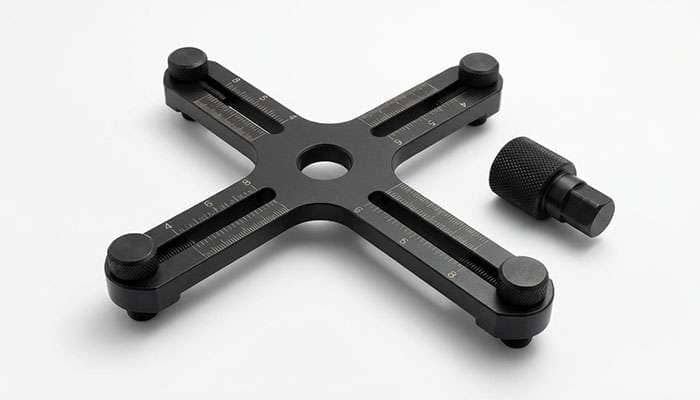
Bolt pattern gages deliver the most accurate measurements when you need to verify your lug pattern directly on your vehicle. These professional-grade tools adjust to measure 4, 5, 6, and 8 bolt patterns on both wheels and hubs. Quality gages give you measurements in both inches and millimeters, so you never have to worry about conversion mistakes. For the 8x6.5 pattern specifically, these gages align perfectly with your lug holes and provide quick, precise readings.
Digital tools have changed the game for fitment verification. Websites like Performance Plus Tire let you visualize different wheel and tire combinations by entering your specifications. These calculators figure out offset, compare tire stretch, and calculate rolling radius to ensure everything fits properly. Performance Plus Tire offers a solid wheel offset calculator that shows clearance between wheels and strut housing, plus how far your wheels will stick out. This helps you avoid rubbing issues before they happen.
For those building automotive websites, plenty of APIs and widgets are available to integrate wheel fitment data. These tools let developers embed calculators directly into their platforms, so users can check compatibility without leaving the site. Find the best selection of 8x165.1 wheels at Performance Plus Tire for guaranteed fitment across multiple vehicle makes.
The 8x6.5 lug pattern knowledge puts you in control when selecting wheels for your heavy-duty truck or larger vehicle. This guide covered the essential details you need to make smart wheel choices across multiple manufacturers and model years.
Cross-brand compatibility gives you more options when shopping for wheels. Dodge wheels often work on compatible Chevrolet models, though you'll still need to check center bore and offset specifications. Remember that 8x6.5 and 8x165.1 represent the same measurement - just different units.
Timing matters when it comes to bolt patterns. Chevrolet and GMC switched to 8x180mm in 2011, while Ford moved to 8x170mm after 1998. Dodge and Ram stuck with 8x6.5 longer, keeping this pattern through current models.
Getting your bolt pattern right starts with proper identification. Your owner's manual, door jamb sticker, or online databases provide the quickest verification. When in doubt, bolt pattern gages deliver the most accurate measurements.
At Performance Plus Tire, we carry wheels that fit the 8x6.5 bolt pattern across all compatible manufacturers. Our expert team can help you find the perfect match for your vehicle, ensuring proper fitment and performance. Whether you're replacing damaged wheels or upgrading your truck's appearance, we have the selection and expertise to get you rolling with confidence.
Understanding the 8x6.5 bolt pattern is crucial for proper wheel fitment on heavy-duty trucks and larger vehicles across multiple manufacturers.
• The 8x6.5 bolt pattern (8 lugs, 6.5-inch diameter) is identical to 8x165.1mm and appears on vehicles from Chevrolet, GMC, Dodge, Ford, and other manufacturers.
• Chevrolet and GMC switched from 8x6.5 to 8x180mm in 2011, while Ford changed to 8x170mm after 1998, but Dodge/Ram still uses 8x6.5 today.
• Cross-brand compatibility exists between manufacturers using the same 8x6.5 pattern, but other factors like center bore and offset must still be considered.
• Verify your vehicle's bolt pattern through the owner's manual, door jamb sticker, online databases, or manual measurement before purchasing new wheels.
• Professional bolt pattern gages and online fitment calculators provide the most accurate verification methods to ensure safe wheel installation.
When shopping for replacement or upgrade wheels, always confirm your exact bolt pattern specifications to avoid compatibility issues and ensure optimal safety and performance.
An 8x6.5 bolt pattern indicates that the wheel has 8 lug holes arranged in a circle with a diameter of 6.5 inches. This specification is crucial for ensuring proper wheel fitment on heavy-duty trucks and larger vehicles.
The 8x6.5 bolt pattern is used by several major manufacturers, including Chevrolet, GMC, Dodge, Ford, and Ram. It's particularly common on older model heavy-duty trucks and some larger SUVs.
Yes, you can. The 8x6.5 and 8x165.1mm bolt patterns are identical, just expressed in different units (inches and millimeters respectively). Wheels with either specification will fit the same vehicles.
You can verify your vehicle's bolt pattern by checking the owner's manual, looking at the door jamb sticker, using online fitment databases, or measuring the bolt circle diameter manually. For the most accurate results, consider using a specialized bolt pattern gage.
While 8x6.5 wheels from different brands may share the same bolt pattern, other factors like center bore diameter, offset, and clearance issues need to be considered. In many cases, wheels are interchangeable, but it's important to verify all specifications for proper fitment and safety.



