
You found the perfect set of aftermarket wheels — right size, right finish, right spoke design. You bolt them on, hit the highway, and somewhere around 55 mph a shimmy starts crawling up through your steering wheel. You pull over, check every lug nut, and everything's tight. So what gives? Nine times out of ten, the culprit is something most buyers never bother to check: the wheel center bore. It's a single hole in the middle of your wheel, but it plays an outsized role in how your wheels fit, how your vehicle handles, and whether that vibration ever disappears. If you're shopping for new wheels and you haven't looked at center bore compatibility yet, read this guide before you spend a dime.
At Performance Plus Tire, we field questions about center bore every single week. It's one of those specs that never gets the attention it deserves compared to bolt pattern or wheel offset — but it's just as critical. Get it wrong and you'll be chasing vibrations, stressing your wheel studs, or worse. Get it right and your new wheels seat perfectly, ride smoothly, and stay that way for years. Let's break it all down from the ground up.
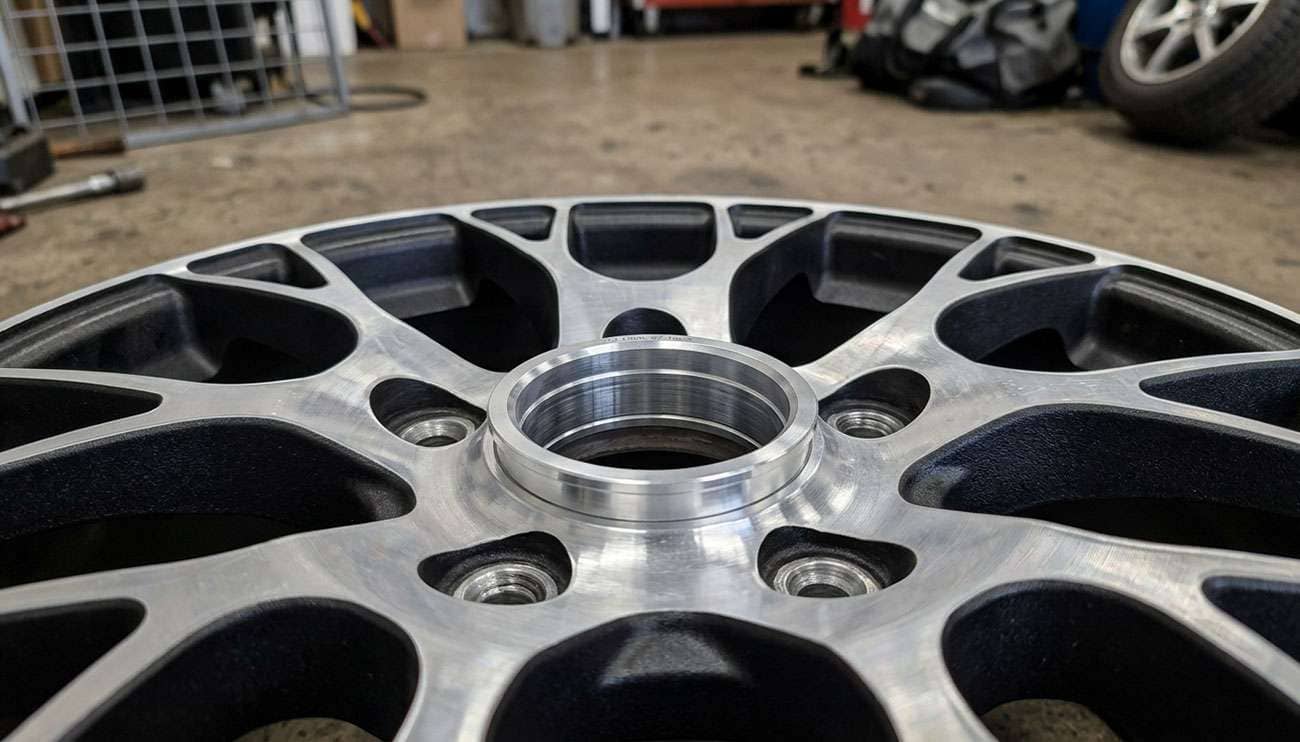
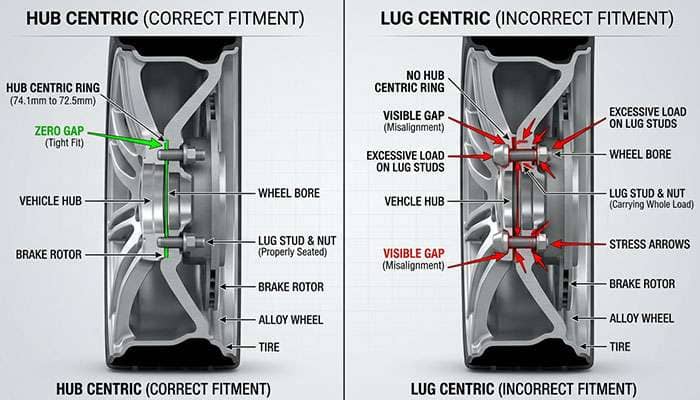
Yes — center bore absolutely matters, and understanding why starts with knowing exactly what it is. The center bore is the large circular hole machined into the back face of a wheel, right at the center. This hole fits over the hub of your vehicle — the raised cylindrical protrusion that extends from your axle or brake rotor. When the center bore of your wheel matches the outer diameter of your vehicle's hub exactly, the hub itself centers the wheel completely. That's a hub-centric fit, and it's the gold standard for smooth, vibration-free performance. When there's a mismatch — specifically when the wheel's center bore is larger than the vehicle hub — you're dealing with a lug-centric setup, where the lug nuts or bolts do all the centering work. That difference has real consequences you'll feel behind the wheel.
Center bore is measured in millimeters and refers specifically to the inside diameter of that center hole in the wheel. Your vehicle's hub has an outside diameter — also measured in millimeters — and these two numbers need to either match exactly or be reconciled with a hub centric ring. Here are the core specs you'll encounter when shopping for wheels:
Center Bore (CB): The diameter of the hole in the wheel. A common example is 72.6mm, which fits many GM vehicles. Another frequent measurement is 57.1mm, found on many Hondas and Toyotas. Wheel manufacturers often machine their wheels with a larger-than-stock center bore — sometimes called a "universal" or "oversized" bore — so a single wheel SKU can serve multiple vehicle platforms. A wheel might be bored to 73mm to fit everything from a Dodge to a Chevy with the help of hub centric rings.
Hub Bore (HB): The outside diameter of your vehicle's hub — the number your wheel's center bore needs to match. Hub bore measurements vary significantly by vehicle. Compact cars often run 54mm to 60mm, while full-size trucks can measure 78mm or larger. You'll find your vehicle's hub bore in the owner's manual, your vehicle's wheel fitment data, or by measuring directly.
Hub Centric Ring: A small ring — made from aluminum or hard plastic — that fills the gap between an oversized wheel center bore and your vehicle's hub. If your wheel has a 73mm center bore and your hub measures 67.1mm, you install a 73mm-to-67.1mm hub centric ring to achieve a true hub-centric fit. These rings are inexpensive — typically $5–$20 for a set of four — and they make a dramatic difference in ride quality.
Lug Centric: When a wheel is centered by the lug nuts or bolts rather than the hub. This happens when the wheel bore is larger than the hub and no hub centric rings are used. The lug hardware carries all the centering load. While this can work in low-speed applications, it puts additional shear stress on your wheel studs and makes a perfectly centered, vibration-free installation far harder to achieve.
The number one mistake buyers make is assuming that a matching bolt pattern means everything else is fine. Bolt pattern compatibility is necessary — but it's not sufficient. You also need the center bore to be right. Here are the errors that show up most often:
Buying "universal fit" wheels without checking hub compatibility: Universal fit wheels are designed with oversized center bores to span multiple vehicle applications. That's perfectly fine — as long as you order the correct hub centric rings to go with them. Many buyers skip the rings and then wonder why their ride isn't as smooth as expected.
Assuming the center bore is "close enough": Close doesn't cut it. Even a 1–2mm gap between your hub and the wheel center bore can introduce measurable runout when the wheel rotates under load. At highway speeds, that runout translates directly into vibration.
Reusing old hub centric rings: Plastic hub centric rings degrade, crack, and deform over time — especially through heat cycling in performance applications. If you're mounting a new set of wheels, use new rings. They're cheap insurance.
Not cleaning the hub surface: Rust, corrosion, and debris on the hub flange prevent a wheel from seating flush. Before installing any wheel, clean the hub surface thoroughly with a wire brush. A few minutes of prep work prevents a lot of headaches down the road.
When you see a wheel listing with a spec like "CB: 73.1mm" or "Hub Bore: 72.6mm," you need your vehicle's hub diameter to evaluate compatibility. Most vehicle manufacturers publish this data, and fitment databases carry it too. Here's a quick reference for common hub bore measurements by brand:
Vehicle Brand |
Common Hub Bore (mm) |
Typical Applications |
|---|---|---|
Toyota |
54.1 / 60.1 |
Camry, Corolla / Tacoma, 4Runner |
Honda |
56.1 / 64.1 |
Civic, Accord / Pilot, Ridgeline |
Ford |
63.4 / 87.1 |
Mustang, Focus / F-150, Super Duty |
Chevrolet / GMC |
70.3 / 78.1 |
Malibu, Camaro / Silverado, Sierra |
BMW |
72.6 |
3 Series, 5 Series, X5 |
Mercedes-Benz |
66.6 |
C-Class, E-Class, GLE |
Dodge / Ram |
71.5 / 77.8 |
Charger, Challenger / 1500, 2500 |
Subaru |
56.1 |
Outback, WRX, Forester |
These are the most common figures — actual measurements can vary by model year, trim level, and drivetrain configuration. Always verify your specific vehicle's hub bore before purchasing. If you need help, our team at Performance Plus Tire can walk you through the right fitment for your application.
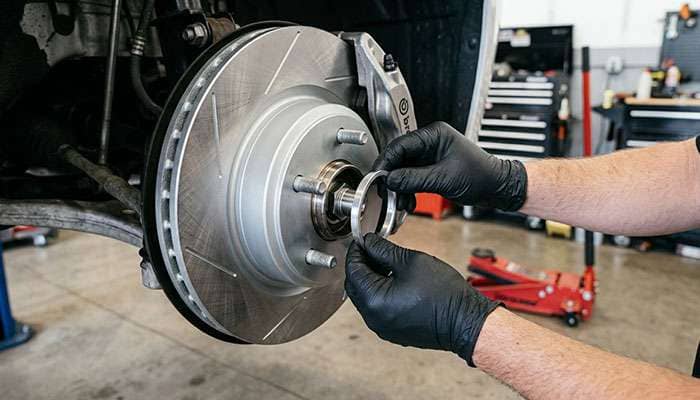
Choosing the right center bore setup isn't complicated — but it does require a methodical approach. The goal is straightforward: ensure your wheel is precisely centered on the hub, whether through a matched bore diameter or through hub centric rings. How you get there depends on your vehicle type, your driving style, and how much you're putting into your wheel setup. Here's how to work through each factor.
Your vehicle's hub bore diameter is a fixed machined spec — it doesn't change. What you need in a wheel is a center bore that either matches it exactly or exceeds it slightly so hub centric rings can bridge the gap. Never install a wheel whose center bore is smaller than your vehicle's hub bore. The wheel won't fit over the hub, and forcing it can damage the hub face.
For passenger cars and crossovers, tolerances are tighter and hub-centric fit is especially critical. These vehicles operate at higher wheel speeds relative to their mass, so even a slight imbalance amplifies quickly at freeway speeds. For light trucks and SUVs, hub bores are larger and wheel manufacturers typically offer dedicated fitments. If you're shopping for a truck setup, our selection of truck tires and compatible wheel packages is a solid starting point for getting the full fitment picture right.
For performance vehicles — sports cars, muscle cars, dedicated track builds — precision is non-negotiable. These applications generate significant lateral forces during cornering, and a lug-centric setup under those loads stresses your wheel studs and invites vibration. Go hub centric every time, and use high-quality aluminum hub centric rings rather than plastic if your budget allows.
If you're a daily commuter putting mostly highway miles on a sedan or compact SUV, hub centric rings from a reputable supplier will serve you perfectly well. The plastic rings commonly available for $10–$15 per set are entirely adequate for street driving — provided you buy from a quality source and replace them at any sign of wear or damage.
If you track your car, autocross, or run performance driving events, the equation changes. Heat cycling from aggressive brake use puts plastic rings through repeated stress cycles. For track applications, machined aluminum hub centric rings are worth the extra investment. They typically run $25–$50 per set but hold up significantly better under thermal load. Some performance wheel manufacturers also offer wheels machined directly to your vehicle's hub bore, eliminating the need for rings entirely — the ideal solution for dedicated performance builds.
Off-road drivers need to pay close attention to center bore as well. The extreme articulation angles and lateral loads common in off-road driving put real stress on wheel mounting hardware. A lug-centric setup off-road — where lug hardware absorbs centering forces on top of clamping forces — is not a setup you want. Look for wheels with the correct center bore for your vehicle's hub, and use aluminum hub centric rings when rings are required. Our off-road wheels selection includes options with appropriate bore specs for popular 4WD applications.
Here's the honest truth: the center bore spec itself doesn't drive the price of a wheel. You can buy a budget wheel with a perfectly correct center bore, and you can buy an expensive wheel with an oversized bore that requires rings. Wheel pricing reflects construction quality, material, weight, and finish — not the bore spec.
What costs money is precision. OEM wheels are machined to exact hub bore tolerances from the factory because they're designed for one specific application. Aftermarket wheels — especially value-tier options — are often bored to a universal size like 73mm or 74.1mm to maximize the number of fitments they can serve. There's nothing wrong with this approach as long as you use hub centric rings. The rings are inexpensive. Skipping them is the mistake.
Where budget genuinely affects center bore performance is in the quality of the hub centric rings you choose. Cheap, ill-fitting rings made from substandard plastic can be worse than no rings at all if they don't seat snugly. Spend a few extra dollars on rings from a reputable supplier and you'll get the full benefit of a hub-centric fit at any price point.
Setup Type |
Cost Impact |
Best For |
Vibration Risk |
|---|---|---|---|
Hub Centric (exact bore match) |
Varies — OEM or custom bore |
Performance, daily driving |
Very Low |
Hub Centric Rings (aluminum) |
$25–$50 per set |
Track, performance, off-road |
Very Low |
Hub Centric Rings (plastic) |
$10–$20 per set |
Street driving, daily commuters |
Low |
Lug Centric (no rings) |
$0 additional |
Not recommended for most applications |
Moderate to High |
Now that you understand the mechanics of center bore, let's turn that knowledge into practical guidance for specific buyer profiles. The right wheel setup looks different depending on whether you're driving a family crossover to work every day, pushing a performance car through canyon roads, or trying to get the most wheel for your money. Here's how to approach each scenario.
For daily driving, your priorities are a smooth, vibration-free ride, long-term durability, and a clean installation. A hub-centric fit is absolutely achievable at any budget — the key is pairing your wheel purchase with quality hub centric rings when the wheel bore doesn't match your hub exactly. Look for wheels marketed specifically to your vehicle make and model, as these are more likely to carry center bore specs that match or come close to your hub diameter.
Cast aluminum alloy wheels in the 17–18 inch range hit the sweet spot for most daily drivers. They're lighter than steel, strong enough for everyday use, and available in hundreds of styles. When comparing options, check whether the product listing specifies a hub bore measurement and whether hub centric rings are included. Many reputable wheel brands include rings in the box for common fitments. If they're not, budget $10–$20 for a set — plastic rings are entirely sufficient for daily street use. Browse our full selection of custom wheels and use the vehicle fitment search to narrow results to your exact make and model.
Performance applications demand precision — no exceptions. If you're autocrossing, tracking your car, or simply prioritizing maximum handling fidelity, you need a true hub-centric fit with zero slop between the wheel bore and the hub. Look for wheels either machined to your exact hub bore from the factory or paired with aluminum hub centric rings. Don't compromise here.
Flow-formed and forged wheels are often available in vehicle-specific bore sizes because they target enthusiast buyers who expect exact fitment specs. Brands like Nitto and performance-oriented wheel manufacturers in our lineup know their customers are paying attention to these details. For performance setups, also factor in wheel weight — a lighter wheel reduces unsprung mass and sharpens handling response independent of center bore. Two-piece and three-piece forged wheels represent the pinnacle of this approach, and the price reflects it.
One more tip for performance drivers: after installing new wheels, torque your lug hardware to spec in a star pattern, drive 50–100 miles, then re-torque. Letting the hub centric rings seat and everything settle under real-world loads is good practice every time you mount a new set of wheels.
A solid, hub-centric wheel setup on a tight budget is completely achievable — you just need to be diligent about the specs. Budget-tier cast alloy wheels almost universally use oversized universal center bores, which means hub centric rings are part of the deal. Factor that $10–$20 cost into your budget from the start so it's not a surprise. The good news is that at the budget tier, you're typically driving a daily commuter at moderate speeds — exactly the application where plastic hub centric rings perform perfectly well.
When shopping budget wheels, look for options with at least 5–6 spoke designs (more material, better strength than 3-spoke options at this price point), a load rating that meets or exceeds your vehicle's requirements, and a clear coat or powder coat finish to resist corrosion. Steel wheels are the most budget-friendly option of all and actually come with hub-centric bores pre-machined for specific vehicles when ordered correctly — though they're heavier than alloys. Our wheel inventory covers multiple price points, and our fitment system makes it easy to filter down to wheels that work for your specific vehicle.
Regardless of your budget, don't skip the hub centric rings to save $15. That's the worst version of cutting corners. The rings are the cheapest component of your entire wheel purchase and they deliver one of the most significant improvements in ride quality and performance. Budget for them, use them, and replace them every time you remount your wheels.
Wheel center bore is one of those specs that sits quietly in the background of every wheel purchase — but it has a direct, real-world impact on how your vehicle rides and handles. Understanding the difference between hub centric and lug centric setups, knowing how to find your vehicle's hub bore, and knowing when hub centric rings are required — that knowledge separates a wheel purchase you'll be happy with for years from one that has you chasing vibrations and second-guessing yourself. And getting it right isn't complicated or expensive. It just requires knowing what to check before you buy.
Whether you're building a performance setup that demands exact bore specifications, outfitting a daily driver with a fresh set of alloys, or working within a tight budget, a hub-centric, vibration-free fit is within reach at every level. Measure your hub, check the wheel specs, order the right rings if needed, and install everything correctly. It's a straightforward process that pays off in ride quality and confidence every time you get behind the wheel.
Performance Plus Tire carries thousands of wheel options, and our fitment tools make it easy to find wheels that work with your vehicle's specific hub bore. If you have questions about center bore compatibility for your application, reach out to our team — we'll help you get the fitment right the first time. Visit our full wheel catalog and use our vehicle selector to start shopping with confidence.
Here are the most important points to remember about wheel center bore before you buy your next set of wheels.
• Center bore is the diameter of the hole in the center of a wheel: It must match or exceed your vehicle's hub bore diameter — never be smaller — to achieve proper fitment and prevent installation damage.
• Hub centric fits are superior to lug centric setups: When the wheel bore matches the hub, the hub centers the wheel precisely, reducing vibration and removing shear stress from your wheel studs. Lug centric setups rely on lug hardware alone, which is a less accurate and less durable centering method.
• Hub centric rings bridge the gap between oversized wheel bores and your vehicle's hub: These inexpensive rings ($10–$50 per set depending on material) allow universal-bore aftermarket wheels to achieve a true hub-centric fit on your specific vehicle. Never skip them when there's a bore size difference.
• Aluminum hub centric rings outperform plastic for performance and off-road applications: Plastic rings are fine for street driving, but heat cycling and lateral loads in performance or off-road environments make aluminum the better choice for those use cases.
• Always verify your vehicle's specific hub bore before purchasing: Common measurements are published by vehicle manufacturers and fitment databases, but actual specs can vary by model year, trim, and drivetrain. Confirm your number before ordering, or contact us at Performance Plus Tire for assistance.
If your wheel's center bore is larger than your vehicle's hub, the wheel won't sit centered on the hub — it floats slightly until the lug nuts pull it into position. This lug-centric fit places all centering loads on the lug hardware and typically produces vibration at speed. The fix is straightforward: install hub centric rings that fill the gap between the wheel bore and the hub. These rings are available for virtually every bore size combination and cost $10–$50 per set depending on material. Never run an oversized bore without rings if you want a smooth, vibration-free ride.
No. A wheel with a center bore smaller than your vehicle's hub bore will not fit over the hub at all. Forcing it can damage both the wheel and the hub face. This is a hard incompatibility with no workaround. You need a wheel whose center bore is equal to or larger than your vehicle's hub bore. If it's larger, bridge the difference with hub centric rings. If it's an exact match, you have a perfect hub-centric fit straight out of the box.
Use a set of digital vernier calipers — available for $15–$30 and worth having in any enthusiast's toolbox. Remove one wheel, then measure the outer diameter of the raised hub protrusion — the cylindrical portion the wheel slides over. Measure across the widest point at the base of the hub flange where the wheel seats, and record the result in millimeters. You can also look up your vehicle's hub bore in a fitment database, or contact the wheel manufacturer with your vehicle's year, make, model, and drivetrain configuration. Our team at Performance Plus Tire can help you track down this information as well.
Yes, hub centric rings are reusable — but inspect them carefully before each reinstallation. Plastic rings can crack, deform, or develop stress fractures over time, particularly after significant heat cycling or if they were ever torqued under an improperly mounted wheel. If you see cracking, deformation, or a ring no longer fits snugly in the wheel bore or over the hub, replace it immediately. Aluminum rings are more durable and typically hold up better through repeated use. Given that a full set costs $10–$50, there's no reason to take chances with worn hardware.
Yes, indirectly. When a wheel is balanced on a balancing machine, the machine centers the wheel on its bore — exactly as your vehicle hub does. If your wheel has an oversized center bore and the balancing machine uses a standard taper cone, the centering reference may not match how the wheel will sit on your actual hub. The result is a wheel that measures as "balanced" on the machine but runs slightly out of balance on your car. For best results with oversized-bore wheels, use hub-centric centering cones on the balancing machine that match your vehicle's hub diameter, or have the wheels balanced after hub centric rings are installed so the centering reference matches real-world conditions.



