
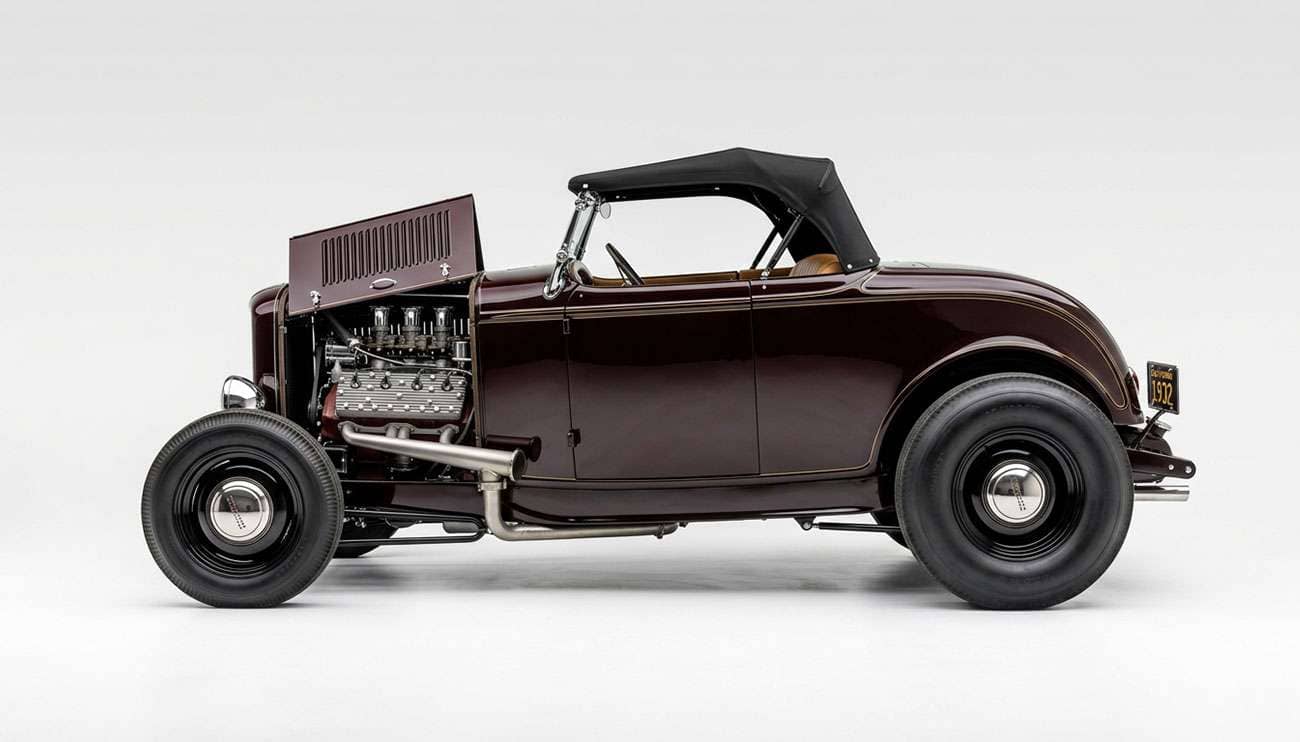
Big 'n' littles are the traditional hot rod tire formula: small-diameter, skinny tires up front and tall, fat tires out back. The combination drops the nose, raises the tail, and creates the "rubber rake" that has defined the hot rod look since the dry lakes days. A difference of 4 to 6 inches in overall diameter between front and rear is the classic sweet spot, and you can build it with bias plys, radials, or bias-look radials. Here is how the formula works and exactly which tires to run.
The recipe came straight off the race track. Dirt trackers, Indy cars, and the early drag racers all ran smaller tires on the front to cut rolling resistance and unsprung weight, with bigger rear tires for traction and a taller effective gear. When those racers drove home Monday morning, the look came with them, and street rodders realized something the engineers never intended: it just looked right. A Model A or a Deuce sitting on skinny fronts and fat rears has an attitude that level tires can never deliver.
The formula is different from a gasser setup, where the whole nose points at the sky on a straight axle, and different again from a modern muscle car staggered fitment where both ends run wide low-profile rubber. We covered those looks in our gasser stance guide and our muscle car staggered setup article. Big 'n' littles are the original version: tall and skinny meets big and meaty, on a traditional rod.
Old-timers called it the rubber rake because the tires alone do the work of lowering the front and lifting the rear, no torch or lowering blocks required. Every inch of diameter difference between front and rear tilts the body forward by half an inch at each end, and that forward lean reads as speed even when the car is parked at the drive-in.
The visual math matters too. A skinny front tire exposes the wheel, the brake, and the suspension, which makes the front of the car look light and delicate. A wide rear tire fills the wheel well and plants the car, making the back look muscular. That contrast, delicate up front and brutal out back, is the whole trick.
Four to six inches of diameter difference is the traditional window. A mild street combo like a 165R15 front and 235/75R15 rear gives about 3.5 inches, subtle enough for a full-fendered sedan. The classic highboy roadster runs 5 to 6 inches, like the beloved 165R15 over 285/70R15 radial pairing at 5.3 inches. The wild show cars stretch past 8 inches with tall prewar rears, but past that point steering geometry, headlight aim, and driveline angles all start demanding attention. Start at 4 inches, and add from there only if the car and your nerve can take it.
These are the time-tested pairings, all on common 15 inch wheels, all buildable from tires we stock today.
Combination |
Front / Diameter |
Rear / Diameter |
Difference |
Character |
|---|---|---|---|---|
Classic Bias |
5.60-15 / 26.5 in |
8.20-15 / 29.5 in |
3.0 in |
Period-perfect 1950s look and ride |
Radial Roadster |
165R15 / 25.4 in |
285/70R15 / 30.7 in |
5.3 in |
The definitive highboy stance, modern ride |
Mild Street |
165R15 / 25.4 in |
235/75R15 / 28.9 in |
3.5 in |
Subtle rake for fendered sedans |
Street Bruiser |
165R15 / 25.4 in |
255/70R15 / 29.1 in |
3.7 in |
Big footprint with easy availability |
Want the drag strip flavor instead? Swap the rear for a pie crust slick and you are in nostalgia territory, which we covered top to bottom in our cheater slicks guide. And if the car will see serious rear rubber under tubbed wheel wells, that is a different formula entirely, covered in our pro street tires guide.
No. Run bias on all four corners or radials on all four, never split them front to rear. The two constructions flex and follow the road completely differently, and mixing them makes a car dart and wander in ways that will scare you at speed. If you want the bias look with radial manners, that exact problem is why the bias-look radial was invented, and our bias-look radial tires article explains the technology.
Every tire below is in our warehouse right now, and between them you can build any combination in the chart above.
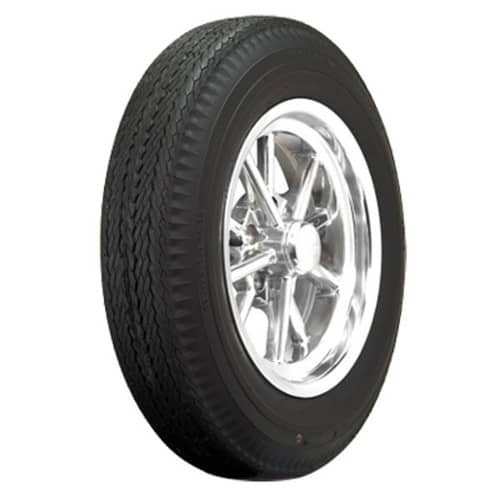
The front tire of the traditional movement. The Firestone Deluxe Champion 5.60-15 is the genuine pie-crust-shouldered bias ply that sat under half the roadsters at the first hot rod shows, still built from the original molds, at 273 dollars.
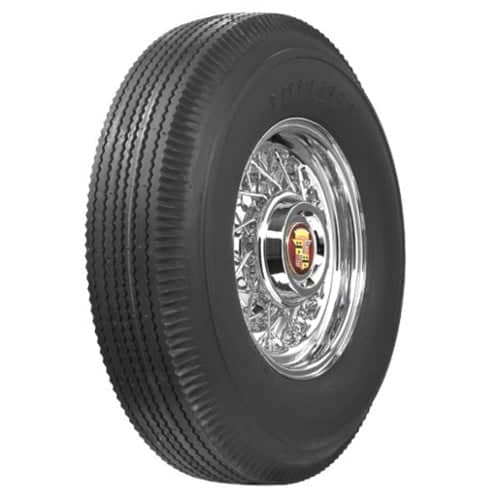
Its matching big brother. The Firestone Deluxe Champion 8.20-15 completes the all-Firestone bias pairing that defined 1950s hot rodding, 329 dollars, and the correct answer when the judges at a traditional show start looking closely.
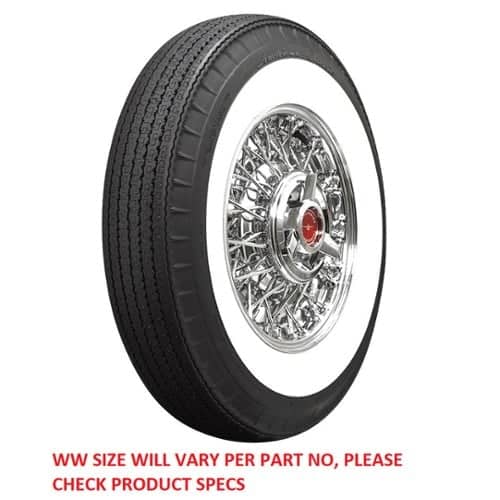
The cheat code. The American Classic Bias Look Radial 5.60-15 wears the tall, narrow pie-crust profile and a wide whitewall, but hides modern radial construction underneath. Period looks, freeway manners, 324 dollars.
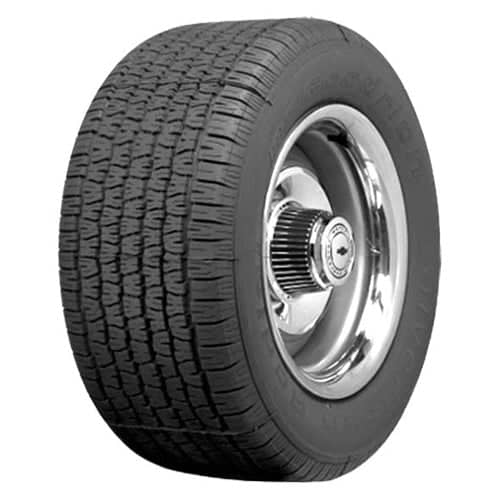
The definitive radial rear. The BFGoodrich Silvertown Radial 285/70R15 is the 30.7 inch tall rear that made the 165R15 pairing famous, available in blackwall at 383 dollars or wide whitewall for the full custom treatment. If you go white, get the proportions right with our whitewall width guide.
The wheels have to stagger with the rubber. Run a 15x4 or 15x5 up front so the skinny tire keeps its tall, narrow profile, and a 15x7 through 15x10 in the rear depending on how much tire you are stuffing under there. Steelies in body color with caps are the traditional default, painted artilleries carry the prewar look, and bare steel in primer or patina is the rat rod move we broke down in our rat rod patina steelies article. Whatever the style, keep the front and rear wheels the same design and finish; the tires provide the contrast, and matching wheels keep the car looking like one build instead of two.
Big 'n' littles are the oldest trick in the hot rod book because they still work: skinny fronts, fat rears, four to six inches of diameter difference, and the rubber rake takes care of the rest. Go all-bias with the Firestone Deluxe Champions for period perfection, or run the 165R15 and Silvertown 285 radial combo for the classic look with modern behavior. Every tire in this article ships from our Firestone tires and classic lines today, and if you need a hand pairing sizes to your fenders, that is exactly the kind of phone call we like taking.
It is hot rodder slang for running small-diameter, narrow tires on the front of a car and tall, wide tires on the rear. The combination creates a forward rake and the classic traditional hot rod stance.
On a rear-wheel-drive hot rod, yes, and rodders have done it safely for over seventy years. The rules are simple: keep the same construction type on all four corners, stay within the load rating your car requires, and make sure the front tires are wide enough to steer and brake the actual weight on the nose.
On 15 inch wheels, the 165R15 front with a 285/70R15 rear is the modern radial standard, giving about 5.3 inches of diameter difference. In bias ply, the 5.60-15 front with an 8.20-15 rear is the traditional pairing.
They can. The speedometer reads off the driveline, so a taller-than-stock rear tire makes it read slow. A speedometer shop can recalibrate the drive gear to your exact rear tire diameter, which is a cheap fix worth doing once the combination is final.



