
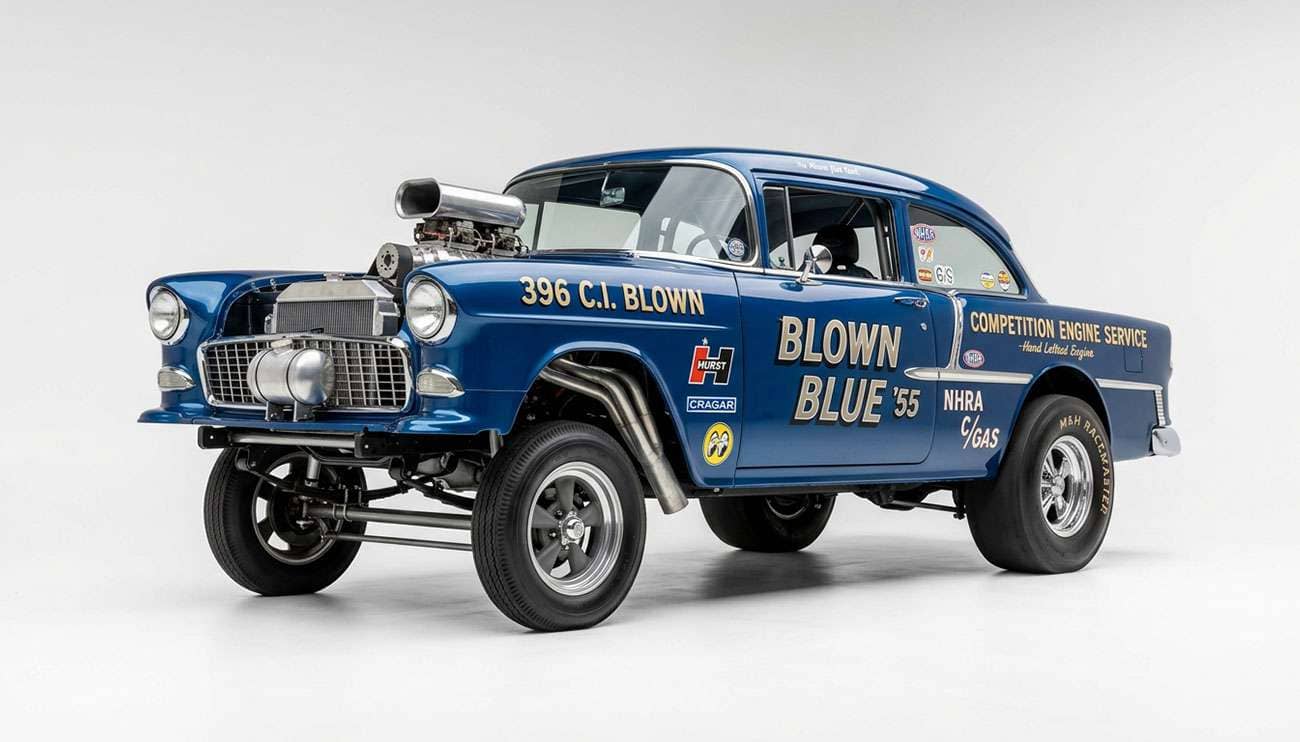
A gasser stance is the nose-high, tail-low look you get when you jack the front of a car way up, usually with a straight axle, and run skinny tires up front with fat ones out back. The whole car tips backward like it is about to launch. That is the point. Pair that raised front with a big-and-little tire combo, no front bumper, and a loud engine, and you have got yourself a gasser. It is one of the most recognizable looks in hot rodding, and folks have been chasing it since the 1950s.
I have been around these cars my whole life, and I will tell you, nothing turns heads at a cruise night like a Tri-Five sitting nose-up on a solid axle. People who do not know cars still stop and stare. There is something about that attitude that just reads "fast" before the key ever turns.
The gasser stance was not born out of style. It was born out of trying to win drag races back when slicks were not very sticky. Lifting the front end shifts the car's weight rearward when it launches, planting the rear tires harder for better bite. In the early days, that extra traction was the difference between hooking up and going up in tire smoke.
A solid front axle does a few things an independent front suspension cannot. It is lighter, it lets you raise the front end without a lot of fuss, and it keeps both front wheels standing straight up and down. That last part matters. When a gasser pulls the front wheels off the ground and sets them back down, a straight axle brings them back plumb and predictable. An independent setup lets the wheels droop and flop, which makes the landing sketchy. The old-timers also liked that a straight axle cleared out the crossmember, so they could drop the engine low, run headers easy, and service the motor without pulling it.
One thing I always tell guys: a straight axle has fixed caster and camber, and it needs a healthy dose of positive caster to track straight. Most gasser setups run somewhere around 7 to 10 degrees. Get it wrong and the car will wander all over the road. Find somebody who actually knows how to align a solid axle, because it is nothing like a modern front end.
Weight transfer, plain and simple. When you stand on the throttle, the car wants to rotate backward on its rear axle. Starting with the nose already high exaggerates that rotation and dumps more load onto the rear tires right when you need grip the most. There was a practical side too. Raising the body let racers tuck a tall intake and air cleaner under the stock hood line, which the rulebook required back in the NHRA Gas classes. Form followed function, and the function was going quick.
Lightweight closed-body cars from the 1930s through the mid-1960s are the classic choice. The all-time favorites are Willys coupes, Austin and Anglia sedans, and the Chevy Tri-Five cars, the 1955 to 1957 Bel Airs, 210s, and Nomads. Early Corvettes show up too. If you want that authentic look, start with one of those. If you want the attitude on a budget, the stance principle works on plenty of period cars, as long as you keep it lean and mean. For a broader look at the classic profiles that pair well with this build, our guide to classic car wheel styles is a good place to start.
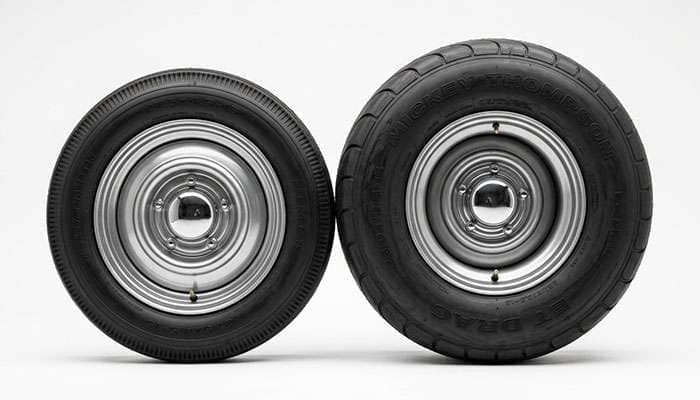
If the raised front is the gasser's posture, the big-and-little tire combo is its signature. Skinny tires up front, fat tires out back. The mismatch is the whole look, and it is functional too. Narrow front tires cut rolling resistance and weight where you do not need grip, while the wide rears do all the work hooking up. Get the proportions right and the car looks like it is straining at the leash even sitting still.
Up front you want narrow. The traditional gasser runs a 15-inch wheel that is anywhere from 3.5 to 4.5 inches wide, often a steel wheel, a slot mag, or a classic five-spoke. Tire-wise, think tall and thin: 155 to 205 millimeters wide, with 165/80-15 and 205/70-15 being common starting points. Those tall skinnies keep the front light and give you that pencil-line profile. Some builders go even narrower with true front runners, but a 4.5-inch wheel opens up a lot more tire choices, so I usually steer folks that way.
Out back is where the meat goes. A 15x8 to 15x10 wheel with a 275 to 315 tire is the sweet spot for a street-driven gasser, often a tire that stands around 28 to 29 inches tall. Run too wide and you will be radiusing rear wheel openings and moving leaf springs inboard to make room, which is a real project. If you are chasing the period drag look, this is where drag radials or cheater slicks live. Deciding between the two trips a lot of guys up, so it is worth reading our breakdown of drag slicks vs drag radials before you buy.
Feature |
Front (Skinny Runners) |
Rear (The Meats) |
|---|---|---|
Wheel size |
15x3.5 to 15x4.5 |
15x8 to 15x10 |
Tire width |
155 to 205 mm |
275 to 315 mm |
Profile |
Tall and narrow |
Wide and tall, about 28 to 29 in |
Tire examples |
M and H Front Runner, Mickey Thompson Sportsman Front |
Mickey Thompson ET Street R, Sportsman S/R |
This big-and-little idea is not unique to gassers. Plenty of street machines run a milder version of it, and you can see the same thinking in our muscle car staggered setup guide. The gasser just takes the contrast to the extreme.
Now for my favorite part, picking the rolling stock. This is where a gasser earns its personality, and where you can get period-correct or put your own twist on it.
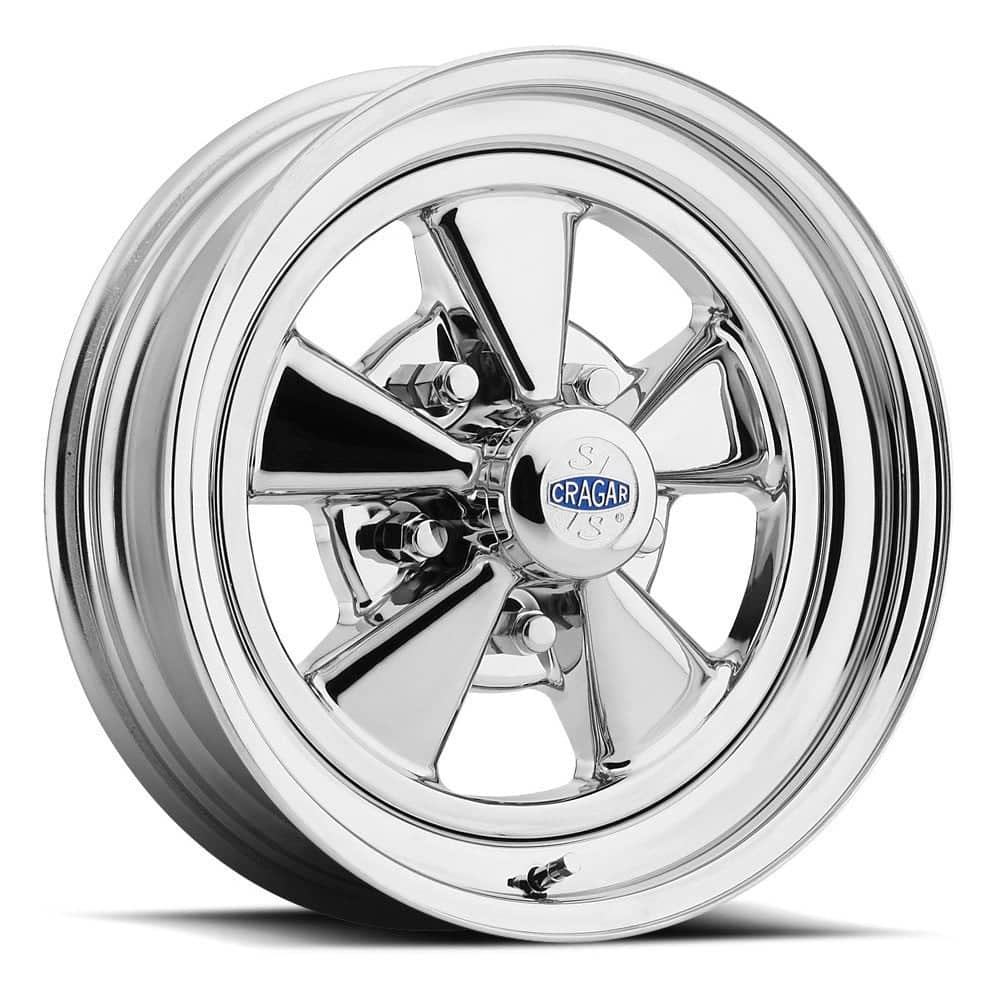
The classics never go out of style here. The Cragar S/S Super Sport is about as iconic as it gets, that chrome five-spoke with the polished lip has been on gassers since the 1960s. The American Racing Torq Thrust is another forever-cool choice. Slot mags are the budget hot-rod hero, and steel wheels keep things honest and old-school. If you want a real period drag-strip look up front, a lightweight steel wheel is hard to beat.
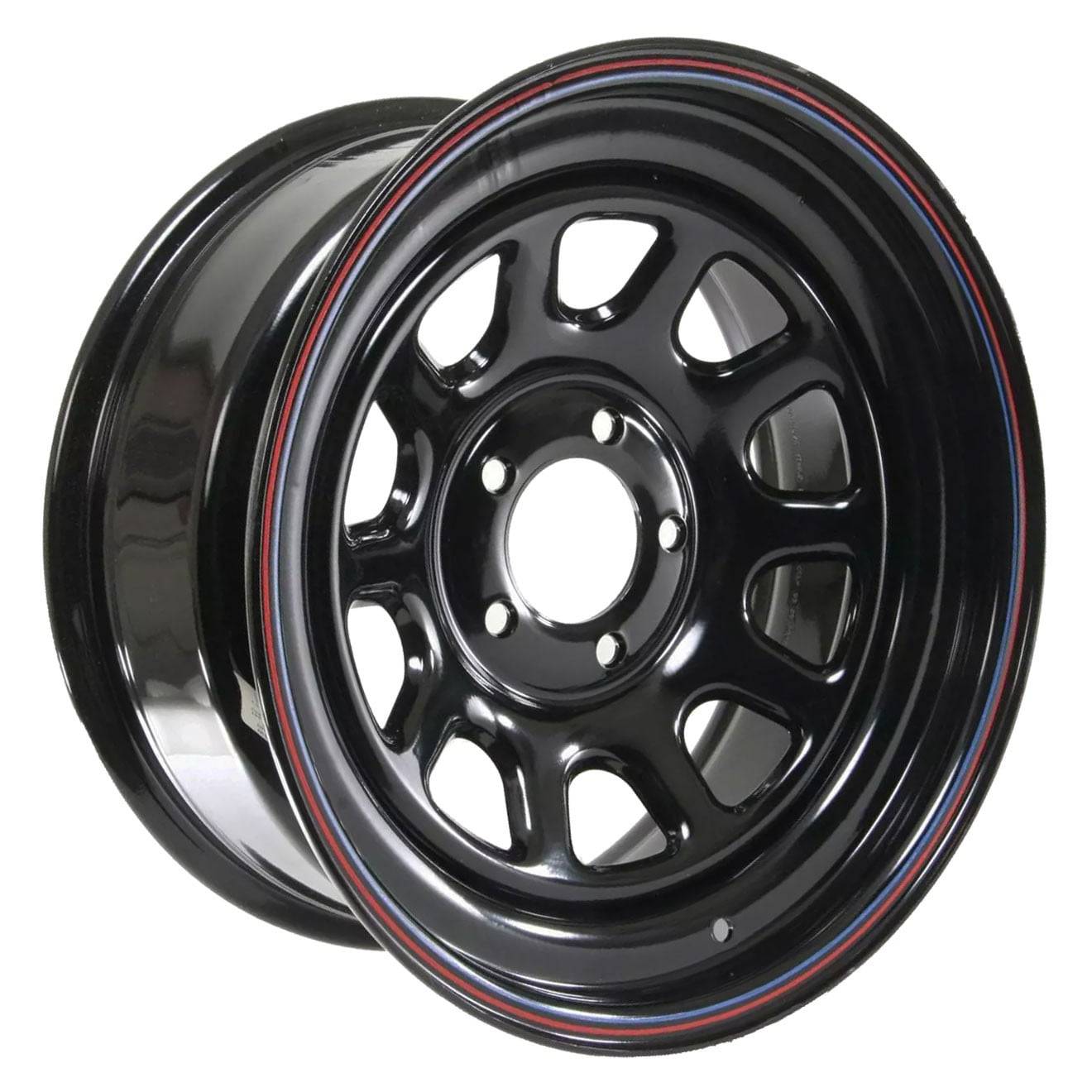
For our in-house pick, I am partial to the Hot Rod Hanks 42 D Window steel wheel. The D-window steel is exactly the kind of lightweight, no-nonsense wheel the old gasser racers ran, and it looks right at any width, narrow up front or wide out back. We build the Hot Rod Hanks line to nail that vintage shop-floor look without breaking the bank. If you lean more toward a smooth, dressed-up vibe, the Hot Rod Hanks Smoothie or 55 Rally will get you there too.
The Cragar is so tied to this scene that it has its own following, and if you are weighing it against other classics, our honest take on whether Cragar wheels are good walks through it. Slot mags get the same treatment in our slot mag wheels explained guide.
Front runners are the move up front. The M and H Bias Ply Front Runner and Radial Front Runner are purpose-built for this, and the Mickey Thompson Sportsman Front and ET Street Front are popular too. If you want the classic redline or wide-whitewall touch, a BFGoodrich Redline Silvertown in bias or radial dresses up a skinny front nicely. Out back, the Mickey Thompson ET Street R and Sportsman S/R give you that fat, sticky drag profile, and the M and H Cheater Slick takes it full vintage.
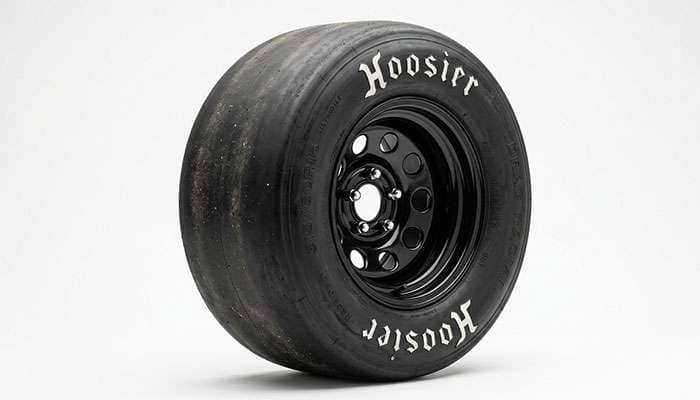
One old debate worth settling before you commit: bias-ply versus radial up front. Bias looks the most period-correct, but radials ride and track better on the street. I get into the trade-offs in our bias look radial tires article. My usual advice is do not mix a bias front with a radial rear on the same car if you can help it, and never on the same axle.
Here is where I get honest with people. A gasser is a car that looks better than it drives, and that is by design. A car at a sane ride height with a proper-size front tire will always handle better. But that does not mean a gasser is undrivable.
You can, with caveats. The trick is not building it too tall. There is an old saying in this hobby that too high is always worse than too low. A nose that is jacked sky-high screams "street freak" and rides like a buckboard. Keep the lift sensible, run a slightly wider and taller front tire like a 205, get the caster dialed in by someone who knows solid axles, and you can absolutely cruise it. I know guys running mild gassers that drive about like a stock Tri-Five, just with attitude. The difference between a parking-lot trailer queen and a real driver is restraint. For the broader conversation about how high to sit a hot rod, our hot rod rake stance guide covers the whole range of options.
That depends on where you live, and you should always check your local rules. Most street-driven gassers run working front brakes, proper lighting, and a tire and wheel package that is safe at road speed, which is what keeps them legal and sane to drive. The full-on race builds with no front brakes and motorcycle tires up front are strictly a strip-and-show deal. If you want to actually drive the thing, build it to drive, with real brakes and a real tire that turns the car. That is the difference between a costume and a car.
The gasser stance is one of those looks that never gets old because it came straight from the racetrack. Raise the nose, run skinny up front and fat out back, and let the car lean back like it is daring you to launch it. Whether you go full period-correct with a straight axle and bias-ply front runners, or build a sensible street version on radials, the formula is the same: attitude, proportion, and the right rolling stock. Get those three right and you will have a car that draws a crowd everywhere it goes. When you are ready to pick out the wheels, come see what we have in Classic Wheels, and let's build something that looks fast standing still.
A gasser stance is the nose-high, tail-low look created by raising a car's front end, usually with a straight axle, and running skinny tires up front with wide tires out back. It started as a drag-racing setup to improve rear traction and became an iconic hot-rod style.
A straight axle is lightweight, makes it easy to raise the front end, and keeps both front wheels standing straight up and down for a predictable landing after a launch. It also clears the crossmember so builders can drop the engine low and run headers easily.
Up front, run tall narrow tires roughly 155 to 205 mm wide on 15x3.5 to 15x4.5 wheels. Out back, run wide tires around 275 to 315 mm on 15x8 to 15x10 wheels, often standing about 28 to 29 inches tall.
Classic choices include the Cragar S/S Super Sport, American Racing Torq Thrust, slot mags, and lightweight steel wheels such as the Hot Rod Hanks 42 D Window. Steel and slot wheels keep the period drag-strip look, while chrome five-spokes add polish.
Yes, if you build it sensibly. Keep the front lift moderate, run a slightly wider and taller front tire, dial in proper caster with someone who knows solid axles, and use working front brakes. A mild gasser can drive close to a stock car with a lot more attitude.
Lightweight closed-body cars from the 1930s through the mid-1960s are the traditional picks, especially Willys coupes, Austin and Anglia sedans, and Chevy Tri-Five cars like the 1955 to 1957 Bel Air and Nomad. Early Corvettes are popular too.



