
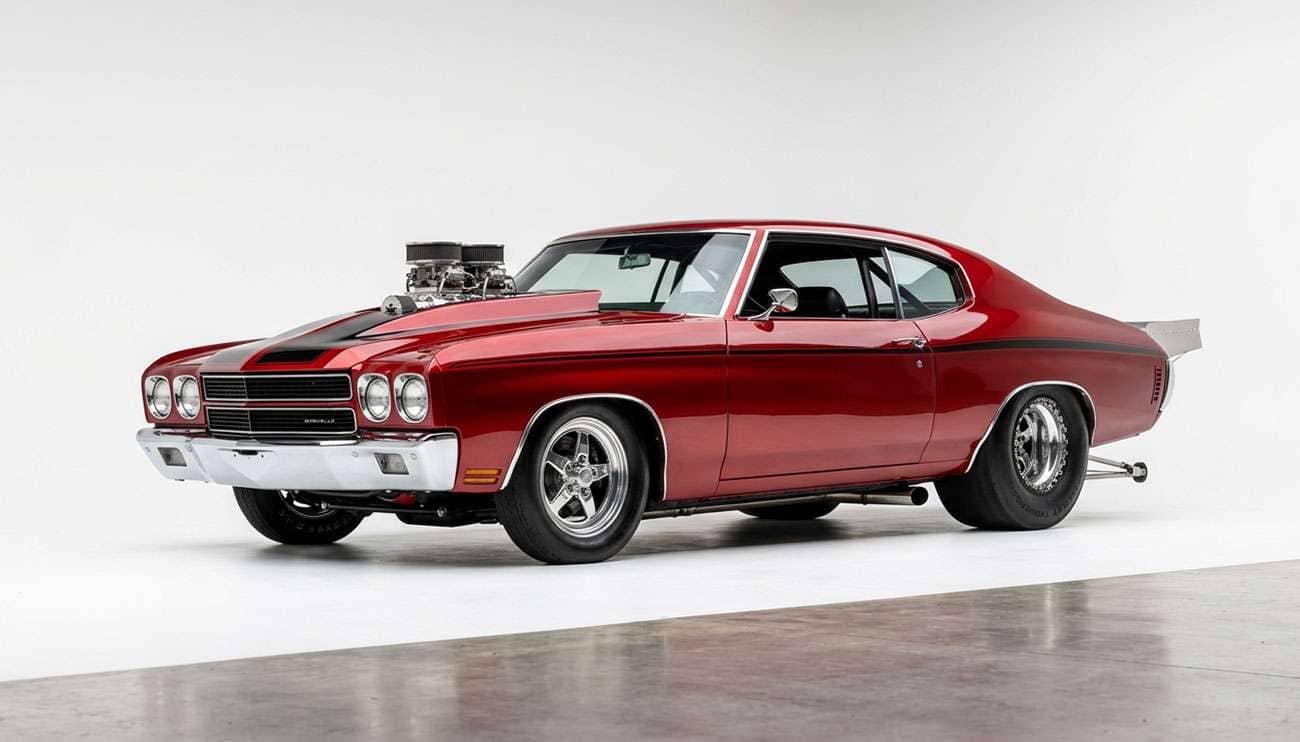
Pro street tires are the skinny-front, giant-rear tire combination that gives a street-driven muscle car the look of a full-on drag car. Up front you run a narrow runner, and out back you stuff in the biggest, widest DOT-legal tire the car will hold, often 29 to 33 inches tall and up to 18 inches wide. The rear is the whole show. It is a look that came straight out of the 1970s and early 1980s street-machine scene, when guys would back-half their cars to swallow a pair of monster rear meats and still cruise them on Friday night.
I lived through the original pro street era, and I will tell you, nothing fills a wheel well like a properly sized rear tire. Done right, the car looks like it is doing 100 miles an hour parked at the curb. Let me walk you through how the setup works, how big you can actually go, and which tires hold up to street driving.
Pro street is a big-and-little setup, but it has its own flavor. The defining move is a skinny front runner paired with an enormous rear tire, which puts a huge contact patch where the power goes down and keeps the front light and quick. The wider the rear and the narrower the front, the more aggressive the stance reads.
People mix these up, so let me set it straight. A gasser is the 1950s and 1960s look: a high, nose-up stance on a straight axle, built to transfer weight on a launch. Pro street came later, in the 70s and 80s, and it sits the opposite way. It is lower and meaner, with the emphasis on cramming the absolute widest rear tire under the car, usually by tubbing it. A gasser is about height; pro street is about width. If you want the nose-high side of the family, that is a separate build, and the hot rod rake stance guide covers how high to sit a car. The same big-and-little thinking shows up in a milder form on factory-style cars too, which our muscle car staggered setup guide breaks down.
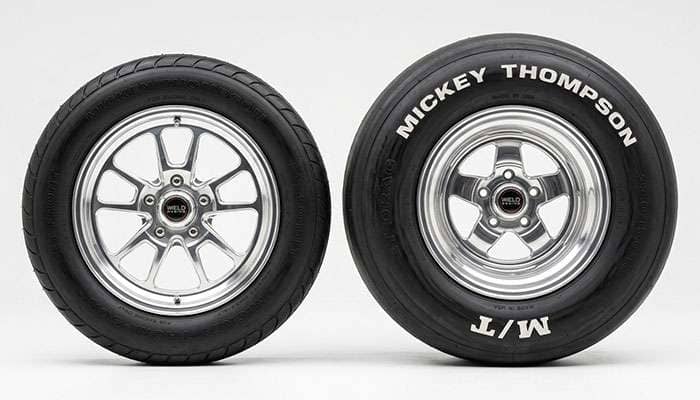
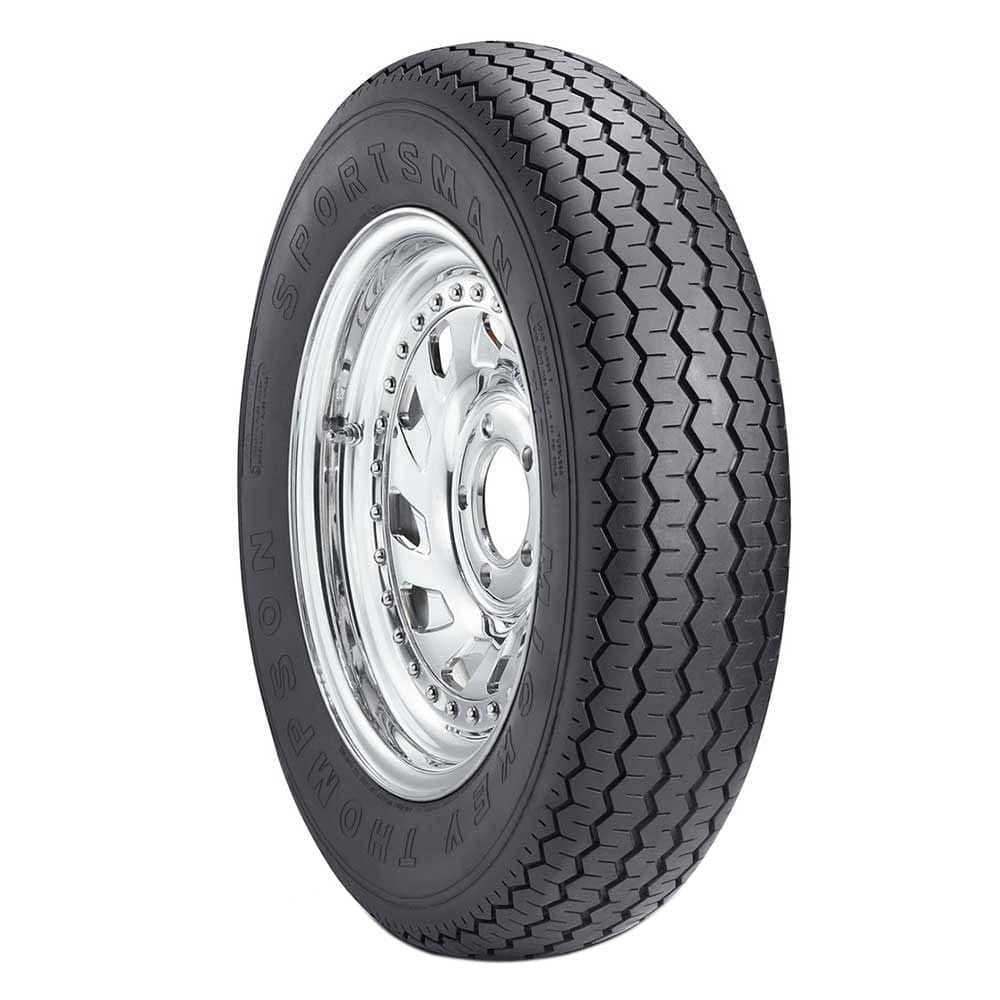
Up front, narrow is the name of the game. A classic pro street runner is a tall, skinny tire, often a 26 to 28 inch tall front runner on a 4 to 5 inch wide wheel. The skinny front keeps weight down and exaggerates the contrast with the rear. Tires like the Mickey Thompson Sportsman Front and the M and H Radial or Bias Ply Front Runner are built exactly for this job.
This is the question every pro street builder asks. The answer depends on how far you are willing to cut.
Most pro street rears run 29 to 33 inches tall and somewhere from 15 to 18.5 inches wide. In metric, a popular streetable size is something like a 295/65-15. The really wide stuff, a 31x16.5-15 or a 33x18.5-15, is where the look gets serious, but those tires will not fit a stock body without surgery. A good rule from the shop floor: pick a tire about an inch narrower than your wheel width to keep sidewall sway down.
For the big sizes, yes. A stock wheel well only holds so much tire. To fit a true pro street rear, you either mini-tub the car or do a full back-half. The tires themselves are the easy part; making room for them is the work.
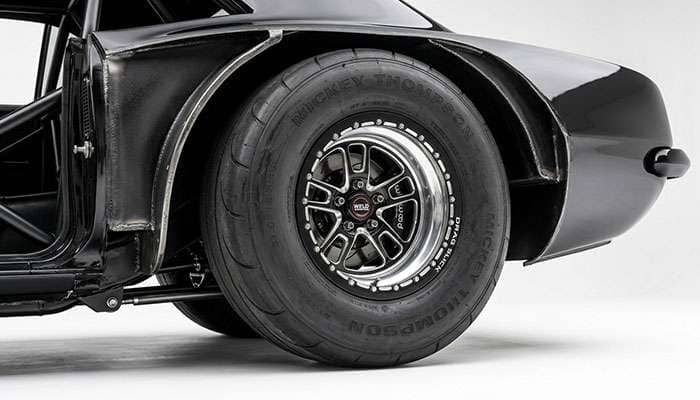
Mini-tubbing means widening the inner wheel tubs and moving the leaf springs or frame rails inboard so you can squeeze a wider tire in without back-halfing the whole car. It is the middle ground: more tire than stock, less work than a full tube chassis. A full back-half rebuilds the entire rear section of the car around the tire and rear end. How far you go is a question of how big a tire you are chasing and how much you want to drive the thing.
Here is where a lot of guys go wrong. A true racing slick is not street legal and is miserable on the road. For a car you actually drive, you want a DOT-stamped tire that gives you the look and some real traction without putting you in a ditch the first time it rains. There are three main flavors.
Feature |
DOT Drag Radial |
Sportsman-Type |
Bias-Ply Street |
|---|---|---|---|
Traction |
Strong, real hook |
Mostly show, modest grip |
Moderate, period feel |
Street manners |
Decent for the type |
Hard rubber, long wearing |
Old-school ride |
Rain |
Use caution |
Poor |
Poor |
Best for |
Cruise plus real launches |
Cruising and the look |
Period-correct builds |
Honest answer: not really. The Sportsman is a harder-compound tire, so it lasts a long time and looks the part, but it does not hook like a true drag tire. I tell folks straight, if you want the wide stance for cruising and burnouts, the Mickey Thompson Sportsman S/R is a great-looking, durable choice. If you are putting down real power and want the tire to actually grip, step up to a drag radial.
For a street car that needs to hook, a DOT drag radial is the move. The Mickey Thompson ET Street R and ET Street Radial Pro are the standards, and the Nitto NT555R II is a popular street-legal drag radial as well. These give you real bite off the line and still behave on the road, as long as you respect the weather. If you want to know how long they last, our deep dive on how many miles Mickey Thompson ET Street drag radials last has the real-world numbers. And if you are torn between a radial and a slick for the rear, the drag slicks vs drag radials comparison lays out the trade-offs.
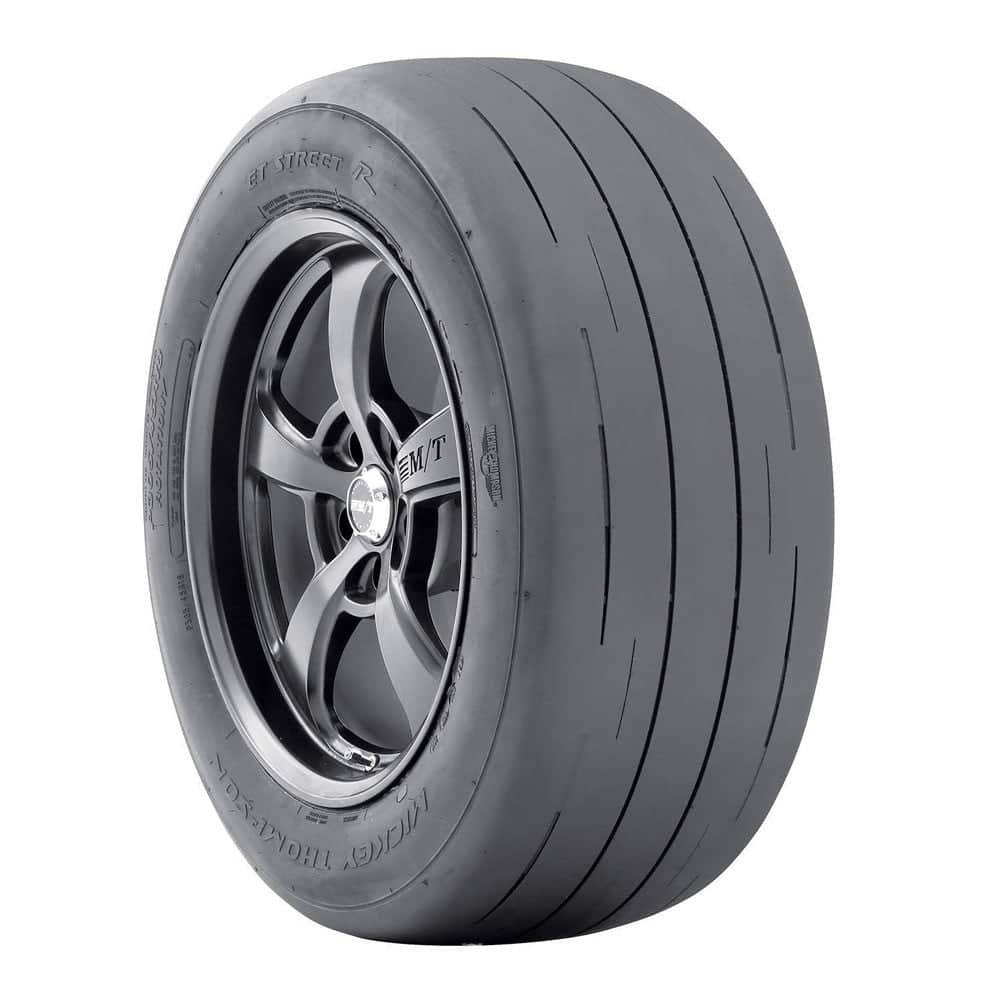
If you are after the period-correct 1970s look instead of maximum grip, a bias-ply street tire delivers that exact day-two flavor. There is a real difference in how bias and radial tires ride and behave, which our guide on the bias look vs radial tires walks through. For the broader picture of what muscle cars wore from the factory, our factory muscle car tires article fills in the history.
They can be, as long as you build it sensibly and pick the right rubber. Let me be straight about what you are signing up for.
The DOT-stamped tires are, which is the whole reason the pro street crowd runs them instead of full slicks. As long as the tire carries a DOT marking and the car meets your local rules for fender coverage and lighting, you are good to roll. Full racing slicks are not street legal, so for a driver, stick with DOT-legal drag radials, Sportsman-type tires, or bias-ply street tires.
You can, but you need to slow way down and respect them. Even a treaded DOT drag radial does not shed water like a normal passenger tire, and the harder Sportsman-type and bias tires are worse. A lot of guys keep a second set of normal tires and wheels for daily duty and save the meats for nice days and cruise nights. That is the smart play if you want to actually use the car. The drag radials hold up better in the wet than slicks, and our drag radials street and strip buyers guide covers what to look for.
Pro street is one of the all-time great American looks: skinny up front, all the tire you can fit out back, and a stance that means business. The rear is the heart of it, so size it to your build, tub the car if you are chasing the big stuff, and pick a DOT-legal tire that matches how you actually drive, real grip from a drag radial or long-wearing looks from a Sportsman. Get it right and you will have a head-turner that you can still fire up and cruise. When you are ready to pick out your rear meats, come see our full lineup of drag racing tires and we will help you find the right size for your car.
Pro street tires are the skinny-front, giant-rear combination that gives a street-driven car a drag-car look. The front runs a narrow runner while the rear uses the widest DOT-legal tire the car will hold, often 29 to 33 inches tall and up to 18 inches wide.
Most pro street rears run 29 to 33 inches tall and 15 to 18.5 inches wide, with a popular streetable metric size around 295/65-15. The widest sizes, like a 33x18.5-15, require tubbing the car to fit.
For the big sizes, yes. A stock wheel well only holds so much tire, so you either mini-tub the car, which widens the inner tubs and moves the springs inboard, or do a full back-half to make room for the widest rears.
A gasser is the 1950s and 1960s nose-high look built on a straight axle to transfer weight. Pro street came later, in the 70s and 80s, sits lower, and focuses on fitting the widest possible rear tire, usually by tubbing the car. A gasser is about height; pro street is about width.
DOT-stamped tires are street legal, which is why the pro street crowd runs them instead of full racing slicks. As long as the tire carries a DOT marking and the car meets local fender and lighting rules, it is road legal. Full slicks are not.
You can, but with caution. Even a treaded DOT drag radial does not shed water like a normal tire, and Sportsman-type and bias tires are worse. Many owners keep a second set of regular tires and wheels for daily use and save the rear meats for dry days.



