
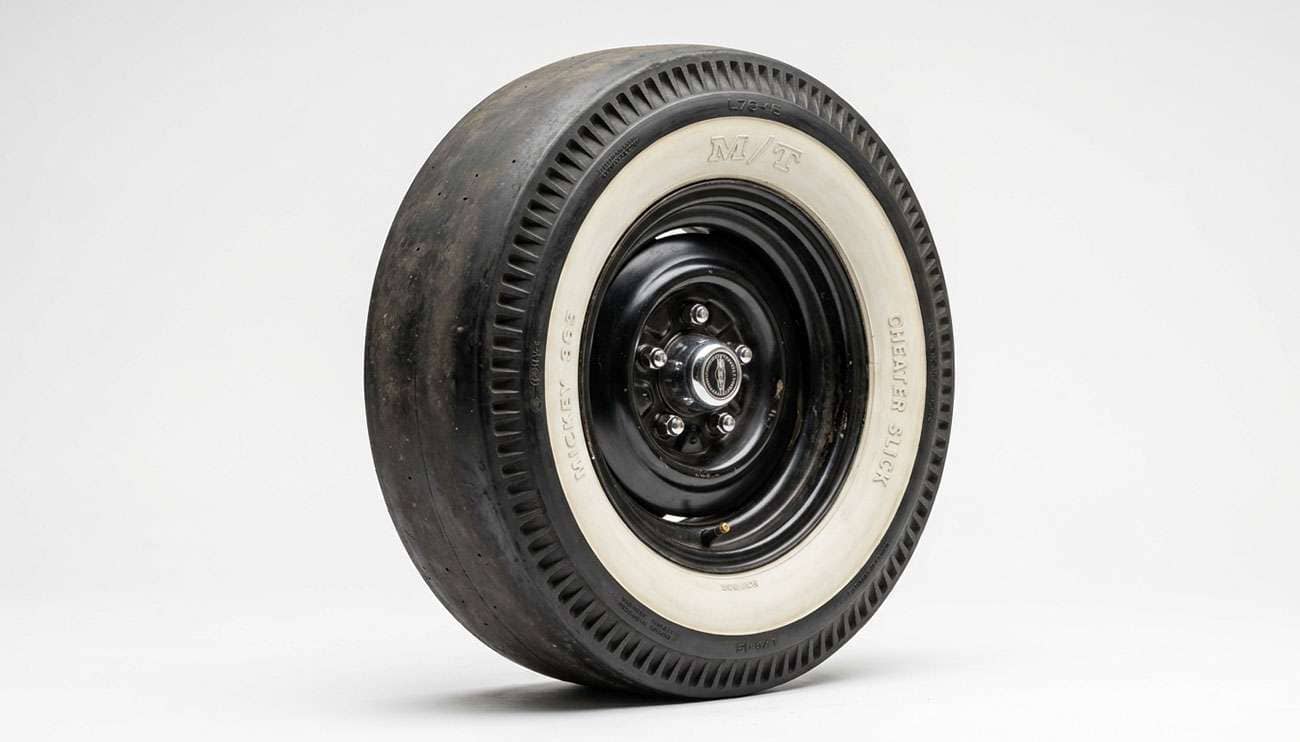
A cheater slick is a drag racing slick with just enough tread molded into it, usually a pair of shallow grooves, to squeak past the law and count as street legal. Back in the 1960s, hot rodders wanted the bite of a full racing slick on the street, but slicks were not DOT approved, so the cops kept writing tickets. Tire makers answered by cutting the bare minimum of tread into a slick so it would pass inspection. That is the whole idea: cheat the law, keep the traction. Here is how they work and what to run.
I have been mounting these things since the days when a set of pie-crusts on a gasser was the coolest thing in the county. Cheater slicks have made a serious comeback with the nostalgia drag crowd, and for good reason. They look right, they hook, and they carry a piece of hot rod history in every sidewall. Let me walk you through what they are, whether you can legally run them, and how to get them under your car.
Strip it down and a cheater slick is a drag slick with a token tread pattern. A true racing slick has a completely smooth face with zero tread, which is illegal for the street. A cheater slick takes that same soft, sticky drag compound and adds a couple of shallow circumferential grooves so it technically has tread. The name says it all: the grooves let you cheat past the DOT rules that would otherwise keep a slick off public roads.
The magic is in the compound. Cheater slicks use the same kind of soft, grippy rubber that a full slick uses, so they warm up and hook far better than a normal street tire at the strip. The trade-off is that soft rubber wears fast and does not love rain or cold. Most cheater slicks are bias-ply tires, which is part of what gives them that authentic vintage look and the flexible sidewall that helps plant power on launch.
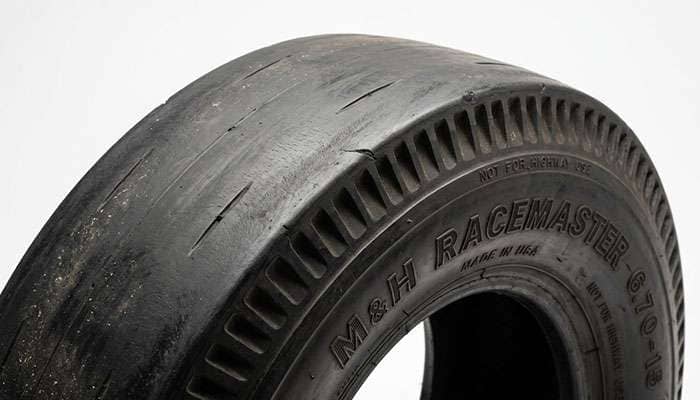
Yes, but only just. That is the entire point of the design. A genuine cheater slick carries enough tread and the right DOT sidewall markings to be street legal, which is why they were so popular in the first place. Modern reproductions like the Firestone Dragster cheater slicks are built with just enough tread to be DOT approved, so you can legally roll to the strip and back.
That said, street legal is not the same as street smart. These are soft drag tires, not all-season rubber. They give up grip in heavy rain, they get greasy in the cold, and they wear quickly, often lasting only around 10,000 street miles. It is also on you to know your local laws, since some areas have minimum tread-depth rules. Run them for the look, the occasional cruise, and the strip, but do not expect them to behave like a touring tire. If you want the modern take on street-and-strip rubber, a DOT drag radial is the other path, and we will compare the two below.
To understand cheater slicks, you have to know where drag rubber came from. M&H, or M&H Racemaster, built the first purpose-made drag slick back in the 1950s, and companies like Firestone and Inglewood Tire followed. Those early tires spawned two names every hot rodder should know: pie-crust and wrinkle-wall.
The pie-crust name comes from the notched pattern molded into the tire's shoulder, where the tread meets the sidewall, which looks just like the crimped edge of a pie. It was not decoration at first. Early wide slicks were made by recapping a fat tread onto a narrower passenger or truck carcass, and those pie-crust ribs acted as little trusses to support the overhanging tread. Once tire makers started building proper wide carcasses, the trusses were no longer needed, so on later tires the pie-crust notches became purely a styling cue. Today that pie-crust shoulder is prized for its authentic late-1950s and early-1960s drag look.
As drag racing got serious, the hard-sidewall pie-crust tire gave way to the wrinkle-wall slick. Wrinkle-walls have soft, flexible sidewalls that literally wrinkle as the car launches, which loads the tire and puts more rubber on the ground for traction. Smoother wrinkle-wall slicks from Goodyear arrived around 1964 to 1965, and within a few years serious drag cars had left the pie-crust behind. For the nostalgia crowd, though, both styles are back in demand precisely because they capture different eras of the sport. The bias-ply construction behind these tires is a big part of the look, and our piece on the bias look versus radial tires explains why that old-school sidewall reads so differently from a modern radial.
People mix these three up all the time, so here is the plain-English breakdown. A cheater slick is the vintage, nostalgia choice. A drag radial is the modern street-and-strip choice. A true slick is the track-only choice. The table below sorts them out.
Feature |
Cheater Slick |
Drag Radial |
True Slick |
|---|---|---|---|
Construction |
Usually bias-ply |
Radial |
Bias or radial |
Tread |
A pair of shallow grooves |
Minimal DOT tread pattern |
None, fully smooth |
Street Legal |
Yes, barely, DOT approved |
Yes, DOT approved |
No, track only |
Best For |
Nostalgia hot rods, gassers, rat rods |
High-horsepower street-strip cars |
All-out drag racing |
Look |
Vintage pie-crust or wrinkle-wall |
Modern low-profile |
Pure racing slick |
If your build is a period-correct hot rod, the cheater slick is the only choice that looks right. If you have a modern muscle car making big power and you want to drive it to the track, a drag radial is the smarter tool. And if the car never sees a public road, a true slick gives you the most traction of all.
Cheater slicks are not for every car, but on the right build they are perfect. Their natural home is the traditional hot rod and the nostalgia drag scene. A gasser with its nose-high stance and a fat set of pie-crust slicks out back is about as iconic as it gets, so if you are chasing that look, start with our gasser stance guide. Rat rods love them too, since a patina build wearing vintage drag rubber tells a story no modern tire can, and our rat rod patina and steelies piece covers that world.
They also fit the pro-street and street-freak playbook, where a tubbed rear and a wide, meaty tire are the whole point. If that is your direction, the big-tire strategy in our pro-street tires guide is worth a read. Across all of these builds, the theme is the same: cheater slicks belong on cars that celebrate old-school drag culture, not on a daily commuter.
The classic cheater slick setup is a big-n-little combo: a tall, wide cheater slick on the rear and a skinny front runner up front. That skinny front reduces rolling resistance and completes the drag look, while the fat rear does the work. It is the same staggered thinking behind our muscle car staggered setup, just taken to a nostalgia extreme.
Clearance is the big thing to plan for. A cheater slick like the Firestone Dragster measures more than 30 inches tall and can run 10 to 12 inches wide, so you need real room in the rear. Most cars running them have radiused wheel openings, a tubbed rear, or no rear fenders at all. Pay close attention to backspacing and wheel width when you order, because a tire that looks perfect on paper can still rub a quarter panel or a frame rail. These tires are typically tubeless but can take a tube if your wheel is not airtight. And if you want the full period look, many cheater slicks come with a wide whitewall, which our whitewall width guide can help you spec. The Firestone Dragster shares a family with other vintage rubber like the Firestone wide oval tires, so the sidewall styling stays consistent across a build.
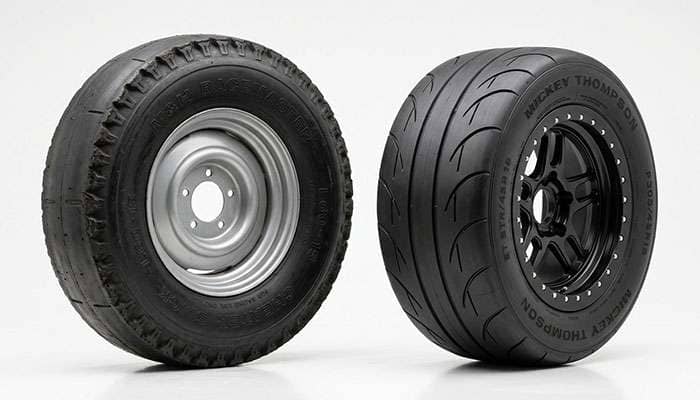
Here are three tires that cover the range, from an authentic vintage cheater slick to the modern drag-radial alternative. Browse the full selection on our drag racing tires page.
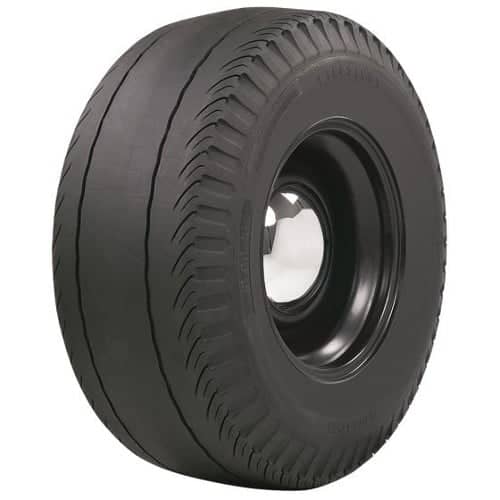
Firestone Dragster Cheater Slick (1000-15, Blackwall) - about $598. This is the nostalgia hero. Built in reproduction molds from the original Firestone drawings, it is a bias-ply cheater slick with the classic pie-crust shoulder and just enough tread to be DOT approved. It looks fantastic in a big-n-little combo and is offered in blackwall or wide whitewall. If you want a period-correct gasser or hot rod tire, this is it. See it on the Firestone Dragster Cheater Slick page.
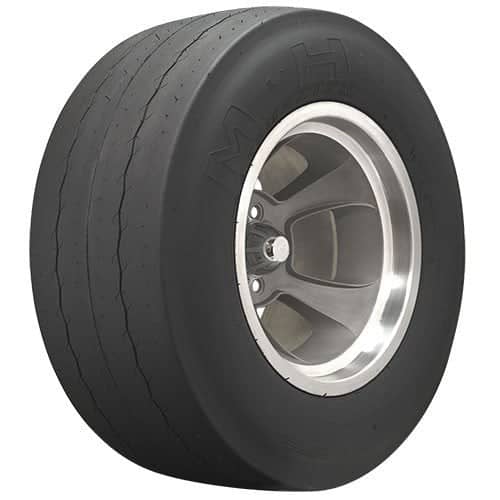
M&H Cheater Slick (26/10.50R15) - about $366. M&H built the very first purpose-made drag slick back in the 1950s, so there is real heritage here. This cheater slick pairs that legacy with a modern size and a sticky compound, making it a strong choice for a nostalgia build that still wants dependable bite. Check it out on the M&H Cheater Slick page.
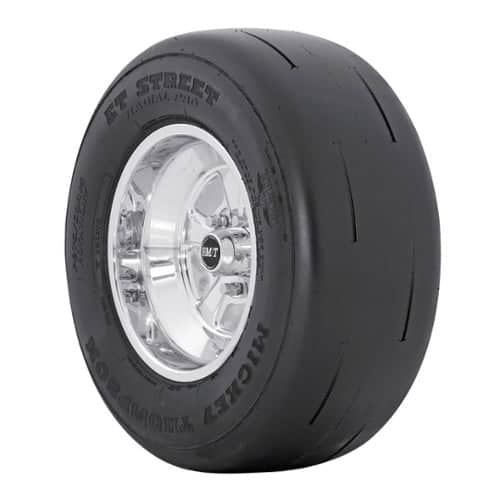
Mickey Thompson ET Street Radial Pro (P275/60R15) - about $338. If your car is a modern high-horsepower street-strip machine rather than a period build, this is the tool. It is a DOT drag radial with a soft drag compound and minimal tread, so you get serious launch traction while staying street legal. It is the sensible pick for driving to the track and back. Find it on the Mickey Thompson ET Street Radial Pro page.
It is not recommended. Cheater slicks use a soft drag compound that wears quickly, gives up grip in heavy rain, and gets greasy in the cold. They are street legal for cruising to the strip and back, but they are not built for daily commuting or all-weather use. For a car you drive often, a DOT drag radial is a better balance.
Yes, but only a token amount. A cheater slick has a slick traction surface with a pair of shallow circumferential grooves added, which is just enough tread to meet DOT requirements and be street legal. A true racing slick, by contrast, has no tread at all.
A true slick has a completely smooth, treadless face and is not street legal, so it is for the track only. A cheater slick is essentially the same tire with a minimal tread pattern molded in, which makes it DOT approved and legal for the street while keeping most of the drag-slick look and grip.
A cheater slick is usually a bias-ply tire with a vintage look and just a couple of grooves, aimed at nostalgia hot rods. A drag radial is a modern radial-construction tire with a proper minimal tread pattern and DOT markings, built for high-horsepower street-and-strip cars that want more predictable street manners.
Most modern cheater slicks are tubeless, so they do not require a tube on a sealed wheel. However, if you are running an older or non-airtight wheel, you can run a tube to hold air reliably. Always confirm the tire's specification and match it to your wheel.
Because they use a soft drag compound, cheater slicks wear much faster than normal street tires, often lasting only around 10,000 street miles depending on how they are driven. Many owners find traction actually improves as the tire wears, but the trade-off is a short overall life compared to an all-season tire.



