
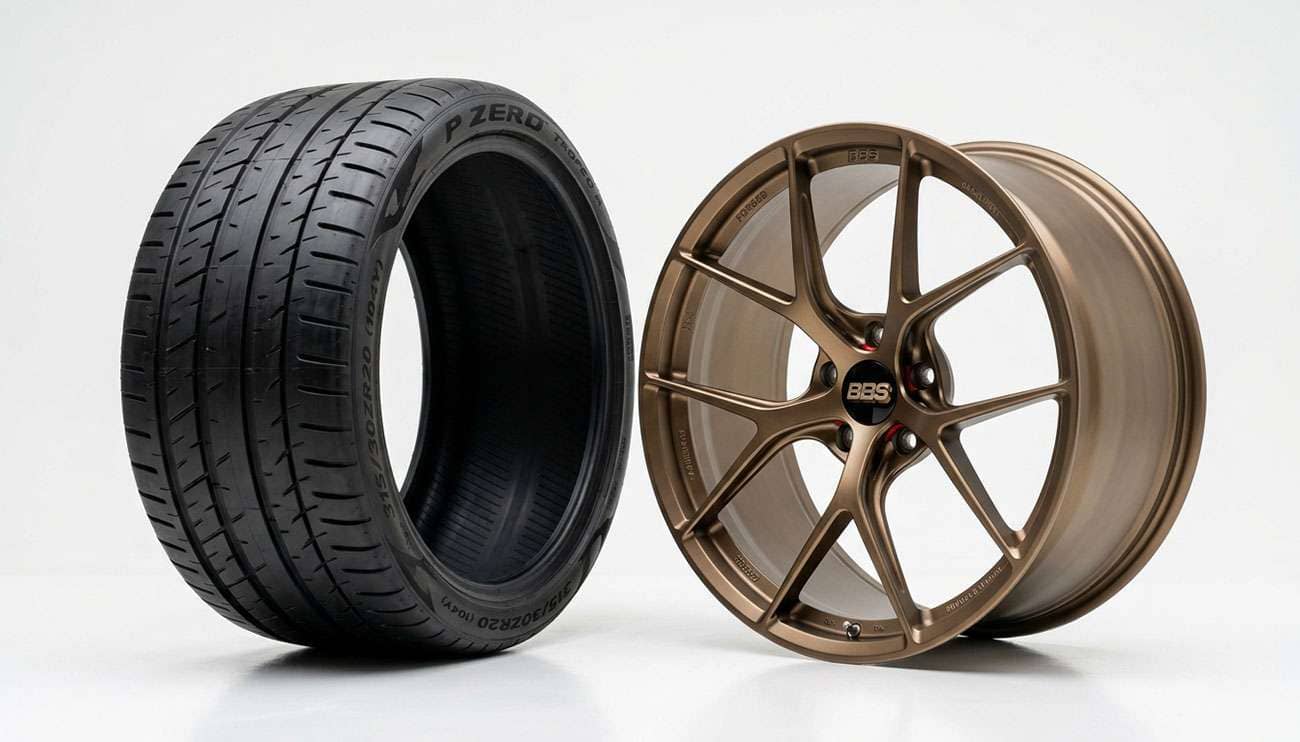
The performance tire and wheel world is moving faster in 2026 than at any point in the last decade. The high-performance tire market is projected to grow from $55.17 billion in 2025 to $59.82 billion in 2026 - an 8.43 percent annual clip on its way to nearly $90 billion by 2031 - and the technology arriving at that pace is reshaping what enthusiasts bolt onto their cars. I'm Dennis Feldman, and this is the Performance & Track installment of our industry trends series, following the wheel, off-road, and tire edition roundups. Here are the seven trends that matter this year.
Overview: The 200 treadwear class - street-legal tires built to a UTQG rating of 200 that behave like competition rubber - has become the most fiercely contested segment in the industry. Every major manufacturer now fields an entry, and each new release resets lap-time expectations for the class.
Performance: Today's 200TW tires grip at levels that would have embarrassed full race tires from fifteen years ago, blurring the old line between street tires and R-compound tires. Tires like the Yokohama Advan A052 and the endurance-focused entries from Falken and Nankang deliver near-slick cornering with wet-weather legality.
Esthetics: Minimal tread void and massive outer shoulder blocks give these tires an unmistakable purposeful look - the visual signature of a car that gets driven hard.
Customization: The class spans 14-inch club racer sizes to 20-inch fitments for modern performance cars, so nearly any build can join.
Pricing: Expect roughly $135 to $350 per tire depending on size - we stock the Advan A052 from $214.99 and the Toyo Proxes R888R from $134.97.
Use Cases: Autocross, time attack, HPDE weekends, and any street car whose owner values corner speed over tread life.
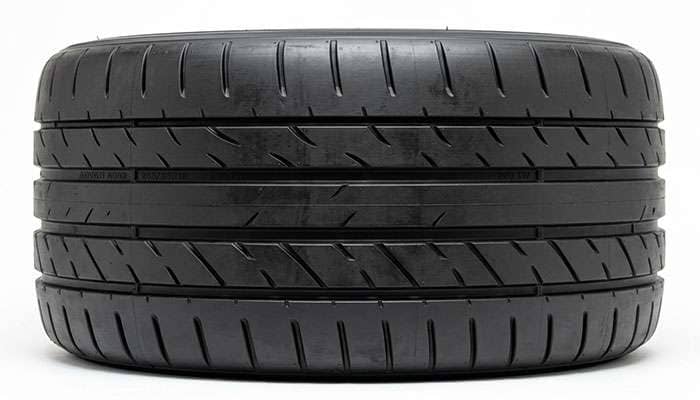
Overview: Racing programs have become the fastest pipeline for street tire development. Industry analysts note that manufacturers co-locating R&D, compounding, and testing have compressed product cycles to three or four years - which means compound chemistry proven in competition reaches the tire aisle faster than ever.
Performance: The headline technology is silica-rich tread compounding, which delivers grip and low rolling resistance at the same time - a combination that was considered a contradiction a decade ago.
Esthetics: Asymmetric tread designs pulled from competition tires now define the look of the ultra-high-performance category.
Customization: The trickle-down means max-performance summer tires now exist for everything from hot hatches to three-row SUVs.
Pricing: Motorsport-derived UHP tires carry a premium over standard all-seasons, but the gap keeps narrowing as the technology scales - strong options like the Nitto NT555 G2 start around $166.
Use Cases: Daily-driven performance cars that see occasional spirited use and want race-bred grip without race-tire wear rates.
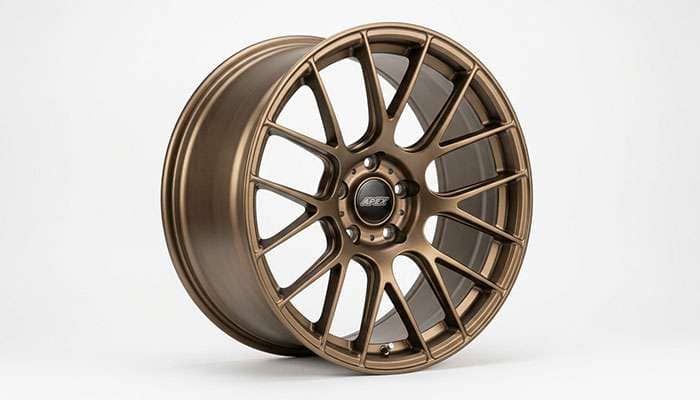
Overview: Flow-formed manufacturing - casting a wheel, then stretching and compressing the barrel under rollers - keeps eating into forged territory. It delivers most of the strength-to-weight benefit of forging at a fraction of the price, and in 2026 it is the default choice for grassroots track builds.
Performance: The rolled barrel aligns the aluminum grain structure, producing a wheel 15 to 25 percent lighter than a comparable cast wheel with better impact resistance where it counts. We ran the full engineering comparison in our cast vs forged vs flow-formed breakdown.
Esthetics: Motorsport-inspired multi-spoke and split-spoke designs dominate, usually in satin bronze, gunmetal, and matte black.
Customization: Track-oriented flow-formed lines now ship in aggressive widths and offsets that used to require custom forged orders.
Pricing: Typically $250 to $450 per wheel - roughly half the entry price of a comparable forged wheel.
Use Cases: HPDE cars, autocross builds, and dual-duty street cars that need a wheel tough enough for curbing but light enough to matter.
Overview: Electric performance cars are showing up at track days in force, and they are rewriting tire requirements as they arrive. Battery-electric models weigh roughly 250 to 350 kilograms more than comparable gas cars, and instant torque can accelerate tread wear by as much as 40 percent under hard launches.
Performance: The industry answered with the HL (High Load) rating, standardized in 2024, plus aramid-reinforced belts and heat-dissipating compounds built for sustained EV loads. The engineering details are in our guide to why EV tires are different.
Esthetics: Aero-optimized wheel designs are crossing over from efficiency into performance styling, with smooth faces and partial covers appearing on track-focused EVs.
Customization: The aftermarket now offers HL-rated UHP fitments in the large diameters EVs demand, a category that barely existed three years ago.
Pricing: HL-rated performance tires typically run 10 to 20 percent above their standard-load equivalents.
Use Cases: Any performance EV that sees hard driving - and given the weight and torque involved, skipping the correct load rating is not a corner worth cutting.
Overview: Big brake kits have become the second upgrade on most serious builds, and they are dragging minimum wheel diameters upward with them. Kits with 14-inch rotors and six-piston calipers commonly demand an 18-inch wheel, and some require 19s.
Performance: Larger rotors mean more thermal mass and more consistent stopping on track - but only if the wheel's barrel profile and spoke geometry actually clear the caliper.
Esthetics: Open, concave spoke designs that showcase the caliper are the dominant style - though concavity and clearance fight each other, a geometry problem we mapped in our piece on concave wheels and brake clearance.
Customization: Wheel brands now publish caliper clearance templates, and buying the wheel and brake plan together is becoming standard practice.
Pricing: The hidden cost of a big brake kit is often a new set of wheels; budget for both or measure twice.
Use Cases: Track cars running sustained sessions, heavy performance sedans, and any build where the stock brakes fade before the driver does.
Overview: Wider rear wheels and tires than fronts - once the signature of exotic cars - are now factory equipment on ordinary performance models and a default aftermarket choice.
Performance: On rear-drive cars, extra rear contact patch converts power into forward motion instead of wheelspin. The trade-off is that staggered cars cannot rotate tires front to rear, so rear tire budgets run higher.
Esthetics: The planted, wide-hipped rear stance remains one of the most requested looks in the shop, from modern muscle to German sedans.
Customization: Manufacturers now build staggered collections into their catalogs, with matched front and rear designs across diameters. Our muscle car staggered setup guide covers how to size the split correctly.
Pricing: Expect the rear pair to cost 10 to 25 percent more than the fronts in both wheels and tires.
Use Cases: Rear-drive performance cars putting down real power, and any build chasing the OEM-plus wide-body look.
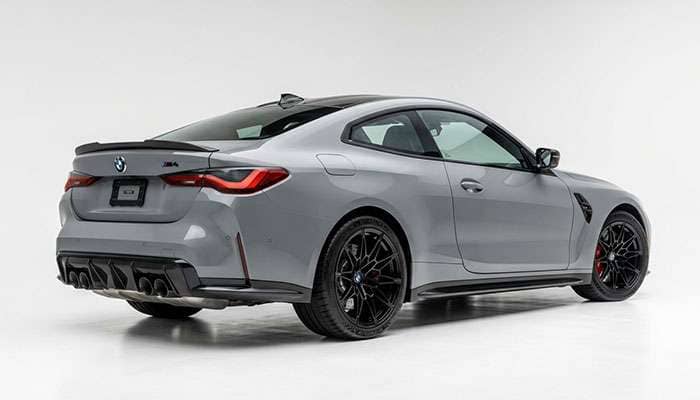
Overview: Grassroots track culture is the demand engine behind everything above. HPDE programs, autocross series, and open lapping days keep growing, and market data reflects it: track-capable rubber is the fastest-growing category in the performance tire segment, expanding at roughly 8.5 percent annually.
Performance: First-time track drivers quickly learn that tires are the single biggest lap-time variable on a stock car - which is why the entry point into this hobby is almost always a tire purchase.
Esthetics: The dual-duty build - a street car with track hardware - has become its own style, numbered doors optional.
Customization: A dedicated set of track wheels and tires, swapped on at the gate, is the most cost-effective upgrade path and keeps the daily tires out of the abuse.
Pricing: A capable second set of flow-formed wheels and 200TW tires lands between $2,000 and $3,500 for most cars - less than a season of replacing prematurely cooked street tires.
Use Cases: Anyone track-curious. Start with our eight best track day tires and work backward from the rubber.
Trend |
What's Driving It |
Cost Impact |
Best For |
|---|---|---|---|
200TW arms race |
Competition classes built around the rating |
$135-$350 per tire |
Autocross, time attack, HPDE |
Motorsport tech migration |
3-4 year product cycles, silica compounds |
Narrowing UHP premium |
Daily-driven performance cars |
Flow-formed wheels |
Near-forged strength at half the price |
$250-$450 per wheel |
Grassroots track builds |
EV track performance |
Weight, torque, HL load standard |
10-20% over standard load |
Performance EVs driven hard |
Bigger brakes, bigger wheels |
14-inch rotors need 18-inch-plus wheels |
Often forces a wheel purchase |
Track cars, heavy sedans |
Staggered fitments |
Factory adoption, traction demands |
Rears cost 10-25% more |
Rear-drive power builds |
Track-day boom |
HPDE and autocross growth |
$2,000-$3,500 second set |
Anyone track-curious |
The through-line for 2026 is access: technology that lived exclusively in professional racing five years ago - competition compounds, flow-formed construction, engineered staggered fitments - is now priced for the weekend enthusiast, and the track-day boom proves people are using it. Whether you're building a dedicated track set or upgrading a daily driver with motorsport-derived rubber, the smart play is matching the tire and wheel to how the car actually gets used. Browse our full lineup of performance racing tires and we'll help you spec a setup that keeps pace with where this industry is headed.
They are street-legal performance tires with a UTQG treadwear rating of 200, the threshold most competition classes use as a minimum. The rating has become a de facto category of extreme-grip tires built for autocross, time attack, and track days while remaining road legal.
Many are. 200TW tires and DOT-approved R-compounds are legal on the street, though grip drops sharply in cold or wet conditions and tread life is short. Full racing slicks are not DOT approved and are track-only.
Yes. Performance EVs carry several hundred extra kilograms and deliver instant torque, which overloads standard-rated tires and accelerates wear. HL (High Load) rated performance tires with reinforced construction are the correct spec for hard-driven EVs.
For grassroots track duty, absolutely. The flow-forming process strengthens the barrel where track loads concentrate, and the weight savings over cast wheels improve every performance metric. Dedicated forged wheels still win for professional competition and extreme applications.
A dedicated second set built on flow-formed wheels and 200TW tires typically runs $2,000 to $3,500 for most cars. It protects your street tires from track abuse and is usually cheaper over a season than replacing prematurely worn daily rubber.



