
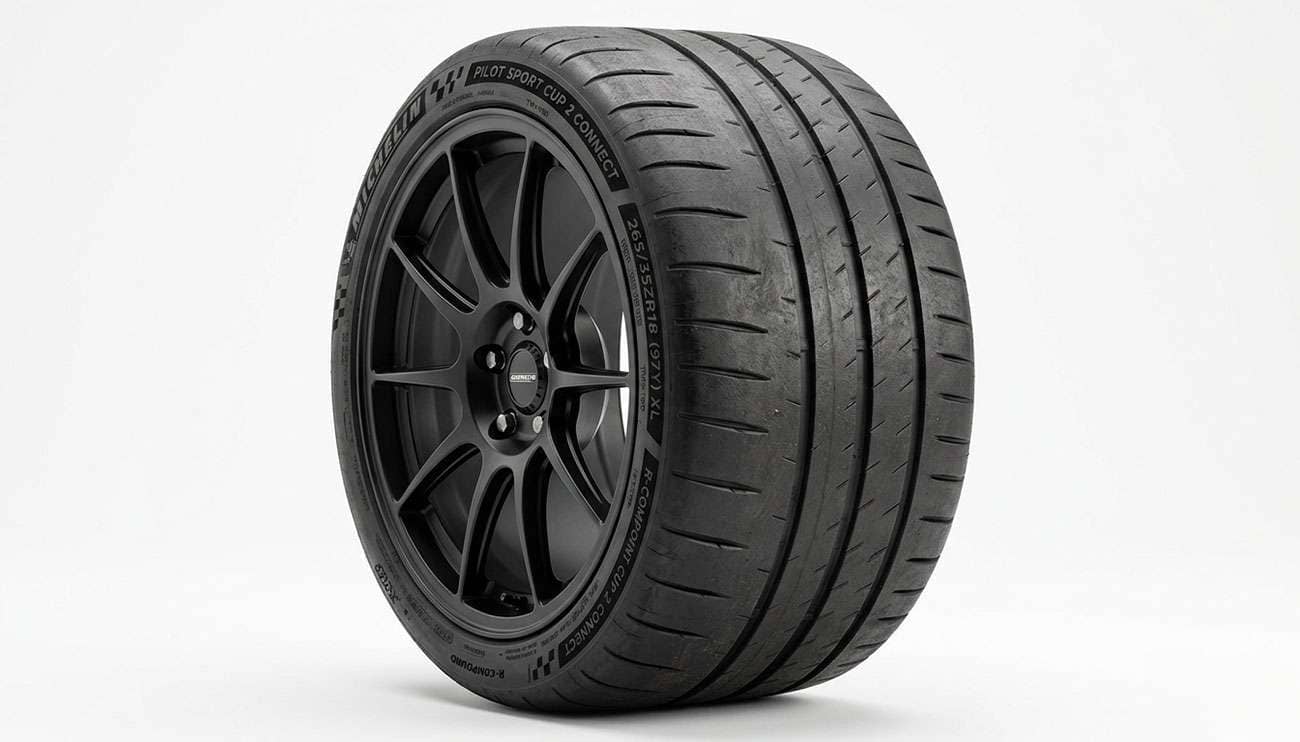
R-compound tires are DOT-legal track tires built with a very soft, sticky tread compound and minimal tread pattern, often semi-slick. They are the closest thing to a racing slick you can still register for the street. The trade-off is that they are designed for the track, not the road: they need heat to work, they wear fast, and they are poor in the cold and wet. On a hot, dry course they deliver grip a street tire cannot touch. On your Tuesday commute, they are a compromise at best.
I get asked about these constantly, usually by someone shopping their first set of track tires. The short version is that R-compounds are a precision tool. Used in the right place, they transform a car. Used in the wrong place, they will frustrate you and wear out fast. Let me break down how they work, how they differ from the 200 treadwear tires everyone compares them to, and whether they are right for your setup.
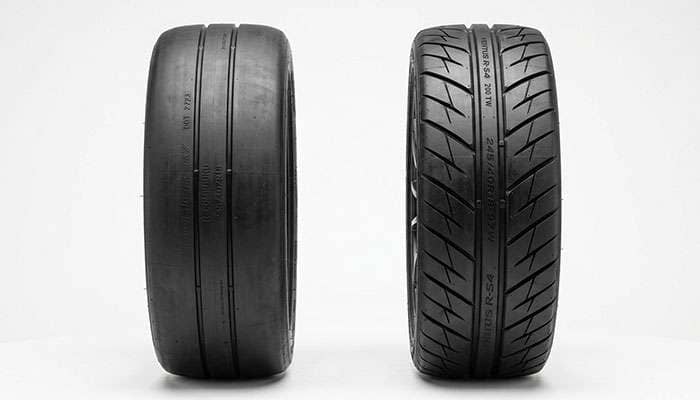
The performance comes from the rubber. An R-compound uses a soft compound that gets stickier as it heats up, paired with a tread that is mostly smooth so more rubber touches the pavement. That is the whole formula: maximum contact, maximum grip, minimum compromise for the street.
The "R" comes from the DOT R tread-wear category, the designation for these soft race-bred compounds. It has nothing to do with the letter R you might see in a tire size or a speed rating. The name simply marks the tire as a racing-type compound that still technically meets DOT requirements, usually by carrying the minimum couple of grooves needed for approval.
Most carry a DOT stamp, so they are technically street legal, but legal and advisable are two different things. Manufacturers are clear that these tires are intended for competition. They work on heat, so until you get temperature into them they feel vague and slippery, and below roughly 60 degrees they can feel like driving on hockey pucks. Each time the tire heats up and cools down counts as a heat cycle, and the grip is at its best for only a limited number of those cycles, sometimes as few as five for the most aggressive compounds. If you want to understand why temperature matters so much, our data-driven look at how tire compounds actually behave in extreme weather is worth a read.
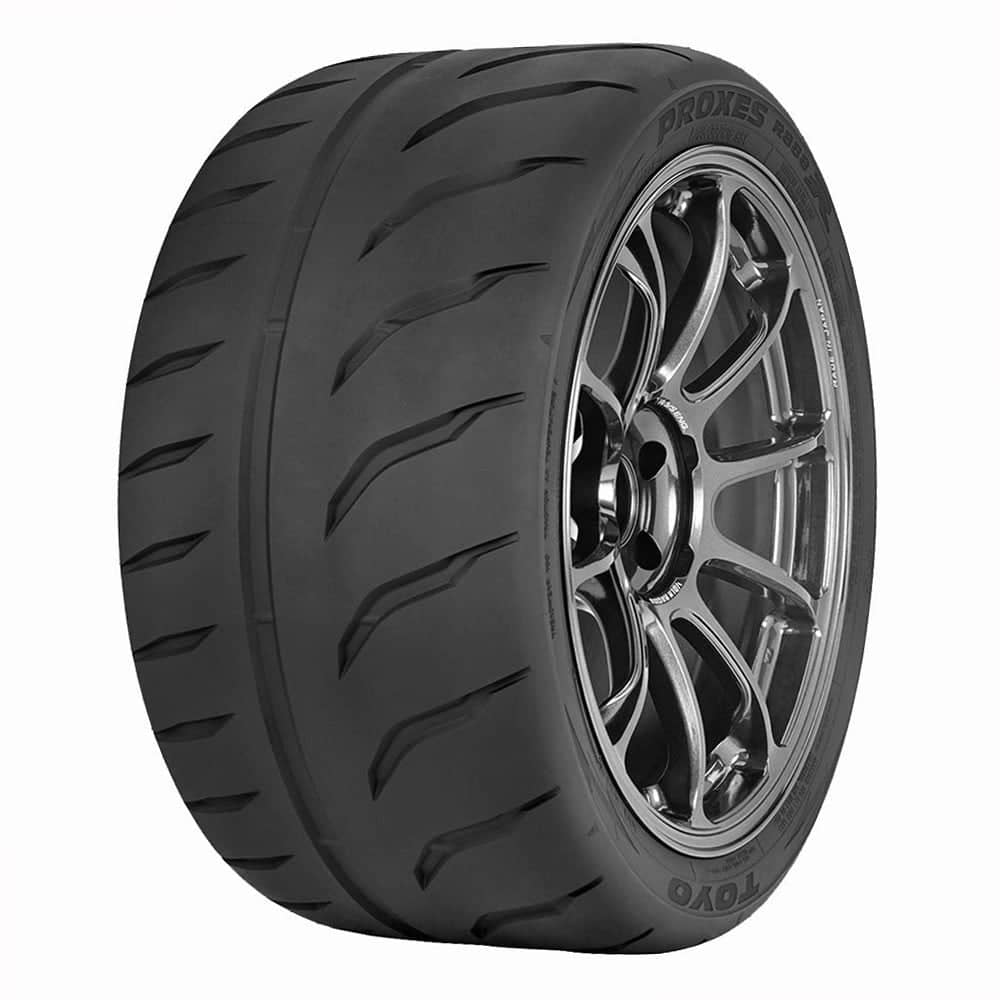
This is the comparison that trips up most shoppers, because the two categories overlap and the marketing blurs them. Here is the clean way to think about it.
Feature |
R-Compound |
200 TW Extreme |
UHP Summer |
|---|---|---|---|
Treadwear (UTQG) |
100 or below |
200 |
300 to 400 |
Best use |
Track and competition |
Track plus street |
Spirited street |
Wet and cold grip |
Poor |
Fair |
Good |
Tread life |
Very short |
Short |
Moderate |
It comes down to the treadwear rating and the intent. A true R-compound usually carries a UTQG treadwear rating of 100 or below and is tuned for the track first. A 200 treadwear tire, often sold as an "extreme performance" or "extreme high performance" street tire, is built to balance serious grip with enough manners and tread life to drive on the road. Many racing organizations, including SCCA, actually require a 200 treadwear minimum in certain classes, which is a big reason the 200 treadwear category has gotten so fast. If you want the rating system itself explained, our guide on UTQG tire ratings decoded covers how treadwear numbers are assigned.
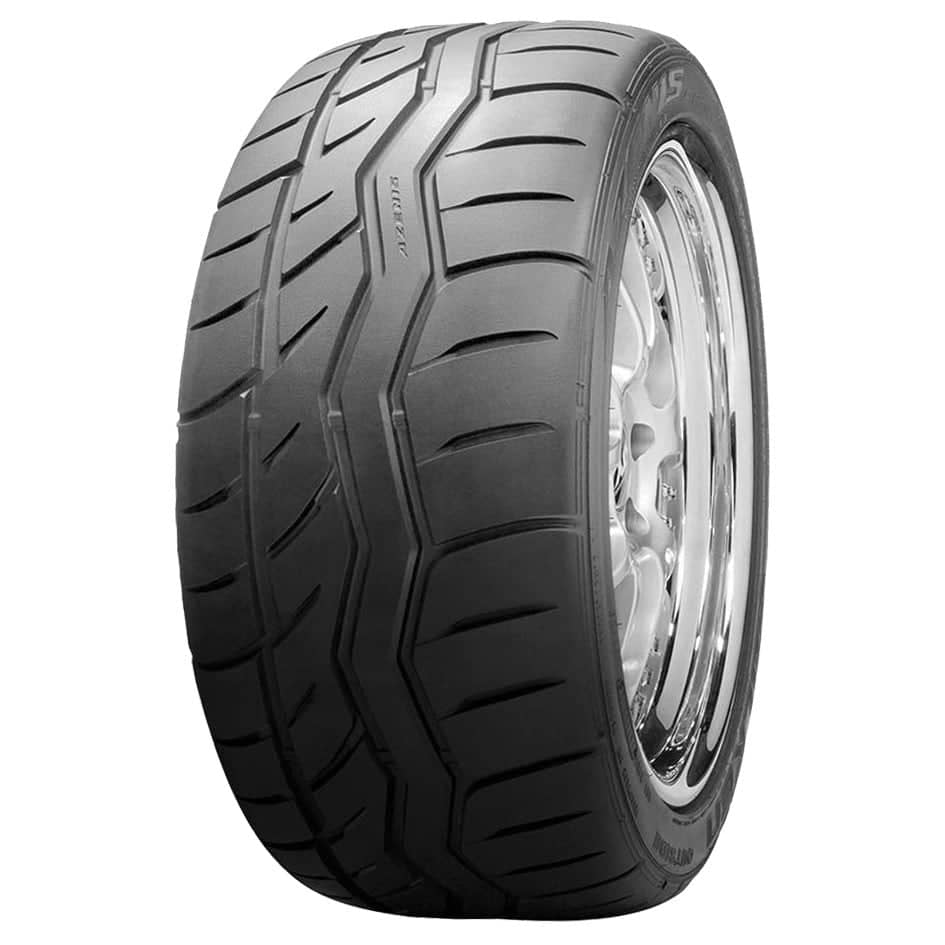
The 200 treadwear tire, without question. Today's 200 treadwear tires have gotten remarkably quick and have closed much of the gap to older R-compounds, while still being drivable to and from the track on the same set. A car running something like a Falken Azenis RT615K+, a Nitto NT05, or a Yokohama Advan A052 can cruise to the event, run hard, and drive home. A dedicated R-compound is happiest on a trailer. For more on the bigger summer-tire picture, see our breakdown of summer tires vs all-season tires.
I am a fan of R-compounds in the right application, but you need to go in with your eyes open. These are the costs of all that grip.
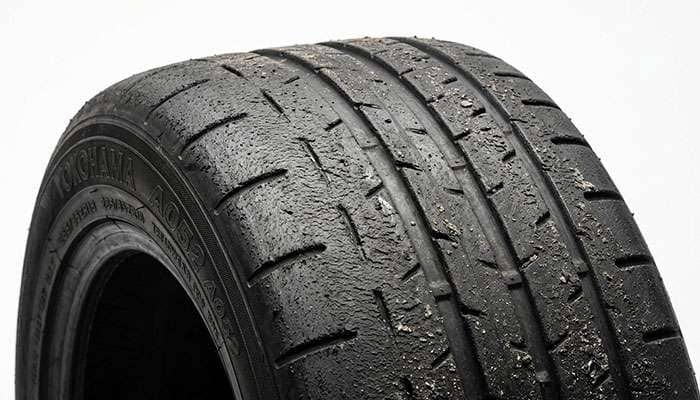
Not long, and there are two clocks running. The first is heat cycles. The compound peaks for a limited number of heat-up and cool-down cycles, then the grip tapers off even with tread left. The second is plain wear: drive them hard and a set can be down to the cords in a few thousand miles. The harder and hotter you run them, the faster both clocks tick. This is why dedicated racers shave new tires and manage cool-down time carefully.
Poorly. A semi-slick simply does not have the grooves to evacuate standing water, so a true slick-style R-compound is dangerous in the wet. The fuller-tread R-compounds like the Toyo Proxes R888R or Nitto NT01 can handle a damp surface when they still have depth, but none of them are rain tires. Cold is the other enemy. Below operating temperature these compounds lose grip sharply, and they give very little progressive warning before they let go, which is the opposite of what a new track driver wants. That abrupt, on-or-off breakaway is a real safety consideration. If you are weighing a semi-slick against a true drag tire for a different kind of build, our drag slicks vs drag radials comparison shows how slick-style rubber behaves.
It depends entirely on what you are doing with the car. Let me give you the straight fitment answer.
If you have a dedicated track car that gets trailered, or you are chasing the last few tenths in dry competition, a true R-compound like the Nitto NT01, Toyo Proxes R888R, or Yokohama Advan A048 is the tool for the job. If your car does double duty, drives to the track, runs the day, and drives home, a 200 treadwear extreme performance tire is almost always the smarter choice. And if this is your first track day or autocross, I steer people toward a 200 treadwear tire on purpose: the more progressive breakaway teaches you the car's limits instead of snapping you around. For a curated set of options, our 8 best track day tires picks are a good starting point, and if you want grip without the R-compound penalties for a street car, the 9 best all-season performance tires list covers streetable choices.
No, and I will be direct about it. They are loud, they ride hard, they have poor rolling resistance, they are unsafe below operating temperature, and they wear out in a fraction of the miles a street tire delivers. If you want one tire that does it all, a 200 treadwear or ultra-high-performance summer tire gives you most of the dry grip with a fraction of the headaches.
No, and this confuses a lot of people. An R speed rating means the tire is certified for speeds up to 106 mph and has nothing to do with the compound. A tire can carry an R speed rating and be a basic touring tire. R-compound refers to the soft racing rubber, not the speed symbol. If you want the speed-rating system explained, our tire speed rating explained guide clears it up.
R-compound tires are a specialist's tire: DOT-legal in name, but built for the track in every other way. They reward heat, punish cold and rain, and trade longevity for outright grip. If you run a dedicated track car, they belong in your program. If your car drives to the event, a modern 200 treadwear extreme performance tire will get you nearly there without the daily-driving penalties, and if you are just starting out, the more forgiving tire will make you faster sooner. Match the tire to how you actually use the car, and you will be both quicker and safer. When you are ready to shop, browse our lineup of extreme performance tires and we will help you pick the right compound for your build.
R-compound tires are DOT-legal track tires made with a very soft, sticky tread compound and minimal, often semi-slick tread. They are the closest thing to a racing slick you can register for the street, built for maximum dry grip on track rather than street use.
Most carry a DOT stamp, so they are technically street legal, but manufacturers intend them for competition. They need heat to grip, perform poorly below about 60 degrees, and are unsafe in the rain, so they are not a good choice for everyday driving.
A true R-compound usually has a UTQG treadwear rating of 100 or below and is tuned for the track first. A 200 treadwear tire, sold as an extreme performance street tire, balances serious grip with enough tread life and manners to drive on the road, and is far more streetable.
Not long. Grip peaks for a limited number of heat cycles, sometimes as few as five for the most aggressive compounds, and hard use can wear a set down to the cords in a few thousand miles. The harder and hotter you run them, the faster they fade.
No. They are loud, ride hard, have poor rolling resistance, grip poorly when cold, and wear out quickly. A 200 treadwear or ultra-high-performance summer tire gives you most of the dry grip with far fewer daily-driving drawbacks.
No. An R speed rating certifies a tire for speeds up to 106 mph and has nothing to do with the rubber. R-compound refers to the soft racing compound itself. A tire can carry an R speed rating and still be an ordinary touring tire.



