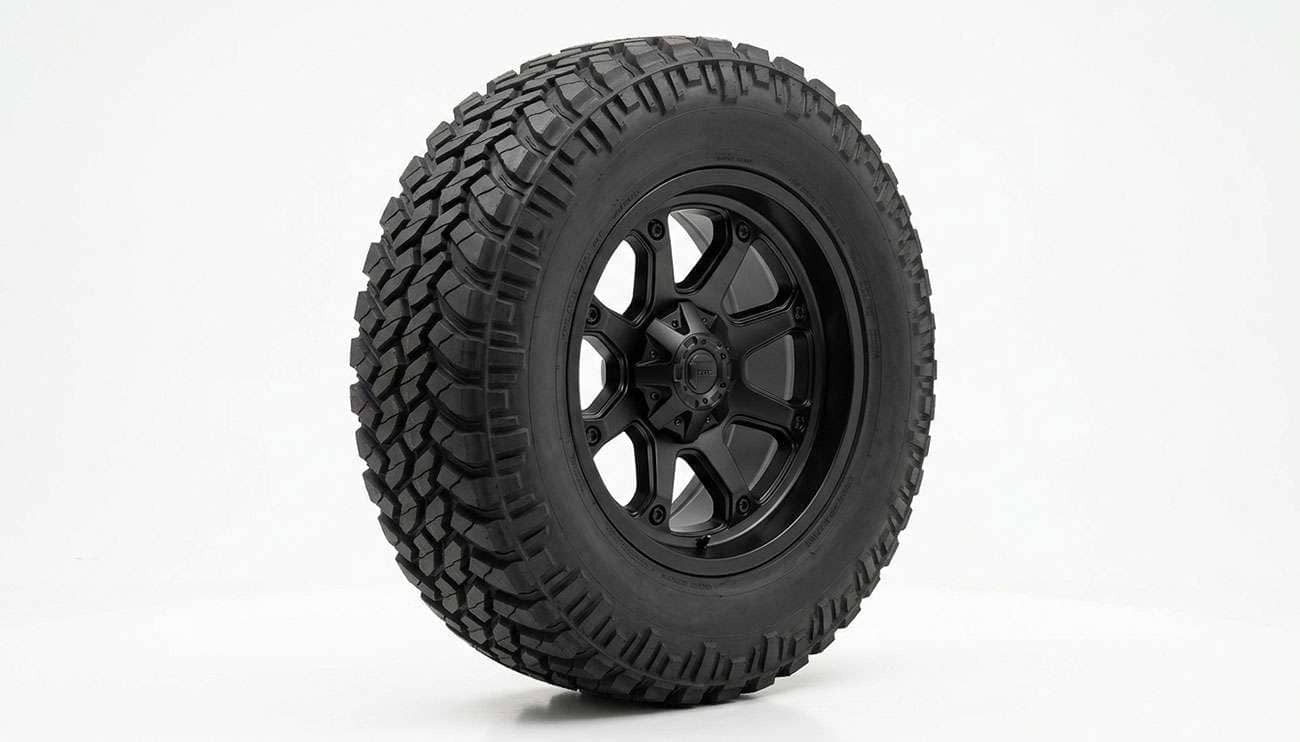
Off-road and overlanding have gone from a weekend niche to one of the fastest-growing corners of the aftermarket, and 2026 is the year the hardware finally caught up to the hype. The explosion of mid-size platforms - the Ford Bronco, Toyota Tacoma, Jeep Gladiator, and Chevy Colorado - put a purpose-built rig in a lot of driveways, and those owners want wheels and tires that survive a real trail, not just look the part in a parking lot.
I am Dennis Feldman, and I spend most of my week spec'ing fitments for exactly these builds. What I am seeing this year is a clear shift from show to function. Buyers are asking harder questions: What load range do I actually need? Will a 17-inch wheel clear my brakes and still let me air down? Is a simulated beadlock worth it, or do I need the real thing? Those are the right questions, and the industry has finally built products that answer them.
The seven trends below are the ones moving real volume at Performance Plus Tire right now. Each one gets the same breakdown - what it is, how it performs, how it looks, how you can customize it, what it costs, and who it is actually for - so you can decide which of these belongs on your rig. Every product I name is one we stock and one that is current for the 2026 model year, not a discontinued SKU riding out its last inventory.
Whether you are building a rock crawler, a high-desert overlander, or a daily-driven trail truck, this is the state of off-road hardware in 2026. Let us get into it.
The single biggest fitment shift I have watched over the last two years is owners going down in wheel diameter, not up. A rig that came from the factory on 20s is getting rebuilt on 17s or 18s the second it becomes a trail truck.
Downsizing to a 17- or 18-inch wheel trades expensive rim real estate for cheap, tough sidewall. On a 35-inch tire, dropping from a 20-inch to a 17-inch wheel adds roughly an inch and a half of extra sidewall per side - rubber that flexes, absorbs impacts, and grips when you air down. It is the most cost-effective upgrade on this entire list.
More sidewall means a bigger contact patch when you drop to 12-18 PSI on the trail, better bump absorption over rock and washboard, and far less risk of bending a rim or slicing a low-profile tire on a sharp edge. Steel and cast aluminum off-road wheels in these smaller diameters also tend to be more repairable in the field.
The look is unmistakably purpose-built. A tall, aggressive sidewall with visible tread blocks reads as capable in a way a stretched 22 never will. It is the stance that says the truck actually leaves pavement.
Seventeen and eighteen-inch fitments open up the widest catalog of true off-road wheels, so you get maximum choice on offset, backspacing, bolt pattern, and finish. This is where the beadlock and flow-formed options later in this list live.
Because you are buying less aluminum, downsized wheels are frequently cheaper per corner than the factory 20s they replace, often landing in the USD 150 to USD 350 range for a quality cast off-road wheel. The tire is where you invest.
Rock crawling, overlanding, and any build that regularly airs down. If your truck never sees dirt, keep the 20s. If it does, 17s and 18s are the smartest first move you can make.
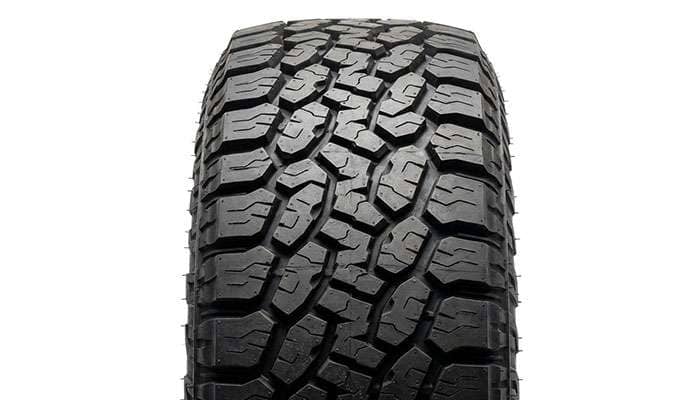
The hottest tire category of 2026 is not all-terrain and it is not mud-terrain - it is the rugged-terrain hybrid that splits the difference. These tires borrow the biting shoulder lugs of an M/T and the on-road manners and tread life of an A/T.
Rugged-terrain (R/T) tires use an aggressive, open tread center with reinforced, staggered shoulder blocks that throw mud and grip rock, wrapped in a compound tuned to stay quiet and last on the highway. If you have ever had to choose between an all-terrain and a mud-terrain, understanding the differences between H/T, A/T, and M/T tires is exactly why this hybrid category exploded.
You get 70 to 80 percent of a mud-terrain's off-road bite with dramatically less road noise, better wet traction, and longer tread life. Options like the Nitto Ridge Grappler, Toyo Open Country R/T Trail, and Falken Wildpeak R/T01 are the poster children - genuine trail capability that will not punish you on a 300-mile highway day.
Hybrids look mean. Deep sidewall lugs, aggressive tread voids, and side-biters give you the M/T stance without the M/T drone. For a lot of overlanders, this is the ideal balance of attitude and civility.
The rugged-terrain segment now spans everything from 30-inch daily sizes up to 37s and beyond, with load-range C, D, and E builds, so you can dial the exact size and load rating your platform needs.
Expect roughly USD 190 to USD 330 per tire in common half-ton and mid-size fitments. The Mickey Thompson Baja Boss A/T starts around USD 193, the Nitto Ridge Grappler around USD 229, and the Toyo Open Country R/T Trail around USD 290.
The perfect answer for a daily-driven trail truck or overlander that needs to do highway miles all week and hit dirt on the weekend. It is the single most-requested tire type at our counter right now.
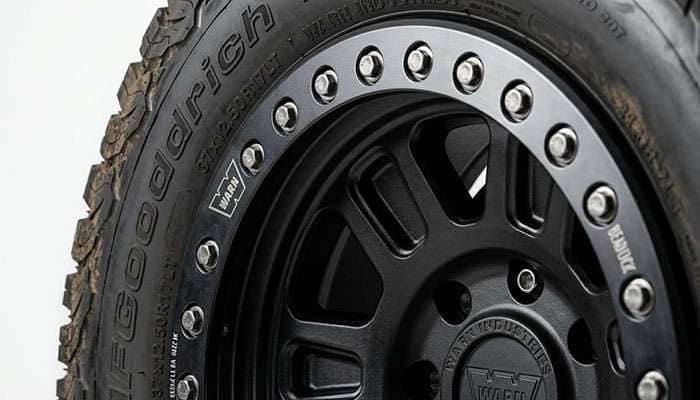
Beadlocks are having a moment, and it is important to know which kind you are buying, because the two are very different products at very different price points.
A true beadlock physically clamps the tire bead between the wheel and a bolt-on ring, letting you run single-digit tire pressures without the bead unseating. A simulated beadlock gives you the same rugged outer-ring look but bolts to the face cosmetically - the bead still seats conventionally. Raceline, for example, offers both: the Podium and Monster RT are true beadlocks, while the Krank and Trophy are simulated.
True beadlocks are the gold standard for hardcore crawling because they hold the tire at 5 to 8 PSI for maximum wrap and traction. Simulated beadlocks add nothing mechanically, but for 95 percent of overlanders who air down to the mid-teens, a quality standard wheel already holds the bead fine.
The bolt-ring look is arguably the defining off-road wheel style of the decade. Whether functional or cosmetic, that ring of hardware reads as serious capability - which is why simulated versions sell so well.
Choices run deep across Method, Fuel, KMC, and Raceline, from cast simulated rings all the way up to monoblock forged true beadlocks like the KMC KM444 and KM445. You can spec ring color, bolt color, and face finish independently on many models. These are some of the off-road wheels we've tested on brutal trails.
Simulated-beadlock cast wheels often land in the USD 200 to USD 350 range. True beadlocks command a premium for the extra ring, hardware, and engineering, and forged true beadlocks can run well past USD 500 per wheel.
Buy a true beadlock if you crawl rocks and run very low pressures. Buy a simulated beadlock if you want the look and air down to normal overlanding pressures. Do not pay true-beadlock money for capability you will never use.
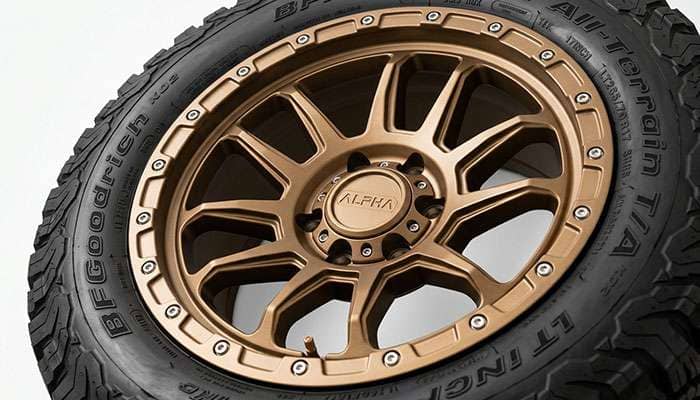
Gloss black had a long run. In 2026, the finish moving fastest on off-road wheels is bronze, closely followed by satin and matte earth tones.
Bronze - in matte, satin, and burnt variations - has become the signature off-road colorway. Black Rhino alone offers it across the Apache, Bandolier, Barstow, Caprock, and Crawler; Method runs it on the 106 Beadlock; and Raceline offers bronze on the Krank and Ryno beadlock lines.
Finish is mostly cosmetic, but there is a practical angle: matte and satin finishes hide trail dust, fine scratches, and brake haze far better than a mirror polish or gloss black. They simply look clean longer between washes.
Bronze pops against white, gray, and green trucks and pairs beautifully with tan interiors and overland accessories. Satin gunmetal and matte earth tones give a more tactical, understated look. It is the biggest visual shift the segment has seen in years.
Beyond bronze, expect burnt-bronze bolts, tinted machined rings, and two-tone matte black with bronze accents. Because these are often powder or PVD finishes, keeping them looking right is straightforward - here is how to clean aftermarket wheels by finish.
A premium bronze or specialty finish usually adds nothing to modest USD 20 markup over the same wheel in matte black. It is one of the cheapest ways to make a build look custom.
Any overland or trail build where you want a current, distinctive look without a custom-paint bill. Bronze is the safe-but-fresh choice for 2026.
The construction story of the year is flow forming going mainstream in the off-road aisle. It is the sweet spot between a cheap cast wheel and an expensive forged one.
Flow forming (also called flow forming or rotary forging) starts with a cast center and then uses rollers and heat to spin-stretch the barrel, aligning the aluminum grain much like forging does. The result is a barrel that is thinner, stronger, and lighter than a conventional cast wheel. Black Rhino runs it on models like the Rapid, Sandstorm, Shogun, and Stadium.
You get a meaningful drop in unsprung weight - which improves acceleration, braking, and suspension response - plus higher load ratings and better impact resistance than standard casting, without the price of a full forging.
Flow forming allows thinner spokes and cleaner barrel profiles, so these wheels can pull off concave and split-spoke designs that would be too heavy in a basic cast wheel while still looking rugged.
Flow-formed off-road wheels come in the full range of modern finishes and aggressive spoke patterns. If you are weighing brands, our take on Fuel vs Method wheels is a good place to start understanding what you are paying for.
Flow-formed off-road wheels typically slot between cast and forged - roughly USD 300 to USD 500 per wheel depending on size and finish. For most overlanders, this is the best strength-to-dollar ratio available.
Overlanders carrying heavy payloads (roof tents, drawers, water, fuel) who want forged-adjacent strength and weight savings without forged pricing. This is the value pick of 2026.
As rigs get loaded heavier and travel farther, the conversation has shifted from tread pattern to load rating and all-weather certification. This is the most technical trend on the list, and the most overlooked.
A fully kitted overlander with a rooftop tent, drawer system, fridge, recovery gear, and full fuel and water can easily carry 800 to 1,200 pounds of added weight. That demands load-range D or E tires, and increasingly buyers want the Three-Peak Mountain Snowflake (3PMSF) rating for genuine winter and high-altitude capability.
A higher load range means a stiffer sidewall that resists squirm and heat under sustained load, which protects the tire and improves stability. A 3PMSF-rated all-terrain like the Falken Wildpeak A/T4W or Toyo Open Country A/T III adds real snow and ice grip so you do not need a second set of tires. Matching load and pressure correctly also directly affects off-road tire tread life.
These tires look the part with modern siping and shoulder scallops, but the story here is engineering, not appearance. The badge that matters is the snowflake on the sidewall.
Load-rated all-terrains span nearly every off-road size, from 30-inch touring sizes to 35s, in load ranges C through F, so you can match the exact payload rating your platform and gear require.
Quality 3PMSF all-terrains run roughly USD 175 to USD 325 per tire. The Toyo Open Country A/T III starts around USD 174, and the Falken Wildpeak A/T4W around USD 202.
Any heavily loaded overlander, tow rig, or four-season traveler. If you carry weight or see snow, load range and the 3PMSF badge should drive your tire choice before tread pattern does.
Tire Model |
Type |
Starting Price (USD) |
|---|---|---|
Toyo Open Country A/T III |
All-Terrain (3PMSF) |
174 |
Mickey Thompson Baja Boss A/T |
Rugged-Terrain Hybrid |
193 |
Falken Wildpeak A/T4W |
All-Terrain (3PMSF) |
202 |
Nitto Ridge Grappler |
Rugged-Terrain Hybrid |
229 |
Toyo Open Country R/T Trail |
Rugged-Terrain Hybrid |
290 |
Nitto Trail Grappler M/T |
Mud-Terrain |
293 |
The final trend is the platform driving all the others. The mid-size overland segment - Bronco, Tacoma, Gladiator, and Colorado - is where the growth is, and fitment for these trucks has its own rules.
These mid-size rigs are lighter and narrower than a full-size half-ton, so the right wheel-and-tire package is different. Getting bolt pattern, offset, and backspacing correct matters more here because there is less fender and suspension clearance to absorb a wrong guess.
Correct fitment keeps steering geometry, scrub radius, and bearing loads in check while giving you the tire clearance you want. On these platforms, a moderately negative offset widens the track for stability without the extreme poke and rubbing that oversized full-size fitments invite.
A properly filled wheel well with a 33- or 35-inch tire tucked under trimmed fenders is the defining overland look, and mid-size trucks wear it cleanly without needing a massive lift.
Bolt patterns vary by platform - the Bronco and Tacoma use 6x139.7, the Colorado uses 6x120, and the Gladiator uses 5x127 - so always confirm before you buy. From there you can tune offset and backspacing to your lift and tire size. Many of these same principles carry over from our guide to the best wheels for lifted trucks.
Platform-specific overland packages vary widely, but a complete mid-size wheel-and-tire setup in the trends above generally runs from roughly USD 1,600 to USD 3,500 for a set of five, depending on wheel construction and tire size.
Every mid-size overland and trail build. Get the fitment right first, then choose your finish and beadlock style - not the other way around.
Here is how the seven trends stack up at a glance, so you can see which ones matter most for the way you actually use your rig.
Trend |
Primary Benefit |
Best For |
Typical Price |
Top Pick |
|---|---|---|---|---|
17-18 in Downsizing |
More sidewall, better air-down |
Crawlers and overlanders |
USD 150-350 per wheel |
Cast off-road 17 in |
Rugged-Terrain Tires |
M/T grip, A/T manners |
Daily-driven trail trucks |
USD 190-330 per tire |
Nitto Ridge Grappler |
Beadlock Wheels |
Low-pressure bead retention or look |
Rock crawlers (true) / style (sim) |
USD 200-500+ per wheel |
Raceline Podium (true) |
Bronze / Matte Finishes |
Fresh look, hides dust |
Any current build |
Small markup over black |
Method 106 Bronze |
Flow-Formed Wheels |
Lighter, stronger, mid-price |
Heavy overlanders |
USD 300-500 per wheel |
Black Rhino Sandstorm |
Load Rating / 3PMSF |
Payload and all-weather grip |
Loaded four-season rigs |
USD 175-325 per tire |
Falken Wildpeak A/T4W |
Mid-Size Fitment |
Correct offset and clearance |
Bronco, Tacoma, Gladiator |
USD 1,600-3,500 per set |
Platform-specific fitment |
If there is one theme tying 2026 together, it is that off-road hardware has grown up. The trends moving volume this year are not gimmicks - they are engineering answers to real questions overlanders and trail drivers have been asking for a decade. Smaller wheels for more sidewall, hybrid tires that finally end the A/T-versus-M/T compromise, beadlocks matched to how you actually drive, and flow forming that delivers forged-adjacent strength at a fair price.
My advice at the counter has not changed: build from the ground up and from function to finish. Nail your fitment and load rating first, choose a tire type that matches how you split highway and dirt miles, then pick the wheel construction that suits your payload, and only then worry about bronze versus matte. Get that order right and you end up with a rig that performs as good as it looks - which is the whole point.
Every wheel and tire mentioned here is one we carry and one that is current for 2026. When you are ready to spec your build, you can shop our full selection of off-road wheels or call our fitment team and we will help you get the offset, backspacing, and load rating exactly right for your platform.
For off-road use, yes. A smaller-diameter wheel lets you run a taller tire sidewall, which flexes over obstacles, absorbs impacts, and grips better when you air down. Seventeen and eighteen-inch off-road wheels are also easier to repair and often cheaper than the factory 20s they replace. If your truck stays on pavement, the larger wheel is fine, but for real trail use, downsizing is the smarter move.
A rugged-terrain (R/T) tire is a hybrid that sits between an all-terrain and a mud-terrain. It uses the aggressive shoulder lugs and open tread of a mud-terrain for off-road bite, but a quieter, longer-lasting compound and tread design closer to an all-terrain for the highway. Tires like the Nitto Ridge Grappler and Falken Wildpeak R/T01 give you most of an M/T's capability with far less road noise.
It depends on how low you air down. A true beadlock mechanically clamps the tire bead so you can run 5 to 8 PSI for rock crawling without the tire unseating. A simulated beadlock is cosmetic - it gives you the bolt-ring look but the bead seats normally. For most overlanders who air down to the mid-teens, a quality standard or simulated-beadlock wheel is plenty. Buy a true beadlock only if you run very low pressures.
3PMSF stands for Three-Peak Mountain Snowflake. It is a certification showing the tire meets a defined standard for snow traction, which is more demanding than the basic M+S marking. On an all-terrain like the Falken Wildpeak A/T4W or Toyo Open Country A/T III, the 3PMSF badge means genuine winter and high-altitude capability, so many overlanders can run a single set year-round instead of swapping to dedicated snow tires.
Yes. Flow forming spin-stretches the barrel of a cast wheel under heat and pressure, aligning the aluminum grain to produce a barrel that is lighter and stronger than standard casting. That gives higher load ratings and better impact resistance, which is exactly what a loaded overland rig needs, at a price well below full forging. For most overlanders, flow-formed wheels are the best strength-to-dollar option available.
Start with fitment and load rating. Confirm your platform's bolt pattern, offset, and backspacing and the load range your fully loaded weight requires. Next, choose a tire type that matches your highway-to-dirt ratio. Then select wheel construction to suit your payload, and finish with your preferred color. Building in that order - function to finish - avoids clearance problems and gives you a rig that performs as well as it looks.