
Looking for last year's analysis? See our 2025 Fuel vs Method comparison.
I have the same conversation in this shop about three times a week. Customer rolls in on a stock F-150 or a Jeep Wrangler, points at the wheel display, and asks me whether to go Fuel or Method. They've already done some homework — they know both brands deliver real off-road capability, they know both run in the $250-500 per wheel range, and they're trying to figure out which one's the right answer for their specific build. After fifty years of bolting wheels onto trucks and Jeeps, I can tell you the honest answer: it depends. Both brands are good. Both brands have specific advantages. The right pick depends on what story you want your build to tell.
This 2026 head-to-head goes through every factor that should determine the decision — manufacturing origin, pricing tiers, warranty coverage, design philosophy, top model lineups, off-road capability, and resale value. The data points to clear buyer profiles for each brand, and matching yourself to the right column saves you from second-guessing the decision two years into ownership when the wheels are already on the truck.
Both brands are stocked deep at Performance Plus Tire — over 100 Fuel models, over 50 Method models, with the popular fitments in stock for Jeep Wrangler, Ford Bronco, F-150, Silverado, RAM 1500, Tundra, Tacoma, 4Runner, and similar applications. Click any wheel below to verify sizes and current pricing for your specific rig.
Above-the-fold answer for buyers who want the takeaway without reading 4,500 words.
Factor |
Winner |
Margin |
|---|---|---|
Manufacturing origin |
Fuel (USA-made) |
Clear advantage for domestic buyers |
Pricing |
Method |
Typically $30-80 lower per wheel |
Warranty coverage |
Method |
Lifetime structural vs 1-year finish |
Off-road capability (cast) |
Tie |
Both deliver real capability |
Off-road capability (beadlock) |
Method |
Race-derived 101 Beadlock benchmark |
Bead-grip technology |
Method |
Patented technology Fuel doesn't have |
Design variety |
Fuel |
Broader range of aggressive styles |
Resale value |
Fuel |
Slightly stronger on secondary market |
The verdict: Both brands deliver excellent off-road wheels — the picking comes down to specific buyer priorities. Pick Fuel if you value American manufacturing, aggressive aesthetics with broad design variety, and strong resale value. Pick Method if you value race-derived engineering, lifetime structural warranty coverage, bead-grip technology for daily-driven trail rigs, and lower pricing at comparable size points. For dedicated hardcore wheelers running beadlock, Method is the clear answer. For style-focused street and mild off-road builds, Fuel has the design language advantage.
Understanding where each brand came from helps explain why their products differ the way they do.
Fuel Off-Road launched in 2008 as a division of MHT Luxury Alloys, which has been manufacturing wheels since 1986. That MHT pedigree gave Fuel immediate credibility — the company didn't start from scratch trying to figure out wheel manufacturing; they applied decades of luxury alloy manufacturing experience to the off-road truck market. The result is a brand that takes design seriously and produces wheels with the kind of fit-and-finish that buyers expect from premium products. Fuel operates out of a 36,000 square foot facility in Los Angeles, California, where every wheel is designed, tested, and manufactured. American manufacturing matters to a lot of truck buyers, and Fuel built its identity around that.
Method Race Wheels entered the market in 2010 with a different focus — racing. Method's founders were Ultra4 racers who couldn't find wheels that survived the abuse of competition off-road racing, so they built their own. The engineering DNA of the brand comes directly from race competition where wheels regularly take impact loads that would destroy lesser products. Method's headquarters is also in California (Wilmington), but the wheels themselves are manufactured in Taiwan and mainland China — not the United States. The trade-off Method made was offshoring manufacturing to keep pricing competitive while investing in engineering and quality control to maintain product standards.
Both approaches work. Fuel's American manufacturing produces wheels that resonate with a specific buyer demographic and supports domestic jobs. Method's offshore manufacturing produces wheels at lower price points with the engineering credibility that comes from race-derived design. Neither approach is wrong — they're different philosophies serving different buyers.
This is the biggest differentiator between the two brands, and it matters more to some buyers than others.
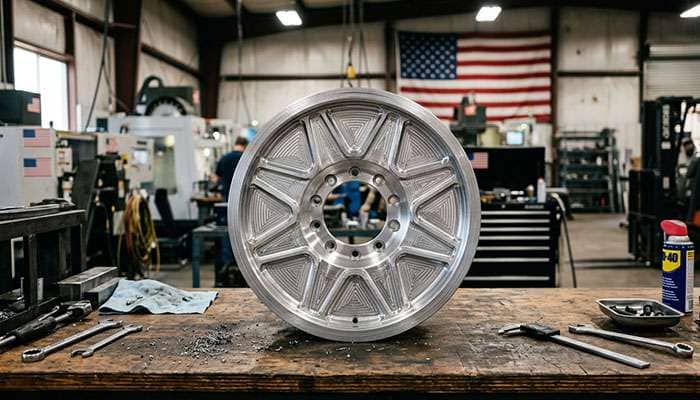
Fuel's American manufacturing happens in a 36,000 square foot facility in Los Angeles. Every wheel is designed, tested, cast or forged, machined, finished, and inspected at the same Los Angeles location. The complete production process — from raw aluminum billet through final inspection — happens domestically. For buyers who value American manufacturing for principled reasons (supporting domestic jobs, reducing supply chain dependency, quality control consistency through American labor standards), Fuel is the only one of the two brands that meets that requirement.
Method's offshore manufacturing happens in Taiwan and mainland China. The company designs, engineers, and tests wheels at its California headquarters, but the physical manufacturing happens overseas. Method maintains quality control standards through frequent factory audits and supervisory personnel at the production facilities, but the wheels themselves are not made in the United States. For buyers who don't prioritize American manufacturing, the offshore production allows Method to offer the engineering quality at lower price points than equivalent American-made alternatives.
Quality consistency between the two approaches is actually quite similar in 2026 — both brands deliver wheels that perform as advertised, both meet ISO/SAE/JWL/VIA structural standards, both rarely produce in-warranty failures. The difference isn't really about quality anymore; it's about manufacturing principles and pricing flexibility. American-made buyers gravitate to Fuel; price-conscious buyers willing to accept offshore manufacturing gravitate to Method.
Method consistently undercuts Fuel pricing by $30-80 per wheel at comparable size points. The pricing gap is bigger than most buyers initially expect.
Comparable Model Tier |
Fuel Pricing (typical) |
Method Pricing (typical) |
Per-Wheel Gap |
|---|---|---|---|
Entry-level 17" off-road |
$280-340 |
$250-300 |
$30-40 |
Mid-tier 17-18" off-road |
$340-450 |
$300-400 |
$40-50 |
Premium 18-20" off-road |
$450-600 |
$400-500 |
$50-80 |
Beadlock (true) |
$550-700+ |
$500-650 |
$50-100 |
Full set of 4 (mid-tier) |
$1,360-1,800 |
$1,200-1,600 |
$160-200 total |
Across a set of four wheels, the pricing gap typically lands around $160-200 in Method's favor for comparable sizes. For buyers building rigs on a strict budget, that's meaningful — enough to cover tire installation labor or add to the tire purchase budget. For buyers where the American manufacturing premium is justified, the Fuel pricing makes sense regardless. The decision isn't really about whether one brand is "worth the money" — both deliver acceptable value at their respective price points. It's about whether American manufacturing matters enough to justify the price premium for your specific situation.
This is where Method has a clear advantage that most buyers don't realize until they need it.
Method backs every wheel with a lifetime structural warranty. If the wheel fails structurally during reasonable use — cracks, bends, separates — Method replaces it. The warranty covers the lifetime of the original owner, transfers between vehicles, and applies to any Method wheel sold to any buyer. For wheelers who actually use their rigs on technical trails where structural damage is a realistic concern, that warranty is meaningful protection. I've seen Method replace warped wheels for customers no questions asked.
Fuel's standard warranty covers manufacturing defects in finish and structural integrity for one year. Beyond the one-year window, finish defects (peeling, fading, corrosion) and structural failures (cracks, bends) are not covered. Fuel maintains internal quality control standards that keep most wheels from failing in normal use, but the warranty doesn't provide the long-term peace of mind that Method delivers.
For pure street-driven trucks where the wheels won't see structural stress, the warranty difference rarely matters in practice — neither brand's wheels fail under typical street use. For wheelers who run trails regularly, Method's lifetime structural warranty becomes meaningful protection. The customer who comes back to my shop after a year of hard wheeling with a cracked Method wheel walks out with a new wheel under warranty. The same customer with a Fuel wheel buys a replacement out of pocket.
Both brands produce off-road wheels for trucks and Jeeps, but they approach design from fundamentally different starting points.
Fuel's design philosophy emphasizes aggressive aesthetics — wheels that look powerful, intentional, and bold from the parking lot. The brand's design team prioritizes visual impact, which produces wheels with deep concave faces, intricate spoke patterns, and distinctive finishing details. The Rebel line uses muscular concave spokes that dominate visually; the Maverick uses fine multi-spoke geometry that catches light dramatically; the Assault uses chrome accents that draw the eye. Buyers who value how the wheel looks at first glance gravitate toward Fuel.
Method's design philosophy emphasizes function-derived form — wheels that look the way they do because of engineering rather than aesthetic choice. The 12-window 305 NV design isn't decorative; the window geometry was developed for brake cooling and weight reduction. The clean six-spoke 312 Standard doesn't have intricate spoke detail because the structural engineering doesn't require it. The 101 Beadlock looks aggressive because beadlock construction requires the visible hardware. Buyers who appreciate engineered honesty gravitate toward Method.
Neither philosophy is wrong. Fuel buyers want their build to make a statement; Method buyers want their build to look like it was engineered. Both produce wheels that look great on the right vehicles — Fuel reads more "lifestyle pickup," Method reads more "purpose-built rig." Picking depends on which story you want your truck or Jeep to tell.
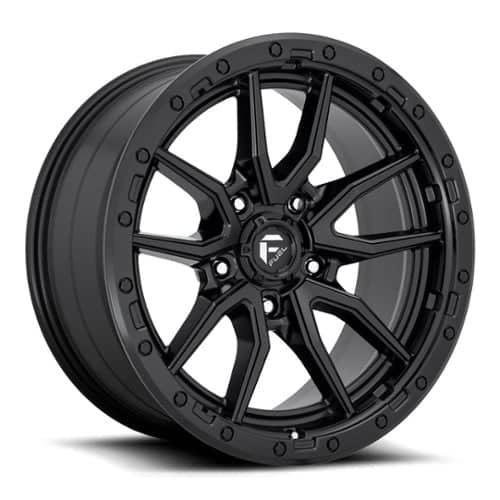
The Rebel 5 is the most popular Fuel wheel I sell, and there's a reason for that — five thick concave spokes, Matte Black finish that hides dirt and rock damage, and proportions that look right on virtually every Jeep, Bronco, and mid-size truck. The Rebel 5 covers 17-inch through 20-inch with bolt patterns for 5x5 (Jeep), 6x135 (Bronco/F-150), 6x5.5 (Tacoma/4Runner), and 5x150 (Tundra). For typical trail rigs running 33-35 inch tires, the 17x9 with -12 ET is the popular fitment.
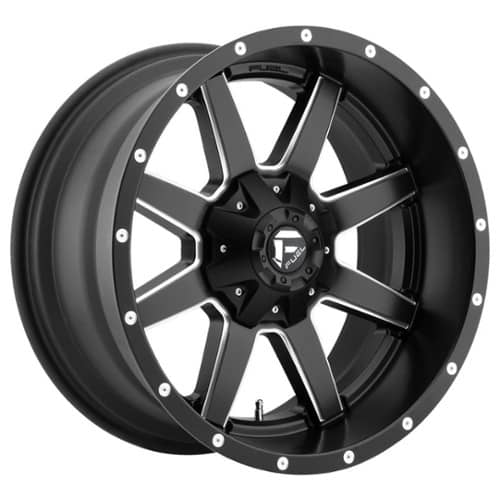
The Maverick is one of Fuel's longest-running designs and remains a top seller for good reason. The fine multi-spoke pattern with milled accents catches light dramatically and reads more refined than the broader concave designs. For buyers who want the Fuel brand identity with a slightly less aggressive aesthetic, the Maverick is the right answer. Sizes cover 17-inch through 22-inch with bolt patterns for all popular truck and SUV applications.
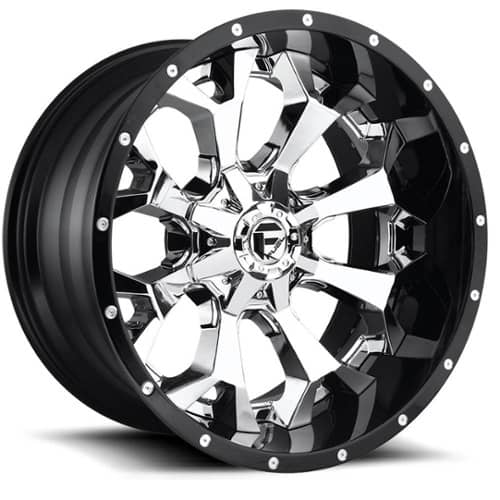
The Assault delivers chrome aesthetics for buyers who want their truck to shine in the parking lot. The Chrome Face with Gloss Black Lip combines reflective brightness with darker contrast detail, producing a wheel that photographs well and stands out at shows. Chrome wheels require more maintenance than matte black alternatives (regular cleaning to prevent water spotting and oxidation), but they deliver visual impact that matte finishes can't match.
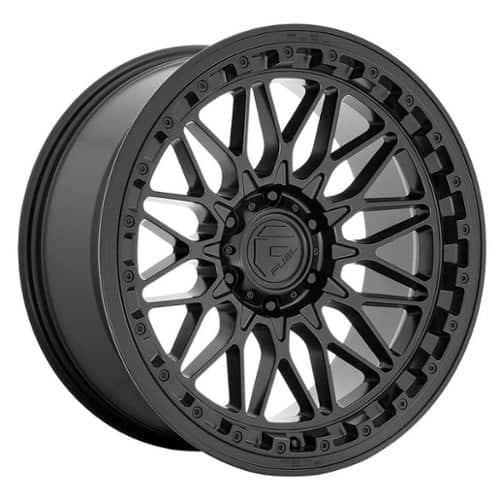
The Trigger represents Fuel's most detail-oriented design — a multi-spoke pattern with intricate spoke-to-spoke geometry that catches light differently than the simpler patterns. For buyers who want their wheel choice to be a visual focal point of the build, the Trigger delivers more visual interest per square inch than most off-road wheels on the market. Sizes cover 17-inch through 22-inch.
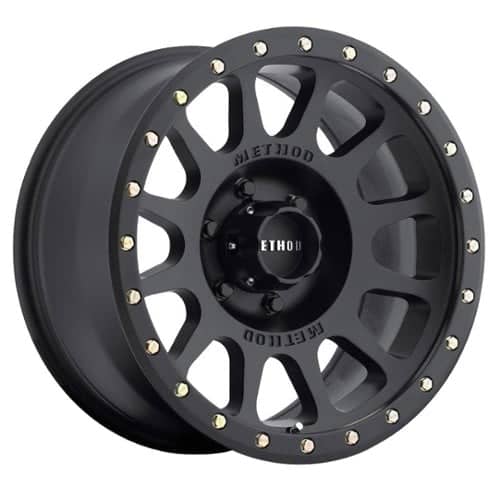
The 305 NV is Method's most popular wheel and the one I recommend most often for daily-driven trail rigs. The 12-window race-derived design carries the same DNA as Method's beadlock wheels, but the bead-grip technology delivers most of the air-down advantages without the legal complications of a true beadlock. The mechanical pinch on the inner tire bead lets the 305 NV hold a tire down to about 10-12 PSI safely. Sizes cover 17-inch through 20-inch with all popular bolt patterns.
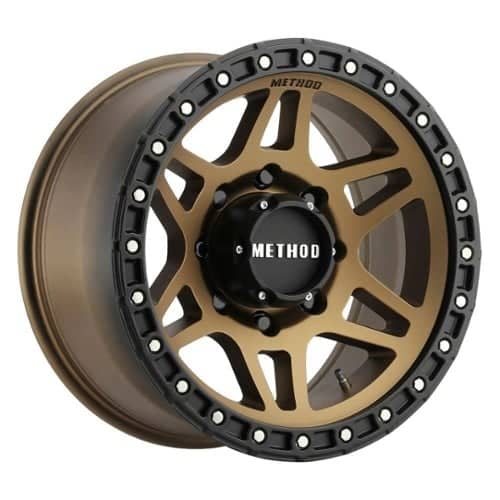
The 312 Standard is the cleaner, more street-friendly Method that fits trail rigs whose owners want the brand's engineering credibility without going full beadlock or full race-derived aesthetic. Six clean spokes with a recessed center, finished in the Bronze color that's become Method's signature in recent years. For mild trail use where the rig won't see aggressive air-down sessions, the 312 delivers Method quality at meaningfully lower pricing than the 305 NV.
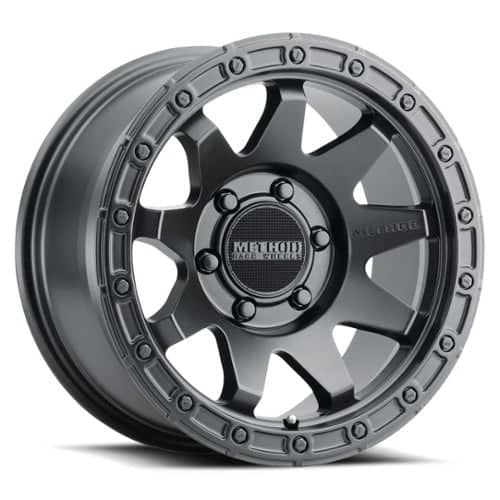
The 317 targets the full-size truck and SUV market specifically, with fitments engineered for Tundra, F-150, Sierra, RAM, and other 5x150 and 6x135 applications that need the right offset and the right load capacity for heavier vehicles. Six wider spokes with the recessed center detail that defines Method's design language, finished in straight Matte Black for a clean, no-nonsense appearance.
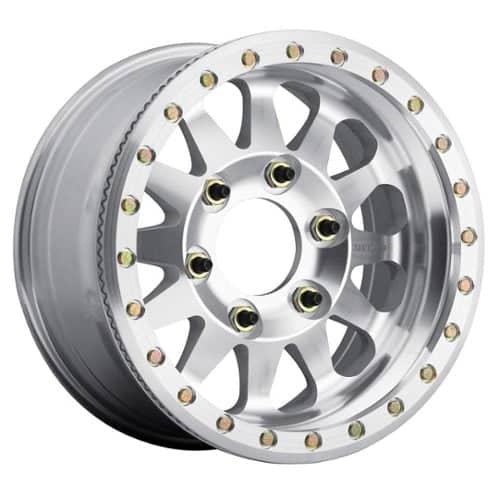
The 101 Beadlock is Method's hardcore-wheeler benchmark and delivers the race-derived engineering that puts Method ahead of Fuel for serious off-road use. Aircraft-style locking ring with grade-8 hex bolts, cast aluminum center engineered for impact loads, and the lifetime structural warranty that backs every Method wheel. Not street legal in most states — designed for dedicated trail rigs that get trailered to the trailhead. Fuel doesn't have a directly competitive product in this category.
At equivalent product tiers, the two brands deliver very similar off-road capability — both meet OEM, ISO, SAE, JWL, VIA, and TUV standards, both use cast aluminum construction with structural reinforcements, and both produce wheels that survive typical trail rig use without failure. The differences show up at the extremes of off-road duty.
For standard cast aluminum off-road wheels (Fuel Rebel 5, Method 305 NV, Method 312, Method 317), both brands deliver comparable structural strength and impact resistance. Customer rigs running these wheels report similar real-world performance — they handle the typical Wrangler, Bronco, Tacoma, F-150 trail use without structural issues. The decision between equivalent Fuel and Method models comes down to design preference and warranty considerations rather than capability differences.
For bead-grip technology, Method has a clear advantage. Method patented bead-grip technology that lets daily-driven trail rigs run tire pressures down to 10-12 PSI safely while remaining street legal. The technology appears on the Method 305 NV and other bead-grip variants in Method's lineup. Fuel doesn't have a directly competitive technology — Fuel wheels at comparable size points require minimum 15+ PSI operation for safe bead retention, which limits the aggressive air-down strategies that bead-grip enables.
For true beadlock construction, Method has a clearer advantage. The Method 101 Beadlock is the race-derived benchmark for serious wheelers — Ultra4 racing, King of the Hammers competition, and hardcore rock crawling applications. Fuel produces beadlock variants but they don't carry the race-derived engineering heritage that Method's 101 inherits from competition development. For dedicated hardcore wheelers, Method is the clearer choice.
For broader off-road wheel context, see our 12 best off-road wheels for 2026 ranking, where both brands appear with their strongest models.
Fuel wheels generally hold resale value slightly better than Method wheels on the secondary market. Several factors contribute to this pattern.
Fuel's American manufacturing premium translates to slightly higher new-wheel pricing, which establishes a higher reference point for used wheels. Used Fuel Rebel 5s typically sell for 50-65% of original retail after 2-3 years of use; comparable Method 305 NVs typically sell for 45-60% of original retail. The difference is real but small — typically $30-60 per wheel on the used market.
Brand recognition also affects resale. Fuel has invested heavily in marketing and brand visibility, which produces stronger consumer recognition outside the dedicated off-road community. Casual truck buyers shopping used wheels recognize the Fuel brand more readily than the Method brand, which supports stronger resale demand.
For dedicated off-road buyers, the situation reverses. Used Method wheels in the dedicated wheeler community hold value better than Fuel wheels because Method's lifetime structural warranty transfers between owners, and Method's racing credibility carries weight in that buyer segment. The general retail market favors Fuel; the specialty off-road market favors Method.
For most buyers, the resale value difference shouldn't drive the decision. The 2-5% difference in retained value over 2-3 years amounts to $30-60 per wheel — meaningful but not enough to justify picking a wheel that doesn't match your build's design language or your actual use case. Pick the wheel that works for your build; resale considerations should be secondary.
Match yourself to the right column.
Buyer Profile |
Right Brand |
Why |
|---|---|---|
American-manufacturing priority |
Fuel |
USA-made in Los Angeles, supports domestic jobs |
Value-focused with engineering credibility |
Method |
$30-80 lower per wheel with race-derived engineering |
Daily-driven trail rig |
Method |
Bead-grip technology and lifetime warranty |
Style-focused street build with off-road look |
Fuel |
Broader range of aggressive design language |
Hardcore comp crawler or Ultra4 racer |
Method |
101 Beadlock race-derived benchmark |
Chrome aesthetic on F-150 or RAM |
Fuel |
Assault Chrome and similar chrome variants |
Wrangler with serious weekend trail use |
Method |
305 NV bead-grip + lifetime structural warranty |
Tundra or Sequoia heavy-vehicle build |
Method |
Method 317 engineered for heavier full-size vehicles |
Show truck prioritizing visual impact |
Fuel |
Trigger, Maverick, and similar visual-focused designs |
Bronco daily driver with mild off-road use |
Either works well |
Both deliver Bronco fitments at comparable quality |
The pattern that emerges: Fuel for buyers who prioritize aesthetics, American manufacturing, and visual impact; Method for buyers who prioritize engineering credibility, lifetime warranty coverage, and off-road technical capability. Both produce excellent wheels — picking the wrong brand isn't a disaster, but matching the right brand to your build philosophy produces better long-term satisfaction.
Specification |
Fuel Off-Road |
Method Race Wheels |
|---|---|---|
Founded |
2008 (parent MHT Luxury Alloys 1986) |
2010 |
Headquarters |
Los Angeles, California |
Wilmington, California |
Manufacturing |
USA-made (Los Angeles) |
Taiwan and China |
Design philosophy |
Aggressive aesthetics, visual impact |
Function-derived form, racing engineering |
Pricing tier |
Mid to upper-premium |
Mid-range |
Warranty |
1-year finish defects |
Lifetime structural |
Bead-grip technology |
Not available |
Patented (305 NV and select variants) |
Beadlock options |
Available but limited race heritage |
101 Beadlock race-derived benchmark |
Resale value |
Slightly stronger on general market |
Slightly stronger in dedicated wheeler community |
Best for |
Style-focused builds, American-made priority |
Daily-driven trail rigs, hardcore wheelers |
Both brands deliver excellent off-road wheels — neither is universally better than the other. Fuel wins on American manufacturing, aggressive aesthetics with broader design variety, and slightly stronger general-market resale value. Method wins on lower pricing ($30-80 per wheel less at comparable sizes), lifetime structural warranty coverage (versus Fuel's 1-year finish warranty), bead-grip technology for daily-driven trail rigs, and race-derived engineering heritage that includes the Ultra4-competition-validated 101 Beadlock. The right pick depends on which set of advantages matches your specific build priorities. Style-focused street builds gravitate toward Fuel; daily-driven trail rigs and hardcore wheelers gravitate toward Method.
Yes. Fuel Off-Road operates a 36,000 square foot manufacturing facility in Los Angeles, California, where every wheel is designed, engineered, cast or forged, machined, finished, and inspected. The complete production process from raw aluminum to finished wheel happens at the same Los Angeles location. Fuel is the only one of the two major off-road wheel brands (Fuel vs Method) that manufactures domestically. Method headquarters is also in California (Wilmington), but Method's actual wheel production happens in Taiwan and mainland China. For buyers prioritizing American manufacturing, Fuel is the answer; for buyers willing to accept offshore manufacturing in exchange for lower pricing, Method delivers value.
Yes. Method Race Wheels backs every wheel with a lifetime structural warranty that covers cracks, bends, and structural failures under reasonable use. The warranty covers the lifetime of the original owner and transfers between vehicles. For wheelers who actually use their rigs on technical trails, this warranty provides meaningful long-term protection. By comparison, Fuel Off-Road's standard warranty covers manufacturing defects in finish and structural integrity for one year. Beyond the one-year window, Fuel finish defects and structural failures are not covered. The warranty difference is meaningful for buyers who keep their wheels long-term or who use their rigs in conditions that risk structural damage.
Fuel wheels typically cost $30-80 more per wheel than comparable Method wheels primarily because of the manufacturing origin difference. Fuel's American manufacturing facility in Los Angeles incurs higher labor costs, more expensive raw materials sourcing, and stricter environmental regulations than Method's offshore manufacturing in Taiwan and China. The price premium reflects the cost difference in domestic versus offshore production. Method's pricing flexibility comes from offshore manufacturing while maintaining engineering quality through factory audits and quality control supervision. Neither approach is wrong — they serve different buyer priorities. American-made buyers justify the Fuel premium; value-focused buyers willing to accept offshore manufacturing get Method engineering at lower cost.
Bead-grip technology is Method's patented mechanical pinch on the inner tire bead that lets daily-driven trail rigs run tire pressures down to 10-12 PSI safely while remaining DOT-compliant for street operation. The technology appears on the Method 305 NV and similar bead-grip variants in Method's lineup. Fuel Off-Road does not have a directly competitive bead-grip technology — Fuel wheels at comparable size points require minimum 15+ PSI operation for safe bead retention. For drivers who want aggressive air-down capability on a daily-driven trail rig (Jeep Wrangler, Ford Bronco, Toyota Tacoma, 4Runner), Method's bead-grip technology delivers meaningful advantage that Fuel cannot match.
The Fuel Rebel 5 D679 Matte Black is the most popular Fuel wheel for Jeep Wrangler applications. The five-spoke concave design pairs naturally with Jeep aesthetics, the Matte Black finish hides dirt and rock damage on trail use, and the 17x9 with -12 ET fitment works with the broadest range of tire sizes from 33s through 37s without rubbing. The bolt pattern is 5x5 (5x127mm) which matches Jeep Wrangler JK and JL. For Jeep Wrangler builds prioritizing the broader Fuel design language with cleaner aesthetics, the Maverick D538 Matte Black Milled is another popular choice. Both are in current stock at Performance Plus Tire with multiple finish variants.
The Method 305 NV Matte Black is the most popular Method wheel for daily-driven trail rigs and the wheel I recommend most often for serious wheelers who need both road-legal operation and aggressive off-road capability. The 12-window race-derived design carries the same DNA as Method's beadlock wheels but the bead-grip technology delivers most of the air-down advantages without the legal complications of a true beadlock. The wheel works on Jeep Wrangler, Bronco, Tacoma, 4Runner, F-150, Tundra, and similar applications. For pure street use without serious off-road duty, the Method 312 Standard delivers Method engineering quality at lower pricing.
Resale value depends on the buyer segment. On the general retail used wheel market, Fuel typically holds value slightly better — used Fuel Rebel 5s sell for 50-65% of original retail after 2-3 years versus 45-60% for comparable Method 305 NVs. Fuel's stronger brand recognition outside the dedicated wheeler community supports this advantage. In the dedicated off-road buyer community, Method holds value better because the lifetime structural warranty transfers between owners and Method's racing credibility carries weight. The 2-5% difference in retained value amounts to $30-60 per wheel — meaningful but small enough that resale considerations should not drive the purchase decision. Pick the wheel that matches your build's design language and use case; resale considerations are secondary.



