Looking for last year's rankings? See our 2025 brutal trail wheel picks.
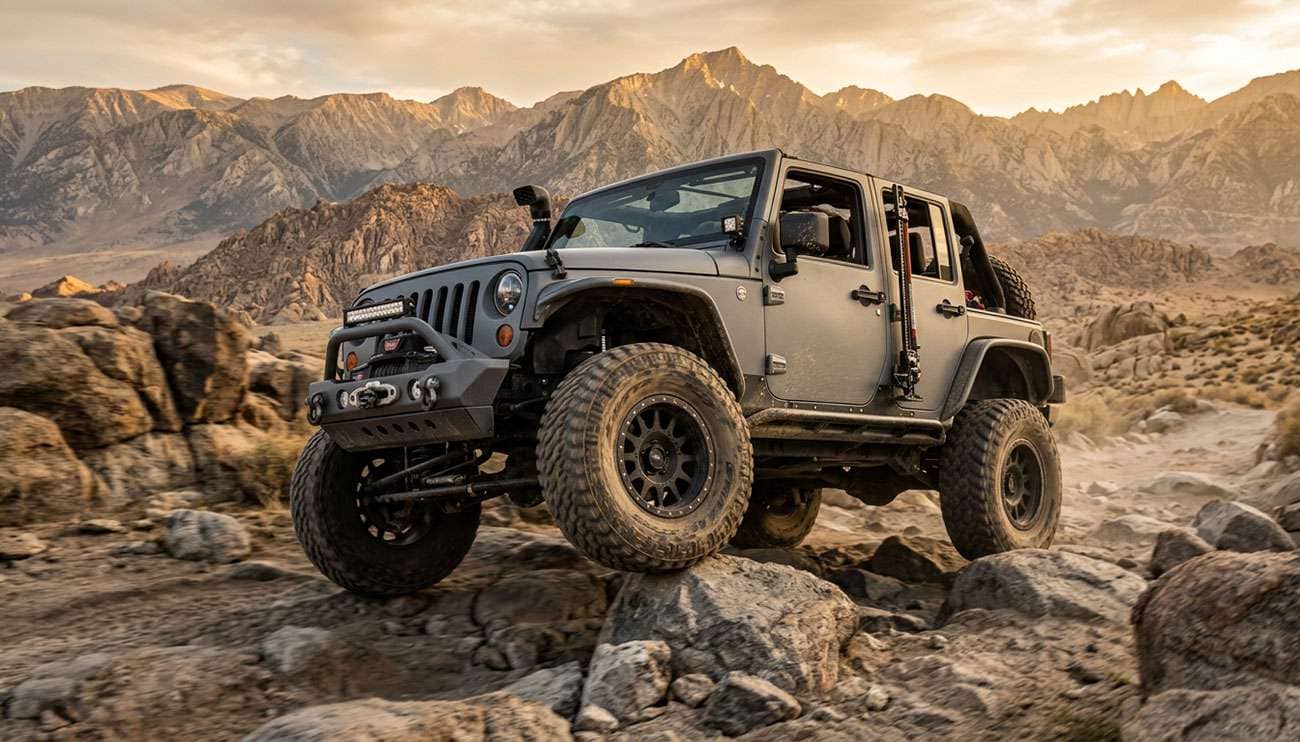
I've seen more bent wheels come back to my shop from Moab and the Rubicon than I care to count. Most of them got bent because the owner picked a wheel based on how it looked instead of how it was built. The wheel that looks aggressive in the parking lot doesn't always survive when you put it under a 5,500-pound Wrangler with 37-inch tires and start dragging the rocker panel across granite. There's a difference between a wheel marketed as "off-road" and a wheel actually engineered for off-road, and after fifty years of bolting wheels onto trail rigs at this shop I can tell you the marketing doesn't always match the metallurgy.
The 12 wheels below are what I'd put on a serious trail rig in 2026. Every one of them is built to survive what a Wrangler, a Bronco, a Tacoma, or a 4Runner sees on actual technical trails — not just gravel forest service roads, but real rock crawling, mud bogging, sand running, and the bashing that happens when you misjudge a line and clip a stone with the wheel face. These aren't show wheels. They're work wheels. Pretty enough that you'll like looking at them, tough enough that they'll still be straight after a hundred trail days.
Every wheel on this list is in stock at Performance Plus Tire with multiple finish and bolt-pattern variants for Jeep, Bronco, Tacoma, 4Runner, and similar mid-size trail rig applications. Click any wheel to see sizes, finishes, and current pricing for your specific rig.
Five things matter, and they matter in this order.
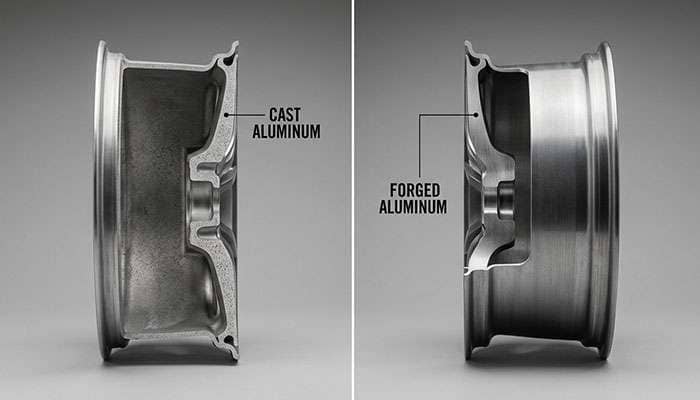
Construction quality. Forged wheels beat cast wheels for serious trail use. Period. A forged wheel is hammered out of a single piece of aluminum under thousands of tons of pressure, which compacts the grain structure and produces a wheel that's stronger and lighter than equivalent cast designs. Cast wheels are made by pouring molten aluminum into a mold, which is faster and cheaper but produces a wheel with weaker grain structure that bends and cracks under impact loads. Most off-road wheels on the market are cast aluminum because forged wheels cost two to four times as much. For mild trail use, cast is fine. For serious rock crawling, sand bashing, or any rig that runs 35-inch or larger tires, forged is the right answer because the difference shows up exactly when you can least afford it — middle of nowhere, hundreds of miles from a tow truck.
Real load capacity. Marketing materials list the maximum static load — the weight a wheel can support sitting still. What matters for off-road use is the dynamic load capacity, which factors in the impact loads from rocks, drops, and corner-loading during off-camber driving. The Method 101 Beadlock, for example, carries a static rating around 4,500 pounds per wheel. The Fuel Rebel runs from 2,300 pounds on 6-lug patterns to 3,700 on 8-lug patterns. Most trail rigs need at least 2,500 pounds of capacity per wheel; bigger rigs with 35s or 37s and bumpers and winches and gear should be looking for 3,500 pounds or more.
Bead retention technology. Beadlocks physically clamp the tire bead to the wheel rim with bolts, which lets you air down to 5-8 PSI without rolling the tire off the bead. Bead-grip technology (Method's invention) provides 80% of the benefit through a mechanical pinch on the inner bead while remaining street-legal. Standard wheels with no bead-retention features need 15+ PSI to keep the tire seated, which sacrifices traction in soft sand, mud, and on rocks where a wider footprint makes the difference between making the climb and getting stuck.
Lifetime structural warranty. Method, Fuel, KMC, Mickey Thompson, and Black Rhino all back their off-road lineups with structural warranties that cover the wheel against bending, cracking, and other defects. That means if the wheel fails on the trail under reasonable use, the manufacturer replaces it. Brands without lifetime structural coverage are betting their wheels won't fail. The brands with the warranty are betting on themselves — and over the years, the brands that stand behind their wheels are the ones I've seen actually deliver durable products.
Bolt pattern and offset for actual trail rigs. Most trail rigs run 5x5 (Jeep Wrangler JK/JL, Gladiator), 5x5.5 (some Wranglers and aftermarket conversions), 6x5.5 (Toyota Tacoma, 4Runner, Tundra), or 6x135 (Ford Bronco, F-150). Negative offset (-12 to -25 mm typical) pushes the wheel outward to clear suspension components and provide proper steering geometry on lifted rigs. Positive offset wheels designed for stock-height crossovers don't fit lifted trail rigs without serious modification. For deeper guidance on getting fitment right, see our off-road wheel sizes guide.
Three wheel categories cover virtually all serious trail rigs, and picking the right category matters more than picking between brands within a category. Here's what each one actually delivers.
Type |
Minimum Safe PSI |
Street Legal |
Best For |
|---|---|---|---|
Beadlock |
5-8 PSI |
No (DOT issues in most states) |
Dedicated trail rigs, comp crawlers, hardcore wheelers |
Bead-Grip (Method) |
10-12 PSI |
Yes |
Daily-driven trail rigs, dual-purpose builds |
Standard (no bead retention) |
15+ PSI |
Yes |
Mild trail use, daily drivers, moderate off-road |
Beadlocks are the best at what they do but you can't legally run them on the road in most states. The aircraft-style locking ring uses bolts that the DOT considers a safety concern for high-speed road use. For dedicated trail rigs that get trailered to the trailhead, beadlocks make sense. For dual-purpose builds that drive to the trail and home again, bead-grip or standard wheels are required.
Bead-grip is Method's patented compromise — a mechanical pinch on the inner bead that holds tire pressure down to about 10-12 PSI without violating DOT standards. It's not as aggressive as full beadlocks but it gets you most of the way there for daily-driven trail rigs. The technology debuted on the Method 305 NV and now appears across most of Method's serious trail wheels.
Standard wheels work fine for most weekend trail users. If you're running 17-inch wheels with 33-35 inch tires on a Jeep that sees 10-15 trail days per year and you're not pushing it into hardcore crawling, standard wheels at 15-18 PSI deliver acceptable performance. The aggressive air-down strategies require beadlock or bead-grip; standard wheels just don't get there safely.
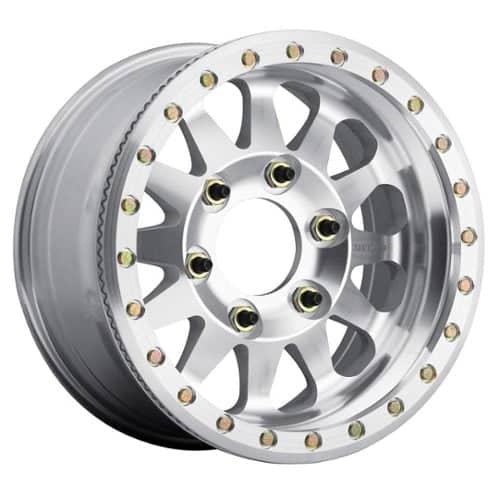
Brand: Method Race Wheels • Construction: Cast aluminum with steel beadlock ring • Best For: Dedicated rock crawlers, comp rigs, serious wheelers • Notes: Not street legal in most states
The Method 101 Beadlock is the wheel for guys who are serious about wheeling. The aircraft-style locking ring is bolted to the rim with hardware that's been specifically engineered for the abuse a beadlock takes — eight grade-8 hex bolts hold the ring in place under impact loads that would shear standard hardware. The Raw Machined finish leaves the cast aluminum exposed for that purposeful trail-rig look that says the owner cares more about how the wheel works than how it looks.
Method built the 101 specifically for the King of the Hammers Ultra4 racing series, which is the closest thing the desert racing world has to combat conditions. Wheels that come back from a single Hammers race look like they've been beaten with hammers, and the 101 is engineered to survive that exact treatment. The cast aluminum center uses extra-thick spokes compared to street wheels, the beadlock ring is overbuilt for impact resistance, and the whole package is rated for some of the highest static load capacities in the industry.
Where the 101 makes sense is dedicated trail rigs that get trailered to the wheeling spot and don't see road duty. Comp crawlers, Ultra4 racers, hardcore Wranglers and Broncos that live their best lives on the rocks. The wheel is available primarily in 17-inch with 5x5 (Jeep Wrangler JK/JL) and 5x5.5 bolt patterns. For daily-driven rigs, look further down the list at Method's bead-grip alternatives.
Browse Method 101 Beadlock sizes, or see the full Method Race Wheels lineup.
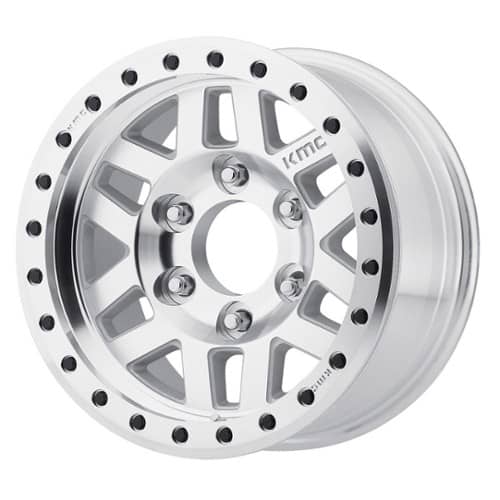
Brand: KMC Wheels • Construction: Cast aluminum with cast aluminum beadlock ring • Best For: Trail rigs prioritizing aggressive crawl-spec aesthetics
The KMC KM228 Machete Crawl Beadlock takes the beadlock concept and runs it through KMC's design language — the result is a wheel that looks unmistakably KMC even if you covered up the cap. Eight bolted bead-retention points around an aggressive multi-spoke design with a recessed center, finished in Desert Machined that combines a satin tan body with machined accents that catch light without going showy. It's the kind of wheel that pairs well with a Jeep Wrangler or Gladiator that the owner has spent serious money building.
Construction is cast aluminum throughout — KMC's standard for the off-road lineup. The beadlock ring uses cast aluminum hardware mounted with grade-8 bolts, which delivers the bead retention performance buyers expect from a real beadlock without the additional weight of steel ring construction. Static load ratings reach 2,500 pounds per wheel in the typical Jeep fitments, scaling higher for larger applications. The wheel covers 17-inch and 18-inch diameters with 5x5 and 6x5.5 bolt patterns covering most popular trail rigs.
What makes KMC the right choice over Method for some buyers is the aesthetic direction. Method goes for purposeful, race-derived industrial looks — the KM228 takes a similar engineering approach but presents itself with KMC's design language that reads more aggressive and more styled. Two equally capable wheels with different visual stories. Pick the one that matches your build's personality.
Browse KMC KM228 Machete Crawl Beadlock sizes, or see the full KMC Wheels lineup.
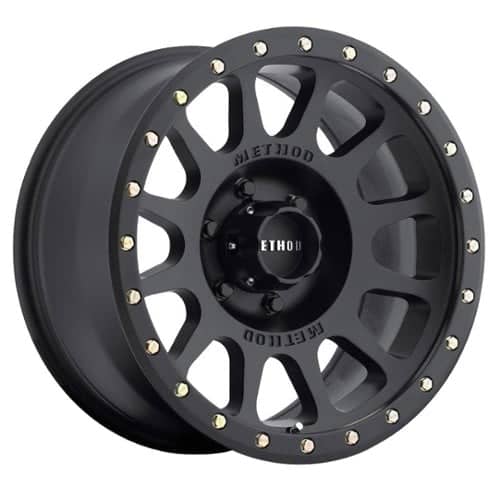
Brand: Method Race Wheels • Construction: Cast aluminum with bead-grip technology • Best For: Daily-driven trail rigs prioritizing serious capability
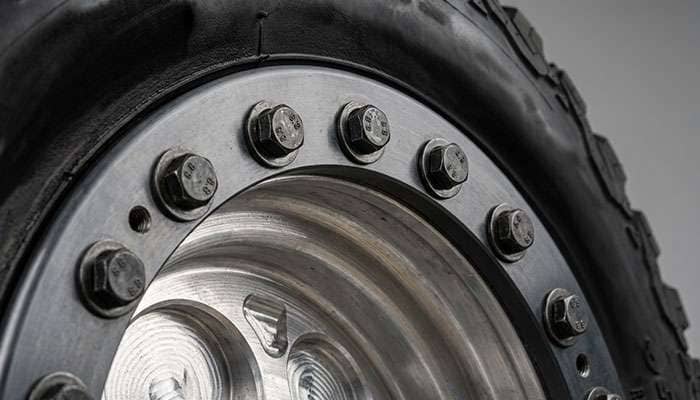
The Method 305 NV is the wheel I recommend most often for guys who want serious off-road capability on a daily-driven trail rig. The 12-window race-derived design carries the same DNA as Method's beadlock wheels, but the bead-grip technology delivers most of the air-down advantages without the legal complications of a true beadlock. The mechanical pinch on the inner tire bead lets the 305 NV hold a tire down to about 10-12 PSI safely — close enough to beadlock territory for most trail conditions while remaining DOT-compliant for road use.
Construction is cast aluminum with Method's signature thick spokes and structural reinforcements. Static load ratings cover 2,500 pounds for 6-lug applications and higher for 8-lug. The Matte Black finish is the most popular but Method also offers the 305 NV in Bronze, Titanium Silver, and several specialty finishes. Sizes cover 17-inch through 20-inch in the most popular bolt patterns including 5x5 (Jeep), 5x150 (Toyota Tundra/Sequoia), and 6x5.5 (Tacoma, 4Runner, Toyota Tundra). For Jeep Wrangler JK/JL applications specifically, the 17x8.5 fitment with 0 ET is the most popular option.
The 305 NV pairs well with everything from mild Jeep Sahara builds running 33s to serious Rubicon rigs running 37s. The bead-grip advantage shows up exactly when it matters — sand washes, soft mud, technical rock sections where a wider tire footprint makes the difference. Plus the lifetime structural warranty means the wheel comes back if it fails. Hard to beat the combination.
Browse Method 305 NV Matte Black sizes.
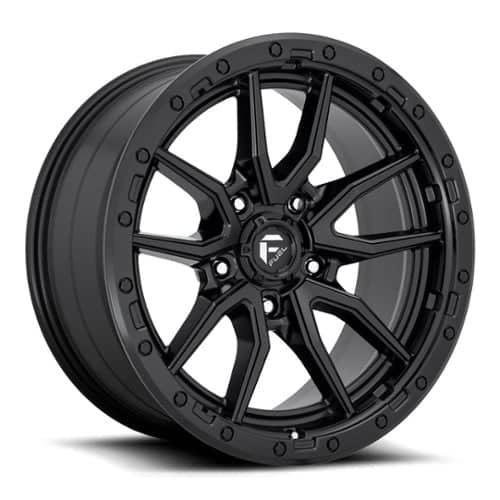
Brand: Fuel Off-Road • Construction: Cast aluminum with structural backing plates • Best For: Jeep Wrangler and Bronco trail rig builds
The Fuel Rebel 5 D679 is Fuel's five-spoke trail wheel — the cleaner, more spoke-defined sibling to the Rebel 6 we ranked in our truck wheels article. Where the Rebel 6 reads more truck-aggressive, the Rebel 5 reads more trail-rig-purposeful. Five thick spokes, structural backing plates that reinforce the spoke-to-rim joints, and finishes that pair well with Jeep, Bronco, and Toyota trail rig aesthetics.
Construction is cast aluminum with Fuel's M-Land warranty (their lifetime structural coverage) backing every wheel. Load capacity runs 2,300 pounds on 6-lug patterns and up to 3,700 pounds on 8-lug — good coverage for everything from 4Runner-class trail rigs through the heavier 1500-class trucks that occasionally see real off-road duty. The Matte Black finish is the most common request but the Rebel 5 also comes in Brushed Black, Bronze, Anthracite, and Chrome variants.
The Rebel 5 covers 17-inch through 20-inch diameters with bolt patterns for virtually every trail rig: 5x5 Jeep, 5x150 Tundra, 6x135 Bronco/F-150, 6x5.5 Toyota and GM mid-size. Offsets are negative across most fitments, pushing the wheel outward for fender clearance on lifted rigs. For Jeep Wrangler JK/JL applications specifically, the 17x9 with -12 ET is the popular fitment because it works with the broadest range of tire sizes from 33s through 37s without rubbing.
For mild-to-moderate trail use, the Rebel 5 delivers strong value. Pricing typically lands $200-300 below comparable Method offerings at the same size, while the structural warranty and engineering quality cover the bases that matter. For serious wheelers running expensive bumpers and recovery gear who need maximum capability, Method or KMC beadlock alternatives make more sense. For everyone else, the Rebel 5 is the right combination of capability, aesthetics, and value.
Browse Fuel Rebel 5 D679 sizes, or see the full Fuel Off-Road Wheels lineup.
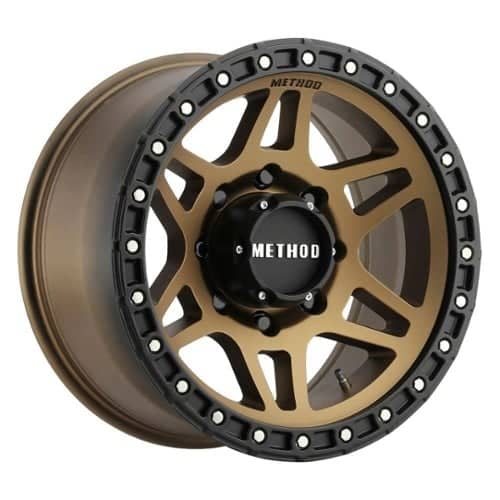
Brand: Method Race Wheels • Construction: Cast aluminum • Best For: Dual-purpose street and mild trail builds
The Method 312 is the cleaner, more street-friendly Method that fits trail rigs whose owners want the brand's engineering credibility without going full beadlock or full race-derived aesthetic. Six clean spokes with a recessed center, the Bronze finish that's become Method's most-requested color in recent years, and standard Method construction quality with the lifetime structural warranty.
The 312 Standard skips bead-grip technology — it's a standard wheel without the inner-bead pinch — which keeps the price point lower than the 305 NV at comparable sizes. For mild trail use where the rig won't see aggressive air-down sessions, the 312 delivers Method-quality construction at meaningfully better pricing. Cast aluminum with structural reinforcement at the spoke-to-rim joints, static load ratings around 2,000-2,500 pounds depending on fitment, and finishes available beyond Bronze including Matte Black, Titanium Silver, and Gloss Black.
Sizes cover 17-inch and 18-inch with bolt patterns for the popular trail rig applications. The 17x8.5 with 0 ET is the typical Jeep Wrangler fitment, while 17x8.5 with -12 ET works for lifted Tacoma, 4Runner, and Bronco builds. For Toyota Tundra and other 5x150 applications, Method offers the 312 in 17x8.5 with the appropriate offset.
The 312 makes sense for buyers who want Method's brand identity and structural warranty without the cost premium of bead-grip or beadlock variants. For street-driven Jeeps that see occasional weekend trail use, weekend cruisers that occasionally hit dirt roads, and dual-purpose builds where the trail isn't the primary mission, the 312 is a strong choice. Browse Method 312 sizes.
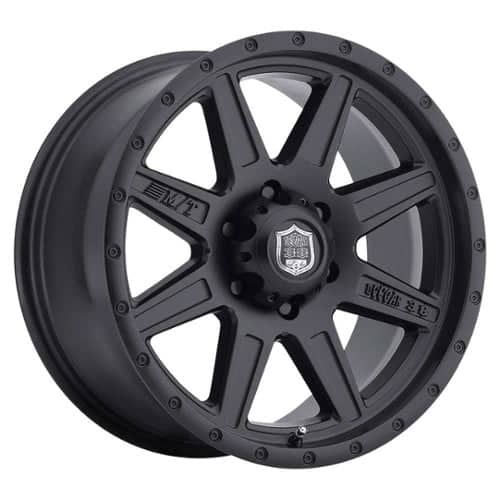
Brand: Mickey Thompson • Construction: Cast aluminum with deep dish profile • Best For: Pro-style trail rigs with aggressive aesthetics
Brian Deegan's name on a wheel means something to off-road buyers — the man's racing record stands on its own, and the Deegan 38 Pro 2 carries the design language of his Trophy Truck campaign. The eight-spoke pattern reads aggressive without crossing into busy territory, and the deep-dish profile gives lifted rigs the visual fill that makes a build look intentional rather than awkward. The Matte Black finish is the most popular of the Deegan 38 lineup but the wheel is also available in Black/Machined and Black/Bronze variants.
Construction is Mickey Thompson's standard cast aluminum with structural reinforcements at high-stress points. Load capacity ratings cover the typical trail rig applications, and the wheel carries Mickey Thompson's lifetime structural warranty. Sizes are available in 17-inch and 18-inch with bolt patterns covering Jeep, Bronco, Toyota, and most popular trail applications. The 17x9 with -12 ET is the most popular Jeep Wrangler fitment, providing fender clearance on lifted rigs running 35-37 inch tires.
What gives the Deegan 38 its slot on this list is the combination of authentic racing credentials and design quality that holds up. Some racing-branded wheels are pure marketing — the Deegan 38 is engineered as if it'll see actual abuse, because Brian Deegan and his crew actually use them. The construction quality matches the marketing, which can't always be said in this category. For buyers building rigs with the Deegan-style aggressive aesthetic, the wheel delivers.
Browse Mickey Thompson Deegan 38 Pro 2 sizes, or see the full Mickey Thompson Wheels lineup.
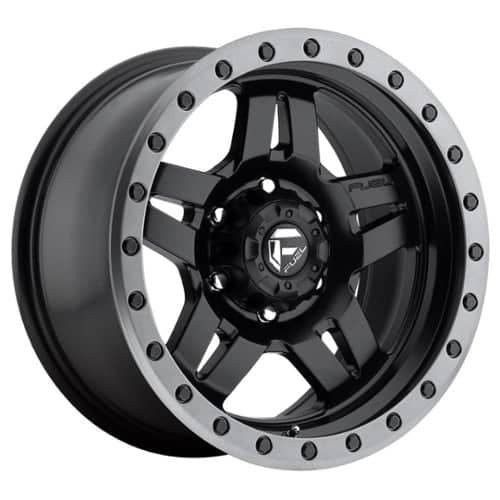
Brand: Fuel Off-Road • Construction: Cast aluminum with stepped lip ring • Best For: Trail rigs prioritizing distinctive design with engineered capability
The Fuel Anza D557 is the visual standout in the Fuel lineup — the contrasting Anthracite ring around the Matte Black face creates a two-tone effect that reads more refined than the typical aggressive truck wheel while maintaining the structural integrity that Fuel's lineup demands. The eight-spoke open pattern improves brake cooling for rigs that spend time on technical descents, and the stepped lip provides additional structural reinforcement at the rim where impact loads are highest.
Construction matches Fuel's standard for the off-road lineup — cast aluminum with the M-Land lifetime structural warranty backing the wheel. Load capacity covers the typical trail rig applications with appropriate margin for lifted rigs running 35-inch and larger tires. The two-tone finish is a paint application over the cast aluminum substrate, applied with Fuel's standard finishing process for durability against trail abrasion.
Sizes cover 17-inch through 22-inch — that broader range makes the Anza one of the more versatile choices for buyers cross-shopping trail-rig and pro-touring applications. Bolt patterns cover the popular trail rigs (5x5, 6x5.5, 6x135) and the 22-inch variants fit modern luxury SUV applications for buyers crossing over from trail to street performance. The 17-inch and 18-inch fitments are the standard trail rig sizes.
For buyers who want a Fuel wheel with more visual personality than the standard Rebel or Assault, the Anza delivers. The two-tone finish photographs well, holds up better than expected to trail abrasion, and pairs well with both modern and traditional off-road build aesthetics. Pricing typically lands in the $400-500 per wheel range for typical trail fitments. Browse Fuel Anza D557 sizes.
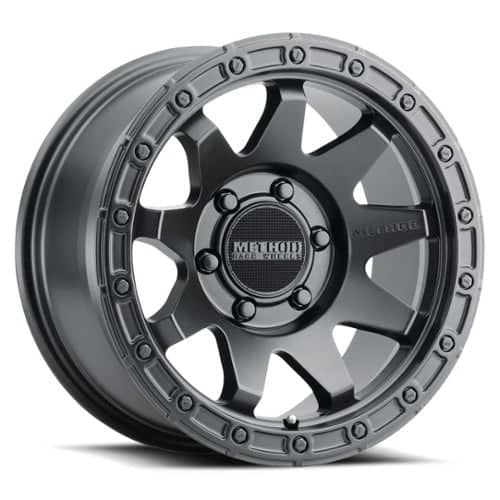
Brand: Method Race Wheels • Construction: Cast aluminum • Best For: Tundra, F-150, Sierra, and full-size truck trail builds
The Method 317 is the modern take on Method's 12-window design family — six wider spokes with the recessed center detail that defines Method's design language, finished in straight Matte Black for a clean, no-nonsense appearance. The 317 targets the full-size truck and SUV market specifically, with fitments engineered for Tundra, F-150, Sierra, RAM, and other 5x150 and 6x135 applications that need the right offset and the right load capacity for heavier vehicles.
Construction is cast aluminum with Method's typical structural reinforcements — thicker spokes than entry-level alternatives, reinforced spoke-to-rim joints, and cast geometry engineered for impact loads from off-road use. Load ratings reach higher numbers than Method's smaller-vehicle fitments because the 317 is designed for heavier trucks. Static load ratings around 3,500-4,000 pounds per wheel depending on fitment, with the lifetime structural warranty backing the wheel.
The 317 covers 17-inch through 20-inch diameters with the popular full-size truck bolt patterns. The 18x9 with -12 ET works particularly well on lifted Tundra, Sequoia, and Sierra applications running 35-inch tires; the 20x10 with -18 ET works for builds prioritizing the larger-diameter aggressive look. For buyers cross-shopping the 317 versus the 305 NV bead-grip alternative, the 317 saves money (no bead-grip technology) at the cost of higher minimum operating pressures — make sense for mild trail use, less sense for aggressive air-down scenarios.
Browse Method 317 Matte Black sizes.
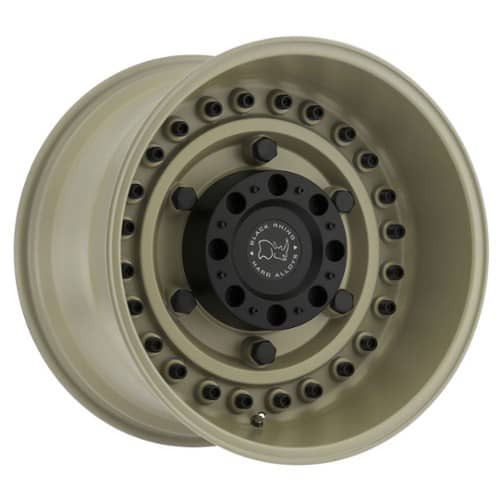
Brand: Black Rhino • Construction: Cast aluminum with reinforced face • Best For: Overland builds, expedition rigs, tactical-aesthetic trail vehicles
Black Rhino Armory in Desert Tan reads tactical without going overdone. The eight-spoke pattern with reinforced face has the heavy-duty industrial appearance that overland buyers gravitate toward, and the Desert Tan finish (close to FDE/Flat Dark Earth in tactical color terms) pairs well with the matte-finished bumpers, snorkels, and roof racks that define the overland aesthetic. The wheel also comes in Matte Bronze, Matte Black, and several gun-metal variants for buyers who want a different aesthetic direction.
Black Rhino built its reputation on overland and expedition-style rigs — Land Rover Defender builds, lifted 4Runners, expedition-prepped Wranglers, and similar vehicles where the wheel needs to handle real overland abuse on multi-day trips far from home. The Armory delivers on that mission with cast aluminum construction that's tuned for impact loads from rocks and unmaintained roads, structural reinforcement at the spoke-to-rim joints, and finishes that hold up to the dust, mud, and trail abrasion that overland travel produces.
Sizes cover 17-inch and 18-inch with bolt patterns including 5x5 (Jeep), 6x5.5 (Toyota Tacoma, 4Runner, Land Cruiser), 6x135 (Bronco, F-150), and 5x150 (Tundra). Most fitments use negative offsets in the -12 to -25 ET range for lifted rig fender clearance. For overland-style rigs running 33-37 inch tires with full bumpers and gear, the Armory's combination of structural capacity and overland-appropriate aesthetics makes it one of the strongest choices in the category.
Browse Black Rhino Armory sizes, or see the full Black Rhino Wheels lineup.
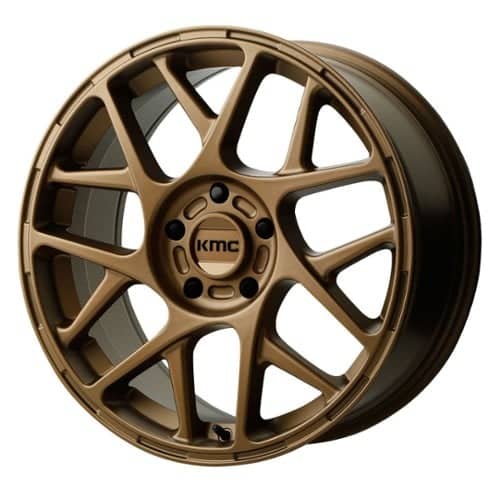
Brand: KMC Wheels • Construction: Cast aluminum • Best For: Modern Jeep, Bronco, and 4Runner builds with bronze-accent aesthetics
The KMC KM708 Bully takes the brand's design language in a cleaner direction — eight spokes with a recessed center, straightforward construction, finished in the Matte Bronze that's become one of KMC's signature colors for modern trail rigs. The wheel works particularly well with builds that have other bronze accents (auxiliary lights with bronze trim rings, bronze grab handles, bronze interior accents) for a coordinated visual identity.
Construction is KMC's standard for the off-road lineup — cast aluminum with structural reinforcements at the high-stress points, finishes engineered for trail durability, and the lifetime structural warranty. Load capacity ratings cover typical trail rig applications including Jeep Wrangler, Bronco, 4Runner, Tacoma, and similar mid-size vehicles. The Bully is not a beadlock and doesn't include bead-grip technology — it's a standard off-road wheel that prioritizes design quality and engineering credibility at a moderate price point.
Sizes cover 17-inch and 18-inch with the typical trail rig bolt patterns. The 17x9 with -12 ET is the popular Jeep Wrangler fitment; the 17x8.5 with 0 ET works better for stock-height Wranglers. KMC also offers the Bully in Satin Black and Gloss Black for buyers who want a different finish direction. Pricing typically lands $250-350 per wheel for typical trail fitments — competitive with similar Method and Fuel alternatives.
Browse KMC KM708 Bully sizes.
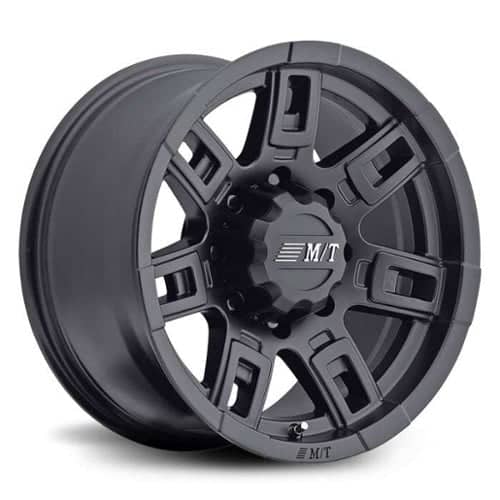
Brand: Mickey Thompson • Construction: Cast aluminum with extended center detail • Best For: Mickey Thompson tire pairings, classic off-road build aesthetics
The Mickey Thompson Sidebiter II is the classic Mickey Thompson off-road wheel — the design that defined the brand's identity through decades of off-road racing and recreational wheeling. Five spokes with the distinctive center cap, finished in straight Matte Black with the Mickey Thompson logo proudly displayed. It's a wheel that signals the rig's owner cares about Mickey Thompson's legacy in off-road racing — Baja 1000 wins, NHRA stock-eliminator dominance, the Bonneville Salt Flats heritage that goes back to the 1960s.
Construction is cast aluminum with Mickey Thompson's lifetime structural warranty. The wheel carries the brand's standard load ratings for trail and recreation use, with appropriate margin for typical Jeep, Bronco, and 4Runner applications. The straightforward five-spoke pattern provides excellent brake cooling and pairs naturally with Mickey Thompson Baja Boss A/T or Baja Legend MTZ tires for a coordinated brand identity throughout the rig.
Sizes cover 17-inch primarily with bolt patterns including 5x5 (Jeep Wrangler), 6x5.5 (Tacoma, 4Runner), and 6x135 (Bronco, F-150). The Sidebiter II reads more traditional than modern aggressive alternatives — buyers who want the cleaner, classic-American off-road aesthetic find it in this wheel. For Jeep Wrangler builds running Mickey Thompson Baja Boss tires, the Sidebiter II is the matching wheel that completes the brand identity.
Browse Mickey Thompson Sidebiter II sizes.
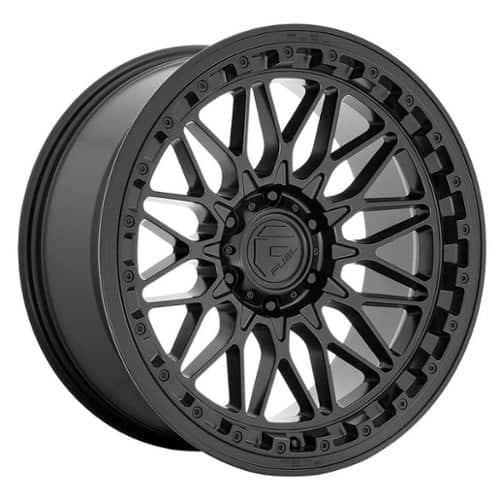
Brand: Fuel Off-Road • Construction: Cast aluminum with multi-spoke design • Best For: Detailed-aesthetic trail rigs, mid-size truck builds
The Fuel Trigger D757 closes out the 2026 list as the most detail-oriented design — a multi-spoke pattern with intricate spoke-to-spoke geometry that catches light differently than the simpler patterns higher on this list. For buyers who want their wheel choice to be a visual focal point of the build rather than a utilitarian component, the Trigger delivers more visual interest per square inch than most off-road wheels on the market.
Construction is Fuel's standard cast aluminum with the M-Land lifetime structural warranty. Load capacity covers the typical trail rig applications with appropriate margin for lifted rigs. The Matte Black finish is the most common but the Trigger comes in Brushed Black variants for buyers who want a slightly different aesthetic direction. Sizes cover 17-inch through 22-inch — the broader diameter range makes the Trigger work for both traditional trail-rig applications and more pro-touring oriented builds.
Bolt patterns cover the popular trail rig and mid-size truck applications including 5x5 Jeep, 6x5.5 Tacoma/4Runner, 6x135 Bronco/F-150, and 5x150 Tundra. Most fitments use negative offsets appropriate for lifted rigs. For buyers building Tacomas, 4Runners, mid-size Toyotas, and similar applications who want a wheel with more visual character than the standard offerings, the Trigger is one of the strongest choices in the category. Browse Fuel Trigger D757 sizes.
Twelve wheels on this list, all cast aluminum. There's a reason for that — the forged alternatives in the off-road wheel market are typically priced $700-1,000 per wheel and serve a specific buyer who races King of the Hammers or pushes a Wrangler past anything most people will ever attempt. For 95% of buyers, cast wheels from a quality manufacturer with a lifetime structural warranty cover the use case completely. The question isn't really "cast vs forged" for most buyers — it's "which cast wheel manufacturer takes their structural engineering seriously."
That said, here's what the difference actually means in practice. Cast wheels are made by pouring molten aluminum into a mold. The cooling process produces grain structure that's relatively uniform but contains microscopic porosity — small voids in the metal where the aluminum didn't fully consolidate during cooling. Under impact load (a rock striking the wheel face), those voids become stress concentrators where cracks initiate. Quality cast manufacturing reduces porosity through controlled cooling and post-cast heat treatment. Cheap cast manufacturing skips the heat treatment, which is why no-name budget wheels fail more often than name-brand alternatives at the same price.
Forged wheels are made by hammering a solid aluminum billet under thousands of tons of pressure into the wheel shape. The pressure compacts the grain structure and eliminates the porosity that's inherent to casting. The resulting wheel is stronger and lighter than a comparable cast design — typically 20-30% stronger pound-for-pound, and 15-25% lighter at the same dimensions. For Ultra4 racers and serious crawlers running 40-inch tires on 6,000-pound rigs, that strength-to-weight advantage is the difference between finishing a race and DNF'ing with a broken wheel. For typical trail rigs running 35-inch tires, the cast alternatives from quality manufacturers cover the use case adequately at one-quarter the price.
For deeper engineering coverage, see our off-road wheel materials guide and the broader off-road wheel types overview.
Rank |
Wheel |
Brand |
Construction |
Best For |
|---|---|---|---|---|
1 |
101 Beadlock Raw Machined |
Method Race Wheels |
Cast w/Beadlock |
Hardcore crawlers, comp rigs |
2 |
KM228 Machete Crawl Beadlock |
KMC Wheels |
Cast w/Beadlock |
Aggressive crawl-spec aesthetics |
3 |
305 NV Matte Black |
Method Race Wheels |
Cast w/Bead-Grip |
Daily-driven serious trail rigs |
4 |
Rebel 5 D679 Matte Black |
Fuel Off-Road |
Cast aluminum |
Jeep, Bronco trail rig builds |
5 |
312 Standard Bronze |
Method Race Wheels |
Cast aluminum |
Dual-purpose street and mild trail |
6 |
Deegan 38 Pro 2 Black |
Mickey Thompson |
Cast aluminum |
Pro-style aggressive trail builds |
7 |
Anza D557 Matte Black |
Fuel Off-Road |
Cast aluminum |
Distinctive design with capability |
8 |
317 Matte Black |
Method Race Wheels |
Cast aluminum |
Tundra, F-150, Sierra trail builds |
9 |
Armory Desert Tan |
Black Rhino |
Cast aluminum |
Overland and expedition rigs |
10 |
KM708 Bully Matte Bronze |
KMC Wheels |
Cast aluminum |
Modern Jeep, Bronco, 4Runner builds |
11 |
Sidebiter II Black |
Mickey Thompson |
Cast aluminum |
Classic off-road aesthetics, MT pairings |
12 |
Trigger D757 Matte Black |
Fuel Off-Road |
Cast aluminum |
Detailed-aesthetic mid-size builds |
The Method 101 Beadlock leads the 2026 ranking for dedicated trail rigs that get trailered to the trailhead. The aircraft-style locking ring with grade-8 hardware delivers the bead retention serious wheelers need while the cast aluminum center carries Method's race-derived structural engineering. For daily-driven trail rigs that drive to the trail and back, the Method 305 NV with bead-grip technology delivers most of the beadlock advantages without the legal complications of full beadlock construction. Both wheels carry Method's lifetime structural warranty.
Beadlock wheels are not DOT-approved for road use in most states. The aircraft-style locking ring uses bolted hardware that the DOT considers a safety concern for high-speed road operation. For dedicated trail rigs that get trailered to the trailhead, beadlocks are the right answer. For daily-driven trail rigs that drive to and from the trail, look for bead-grip technology (Method's patented alternative on the 305 NV and similar wheels) which delivers most of the air-down advantages while remaining DOT-compliant. Standard wheels without bead-retention features require higher minimum operating pressures (15+ PSI) but are fully street-legal everywhere.
Forged wheels are stronger and lighter than cast wheels at the same dimensions — typically 20-30% stronger and 15-25% lighter pound-for-pound. The forging process compacts the aluminum grain structure under thousands of tons of pressure, eliminating the microscopic porosity that's inherent to cast manufacturing. For Ultra4 racers, comp crawlers, and serious off-roaders running 40-inch tires on 6,000-pound rigs, the strength-to-weight advantage matters. For typical trail rigs running 35-inch tires, quality cast wheels from manufacturers like Method, Fuel, KMC, Mickey Thompson, and Black Rhino deliver adequate strength at one-quarter to one-third the price of comparable forged alternatives.
Standard Jeep Wrangler builds running 33-35 inch tires with stock bumpers and modest gear typically need wheels rated for at least 2,500 pounds per wheel. Heavier builds with steel bumpers, winch, recovery gear, roof racks, and 37-inch tires should look for 3,000-3,500 pounds per wheel minimum. For overland-prepped Wranglers carrying water, fuel, and full camping gear on extended trips, 3,500 pounds or more provides appropriate margin. Most quality off-road wheels in the typical Wrangler fitments (17x9 with -12 ET) carry static load ratings around 2,500-3,000 pounds, which covers typical builds adequately.
The Method 101 Beadlock uses a true aircraft-style beadlock ring with grade-8 hardware that physically clamps the tire bead to the wheel rim, allowing safe operation at 5-8 PSI. The wheel is not DOT-approved for road use in most states. The Method 305 NV uses Method's patented bead-grip technology — a mechanical pinch on the inner tire bead that holds tire pressure down to 10-12 PSI safely while remaining DOT-compliant for road operation. The 101 delivers maximum air-down capability for dedicated trail rigs that get trailered to the trailhead; the 305 NV delivers most of the air-down advantages for daily-driven trail rigs that need to be street-legal.
Quality cast off-road wheels in 2026 typically run $250 to $500 per wheel for standard (non-beadlock) trail rig fitments. Method 312 Standard and KMC KM708 Bully fall in the $250-350 per wheel range. Fuel Rebel 5 D679 and Fuel Anza D557 typically run $350-450. Method 305 NV with bead-grip technology runs approximately $400-500. True beadlock wheels like Method 101 and KMC KM228 Machete typically run $500-700 per wheel due to the additional hardware and engineering required for the locking ring construction. Forged off-road wheels start around $700-1,000 per wheel and serve specific high-end applications.
17-inch wheels are the right answer for most serious trail rigs. The smaller diameter accommodates more sidewall in the same overall tire size — a 35x12.50R17 tire has more sidewall than a 35x12.50R18, which translates to more impact absorption during rock crawling, better airing-down performance, and more compliance over technical terrain. The 18-inch alternatives make sense for builds that prioritize on-road handling alongside trail capability, but the 17-inch fitments deliver better pure off-road performance. For Jeep Wrangler builds specifically, the 17x9 with -12 ET is the most popular fitment because it works with the broadest range of tire sizes from 33s through 37s.
Common trail rig bolt patterns: Jeep Wrangler JK and JL use 5x5 (5x127mm). Jeep Gladiator uses 5x5. Toyota Tacoma, 4Runner, and FJ Cruiser use 6x5.5 (6x139.7mm). Toyota Tundra and Sequoia use 5x150. Ford Bronco (modern) uses 6x135. Ford F-150 uses 6x135. Chevrolet Silverado 1500 and GMC Sierra 1500 use 6x5.5 (6x139.7mm). RAM 1500 uses 5x5.5 (5x139.7mm). Older Wrangler TJ and YJ models use 5x4.5 (5x114.3mm). Always confirm the specific year and model fitment before ordering — bolt patterns occasionally change with model refreshes, and aftermarket suspension kits sometimes require different fitments than the OEM spec.