
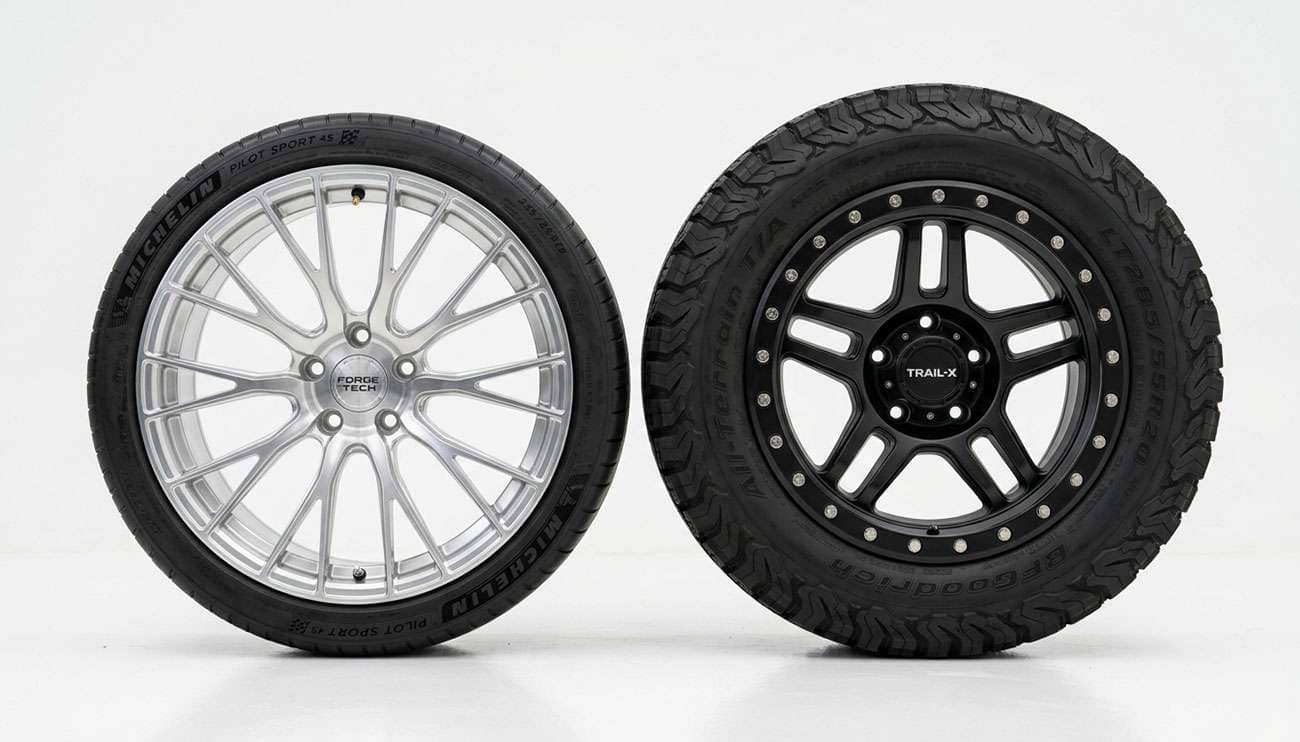
I get this question more than you'd think — usually from someone who just bought a truck or Jeep and wants to make it trail-ready. They see "off-road wheels" listed everywhere, they look at the price tags, and they wonder: what am I actually paying for? Is an off-road wheel genuinely different from the wheels already on my truck, or is it just a regular wheel painted black with some aggressive styling?
Fair question. And the honest answer is: both. Some of what makes an off-road wheel "off-road" is real engineering that matters on the trail. Some of it is styling that looks tough but doesn't change performance at all. Let me break down what's real, what's marketing, and what you actually need based on how you use your truck.
An off-road wheel is a wheel engineered to survive impacts, load stresses, and environmental punishment that would damage or destroy a standard passenger car wheel. The differences fall into three categories: stronger construction to handle trail hazards, specific dimensions (wider, with more aggressive offset) to accommodate larger off-road tires, and protective finishes that resist corrosion from mud, water, and salt.
That's the real definition. Everything else — simulated beadlock rings, military-inspired styling, skulls and crossbones center caps — is cosmetics. Cosmetics matter if you care how your truck looks (and most of us do), but they don't make the wheel perform better on a trail. So let's separate the substance from the style.
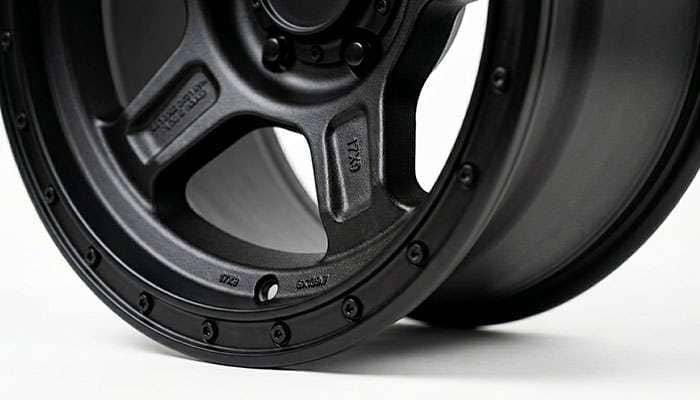
Off-road wheels are rated to carry more weight than standard wheels. A stock passenger wheel might be rated for 1,800-2,200 pounds per wheel. A proper off-road wheel typically handles 2,500-3,700 pounds per wheel. That matters when you've loaded the truck with camping gear, recovery equipment, roof racks, and a full-size spare — then hit a pothole at 40 MPH on a forest service road. The extra load rating is your margin of safety.
The outer lip of an off-road wheel — the part closest to the tire bead — is thicker and more heavily reinforced than a street wheel. Rock strikes, curb impacts, and off-camber trail obstacles hit the wheel lip first. A thin street wheel lip can bend or crack from a single rock hit. An off-road wheel's reinforced lip absorbs that same impact without deforming. The spokes are also thicker, with wider base sections where they meet the barrel — that's the highest-stress point on any wheel, and off-road wheels put extra material there.
Street wheels rely on clear coat over polished or painted aluminum. That finish looks great in a parking lot but chips easily from trail debris, and once the clear coat is breached, the aluminum oxidizes and corrodes. Off-road wheels use tougher finishes — powder coating, matte paint, textured coatings, or anodizing — that resist chipping, scratching, and corrosion. A powder-coated matte black off-road wheel can take a season of trail abuse and still look intentional. A clear-coated chrome wheel would look destroyed after one trip.
Off-road wheels are typically available in wider widths (8-12 inches versus 7-8.5 inches for most street wheels) and with more aggressive offset options that push the tire outward from the vehicle body. This wider stance improves stability on uneven terrain and gives clearance for larger off-road tires. The offset options matter — getting the wrong offset causes rubbing, suspension interference, or a tire that sticks out past the fender and throws rocks at the body.
Off-road wheels come in three material categories, and which one you should buy depends entirely on how seriously you off-road:
Feature |
Steel |
Cast Aluminum |
Forged Aluminum |
|---|---|---|---|
Weight (17x9 typical) |
28-35 lbs |
24-30 lbs |
18-24 lbs |
Impact Resistance |
Bends but rarely cracks |
Can crack on hard impacts |
Extremely strong — resists both |
Trail Repairability |
Can be hammered back into shape |
Cannot be repaired if cracked |
Rarely needs repair |
Corrosion Resistance |
Rusts without coating |
Good with proper finish |
Excellent |
Design Options |
Limited — basic spoke patterns |
Wide variety of styles |
Widest variety, custom options |
Price Per Wheel |
$80-$180 |
$150-$400 |
$400-$1,200+ |
Best For |
Dedicated trail rigs, rock crawlers |
Daily-driven trucks that go off-road |
Performance builds, race trucks |
Here's my honest advice: if you're building a dedicated trail rig that takes real hits, steel wheels are the smartest choice. They bend instead of cracking, and you can hammer a bent steel wheel back into shape on the trail with a rock and a spare tire iron. Try that with a cracked aluminum wheel — you're calling a tow truck. If your truck is a daily driver that sees occasional trails, cast aluminum off-road wheels give you the best balance of weight, style, and durability. Forged aluminum is the premium option for serious performance builds where every pound matters.
Beadlocks are the most misunderstood feature in the off-road wheel market. Let me clear this up.
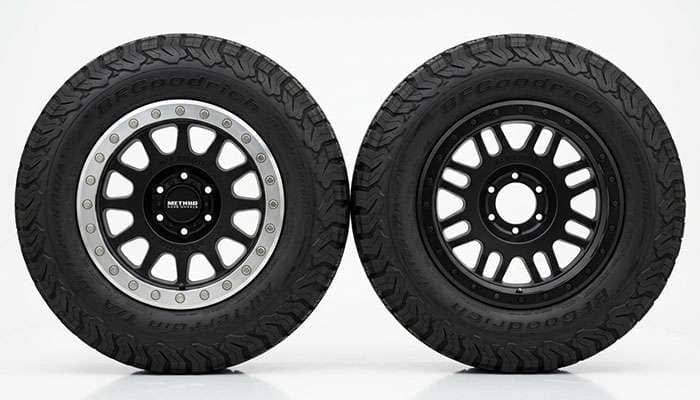
A true beadlock wheel has a physical ring that bolts to the outer lip of the wheel and clamps the tire's bead between the ring and the barrel. This mechanically prevents the tire from popping off the rim when you air down to very low pressures (8-15 PSI) for maximum traction on rocks or sand. True beadlocks are essential for serious rock crawling and competition off-road. They are also heavy, require regular bolt torque checks, can leak air slowly, and are not DOT-approved for street use in most configurations.
A simulated beadlock is a decorative ring with bolts that looks like a beadlock but does nothing functionally. It's styling. The tire seats on the wheel exactly like a standard wheel — there's no mechanical clamping. About 80% of the "beadlock" wheels you see on trucks at the mall are simulated. Nothing wrong with that if you like the look, but don't confuse it with actual off-road capability.
A bead grip wheel (like Method's Bead Grip technology) is a middle ground. It uses ridges machined into the bead seat area to resist tire slippage at reduced pressures without the weight and maintenance of a full beadlock. It's DOT-legal, requires no special maintenance, and provides meaningful beadlock benefit for most recreational off-roaders who air down to 15-20 PSI.
Do you need a beadlock? If you're not regularly airing below 15 PSI, no. If you're crawling Moab slickrock at 8 PSI, yes. For everyone in between, a bead grip wheel or even a standard off-road wheel with quality tires works fine.
Two specs matter more on off-road wheels than any other: offset and width.
Offset determines how far the wheel sits from the hub mounting surface. Street wheels typically have positive offset — the mounting surface is toward the outside of the wheel, tucking the tire under the fender. Off-road wheels often have zero or negative offset, pushing the tire outward for a wider, more stable stance. More negative offset = wider stance = more stability on uneven terrain, but also more stress on wheel bearings and suspension components, more road spray, and potential fender rubbing.
Width determines how wide a tire you can mount. Most off-road wheels run 8-10 inches wide to accommodate the 10.5-12.5 inch wide tires that dominate the off-road market. A wider wheel gives the tire a flatter contact patch on hard surfaces, while a narrower wheel allows the tire sidewall to balloon slightly for better grip on rocks and sand.
The common mistake I see is guys going too aggressive on both specs simultaneously — a 12-inch-wide wheel with -44mm offset that sticks the tire 4 inches past the fender. It looks dramatic, but it destroys wheel bearings, throws rocks at the body, and creates horrible highway handling. For most trucks, a 9-inch-wide wheel with -12 to -18mm offset gives you a meaningful stance improvement without the durability penalties. Save the extreme offsets for show trucks that don't actually go off-road.
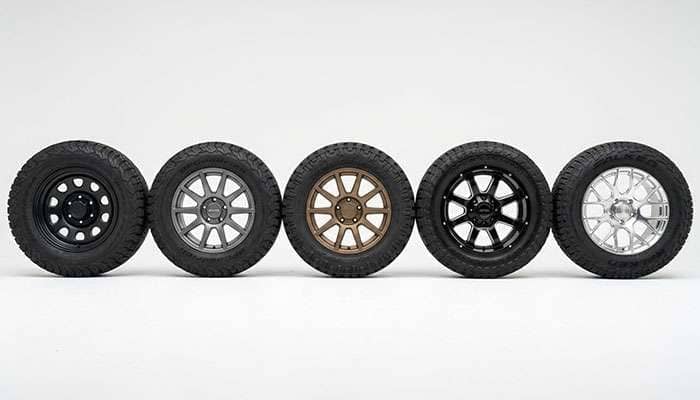
We carry a deep selection of off-road wheels. Here's where each brand excels:
Method — The racers' choice. Their Bead Grip technology is the best non-beadlock solution for aired-down trail driving. Winners of Baja 1000, Dakar, and King of the Hammers. Premium cast and forged options. If you actually race or crawl, Method is the brand.
Fuel — The widest style selection in the off-road market. Dozens of designs from subtle to extreme. Strong cast construction with excellent protective finishes. Best for truck owners who want aggressive styling with solid trail capability.
KMC — Great value with proven designs like the Grenade. Solid cast aluminum construction with lifetime structural warranties. The sweet spot between budget and premium.
Black Rhino — Military and expedition-inspired designs with some of the most unique aesthetics in the market. Strong cast and flow-formed options. If you want your truck to look like it belongs in a desert convoy, Black Rhino nails that aesthetic.
Pro Comp — Budget-friendly off-road wheels that don't cut corners on load ratings or construction. Great entry point for first-time off-road wheel buyers.
Browse our full off-road wheel selection or build a complete wheel and tire package with off-road tires mounted and balanced. Call us at 888-926-2689 for help matching wheels to your specific truck and the terrain you run.
Yes — with the exception of true beadlock wheels, which are not DOT-approved for highway use in most configurations. All cast aluminum, forged aluminum, and steel off-road wheels are fully street-legal and designed for mixed highway and off-road use. They're heavier than dedicated street wheels, which may reduce fuel economy by a small amount, but they're otherwise identical in terms of highway safety and performance. Most truck owners run off-road wheels as their only set and drive them daily without issues.
Generally yes. Off-road wheels are built with higher load ratings (2,500-3,700 lbs per wheel versus 1,800-2,200 for most street wheels), thicker spokes, and reinforced lip sections designed to absorb trail impacts without cracking or bending. However, "off-road" is a broad category — a budget cast aluminum off-road wheel may not be significantly stronger than a quality street wheel. Look at the load rating stamped on the wheel and the warranty to judge actual strength rather than relying on the "off-road" label alone.
Steel off-road wheels run $80-$180 per wheel. Cast aluminum off-road wheels — which represent the majority of the market — range from $150-$400 per wheel depending on brand, size, and design complexity. Forged aluminum off-road wheels start around $400 and can exceed $1,200 per wheel for premium racing-grade options. For a set of four quality cast aluminum off-road wheels in a popular size like 17x9 with tires mounted and balanced, expect to spend $1,800-$3,200 total depending on the tire choice.
For most trucks and SUVs, 17-inch diameter wheels in 8.5 or 9 inch width are the most versatile off-road size. This diameter accommodates the widest range of off-road tire options, clears most brake setups, and provides enough sidewall height for comfortable aired-down trail driving. Going to 18 or 20 inch wheels reduces tire sidewall height, which limits your ability to air down and absorb trail impacts. If serious off-road capability is your priority, stay at 17 inches. If highway comfort and appearance are more important, 18 or 20 inch off-road wheels work well for moderate trail use.
Yes, slightly. Off-road wheels are typically heavier than street wheels in the same size — a cast aluminum off-road wheel might weigh 28-30 pounds versus 22-25 for a comparable street wheel. That extra weight is unsprung mass that the engine has to accelerate and the brakes have to stop. The practical impact is about 0.5-1 MPG reduction compared to lighter street wheels. Paired with heavier, more aggressive off-road tires, the total wheel-and-tire weight increase can reduce fuel economy by 1-3 MPG compared to a stock highway setup. Steel off-road wheels have the biggest impact due to their heavier weight.
A true beadlock uses a bolted ring that physically clamps the tire's bead to the wheel, preventing the tire from slipping off the rim at very low air pressures (8-15 PSI). It's a functional safety feature essential for serious rock crawling. A simulated beadlock is a decorative ring with cosmetic bolts that mimics the appearance of a beadlock but provides zero functional benefit — the tire seats on the wheel exactly like any standard wheel. About 80% of the beadlock-style wheels you see on daily-driven trucks are simulated. True beadlocks are heavier, require regular bolt checks, can leak air, and are not DOT-approved for highway use.



