
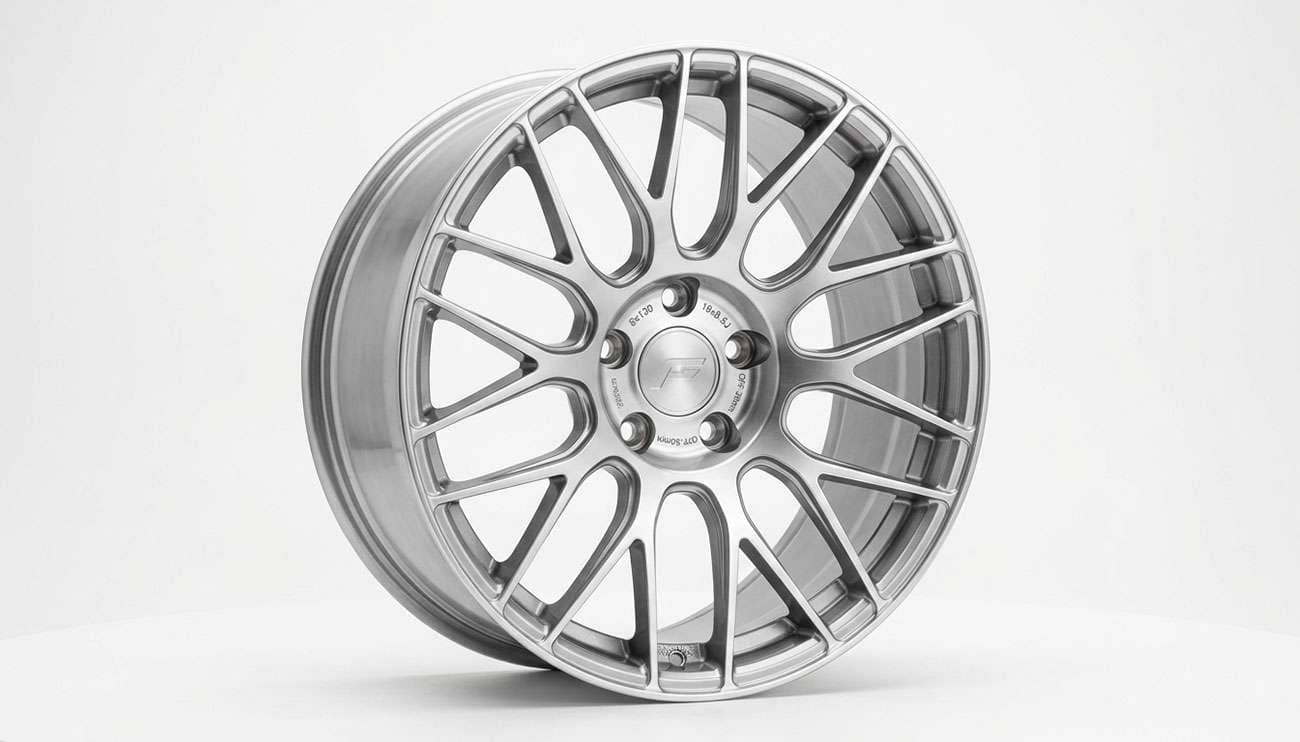
A 5x130 bolt pattern means the wheel mounts with 5 lug holes spaced around a circle 130 millimeters in diameter, which works out to 5x5.12 inches. In plain terms, it is the Porsche pattern. Nearly every modern Porsche wears it, along with the Volkswagen Touareg, early Audi Q7, the Mercedes-Benz Sprinter and G-Class, and exotics like the Lamborghini Urus and Bentley Continental. If your car uses 5x130, the wheel has to match that exact spacing, and, just as important, it has to match your hub bore. Here is the full fitment picture and what actually bolts on.
The bolt pattern, or pitch circle diameter (PCD), is one of the first specs you have to nail before buying wheels. Get it wrong and the wheel will not sit flat on the hub, if it mounts at all. The 5x130 pattern is precise and unforgiving, and because it lives almost entirely in the premium German market, it comes with a couple of quirks that trip people up. Let me break down the numbers, the vehicles, and the details that decide whether a set of wheels will fit.
Every bolt pattern is described by two numbers: the lug count and the bolt circle diameter. For 5x130, the 5 is the number of lug holes and the 130 is the diameter, in millimeters, of the imaginary circle that passes through the center of all five holes. That measurement is the PCD. Because five lugs sit on an odd count, you cannot simply measure straight across two holes. The accepted method is to measure from the center of one lug to the outer edge of the second hole across from it, which lands you at that 130mm circle.
The 5x130 pattern uses a 14x1.5 stud or bolt thread and, in most Porsche applications, a lug bolt rather than a stud and nut. It is a tight, high-precision pattern built for performance and heavy luxury vehicles, which is exactly why it shows up where it does.
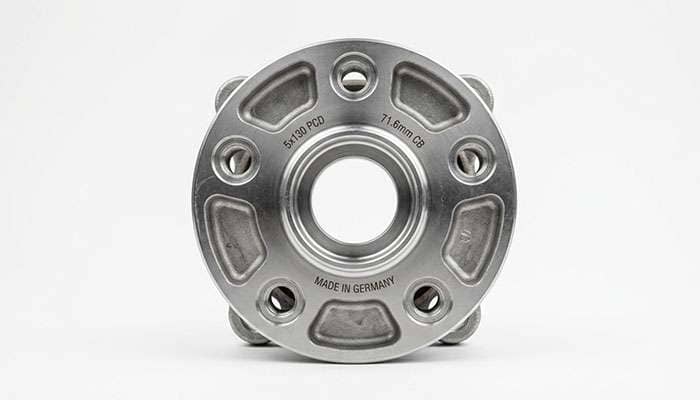
To convert a metric bolt pattern to inches, divide the millimeter figure by 25.4. So 130 divided by 25.4 equals 5.118, which rounds to 5.12 inches. That means 5x130 and 5x5.12 are the exact same bolt pattern, just written in different units. You will see wheels and vehicle specs listed either way, and both refer to the same fit. This matters because a neighboring pattern like 5x127 (which equals 5x5.00 inches) sits only 3mm away and will not interchange, so the decimal precision is not a rounding suggestion. For a full breakdown of how offset plays into fitment, see our guide on wheel offset explained.
The 5x130 pattern is dominated by Porsche, but it appears across a specific group of German and European performance and heavy-duty vehicles. Here is where you will find it.
Porsche is the reason 5x130 exists in the aftermarket at all. The pattern runs across the modern lineup: the 911, Boxster, Cayman, and 718, plus the Cayenne SUV, Panamera, and Taycan. Older water-cooled and even many air-cooled models used it too, including the 928, 944, and 968. The one notable exception is the Porsche Macan, which uses 5x112, not 5x130, so never assume a Porsche badge guarantees the pattern.
Because the Volkswagen Touareg, first-generation Audi Q7, and Porsche Cayenne share a platform, all three carry 5x130. The Touareg used it from roughly 2003 to 2018, and the early Q7 shares the same 71.5mm to 71.6mm hub territory as Porsche. Volkswagen commercial vans like the Transporter T5 and Crafter also use it. On the Mercedes-Benz side, the Sprinter van and the G-Class (including AMG G models) run 5x130, though the Sprinter uses a much larger hub bore, which we will get to next.
The heavy hitters share the pattern as well. Bentley uses 5x130 on the Continental GT and GTC, Flying Spur, Bentayga, and Mulsanne. The Lamborghini Urus wears it, as do Bugatti models like the Chiron and Veyron. In every case it is the same 130mm circle, which is why a set of Porsche-fitment wheels and a set of Bentayga wheels speak the same fitment language even if the offsets differ wildly.
This is a common search, so let me answer it directly: 5x130 is not a pickup-truck pattern. American half-ton and heavy-duty pickups use patterns like 6x139.7, 8x165.1, or 8x180, not 5x130. What people often mean by trucks here are the SUVs and vans that use it, the Cayenne, Touareg, and G-Class on the SUV side, and the Sprinter, Transporter, RAM ProMaster, Fiat Ducato, and similar Euro vans on the commercial side. If you drive a domestic pickup, 5x130 is almost certainly not your pattern.
Vehicle |
Typical Years |
Center Bore |
Notes |
|---|---|---|---|
Porsche 911 |
1999-2023 |
71.6 mm |
Uses lug bolts, not studs |
Porsche Cayenne |
2011-2023 |
71.6 mm |
Shares platform with Touareg and Q7 |
Porsche Panamera |
2010-2023 |
71.6 mm |
High positive offset is common |
Volkswagen Touareg |
2003-2018 |
71.5 mm |
Close to Porsche hub, often direct fit |
Audi Q7 (first generation) |
2007-2015 |
71.5 mm |
Later Q7 moved to 5x112 |
Mercedes-Benz Sprinter |
2007-2023 |
84.1 mm |
Larger hub bore than Porsche |
Mercedes-Benz G-Class |
2002-2023 |
84.1 mm |
Heavy vehicle, check load rating |
Lamborghini Urus |
2018-2023 |
71.5 mm |
Shares pattern with Cayenne and Q7 |
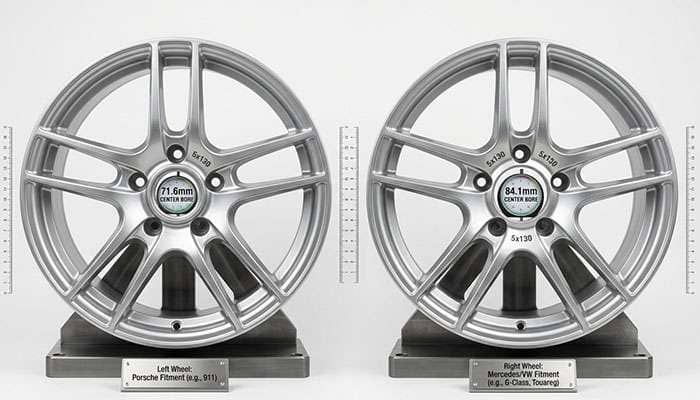
Here is the detail that catches people out. Two vehicles can share the exact 5x130 bolt pattern and still not swap wheels cleanly, because the center bore is different. The center bore is the diameter of the hole in the middle of the wheel that sits over the hub. On Porsche, Audi, and Volkswagen cars the hub is 71.5mm to 71.6mm. On the Mercedes Sprinter and other heavy vans it jumps to 84.1mm. A wheel built for an 84.1mm van hub has too big a center hole to sit properly on a 71.6mm Porsche hub without a hub-centric ring, and a wheel bored for Porsche simply will not slide onto the larger van hub at all.
This is why hub-centric fitment matters so much on 5x130. If the wheel bore is larger than the hub, you use hub-centric rings to take up the gap and center the wheel precisely, which prevents vibration. If the bore is smaller than the hub, the wheel is off the table for that vehicle. Always match both the bolt pattern and the center bore before you buy. Our breakdown of hub-centric vs lug-centric wheels explains exactly how the wheel locates on the hub and why it matters for a smooth ride.
Several five-lug patterns sit close enough to 5x130 to cause confusion, but none of them interchange. Nearby fits like 5x115 on modern Mopar, Cadillac, and GM models add to the mix, and a few millimeters at the PCD is the difference between a wheel that bolts up safely and one that does not. Here are the ones people mix up most.
The 5x135 pattern equals 5x5.31 inches and is a Ford truck and SUV pattern, used on the F-150 from 1997 to 2003 and on the Expedition and Navigator of that era. It is 5mm larger at the PCD than 5x130, so the two do not interchange. If your search turned up 5 on 135, you are looking at older Ford full-size vehicles, not the Porsche and German group that runs 5x130.
BMW built most of its lineup on 5x120, which equals 5x4.72 inches. That is a full 10mm smaller than 5x130, so BMW wheels will not fit a Porsche and 5x130 wheels will not fit a BMW. Despite both being German performance brands, their bolt patterns are not compatible.
The 5x127 pattern, also written as 5x5.00 inches, appears on many Jeep, Chrysler, and GM vehicles. At only 3mm smaller than 5x130, it is dangerously close on paper but still will not seat correctly. Do not attempt to force a 5x127 wheel onto a 5x130 hub or the reverse. The lugs will not line up cleanly, and the wheel will not clamp evenly.
Because 5x130 lives on performance and heavy vehicles, the fitment details are more demanding than on an average sedan. Offset is the first hurdle. Porsche and its platform-mates run high positive offsets, often in the 45mm to 65mm range, which is why enthusiasts sometimes call 5x130 the difficult one to shop for. A wheel with the wrong offset either rubs the suspension or pokes past the fender, so the offset has to be right for your specific model, not just the bolt pattern.
On the hardware side, 5x130 typically uses a 14x1.5 thread. Most Porsche models use lug bolts that thread directly into the hub rather than studs with nuts, so you tighten the wheel with bolts and there is nothing sticking out to hang the wheel on during installation. Torque values vary by vehicle, generally landing around 96 ft-lbs for Porsche cars and climbing higher, up to roughly 130 ft-lbs or more, on the heavy Sprinter and G-Class. Always tighten in a star sequence (1, 3, 5, 2, 4) to seat the wheel evenly, and re-torque after about 50 to 100 miles of driving. For the full method, follow our step-by-step guide on how to torque lug nuts perfectly. On heavy SUVs like the Cayenne, Touareg, and G-Class, also confirm the wheel meets the vehicle weight with our wheel load rating guide.
Ask any Porsche or Touareg owner and they will tell you: sourcing 5x130 wheels is harder than it should be. The pattern is used by a relatively small, premium slice of the market, so many popular aftermarket wheels are never produced in 5x130 at all. When they are, they often carry a premium price and a limited range of offsets. That leaves buyers choosing between expensive factory replacements, high-end forged options, or a narrow set of aftermarket fitments.
That scarcity is exactly why it pays to shop a catalog built for the pattern. We carry a deep 5x130 selection spanning street, track, luxury, and overland fitments across brands like Victor Equipment, Rotiform, Niche, Black Rhino, and OE Performance, with the correct offsets and hub bores for Porsche, VW, Audi, and Mercedes applications. You can browse the full lineup on our 5x130 bolt pattern wheels page. And if the wheel you love comes in a nearby pattern, our guide on whether wheel spacers and adapters hurt your car covers when an adapter is a safe route and when it is not.
Here are three sets that show the range of what 5x130 can do, from a Porsche-focused street wheel to an overland-ready SUV fitment. All three are stocked in 5x130 with the correct hub bores.
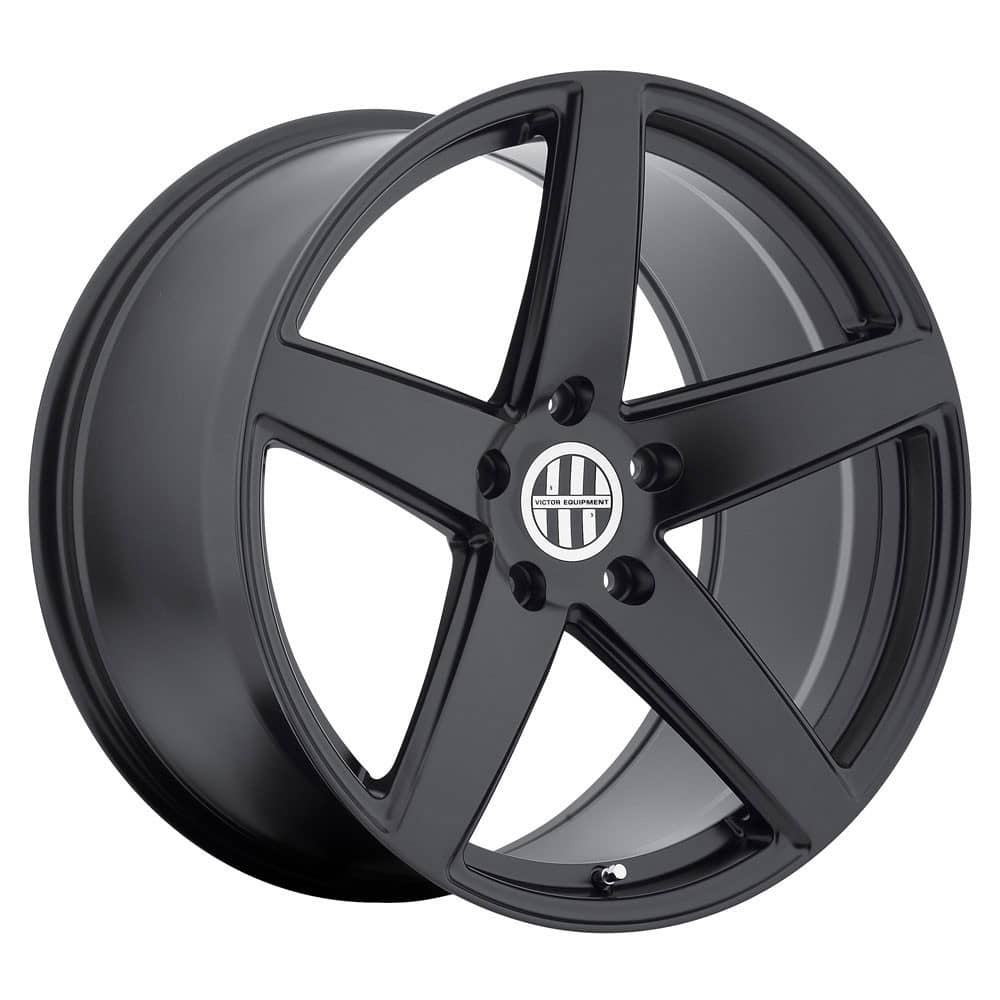
Victor Equipment Baden (18x10, Matte Black) - about $314. Victor Equipment builds specifically for the Porsche and German performance market, so its wheels come in the right 71.6mm hub bore and high offsets out of the box. The Baden is a clean, multi-spoke street wheel that suits a 911, Cayman, or Panamera without the guesswork. Browse the range on the Victor Equipment wheels page.
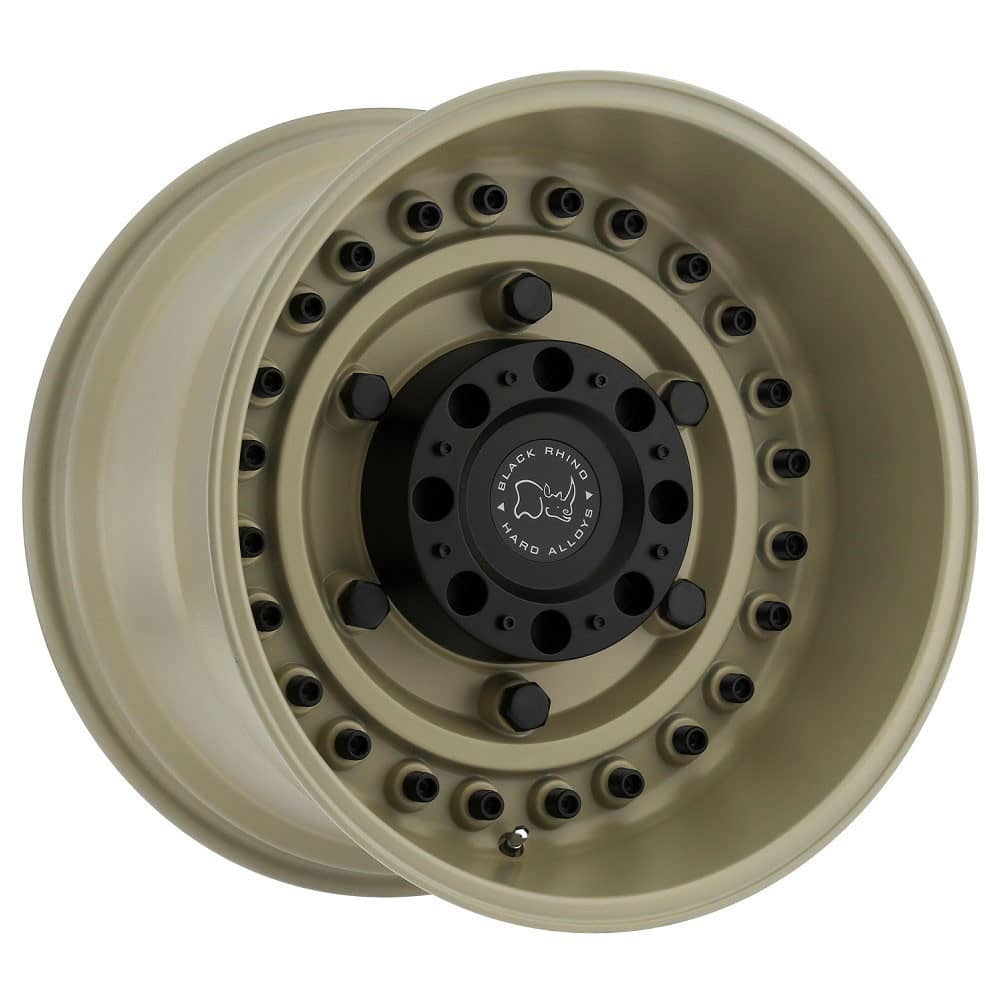
Black Rhino Armory (17x8, Desert Sand) - about $250. For a Cayenne, Touareg, or G-Class headed off the pavement, the Armory is built around the larger 84.1mm hub bore and a rugged, military-inspired look. It is the pick when you want an overland stance on a 5x130 SUV rather than a track fitment. See more on the Black Rhino wheels page.
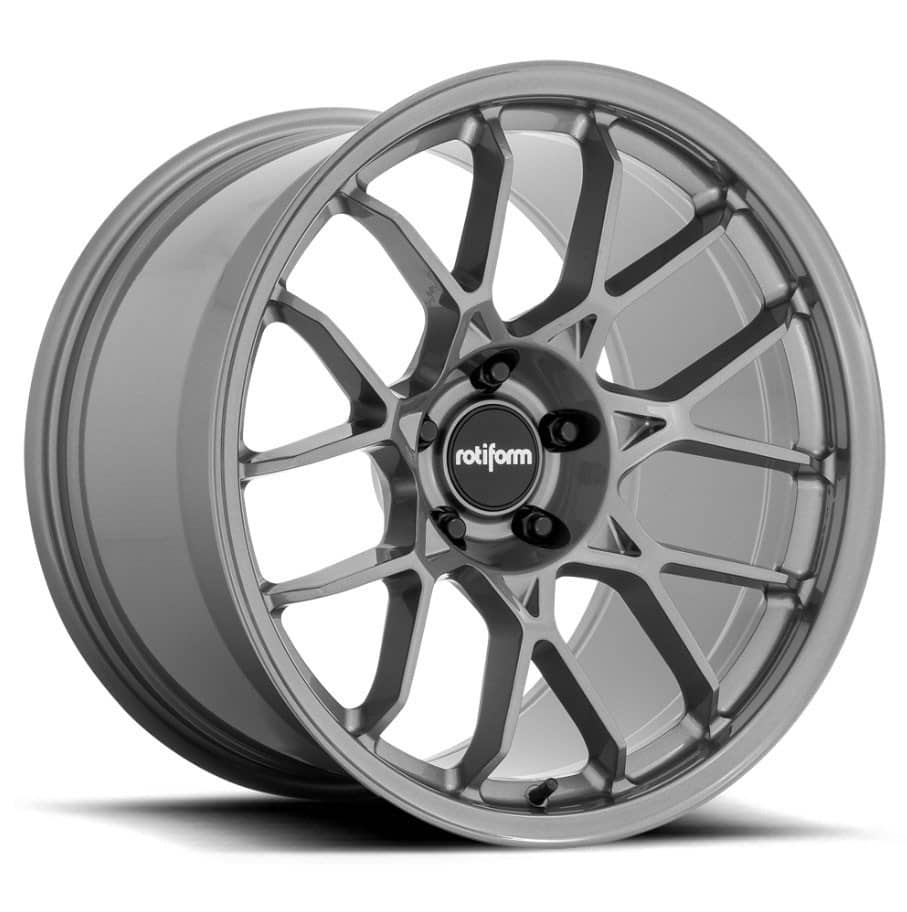
Rotiform R196 ZWS (21x11, Gloss Anthracite) - about $233. Rotiform is a favorite in the European tuner scene, and the deep-concave R196 delivers that aggressive, flush look on a Panamera or Touareg. At a 71.5mm bore and a wide 21-inch footprint, it is a strong value for a show-quality 5x130 fitment. Find it on the Rotiform wheels page.
The 5x130 pattern is used across the Porsche lineup (911, Boxster, Cayman, 718, Cayenne, Panamera, Taycan, and older 928, 944, and 968 models), plus the Volkswagen Touareg, first-generation Audi Q7, Mercedes-Benz Sprinter and G-Class, Lamborghini Urus, and Bentley models. The Porsche Macan is the notable exception, using 5x112 instead.
5x130 converts to 5x5.12 inches. Divide 130 millimeters by 25.4 to get 5.118 inches, which rounds to 5.12. Both notations describe the same bolt pattern.
No. 5x135 equals 5x5.31 inches and is a Ford full-size truck and SUV pattern (F-150 1997-2003, Expedition, Navigator). It is 5mm larger at the pitch circle than 5x130, so the two do not interchange.
No. 5x4.5 inches equals 5x114.3 millimeters, a common Honda, Toyota, Ford, Jeep, and Nissan pattern. 5x100 is a smaller pattern found on Subaru, Volkswagen, and some Toyota models. They are 14.3mm apart at the pitch circle and are not interchangeable.
No. 5x5 inches equals 5x127 millimeters, while 5x135 equals 5x5.31 inches. They differ by about 8mm at the pitch circle, so wheels for one will not fit the other.
The 6x130 pattern (six lugs on a 130mm circle) is a commercial-van pattern, most commonly found on the Mercedes-Benz Sprinter in its six-lug configurations and related European vans. It is a separate pattern from the five-lug 5x130 and does not interchange with it.
Yes, quality wheel adapters can convert a nearby pattern to 5x130, but they must be hub-centric, properly torqued, and rated for the vehicle. Adapters add width and change offset, so they are best installed and inspected by a professional. When possible, a direct 5x130 fitment is preferable to an adapter.



