
=
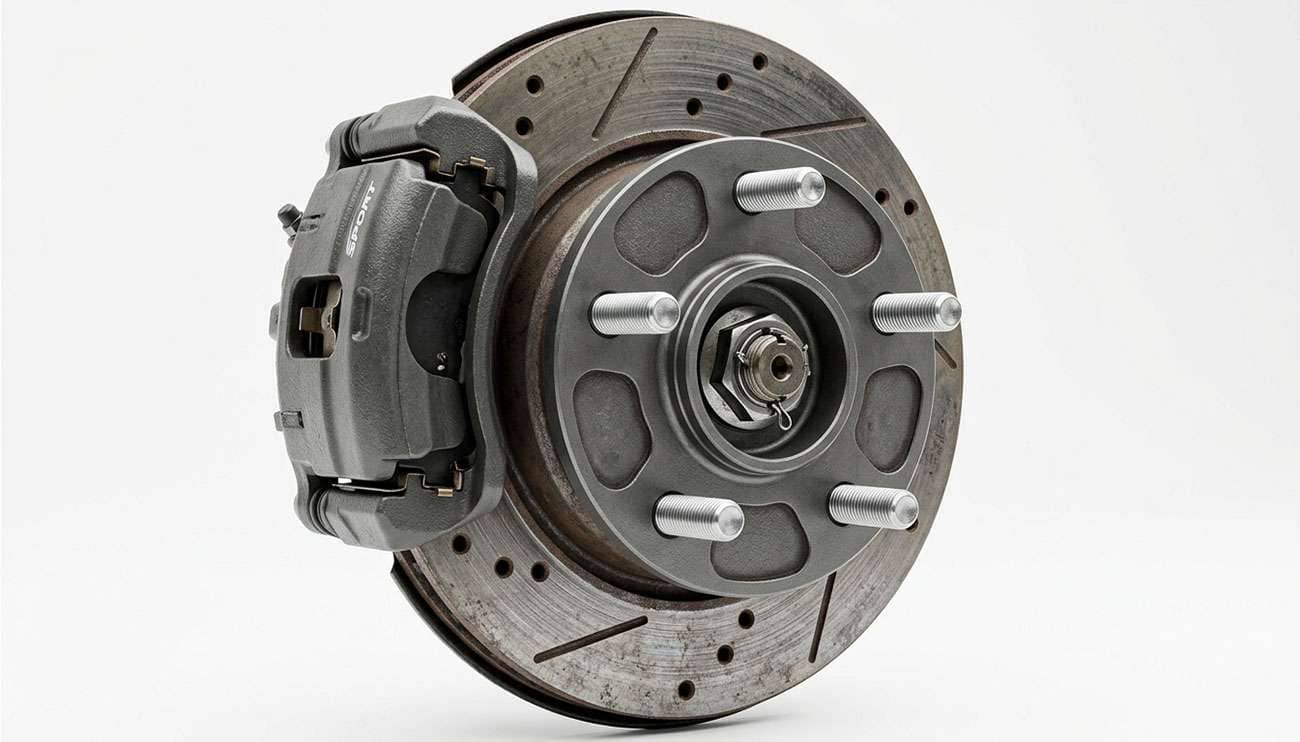
The 5x115 bolt pattern shows up on two big groups of vehicles: modern rear-wheel-drive Mopars and a long list of front-wheel-drive General Motors cars. On the Mopar side, that means the Dodge Charger, Dodge Challenger, Dodge Magnum, and Chrysler 300. On the GM side, it covers Cadillac, Buick, Chevrolet, Pontiac, Oldsmobile, and Saturn front-drivers, from the Impala and Monte Carlo to the DeVille and Grand Prix. In plain numbers, 5x115 means five lugs spaced evenly on a circle 115 millimeters across, which works out to about 4.52 inches.
I run fitment for a living, and 5x115 is one of the patterns people misread most often, usually because it sits so close to 5x114.3. Get the two confused and the wheel will not seat correctly. So let me lay out exactly which cars use it, what the specs are, and what 5x115 is not.
The pattern itself is simple, but the surrounding fitment details change depending on whether you are working on a GM car or a Mopar. Here are the numbers that matter.
The Pitch Circle Diameter (PCD) is 115 millimeters, or roughly 4.52 inches, measured through the center of the five studs. That part is constant across every 5x115 vehicle. What changes is the hardware. The GM front-drive cars generally use 12x1.5 mm studs with a hub bore around 70.3 mm. The Mopar LX cars, the Charger, Challenger, Magnum, and 300, use larger 14x1.5 mm studs and a hub bore closer to 71.5 mm. Lug torque follows the same split: most GM 5x115 applications land near 100 lb-ft, while the larger Mopar studs are torqued closer to 130 lb-ft. Always confirm the figure in your owner's manual, because trim and year can shift it.
That hub bore difference matters more than people expect. A wheel built for the Mopar 71.5 mm hub will not center properly on a 70.3 mm GM hub without the right hub-centric ring, even though both share the 5x115 pattern. If you want the full breakdown on why centering matters, our guide on hub-centric vs lug-centric wheels covers it.
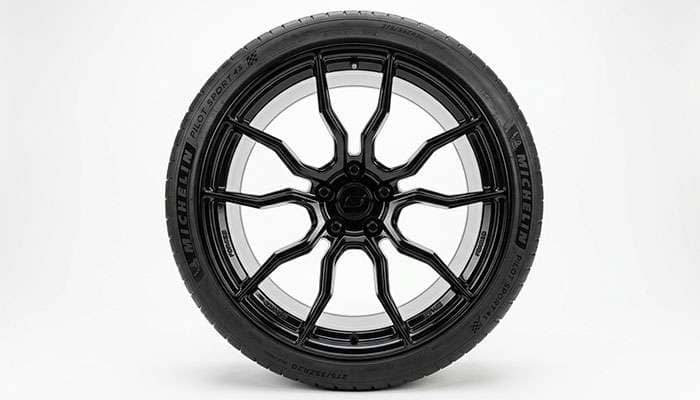
Here is the breakdown by brand. This covers the North American vehicles most owners are shopping wheels for, though the pattern also appears on some Opel, Vauxhall, and Holden models overseas.
This is the marquee group for performance shoppers. The Dodge Charger (2005 to 2024), Dodge Challenger (2008 to 2024), Dodge Magnum (2004 to 2009), and Chrysler 300 and 300C (2004 to 2024) all run 5x115 on the LX and LD platforms. That includes the SRT variants. Because these are rear-drive muscle cars, they are the most common 5x115 vehicles getting aftermarket wheels, often in a staggered setup.
Cadillac uses 5x115 widely. You will find it on the ATS (2013 to 2019), CTS (2002 to 2007), CT4 (2020 and up), DeVille (1985 to 2005), DTS (2006 to 2011), Seville (1986 to 2004), STS (2004 to 2012), Eldorado (1986 to 2002), Allante, and Fleetwood. Note that later CTS generations switched away from this pattern, so always verify by year.
Buick 5x115 applications include the LaCrosse, Lucerne (2006 to 2011), Park Avenue (1991 to 2006), LeSabre (1986 to 2005), Regal, Verano (2011 to 2017), and the newer Encore, Encore GX, and Envision crossovers.
On the Chevy side, the Impala (2000 to 2013), Monte Carlo (1995 to 2007), Malibu (1997 to 2003 and 2016 to 2025), Cruze (2009 to 2018), Equinox (2004 to 2009 and 2017 and up), Trax, Volt (2010 to 2015), and TrailBlazer all use 5x115.
From the discontinued GM brands, 5x115 covers the Pontiac Grand Prix (1988 to 2008), Bonneville (1987 to 2005), Grand Am (1999 to 2005), Aztek, and Montana; the Oldsmobile 88, 98, Aurora, Intrigue, Cutlass Supreme, and Alero; and the Saturn Vue (2002 to 2010) and Relay.
A handful of imports share the pattern too, including the Kia Amanti (2007 to 2009) and Suzuki XL-7 (2007 to 2009), plus the Opel, Vauxhall, and Holden models sold outside North America.
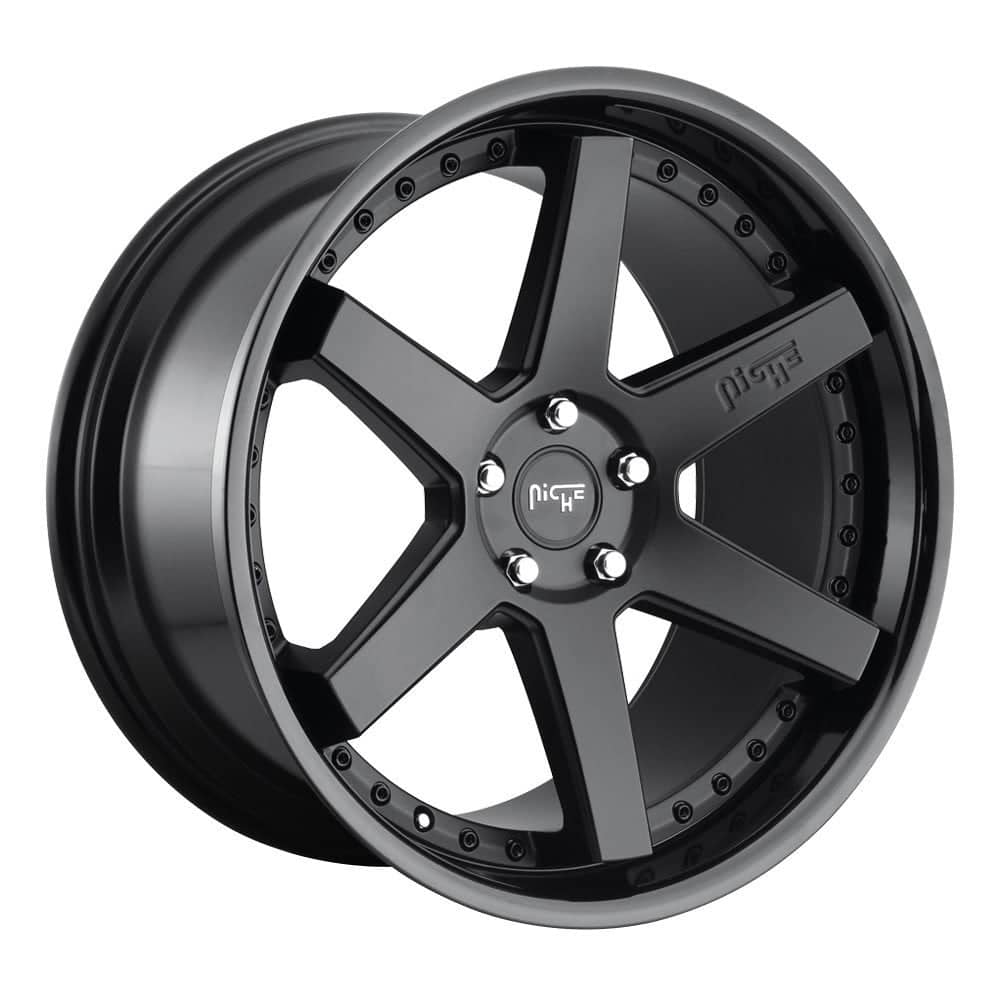
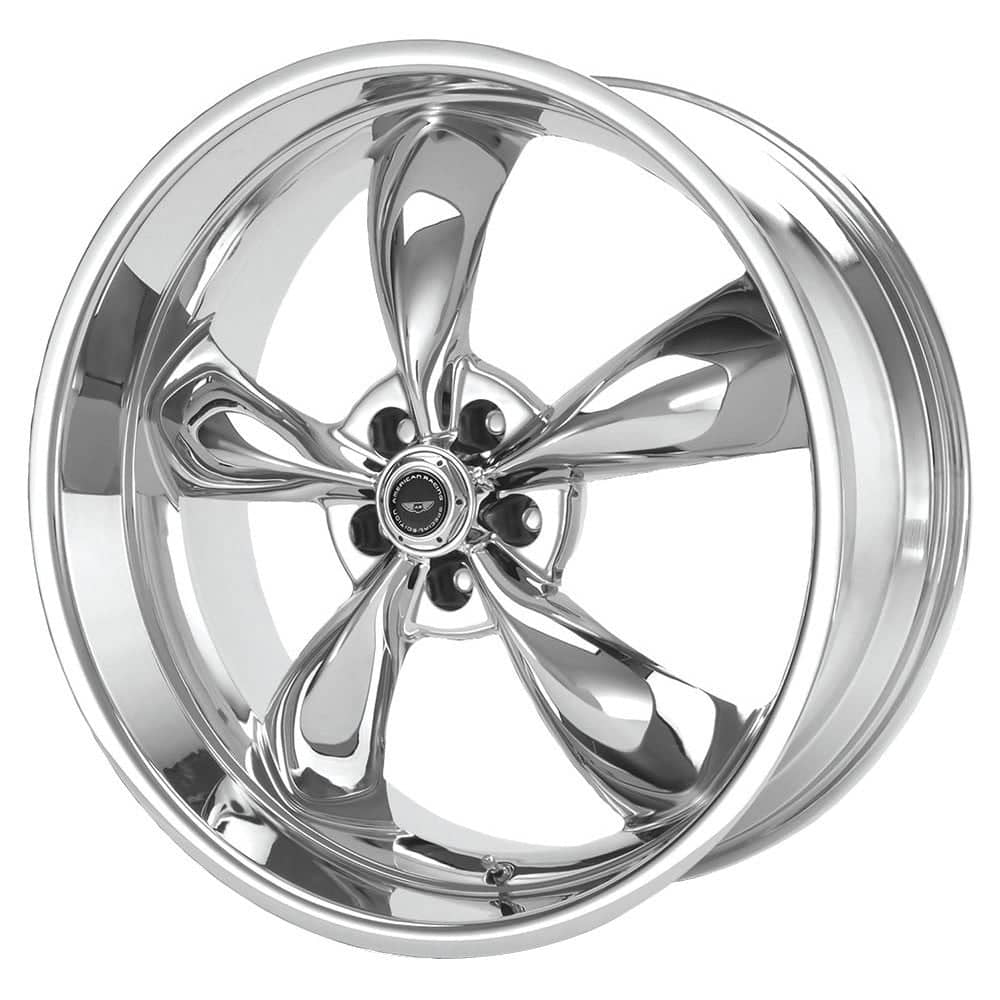
Because so many vehicles share 5x115, the aftermarket selection is deep. We stock the pattern across 70-plus brands, from modern concave designs like the Niche Altair M192 to classic looks like the American Racing AR605M Torq Thrust M, plus Touren, Vision, Asanti, and Petrol. For the Mopar crowd running staggered, the wider selection makes it easy to dial in offset front and rear.
This is where most fitment mistakes happen. The short answer is no, 5x115 is not interchangeable with its neighbors, even when the numbers look close. Here is how it compares.
Feature |
5x115 |
5x114.3 |
5x120 |
|---|---|---|---|
PCD (mm) |
115 mm |
114.3 mm |
120 mm |
PCD (inches) |
4.52 in |
4.50 in |
4.72 in |
Difference vs 5x115 |
Baseline |
0.7 mm smaller |
5 mm larger |
Interchangeable? |
Reference |
No, not safely |
No |
Typical vehicles |
Charger, 300, Impala, DeVille |
Mustang, Camry, many Hondas |
BMW, older Camaro |
No. The gap is only 0.7 millimeters, which is why people try to force it, but that small difference puts the studs slightly off-center in the wheel holes. The lugs may start, but the wheel will not sit flat against the hub, and you risk vibration, loosening lugs, and uneven clamping load. I tell customers to treat these as two separate patterns. If you need to run a 5x114.3 wheel on a 5x115 car or the reverse, do it with proper bolt-pattern adapters, not by forcing the lugs. Our breakdown of what cars are 5x114.3 bolt pattern shows just how many vehicles use that neighboring spec.
No. At 120 millimeters, that pattern is a full 5 millimeters larger, so the studs will not line up at all. The 5x120 pattern belongs to a different crowd, mostly BMW and some older Chevy performance cars. There is no shortcut here; you would need adapters. See our guide on what car wheels are 5x120 for that group.
Also no. The 5x112 pattern, common on Audi, Volkswagen, and Mercedes-Benz, is 3 millimeters smaller than 5x115. It is a European standard and does not cross over. If you are shopping that side of the market, our 5x112 bolt pattern guide lists those vehicles.
Yes, with the right hardware. Bolt-pattern adapters let you run a wheel with a different pattern by bolting to your hub at 5x115 and presenting a new pattern on the outer face. They also push the wheel outward, which changes your effective offset, so they need to be chosen carefully and torqued correctly. Our article on the benefits of wheel spacers and adapters walks through how to do it safely.
Before you buy, confirm three things: the pattern, the center bore, and the offset. The pattern you can verify by measuring. On a five-lug wheel, you measure from the center of one stud to the outer edge of the stud two positions away, because five lugs do not sit directly across from each other. If you are unsure of the technique, our step-by-step on how to measure lug bolt pattern covers the five-lug method exactly.
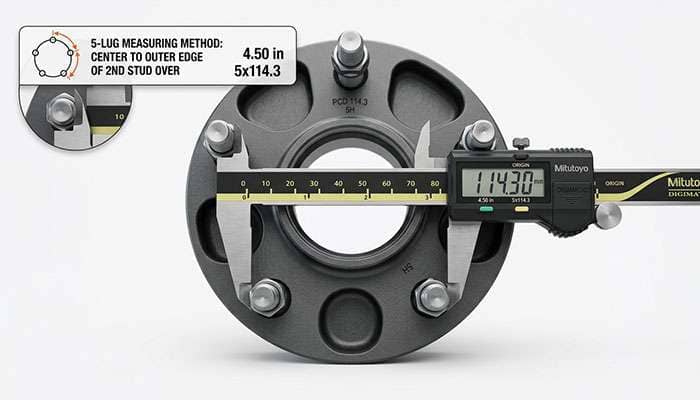
The center bore is the hole in the middle of the wheel that locates it on the hub. As I noted, GM and Mopar 5x115 hubs differ slightly, so a wheel that is hub-centric on one may need a centering ring on the other. The offset determines how far the wheel sits in or out, which controls clearance and stance, especially important on the Charger and Challenger where staggered setups are popular. If any of those three numbers is off, the pattern matching alone will not save the fit. For the broader picture of how all these numbers work together, our lug pattern explainer ties it together.
The 5x115 bolt pattern is one of the most common five-lug specs on American roads, spanning modern Mopar muscle and a deep catalog of GM front-drivers. The pattern measures 115 millimeters, or about 4.52 inches, and it is distinct from the 5x114.3, 5x120, and 5x112 patterns it gets confused with, even when the numbers look close. Match the pattern, confirm the hub bore and offset for your specific platform, and you will get a clean, safe fit. When you are ready, browse our full selection of 5x115 bolt pattern wheels and we will help you dial in the right offset for your build.
The 5x115 bolt pattern is used by modern rear-drive Mopars like the Dodge Charger, Challenger, Magnum, and Chrysler 300, plus many front-wheel-drive GM cars including Cadillac DeVille and DTS, Chevy Impala and Monte Carlo, Buick LaCrosse and Lucerne, and Pontiac Grand Prix and Bonneville.
A 5x115 bolt pattern has a pitch circle diameter of 115 millimeters, which is about 4.52 inches. The five studs sit evenly spaced on that circle.
No. They differ by only 0.7 millimeters, but that gap keeps the wheel from seating flat against the hub. Forcing a 5x114.3 wheel onto a 5x115 car risks vibration and loosening lugs. Use proper adapters if you need to cross between them.
Yes. The Dodge Charger from 2005 to 2024, including SRT models, uses the 5x115 bolt pattern on the LX and LD platform, as do the Challenger, Magnum, and Chrysler 300.
It depends on the platform. GM 5x115 cars generally use 12x1.5 mm studs torqued near 100 lb-ft, while the Mopar LX cars use larger 14x1.5 mm studs torqued closer to 130 lb-ft. Always confirm the exact figure in your owner's manual.
No. At 120 millimeters, the 5x120 pattern is a full 5 millimeters larger than 5x115, so the studs will not line up. You would need bolt-pattern adapters to bridge the two.



