
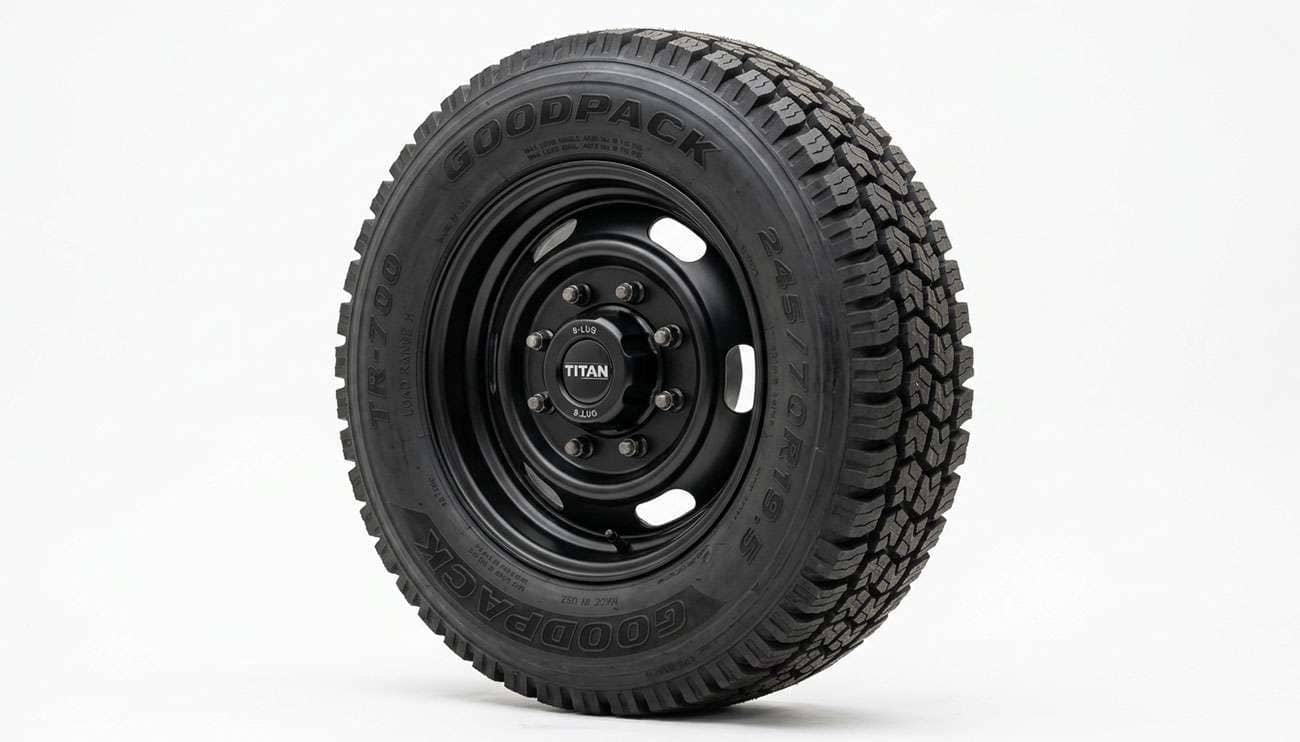
People scrutinize wheel diameter, width, offset, and finish, and then scroll right past the one spec that determines whether the wheel can actually do its job: the load rating. It's an easy number to overlook because nothing looks different about a wheel rated for 1,800 pounds versus one rated for 2,900. But put the wrong one under a loaded truck or a lifted rig on 37s, and that overlooked number becomes the weak link in the entire setup. This is the spec I check first on any build that carries weight, and here's how to read it, where to find it, and how to know yours is high enough.
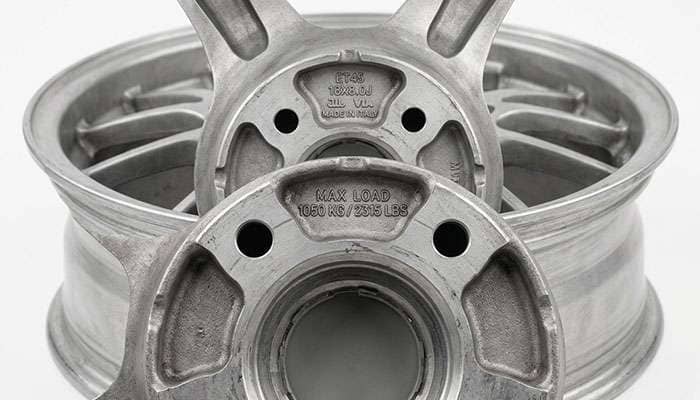
A wheel's load rating is the maximum weight a single wheel is engineered to carry under normal use, expressed in pounds. It reflects the wheel's structural strength — a product of its material, its construction method, and its intended vehicle class. It is not a marketing figure. It's the result of engineering analysis and, on reputable wheels, validation testing that confirms the wheel can survive real-world loads without cracking or deforming.
The key word is per wheel. A load rating of 2,500 pounds means that one wheel is built to carry 2,500 pounds. Four of them spread the vehicle's weight, but each individual wheel has to stay within its own number. Exceed it — through cargo, towing, heavy accessories, or the brutal spike of an impact — and you're relying on the safety margin the manufacturer built in, which is exactly the cushion you don't want to spend on a routine pothole.
This is the misconception I correct most often. A tire has its own load capacity, expressed through its load index and load range, and it is a completely separate spec from the wheel's load rating. They are not interchangeable, and one does not cover for the other.
Here's why that matters: your real-world capacity is set by the weaker of the two. If you bolt a tire rated to carry 3,000 pounds onto a wheel rated for only 2,000, your effective limit is 2,000 — and worse, you may be quietly overloading the wheel while assuming the stout tire has you covered. The wheel must be rated to handle at least as much as the tire, ideally more. If the tire side of this equation is fuzzy for you, our guides on how to read tire load range and ply ratings and the difference between load range vs load index clear it up. Think of the wheel rating as the other half of that conversation.
You actually need two numbers: what your vehicle requires, and what your wheel provides.
For the requirement, look at the vehicle. The certification label on your driver's side door jamb lists your Gross Axle Weight Rating, or GAWR — usually a separate figure for the front axle and the rear. That's the number we'll do the math on in a moment.
For what the wheel provides, look at the wheel itself. Aluminum wheels almost always have the rating stamped on the back, often near the bolt pattern or along a spoke, marked as "Max Load." You may have to clean the casting to read it. One thing to watch: some wheels are stamped for two different bolt patterns and carry a separate rating for each — use the rating that matches the bolt pattern you're actually running. Steel wheels are less consistent about stamping, so if it's not marked, you'll want the manufacturer's spec.
The formula the industry uses is refreshingly simple. Take your higher GAWR — front or rear, whichever is greater — and divide it by two, because each axle's weight is carried by two wheels. The result is the minimum load rating each wheel needs.
So a vehicle with a rear GAWR of 3,600 pounds needs wheels rated to at least 1,800 pounds each. If the front GAWR were higher, you'd size to that instead. Here are a few worked examples to show the pattern, including the margin I'd add for anyone who tows or runs off-road.
Higher GAWR |
Minimum per wheel (GAWR ÷ 2) |
Suggested with towing / off-road margin |
|---|---|---|
3,000 lbs |
1,500 lbs |
1,800 lbs or higher |
3,600 lbs |
1,800 lbs |
2,100 lbs or higher |
4,400 lbs |
2,200 lbs |
2,600 lbs or higher |
One important clarification: choosing a wheel rated above the minimum does not raise your vehicle's legal weight limit. Your GAWR and GVWR are set by the vehicle manufacturer and don't change because you bought stronger wheels. A higher-rated wheel simply ensures the wheel isn't the component that fails first.
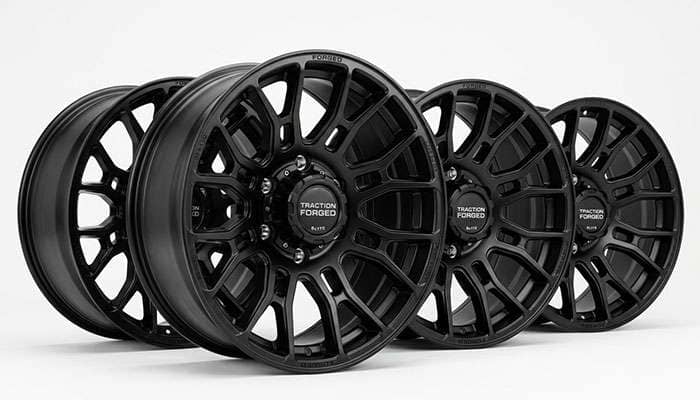
Two wheels of the same size can carry very different loads depending on how they're made. Cast wheels offer a solid strength-to-weight ratio and cover most street and light-duty needs. Flow-formed wheels, which work-harden the barrel during manufacturing, generally rate higher. Forged wheels — pressed from solid billet with a dense, tightly aligned grain structure — typically carry the highest ratings of all, which is why serious tow rigs and heavy off-road builds gravitate to them. If you want the full picture on how these processes differ, our breakdown of cast vs forged vs flow-formed wheels explains exactly why the construction method moves the number.
Material plays in too. The same logic applies to steel versus aluminum on trailers and utility applications, where the demands and the trade-offs are a little different — our piece on steel vs aluminum trailer wheels covers that side of the decision.
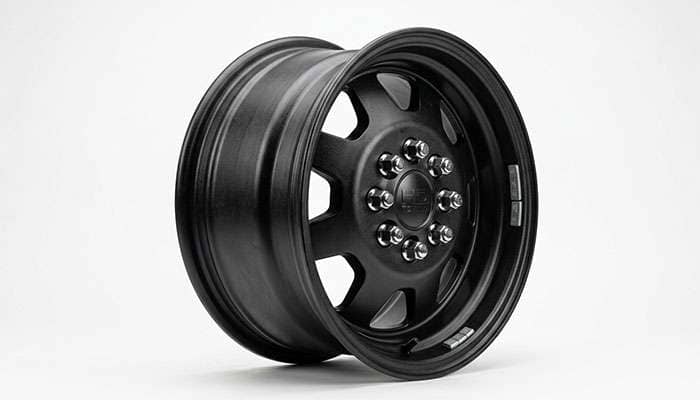
The GAWR-divided-by-two figure is a minimum, not a target. The static weight of your vehicle sitting still bears little resemblance to the forces a wheel sees in motion. Cornering can put close to twice the static load on the outside wheels. Heavy braking shifts weight forward onto the front wheels. And dropping a wheel into a pothole at speed generates an impact spike that makes cornering loads look gentle. Load ratings exist precisely to absorb these multiplying forces, not just to match your curb weight with a token buffer.
So add headroom whenever your use is demanding. Towing puts tongue weight over the rear axle, so factor in roughly ten percent of the trailer's weight landing there. Going up to 35- or 37-inch tires adds thirty to fifty pounds per corner before you've loaded a thing. Aftermarket bumpers, recovery gear, roof racks, and a bed full of tools all stack up. Heavy-duty and dually applications are exactly where this matters most — our dually wheels buying guide walks through the heavy-truck side in detail. And because tire choice rides alongside this, the comparison of 10-ply vs 12-ply tires helps you match the tire's capacity to the wheel's.
A load rating is only as trustworthy as the testing behind it. In the United States, the DOT requires wheels to carry permanent markings — size, load, manufacturer mark, date of manufacture, part code, country of origin, and the DOT symbol — so you can confirm basic specs and traceability. What surprises people is that those federal requirements cover markings and dimensions, not mandatory strength testing.
That's where voluntary industry standards come in, and reputable brands follow them. SAE J2530 is the widely used aftermarket wheel standard in the U.S., defining three core tests: dynamic cornering fatigue, dynamic radial fatigue, and impact. The Japanese JWL and VIA standards serve a similar role. Testing is done per style and per size, so a 17x8 and an 18x9 of the same design each qualify separately. When you're buying wheels that will carry real weight, documented testing and a clearly stated load rating are the signals of a wheel you can trust — not a show-only piece. To get the most out of any spec sheet, it also helps to be fluent in the related numbers, which our guide to wheel offset, backspacing, and bolt patterns covers.
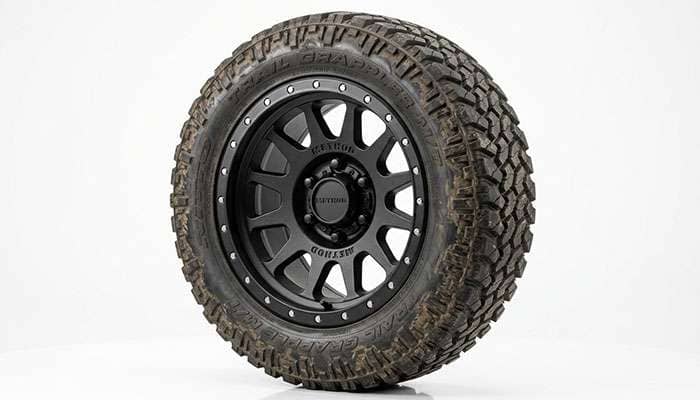
The good news is you don't have to crawl under the truck with a flashlight to shop. The vast majority of the wheels we list show a load capacity right in the specs, so you can match it to your GAWR math before you buy. Heavy-duty truck and off-road lines routinely post per-wheel ratings in the 2,500-to-3,900-pound range, which covers most half-ton through one-ton applications with margin to spare.
The workflow is simple: pull your higher GAWR off the door jamb, divide by two, add margin if you tow or wheel hard, then filter for wheels that meet or beat that number in your size and bolt pattern. You can start on our truck wheels page, where the heavy-duty fitments live. If a listing's rating isn't obvious or you're working a build with serious weight, give us the vehicle and the loads you carry and we'll confirm the wheel is rated for the job before anything ships.
Wheel load rating is the quiet spec that decides whether your wheels are an asset or the weak link. It's the maximum weight one wheel can carry, it's separate from your tire's rating, and your real capacity is governed by whichever of the two is weaker. Find your higher GAWR on the door jamb, divide by two for the minimum, and add margin for towing, big tires, and hard use. Lean toward forged or flow-formed construction when the loads get serious, look for documented testing, and check the rating stamped on the wheel or listed in the specs. Run those numbers before you buy, and your wheels will never be the thing that gives out when you need them most.
A wheel's load rating is the maximum weight a single wheel is engineered to carry safely under normal use, given in pounds. It reflects the wheel's material, construction method, and intended use, and it's verified on reputable wheels through engineering analysis and fatigue and impact testing.
No. They are separate specs. A tire has its own load index and load range, and a wheel has its own load rating. Your real-world capacity is limited by whichever is lower, so the wheel must be rated to handle at least as much weight as the tire on it, ideally with extra margin.
Find your Gross Axle Weight Rating (GAWR) on the driver's side door jamb sticker. Take the higher of the front and rear GAWR and divide it by two, since each axle's weight is split between two wheels. That gives the minimum load rating each wheel needs. Add margin if you tow, run large tires, or go off-road.
On most aluminum wheels it's stamped on the back, often near the bolt pattern or on a spoke, marked as "Max Load." You may need to clean the area to read it. If a wheel is stamped for two bolt patterns, use the rating that matches the pattern you're running. Steel wheels are less consistently stamped, so check the manufacturer's spec.
No. Your vehicle's GAWR, GVWR, and towing capacity are set by the manufacturer and don't change because you install stronger wheels. A higher load rating simply ensures the wheel isn't the weak link, but it does not legally or mechanically raise the vehicle's overall weight limits.
Generally yes. Forged wheels are pressed from solid billet with a dense, aligned grain structure that gives them the highest ratings, flow-formed wheels fall in the middle, and cast wheels offer a good strength-to-weight ratio for lighter-duty use. That's why heavy tow rigs and serious off-road builds tend to choose forged or flow-formed wheels.



