
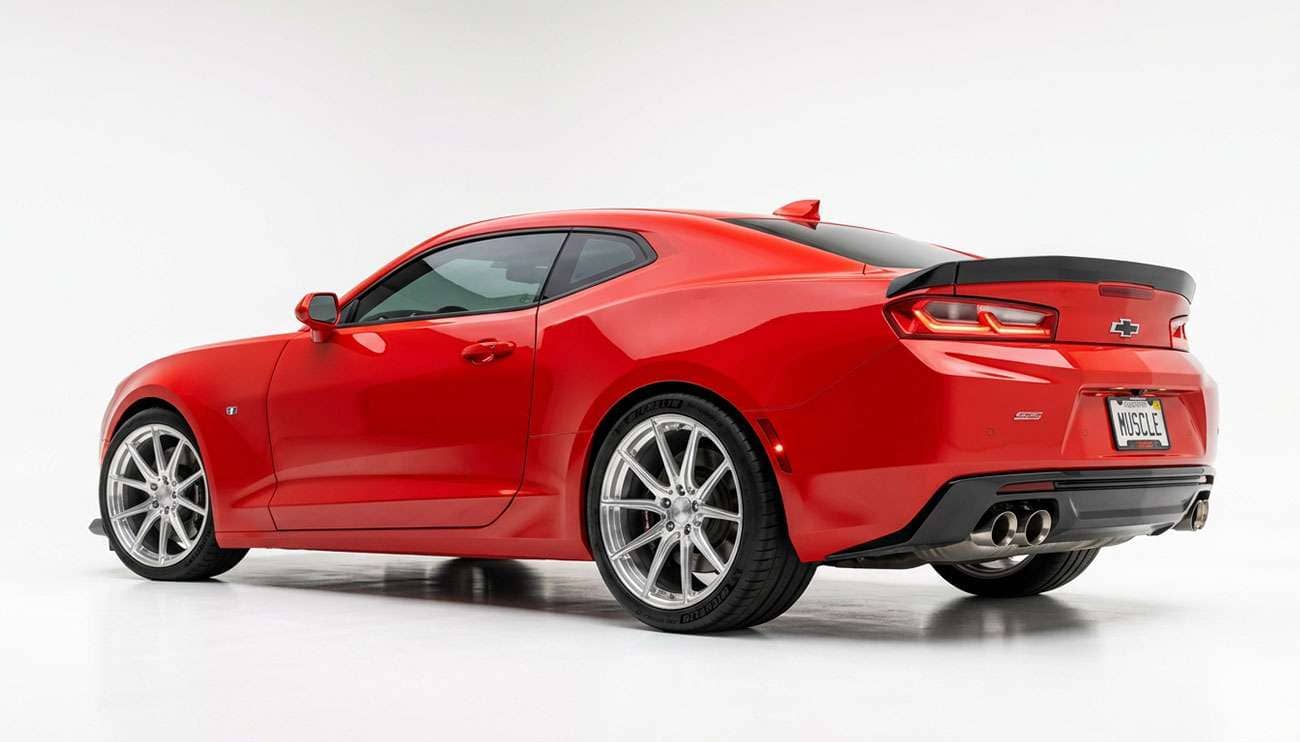
I have been around shop floors long enough to spot the look from across the lot. A rear-wheel-drive coupe sitting just right, with a fat tire filling the back fender and a slightly narrower one up front. Nine times out of ten, when somebody asks me how to get that planted, "steamroller in the back" stance on a set of 20s, the answer is the same combo: a 20x8.5 wheel up front and a 20x10 in the rear.
It is far and away the most popular staggered spread on 20-inch wheels, and there is a good reason for that. It hits the sweet spot between looks, traction, and fitment on the cars people actually drive. Let me walk you through what it is, why it works, which cars wear it best, and the handful of trade-offs I always make sure folks understand before they hand over the credit card.
"Staggered" just means your front and rear wheels are different widths. In this case, both are 20 inches in diameter, but the fronts are 8.5 inches wide and the rears are a full 10 inches wide. That inch and a half of extra rear width is what lets you stuff a wider, grippier tire under the back of the car while keeping the fronts narrow enough to steer cleanly and clear the suspension.
The opposite approach is a square setup, where all four wheels and tires match. Both have their place, and I will not pretend one is universally right. If you want the full side-by-side on that decision, our breakdown of a square vs staggered setup covers it. But for a rear-drive car built for a little attitude, the 20x8.5/20x10 stagger is the combo that keeps coming back to my shop. If you want the broader rundown on running mismatched widths in general, the staggered wheels guide and must-know facts before you buy is the place to start.
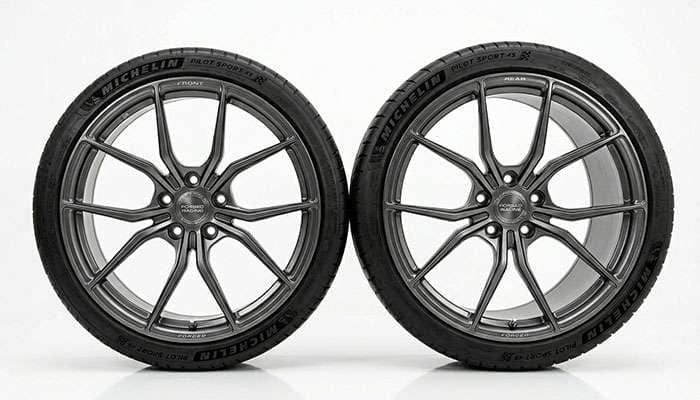
The 10-inch rear is the star of the show. On a rear-wheel-drive car, the back tires are doing the hard work of putting power to the pavement. A wider rear wheel lets you run a wider rear tire, and a wider rear tire means more rubber on the ground, better traction off the line, and that aggressive look everybody is after. The fronts only have to steer, so they do not need the same width.
Now, why 8.5 and 10 specifically, instead of going even wider? Because that pairing fits. An 8.5-inch front clears the brakes and suspension on most performance cars without rubbing or needing fender work, and a 10-inch rear tucks under the typical rear fender with the right offset. Go wider than a 10 in back and you are usually into rolled fenders, camber adjustments, and headaches. The 8.5/10 spread is the biggest stagger most people can run with a bolt-on attitude rather than a fabrication project. The rear wheel itself is worth understanding before you buy — our look at how big 20x10 wheels really are and the exact specs that matter spells out the dimensions that decide whether it tucks or rubs.
This is the same logic that has driven muscle car builders for decades, just modernized onto 20s. If you are working on an older platform, our muscle car staggered setup guide gets into the classic side of the same idea.
Here is where the rubber meets the road. The 20x8.5/20x10 combo lives and breathes on rear-wheel-drive American performance cars, and a few other rear-drive platforms wear it beautifully too. These are the ones I see it on most:
Ford Mustang (S197 and S550 generations, roughly 2005 to present). This is the poster child. The GT and EcoBoost both take to this stagger like they were designed for it, and a 255-front, 285-or-wider-rear combo on 20x8.5/20x10 is one of the most requested setups I do. For the tire side specifically, see our guide to choosing Ford Mustang aftermarket tires for perfect fitment.
Chevrolet Camaro (5th and 6th generation, 2010 to 2024). The Camaro is a natural for this spread, and the SS in particular fills out a 20x10 rear with a 285 or 295 like it came from the factory that way. Note that ZL1 and some track-pack models already run wide rubber and have their own fitment rules. Our Chevrolet Camaro aftermarket tire fitment guide covers the details.
Dodge Challenger and Charger. These big rear-drive bruisers love a wide rear tire, and the 20x8.5/20x10 spread gives the Challenger especially that wide-shouldered, planted look that suits the car's whole personality.
Chevrolet Corvette. Plenty of Corvette generations already run staggered from the factory, so stepping up to a 20x8.5/20x10 (or close to it) on the right model keeps the engineering intent while modernizing the look.
Rear-drive imports. Cars like the BMW 3- and 4-Series, certain Lexus and Infiniti coupes, and other RWD performance sedans take to this stagger as well, though you will want to mind the bolt pattern and offset, which differ from the domestics.
The common thread is rear-wheel drive. On a front- or all-wheel-drive car, this spread either makes no sense or causes problems, which is exactly why you see it almost exclusively on rear-drive platforms.

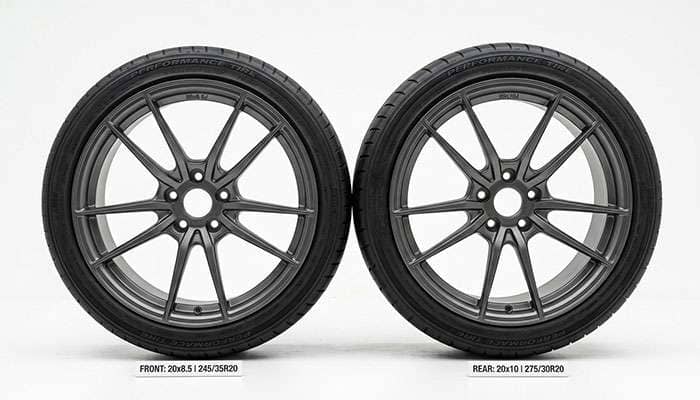
Wheels are only half the equation. The tire sizes you bolt onto a 20x8.5/20x10 stagger are what make it work, and getting them wrong is the fastest way to end up with rubbing or a tire that looks stretched or pinched. Here are the pairings I reach for most on these cars.
Vehicle |
Front (20x8.5) |
Rear (20x10) |
|---|---|---|
Ford Mustang GT |
255/35R20 |
285/35R20 |
Chevrolet Camaro SS |
275/35R20 |
295/30R20 |
Dodge Challenger |
245/45R20 |
285/40R20 |
General RWD guideline |
245–255 width |
285–295 width |
These are starting points, not gospel — your car's exact offset, ride height, and suspension all factor in, so always confirm against your specific vehicle. The reason a 285 or 295 lives happily on a 10-inch wheel comes down to matching tire width to rim width — a wider rim is built to seat a wider tire properly. One thing to keep in mind: because the front and rear tires are different sizes, you cannot rotate them front to back. They wear in place, and you replace them as needed.
I would not be doing my job if I sent you off without the honest downsides. A staggered setup looks fantastic and grips great in back, but it asks for a few compromises.
First, no tire rotation. As I mentioned, the different front and rear sizes mean you cannot rotate to even out wear, so your rear tires will generally wear faster on a powerful rear-drive car. Budget for that. Second, daily-driver manners. A wide, low-profile rear tire can be more prone to tramlining, where the car follows grooves and ruts in the road, and a square setup is usually the calmer choice for an everyday commuter. Third, all-wheel-drive and front-wheel-drive cars. This stagger is really a rear-drive trick. On an AWD car, mismatched front and rear sizes can confuse the drivetrain, and on a front-driver it makes no sense to put the skinny tires where the power goes. Stick to RWD platforms for this combo.
None of that should scare you off if you have got the right car and clear eyes about the maintenance. It is just the deal you are signing up for.
The single most important number in a staggered fitment is offset, and it is where I see the most mistakes. Offset determines how far the wheel sits in or out of the fender, and a 20x10 rear with the wrong offset will either rub the fender lip or tuck in too far and look lost in the wheel well. Front and rear wheels in a staggered set almost always have different offsets to account for their different widths.
Before you buy, get clear on your car's bolt pattern, the front and rear offsets that fit it, and your center bore. If any of that is fuzzy, our guide to wheel offset explained and how to get the perfect fit every time walks through it step by step. When you are ready to shop, you will find staggered-friendly designs from brands like TSW, Niche, Foose, and American Racing across our full lineup of 20-inch wheels, and our team can confirm the right front and rear offsets for your exact car before anything ships.
The 20x8.5/20x10 staggered setup earned its popularity honestly. It gives a rear-wheel-drive car the wide-rear stance and traction enthusiasts want, it fits the most popular platforms without major fender work, and it pairs cleanly with proven tire sizes. As long as you are running the right kind of car, you have got the offsets dialed in, and you go in knowing the trade-offs — no rotation, a little less daily-driver calm — it is one of the most satisfying upgrades you can bolt on. Get the fitment right and your Mustang, Camaro, or Challenger will thank you every time you walk up to it in a parking lot.
No. Because the front and rear wheels and tires are different sizes, you cannot rotate them front to back. They wear in place, and the rear tires typically wear faster on a powerful rear-wheel-drive car, so plan to replace them more often.
Rear-wheel-drive performance cars benefit most, including the Ford Mustang (S197 and S550), Chevrolet Camaro (2010–2024), Dodge Challenger and Charger, Chevrolet Corvette, and rear-drive imports like the BMW 3- and 4-Series. Always confirm bolt pattern and offset for your specific model.
As a general rule, a 20x8.5 front takes a tire in the 245 to 275 width range, and a 20x10 rear takes a 285 to 295. A common Mustang GT pairing is 255/35R20 front and 285/35R20 rear. Exact sizing depends on your car's offset and ride height.
It can be, but there are trade-offs. You cannot rotate the tires, rear wear is faster, and wide low-profile rear tires can be more prone to tramlining. For a calmer everyday commute, a square setup is often the better choice. For looks and rear traction on a rear-drive car, staggered wins.
It is not recommended. Mismatched front and rear tire sizes can interfere with an all-wheel-drive system's operation and cause drivetrain issues. This staggered combo is designed for rear-wheel-drive cars, and front-wheel-drive cars gain nothing from putting the narrow tires where the power is delivered.



