
Moving up one rim size from your stock Ford Mustang Aftermarket Tires typically delivers measurable performance gains.
When it comes to Mustang upgrades, wheel and tire fitment directly impacts your vehicle's braking power, cornering grip, and overall handling characteristics. Going two sizes larger can push performance even further, though you'll need to balance these gains against ride quality. Understanding mustang rim specifications and fitment requirements isn't just about looks—it's about unlocking your Mustang's true performance potential.
Proper wheel fitment makes the difference between an upgrade that transforms your driving experience and one that creates problems. The relationship between diameter, width, offset, and bolt pattern determines how your new wheels will perform on your specific Mustang. These measurements affect everything from steering response to brake clearance.
At Performance Plus Tire, we've helped thousands of Mustang owners navigate these technical requirements to find the perfect setup for their needs. Whether you're planning a conservative upgrade for daily driving or an aggressive setup for track use, the right fitment knowledge ensures you get maximum performance and safety from your investment.
Mustang wheel and tire specifications have evolved dramatically across five decades of production. Each generation brings distinct requirements that directly impact your upgrade options and fitment decisions.
Classic Mustangs from the 1960s rolled on modest 14-inch wheels with 185/75R14 tires. The Fox body era (1979-1993) introduced more variety, starting with 14" wheels but progressing to 15" and eventually 16" wheels for GT models by 1991.
The S197 platform (2005-2014) marked a significant shift toward larger wheels. Base models came with 16" wheels and 215/65R16 tires, while GT models featured 17" or 18" wheels with 235/55R17 or 235/50R18 tires. Current S550 Mustangs (2015-present) push the envelope further with wheels ranging from 17" to 20", and performance models like the GT350 using specialized 295/35R19 front and 305/35R19 rear tires.
Modern Mustangs (1994-2025) typically use 17"-20" wheels, while Fox body models (1979-1993) stay within the 14"-16" range. For daily driving, 18x9 or 19x9.5 inch wheels paired with 275mm wide tires provide an excellent balance between comfort and the aggressive stance Mustang owners expect.
Performance-focused owners often choose wider configurations:
• 8-inch width: Works with existing stock tires on most Mustangs • 9-inch width: Accommodates 245/45 to 275/40 tires for improved grip • 10-inch width: Supports 285/35 tires (1994-2004 models) or 275/40 tires (2005+ models) • 10.5-inch width: Enables extremely wide rear tires from 275mm to 315mm
Aspect ratio represents the sidewall height as a percentage of tire width. This measurement becomes critical when upsizing wheels because you must reduce aspect ratio to maintain proper overall diameter.
Too small an aspect ratio reduces the rubber cushion available to absorb road impacts, potentially damaging wheels and reducing tire contact patch. Excessive aspect ratio creates the opposite problem—increased ride height, inaccurate speedometer readings, and potential wheel well interference.
The relationship between wheel width and tire width determines performance and longevity. Tires measuring 275-285mm work optimally on 10" wide wheels, while 295-315mm tires perform best on 11" wide wheels. This pairing ensures proper tire shoulder contact with the road surface, maximizing traction while preventing irregular wear patterns.
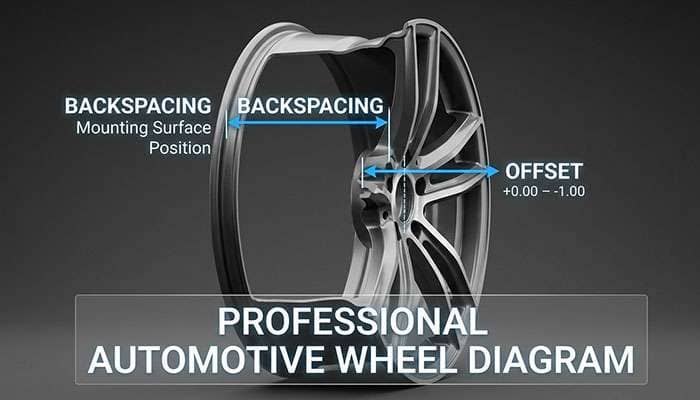
Three critical measurements determine whether your Ford Mustang Aftermarket Tires will fit properly and perform as expected. These specifications control everything from steering response to brake clearance.
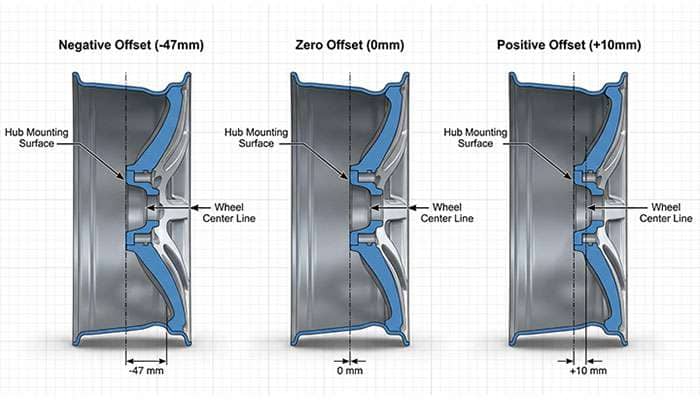
Wheel offset measures the distance between your wheel's hub mounting surface and its centerline, expressed in millimeters. This single number dramatically affects your Mustang's handling characteristics, visual stance, and component longevity.
Understanding the three types of offset helps you choose the right setup:
Zero offset: The mounting surface sits exactly at the wheel's centerline
Positive offset: The mounting surface moves toward the wheel face, tucking the wheel deeper into the fender
Negative offset: The mounting surface moves toward the brake side, pushing the wheel outward for an aggressive stance
Modern Mustangs (2015-2021) typically use positive offsets ranging from 35-50mm, while Fox body models feature 15-25mm offsets. Choosing incorrect offset puts additional stress on wheel bearings and can negatively impact steering precision.
Backspacing tells you exactly how deep your wheel sits in the wheel well. Unlike offset, this measurement uses inches and represents the distance from the wheel's back edge to the mounting surface. You can calculate backspacing using this formula: half wheel width + offset (in inches) + 0.5 inches.
The center bore serves as the wheel's centering mechanism on your Mustang's hub. Most Mustangs from 1994-present require a 70.3mm center bore, while Fox bodies need 63.4mm. Wrong center bore dimensions prevent proper wheel seating and create vibration problems that affect driving comfort.
Bolt patterns use two numbers: lug count and the diameter circle those lugs create. Since 1994, Mustangs have used a consistent 5 x 114.3mm pattern (sometimes written as 5 x 4.5"). Earlier generations vary:
1965-1973: 4 x 114.3mm or 5 x 114.3mm
1974-1993: 4 x 108mm
When measuring a 5-lug pattern yourself, measure from one lug center to the furthest lug's outer edge—not straight across. This measurement prevents costly mistakes when selecting aftermarket wheels, ensuring perfect compatibility with your specific Mustang generation.

Once you've mastered fitment specifications, matching tire characteristics to your driving style becomes the next critical decision. Ford Mustang Aftermarket Tires come in several categories, each designed to excel in specific conditions and applications.
Daily drivers should prioritize comfort, longevity, and quiet operation. Performance enthusiasts need maximum grip, precise handling response, and heat resistance under aggressive driving conditions. Your Mustang's engine configuration affects tire selection too—EcoBoost models distribute weight differently than V8 GTs, allowing for tire strategies that optimize both performance and wear patterns.
All-season tires provide year-round versatility with tread compounds designed to handle wet conditions while delivering respectable dry-weather performance. These tires typically offer longer tread life and improved fuel economy, making them ideal for daily commuting.
Summer performance tires step up the game with specialized compounds that deliver superior dry-road traction. You'll see dramatic improvements in acceleration, cornering grip, and braking distances compared to all-season options. Track-focused tires feature reinforced sidewall construction and heat-resistant compounds that maintain performance during extended high-speed sessions.
Tire diameter changes directly affect your speedometer readings. Larger overall diameter reduces wheel revolutions per mile, causing your speedometer to read slower than your actual speed. A tire size calculator reveals the exact difference—for instance, a 3.6% change means you're traveling 62 mph when your speedometer shows 60 mph.
The Performance Plus Tire vehicle search tool takes the guesswork out of tire sizing. These calculators compare your current setup against potential upgrades, showing changes in sidewall height, section width, and revolutions per mile. This ensures your new tires maintain proper speedometer accuracy while delivering the performance characteristics you're seeking.

Custom wheels open up exciting possibilities beyond standard Ford Mustang Aftermarket Tires specifications. Understanding which wheels work across different generations helps you find the perfect setup that matches both your vision and your budget.
Mustangs from 1994-2014 share the same 5x114.3mm bolt pattern, which means wheels are interchangeable between these generations. However, fitment varies significantly. S197 wheels (2005-2014) on SN95/New Edge Mustangs (1994-2004) will sit deeper in the wheel wells, usually requiring spacers for proper appearance. The reverse creates the opposite problem—SN95 wheels on S197 models extend beyond the fenders. Modern Mustangs since 2015 can accept earlier generation wheels but need different lug nuts for proper installation.
Staggered configurations use wider rear wheels than front wheels—typically 9-inch front and 10-inch rear. This setup provides better acceleration traction while creating an aggressive stance that many Mustang owners prefer. Daily drivers often choose 19x10 front and 19x11 rear wheels, paired with 275/35/19 front and 305/35/19 rear tires for an ideal balance of performance and comfort.
Quality wheel spacers solve multiple fitment challenges. They create a more aggressive appearance, provide clearance for wider wheels, and accommodate larger brake upgrades. Slip-on spacers with extended wheel studs offer safe installation, while bolt-on spacers create potential failure points and should be avoided. Track-focused S197 owners commonly use 20-25mm front spacers to clear strut towers when running wider performance tires.
Deep dish wheels create dramatic visual impact with their pronounced outer lip and set-back wheel face. We offer these in multiple finishes including gloss black with polished lips, anthracite, chrome, and custom powdercoat options. For the best combination of style and function, Performance Plus Tire's Mustang fitment tools help you find wheels that complement your specific generation while meeting your performance needs.
Our experienced team can guide you through the selection process, ensuring your custom setup delivers both the look and performance you want from your Mustang.
Ford Mustang aftermarket tires can transform your driving experience when you choose the right combination of size, fitment, and performance characteristics. The technical specifications we've covered—wheel dimensions, offset, backspacing, and bolt patterns—directly determine how your Mustang handles, accelerates, and stops.
Moving up one rim size typically enhances performance, while two sizes larger delivers more dramatic gains with some trade-offs in comfort. Daily drivers benefit most from all-season tires with moderate widths, while track enthusiasts need specialized compounds designed for aggressive driving conditions.
Staggered setups provide an excellent solution for many Mustang owners. These configurations improve rear traction during acceleration while creating that aggressive stance that makes your pony car stand out. Quality wheel spacers can fine-tune your fitment when needed, though proper safety specifications remain essential.
Always use tire size calculators before making your final decision. These tools reveal how changes affect speedometer accuracy and overall driving characteristics. Mustang-specific fitment tools eliminate guesswork and prevent costly mistakes.
At Performance Plus Tire, we understand that the perfect wheel and tire combination does more than just look good—it unlocks your Mustang's performance potential. Our fitment experts can help you navigate the technical requirements while finding the setup that matches your driving style and budget. Whether you're building a weekend warrior or upgrading your daily driver, the right choice enhances both appearance and capabilities.
Your Mustang deserves wheels and tires that complement its legendary performance heritage. With proper fitment knowledge and quality components, you can achieve the perfect balance of style, performance, and reliability that makes every drive memorable.
Master these essential fitment principles to transform your Mustang's performance and appearance while avoiding costly mistakes.
• Know your generation's specs: Mustangs from 1994-present use 5x114.3mm bolt pattern, while wheel sizes range from 17"-20" with specific offset requirements for proper fitment.
• Balance performance with practicality: Moving up one rim size generally improves performance, but going two sizes larger risks ride quality and component stress.
• Master the critical measurements: Wheel offset, backspacing, and center bore directly affect handling, clearance, and safety—incorrect specs can damage bearings and cause rubbing.
• Match tires to your driving style: Daily drivers benefit from all-season tires with moderate width, while track enthusiasts need specialized compounds with reinforced sidewalls.
• Use staggered setups strategically: Wider rear wheels (like 19x10 front/19x11 rear) provide better acceleration traction while maintaining an aggressive stance.
• Always verify compatibility first: Use tire size calculators and Mustang-specific fitment tools to predict speedometer changes and ensure proper clearance before purchasing.
The right aftermarket tire setup unlocks your Mustang's true potential, but success depends on understanding these technical fundamentals rather than just choosing what looks good.
Upgrading to aftermarket tires can improve performance, handling, and appearance. Moving up one rim size generally enhances performance, while larger sizes can further boost capabilities but may affect ride comfort. The right tire choice can optimize traction, cornering, and braking for your specific driving needs.
To choose the right tire size, consider your Mustang's generation, driving style, and performance goals. Use tire size calculators to maintain proper overall diameter and speedometer accuracy. For daily drivers, experts often recommend 18x9 or 19x9.5 inch wheels with 275mm wide tires, balancing comfort and sportiness.
A staggered setup uses wider wheels and tires in the rear than the front. It's popular among Mustang owners as it provides better traction during acceleration and maintains an aggressive stance. For daily drivers, a 19x10 front and 19x11 rear setup is common, paired with 275/35/19 front and 305/35/19 rear tires.
Changes in tire diameter directly impact speedometer readings. Larger tires reduce wheel revolutions per minute, causing your speedometer to read lower than actual speed. For example, a 3.6% difference means your Mustang is actually traveling 62 mph when the speedometer shows 60. Always use a tire size calculator to determine the impact.
Mustangs from 1994-2014 share the same 5x114.3mm bolt pattern, allowing some wheel swapping between generations. However, other factors like offset and clearance may require adjustments. Most modern Mustangs since 2015 can accommodate earlier wheels but may need different lug nuts. Always verify compatibility and consider using wheel spacers if necessary.