
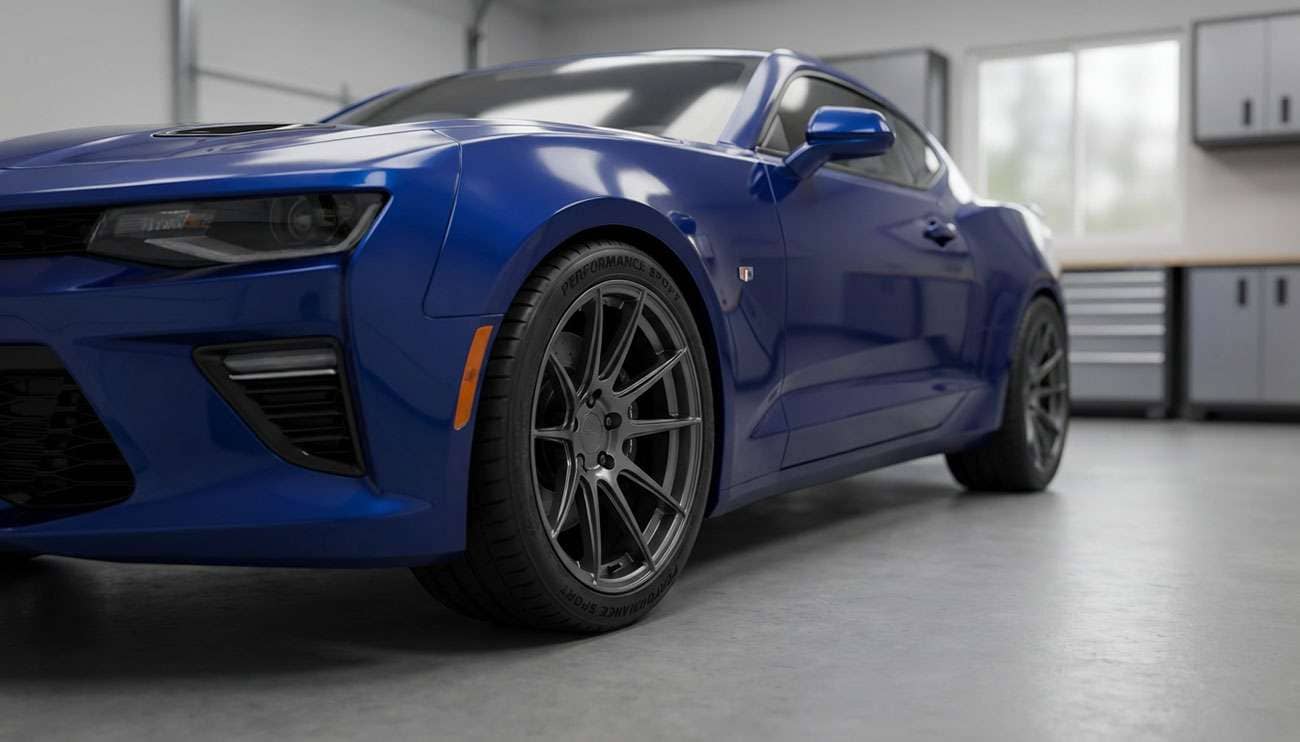
Chevrolet Camaro Aftermarket Tires rank among the most popular performance modifications for good reason. Performance enthusiasts choose tire upgrades as their first modification because it preserves the factory warranty while dramatically improving your Camaro's stance and capabilities.
Choosing the right chevrolet camaro tires requires understanding fitment specifics that ensure both performance and compatibility. We'll guide you through tire sidewall reading, camaro tires and rims matching, and essential specifications like 2016 camaro ss tire size details. You'll master 6th gen camaro ss wheel size options and critical 6th gen camaro wheel offset requirements that determine perfect fitment.
At Performance Plus Tire, we carry the best selection of Camaro-compatible tires at the lowest prices. Our expertise covers every generation from fourth-gen F-bodies to the latest sixth-generation models. Whether you need daily driving comfort or maximum track grip, we have the knowledge to match you with the perfect rubber for your specific Camaro.
Ready to upgrade your Camaro's performance and appearance? Let's get started!
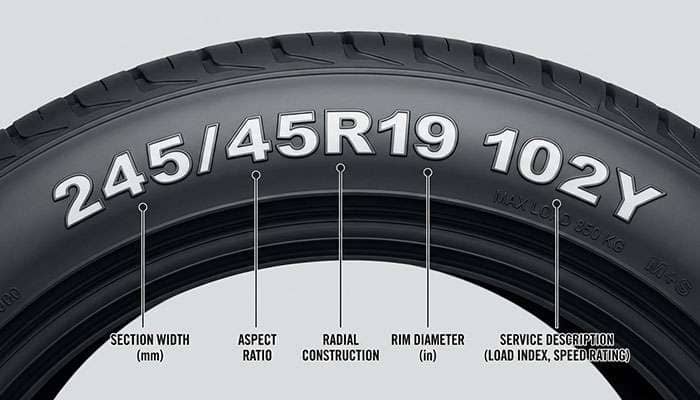
Understanding tire markings is essential before selecting chevrolet camaro tires for your vehicle. Each sidewall displays a standardized code that reveals everything about fitment and performance capabilities. A typical Camaro tire reads P245/45R20 99W, and each element tells a specific story.
The opening letter indicates tire classification. P-metric tires begin with "P" and follow Tire and Rim Association standards for passenger vehicles. Euro-metric sizes skip the prefix letter and follow European Tire and Rim Technical Organization standards. LT designates light truck applications that require higher inflation pressures.
The three-digit number shows tire width in millimeters from sidewall to sidewall. After the slash, you'll find a two-digit aspect ratio expressed as a percentage of width. The letter R confirms radial construction. The final two digits specify rim diameter in inches. Load index and speed rating follow these dimensions, indicating maximum weight capacity and sustained speed limits.
Tire width directly affects your Camaro's contact patch and handling characteristics. A 245mm tire measures exactly 245 millimeters at its widest point. Aspect ratio determines sidewall height as a percentage of width. With a 45 aspect ratio, sidewall height equals 45 percent of the tire's width. For our 245mm example: 245mm × 0.45 = 110.25mm sidewall height.
Calculating overall tire diameter requires adding both sidewalls to rim diameter. Convert sidewall measurements to inches first: 110.25mm ÷ 25.4 = 4.34 inches per sidewall. Double that figure (8.68 inches) and add the 20-inch rim for 28.68 inches total diameter.
Performance Camaros employ staggered setups with wider rear tires for improved traction and handling. The 2016 camaro ss tire size features 245/40R20 fronts and 275/35R20 rears. When choosing camaro tires and rims with different widths, keep rolling diameter differences within 1-2% to maintain accurate speedometer readings. Proper tire-to-wheel width ratios range from 1 to 1.4 inches wider than wheel width. A 9-inch wheel works with 245mm to 255mm tires, while 10-inch wheels accommodate 275mm to 285mm rubber.
Factory specifications appear in three locations: the tire sidewall, driver's door jamb placard, and owner's manual. These references guarantee replacement tires meet original load ratings and speed capabilities for safe vehicle operation.

Understanding factory tire specifications helps you select compatible aftermarket options. Each Camaro generation features distinct sizing patterns that affect your upgrade choices.
Fourth-generation Camaros used a 5x120.65mm bolt pattern. Base models from 1993 through 2001 ran 215/60R16 or 235/55R16 tires. Z28 variants stepped up to 235/55R16 or 245/50R16 sizing. The SS models introduced in 1996 featured significantly wider 275/40R17 tires.
Factory sizing evolved throughout this generation. Base models standardized on 235/55R16 by 2002, Z28s maintained 245/50R16, and SS models kept their distinctive 275/40R17 configuration.
Fifth-generation models adopted a 5x120mm bolt pattern. LS and LT trims offered multiple configurations: 245/55R18, 245/50R19, or staggered 245/40R21 front with 275/35R21 rear setups. SS models featured staggered arrangements with 245/45R20 fronts and 275/40R20 rears.
Stock suspension SS fitment typically used 20x10 +35 fronts with 275/40R20 and 20x11 +35 rears with 315/35R20 tires. The ZL1 introduced in 2012 featured 285/35R20 fronts and 305/35R20 rears. Performance variants escalated sizing significantly. The SS 1LE received 285/35R20 sizing by 2014, while the Z/28 ran extreme 305/30R19 tires.
Sixth-generation SS models standardized on staggered 245/40R20 front and 275/35R20 rear configurations starting in 2016. Standard 2016 2SS models came with 20-inch black five-spoke wheels in staggered widths. Wheel sizes typically ranged from 18 to 20 inches in diameter with widths between 8.5 and 11 inches.
Performance packages feature significantly wider configurations. The SS 1LE Track Package runs 285/30R20 fronts and 305/30R20 rears. Standard ZL1 models share this 285/30R20 and 305/30R20 staggered setup. The ZL1 1LE Extreme Track Package features the widest factory configuration at 305/30R19 front and 325/30R19 rear.
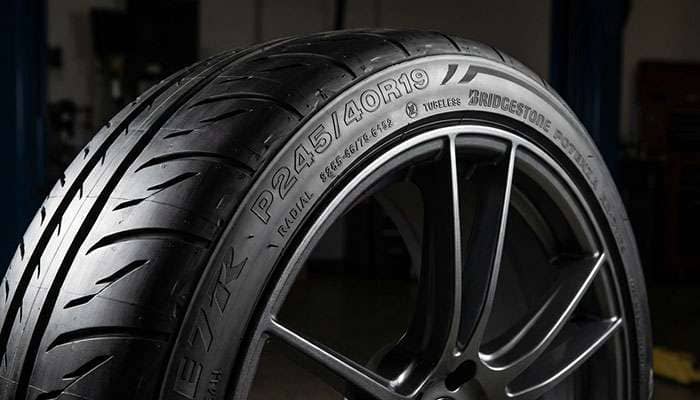
The sidewall displays a complete fitment code using a standardized format. A typical chevrolet camaro tires marking reads P245/45R20 99W. The initial letter indicates tire classification - P-metric tires follow Tire and Rim Association standards for passenger vehicles. Euro-metric sizes have no prefix letter and follow European Tire and Rim Technical Organization standards. LT designates light truck applications requiring higher inflation pressures.
The three-digit number represents tire width in millimeters measured from sidewall to sidewall. The two-digit aspect ratio appears as a percentage of the width after the slash. The letter R denotes radial construction. The final two-digit number specifies rim diameter in inches. Load index and speed rating follow these dimensions, showing maximum weight capacity and sustained speed capability.
Width measurements determine contact patch size directly. A 245mm tire measures exactly 245 millimeters across at its widest point. Aspect ratio defines sidewall height as a percentage of width. A 45 aspect ratio means the sidewall height equals 45 percent of the tire's width. For example, 245mm × 0.45 = 110.25mm sidewall height.
Calculate overall tire diameter by multiplying sidewall height by two and adding rim diameter. Convert millimeters to inches first: 110.25mm ÷ 25.4 = 4.34 inches per sidewall. Double that (8.68 inches) plus a 20-inch rim equals 28.68 inches total diameter.
Performance Camaros use staggered setups with wider rear tires for better traction. The 2016 camaro ss tire size runs 245/40R20 front and 275/35R20 rear. When selecting camaro tires and rims with staggered widths, keep rolling diameter differences within 1-2% to maintain speedometer accuracy. Tire width should be 1 to 1.4 inches wider than wheel width. A 9-inch wheel pairs with 245mm to 255mm tires, while 10-inch wheels work with 275mm to 285mm rubber.
Original equipment specifications appear on the tire sidewall itself, the driver's door jamb placard, and owner's manual. These references ensure replacement tires match factory load ratings and speed capabilities for safe operation. Always verify these specifications before purchasing aftermarket tires to maintain proper vehicle performance.
Measure from the mounting hub to inner fender wall using a plumb bob to establish maximum tire width. Maintain at least 1 inch clearance around all interference points including A-arms, shocks, and tie rod ends. Account for suspension travel through full compression and rebound cycles.
Understanding wheel well limitations prevents costly fitment mistakes. Check clearance at multiple steering positions and suspension heights. Full lock steering often reveals interference issues that straight-ahead measurements miss.
Camaro bolt patterns are expressed as two numbers: lug count and spacing distance. Fifth and sixth-generation models use 5x120mm patterns. Offset changes affect track width. Stay within 15-20mm of factory offset to avoid handling issues and component wear. Higher positive offset brings wheels closer to suspension and brakes, potentially limiting clearance.
Wrong offset creates serious problems beyond just appearance. Excessive positive offset can cause brake caliper interference, while negative offset stresses wheel bearings and creates unpredictable handling characteristics.
Tire diameter changes create false speed readings. Keep overall diameter within 5% of original equipment. A 3% taller tire shows 60 mph when actual speed reaches 63.3 mph. Speedometers calculate speed based on wheel rotations calibrated to original tire circumference.
Speedometer accuracy affects more than just speed awareness. Insurance companies and law enforcement rely on accurate readings, making proper diameter matching essential for legal protection.
Allow 3mm minimum clearance between calipers and wheels in all directions. Larger brake kits require checking clearance templates before purchase. Wheel diameter alone doesn't guarantee clearance. Spoke depth and barrel design affect brake fitment correspondingly.
Test fitment with cardboard templates before ordering wheels. Many wheels that appear compatible on paper create interference with Brembo brake packages or aftermarket big brake kits.
Staggered configurations prevent tire rotation, reducing tire life. Most manufacturers cut mileage warranties by up to 50% on staggered applications. Keep front and rear rolling diameter differences within 1-2% for speedometer accuracy and drivetrain health.
While staggered setups enhance handling performance, they increase replacement costs and limit tire rotation options. Consider these trade-offs when deciding between square and staggered configurations for your Camaro.
You now have the expertise needed to select the perfect chevrolet camaro aftermarket tires with complete confidence. These fitment fundamentals ensure proper compatibility every time, from sidewall reading to 6th gen camaro wheel offset verification.
The right tire choice transforms your Camaro's entire character and performance capabilities. Whether you're building a comfortable daily driver or preparing a track weapon, proper measurements matched to your specific driving needs create the foundation for success. Your Camaro deserves rubber that delivers both perfect fitment and flawless performance.
At Performance Plus Tire, we're confident that we can provide you with the perfect set of tires for your Camaro at a price you can afford. Our knowledgeable team stands ready to guide you through the selection process, ensuring you get exactly what your vehicle needs to perform at its best.
Ready to upgrade your Camaro's performance and style? Contact our experts today and discover why Performance Plus Tire is your ultimate source for Camaro aftermarket tires.
Master these essential fitment principles to select the perfect aftermarket tires for your Chevrolet Camaro without costly mistakes or compatibility issues.
• Decode tire sidewall markings correctly: Read P245/45R20 as 245mm width, 45% aspect ratio, radial construction, and 20-inch rim diameter for proper sizing.
• Match your driving purpose to tire type: Choose all-season for daily driving, summer performance for spirited street use, or track-specific compounds for maximum grip.
• Verify critical fitment specifications: Maintain 1-inch wheel well clearance, stay within 15-20mm of factory offset, and keep overall diameter within 5% of OEM.
• Understand generation-specific requirements: 6th gen SS models use staggered 245/40R20 front and 275/35R20 rear with 5x120mm bolt pattern and specific offset ranges.
• Consider staggered setup trade-offs: While staggered configurations improve handling, they prevent tire rotation and can reduce tire life by up to 50%.
Remember that proper tire selection goes beyond just fitting on your Camaro—it's about optimizing performance, safety, and longevity while maintaining speedometer accuracy and avoiding expensive fitment mistakes.
Camaro tire sizes vary depending on the model and generation. Stock sizes range from 245/50R18 on base models to 275/35R20 on performance variants. The 2016 Camaro SS typically uses a staggered setup with 245/40R20 front and 275/35R20 rear tires, while ZL1 models run even wider configurations like 285/30R20 front and 305/30R20 rear.
To verify wheel fitment, measure the offset (distance from the wheel's center to the mounting surface) and add it to half the wheel's width for backspace, or subtract it for front space. Compare these measurements to your wheel well dimensions. For Camaros, stay within 15-20mm of factory offset and maintain at least 1 inch of clearance around all interference points including suspension components and brake calipers.
The 3% rule refers to keeping your new tire's overall diameter within 3% of the original size to maintain speedometer accuracy. When you exceed this threshold, your speedometer will display incorrect readings. For example, a tire that's 3% taller will show 60 mph when you're actually traveling at 63.3 mph, which can lead to speeding tickets and drivetrain issues.
Popular aftermarket wheel choices for Camaros include the Curva C300, TSW Bardo, Niche Misano, and American Racing Classic Torq Thrust II. When selecting wheels, ensure they match your Camaro's 5x120mm bolt pattern (for 5th and 6th generation models) and accommodate your brake caliper size with at least 3mm clearance in all directions.
While staggered configurations (wider rear tires than front) improve handling performance, they prevent tire rotation between front and rear positions. This limitation can reduce overall tire life and many manufacturers cut mileage warranties by up to 50% for staggered applications. Additionally, you must keep front and rear rolling diameter differences within 1-2% to maintain speedometer accuracy and protect drivetrain components.



