
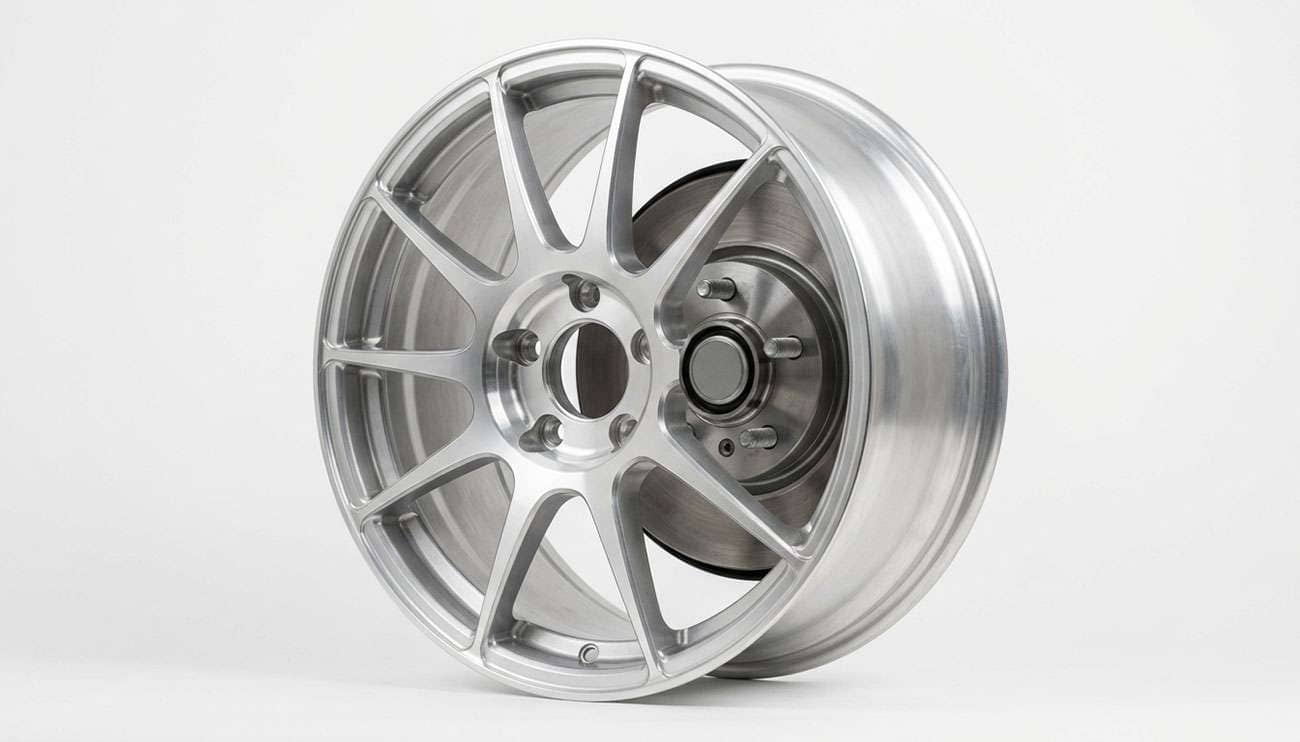
I have been fitting wheels for a long time, and I can tell you the single most expensive misunderstanding in this business. It is not people buying cheap wheels. It is people buying wheels that bolt on perfectly and fail three weeks later. The bolt pattern matched. The wheel went on. The lug nuts torqued down. And then something started making noise on the highway, or the inside of a brand-new tire wore through, or a wheel bearing that had 90,000 good miles left in it went out at 12,000.
Every one of those calls traces back to a spec that nobody checked, because bolt pattern matching only tells you the wheel will mount. It tells you nothing about whether it will work. Those are two completely different questions and the industry has done a poor job of explaining the difference.
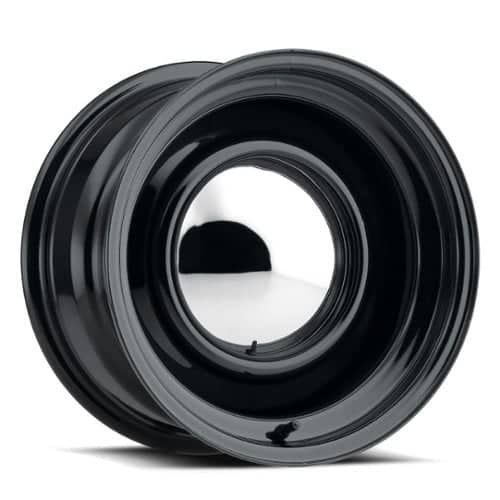
Let me show you what I mean with a wheel we sell a lot of. The U.S. Wheel Smoothie 510 in the 5x114.3 bolt pattern comes in 47 different configurations. Every one of them will bolt to a 5x114.3 hub. And across those 47, the offset ranges from negative 57 millimeters to positive 51 millimeters.
That is 108 millimeters of spread. More than four inches of difference in where the tire actually sits, all under the same model name, all with the same bolt pattern. Pick the wrong one and the tire is either buried in the fender or hanging out past it. The bolt pattern told you nothing.
Here is the whole problem laid out. Read down the left column and find whichever one you have not checked.
Spec |
What It Looks Like When Wrong |
When It Shows Up |
What It Costs |
|---|---|---|---|
Center bore |
Vibration at speed that balancing will not fix |
First highway drive |
Hub rings, or wheels back off |
Offset |
Rubbing at full lock or over bumps |
First week |
Tires, fender liners, sometimes the fender |
Lug seat type |
Lug nuts loosening repeatedly |
Days to weeks |
Studs, wheel, potentially the wheel departing |
Caliper clearance |
Grinding or scoring on the spoke backs |
Immediately, sometimes on the lift |
The wheel, and possibly the caliper |
Load rating |
Nothing, until it cracks |
Months, or one bad pothole |
Structural failure at speed |
Scrub radius |
Heavy steering, tramlining, pulling |
Immediately, worsens over time |
Wheel bearings, ball joints, tie rods |
TPMS fitment |
Warning light that will not clear |
Immediately |
Sensors and relearn, about USD 40 each |
The center bore is the big hole in the middle of the wheel that goes over your hub. On a factory wheel, that bore is machined to sit snugly on the hub, and the hub carries the weight of the vehicle. That is what hub-centric means.
Aftermarket wheels are mostly built lug-centric instead, with a deliberately oversized bore so one wheel can fit dozens of vehicles. Our catalog bears that out: the most common bore in our inventory is 108.0 millimeters across nearly 16,000 SKUs, followed by 125.1, 72.56, 73.0, 73.1, 78.1, and on down. That variety exists so a single casting can serve a lot of different hubs.
An oversized bore is not a defect. But it means the wheel is not located by the hub anymore, and if you just bolt it on and torque it down, you are relying on the lug nuts to pull the wheel into center as they tighten. Sometimes that works. Often it leaves the wheel sitting a fraction off center, and a fraction off center at 70 miles an hour is a vibration you will chase forever with a balancer that keeps telling you the wheel is fine.
The fix is hub rings, and here is the part people get wrong about them: hub rings are not load bearing. They center the wheel while you torque it, and once the lugs are tight the clamp load carries everything. Anyone telling you plastic hub rings are holding your vehicle up is confused about how the assembly works. For the full breakdown, see our guides on hub-centric vs lug-centric wheels and wheel center bore explained.
Offset is the distance from the wheel's mounting face to its centerline. Positive offset tucks the wheel in toward the suspension. Negative pushes it out toward the fender. It is measured in millimeters and the tolerances are tighter than most people expect.
Five millimeters is often the difference between a wheel that sits flush and a wheel that rubs. That is about the thickness of two stacked quarters. I have had customers argue with me that a 10-millimeter difference could not possibly matter, and then come back with a shredded fender liner.
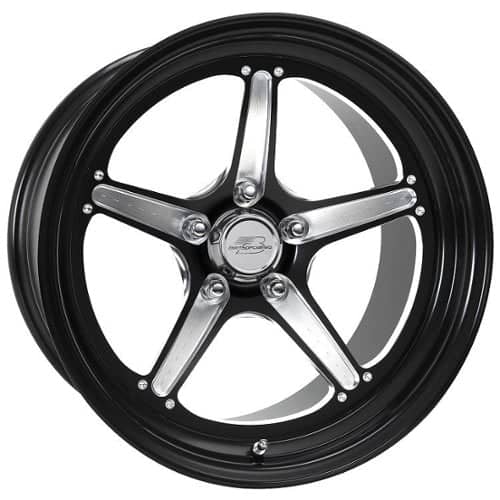
The Billet Specialties Street Lite in 5x114.3 runs across 198 configurations in our catalog, with offsets from negative 51 to positive 54 millimeters, at about USD 570 per wheel. Same wheel, same bolt pattern, and picking the wrong end of that range puts the tire in a completely different place.
Two things compound this. Wider wheels push the tire outward on both sides even at the same offset, roughly 13 millimeters per side for each additional inch of width. And spacers change your effective offset directly. Put a 20-millimeter spacer behind a positive 45 wheel and you are running an effective positive 25, with every clearance and geometry consequence that carries. Our piece on whether wheel spacers hurt your car covers when that is acceptable and when it is not. If you are already rubbing, start with why are my tires rubbing.
This is the one that scares me most, because it is invisible and it is the one that drops wheels off vehicles.
The lug holes in your wheel are machined to a specific seat shape. Conical, sometimes called acorn, is a tapered cone, usually 60 degrees. Ball or radius seat is a rounded dome. Flat or mag seat is a flat washer face. Your lug nuts have to match that geometry exactly.
Here is the mechanism, and it is worth understanding rather than just taking on faith. A wheel is not held on by the lug nuts gripping the studs. It is held on by clamp load, the friction generated between the wheel's mounting face and the hub face by the stretch in the studs. Tightening the lug nut stretches the stud slightly, and that stretch squeezes the wheel against the hub hard enough that the whole assembly behaves like one solid piece.
A mismatched lug seat wrecks that. Put a conical nut into a ball-seat wheel and the contact is a thin ring instead of a full mating surface. Your torque wrench clicks at the right number, but that number is being consumed by the nut deforming into the wrong-shaped hole rather than by stretching the stud. You get a fraction of the clamp load you think you have. The wheel works slightly against the hub every time you brake or turn, the nuts back off, and the process accelerates. Our breakdown of lug nut seat types shows what each one looks like.
If you have ever retightened lug nuts twice and had them loosen again, stop driving the vehicle and check the seat match. That is not a torque problem.
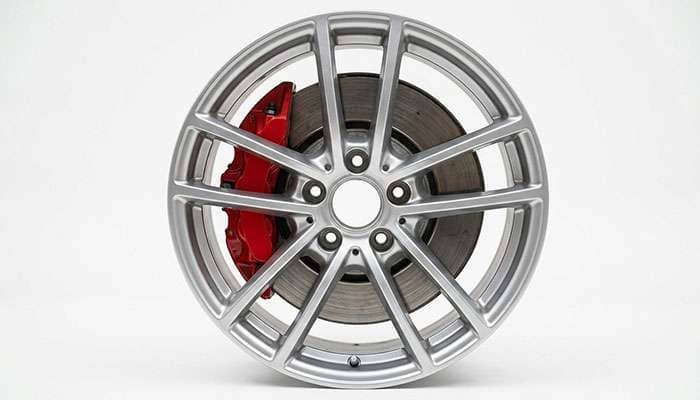
Wheel diameter does not guarantee caliper clearance. What matters is the shape of the inner barrel and the depth of the spoke backs, and two 18-inch wheels from different manufacturers can differ by half an inch in the space they leave behind the face.
This bites hardest on three groups. Anybody who has upgraded to a big brake kit. Anybody downsizing wheel diameter for a taller tire, which is common on trucks. And anybody buying for a modern performance car, where factory calipers are already enormous.
The failure mode is ugly and fast. Sometimes the wheel will not go on at all, which is honestly the good outcome because you find out in the driveway. Worse is the wheel that goes on with almost no gap and contacts the caliper under cornering load or once the caliper heats and expands. You get scoring on the spoke backs, and you can damage the caliper itself.
Check it with the wheel on and the vehicle on the ground, not just hanging on the hub. Suspension load changes the geometry.
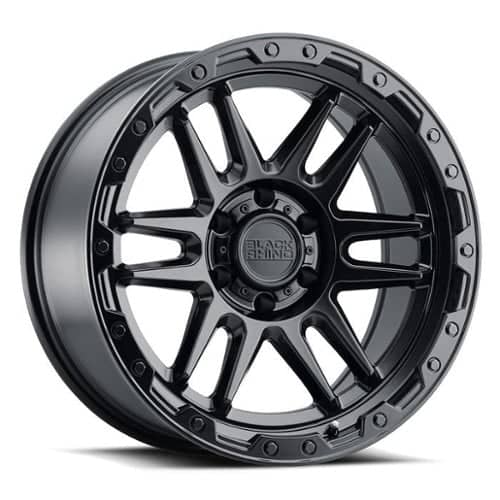
Every wheel has a maximum load it is rated to carry, and it should be published. In our own inventory, 156,022 of 161,041 wheel SKUs carry a stated load capacity, which tells you the reputable manufacturers do publish this. If a wheel you are looking at does not list one anywhere, that absence is your answer.
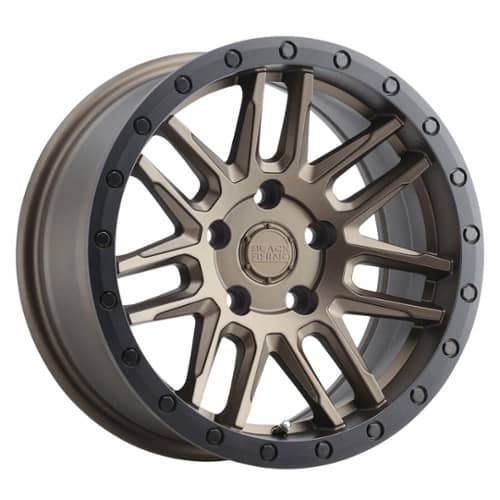
The ratings vary enormously. The Black Rhino Arches is rated at 2,000 pounds. The Apache is 2,500. The Alta is 4,000. Classic-style wheels sit lower, with the Billet Specialties Street Lite at 1,580 pounds and the U.S. Wheel Smoothie 510 at 1,400.
The math you need is per-corner, not total. Take your vehicle's gross axle weight rating, divide by two, and that is what each wheel on that axle has to carry. Not curb weight, and not curb weight divided by four, because loaded weight distribution is not even and the rating exists for the worst case. A three-quarter-ton truck that tows will put loads through a rear wheel that would flatten a wheel designed for a Miata, and both are perfectly good wheels.
What makes this the most dangerous item on the list is that an underrated wheel gives you no warning at all. It looks correct, drives correct, and passes every inspection until the day it meets a pothole at highway speed with a full load. See our wheel load rating guide for the full calculation.
This is the spec almost nobody outside a suspension shop has heard of, and it explains a lot of complaints that get blamed on other things.
Scrub radius is the distance between where your steering axis meets the road and where the center of your tire's contact patch sits. The factory picked a value on purpose. When you change offset, you move the contact patch sideways without moving the steering axis, so you change the scrub radius whether you meant to or not.
Increase it and every force at the tire gets a longer lever arm to work through. The steering gets heavy. The vehicle tramlines, following ruts and crowns in the road. Braking on uneven surfaces pulls the wheel in your hands. And the loads running through the wheel bearing, ball joints, and tie rod ends go up continuously, not just occasionally.
That is why a customer comes in at 15,000 miles with a bad bearing and swears the wheels were fine because they bolted right on. The wheels were fine. The offset was not, and the bearing paid for it over a year. If you are moving more than about 10 millimeters from factory offset, expect to feel it, and understand you are trading component life for stance.
The smallest problem on this list and the most common. Aftermarket wheels have varying valve stem hole diameters and seat angles, and your existing sensors may not seal or clamp correctly in the new wheel.
Some sensors transfer fine. Some need new mounting hardware. Some need to be replaced outright, and then the vehicle needs a relearn procedure before the light goes out. Budget around USD 40 per sensor and plan for it as part of the purchase rather than discovering it at install.
It will not hurt anything mechanically. But a dash light that never clears means you have lost a genuine safety system, and after a few months of ignoring it you will stop noticing an actual low tire.
Here is the escalation, roughly in the order I see it come through the door.
Weeks one through four. A vibration you cannot balance out, or a rub you only hear at full lock. Cheap to fix at this stage. Hub rings run a few dollars. A different offset means exchanging wheels, which is annoying but survivable.
Months one through six. The tires start telling on you. A rubbing tire wears a flat spot or scrubs the sidewall, and sidewall damage is not repairable at any price, which is worth understanding before you dismiss a rub as cosmetic. Read tire sidewall damage and whether it is safe to drive if you have any rubbing at all. Now you are buying tires early on top of the original problem.
Months six through eighteen. The suspension bill arrives. Wheel bearings, ball joints, tie rod ends, all worn early by a scrub radius nobody measured. This is where the real money is, and almost nobody connects it back to the wheel purchase.
Any time at all. The clamp load and load rating failures do not follow a schedule. A mismatched lug seat can back nuts off in a week. An underrated wheel can go 40,000 miles and then crack on one impact. Neither gives warning.
The wheels themselves are rarely the expensive part. Everything downstream is.
Four numbers and one question, and you are past 95 percent of this.
Write down your bolt pattern, hub bore, and factory offset. These are on the back of your factory wheel or in the owner's manual. Bolt pattern gets you a candidate list. The other two decide whether the candidate actually works.
Divide your gross axle weight rating by two. That number has to be under the wheel's published load rating, for each axle separately.
Match the lug seat before you reuse any hardware. If the new wheels take a different seat than your old ones, buy the correct lug nuts at the same time. Do not plan to sort it out at install.
Ask about caliper clearance specifically if you have a big brake kit, are downsizing diameter, or drive something with large factory brakes. Diameter alone will not answer it.
Then call somebody. That is not me selling you a service, it is the fastest way through this. When you browse custom wheels, have those four numbers written down and the conversation takes two minutes instead of two weeks of comebacks.
Nobody sets out to buy the wrong wheels. What happens is that the bolt pattern matches, the wheel goes on, and everything about the experience says the job is done. The specs that actually decide whether the wheel works are the ones you cannot see once it is mounted.
If you take one thing from this, take the offset number. It is the spec that causes the most damage and the one buyers most consistently treat as a styling preference rather than an engineering value. One wheel model in one bolt pattern in our catalog spans 108 millimeters of offset. The wheel does not know which one you needed. You have to.
Not necessarily. A matching bolt pattern only confirms the wheel can mount to the hub. Center bore, offset, lug seat type, brake caliper clearance, and load rating all determine whether the wheel will actually work on your vehicle, and a single wheel model in one bolt pattern can be offered across more than 100mm of offset range.
If the wheel's center bore is larger than your vehicle's hub, yes. Most aftermarket wheels use oversized bores so one casting fits many vehicles. Hub rings fill that gap and keep the wheel centered while you torque the lugs. They are not load bearing, and once the lug nuts are tight the clamp load between the wheel and hub carries the vehicle.
Around five millimeters can be the difference between flush and rubbing. Beyond roughly ten millimeters from factory offset, expect noticeable changes to steering feel and increased loading on wheel bearings, ball joints, and tie rod ends through the change in scrub radius.
The most common cause is a lug seat mismatch. If the nut geometry does not match the wheel's lug hole, conical against a ball seat for example, your torque wrench reads correctly while the actual clamp load stays far below what it should be. The wheel then works against the hub under braking and cornering and the nuts back off. Stop driving and verify the seat type.
Take your vehicle's gross axle weight rating and divide it by two. Each wheel on that axle must have a published load rating at or above that number, calculated separately for the front and rear axles. Do not use curb weight divided by four, since loaded weight is not distributed evenly.
Diameter alone does not answer this. Clearance depends on the shape of the inner barrel and the depth of the spoke backs, which vary considerably between manufacturers at the same diameter. Verify specifically if you have a big brake kit, are reducing wheel diameter, or drive a vehicle with large factory calipers, and check with the vehicle on the ground rather than on a lift.



