
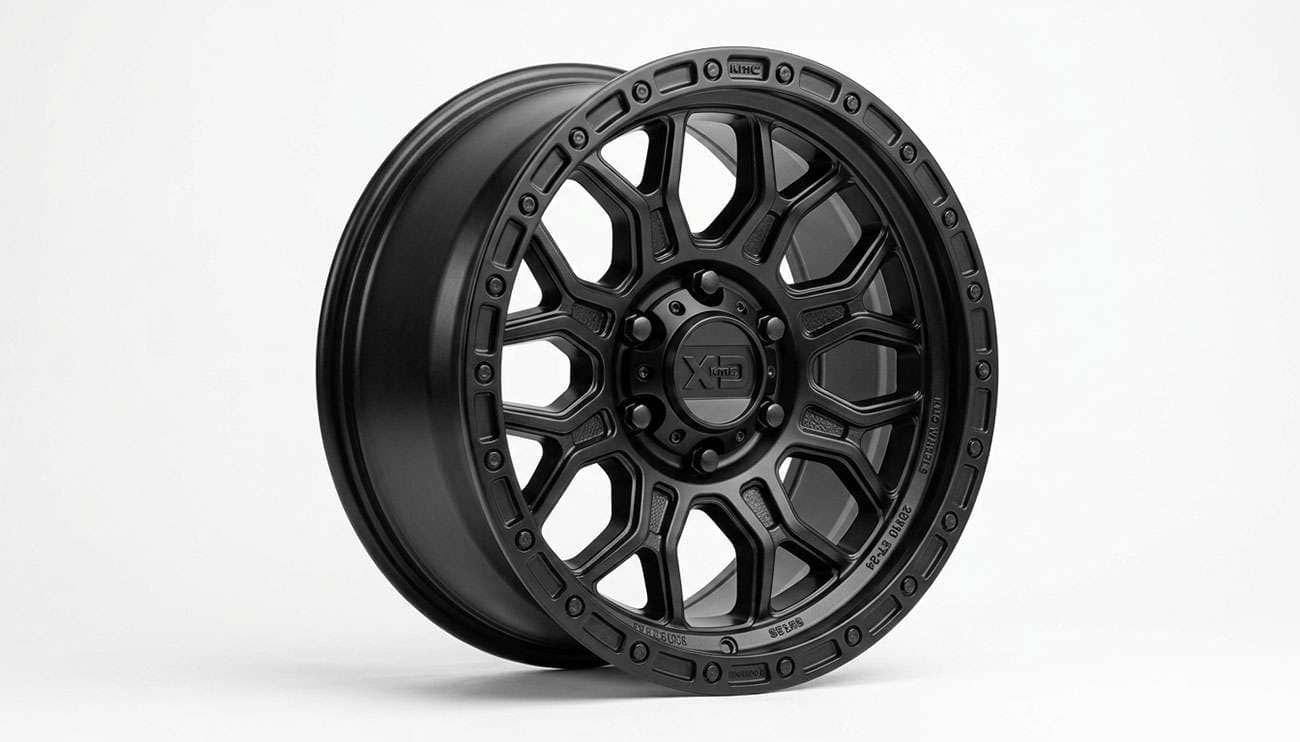
The 6x135 bolt pattern is a Ford and Lincoln signature, found almost exclusively on their full-size trucks and SUVs. If you drive a Ford F-150 from 2004 or newer, a Ford Expedition from 2003 or newer, or a Lincoln Navigator from 2003 or newer, you're running 6x135. The "6" means six lug holes, and the "135" is the diameter of the circle those lugs form, measured in millimeters, which works out to 5.31 inches. The single most important thing to know is that 6x135 is not interchangeable with the similar-looking 6x139.7 (also written 6x5.5) used by Chevrolet, GMC, Toyota, and Nissan. They are only about 4.7 mm apart, but that gap is more than enough to make the wrong wheel unsafe. Here's the complete breakdown.
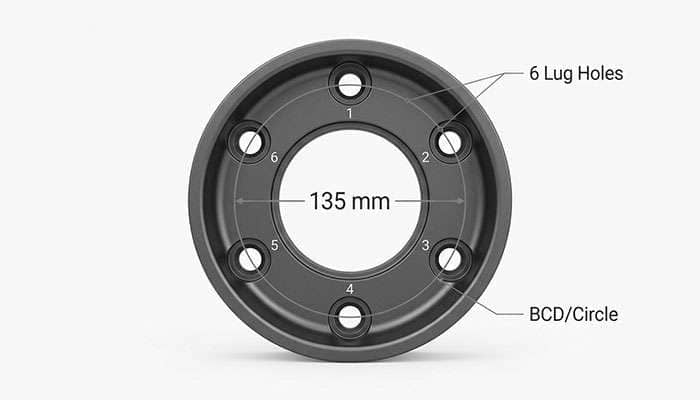
A bolt pattern, also called the lug pattern or pitch circle diameter (PCD), describes how a wheel bolts to your hub. It has two parts, and 6x135 spells both out.
The first number, 6, is the lug count: six studs and six lug holes. The second number, 135, is the bolt circle diameter in millimeters, the size of the imaginary circle that runs through the center of all six lug holes. Because six is an even number of lugs, you measure it the easy way, straight across from the center of one lug to the center of the lug directly opposite. That distance is 135 mm, which converts to 5.31 inches (135 divided by 25.4). You'll sometimes see it written as 6x5.31 in inch form.
Two more specs ride along with the pattern on these Ford applications. The wheel studs are typically M14 x 2.0, larger than the hardware on most cars, and the center bore is usually 87.1 mm. Both matter when you're shopping aftermarket wheels, and we'll come back to the center bore below. If you want to confirm a pattern yourself, our guide on how to measure a lug bolt pattern walks through it step by step, and the broader expert guide to bolt patterns and fitment covers the full picture.
Ford introduced 6x135 on the F-150 in 2004, replacing the older five-lug setup, and built it into their full-size truck and SUV platforms from there. Lincoln, Ford's luxury division, adopted it for the Navigator and Mark LT. Here are the vehicles that use it.
Make & Model |
Years |
Notes |
|---|---|---|
Ford F-150 |
2004–present |
Includes Raptor (2010+) and the electric F-150 Lightning (2022+) |
Ford Expedition |
2003–present |
Full-size SUV on the F-150 platform |
Lincoln Navigator |
2003–present |
Luxury counterpart to the Expedition |
Lincoln Mark LT |
2006–2008 |
Luxury pickup based on the F-150 |
Ford Lobo |
2004–present |
The F-150's name in the Mexican market |
The short version: if it's a modern full-size Ford or Lincoln truck or SUV, it almost certainly wears 6x135. A couple of notes for the edge cases. The Ford Super Duty trucks (F-250 and up) do not use this pattern; they run an eight-lug setup, which we cover in our 8x180 bolt pattern fitment guide. And always confirm against your specific year and trim before buying, because platform changes can shift specifications.
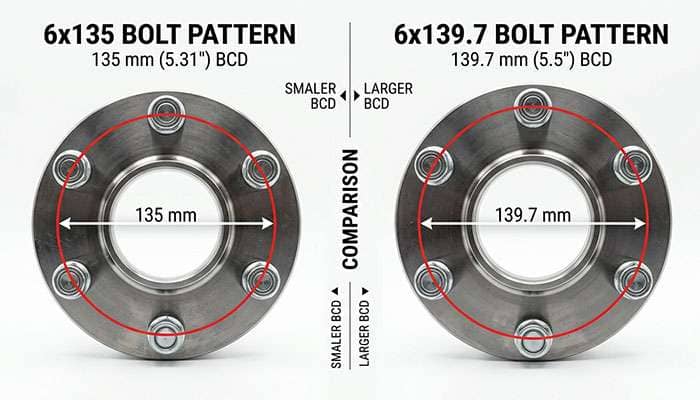
No, and this is the mistake that costs people money and creates a genuine safety hazard, so it's worth being precise. The 6x139.7 pattern, which is the same thing as 6x5.5 (139.7 mm equals 5.5 inches), looks nearly identical to 6x135 at a glance. Both have six lugs. But the bolt circles differ by 4.7 mm, and that is not close enough to force together safely.
Feature |
6x135 |
6x139.7 (6x5.5) |
|---|---|---|
Bolt Circle Diameter |
135 mm (5.31 in) |
139.7 mm (5.5 in) |
Main Vehicles |
Ford, Lincoln |
Chevy, GMC, Toyota, Nissan |
Interchangeable? |
No |
No |
If you try to mount a 6x139.7 wheel on a 6x135 hub, the lug holes won't line up correctly. At best it won't go on; at worst someone forces it with the wrong hardware and the wheel never seats squarely against the hub, which leads to vibration, loosening lug nuts, and eventually a wheel that can come off at speed. There is no "close enough" with bolt patterns. If you have a Chevy or GMC and you're researching that pattern instead, see our complete guide to the 6x139.7 bolt pattern. Adapters do exist to convert from one six-lug pattern to another, but they must be quality hub-centric units installed correctly, and they're a deliberate choice, never a workaround for buying the wrong wheel.
Matching the 6x135 bolt pattern gets the wheel onto the studs, but four more specifications determine whether it fits and performs correctly. Get these right and you'll avoid rubbing, vibration, and clearance headaches.
Center bore. These Ford hubs use an 87.1 mm center bore, and the wheel needs to seat on that hub, not just hang on the lugs. Many aftermarket wheels are made with a larger bore to fit multiple vehicles, so you'll use hub-centric rings to take up the gap and center the wheel precisely. Skip them and you invite vibration even with a perfect bolt pattern. Offset and backspacing control how far the wheel tucks in or pokes out, which is everything on a truck where you're balancing stance against rubbing the fender or the suspension. Our breakdown of wheel offset, backspacing, and bolt patterns explains how to dial it in. Load rating is non-negotiable on a full-size truck or SUV: the wheel must be rated to carry your vehicle's weight, especially if you tow or haul. And brake clearance matters because F-150s and Expeditions run large brake components; the wheel's diameter and internal barrel shape have to clear the calipers.
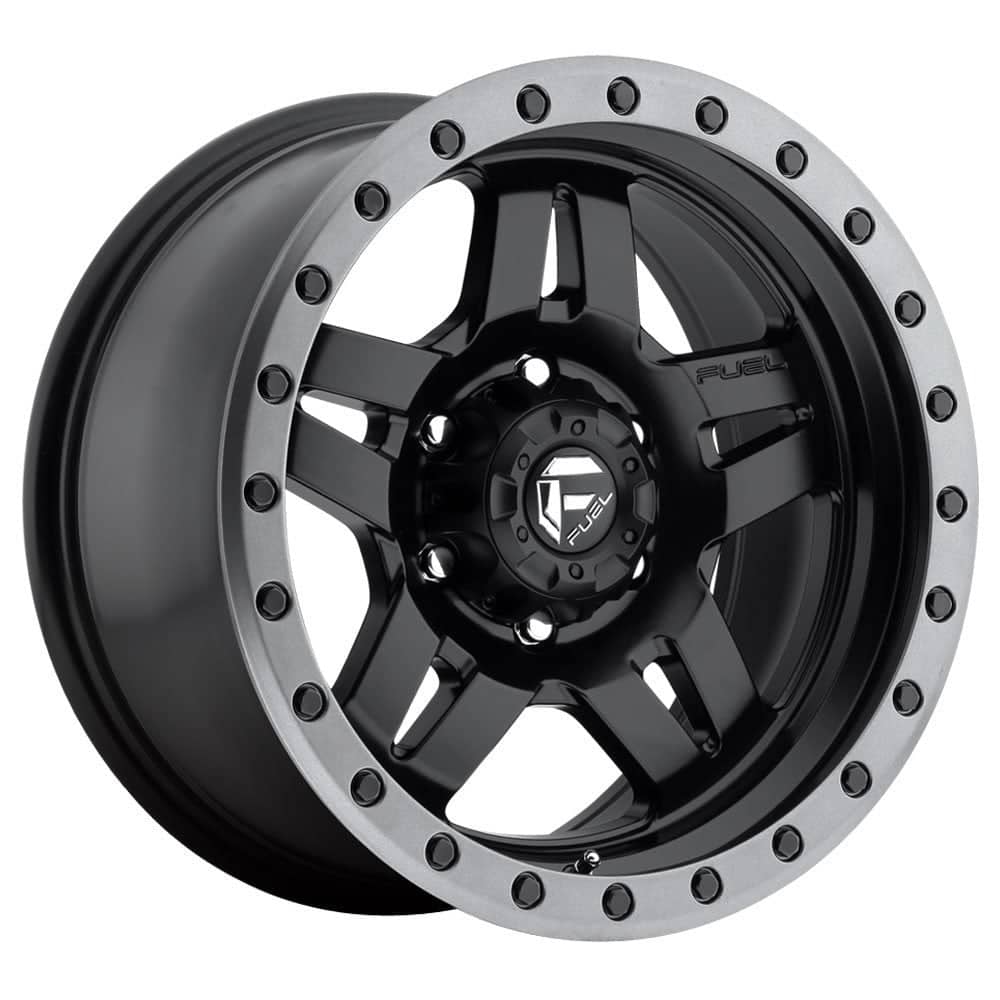
The good news is that because 6x135 sits on the best-selling truck platform in the country, the aftermarket selection is enormous. Whether you're leveling a daily-driven F-150, building a lifted rig, or cleaning up the look on a Navigator, there's a wheel for it. For an aggressive off-road look, the Fuel Anza D557 in matte black is a proven choice, and the Moto Metal MO400 in gloss black milled brings a sharp street-and-trail style. Both come in the diameters and offsets these trucks want, from 17-inch up through 22-inch and beyond.
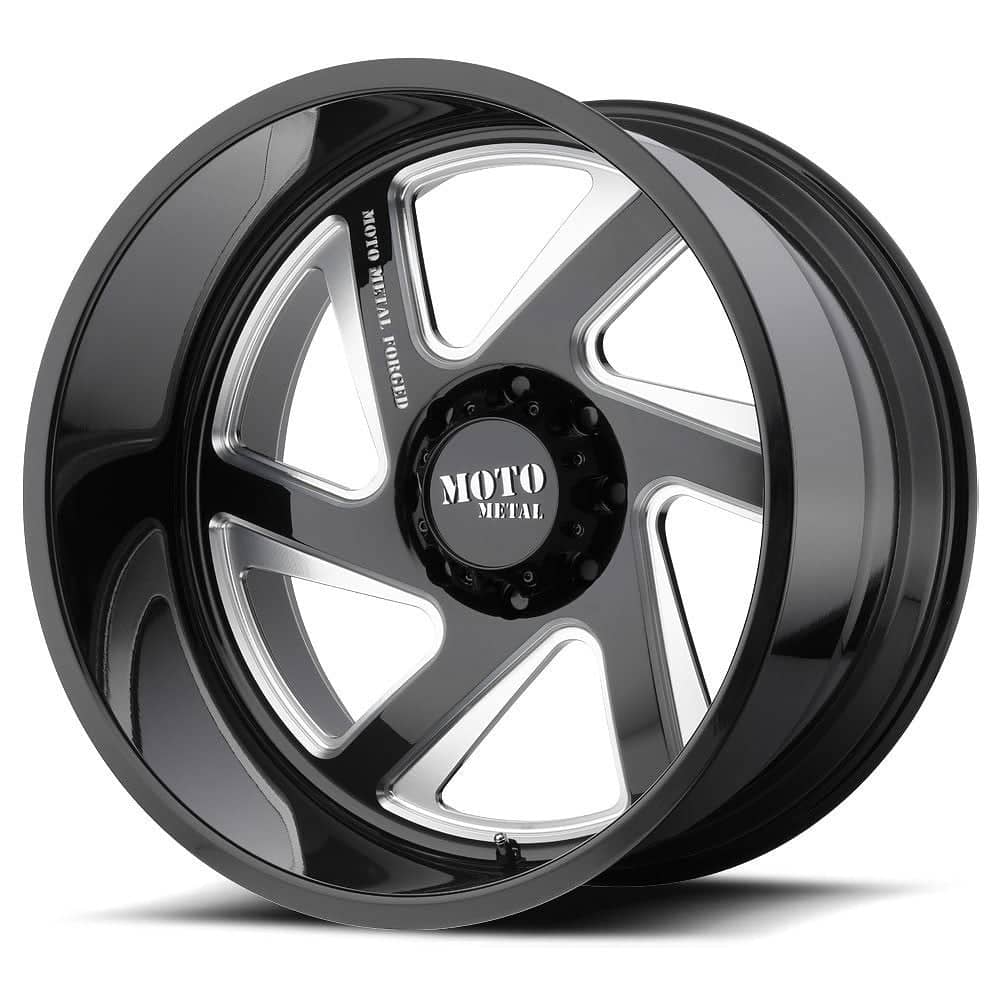
When you shop, confirm the bolt pattern, the center bore, the load rating, and an offset suited to your truck and any lift or level. If you're cross-shopping fitments on other platforms, our guide to the 5x112 bolt pattern and our 8x6.5 lug pattern compatibility chart cover two more common ones. Ready to shop the right pattern? Browse our full selection of 6x135 bolt pattern wheels at Performance Plus Tire.
The 6x135 bolt pattern is straightforward once you know the rules: six lugs on a 135 mm (5.31-inch) circle, found on Ford and Lincoln full-size trucks and SUVs from the early-to-mid 2000s onward, headlined by the F-150, Expedition, and Navigator. The one thing you cannot get wrong is confusing it with the 6x139.7 (6x5.5) pattern used by Chevy, GMC, Toyota, and Nissan. They differ by just 4.7 mm, and that difference is the line between a safe install and a wheel that comes loose. Match the pattern exactly, mind the center bore, offset, load rating, and brake clearance, and your new wheels will fit right and run true.
The essentials on the 6x135 bolt pattern:
The 6x135 bolt pattern is used by Ford and Lincoln full-size trucks and SUVs, including the Ford F-150 (2004 and newer, including the Raptor and F-150 Lightning), Ford Expedition (2003 and newer), Lincoln Navigator (2003 and newer), Lincoln Mark LT (2006–2008), and the Ford Lobo.
A 6x135 bolt pattern converts to approximately 6x5.31 inches. The 135 mm bolt circle diameter divided by 25.4 equals 5.31 inches, so it is sometimes written as 6x5.31.
No. 6x5.5 is the inch version of 6x139.7 mm, which is a different pattern used by Chevrolet, GMC, Toyota, and Nissan. The 6x135 (5.31-inch) and 6x139.7 (5.5-inch) bolt circles differ by 4.7 mm and are not interchangeable.
No. Although both have six lugs and look similar, the 6x139.7 bolt circle is 4.7 mm larger than the 6x135. Mounting a 6x139.7 wheel on a 6x135 hub, or vice versa, will not seat correctly and is unsafe. Use the exact pattern your vehicle requires.
Ford 6x135 applications typically use an 87.1 mm center bore. Many aftermarket wheels are made with a larger bore to fit multiple vehicles, in which case hub-centric rings are used to take up the gap and center the wheel properly and prevent vibration.
A 5x115 bolt pattern converts to approximately 5x4.53 inches (115 mm divided by 25.4). It is a separate five-lug pattern used by modern Dodge, Chrysler, Cadillac, Buick, and some GM front-drive vehicles, and it is unrelated to and not interchangeable with the six-lug 6x135.



