
The wrong lug nut seat will torque to spec and still leave your wheel loose. That is the part almost nobody tells you. A torque wrench measures the friction it takes to turn the nut, not the clamping force holding the wheel on. Match the seat and that friction comes from a wide ring of contact. Mismatch it and the nut rides on a thin line instead, the wrench clicks at the same number, and the joint underneath is nowhere near tight. You cannot feel this. You cannot hear it on the test drive. You find out later.
Nothing, at first. That is the whole problem with this failure, and it is why cars roll into the shop with four elongated stud holes and an owner who swears he torqued them himself.
Here is what is actually going on. A lug nut does not hold your wheel on by being tight against the stud. It holds the wheel on by squeezing the wheel against the hub face hard enough that friction between those two surfaces carries the load. Engineers call that squeeze clamp load, and it is the only thing doing the work. The nut, the stud, the threads, all of it exists to generate clamp load and nothing else.
The seat is where that force gets handed from the nut into the wheel. A matched seat hands it over across a broad band of metal. A mismatched seat hands it over along a narrow circle, sometimes a line barely wider than a pencil mark. Same nut, same stud, same wrench setting, radically different result.
So the failure does not announce itself. The joint starts out under-clamped, the wheel moves a few thousandths under every corner and every stop, that movement works the nut loose, the loose nut lets it move more, and the hole starts wearing into an oval. By the time you hear anything you are well down that road.
Use this table to figure out which situation you are in.
Your Situation |
Likely Mismatch |
What Is Happening at the Seat |
What To Do |
|---|---|---|---|
New aftermarket wheels, reused the factory lug nuts |
Ball seat nuts in a conical seat wheel |
Round nut contacts the cone on one narrow ring near the top |
Stop driving it; new conical nuts before it goes anywhere |
Went back to factory wheels, kept the aftermarket nuts |
Conical nuts in a ball seat wheel |
Cone bottoms on the rim of the dome and can wedge the seat open |
Original ball seat nuts; inspect the factory seats for marking |
Classic steel or mag wheels with modern nuts |
Conical nuts in a flat mag seat |
Cone jams into a straight bore; no flat contact, no centering |
Mag seat nuts with the correct shank length and flat washer |
Nuts keep loosening no matter how you torque them |
Any of the three |
Joint never reached clamp load; movement backs the nuts off |
Pull one nut and inspect the seat before re-torquing again |
Nuts sit noticeably high or deep compared to each other |
Mixed sets from two different wheels |
Some seats bearing correctly, others riding on an edge |
Replace the full set; never run a mixed set |
Shudder or wobble that a balance job did not fix |
Seat mismatch or seat already damaged |
Wheel not centered or not held flat against the hub |
Inspect every seat before chasing it as a balance problem |
Notice the last two rows are not fitment complaints. They come in as vibration complaints and get chased around a balancer for a week before anybody pulls a nut and looks at the seat.
Because a torque wrench is not measuring what you think it is measuring.
When you pull a wrench to 100 foot-pounds, only a small fraction of that effort turns into clamping force. Most of it gets spent overcoming friction in two places: the threads, and the face where the nut bears against the wheel. In a typical fastener, somewhere around 85 to 90 percent of applied torque goes into friction, and only the remaining 10 to 15 percent actually becomes clamp load. Torque is a proxy. It is a good proxy when everything about the joint is what the spec assumed, and it is a terrible one when something changed.
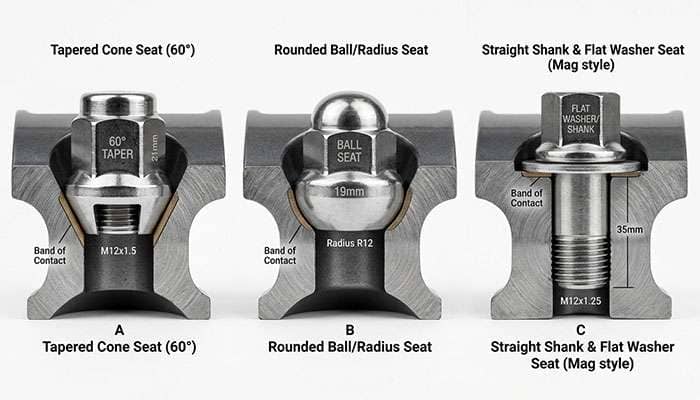
Seat geometry is exactly the thing that changes. Put a matched nut in a matched seat and the two surfaces share a wide contact band. Friction there is predictable, spread out, and the spec was written around it. Put the wrong nut in and you get line contact instead of area contact. That narrow ring generates a different amount of friction at the same applied torque, so the wrench reaches its click well before the joint reaches the clamp load the engineers wanted.
There is a second, nastier effect on top. Force concentrated on a thin line is enormous pressure per square inch, and the aluminum under it yields. The seat deforms, the nut sinks further in, and whatever preload you built bleeds off. Come back a week later, put the wrench on it, and it turns. Most people read that as needing a re-torque. What it means is the seat is being crushed a little more every time.
Heat cycles accelerate it. A wheel that gets hot from braking and then cools overnight expands and contracts against that same small contact patch every single day.
This is why I get short with people who tell me they torqued it right so it must be fine. Torquing it right is necessary, not sufficient, and it has never been a test for whether the hardware is correct. For the procedure itself, we covered that in how to torque lug nuts perfectly, but no procedure saves a joint with the wrong seat in it.
You look at the wheel, not the vehicle. That is the single most useful sentence in this article.
The seat belongs to the wheel. Your truck does not require conical nuts; the wheels currently on your truck do. Change the wheels and the requirement changes with them, even though the studs, the hub, and the thread pitch never moved. This is why the factory nuts that lived happily on your factory wheels for nine years can be completely wrong the afternoon you bolt on a set of aftermarket ones.
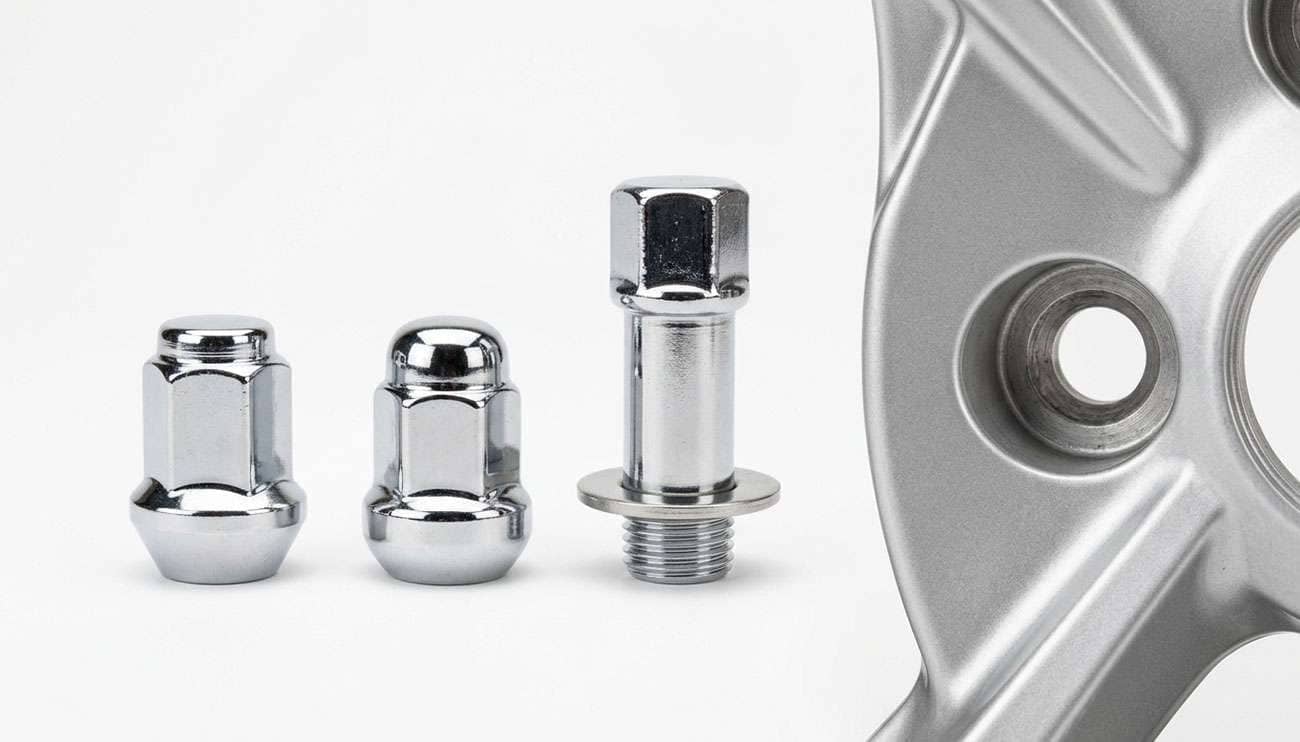
Take one nut off and look into the hole. You are looking at a shape, and there are only three of them worth knowing.
Seat Type |
What the Wheel Hole Looks Like |
What the Nut Looks Like |
Where You Find It |
|---|---|---|---|
Conical, also called acorn or tapered |
A funnel; straight-sided cone narrowing inward |
Pointed taper under the hex |
Most aftermarket wheels and most domestic and Asian vehicles |
Ball, also called radius or dome |
A rounded bowl with no straight sides |
Smooth curved dome under the hex |
Many European models and some Honda applications |
Mag, also called shank or flat seat |
A straight bore with a flat shoulder at the bottom |
Long smooth shank with a separate flat washer |
Classic American mags, vintage steel wheels, older Toyota |
Two things trip people up here. The first is that the nut threading on smoothly tells you nothing at all. Thread pitch and seat shape are completely independent of each other. A nut with the right thread will spin down happily onto the wrong wheel and seat against nothing useful. "It went on fine" is not a fitment test.
The second is the ball seat, because it hides. A shallow ball seat and a shallow cone look similar in a dark wheel well with a flashlight, especially with a little brake dust in them. If you are not certain, run a fingertip around the inside of the hole. A cone feels like a straight ramp. A ball seat feels like it curves the whole way. When you still are not sure, hold the nut up next to the hole and look at the gap in profile rather than trying to judge it seated. For a fuller walk through the three shapes and how they are specified, our piece on matching lug nuts to your wheels lays the types out side by side.
One more thing worth separating out, because it gets tangled into this conversation constantly: seat type is about clamping. Centering is a different job, handled either by the hub register or by the lug hardware itself, and it has its own rules. We sorted that out in hub centric versus lug centric wheels.
Yes, and the damage runs in an order I can almost set my watch by. This is what you are actually spending while you drive around on it.
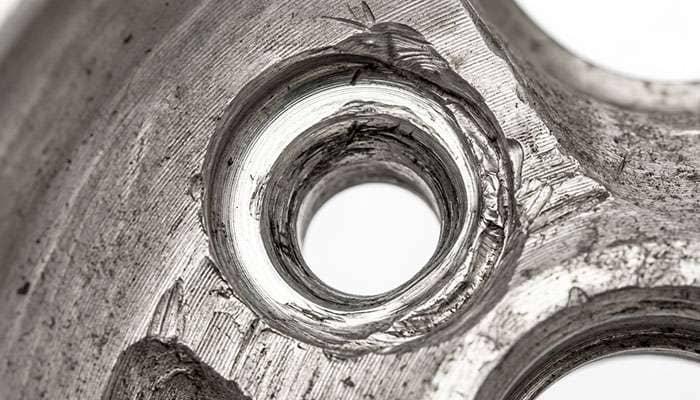
First the finish goes. A bright ring or a scuffed halo around the lug hole where the nut has been working against it. Free to fix at this stage. All it costs you is the right set of nuts.
Then the seat gets marked. The aluminum takes a permanent impression from that narrow contact line. Now the seat is no longer the shape it was machined to be, which means even the correct nut will not sit the way it should. You have moved from a hardware problem to a wheel problem.
Then the nuts start backing off. This is where most people first notice, usually as a click or a rattle at low speed that goes away above about 30 miles an hour. If your nuts keep loosening and you have already chased everything else, seat mismatch belongs at the top of your list. We wrote up the other causes in why your lug nuts keep coming loose, but this is the one that hides behind a correct torque reading.
Then the holes go oval. Once the wheel can move against the hub, the stud works back and forth inside the lug hole and wears it into an egg. An elongated lug hole is the end of that wheel. It is not weldable, not machinable, and no shop worth its sign will send it back out.
Then the studs stretch. A stud that has been cycling loose has been stretched past where it should ever have gone. It will not hold correct torque again even with perfect hardware, and it usually takes its threads with it.
Then you lose the wheel. That is the end of the ladder and it is not a rare outcome. Wheel separation is serious enough that NHTSA tracks it, the FMCSA writes re-torque requirements into commercial vehicle maintenance for the same reason, and the Tire Industry Association builds wheel installation and torque procedure into its technician training. None of those organizations are worried about your paint.
Worth noting that the wheel is not the only thing absorbing this. A wheel that has been running loose has been pounding its tire bead and sidewall too, which is its own inspection. The habit of watching a small problem instead of fixing it is the same habit that turns a scuff into a blowout, and we went through that in tire sidewall damage and whether it is safe to drive.
Ball seats show up most often on European vehicles and on a number of Honda applications, and on plenty of those platforms the fastener is a bolt threading into the hub rather than a nut on a stud. That changes how you handle the job but not the principle: the seat still has to match the wheel.
The practical warning is the aftermarket wheel swap, because it is the most common way people get bitten. The large majority of aftermarket wheels are machined for conical seats, so if your car left the factory with ball seat hardware, the nuts in your trunk are the wrong ones. It catches careful people, because nothing about the swap feels like it should have changed the hardware.
It runs the other way too, and this direction does more damage. Conical nuts driven into a ball seat concentrate their force on the rim of the dome. That can wedge the seat and start to open it up, and once a ball seat has been spread, it will not hold a ball seat nut properly again either. Going back to your factory wheels after a season on aftermarket ones is exactly when this happens, because the aftermarket nuts are sitting right there in the same box as the wheels.
They do, and this is the one closest to my heart, because it is where the classic cars live.
A mag seat is a different animal. Instead of one surface doing double duty, a mag seat nut has a long straight shank that slides into the wheel bore and a flat washer face that clamps. The shank centers, the washer clamps. Two jobs, two features, which is elegant and also means two ways to get it wrong.
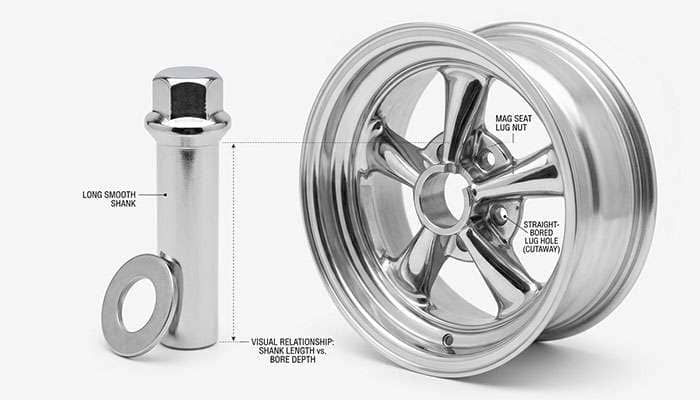
Shank length is the variable nobody checks. It has to match the thickness of the wheel at the lug hole. Too short and the washer clamps before the shank is doing any centering, which leaves you with a wheel held on by friction alone and nothing locating it. Too long and the shank bottoms out in the hole before the washer ever touches the wheel face, and you will torque the wrench to spec against a nut that is resting on the bottom of a hole with essentially no clamp load at all. That second one is the most complete version of this whole failure, and it is invisible from the outside. Everything looks bolted down. Nothing is.
Put a conical nut into a mag seat and you get the worst of everything: a cone jammed into a straight bore, no flat contact, no centering, and a wheel sitting on three or four points of a circle. I see this most on cars that came out of long-term storage, where somebody grabbed a coffee can of nuts off the bench at some point in the last forty years.
Classic steel and mag wheels are still very much in service, and correct mag seat nut sets are still made for them in the common 7/16 and 1/2 inch sizes. If you are running vintage wheels, buy the set that goes with them rather than whatever threads on. For background on the wheels themselves, slot mag wheels explained covers the family.
Stop driving it. Everything else on this list comes after that.
One. Do not just re-torque it. Re-torquing a mismatched seat is how the seat gets crushed a little further. If a set of nuts has needed repeated re-torquing, that is your evidence, not your fix.
Two. Pull one nut and look. Take a nut off, hold it up, look into the hole, compare the shapes. Cone into cone, dome into dome, shank into bore. That is the whole test and it takes a minute.
Three. Inspect the seat. With the nut off, look for a bright ring, an impression, or an edge that is no longer sharp. A seat that is still the shape it was machined to be will look uniform all the way around.
Four. Check all of them. Mixed sets are common, particularly on vehicles that have been through a few tire shops. One correct nut proves nothing about the other nineteen.
Five. Replace the whole set, not the wrong ones. Hardware wears in together. Buying five nuts to go with fifteen old ones gives you two different friction conditions on one vehicle, and your torque wrench cannot see the difference.
Six. Torque properly, then re-torque once on purpose. Star pattern, to the vehicle specification, with a wrench you trust rather than an impact gun. Then re-torque after 50 to 100 miles. That single planned re-torque is normal practice and it lets the new hardware seat. What is not normal is needing it again and again.
Seven. If the seat is already marked, have the wheel looked at. Correct nuts on a deformed seat will not clamp correctly either, and an elongated lug hole retires the wheel. Do not gamble on this one. A wheel that has been running loose is also worth checking against how long you can drive with a missing lug nut, because the loads involved are the same family of problem.
I have been around wheels since we opened the doors in 1971, and lug seat mismatch is still the failure that catches careful people. Not careless ones. Careful ones, with a torque wrench in hand and a number from the owner's manual, doing it the way they were taught.
The reason is simple enough once you see it. Your torque wrench measures friction. What holds a wheel on is clamp load. Those two things track each other faithfully right up until the seat geometry changes, and then they part company without a sound. The wrench still clicks. The joint is still loose.
So check the wheel, not the vehicle. Pull one nut and look at the shape. And if you are putting new wheels on, plan on new lug nuts as part of the job rather than an afterthought, because the odds that your old ones match the new wheels are not good.
If you are not sure what your wheels take, bring us the wheel or the nut and we will tell you straight. That conversation has always been free here. Take a look at our wheel accessories and hardware when you know what you need.
The nut contacts the wheel on a narrow line instead of a wide band, so the joint never reaches proper clamp load even though the torque wrench clicks at specification. The wheel then moves slightly under load, the nuts work loose, and the concentrated pressure deforms the aluminum seat. Left alone it progresses to elongated lug holes, stretched studs, and eventually wheel separation.
No. A conical nut lands on the rim of the rounded seat rather than inside it, concentrating force on a small circle and wedging the seat open. Once a ball seat has been spread this way it will not hold correct ball seat nuts properly either, which turns a hardware mistake into wheel damage. This commonly happens when someone returns to factory wheels but keeps the aftermarket nuts.
Look at the wheel, not the vehicle, because the seat is a property of the wheel. Remove one nut and inspect the hole. A straight-sided funnel is conical, a rounded bowl with no flat sides is ball, and a straight bore with a flat shoulder at the bottom is mag. Run a fingertip inside if you are unsure: a cone feels like a ramp, a ball seat curves the whole way.
Usually yes, and you should plan for it rather than treat it as optional. Factory nuts are matched to the factory wheel's seat, not to your hub or studs, so changing wheels can change the requirement even though thread pitch stays the same. Most aftermarket wheels use conical seats, so anyone whose vehicle came with ball or mag seat hardware will need different nuts.
A correct torque reading does not confirm correct hardware. If the seat type is mismatched, the wrench reaches its click before the joint reaches clamp load, so the wheel is under-clamped from the start and works the nuts loose. Pull one nut and compare the shape of the nut to the shape of the hole before re-torquing again, because repeated re-torquing crushes the seat further.
A conical nut uses one tapered surface to both center and clamp the wheel. A mag seat nut splits those jobs: a long straight shank slides into the wheel bore to center it, and a separate flat washer face does the clamping. That makes shank length critical. Too short and nothing centers the wheel; too long and the shank bottoms in the hole before the washer contacts the face, leaving almost no clamp load.



