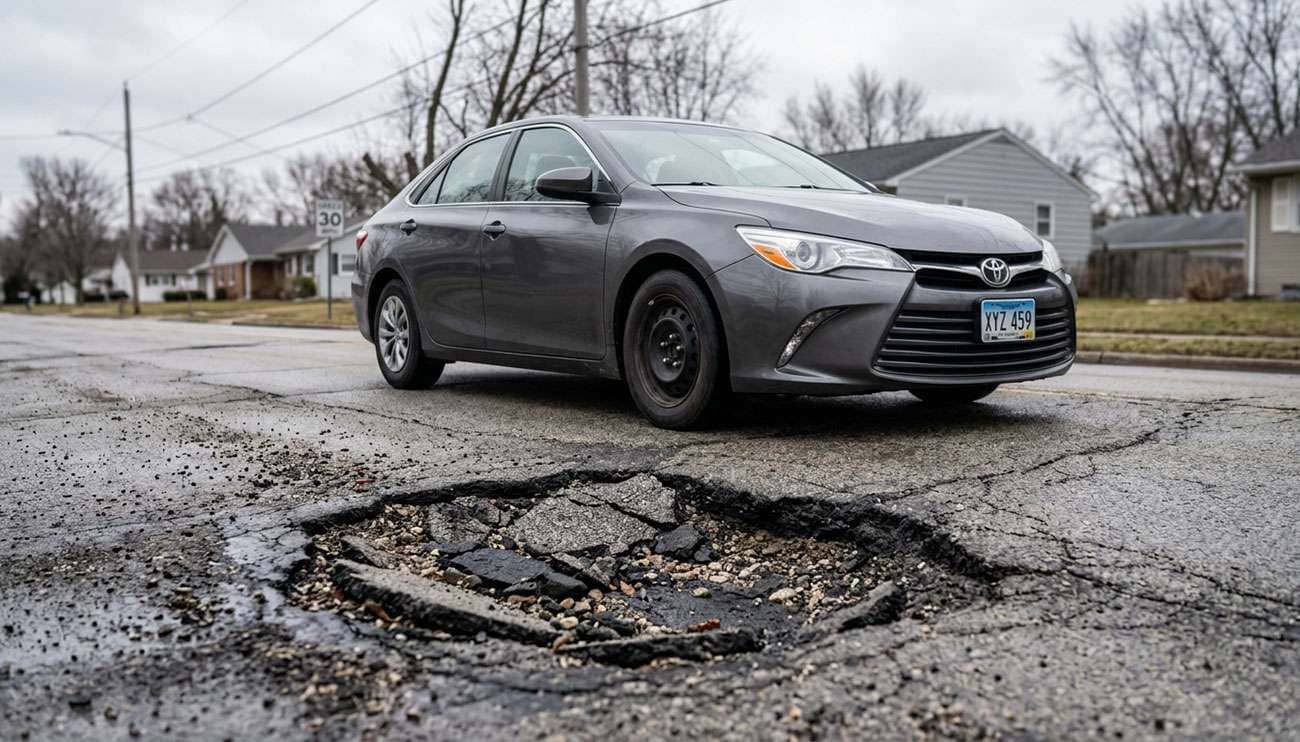
You know the sound. That flat, ugly bang that comes up through the floor and the steering wheel at the same time, and for a second you are not sure whether you just lost a tire or just lost a wheel. Then the car keeps going, everything feels more or less normal, and you tell yourself you got away with it.
Sometimes you did. AAA puts it at roughly one driver in ten taking damage bad enough to need a repair, averaging somewhere around six hundred dollars. That means nine out of ten times, nothing. Those are decent odds, and they are exactly why people stop thinking about it.
Here is the thing I have learned from a lot of cars coming through the shop after a bad winter: the pothole damage that hurts people is almost never the damage they noticed that day. It is the damage that showed up two or three weeks later, on a highway on-ramp, at seventy miles an hour. The car drove away fine. It was not fine.
So this is not another list of things to look at. It is a timeline. What the car tells you in the first minute, what you check when you stop, what shows up on day three, and what shows up on week three. Start with the table, then find your row.
What You Noticed |
Most Likely Cause |
How Fast You Need to Act |
|---|---|---|
Bang, then nothing unusual |
Possibly nothing, possibly a pinch |
Walkaround at next stop |
Car pulls to one side now |
Alignment or bent steering part |
Within days |
Shaking at highway speed |
Bent wheel or lost balance weight |
Within days |
Tire went soft overnight |
Bead leak from a dented rim |
Before you drive it |
Bulge or blister on sidewall |
Pinched, severed internal plies |
Stop driving on it now |
New clunk over bumps |
Suspension or strut damage |
Have it inspected |
Before you pull over, before you get out and look at anything, the car is already telling you most of what you need to know. Turn the radio off and pay attention, because these signals fade once your brain gets used to them.
Does it still track straight? Ease your grip and let the wheel find its own way for a second on a straight, empty stretch. If the car wanders toward a shoulder it was not wandering toward five minutes ago, something moved. That is usually a toe change from a knocked alignment, sometimes a bent tie rod.
Is the steering wheel still centered? Driving straight with the wheel cocked ten degrees to the left is one of the clearest signs you have, and one of the easiest to miss, because you adjust your hands automatically without registering it. Look at the wheel, not at the road, for one second.
Any new vibration, and at what speed? This part matters more than people think. A shake that shows up at 45 to 55 and smooths out again above that is a different problem than a shake that starts at 60 and gets steadily worse. Note the speed where you feel it. Note whether you feel it in the steering wheel, in the seat, or in the floor. That information is worth real money to whoever diagnoses it, and you will forget it by tomorrow.
Any new noise? A rhythmic thump that speeds up with the car is a tire or wheel problem. A clunk that only happens over bumps is suspension. A scraping or rubbing is something bent enough to be touching something it should not.
If the car is pulling hard, shaking badly, or making a noise it was not making thirty seconds ago, do not tell yourself you will look at it at home. Get off the road at the first safe opportunity.
Now the important part, and the reason I wanted to write this at all.
When your tire drops into a pothole, it does not just get bounced. At the far edge of the hole, the tire hits a hard vertical lip, and for a fraction of a second the sidewall gets crushed between that lip on the outside and the rim flange on the inside. Two hard surfaces, one piece of rubber in between. That is a pinch, and it is the single most dangerous thing a pothole does to a car.
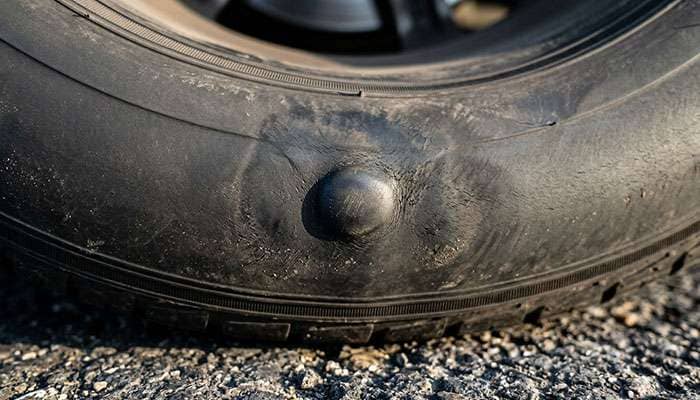
Inside a tire sidewall there are body plies, cords running from bead to bead that carry the load and hold the shape. A pinch can sever some of those cords without breaking the outer rubber at all. From the outside, the tire looks completely normal. It holds air perfectly. You drive on it for two weeks and nothing happens.
What is actually happening is that the remaining cords in that spot are carrying a load that used to be spread across many more of them, flexing thousands of times a mile. Eventually the rubber over the damaged area starts to balloon outward because there is nothing left holding it flat, and you get a bulge on the sidewall. That bulge is not the start of the problem. It is the end of it. It means the structure is already gone and only the outer rubber is containing the air.
Two practical things follow from this.
First, when you do your walkaround, you are not just looking for cuts. You are looking for any place where the sidewall's contour changes. Run your hand around it. A bruise from a pinch often feels like a slightly raised or slightly soft patch before it looks like anything. Compare the same spot on the other side of the car if you are not sure.
Second, if you find a bulge or a blister, that tire is done. Not repairable, not monitorable, not something to keep an eye on. Sidewall structure cannot be repaired, and a tire in that condition is a blowout waiting for a hot day and a highway. Our guide on tire sidewall damage and whether it is safe to drive walks through what is repairable and what is not, and what a sidewall bubble actually means covers the mechanism in more detail.
Low-profile tires are far more exposed to this, because there is less sidewall between the road and the rim flange to absorb anything. If you run 35-series or lower, treat every hard pothole hit as a pinch until you have proven otherwise.
Find level ground, well off the traffic lane. This takes four minutes and you do not need any tools.
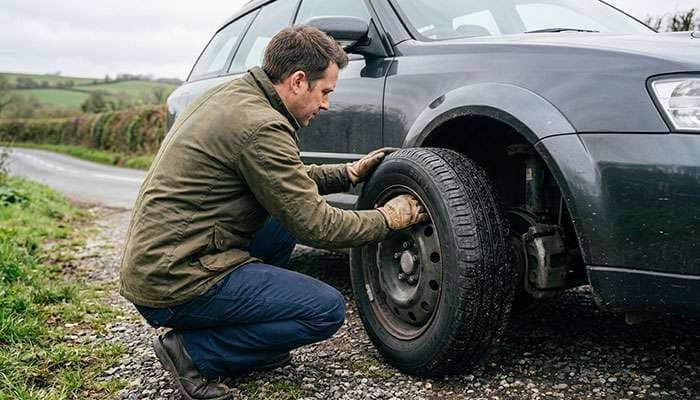
If everything looks clean and the car drives normally, you are probably in the nine-out-of-ten group. Keep reading anyway, because the next two sections are about the times you are not.
This is the window where the obvious stuff surfaces. It is also the window where most people have already stopped paying attention.
The morning pressure check. The single most useful thing you can do is look at your tire pressures the next morning, cold, before driving. A dented rim rarely leaks fast enough to notice while you are driving on it, but it will leak overnight. If one corner is down three or four PSI and the rest are steady, you have a bead seal problem, which means the wheel got bent enough to break the seal against the tire. That will not fix itself and will get worse. Our piece on how long you can drive on a slow tire leak covers what is safe in the meantime.
Steering that drifts. Alignment changes usually announce themselves within a day or two of normal driving. You will find yourself holding slight pressure on the wheel to go straight.
Vibration that was not there. A wheel that lost a balance weight in the impact, which is more common than people realize, will show up as a shake in a fairly narrow speed band. So will a wheel with a modest bend. Distinguishing between the two matters for what it costs to fix, and whether steering wheel vibration is your tires or your wheels is the piece that sorts it out.
A new noise over bumps. Clunks, knocks, or rattles that appear after an impact usually mean something in the suspension took the load. Bushings, ball joints, strut mounts.
The late window is the dangerous one, because by now nobody connects what is happening to a pothole they hit three weeks ago.
The sidewall bulge appears. This is the pinch finally showing itself, and it is why I spent so long on it above. Weeks of flexing on severed cords, and then a visible blister. If you get in the habit of glancing at your sidewalls when you fuel up, you will catch this. Most people never look.
Uneven wear starts to show. An alignment knocked out by an impact will scrub a tire down on one edge surprisingly fast. Run your hand across the tread from inside to outside. If one edge feels feathered or noticeably lower than the other, the alignment has been off for a while and it is eating a tire.
The vibration gets worse. Bends do not stay put. A wheel with a small bend flexes at that point on every rotation, and the bend grows. A shimmy you could ignore at first becomes one you cannot.
A crack finds daylight. This is the rare one and the worst one. Aluminum wheels can take a hit that leaves a hairline crack, usually on the inboard rim or in a spoke root, that opens up over weeks of flexing until it either starts leaking air steadily or lets go. If you have a wheel losing air with no puncture in the tire, get the wheel off and inspect the inboard side properly. Whether a cracked wheel is safe to drive is the short version: it is not.
Three components take pothole damage, and telling them apart from the driver's seat is mostly about what the symptom does with speed.
Symptom |
Tire |
Wheel |
Suspension |
|---|---|---|---|
Vibration behavior |
Often constant, all speeds |
Speed-dependent, narrow band |
Worse over bumps, not speed |
Air loss |
Yes, from a cut or puncture |
Yes, slow, at the bead |
No |
Visible from outside |
Sometimes, bulge or cut |
Often only on inboard edge |
Rarely |
Causes a pull |
Occasionally |
No |
Yes, commonly |
New noise over bumps |
No |
No |
Yes |
A useful shortcut: if the symptom changes with road speed, look at the rotating parts, meaning the tire and wheel. If the symptom changes with road surface, look at the suspension. If the car pulls but does not shake, start with alignment and steering components.
Worth saying plainly that all three can be damaged in one hit, and often are. Fixing a bent wheel while ignoring a knocked alignment just means the new wheel wears a tire out crooked.
Wheel repair is a real trade with real limits, and there is a fair amount of nonsense talked about it. Here is how I would put it to someone in the shop.
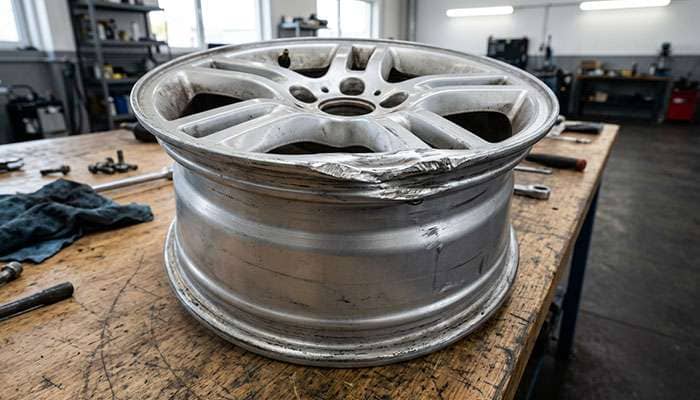
A bent steel wheel is usually straightenable. Steel deforms and comes back without much complaint. It is the cheapest outcome you can hope for.
A bent aluminum wheel depends entirely on where and how much. A modest bend on the rim flange, well away from the spokes, can often be pressed straight by a competent wheel repair shop. Aluminum work-hardens when it is bent and again when it is straightened, so a wheel that has been straightened once is not as strong as it was, and a wheel that has been bent in the same spot twice should be retired.
A cracked aluminum wheel should be replaced. Plenty of shops will weld one, and a welded wheel will hold air and look fine. But welding changes the temper of the aluminum around the weld, and the heat-affected zone next to a repair is a genuinely weaker piece of metal than what was there before. On a wheel that carries a quarter of the car through every corner and every bump, that is not a trade I would make. If the crack is anywhere near a spoke or the mounting face, it is not even a discussion.
Cosmetic curb-style scuffing is not structural. A scraped face from the pothole edge is ugly and does not affect anything.
The economics are worth running before you decide, because on a common wheel a replacement is often close to the cost of a quality straightening job, and you end up with an undamaged part instead of a repaired one. We put the numbers side by side in repairing versus replacing a rim, and whether a bent rim is safe to drive covers what you can and cannot do in the meantime.
Nothing about pothole damage gets cheaper by being ignored. It escalates in a fairly reliable order.
An alignment left alone eats a tire. This is the most common expensive mistake, and it is entirely avoidable. A meaningfully out-of-spec alignment can scrub the shoulder off a tire in a few thousand miles. You put off an alignment and pay for a tire instead, and then you still need the alignment.
A small bend becomes a bigger bend. The wheel flexes at the damaged point every single rotation. What could have been straightened in week one may be past saving by week eight.
A bead leak becomes a corroded seat. Once the seal is broken, moisture gets between the tire bead and the wheel seat and starts corroding the aluminum. Now the wheel needs cleaning and machining before it will hold a seal at all, if it can be saved.
A vibration works on everything it touches. Constant shake is not neutral. It puts cyclic load into wheel bearings, tie rod ends, and strut mounts, and shortens the life of all of them.
And the pinched sidewall fails. That is the one that does not escalate gradually. It holds, and holds, and then it does not, usually at speed, because heat and load are what finally finish it.
One more practical note. If the pothole was on a public road, many municipalities and state DOTs have a claim process for pothole damage, and there is usually a filing window measured in days or weeks. Photograph the pothole and its location if you can do it safely, keep your repair receipts, and check your local authority's process early rather than late.
If a wheel is genuinely finished, you have two sensible paths: match the one you lost, or take the opportunity to change all four.
Matching a single wheel is the cheaper route and the right call on a newer car or a factory set in good condition. Bring the exact size, bolt pattern, and offset, because getting offset wrong will cause rubbing and change your scrub radius even though the wheel bolts on fine.
Replacing the set makes more sense than people expect once one wheel is gone from an older set, because matching a discontinued finish is often impossible and a single new wheel among three weathered ones looks worse than four consistent ones.
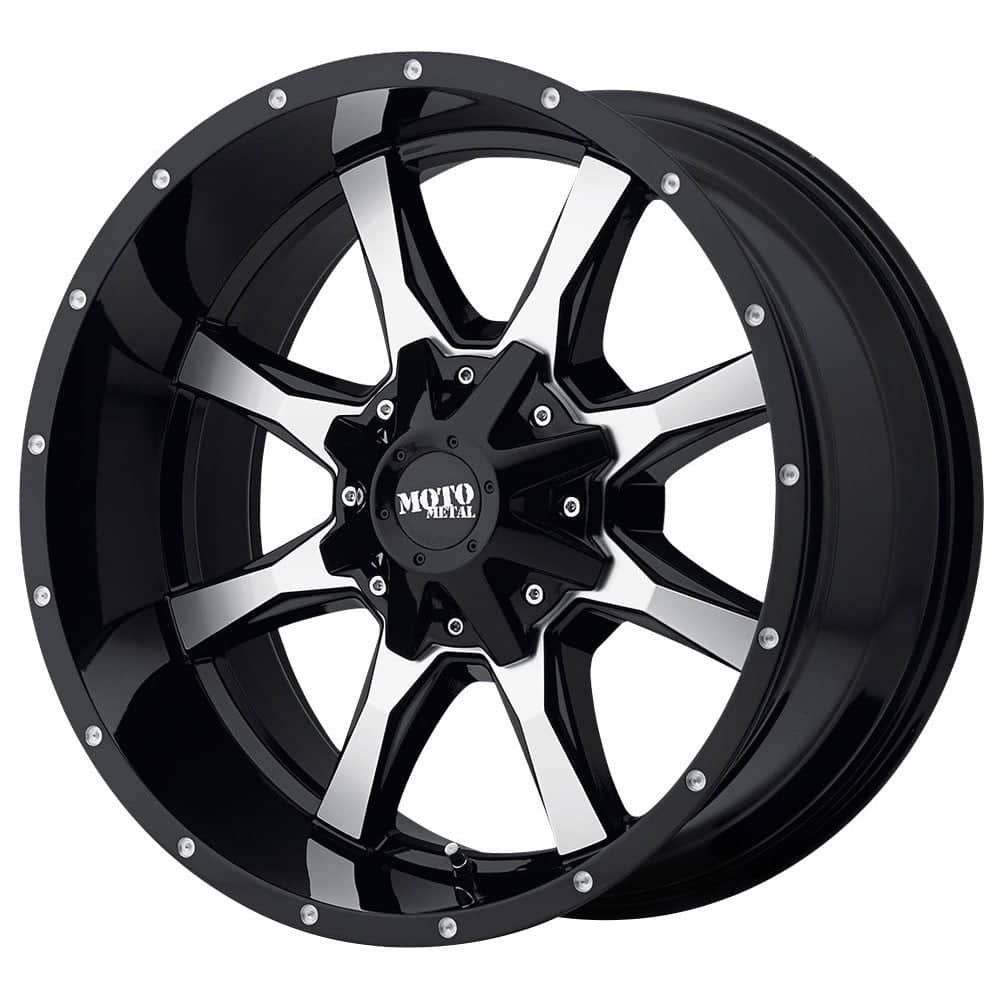
Moto Metal MO970. The practical answer for trucks and SUVs, with 669 fitments in the catalog and pricing starting around $98 per wheel. Gloss black with a machined face, and cheap enough that replacing all four rarely stings.
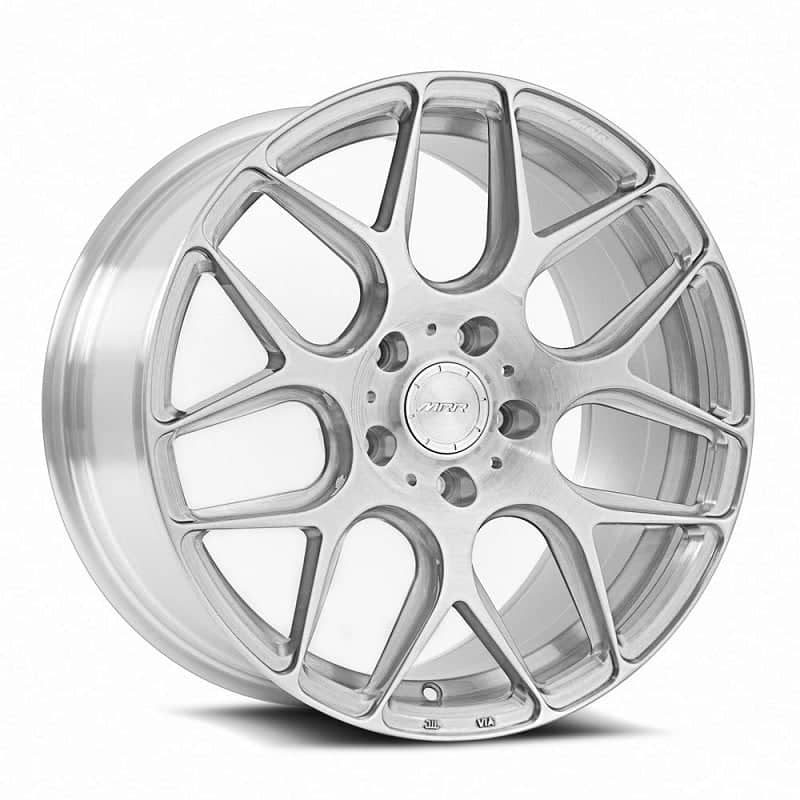
MRR FS01. The deepest car fitment coverage we stock, at 1,849 combinations, which matters enormously when you are trying to match an unusual size or offset. Brushed clear finish, from around $715.
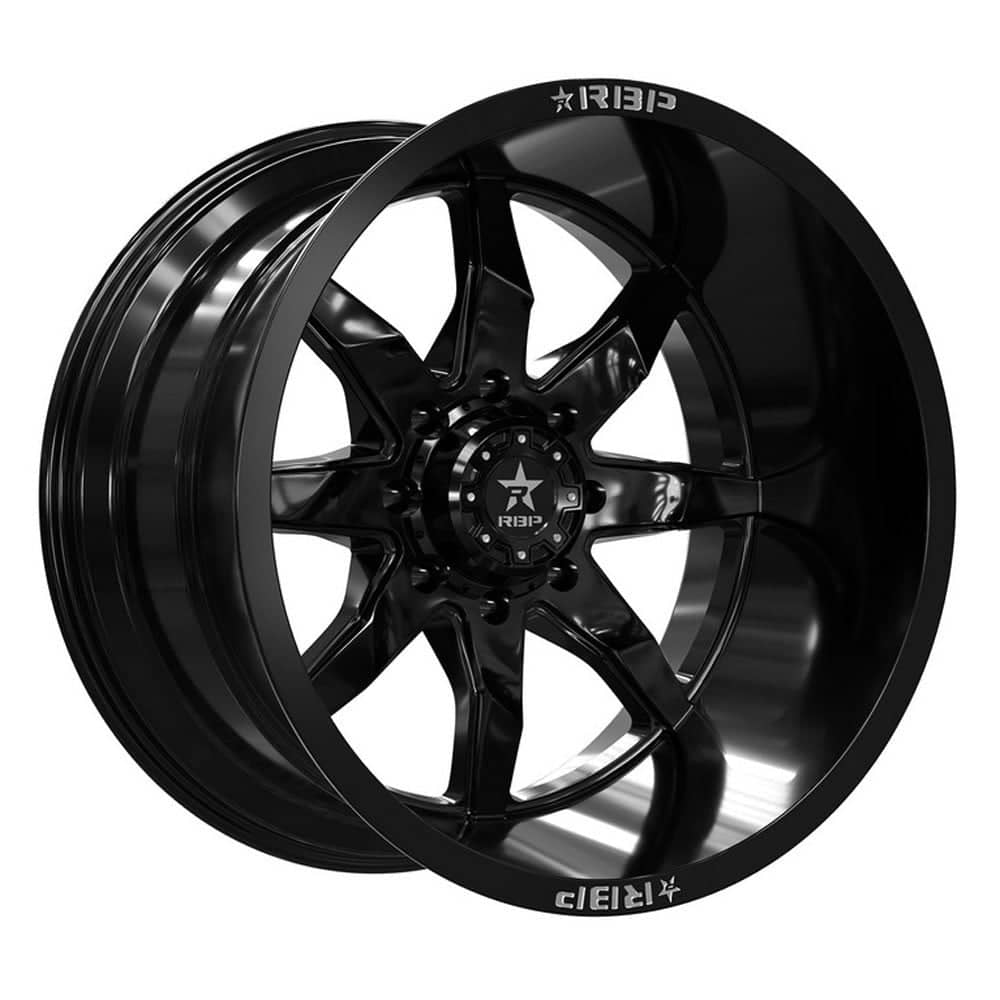
RBP 81R Saharan. A tough truck wheel with 728 fitments and gloss black finish, starting around $260. Heavier construction than a typical cast wheel, which is not a bad quality on roads that just ate your last one.
Whatever you land on, have the alignment checked when the new wheel goes on. It is the cheapest insurance in this entire article. You can browse the full range at custom wheels.
Most of the time you really did get away with it. But "the car drove away fine" is not the same as "the car is fine," and the gap between those two statements is where people get hurt.
Give it sixty seconds of real attention while you are still rolling. Give it four minutes at the next safe stop, including the inner sidewalls and the inboard rim edge. Check your pressures cold the next morning. And then glance at your sidewalls when you fuel up for the next month, because the pinch is patient and it does not announce itself until it is already too late to do anything but replace the tire.
That is the whole routine. It costs you five minutes and one habit, and it is the difference between a bent wheel and a blowout on an on-ramp.
Yes, and it takes about four minutes. The damage that causes real trouble is often invisible on the day it happens. A pinched sidewall holds air normally and looks untouched for a week or more before it bulges. Do a walkaround including both sides of every tire and the inboard rim edges, then check your cold pressures the next morning. If all of that is clean, you are very likely fine.
It comes in waves. Alignment pulls and vibrations usually appear within one to three days of normal driving. Slow leaks from a bent rim show up overnight as a pressure drop. Sidewall bulges from a pinch commonly take one to three weeks of flexing before the damaged area balloons enough to see, and uneven tire wear from a knocked alignment takes a few thousand miles to become obvious.
It can, and this is the failure mode worth understanding. When the sidewall is pinched between the pothole edge and the rim flange, internal body plies can be severed without the outer rubber tearing. The tire holds air and drives normally while the remaining cords carry more load than they were designed to, flexing thousands of times a mile. Eventually the weakened area bulges and can fail suddenly, often at highway speed when heat and load are highest.
It depends on the material and the location. Steel wheels usually straighten well. Aluminum wheels can often be straightened if the bend is modest and on the rim flange away from the spokes, though aluminum work-hardens each time it is bent and straightened, so a wheel bent twice in the same place should be retired. A cracked aluminum wheel is different: welding changes the temper of the surrounding metal and leaves a weaker heat-affected zone, so replacement is the sound choice, particularly if the crack is near a spoke or the mounting face.
That pattern usually points to the wheel rather than the tire. A pothole impact can dent or flatten the rim flange enough to break the airtight seal where the tire bead seats against the wheel, and the leak is typically slow enough that it only shows up as an overnight pressure drop. Most of these bends are on the inboard edge where you cannot see them without looking behind the tire. Left alone, moisture works into the bead seat and corrodes it, which makes the eventual repair harder.
Considerably. The sidewall is what absorbs an impact before it reaches the rim, and a low-profile tire simply has less of it. On a 35-series tire or lower there is very little material between the pothole edge and the rim flange, which makes both pinched sidewalls and bent wheels far more likely from the same impact. If you run low-profile tires, treat every hard hit as a probable pinch and inspect accordingly.