

Your steering wheel starts shaking at 55 mph. The vibration hits every time you brake. Or maybe it's that annoying shimmy that won't go away no matter what speed you're driving. Here's what you need to know: that vibration isn't just irritating—it's your vehicle telling you something needs attention right now.
Steering wheel vibration ranks among the most common driving complaints, and ignoring it costs you money. Unaddressed vibration accelerates tire wear, damages your suspension components, and creates genuine safety risks at highway speeds. The good news? You don't need a mechanic's expertise to diagnose whether your tires or wheels are causing the problem. You just need to know what symptoms to look for.
I'm going to walk you through exactly how to identify the source of your vibration problem. You'll learn the specific symptoms that point to tire issues versus wheel problems. You'll understand when a simple balance fixes everything and when you're looking at replacement. Most importantly, you'll stop wasting money on the wrong solutions and get back to smooth, confident driving.
Steering wheel vibration boils down to two main culprits: your tires or your wheels. These components work together, but they fail independently and create distinctly different vibration patterns. The key to quick diagnosis? Pay attention to when the vibration happens, what speed triggers it, and whether it occurs during braking or steady driving.
Tire-related vibrations come from three sources: imbalance, irregular wear, or internal tire damage. When a tire loses balance—even by just a quarter-ounce—centrifugal force at highway speeds creates a rhythmic shake that travels straight to your steering wheel. You'll notice this starting around 50-55 mph, and it intensifies as you accelerate. Irregular wear patterns like cupping create a thumping sensation. Internal damage like belt separation produces constant vibration that balancing can't fix.
Wheel-related vibrations stem from bent rims, improper mounting, or runout issues where your wheel doesn't spin in a perfect circle. These problems cause vibration at any speed and often create visible wobbling when you watch the wheel spin. Bent wheels—even slightly bent—throw off balance readings and make achieving smooth operation impossible until you repair or replace the wheel itself.
Understanding the numbers behind vibration diagnosis saves you money and gets you faster results. Wheel balance tolerance measures in ounces, and modern tire-wheel combinations require balance within 0.25 ounces for smooth highway driving. Exceed this threshold, and you'll feel vibration—especially on lighter vehicles with responsive steering systems. Your technician's balance report showing "+0.75 oz" means that wheel needs immediate attention.
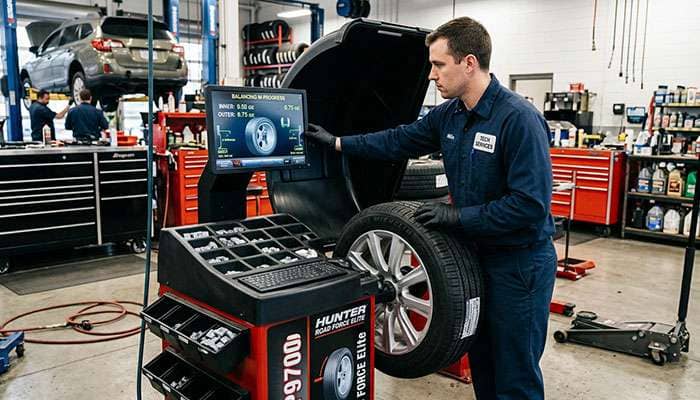
Wheel runout comes in two types: radial (up-and-down movement) and lateral (side-to-side wobble). Manufacturers specify maximum runout between 0.040 and 0.070 inches for aluminum wheels. When your wheel exceeds these limits, it's not spinning true. No amount of balancing fixes a bent wheel. Steel wheels tolerate slightly more runout—around 0.080 inches—due to how they're manufactured, but they still need to stay within acceptable ranges for vibration-free driving.
Tire uniformity gets measured through radial force variation (RFV) and lateral force variation (LFV). Quality performance tires maintain RFV under 15 pounds and LFV under 10 pounds during manufacturing. When these numbers climb—usually from manufacturing defects or damage—you get vibration that balancing alone cannot eliminate. The tire itself has internal irregularities that require replacement, not just weight adjustments.
Drivers assume every steering wheel vibration means "get a balance." Wrong. While unbalanced tires cause most vibration complaints, roughly 30% involve completely different issues. Rushing to rebalance without checking for bent wheels, irregular tire wear, or loose lug nuts wastes your time and money. You end up paying for a service that can't possibly fix your actual problem.
Here's another costly mistake: ignoring when the vibration occurs. Steering wheel shake only during braking? That's warped brake rotors—not tire balance. Period. Drivers spend hundreds on tire services when a simple rotor replacement would've solved everything. Vibration appearing only between 45-50 mph then disappearing points to balance issues. Constant vibration at all speeds indicates bent wheels or severe tire damage. The symptom pattern tells you exactly what's wrong.
Many people skip the most basic check: tire pressure. Under-inflated or over-inflated tires create vibration-like symptoms and throw off balance measurements. Always verify pressure matches your door jamb specification—not the maximum pressure stamped on your tire sidewall—before any diagnostic work. This simple step takes five minutes and costs nothing, yet it solves more "vibration" complaints than most drivers realize.
When your technician hands you balance measurements, those numbers reveal exactly what's happening. A reading showing "+0.75 oz outside, -0.50 oz inside" means your wheel needs three-quarters of an ounce added to the outer rim and half an ounce to the inner rim. Any measurement over 0.25 ounces causes noticeable vibration above 55 mph. The higher the number, the worse your shake.
Measurement Type |
Acceptable Range |
Problem Threshold |
Typical Symptom |
|---|---|---|---|
Static Balance |
0-0.25 oz |
>0.50 oz |
Vertical wheel bounce |
Dynamic Balance |
0-0.25 oz per side |
>0.50 oz combined |
Steering wheel shake |
Radial Runout |
0-0.050 inches |
>0.070 inches |
Up-down oscillation |
Lateral Runout |
0-0.050 inches |
>0.070 inches |
Side-to-side wobble |
Radial Force Variation |
0-15 lbs |
>20 lbs |
Constant speed vibration |
Runout measurements tell you whether your wheel is bent. A technician reports 0.080 inches of radial runout on your aluminum wheel? That exceeds the typical 0.070-inch tolerance. Your wheel isn't spinning true, which explains why balancing hasn't fixed your vibration. You need wheel replacement or professional straightening—adding weights won't help.
Force variation measurements reveal tire manufacturing defects or internal damage. Your tire shows 25 pounds of radial force variation when the acceptable maximum is 15 pounds? You've got a tire uniformity problem. The tire has internal irregularities from manufacturing or belt separation. Replacement is your only option—rebalancing accomplishes nothing.
Fixing steering wheel vibration requires matching the solution to your specific problem. Before you spend a dime, diagnose the actual cause using systematic observation. This approach prevents wasted money on services that can't possibly help and ensures you address the root problem instead of just masking symptoms.
Start with the free checks: verify tire pressure first (takes five minutes), then visually inspect your tires and wheels for obvious damage. Look for tire sidewall bulges, missing wheel weights, bent rim edges, or unusual tread wear patterns. Next, test-drive and note precisely when vibration occurs: during braking, at constant speeds, only at certain speeds, or continuously. These observations point you directly toward the right fix.
Your vehicle type dramatically affects how you experience vibration and what solutions work best. Lighter cars with sport-tuned suspensions and low-profile tires amplify even minor imbalances. Drive a sports sedan with 18-inch wheels and 40-series tires? You'll feel a 0.25-ounce imbalance. That same imbalance on a pickup truck with 17-inch wheels and 65-series tires might create zero perceptible vibration.
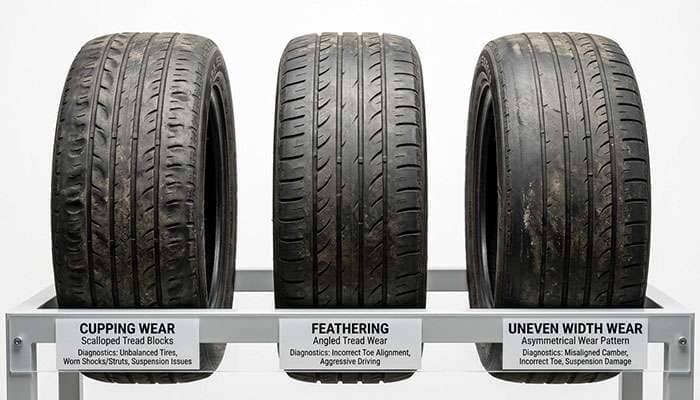
Larger, heavier vehicles develop vibration from completely different causes than passenger cars. SUVs and trucks suffer more tire cupping—those scalloped wear patterns on the tread—because of higher unsprung weight and aggressive tread designs. This creates rhythmic thumping that feels like imbalance but won't respond to adding weights. For these vehicles, tire rotation every 5,000-6,000 miles and proper alignment prevent more problems than frequent rebalancing ever could.
Electric and hybrid vehicles present unique challenges. Their silent operation makes vibrations more noticeable, and their instant torque accelerates vibration-related tire wear. Drive an EV or hybrid? You need tires specifically engineered for these characteristics. Consider EV performance tires with reinforced construction and optimized tread patterns that minimize vibration issues from the start.
Your driving habits directly influence both the type of vibration you'll experience and the best solution. Highway commuters spending hours at 65-75 mph need perfectly balanced tires and true-running wheels. Even minor imbalances magnify at sustained high speeds, making premium balancing services essential for your comfort and safety.
Aggressive drivers who accelerate hard, corner at speed, and brake late put massive stress on tires and wheels. This driving style accelerates irregular wear, increases wheel damage from potholes and curbs, and throws wheels out of balance faster. Sound like you? Budget for more frequent balancing—every 3,000-4,000 miles instead of 6,000. Consider more durable wheel designs with stronger construction that resist damage.
City drivers rarely exceeding 45 mph face different challenges. Low-speed vibration points toward tire damage, severe imbalance, or wheel issues rather than minor balance variations. If you primarily drive urban routes but still experience vibration, focus your diagnosis on structural tire damage and wheel condition. Standard rebalancing probably won't solve your problem.
You get what you pay for with vibration solutions—but expensive doesn't always mean necessary. Standard computerized spin balancing costs $15-25 per tire and solves 70% of vibration complaints. This should be your first move for any vibration that develops gradually and occurs at highway speeds. It's effective, proven, and affordable.
Road-force balancing costs $30-40 per tire and uses a roller to simulate road contact while measuring force variations. This premium service identifies problems standard balancing misses—tire uniformity issues and minor wheel runout. Worth the extra cost? Absolutely, if standard balancing didn't work, if you drive a performance vehicle, or if you're installing new tires and want optimal results from day one.
Service Type |
Cost Per Tire |
Best For |
Solves |
|---|---|---|---|
Standard Balance |
$15-25 |
General maintenance, minor vibration |
Basic weight distribution issues |
Road-Force Balance |
$30-40 |
Persistent vibration, new tires, performance vehicles |
Uniformity issues, match-mounting optimization |
Wheel Straightening |
$75-150 |
Bent aluminum wheels with minor damage |
Radial and lateral runout from impacts |
Tire Replacement |
$100-300+ |
Structural damage, belt separation, severe cupping |
Internal tire defects, irreparable damage |
Wheel Replacement |
$150-800+ |
Severe bends, cracks, unrepairable damage |
Structural wheel failures |
Sometimes replacement beats repair economically. A tire with severe cupping or belt separation cannot be fixed—attempting to balance it throws money away. Similarly, a bent wheel costing $100 to straighten isn't worth repairing if replacement wheels run $150-200. Always get clear diagnosis before committing to expensive repairs. Don't hesitate to get a second opinion when recommended solutions seem excessive.
I've diagnosed and solved thousands of vibration issues. These recommendations address the most common scenarios you'll face, from simple maintenance to complex persistent problems. Remember: accurate diagnosis always precedes solution. Make sure you understand what's causing your vibration before implementing these fixes.
You cover 12,000-15,000 miles annually with mixed highway and city driving. Your vibration prevention strategy should focus on regular maintenance and quality tire selection. Establish a routine balance check every 6,000 miles or with each tire rotation. This proactive approach catches minor imbalances before they become noticeable and identifies developing problems early when they're cheaper to fix.
Tire quality matters more than most daily drivers realize. Touring tires from major manufacturers are engineered for uniformity and long-term balance retention. Budget tires have looser manufacturing tolerances, meaning they're more likely to develop vibration even when properly balanced. Investing in quality tires delivers vibration-free operation over the tire's entire lifespan—typically 50,000-70,000 miles.
When vibration occurs, start with the simplest solution: standard computerized balancing at a reputable shop. Request that technicians also check tire pressure, inspect for visible damage, and verify proper lug nut torque. This comprehensive approach costs around $80-100 for all four tires and solves the vast majority of commuter vibration complaints. Standard balancing doesn't work? Road-force balancing is your next step before considering tire or wheel replacement.
Performance enthusiasts need precision because your sensitive, sport-tuned suspension and low-profile tires transmit every imperfection directly to your steering wheel. For performance vehicles, road-force balancing isn't luxury—it's essential. This service optimizes tire-to-wheel matching by identifying high and low points of both components and mounting them to minimize force variation. The result? Smoother operation at all speeds, especially above 80 mph where minor imbalances amplify significantly.
High-performance and ultra-high-performance tires require more frequent attention than standard tires. Softer compounds and stiffer sidewalls make these tires more susceptible to vibration from irregular wear. Plan on checking balance every 4,000-5,000 miles. Inspect your tires carefully for feathering or cupping at every rotation. Early detection prevents minor issues from becoming major vibration problems.
Participate in track days or spirited driving? Consider investing in dedicated wheel-and-tire sets for performance use. This allows you to maintain separate sets optimized for different purposes—daily driving wheels balanced for highway comfort, track wheels balanced specifically for high-speed stability. The ability to swap between sets means your street tires last longer and maintain better balance because they're not subjected to track-level stresses.
Working with a tight budget but experiencing vibration? Focus your limited resources where they'll have maximum impact. Start by ruling out free or low-cost causes: check tire pressure with your own gauge, visually inspect tires and wheels for obvious damage, verify your lug nuts are properly torqued. You can buy a reliable torque wrench for $25-40 that lasts years. These simple checks often identify problems that don't require professional intervention.
When professional service becomes necessary, get quotes from multiple shops and ask specifically what's included. Some shops charge $15 per tire for balancing but add fees for weight disposal, valve stem inspection, and other services. Others charge $25 per tire all-inclusive. Total cost matters more than advertised per-tire price. Ask whether they use tape weights or clip-on weights—tape weights work better on modern alloy wheels and stay attached longer, reducing rebalancing frequency.
Need tire replacement on a budget and vibration has been an issue? Consider how tire selection affects future balance retention. Premium tires cost more upfront but maintain balance longer and are manufactured to tighter tolerances. Quality all-season tires staying balanced for 30,000 miles cost less over time than budget tires needing rebalancing every 3,000 miles and requiring replacement at 40,000 miles due to irregular wear. Calculate total cost of ownership, not just purchase price.
Steering wheel vibration doesn't have to be a mystery or a money pit. Understand the difference between tire-related and wheel-related causes. Pay attention to when and how vibration occurs. Follow systematic diagnostic steps. These three practices let you identify root causes and implement the right solution—not waste money on fixes that can't possibly work.
Prevention beats correction every time. Regular tire rotations every 5,000-6,000 miles, balance checks during rotations, maintaining proper tire pressure, and avoiding potholes and curb impacts prevent the majority of vibration issues before they start. When problems do develop, address them promptly. Ignoring vibration accelerates tire wear, damages suspension components, and compromises your safety.
Ready to eliminate steering wheel vibration for good? Start with quality tires designed for your vehicle and driving style. Visit Performance Plus Tire to explore our extensive selection of tires engineered for smooth, vibration-free operation. Our experts help you find the perfect match for your vehicle, driving conditions, and budget—ensuring you enjoy comfortable, confident driving for thousands of miles ahead.
Here's what you need to remember about diagnosing and fixing steering wheel vibration:
• Vibration timing reveals the cause: Vibration only when braking indicates warped rotors, not tire or wheel issues. Vibration at constant highway speeds suggests imbalance. Vibration at all speeds points to bent wheels or severe tire damage.
• Balance tolerance is measured in quarter-ounces: Even 0.50 ounces of imbalance creates noticeable vibration above 55 mph. Professional balancing should achieve 0.25 ounces or less on each tire for smooth operation at all speeds.
• Road-force balancing catches what standard balancing misses: For persistent vibration, performance vehicles, or new tire installations, road-force balancing identifies tire uniformity problems and optimizes tire-to-wheel matching for superior results.
• Not all vibration can be balanced out: Bent wheels exceeding 0.070 inches of runout, tires with belt separation, and severely cupped tires cannot be fixed with balancing. These conditions require wheel straightening, wheel replacement, or tire replacement.
• Prevention costs less than correction: Regular tire rotation every 5,000-6,000 miles, balance checks during rotations, proper tire pressure maintenance, and quality tire selection prevent most vibration issues and extend tire life significantly.
Steering wheel vibration occurring exclusively during braking points to warped brake rotors—not tire or wheel issues. When rotors develop uneven thickness from heat cycling or corrosion, they create pulsation that transfers through your steering system. The fix? Brake rotor resurfacing or replacement, not tire balancing. If vibration stops the moment you release your brakes, focus your diagnosis on your braking system. Don't waste money balancing tires that aren't causing your problem.
Most drivers should balance tires every 6,000 miles or with each tire rotation. Performance vehicles and those with low-profile tires need balancing every 4,000-5,000 miles due to their heightened sensitivity to minor imbalances. Hit a major pothole, strike a curb, or notice sudden vibration? Get your balance checked immediately regardless of mileage. Preventive balancing costs $60-100 for all four tires and prevents irregular wear that would cost hundreds in premature tire replacement.
Minor wheel bends can often be professionally straightened for $75-150 per wheel, depending on severity and location. Bends in the wheel's outer barrel area are generally repairable. Damage to spoke areas or cracks anywhere on the wheel require replacement for safety. Straightening works best on aluminum wheels with radial or lateral runout under 0.100 inches. Steel wheels cost less to replace than repair. Always have a professional assess structural integrity—a wheel failure at highway speeds can cause loss of vehicle control.
Static balancing addresses up-and-down wheel hop by ensuring weight distributes evenly around the wheel's center point. Dynamic balancing corrects both vertical and lateral (side-to-side) imbalances by placing weights on both inner and outer wheel edges. Modern computerized balancing is always dynamic balancing—superior for today's higher speeds and lighter vehicles. Old-style bubble balancers only perform static balancing and won't eliminate steering wheel vibration at highway speeds. Always choose shops with computerized dynamic balancing equipment.
Speed-specific vibration appearing at one speed range and disappearing at others is the classic symptom of tire imbalance. The vibration frequency matches your tire's rotational speed at that particular velocity, creating resonance through your vehicle's suspension and steering. This typically indicates imbalance in the 0.50-1.00 ounce range—enough to cause vibration but not severe enough to create problems at all speeds. Standard balancing almost always eliminates speed-specific vibration. Vibration persists after balancing? You may have a tire uniformity issue requiring road-force balancing or tire replacement.



