
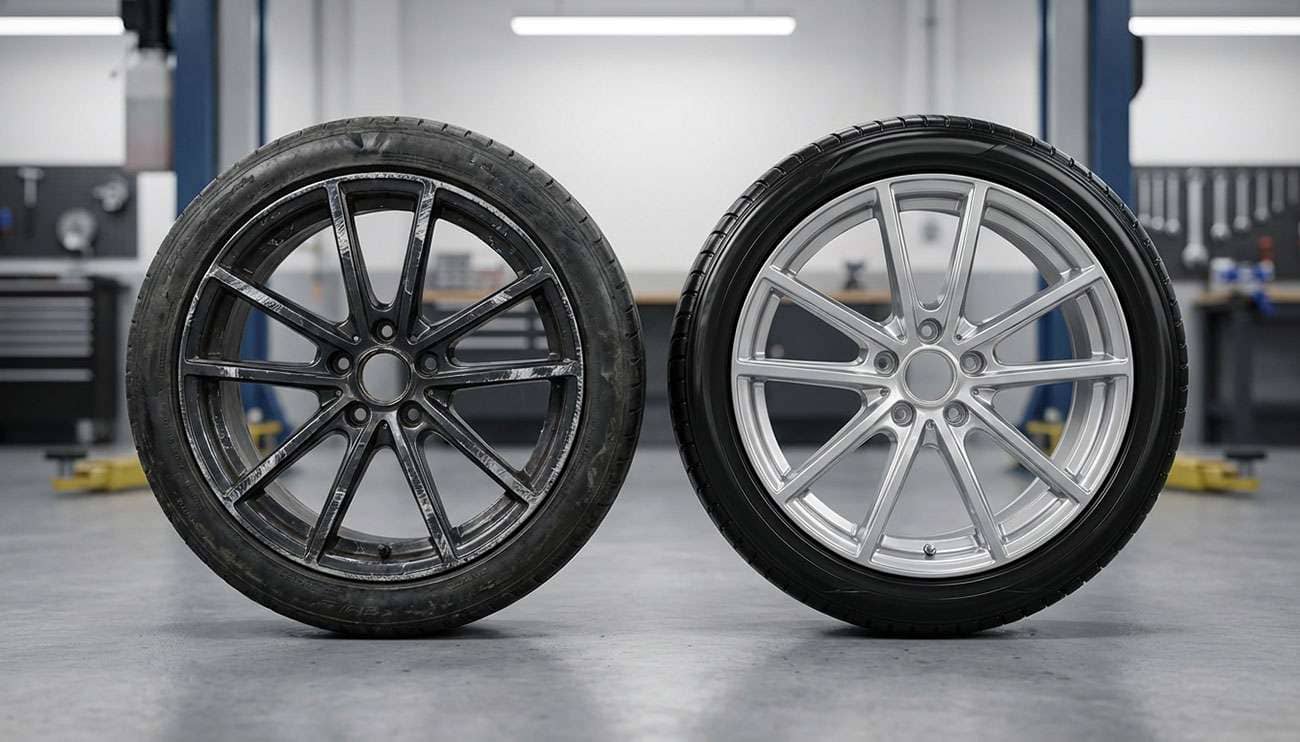
When your rims get damaged, the question hits immediately: is rim repair worth the investment, or should you replace them entirely? Bent, cracked, or scratched rims force you to make a decision that affects both your wallet and your safety on the road.
Factory replacement rims start around $200 to $500 per wheel, with premium brands or custom sizes pushing past $1,000. Rim repair presents a more affordable path that can deliver comparable results while keeping hundreds of dollars in your pocket.
Damaged rims create problems that extend far beyond appearance issues. They slash your vehicle's resale value and frequently cause tire pressure loss, leading to safety risks you can't ignore. Repair also offers an environmentally conscious choice that cuts down on waste.
Minor scrapes require different considerations than serious bends, and knowing what factors should guide your decision makes all the difference. We'll break down the costs, advantages, and key considerations of both repair and replacement options to help you choose the right solution for your situation.
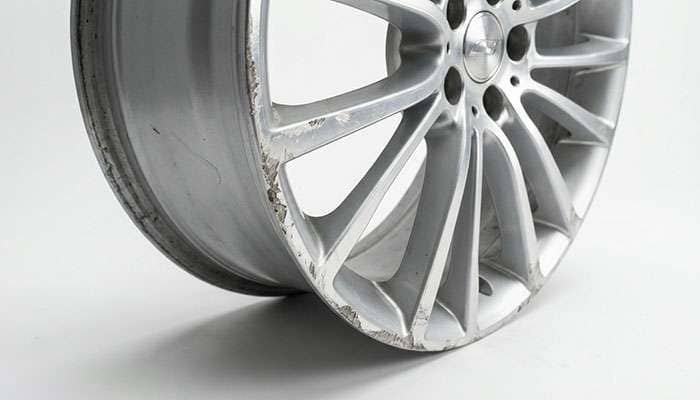
Rim damage spans everything from minor cosmetic scratches to serious structural failures that threaten your vehicle's safety and performance. Knowing how different types of damage affect your wheels is essential before choosing between repair and replacement.
Damaged rims pose safety risks that go well beyond visual concerns. A bent or cracked rim breaks the proper seal between your tire and wheel, causing slow leaks or potentially dangerous blowouts. Even small damage throws off wheel balance, making your vehicle pull to one side and affecting overall handling.
Rim damage also hurts your vehicle's performance in measurable ways. Bent wheels make your engine work harder, cutting into fuel efficiency. When damaged rims create uneven tire contact with the road, your stopping distances increase and steering becomes less responsive, particularly in wet weather. This damage spreads to other parts over time, putting extra stress on your suspension system and wearing out control arms and tie rods faster.
Watch for these warning signals that indicate rim damage:
Vibrations or wobbling in the steering wheel, especially at highway speeds
Constant tire pressure loss that requires frequent air refills
Uneven or early tire wear patterns
Unusual noises like rattling or thumping during driving
Visible dents, cracks, or flat spots on the wheel surface
Some damage stays hidden at first glance. Minor cracks expand under weight and stress, potentially leading to complete wheel failure.
The damage type and severity determine your best option. Minor bends respond well to specialized equipment that reshapes the wheel to factory specifications. Professional refurbishing can remove small amounts of corrosion effectively.
Replacement becomes necessary when you encounter:
Major cracks or fractures in the wheel
Previous repair attempts that have failed
Damage that compromises safety or tire performance
Significant bends in aluminum wheels, which cannot be straightened like steel wheels
Safety must always come first, regardless of cost considerations. While replacement requires a larger upfront investment, it delivers better long-term value and peace of mind.
Making smart financial decisions about damaged wheels requires understanding the real cost differences between repair and replacement. The numbers tell a clear story about which option delivers better value for your situation.
Rim replacement costs depend heavily on material, brand, and vehicle specifications. A complete four-wheel replacement ranges from $200 to $2,000. Here's how materials affect your investment:
Steel wheels: Budget-friendly option at $50-$200 per wheel, totaling $200-$800 for a complete set
Aluminum wheels: Mid-range choice costing $125-$500 each, approximately $500-$2,000 for a full set
Alloy wheels: Popular option priced between $100-$500 per wheel ($400-$2,000 for a set)
Forged wheels: Premium choice starting around $645 per rim, with high-end custom designs exceeding $2,500 each
Installation labor adds $15-$30 per wheel, increasing your total investment. For quality replacement options that fit your budget, Performance Plus Tire offers an extensive selection of rim solutions.
Rim repair typically costs between $75-$150, making it significantly more affordable than replacement. Several factors influence the final price:
Damage severity: Minor curb rash repairs start at $50-$150, bent rims around $100, while crack repairs can reach $500
Material type: Chrome rims require stripping, base damage repair, and re-plating ($150-$400)
Labor complexity: Simple repairs take about an hour, while extensive work requires more time
Powder-coated rims need specialized matching services that add to the overall expense.
Your final expense includes more than the repair or replacement price. Consider these additional factors:
New tire mounting and balancing: $15-$45 per wheel
Valve stem replacement: $5-$30 depending on type
TPMS sensor service: $50-$100 per sensor if damaged
Insurance coverage might offset some expenses if damage resulted from road hazards or accidents. Check your policy for wheel and tire protection benefits.
Many rim damage situations call for repair rather than full replacement. Understanding which problems qualify for repair helps you avoid unnecessary spending while keeping your wheels safe and functional.
Professional rim repair works effectively on several common damage types. Curb rash and cosmetic scratches respond well to refinishing techniques that restore the original appearance. Minor bends from pothole impacts can be straightened using specialized hydraulic equipment. Light corrosion and oxidation often come off completely with proper cleaning and treatment methods.
Chrome and painted finishes benefit from professional restoration that matches factory quality. Small dents and dings that haven't penetrated the wheel structure can be smoothed out without compromising safety.
Repair makes the most sense when:
Damage is purely cosmetic without structural concerns
The wheel maintains its original shape with only minor deformation
No cracks or fractures exist in the metal
The rim holds air properly with the tire mounted
Cost savings significantly outweigh replacement expense
A professional inspection confirms whether your specific damage qualifies for safe repair.
Quality repair depends on finding technicians with proper training and equipment. Look for shops that specialize in wheel repair rather than general auto body work. Certified technicians understand the specific requirements for different rim materials and finishes.
Ask about warranties on repair work and request before-and-after photos of similar repairs. Reputable shops use calibrated equipment that ensures precise straightening and proper balance after repair completion.
Some rim damage extends beyond what repair can safely address. Recognizing when replacement becomes necessary protects both your safety and your long-term investment.
Certain damage types require replacement regardless of cost considerations:
Cracks that extend into the wheel structure
Severe bends that have stressed the metal beyond safe limits
Impact damage near the bead seat where the tire seals
Corrosion that has eaten through significant metal thickness
Attempting to repair severely damaged rims creates serious safety hazards that outweigh any cost savings.
Consider replacement when:
The tire repeatedly loses air despite repair attempts
Vibration continues after professional balancing
Previous repairs have failed on the same wheel
Structural integrity is questionable
Repair costs reach 70-80% of replacement price
Original Equipment Manufacturer (OEM) rims match your factory specifications exactly and undergo rigorous quality testing. These cost more but guarantee proper fitment and performance standards.
Aftermarket options provide:
Extensive design and style choices
Advanced materials like carbon fiber and magnesium alloys
Price ranges from budget-friendly to premium
Quality varies significantly among aftermarket manufacturers. Some brands maintain strict standards while others use minimal testing, potentially affecting long-term reliability.
Choosing between repairing and replacing damaged rims means weighing immediate benefits against long-term implications. Each path offers distinct advantages and limitations that affect your wallet, timeline, and vehicle performance.
Rim repair delivers the most cost-effective solution, typically saving hundreds of dollars compared to new wheel purchases. Most repairs finish within a single day, getting you back on the road fast. Many repair centers provide 24-hour turnaround service. Beyond the financial savings, repair reduces waste and minimizes your environmental footprint. This eco-friendly choice conserves resources and keeps wheels out of landfills.
Repairs have their limitations. Some fixes serve as temporary solutions that may require additional work later. Rims with major cracks or fractures can compromise safety and structural integrity even after repair. Without proper professional assessment, repaired wheels might create dangerous situations if structural issues aren't adequately addressed.
New rims provide enhanced durability and typically last longer without complications. Replacement guarantees structural integrity and long-term performance you can count on. Installing new rims can also boost your vehicle's appeal to potential buyers when it's time to sell. If you're planning to sell your vehicle soon, quality replacements from Performance Plus Tire might increase resale value significantly.
Replacement requires a substantial financial investment, with alloy rims starting around $400 per wheel. Manufacturing new wheels demands significant raw materials, energy, and water resources. Production processes release carbon emissions that contribute to environmental concerns. Discarded wheels add to landfill waste, creating long-term environmental impact.
The repair vs. replacement decision hinges on three essential elements: damage severity, budget considerations, and safety requirements. Minor cosmetic issues like curb rash and small scratches respond well to affordable repairs at $75-$150, while structural problems like cracks and significant bends require replacement for your safety.
Safety comes first, period. Professional repairs on superficial damage can serve you reliably for years, but attempting to fix serious structural damage creates dangerous driving conditions you simply can't risk.
The numbers tell a clear story. New rims start at $200 for basic steel wheels and climb past $1,000 for premium options, while repairs typically stay under $150. However, when repair costs approach 70-80% of replacement price, or when structural integrity is questionable, replacement becomes the smarter investment.
Quality matters regardless of your choice. At Performance Plus Tire, you can explore both repair and replacement solutions that match your vehicle's specifications and performance needs.
Your decision should balance immediate costs against long-term safety and performance. While repair offers excellent value for minor damage, never compromise safety for short-term savings. Your wheels carry everything that matters to you on the road – make sure they're up to the job.
When facing damaged rims, understanding the cost-benefit analysis and safety implications helps you make the smartest financial and safety decision for your vehicle.
Repair costs $75-$150 vs replacement at $200-$1,000+ per wheel - making repair significantly more budget-friendly for minor damage
Safety determines the choice: cosmetic damage can be repaired, but structural cracks require replacement to avoid dangerous blowouts
Minor bends and curb rash are repairable, while fractures and deep corrosion need replacement for long-term reliability
Repair offers faster turnaround (24 hours) and environmental benefits by reducing waste and conserving resources
Professional assessment is crucial - qualified technicians can determine if repair maintains structural integrity or if replacement is necessary
The decision ultimately balances immediate cost savings against long-term safety and performance. While repair works well for superficial damage, never compromise safety for short-term savings when structural integrity is compromised.
Standard rim repair costs usually range from $75 to $150, depending on the severity of the damage and the type of rim. Minor curb rash repairs can start as low as $50, while more complex repairs like fixing cracks can cost up to $500.
Replacement is generally recommended when there are major cracks or fractures, the wheel has been previously repaired and failed again, or when the damage compromises safety or tire performance. Also, if the cost of repair approaches 70-80% of the replacement cost, buying a new rim might be more economical.
Not all rim damage can be safely repaired. While minor cosmetic issues like scratches and small dents can often be fixed, structural damage such as deep cracks or significant bends, especially in aluminum wheels, usually requires replacement for safety reasons.
Most rim repairs can be completed within a day, with many repair centers offering 24-hour turnaround service. This quick service allows you to get back on the road faster compared to waiting for a replacement rim to be ordered and installed.
The safety of repaired rims depends on the quality of the repair and the original severity of the damage. Professional repairs on minor damage typically maintain safety standards. However, repairs involving welding or heating of cracked components may compromise structural integrity. It's crucial to have repairs done by experienced technicians and to ensure proper post-repair testing and balancing for optimal long-term safety.



